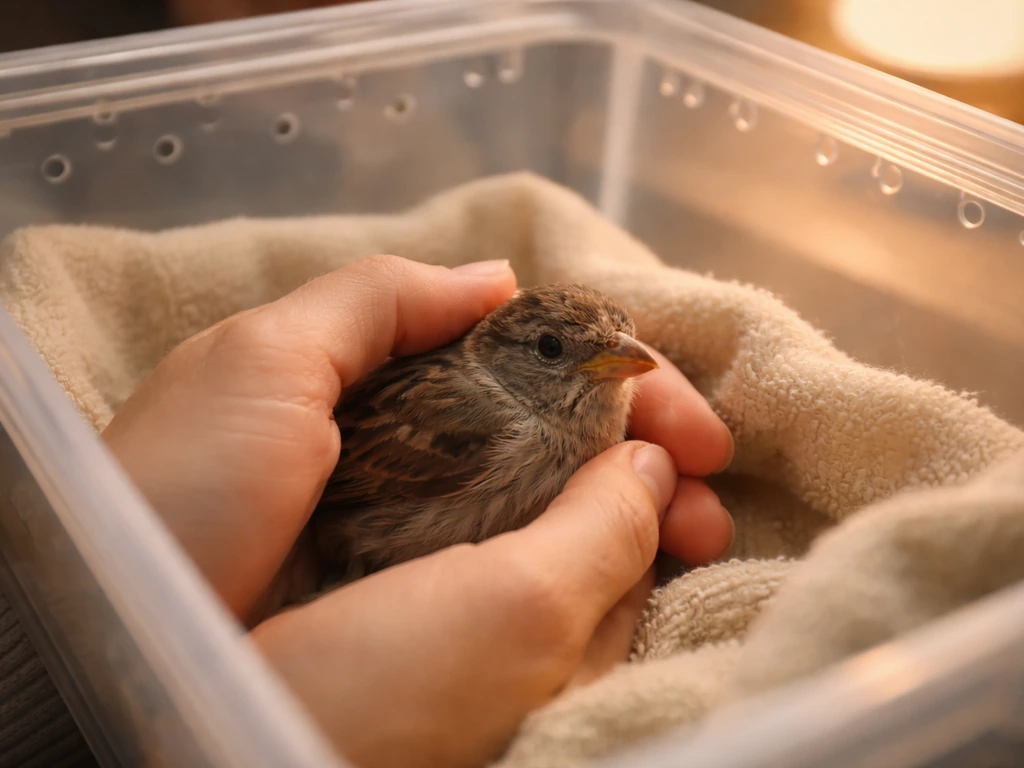
Yes, many injured birds can survive, but the outcome depends heavily on what kind of injury it is, how quickly it gets proper care, and whether shock or blood loss have already set in. A bird that hit a window an hour ago has very different odds than one that's been lying in the yard all day with an open wound. The good news is that if you found this bird today and you're reading this right now, you're already doing the most important thing: getting informed fast.
Can an Injured Bird Survive? First Aid and Red Flags
Marcus Chen
10 Jun 2026
Realistic odds: what actually decides whether an injured bird makes it
Survival is absolutely possible, but it's not guaranteed, and the factors that tip the balance are pretty specific. The type and severity of the injury matter most. A bird with a minor wing contusion from a window strike has much better odds than one with a compound fracture, active bleeding, or a puncture wound from a cat. Age and species play a role too, young fledglings and small songbirds are more fragile than larger, sturdier birds like pigeons or waterfowl.
Shock is one of the biggest killers and it moves fast. Injured birds are often cold and stressed when found, and blood loss accelerates that decline. If a bird is already in shock, unresponsive, extremely cold, breathing with its mouth open, the window for survival is narrowing. Time without treatment is its own kind of injury. That's why everything in this guide is oriented around speed: your job right now is to stabilize the bird quickly and get it to someone who can actually treat it.
One thing that catches people off guard: birds are wired to hide weakness. That's a survival instinct that works great in the wild, but it means an injured bird may look more okay than it is. Unusual behavior, sitting still on the ground, letting you approach, not reacting to noise, often signals a serious problem even when the bird looks physically intact. Merck notes that birds often hide illness or injury as a survival behavior, so unusual behavior can signal a serious problem that needs veterinary attention Unusual behavior, sitting still on the ground, letting you approach, not reacting to noise. Don't be reassured by a bird that 'seems calm.' It may be in shock.
What to do right now: first aid that's safe for anyone
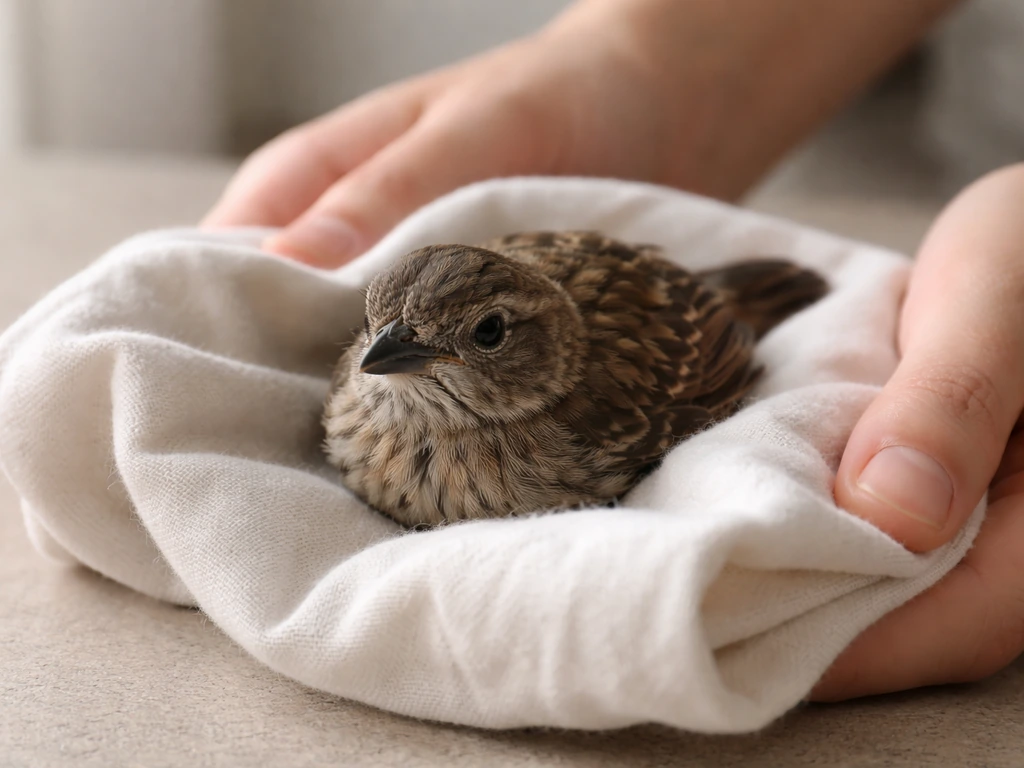
The goal of first aid is not to treat the injury. It's to stabilize the bird long enough to get it to a professional. Keep that in mind because it changes what you do and, importantly, what you don't do.
- Limit handling immediately. Pick the bird up gently using a light cloth or wear gloves, support its body from below, and place it somewhere safe. Every extra minute of handling adds stress that can push a bird into deeper shock. Once it's contained, stop touching it.
- Put it in a small, ventilated box. A cardboard box with a few small air holes at the top works perfectly. Line the bottom with a folded towel or paper towels. The darkness calms the bird and reduces stress significantly.
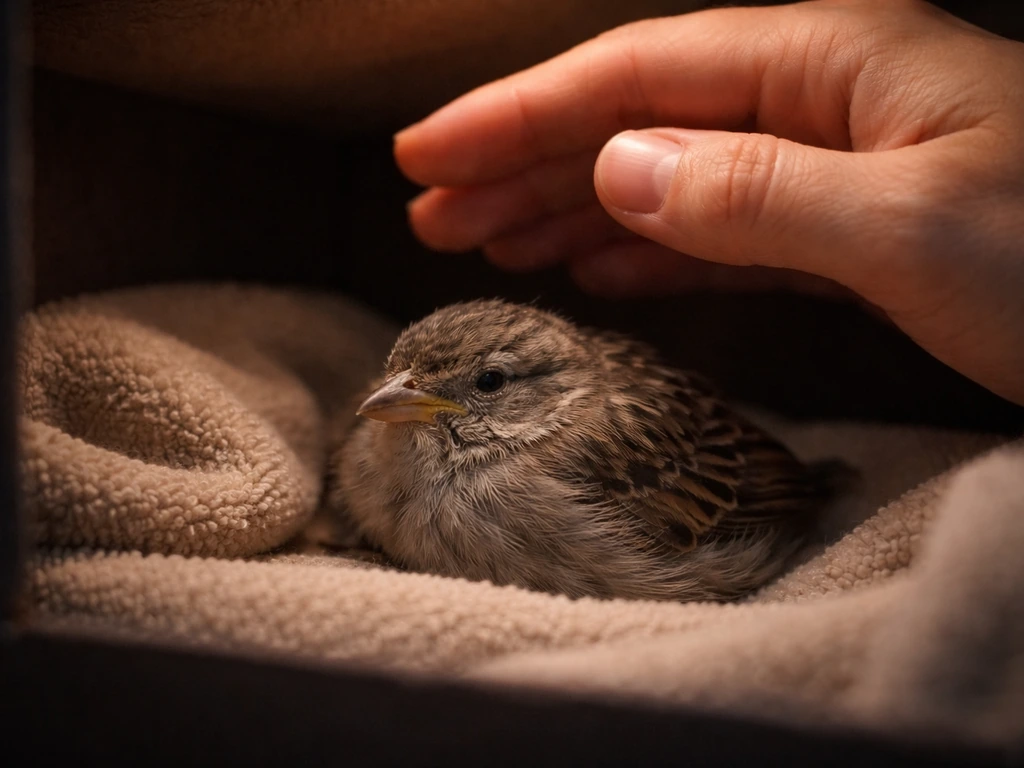
- Keep it warm — but not hot. Injured birds are often cold, and warmth is genuinely life-saving. A good target is around 80 to 90 degrees Fahrenheit. You can place a warm (not hot) water bottle wrapped in a towel under one side of the box, so the bird can move away from the heat if needed. It should never feel too warm to hold comfortably against your own skin.
- Put the box somewhere dark, quiet, and away from pets and drafts. A bathroom with the door closed, a quiet bedroom, or a garage shelf all work. Away from kids, dogs, cats, and anything else that creates noise or vibration.
- Do not give food or water. This is the single most universally repeated rule from every wildlife authority, and it's the one most people instinctively want to break. Do not do it. Squirting water into a bird's mouth can cause aspiration (water in the lungs), which can kill it. Force-feeding does more damage than good. The exception people sometimes hear about — sugar water for hummingbirds — does not apply to general injured bird care.
- If there is active, heavy bleeding, apply gentle manual pressure directly over the wound using a clean cloth. This is the one scenario where you act before containing the bird.
Also wash your hands thoroughly after any contact with a wild bird, whether or not you wore gloves. This protects both you and the bird.
What different injuries usually mean
Broken or drooping wing
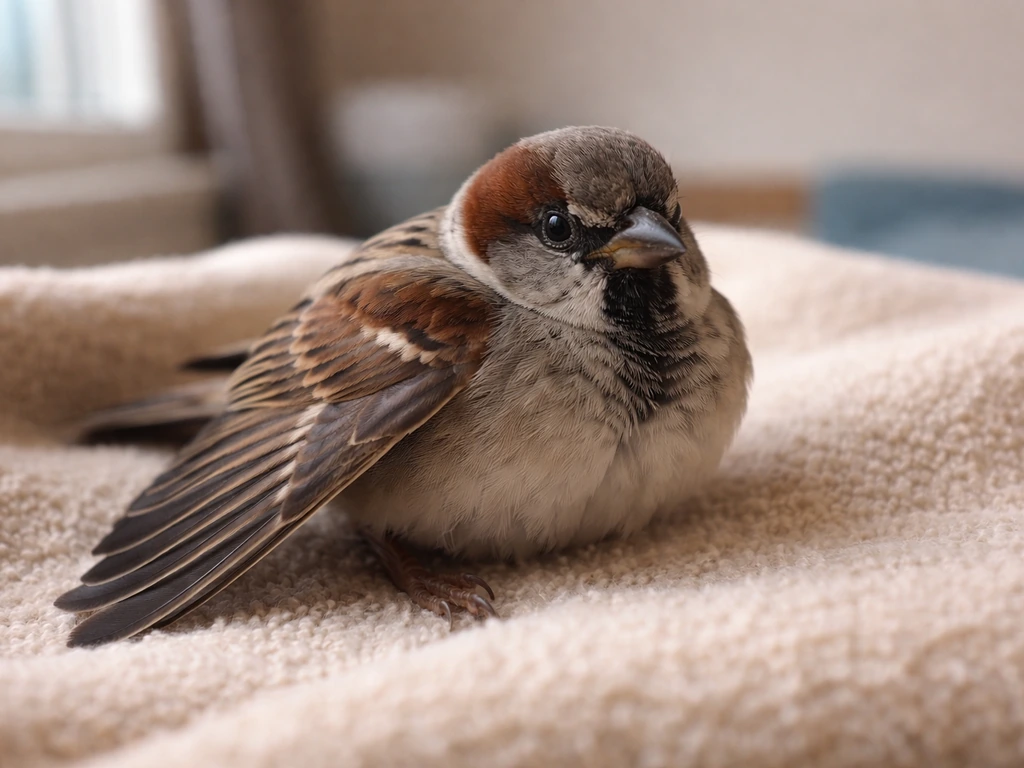
A wing held lower than the other, dragging on the ground, or held at an odd angle is a classic sign of a wing injury, fracture, dislocation, or severe soft-tissue damage. The bird usually can't fly. This is one of the most common injuries you'll encounter, and it requires professional care. Don't try to splint it yourself. Containment in a small box (which naturally limits wing movement) is the right call while you arrange transport. A bird with a broken wing held in a large cage or open space will often injure itself worse trying to use it.
Broken or injured leg
Watch for a leg sticking out at an odd angle, a bird that can't stand or grip with one foot, or visible swelling. Leg injuries vary in severity, a small passerine with a fractured leg has a reasonable chance with proper rehabilitation, but the bird still needs a vet. One leg working and one not is a red flag that needs professional assessment, not watchful waiting.
Beak injuries
A cracked, broken, or visibly misaligned beak is a serious problem because it affects the bird's ability to eat long-term, not just right now. Even a chip that seems minor can be significant. Beak injuries are almost always beyond home care and need a wildlife rehabilitator or avian vet to assess properly.
Window strikes and collisions
Window collision birds are a special category because the external damage can look minimal while the internal damage is serious. A bird that flew into glass may have a concussion, internal injuries, or bruising that isn't visible. Some birds recover with a period of dark, quiet rest, the Wildlife Trusts suggest a few hours of quiet containment before reassessing, but if the bird isn't clearly alert and perching normally after that time, or if you see limb asymmetry (one wing or leg positioned differently than the other), treat it as a serious injury requiring professional help. Never assume 'it looks fine' after a window strike.
Cat or dog attack injuries
This is one of the most urgent categories, and it's easy to underestimate. Cat bites in particular introduce bacteria deep into tissue, and a bird can look almost uninjured on the surface while having severe internal damage underneath. Even a single puncture wound from a cat talon or tooth is a veterinary emergency. The bird needs antibiotics within hours, not days. If a cat or dog got to the bird, skip the 'wait and see' approach entirely.
Signs that mean call for help right now
Some situations don't need any waiting or judgment calls. If you suspect neurologic signs like ataxia, the bird may need urgent evaluation, supportive care, and specialized rehab to judge whether it can recover. If you're seeing any of the following, contact a wildlife rehabilitator or avian vet immediately, don't spend time trying to stabilize further at home.
- Open-mouth breathing or tail bobbing with each breath (these are signs of respiratory distress)
- Bleeding that won't stop with gentle pressure
- The bird is unresponsive or extremely lethargic
- Obvious fracture with bone visible or protruding
- Any cat or dog attack, even if the bird looks mostly okay
- The bird is a raptor (hawk, owl, falcon) — these birds can seriously injure you with talons or beak and need specialized handling
- The bird has been unable to move or fly for more than a couple of hours
- A young nestling (no feathers or sparse down) found outside the nest with no nest reachable
Timing matters here. The earlier you call, the better the bird's chances. A wildlife rehabilitator can often give you guidance over the phone even before you transport the bird, which can make a real difference in how you handle the next hour.
To find help fast: search your state's fish and wildlife or conservation agency website, most keep an updated list of licensed wildlife rehabilitators by county. You can also search 'wildlife rehabilitator near me' or use the National Wildlife Rehabilitators Association directory. If the bird is in immediate danger and no wildlife resource is reachable, calling 911 is appropriate for public safety situations involving dangerous wildlife. When you call any of these resources, tell them the species if you know it, a description of the injury, how long you've had the bird, and what you've done so far.
What to do while you wait for help
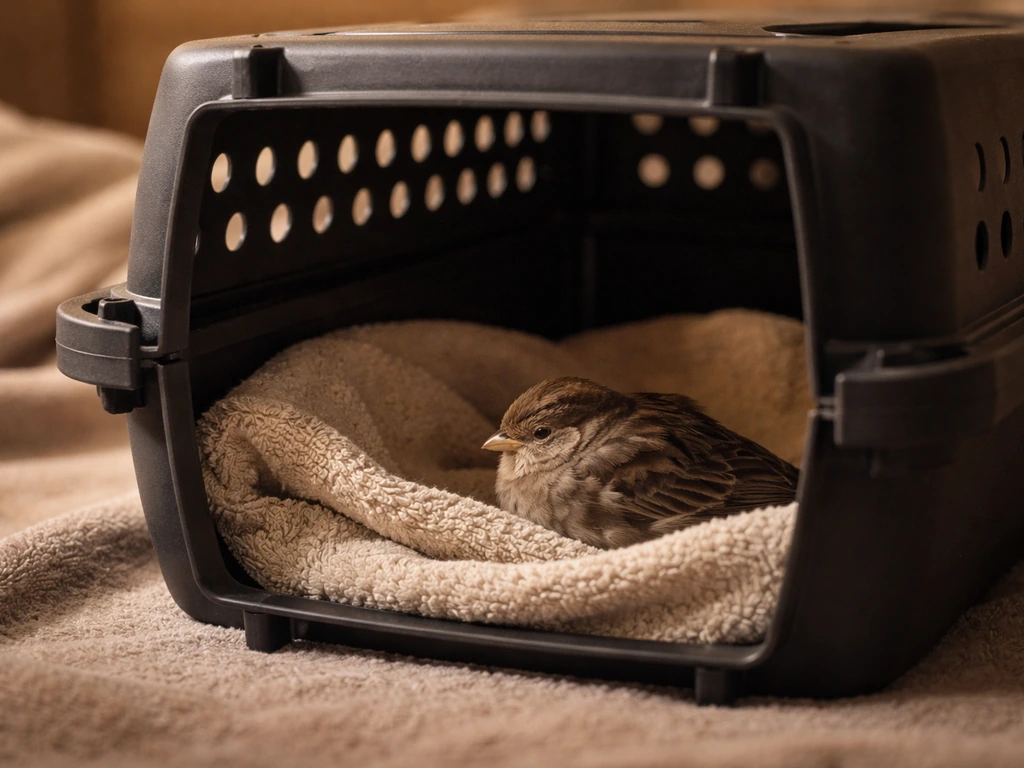
Once the bird is in its box and you've made contact with a rehabilitator or vet, your main job is to do as little as possible. That sounds strange, but it's the right approach. Every unnecessary interaction adds stress. Don't check on the bird every ten minutes, don't let family members look at it, and don't move the box around.
Keep the environment consistent: warm, dark, and quiet. If the wait is going to be several hours, make sure the box is secure and can't be knocked over or accessed by a pet. Resist the urge to feed or water the bird no matter how long the wait gets. Keep the baby bird warm, quiet, and dark, and blank" rel="noopener noreferrer">do not give food or water; contact a permitted wildlife rehabilitator right away. Wildlife rehabilitators consistently give the same advice: a healthy bird can go hours without food and water; aspiration from well-meaning feeding can kill it in minutes. Aspiration, especially from well-meaning feeding, can sometimes cause serious lung issues, so prompt professional advice is important if you suspect it.
Don't keep the bird in your main living area with TV noise, cooking smells, or foot traffic. A quiet spare room or a covered box in a garage is better than a kitchen counter. If the bird is a waterfowl species and is soiled, resist the urge to bathe it, that's a job for the rehabilitator.
Transport and preventing further harm
Safe transport basics
When it's time to move the bird, keep it in the same dark box if possible. Place the box on the car seat (not the trunk, which can get too hot) and drive calmly, no loud music, no sudden stops if you can help it. The bird should not be able to see out of the container during transport, and it should not be in a container large enough for it to flap around.
Protecting the bird from pets while it's with you
If you have cats or dogs at home, this is a serious concern. Keep the box behind a closed door that pets cannot open. Cats in particular are remarkably persistent and can stress a bird severely just by sitting outside a box and scratching at it. Don't assume a door left open 'just a crack' is safe.
After a cat attack: act faster than you think you need to
It bears repeating because it's so often underestimated: if a cat got to this bird, it needs veterinary care within hours. The bacteria in a cat's mouth (Pasteurella, among others) cause rapid, serious infection in birds. Even if the bird seems to be recovering, it is not fine and the clock is running. This is not a situation where you wait to see how it does overnight.
Preventing window strikes from happening again
If this bird hit your window, it's worth addressing the window itself. Window strikes are one of the most common causes of bird injury, and they're highly preventable. Window decals, exterior tape patterns, or screens placed on the outside of the glass all break up the reflection that birds mistake for open sky. This isn't just good for this bird, it prevents the next one.
A quick comparison: injury types and what to expect

| Injury type | Survival potential | Can you wait? | Best next step |
|---|---|---|---|
| Window strike (alert, no visible injury) | Good with rest | Rest 1-2 hours, reassess | Dark/quiet box, call rehabber if not improved |
| Window strike (limb asymmetry, unresponsive) | Moderate, needs care fast | No | Contact wildlife rehabber immediately |
| Broken wing (obvious droop) | Possible with rehab | No | Contain, contact rehabber same day |
| Broken leg | Possible with rehab | No | Contain, contact rehabber same day |
| Beak injury | Depends on severity | No | Avian vet or rehabber needed |
| Cat/dog attack (any wound) | Guarded without antibiotics | No — hours matter | Emergency avian vet or rehabber immediately |
| Active bleeding, open-mouth breathing | Poor without immediate care | No | Call for help while applying gentle pressure |
Your role is stabilizer, not treater
The most important mindset shift here is this: your job is not to fix the bird. Your job is to keep it alive and calm long enough to hand it to someone who can. That means warmth, darkness, quiet, no food or water, minimal handling, and a phone call placed as soon as possible. If you do those five things, you've done everything in your power, and that genuinely makes a difference in whether a bird survives. A bird can also show sudden neurologic signs consistent with stroke, so if you notice weakness, trouble standing, or seizures, contact a wildlife rehabilitator right away bird stroke.
Injuries aren't the only reason birds end up in crisis. If you're dealing with a bird that seems unwell without obvious trauma, it may be worth reading about whether a sick bird can recover on its own, or what conditions like ataxia or aspiration mean for recovery. But if there's a clear physical injury in front of you right now, the steps above are your starting point.
FAQ
Can an injured bird survive overnight if I can't get help immediately?
Sometimes, but survival depends on the injury and whether shock, cold, or bleeding is already present. If you cannot reach a wildlife rehabilitator right away, prioritize warmth, darkness, and minimizing stress, and make the first call as soon as lines open. If the bird is unresponsive, breathing with the mouth open, very cold, or bleeding, treat it as urgent and keep trying for immediate veterinary or rehabilitator guidance.
Is it okay to give an injured bird water or food to keep it strong?
In general, do not feed or offer water while you wait. Aspiration can happen even with careful feeding and can lead to rapid lung problems. If the bird is a hatchling, never assume it is safe to “assist” feeding, instead wait for professional instructions so the bird does not inhale food or milk replacer.
How warm should the bird be, and what’s unsafe for heating?
Aim for warmth, using a non-contact or indirect heat source that keeps the box comfortably warm but not hot. Avoid heating pads directly on the bird or placing the container in direct sun, which can cause overheating and worsen shock. If the bird feels cold to the touch, add gentle warmth and contact a rehabilitator for confirmation.
Can I keep the bird in a regular pet carrier or a bigger box?
A small, dark box is usually safer because it limits movement and reduces additional injury, especially for wing trauma. A large open cage can increase struggling and worsen fractures. Make sure there are no sharp edges, the box is secure, and the bird can rest without having space to flap aggressively.
What should I do if the bird is bleeding, but I can’t reach help right away?
Stop additional handling and focus on containment, warmth, and reducing stress. Do not try to apply home bandages or hold the bird down for extended periods, which can increase shock. Call for guidance immediately, and if bleeding is heavy or the bird is weak or collapsed, treat it as an emergency rather than delaying while you look for materials.
If a window-strike bird perks up after a while, does that mean it’s safe?
Not necessarily. Internal bruising or concussion can improve in outward behavior while the bird is still at risk. If it is not perching normally, shows any limb asymmetry, seems less responsive than expected, or has trouble coordinating, contact a professional. Do not release it outdoors just because it appears alert briefly.
Do I need to identify the bird species before calling a rehabilitator?
It helps, but accuracy matters less than injury description. If you cannot identify the species, describe size (small songbird vs pigeon size), color patterns if visible, and the injury type (window strike, cat bite, leg at odd angle). Share how long you’ve had the bird and what you already did (warmth, containment, any handling) so they can triage.
What if I suspect a cat or dog was involved, but I don’t see puncture wounds?
Assume it still needs urgent evaluation. Cat bites can be small externally but severe internally, and even a single puncture can require rapid antibiotics. If there is any bite mark, torn skin, or localized swelling, prioritize professional care within hours rather than watching overnight.
Is it safe to try splinting a wing or setting a dislocated joint?
No. Improper splinting can worsen a fracture, damage soft tissue, and increase pain and shock. For wing injuries with abnormal angles or dragging, keep the bird contained and call a rehabilitator or avian vet for the correct immobilization method.
Can a bird survive if it has neurologic signs like trouble standing or seizures?
Recovery is possible in some cases, but neurologic symptoms are a strong reason to seek urgent help rather than waiting. Ataxia, seizures, weakness, or repeated abnormal movements can indicate concussion, stroke, poisoning, or other serious conditions. Contact a wildlife rehabilitator right away and follow their transport and support instructions.
After I handle the bird, can I go back to normal activities immediately?
Wash your hands thoroughly afterward, even if you wore gloves, and avoid touching your face or food before washing. If you have pets at home, keep them away from the bird and any used towels or containers, since the primary goal is to prevent further stress or contamination.
Should I release the bird if it seems to recover in my box?
No. A short period of improvement can be misleading, especially after window strikes, concussions, or injuries that can deteriorate later. Keep the bird contained, and only follow through with release if a licensed wildlife rehabilitator or vet tells you it is stable and appropriate for release.
Next Article
Can a Bird Recover From Aspiration? What to Do Now
Know if a bird can recover from aspiration, warning signs, immediate first aid, and urgent care and recovery timelines.