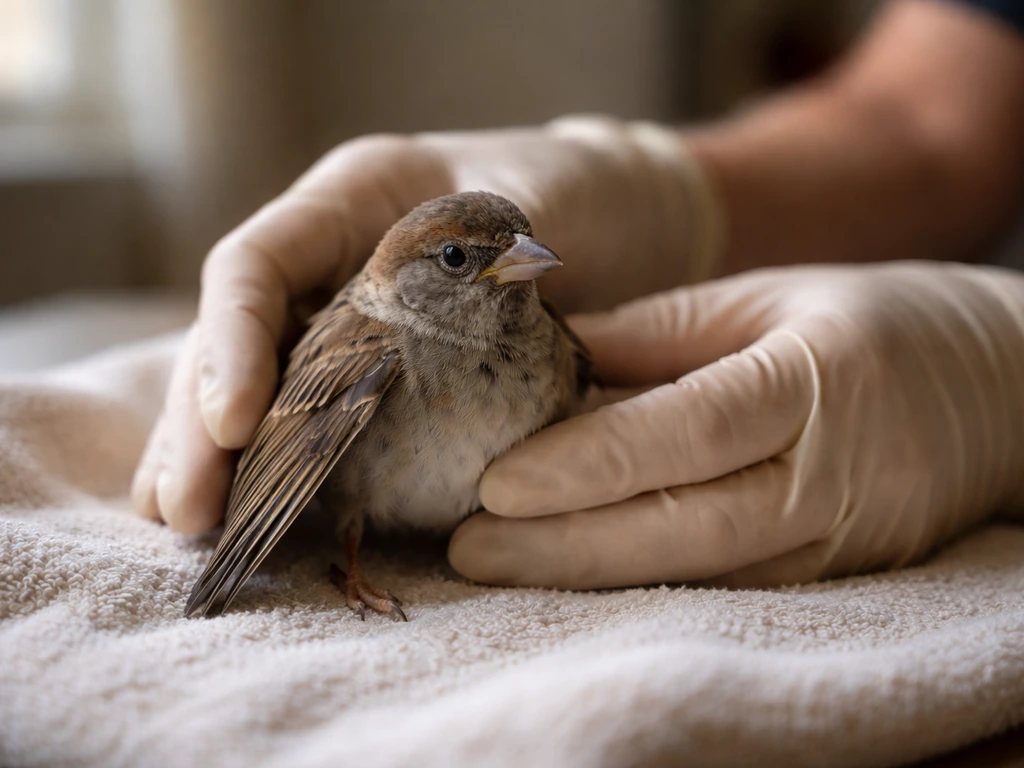
Here's the honest answer: sometimes yes, but usually not without at least some basic help from you. A bird that's mildly stunned from a window hit and sitting quietly for 20 minutes is very different from a bird that can't stand, is bleeding, or is gasping for breath. The difference between those two situations determines everything. This guide will walk you through how to read the signs quickly, what you can safely do at home, and when you need to stop waiting and get professional help today.
Can a Sick Bird Recover on Its Own? When to Help or Call
Marcus Chen
20 Apr 2026
When a sick bird can recover on its own (and when it can't)
A small number of situations genuinely allow for self-recovery with minimal intervention. A bird that briefly collided with a window and is sitting upright, alert, and breathing normally may simply be stunned. Given 20 to 30 minutes in a safe, quiet space away from predators, some of these birds do fly off on their own. Similarly, a fledgling bird hopping on the ground with a full set of feathers is often just doing what fledglings do: learning to fly while parents watch nearby. It doesn't need rescuing at all.
But those are genuinely the narrow exceptions. The vast majority of sick or visibly injured birds cannot recover on their own, and waiting too long costs them their life. In other words, an injured bird often cannot survive without timely help can an injured bird survive. A bird with a broken wing, a broken leg, an open wound, signs of a cat or dog attack, trouble breathing, or neurological symptoms like circling or tilting is not going to shake it off. Infections set in fast in birds. Dehydration can become critical within hours. Internal injuries from collisions often aren't visible at all, which is exactly why the American Bird Conservancy warns that even a bird that looks like it can fly may have an injury that will kill it without expert care.
There's also an important distinction between sick and injured. An injured bird has a physical trauma, a broken bone, a wound, a puncture from a cat's tooth. A sick bird may have an infection, a toxin, a neurological issue, or a systemic illness. Both categories can look similar from the outside, especially in the early stages. The key practical point is this: if you can't identify a clear, minor cause for the bird's distress and the bird isn't improving within 30 minutes, treat it as a situation that needs professional eyes.
Quick triage: signs you should watch vs signs you should act now
Your first job is a fast visual check. You don't need to touch the bird to do this. Observe from a couple of feet away for one to two minutes before you do anything else.
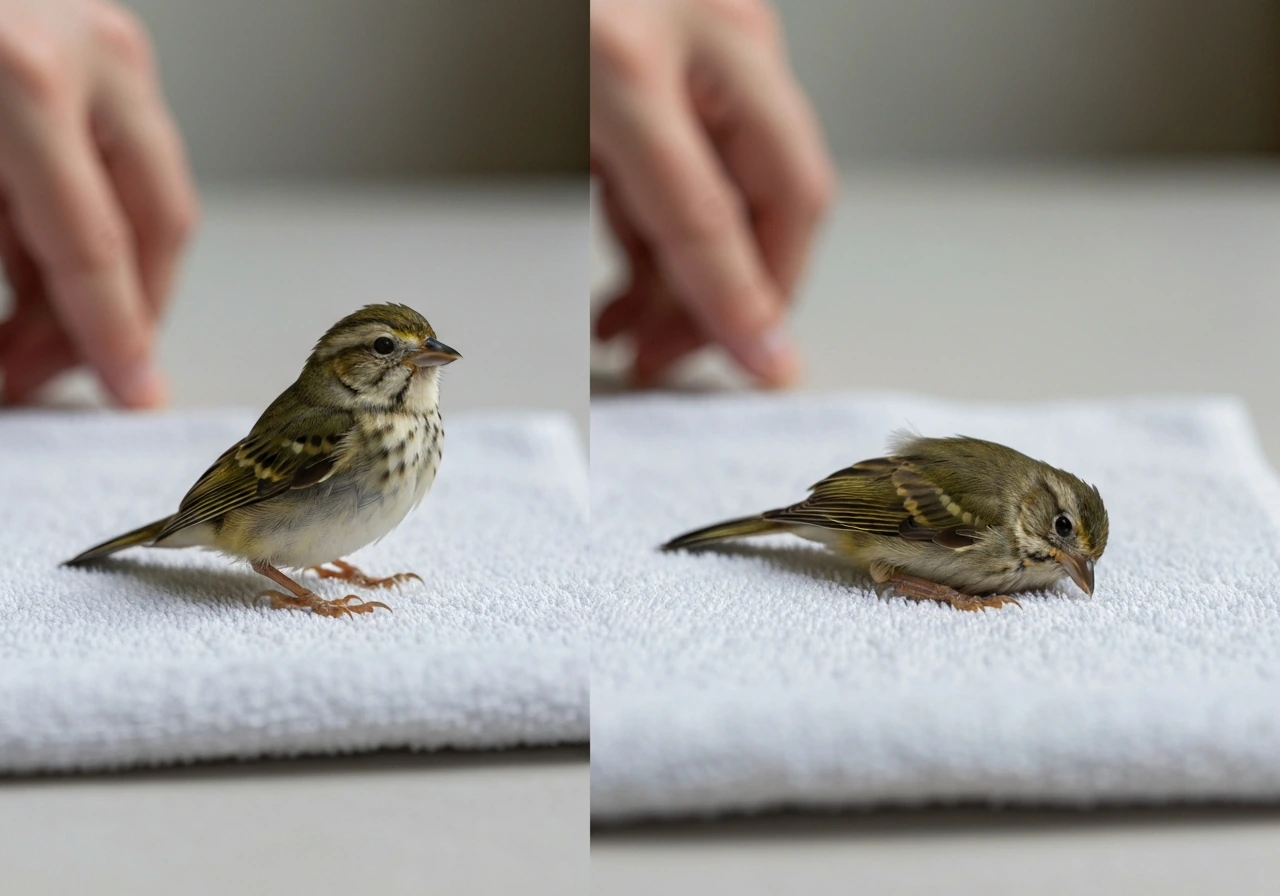
Signs that suggest the bird may be okay with brief monitoring:
- Sitting upright with feathers held normally (not puffed out)
- Eyes open and tracking movement
- No visible blood, wounds, or hanging limbs
- Breathing looks normal, not labored or open-mouthed
- Happened in the last 15 to 20 minutes after a window hit
- Bird is a fledgling with full feathers, hopping around, with no visible injury
Signs that mean you need to act now, not wait:
- Visible bleeding or an open wound
- A wing or leg hanging at an unnatural angle
- Labored breathing, open-beak breathing, or clicking/wheezing sounds
- Lying on its side or unable to stand
- Head tilting, circling, or seizure-like movements (neurological signs)
- Eyes closed, bird appears limp or unresponsive
- Feathers puffed out and the bird has been sitting in the same spot for over an hour
- Evidence of a cat or dog attack, even if wounds aren't obvious
- A baby bird with no feathers (nestling) found outside a nest
- Shivering, which signals shock or dangerous temperature drop
Neurological signs like circling or head tilting are worth a special mention because they sometimes follow window collisions or point to something like avian disease or stroke. If you’re wondering what causes a bird to have a stroke, it helps to understand the underlying triggers and how they show up in the neurological signs. These cases rarely resolve without medical support. If you're curious about what's behind those kinds of symptoms specifically, conditions like ataxia and stroke in birds are their own topic entirely and worth understanding if you encounter them.
How to help safely at home (containment, warmth, minimal handling)
If the bird needs intervention, the most important thing you can do in the first hour is contain it safely, keep it warm, and leave it alone. That's it. You don't need to feed it, give it water, or do much else. In fact, doing too much is one of the most common mistakes people make.
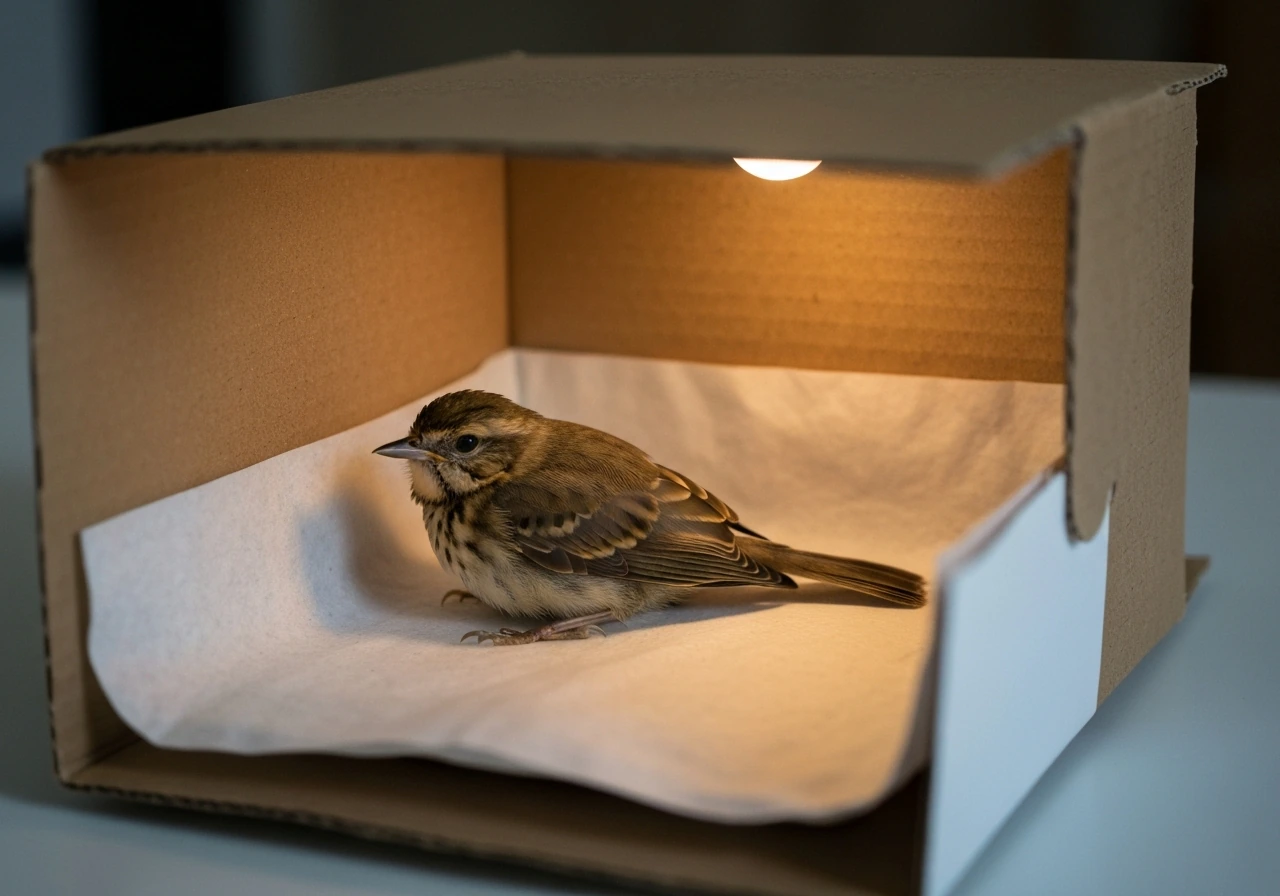
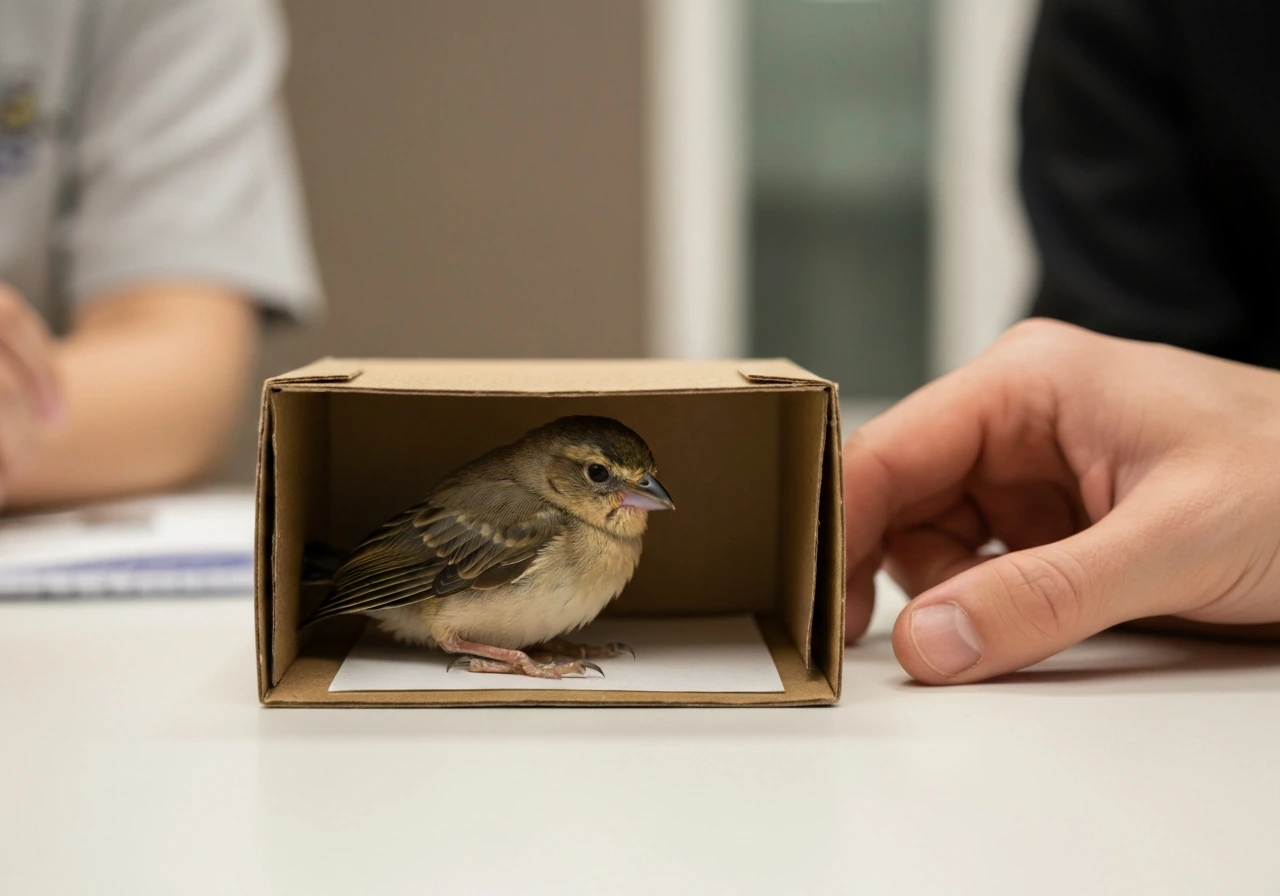
- Find a cardboard box with a lid, or any box you can close securely. Poke small air holes in the sides near the top. Line the bottom with a clean, non-fluffy cloth like a folded paper towel or thin cotton shirt. Avoid anything with loose threads that can tangle feet.
- Using a light towel or cloth, gently scoop the bird and place it in the box. Minimize contact. Don't squeeze or restrain it. Birds go into shock easily when handled.
- Close the box and place it somewhere quiet, away from pets, children, and noise. A bathroom or laundry room works well.
- Keep the temperature warm but not hot. Around 85 to 90 degrees Fahrenheit (29 to 32 Celsius) is ideal for a bird in shock. You can place a heating pad set to its lowest setting under half the box so the bird can move away from heat if needed. Never put a bird directly on a heat source.
- Leave the bird alone for 20 to 30 minutes. Resist the urge to check constantly. Stress kills birds faster than many injuries.
- Do not offer food or water, especially not by force. Aspiration, where liquid or food enters the airway, is a real danger and can be fatal quickly. Birds that are stressed, injured, or in shock cannot safely process food or water anyway.
After 20 to 30 minutes, check quietly. If the bird is sitting upright, looking more alert, and was only mildly stunned (a window hit with no visible injury), you can take the box outside, open it, and see if it flies off. If it doesn't fly, or if any of the red flag symptoms listed above are present, it's time to contact a wildlife rehabilitator or avian vet.
Common scenarios: what to do in each situation
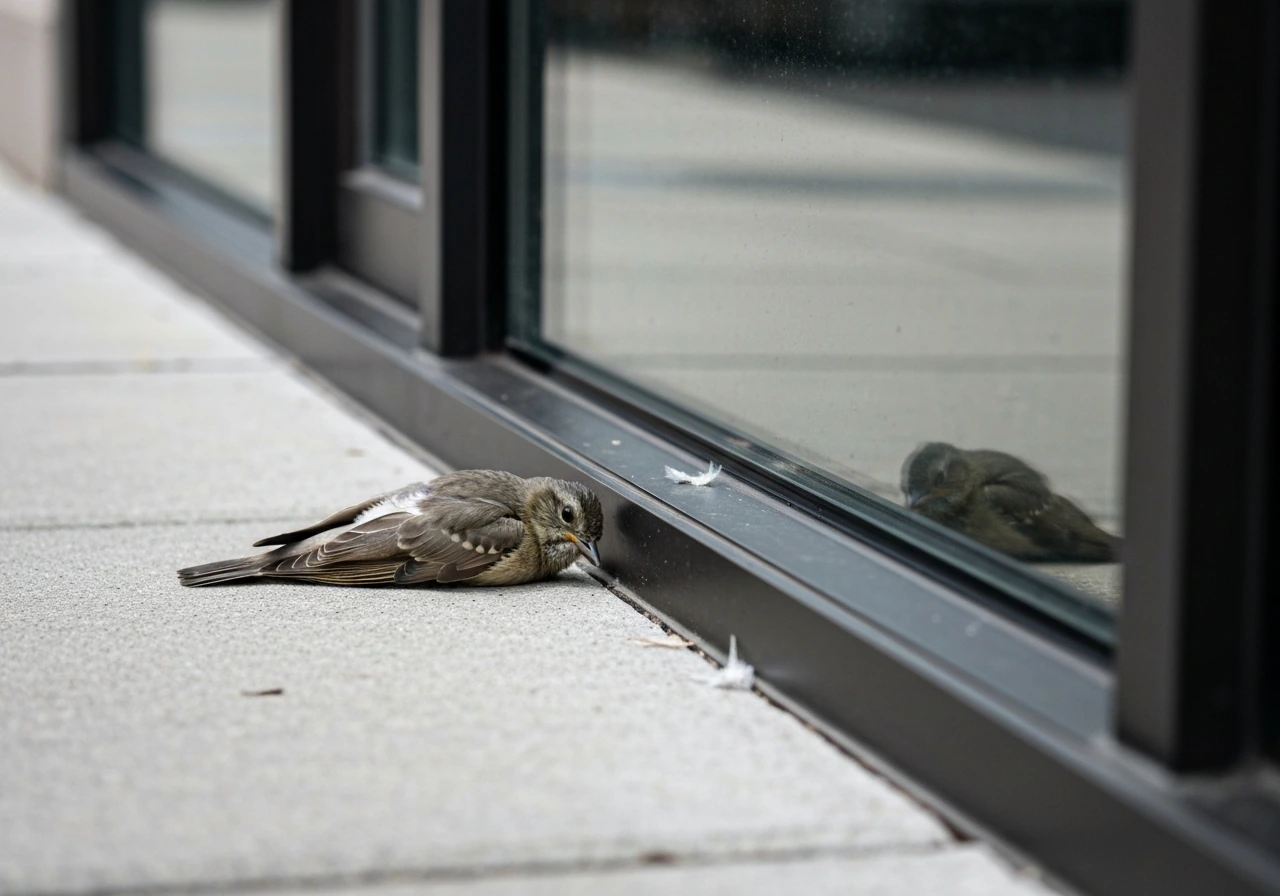
Window collisions
Window strikes are one of the most common reasons people find dazed birds on the ground. The bird may look fine, but internal injuries including brain trauma are common and not visible. Audubon's guidance is clear: the best outcome comes from getting the bird to a wildlife rehabilitator who can assess for internal injuries and provide medication if needed. A short observation period (20 to 30 minutes in a quiet, warm box) is reasonable for a mildly stunned bird, but if it hasn't recovered and flown off by then, escalate to professional help rather than waiting further.
Cat or dog attacks
This one is non-negotiable: any bird attacked by a cat or dog needs professional care today, even if it looks completely fine. Cat saliva contains bacteria that cause fatal septicemia in birds within 24 to 48 hours. The wounds are often invisible because the punctures are tiny. Many birds brought in after cat attacks look healthy and die overnight without antibiotics. If a cat or dog was involved, treat it as an emergency regardless of what you can or can't see.
Broken wings, legs, or beaks
Broken bones in birds do not heal on their own in any functional way, and a bird with a broken wing or leg cannot survive in the wild. Do not try to splint or wrap the injury yourself. Improper splinting causes more damage. Your job is safe containment and warmth while you arrange transport to a wildlife rehabilitator or avian vet. Beak injuries are similar: partial beak fractures can sometimes be repaired by a professional, but the bird cannot feed itself in the meantime. The U.S. Fish & Wildlife Service specifically lists visible broken limbs as a clear indicator that an animal needs help, not hands-off observation.
Nest emergencies: nestlings and fledglings
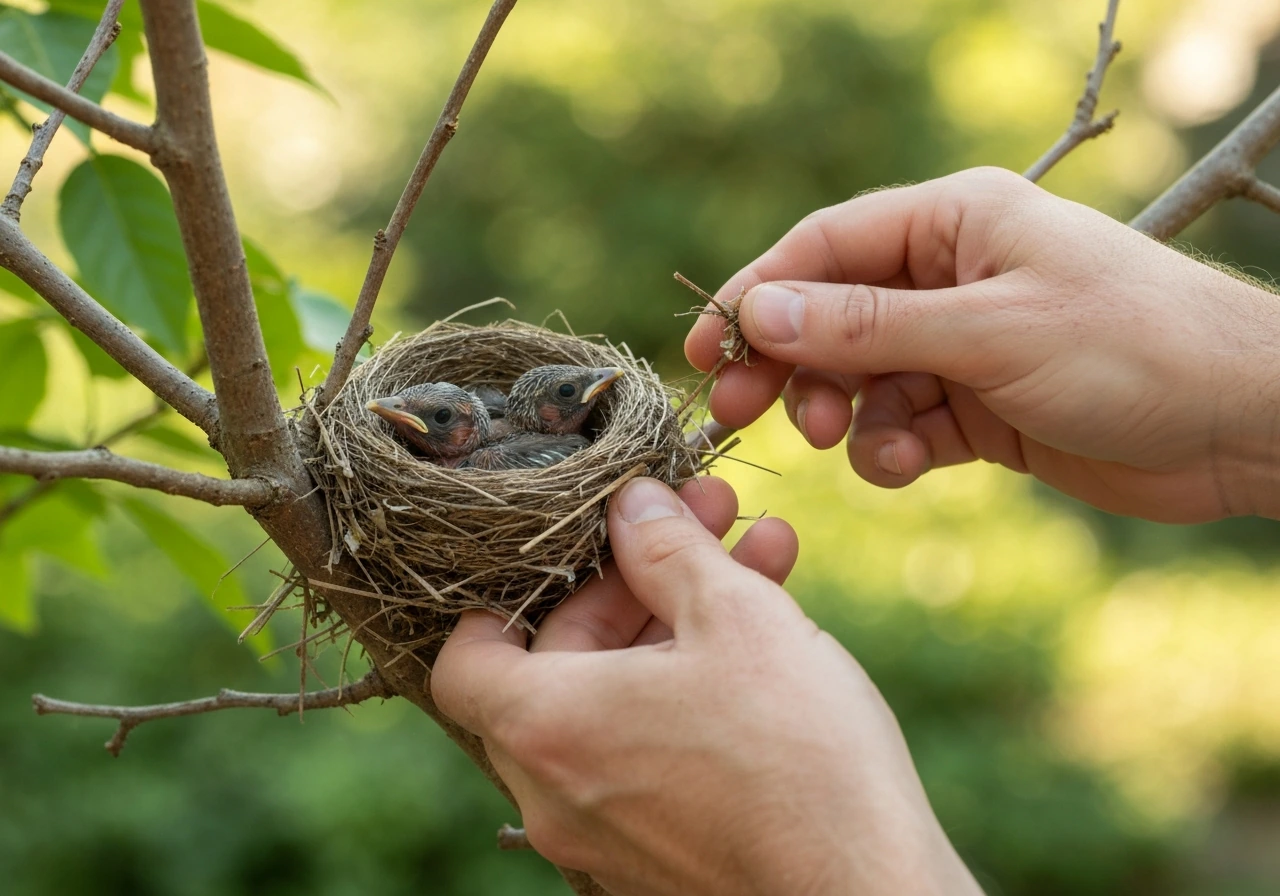
A nestling is a baby bird with no feathers or only partial pin feathers. If you find one outside the nest, look for the nest first and put it back if you can reach it safely. The myth that parent birds reject chicks touched by humans is false. If the nest is destroyed or unreachable, the nestling needs a wildlife rehabilitator. It cannot survive without constant feeding and heat.
A fledgling is a juvenile bird with most of its feathers but limited flight. Finding one on the ground is almost always normal. Parents are usually nearby, still feeding and watching it. The best thing you can do is leave it alone and keep pets indoors. Only step in if the bird is visibly injured, shivering, bleeding, or clearly in danger from an immediate predator. The U.S. Fish & Wildlife Service is explicit that most baby wildlife found outdoors should be left alone unless there are visible signs of injury or a deceased parent nearby.
Red flags that require immediate help
These situations go straight to a professional, no waiting period needed:
- Any cat or dog attack, regardless of visible injury
- Active bleeding that doesn't stop within a few minutes
- Open-beak breathing or audible respiratory distress
- Seizures, uncontrolled tremors, or circling movements
- Complete inability to stand or grip
- A nestling found outside the nest with no accessible nest to return it to
- A bird that has been in the same spot, hunched and puffed up, for more than one hour
- Any bird found near a known toxin source such as pesticides, rodenticide bait, or oil spills
- Evidence of severe dehydration: sunken eyes, dry mucous membranes, extreme lethargy
It's also worth noting that aspiration, where a bird inhales food or liquid, is a medical emergency with a very poor outcome if not treated quickly. This is another reason never to attempt force-feeding or force-watering at home. If you suspect a bird has aspirated something, that's an immediate vet call.
How long to monitor and how to decide your next step
Here's a practical decision timeline to use as your guide:
| Timeframe | What to look for | What to do |
|---|---|---|
| 0 to 5 minutes | Observe from a distance. Identify any immediate red flags. | If red flags are present, go straight to containment and call for help. If not, keep watching. |
| 5 to 30 minutes | Is the bird sitting upright? Eyes open? Breathing normally? | Safe containment in a warm, dark, quiet box. No handling beyond moving to the box. |
| 30 minutes | Does the bird appear more alert? Can it stand on its own? | If yes and no injury is visible, try releasing outside. If no improvement, contact a rehabilitator. |
| 1 hour or more | Bird is still huddled, puffed, or not responding normally. | This is too long. Contact a wildlife rehabilitator or avian vet immediately. |
| Overnight | Bird has not improved at all. | Professional intervention is urgent. Do not wait another day. |
The U.S. Fish & Wildlife Service cautions that well-intentioned attempts to help wildlife that is beyond the point of rehabilitation can actually increase stress and fear, making outcomes worse. That's not meant to scare you off helping. It means the most helpful thing you can do is act quickly and clearly rather than hovering, experimenting with home remedies, or delaying the call to a professional.
Where to get professional help and what to say when you call
In the U.S., your best starting point is the Wildlife Rehabilitators directory at the National Wildlife Rehabilitators Association (NWRA) website, or the search tool at the Wildlife Center of Virginia. You can also call your state's fish and wildlife agency, which is required to maintain referral lists for licensed rehabilitators. In many areas, dialing your local animal control or humane society and asking specifically for a wildlife rehabilitator referral also works. For pet birds or domesticated species, search for a licensed avian veterinarian, since wildlife rehabilitators typically handle wild species only.
When you call, be ready with this information: the species if you can identify it (or just describe it), where you found it and how long ago, exactly what you observed (was it hit by a window, attacked by a cat, found on the ground), what symptoms you're seeing right now, and whether you have it contained already. That's all they need. Don't worry about knowing the perfect terminology. Saying "I found a small brown bird that got hit by my window about 40 minutes ago, it's in a box and still not flying" gives the professional everything they need to advise you.
If you're outside the U.S., search for your country's wildlife rehabilitation network or contact your nearest wildlife or nature reserve directly. Most countries have some form of licensed rehabilitation service, even if it's volunteer-run. An avian vet is always an option for any bird, wild or domesticated, if rehabilitation services aren't reachable in time.
The bottom line is this: if the bird is visibly injured, in distress for more than 30 minutes, or showing any of the red flags above, don't wait for it to get better on its own. Get it warm, get it contained, and get on the phone. That's genuinely the most useful thing you can do for it today.
FAQ
How can I tell if a bird is just stunned versus seriously injured after a window strike?
Use a short baseline check first, watch from a couple of feet away, and then reassess at 20 to 30 minutes. If it can sit upright, keep balance, and show normal breathing with no bleeding or abnormal weakness, it may be able to fly off after quiet recovery. If it is still unable to stand normally, has cloudy or uneven posture, persistent flapping, or any signs of neurological issues, skip waiting and contact a rehabilitator, because internal injury can exist without visible wounds.
Can a sick bird recover on its own if it looks alert but won’t eat or drink?
Not reliably. Birds can look reasonably responsive while still being dehydrated, infected, or affected by toxin exposure. If a wild bird is not eating or drinking and is not clearly improving within 30 minutes, treat it as needing professional assessment rather than assuming it will recover at home.
Is it safe to offer water or food while I’m waiting 30 minutes to see if it recovers?
It’s usually not needed, and it can be risky. For the first hour, the safest approach is warm containment and minimal handling, because force-feeding or force-watering increases choking and aspiration risk. If the bird is actually alert enough to eat normally on its own later, do not try to “help” with syringe or soaked food.
What temperature or setup should I use to keep a bird warm without stressing it?
Use a small, secure box with airflow, lined with soft material, and keep it in a quiet, dim place. Aim for warmth, not heat, so the bird is comfortable but not overheated. Avoid covering the bird tightly with plastic, and avoid hot water bottles or heating pads that can burn or cause rapid temperature swings.
If I don’t see blood, does that mean a cat or dog attack is not serious?
No. Even when wounds are tiny or invisible, bacteria in cat saliva can cause severe infection within 24 to 48 hours. Any cat or dog involvement should be treated as an emergency, with antibiotics needed and timing mattering, even if the bird seems fine at first.
Can I splint a broken wing or leg to help it heal faster?
No. Improvised splints or wraps often worsen fractures, restrict breathing, and cause additional pain. The correct first step is containment and warmth only, then transport to a wildlife rehabilitator or avian vet so they can assess alignment and provide appropriate stabilization.
What if I accidentally touched or picked up the bird with my hands? Will that ruin its chances?
For most injured or stunned wild birds, a brief, careful handling to place them into a safe container is unlikely to be the main problem. The bigger risks are delayed care, stress from repeated handling, and unsafe attempts to feed, water, or medicate. If the bird is a nestling, avoid prolonged contact and focus on returning it to the nest when reachable.
When should I stop the “observe for 30 minutes” plan and call immediately?
Call immediately if the bird is gasping or has labored breathing, shows ongoing neurological signs like circling or head tilting, is bleeding, was attacked by a cat or dog, seems unable to stand or perch, or was found in circumstances suggesting internal injury (like a collision) with no improvement by the check time. Also escalate right away if the bird’s condition is clearly worsening during those minutes.
Is a fledgling on the ground always in danger, or can I just watch from a distance?
Most fledglings found on the ground are normal and have nearby parents feeding them. The right move is to keep pets indoors, reduce disturbance, and observe from a distance. Intervention is warranted if it is shivering, bleeding, obviously injured, or in immediate danger from predators or traffic.
What should I do if I suspect aspiration, like the bird was eating or drinking and then started struggling?
Treat it as an emergency. Do not try to correct it yourself with force-feeding or force-watering, because you can worsen choking and lung damage. Contain the bird safely and contact an avian vet or wildlife rehabilitator for urgent guidance.
Can I release the bird after it seems better at home?
Only release once a professional has assessed it, or if it fully meets the “ready to leave” indicators and you are confident it has no hidden injury risk. For window strikes, even birds that look improved may have internal trauma, so it’s safer to get professional clearance before release, especially if it never flew off during the initial recovery window.
Next Article
Can a Bird Live With One Wing? Survival and First Aid
Can a bird live with one wing? Injury outcomes and step-by-step first aid, plus when to get urgent help.