If you've found a bird that looks stuck, frozen in place, tangled, or unable to fly, the most important thing you can do right now is slow down, keep your distance for a moment, and resist the urge to grab it immediately. If the bird is stuck in a glue trap, avoid pulling the bird off and contact wildlife rescue for the safest removal bird stuck in glue trap. Most 'stuck' birds need calm, controlled help, not a panicked rescue. This guide will walk you through figuring out exactly what kind of problem you're dealing with, what you can safely do in the next few minutes, and when to hand things over to a professional.
Seahawks Bird Stuck: What to Do for Injury or Entanglement
Marcus Chen
20 May 2026
Is it entangled, collision-stunned, or a nest emergency?
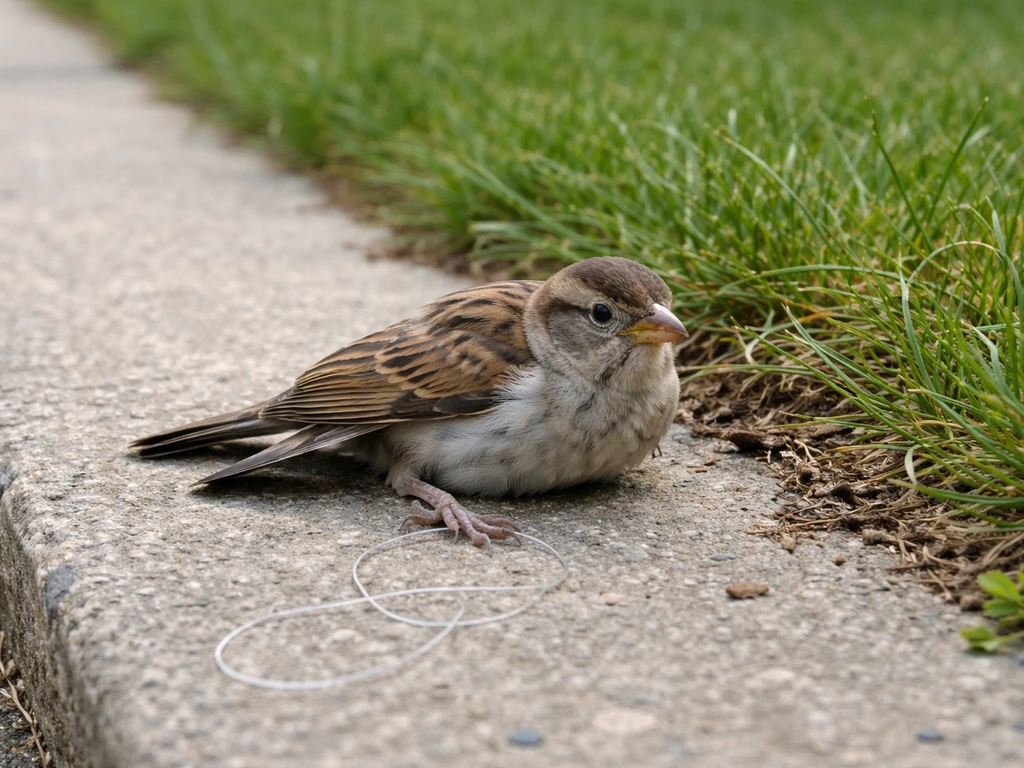
Before you touch anything, spend 30 to 60 seconds just watching the bird from a few feet away. What you observe in those first moments tells you almost everything you need to know about how to respond. The three most common reasons a bird looks 'stuck' are very different problems with very different solutions.
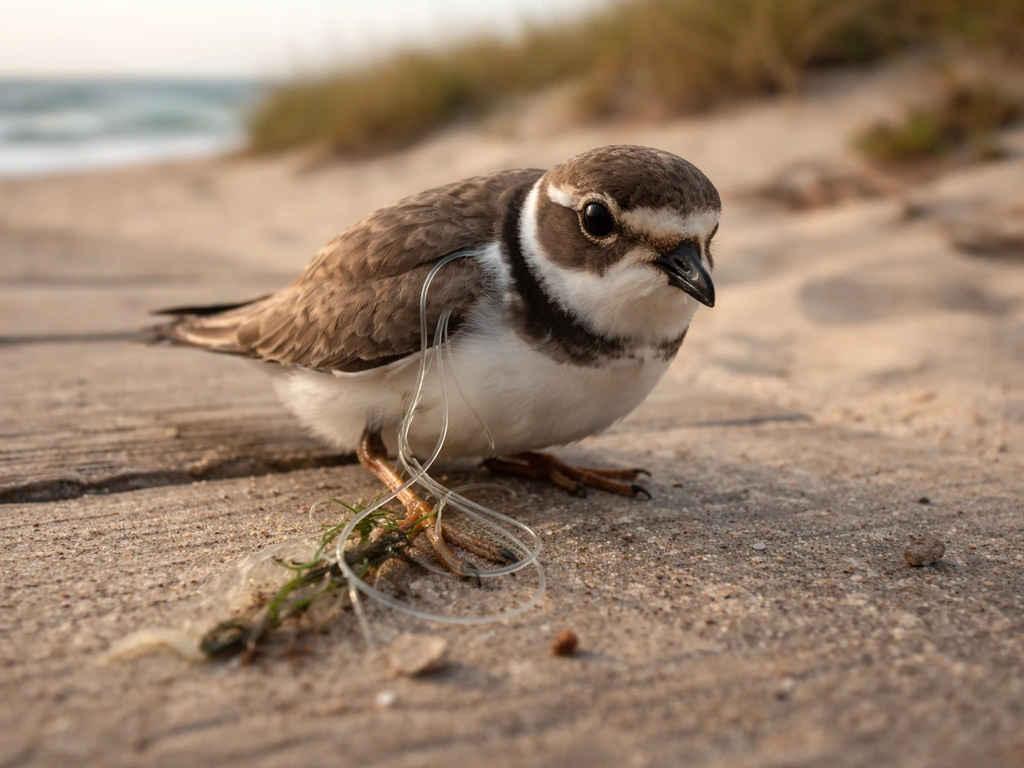
- Entanglement: The bird is visibly wrapped, tangled, or hooked in fishing line, netting, rope, plastic, or another material. It may be flapping or straining to move, or it may have given up and gone still. Look for line or material around the legs, wings, neck, or beak.
- Collision or window strike: The bird is sitting on the ground or a ledge, upright but dazed, not flying away when you approach. No visible material trapping it. It may have hit a window, a vehicle, or another hard surface. Eyes may look glazed or half-closed.
- Nest or fledgling emergency: A very young bird with sparse or fluffy feathers is on the ground and can't fly. It may be calling. This is often not an emergency at all, since fledglings spend days on the ground learning to fly, but a nestling (eyes closed, nearly featherless) genuinely needs help.
A bird that is actively bleeding, breathing with its mouth open, lying on its side, or completely unresponsive is in serious distress regardless of the cause. In that case, skip to the wildlife rescue section below as fast as you can.
Protect yourself and the bird before you do anything else
Wild birds can scratch, bite, and carry bacteria, so protecting your hands matters for both of you. If you have gardening or work gloves nearby, use them. If not, a folded towel works just as well and is often better because it also helps you hold the bird gently without squeezing. Never grab a bird barehanded if you can avoid it, and always wash your hands thoroughly with soap and water after any contact with wildlife, as recommended by the CDC.
Clear the area first. If there are pets nearby, get them inside or on a leash before you approach. If the bird is near a road or parking lot, position yourself between the bird and traffic so you're not both in the way. A stressed bird may flap unpredictably toward danger even when it can barely move. Take that 60 seconds to make the space safer before you close in.
When you do approach, move slowly and stay low. Crouching down is less threatening than looming over the bird from full height. Avoid loud talking, sudden movements, or letting kids or bystanders crowd in. The calmer the environment, the better the bird's chances of surviving the next hour.
What to do based on the specific situation
Entangled in fishing line, netting, or rope
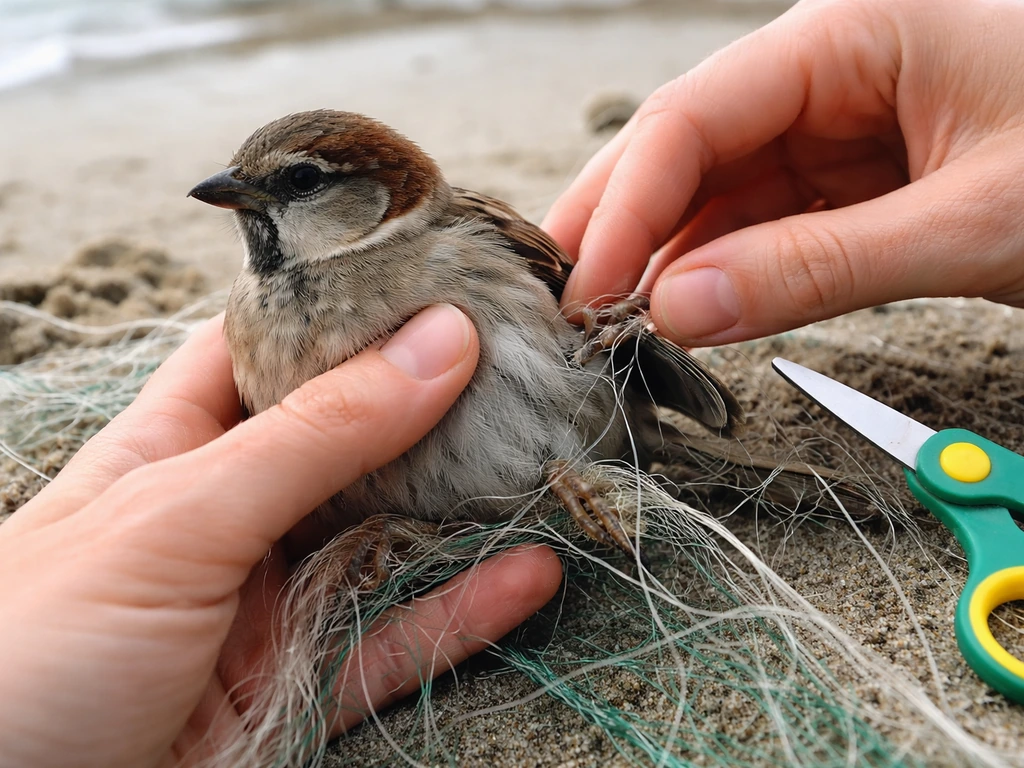
This is one of the trickier scenarios because the instinct is to cut the line and set the bird free. Here's the critical rule: do not cut fishing line and release the bird. A bird with trailing line attached can re-entangle almost immediately, and a hook still embedded in the body needs professional removal. The goal is to contain the bird with the entangling material as intact as possible so a rehabilitator can assess and remove it properly.
If a hook is involved and has a barb embedded in the skin, do not pull it out. Leave it in place. If there is loose line hanging free and the bird is calm enough to contain, you can carefully trim excess line close to the bird's body to reduce the risk of further tangling during transport, but only if doing so doesn't require forcing or straining the entangled area. Cover the bird's head and eyes gently with a cloth to calm it without blocking breathing, then fold the wings carefully into their natural closed position and place the bird in a ventilated box. Chicago Bird Collision Monitors notes that prolonged entanglement can cause permanent damage to skin, feathers, muscles, nerves, and bones, so getting to a rehabilitator quickly is genuinely urgent here.
Stunned after a window or vehicle collision
If the bird hit a window or a car and is just sitting there dazed, it may recover on its own within a few minutes, provided it isn't seriously injured. The key steps are to get it off the ground and away from predators, put it somewhere dark and quiet, and wait. Darkness is genuinely calming for birds and helps the nervous system settle after a concussion-type impact. Tufts Wildlife Clinic confirms that if a window-strike bird is going to revive, it usually does so within a few minutes in a dark container. If it hasn't improved after 30 to 60 minutes, treat it as seriously injured and contact a rehabilitator.
- Gently drape a towel over the bird and scoop it up, keeping its wings folded against its body.
- Place it in a cardboard box with a lid and a few small air holes punched in the sides.
- Line the box with a cloth or paper towel so the bird isn't sliding on cardboard.
- Set the box somewhere warm, dark, and quiet: a quiet room, a shaded spot away from direct sun, or your car with the radio off.
- Do not offer food or water.
- Check after 30 minutes. If the bird is alert, upright, and reactive, you may be able to open the box outdoors and let it fly. If it's still dazed, limp, or not standing, it needs professional care.
Bird on the ground and can't fly (but no obvious entanglement)
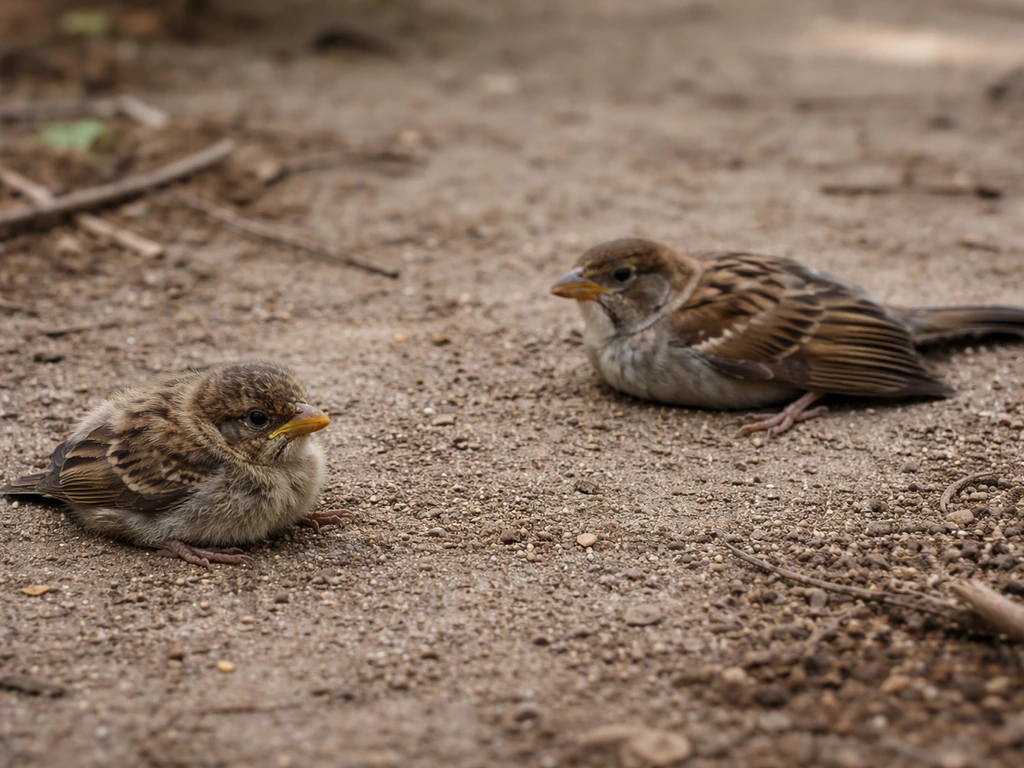
If the bird is on the ground but doesn't appear tangled and you didn't see a collision, check whether it's a fledgling before intervening. Fledglings have most of their feathers but short tail feathers, hop around, and call loudly. These birds are supposed to be on the ground and their parents are almost certainly nearby. Leave them alone unless they are in immediate danger from a cat, road, or predator. A nestling, on the other hand, is mostly bare or downy, can't stand or hop, and genuinely needs help. If you can safely see the nest above, the best option is to place the nestling back in it.
If the bird is clearly an adult that can't fly, is flopped on one side, or keeps falling over when it tries to stand, contain it using the box method above and move straight to assessing injuries and contacting a rehabilitator.
How to check for injuries without making things worse
You don't need to be a vet to do a basic injury check, and you shouldn't be doing a detailed exam anyway. The goal is to notice obvious problems that tell you how urgent the situation is, not to diagnose or treat. If you're dealing with a Nioh 2 bird in a cage stuck situation, treat it as a separate puzzle and check the mission or quest progression so you do not waste time on the wrong fix. Keep handling to the absolute minimum.
| What to look for | What it might mean | Urgency |
|---|---|---|
| One wing drooping lower than the other | Possible fracture or dislocation | Contact rehabilitator today |
| Leg dragging or twisted at an odd angle | Possible fracture or entanglement injury | Contact rehabilitator today |
| Beak partially open and unable to close, or visibly cracked | Beak injury or fracture | Urgent: contact rehabilitator now |
| Breathing with mouth open, tail bobbing with each breath | Respiratory distress or internal injury | Urgent: contact rehabilitator now |
| Bleeding that doesn't slow within a few minutes | Open wound | Urgent: contact rehabilitator now |
| Bird lying on side, eyes closed, no response to touch | Shock or severe head trauma | Urgent: contact rehabilitator now |
| Dazed but upright, wings symmetrical, no bleeding | Mild concussion from collision | Monitor 30 minutes, then decide |
Resist the urge to open the wings manually to 'check' for breaks. You can cause more damage doing that than the original injury did. If one wing looks visibly different from the other when the bird is at rest, that's enough information. Don't force anything. Keep the bird contained and let the professionals do the detailed assessment.
When to call wildlife rescue, and what to tell them
Honestly, calling a wildlife rehabilitator or avian vet sooner rather than later is almost always the right move with a 'stuck' bird. Under the Migratory Bird Treaty Act, it's actually illegal to keep or treat a wild bird without the appropriate permits, which means your job is stabilize and transport, not treat at home. The sooner a professional sees the bird, the better its odds.
Call immediately if the bird is bleeding, has an open wound, can't stand, is breathing with its mouth open, is completely unresponsive, or has a hook or embedded object in its body. For a mildly stunned collision bird, you can wait 30 to 60 minutes to see if it recovers, but if there's any doubt, just call.
To find help near you today, search 'wildlife rehabilitator near me' or visit the NYSDEC wildlife rehabilitator directory if you're in New York. The National Wildlife Rehabilitators Association and the Wildlife Rehabilitators Directory at wildliferehabilitation.org also let you search by state. Your local Audubon chapter is another fast option. Many rehabilitators have a phone line specifically for emergency intake questions.
When you call, have these details ready so they can prioritize and advise you correctly:
- What type of bird it is (or your best description: size, color, beak shape)
- Where you found it (address or nearest intersection, and whether it's near water, a building, or a road)
- What you observed: was it tangled, did it hit something, was it already on the ground
- Any visible injuries (wing position, bleeding, breathing issues)
- How long it's been there or how long you've had it
- What you've done so far (contained in a box, kept warm, etc.)
Getting the bird safely to help
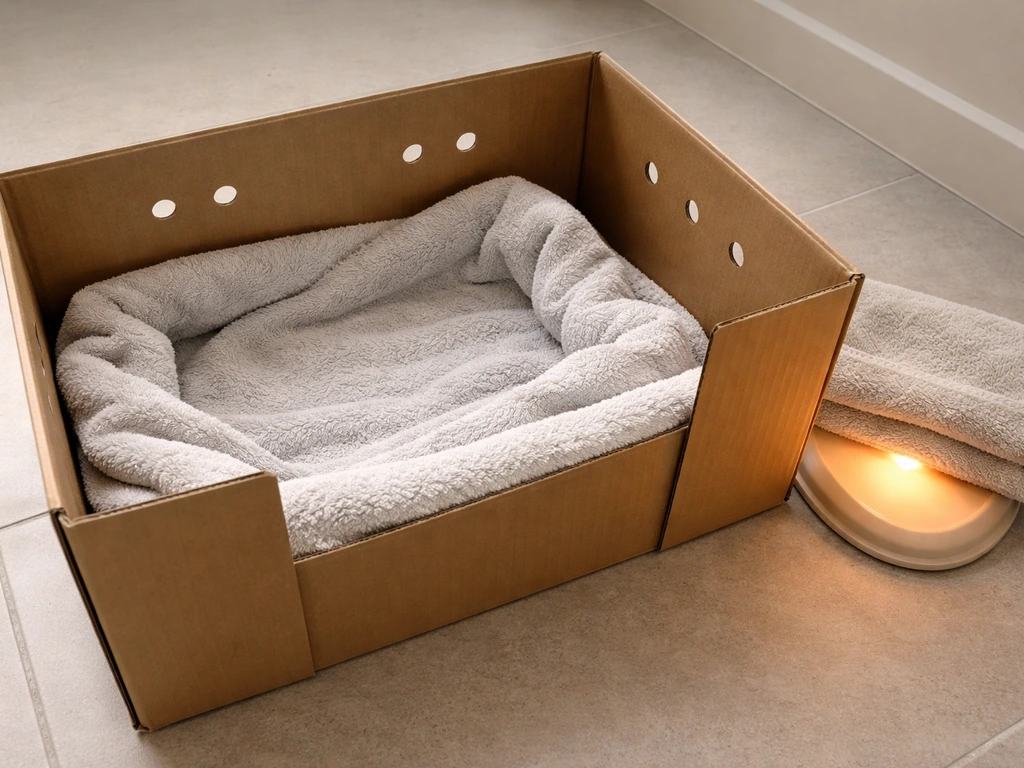
The container setup really does matter here. Use a cardboard box large enough that the bird isn't crammed in, but not so large that it can flap around and hurt itself more. Punch several small holes in the lid or sides for air circulation. Line the bottom with a cloth or paper towel so the bird has something to grip. If you don't have a box on hand right now, NYC Bird Alliance suggests walking to the nearest store and asking for a paper bag as a short-term option until you can get something more suitable.
Warmth is important, especially if the bird is in shock. Place one end of the box on a folded towel laid over a heating pad set on the lowest setting. This gives the bird a warm zone and a cooler zone so it can self-regulate. Don't put the heating pad directly under the entire box and don't use anything hotter than 'low.' A cold bird in shock can deteriorate quickly, but overheating is equally dangerous.
During the drive, keep the car quiet: radio off, conversation low, no air conditioning blasting directly at the box. Sudden sounds or temperature blasts add stress that can push a bird already in shock over the edge. Keep the box level and secure so it doesn't slide. If someone else can hold it on their lap during transport, that's ideal.
Do not give the bird food or water. This is the one rule that every major wildlife clinic and rehabilitator agrees on, and it's worth repeating: no food, no water, no eyedroppers of anything. Forcing food or liquid into an injured, stressed bird can cause aspiration (liquid in the lungs) and can kill an animal that might otherwise have survived. The bird will be assessed and fed appropriately by the rehabilitator.
Once you drop off the bird, wash your hands thoroughly. If you've been handling a bird with signs of significant illness (not just injury), the CDC recommends soap and water as the first choice, with hand sanitizer as a backup until you can get to a sink. Keep kids and other pets away from the box in the meantime.
One last thing: it's easy to feel like you need to do more, to keep checking on the bird, to offer it something. The best thing you can do after getting it into a dark, warm, quiet box is leave it alone. Every time you open the lid to look, you restart the stress response. Trust the setup, make the call, and get it to a professional as quickly as you can. If you are dealing with an in-game situation in Ark, follow our guide on how to get a bird off your shoulder in Ark so you can free it safely. You've already done the most important part.
FAQ
What should I do if the bird is stuck but I cannot safely approach it (high balcony, busy sidewalk, or it’s in heavy traffic)?
From a distance, block off hazards and keep pets and kids away, then contact a local wildlife rehabilitator or emergency animal service. If you must move it to safety, use a barrier approach (for example, guiding traffic away and approaching slowly from the side) rather than chasing it, since flapping can cause additional injuries.
Should I try to loosen a bird that’s tangled in string, netting, or wire myself?
If the entanglement is severe, the bird appears to be bleeding, or you see hooks or embedded material, do not try to remove it. For lighter, superficial material, you can only do minimal trimming if it can be done without pulling or straining the attachment point, then contain the bird and get professional help immediately.
Is it okay to put the bird in a towel or carry it around to keep an eye on it?
Avoid carrying it for long periods or repeatedly opening the container to check on it. Put it in a ventilated box (or paper bag short term), keep it dark and quiet, and leave it alone once it’s set up so you do not repeatedly restart the stress response.
How do I tell whether a grounded bird is a fledgling I should leave alone versus an injured adult?
Fledglings typically hop, call loudly, and have most feathers with short tail feathers. If the bird is unable to stand, keeps falling over, or is uncoordinated in a way that looks like injury, treat it as an injured adult and seek help rather than waiting for the parents.
What if the “stuck” bird is actually a newborn nestling that has fallen from the nest?
If it’s mostly bare or downy and can’t hop or stand, prioritize returning it to the nest if you can do so safely. If you cannot access the nest or the bird is in immediate danger, contact a rehabilitator right away instead of keeping it warm and attempting home care.
Can I give the bird water with a dropper or make it drink something to help it recover?
No. Do not provide food or water by mouth. Aspiration (liquid entering the lungs) can worsen injuries or cause death even if the bird seems thirsty or responsive.
If I found a bird near the Seahawks area, does that change how I handle it or who I call?
The handling rules are the same regardless of location: protect yourself, keep the bird contained and quiet, and contact a wildlife rehabilitator or avian vet. What changes is the intake availability, so search for an appropriate local rehabilitator or call your nearest directory line to confirm emergency intake hours.
How should I protect myself from disease and bites if I have to pick up the bird?
Use gloves if available, otherwise a folded towel to reduce direct skin contact. After any contact, wash thoroughly with soap and water as soon as you can. Keep the box away from kids and pets during transport, since stressed birds can scratch or bite.
What if the bird is breathing through its mouth or is completely unresponsive, but I’m not sure if it’s injured or just scared?
Treat it as serious distress. Mouth breathing, severe weakness, or no response warrants immediate professional intake rather than waiting, because deterioration can be fast even when the cause is unclear.
What is the safest way to warm a cold bird without overheating it?
Place one portion of the box near gentle warmth (heating pad on the lowest setting with a towel barrier), so the bird can move toward or away from heat. Do not apply heat directly under the entire box and avoid high settings, overheating can be as dangerous as hypothermia.
How long should I wait after a window strike before calling for help?
For a mildly stunned bird that otherwise looks okay, you can wait about 30 to 60 minutes in a dark, quiet container. If there is no improvement within that window, treat it as seriously injured and call a rehabilitator.
What do I do if I can’t find a box or paper bag right away?
Use the safest immediately available option that prevents escape and limits flapping. If you have nothing, do not improvise with hard, unsafe containers that can injure the bird during movement. Once you can, switch to a ventilated box and follow the heat, darkness, and minimal-handling steps.
Should I take the bird to a regular pet clinic instead of a wildlife rehabilitator?
If a wildlife rehabilitator or avian vet is available, that is usually the better route. If you have to choose between none and a general clinic, call first and ask whether they handle wild birds and can manage intake, stabilization, and legal transfer, since many do not treat wild birds without the right permits.
Next Article
How to Get a Bird Off Your Shoulder in ARK (Fixes)
Step-by-step ARK fixes to get a bird off your shoulder, troubleshoot stuck perches, and avoid harm safely.