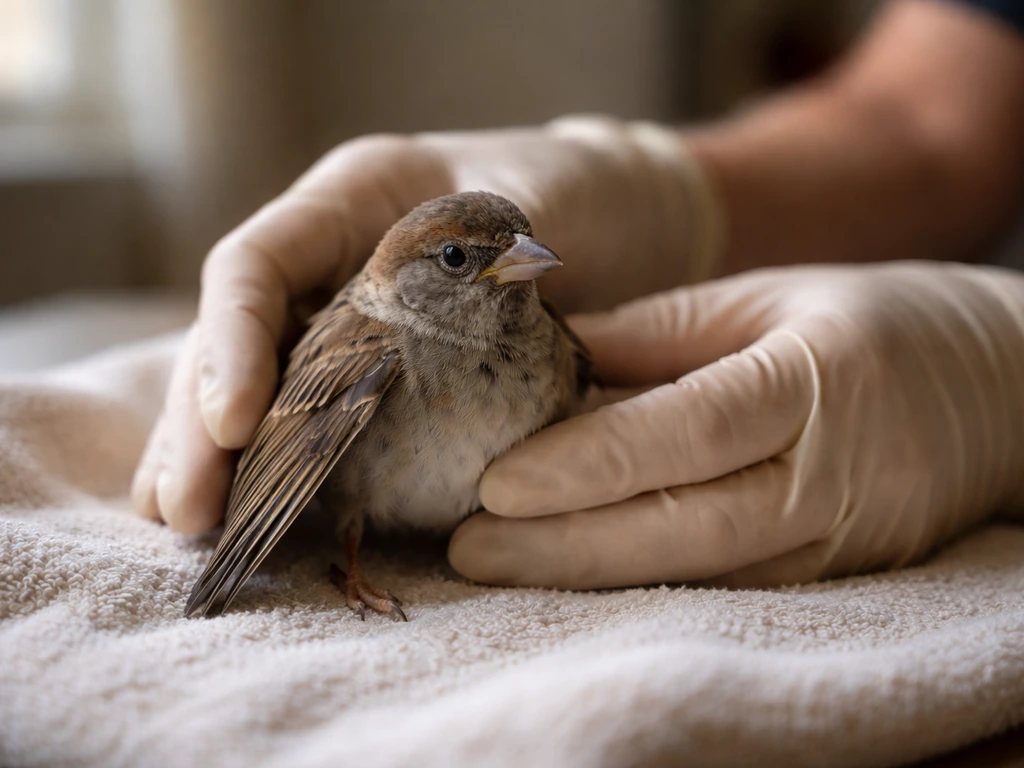
If you've found a bird stuck on a glue trap, you're dealing with a genuine emergency. Birds can die from stress, dehydration, and injury within hours of being trapped, so the clock matters. The good news is that with the right steps you can safely free most birds and give them a real chance at survival. This guide will walk you through exactly what to do, in order, starting right now.
Bird Stuck in Glue Trap: Emergency Rescue and First Aid
Marcus Chen
2 Apr 2026
How to tell the bird is stuck and how urgent it is
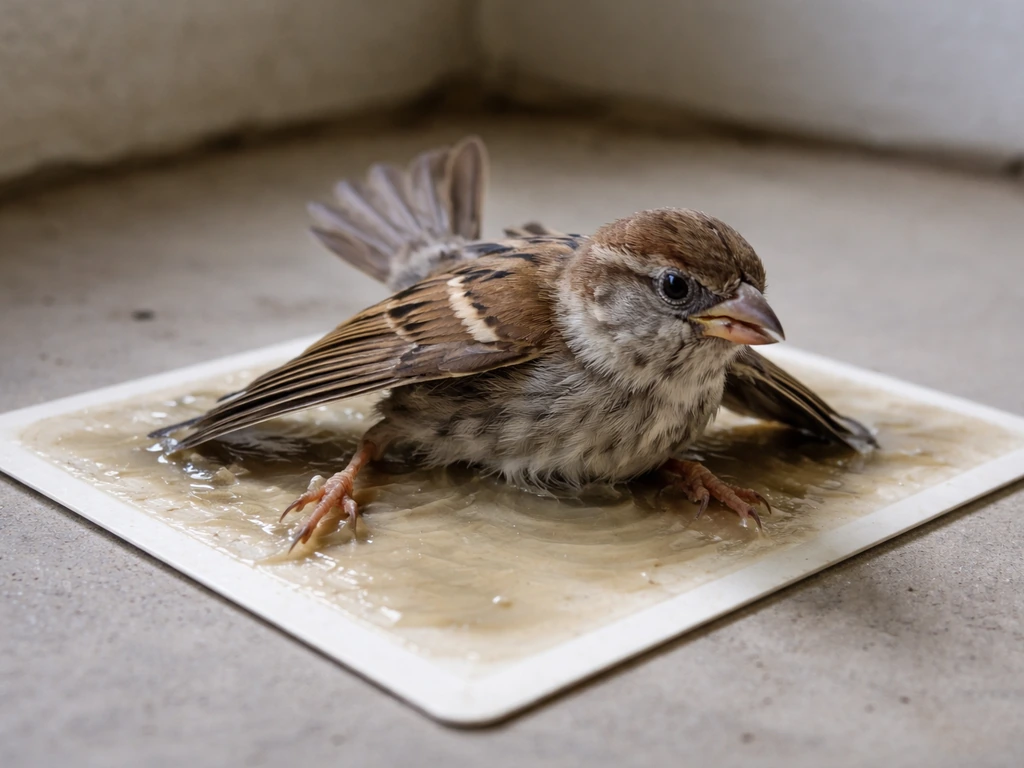
The obvious sign is that the bird can't lift off or move freely, and you'll usually see it thrashing or panting with wings or legs pulled against the trap surface. But urgency comes down to a few specific things to check before you even touch the trap.
- Breathing: Is the chest rising and falling? Rapid, labored, or open-mouthed breathing is a red flag.
- Visible injuries: Dangling legs or wings, open wounds, or blood are signs of trauma from struggling.
- Face or beak stuck: If the bird's face is pressed into the glue, it may not be able to breathe properly. This is the highest-priority scenario.
- Time stuck: If the bird is lethargic, barely moving, or feels cold, it may already be in shock from exhaustion or dehydration.
- Feather and skin damage: Heavy glue coverage across the body or obvious skin tearing means more serious injury.
A bird that is alert, struggling, and making noise is stressed but stable. A bird that is limp, silent, and barely reactive needs professional help immediately, in parallel with your first aid steps. Don't wait to see if it "perks up" on its own.
Immediate safety steps for you and the bird
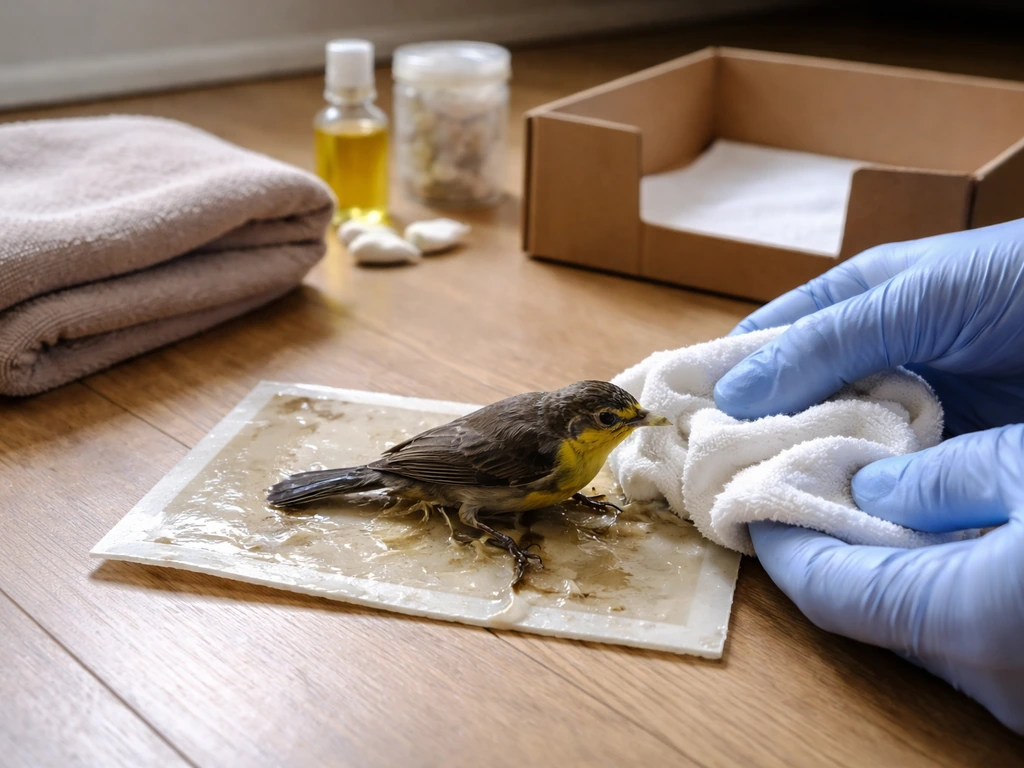
Before you do anything else, protect yourself. Glue traps are extremely sticky, and the last thing you want is to make the situation worse by accidentally pressing more of the bird's body or your own skin into the adhesive. Put on thick gloves if you have them. If not, wrap your hands in a thick towel or use a folded piece of cardboard as a barrier.
Even small birds can bite and scratch when panicked, and a frightened bird will. Work slowly and speak quietly. Reduce visual stimulation by dimming lights or moving somewhere calm if you can do so without jostling the trap too much.
Now, before you try to free the bird, cover any exposed glue on the trap surface with tissue, newspaper, cornmeal, or cornstarch. This is critical. If the bird keeps struggling or you accidentally shift the trap, you don't want new areas of feathers or skin making contact with fresh adhesive. Lightly drape a thin cloth or tissue over the bird's head as well. This reduces visual stress dramatically and often calms the bird enough that it stops thrashing, which prevents further injury.
How to free a bird from a glue trap, step by step
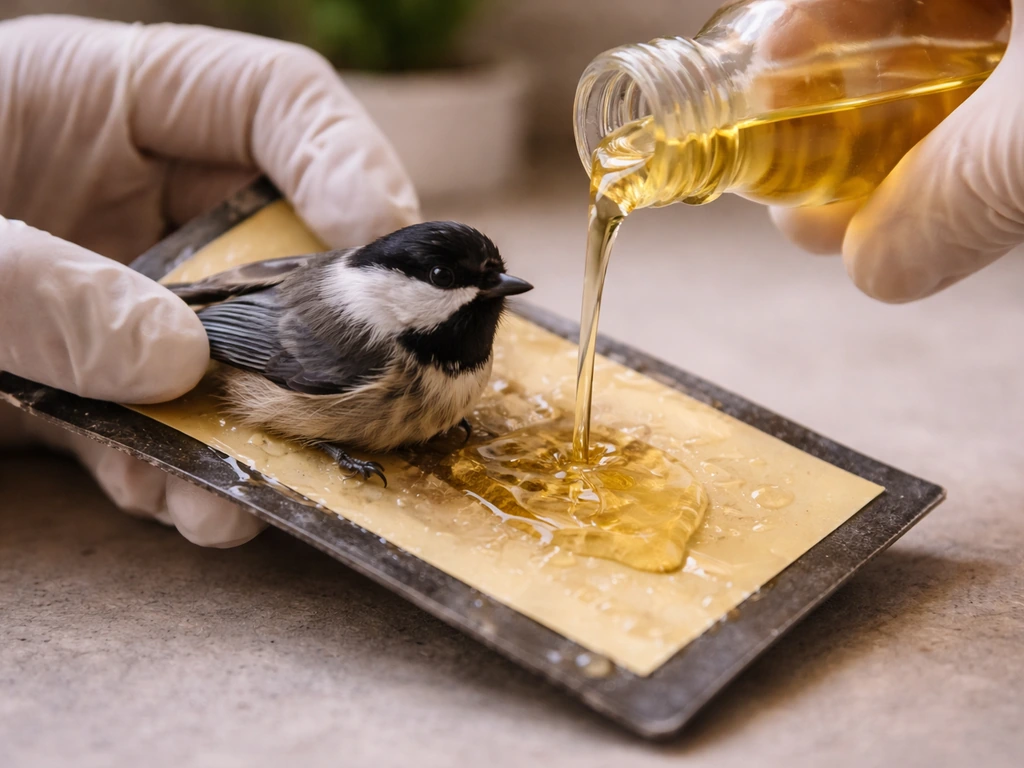
The safest removal agent is plain cooking oil: vegetable oil, olive oil, or mineral oil all work. Do not use petroleum-based solvents, adhesive removers, acetone, or anything with a strong chemical smell. These are toxic to birds and can cause serious harm through skin absorption or inhalation.
One important note before you start: some wildlife rehabilitators advise against attempting full removal in the field, especially if the bird is small and fragile. Their recommendation is to cover the exposed glue, lightly wrap the trap with the bird still attached, and transport the whole thing to a wildlife center. That is a completely valid approach and often the safest one. The exception, where you should act immediately, is if the bird's face is stuck to the glue and it cannot breathe freely. In that case, you need to free the head right away.
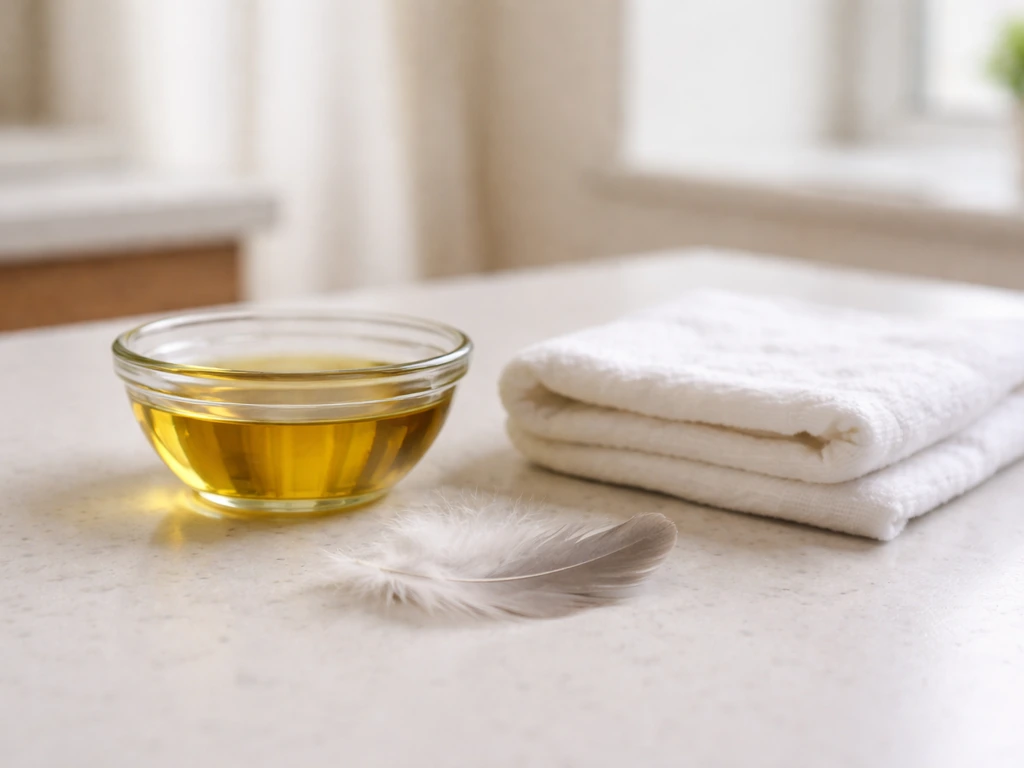
- Warm a small amount of cooking oil (vegetable or olive oil works fine) to body temperature. Cold oil is less effective and uncomfortable for the bird. You can warm it briefly in your hands or run the container under warm water.
- Cover all exposed glue on the trap that isn't already covered with tissue or newspaper, so nothing new gets stuck.
- Lightly cover the bird's head with a tissue or thin cloth to calm it.
- Apply a small amount of oil directly where the feathers or skin meet the adhesive. Use your fingertip, a soft cloth, or a soft paintbrush for delicate areas near the face.
- Gently massage the oil into the adhesive with slow circular motions. Do not pull. Do not yank. Work the oil in and wait. The adhesive will start to release within 30 to 60 seconds.
- As sections free up, gently lift them away from the trap surface. Support the bird's body at all times so you're not putting stress on a single limb or feather shaft.
- Work one area at a time: start with the area causing the most restriction, typically legs or wings, then move outward.
- If a leg or wing is firmly embedded and won't release with gentle pressure and oil, stop. Do not force it. Cover the area, keep the bird calm, and get to a wildlife center.
- Once the bird is free, do not put it down on another sticky surface. Have a cardboard box lined with a clean towel ready to place it in immediately.
Do not offer food or water during or right after the rescue. A bird in shock can aspirate liquids, and forcing food causes additional stress. Keep the environment quiet and warm while you assess what to do next.
What to check after the bird is free
Once the bird is off the trap and in a safe container, take a calm, systematic look at its condition. You're not diagnosing anything, just gathering information that will help you and any vet or wildlife worker understand what you're dealing with.
- Wings: Do both wings sit symmetrically against the body? A drooping or held-out wing suggests a fracture or dislocation from the struggle.
- Legs: Can the bird grip the towel beneath it? Limp or curled toes, or a leg held at an odd angle, point to injury.
- Skin: Look for areas where feathers have been pulled out and the skin underneath is torn, raw, or bleeding. Glue traps can cause significant skin damage even when the removal itself goes smoothly.
- Feathers: Heavy feather loss or "mangled" feathers matted with glue are a sign of prolonged or severe contact.
- Breathing: Count the breaths if you can. Fast, labored, or clicking breathing is abnormal.
- Responsiveness: Is the bird alert and tracking movement with its eyes? A bird that stares blankly or doesn't react to your movements is likely in shock.
- Mouth: If you can safely see inside, a dry or tacky mouth lining indicates dehydration from time spent on the trap.
Even if the bird looks fine from the outside, internal injuries from struggling against the trap are possible and not immediately visible. A professional examination is always the right call after a glue trap incident, regardless of how recovered the bird appears.
First aid for injuries and cleaning off the residue
Cleaning oil and adhesive residue
Once the bird is free, any remaining oil on its feathers needs to come off. Oil destroys the waterproofing and insulating structure of feathers, and a bird left oily will chill rapidly and lose the ability to fly properly. Use a small amount of dish soap (Dawn or any mild dish detergent) diluted in warm water. Gently work it through the affected feathers with your fingertip, then rinse with warm water. Do this quickly, keep the bird warm, and do not submerge the bird or get water near its nostrils or beak.
If there is adhesive residue still on the skin or feathers after oil treatment, apply a second round of oil, wait for it to work, and then repeat the dish soap wash. Don't scrub. The goal is to dissolve and lift, not abrade.
Stabilizing the bird
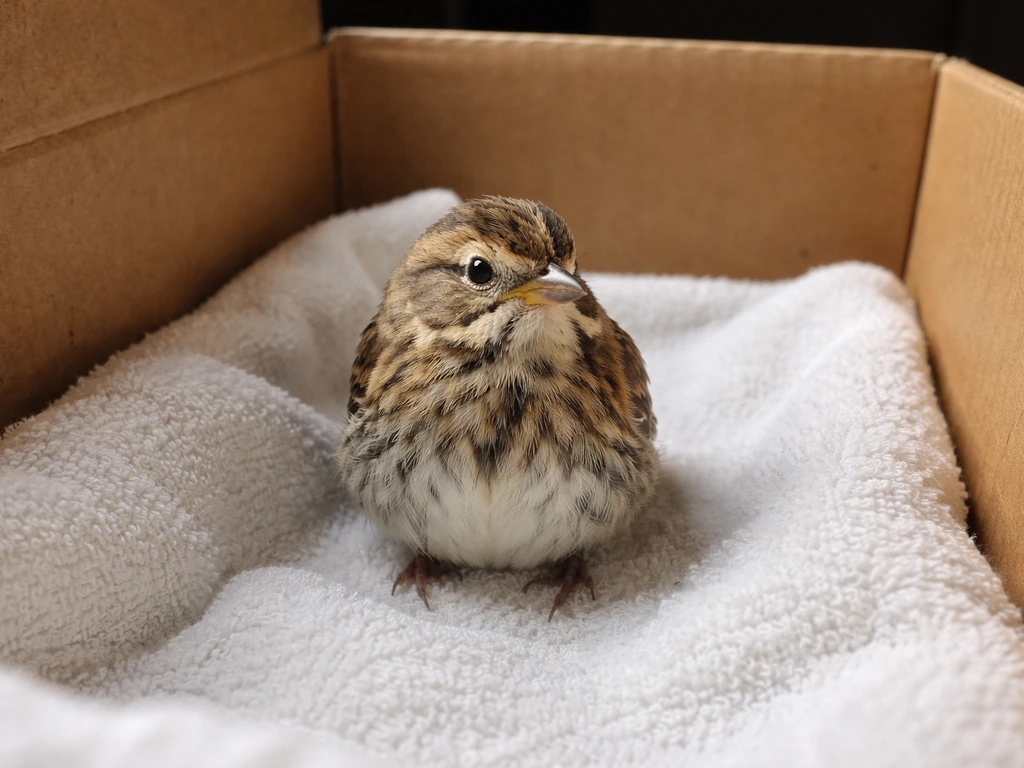
After cleaning, place the bird in a cardboard box lined with a clean, dry towel. The box should be just large enough for the bird to sit upright without much room to flap. Poke small air holes in the lid. Keep the box in a warm (not hot) room, around 85 to 90 degrees Fahrenheit for an injured bird in shock, and keep it dark and quiet. Do not keep checking on the bird. Every time you open the box, you add stress. Set it up right and leave it alone until you can get professional help.
Do not attempt to splint wings or legs yourself. Do not apply antiseptic creams or ointments to wounds. Do not put the bird in direct sunlight or near a heat lamp without monitoring temperature carefully. The goal of first aid here is simply: warm, dark, quiet, and safe.
If you're worried about chemical exposure
Some glue traps contain pesticide components or other chemicals. If you believe the bird has ingested or been heavily exposed to something toxic beyond the adhesive itself, contact the ASPCA Animal Poison Control Center for guidance specific to the substance involved. ASPCA Animal Poison Control can also be reached at (888) 426-4435, but the consultation is not free contact the ASPCA Animal Poison Control Center for guidance specific to the substance involved. For broader poisoning questions, Poison Control (1-800-222-1222) can also help you think through next steps while you're arranging transport.
When to contact a wildlife rescue or avian vet right now
Honestly, the answer to "when should I call a professional" is: as soon as you find the bird. You can be performing first aid with one hand and dialing with the other. But there are specific situations where you should stop what you're doing and get professional help on the line before going any further.
- The bird's face or beak is stuck and you cannot free it quickly with oil.
- There is active bleeding that isn't slowing down.
- A wing or leg is visibly broken, dislocated, or at an abnormal angle.
- The bird is limp, unresponsive, or showing no eye movement.
- Breathing is labored, clicking, or the bird is open-mouth breathing after removal.
- The bird is convulsing or showing neurological signs like head tilting or spinning.
- You suspect the trap contained a pesticide or poison and the bird may have ingested it.
- The bird is very small (a hummingbird, warbler, or similar tiny species) and the damage looks extensive.
To find help fast, search for a licensed wildlife rehabilitator in your area through your state's wildlife agency website, or call a local humane society who can often direct you. An avian veterinarian (a vet with bird-specific training) is your best option for serious injuries. If you're dealing with a larger bird, it's worth knowing that big bird stuck scenarios often involve additional handling challenges that wildlife professionals are specifically trained for.
If you've been through this before and want to share what you went through, many people find it helpful to read through a first-hand account like my bird got stuck in a glue trap, which covers the emotional side of the experience alongside the practical steps. You're not alone in this situation, and knowing what to expect matters.
Prevention and what not to do next time
Safer alternatives to glue traps
Glue traps are genuinely dangerous to birds, and not just as a theoretical risk. Small songbirds and even larger species can be caught while foraging on or near the floor, and they suffer terribly for it. If you're using glue traps indoors for rodents or insects, consider switching to snap traps (which are more humane and contained), electric traps, or live catch-and-release traps placed inside tamper-resistant bait stations that birds can't access. For flying insects like flies, sticky ribbon traps can be positioned high on ceilings where birds won't reach them.
Some sticky trap products designed for specific pests, like TrapStik for wasps, come with optional bird guards that physically block birds from landing on the adhesive surface. Use them. It takes thirty seconds to attach and prevents exactly the scenario you just dealt with.
What not to do if you find a bird on a glue trap
- Don't yank the bird off the trap. Feathers and skin tear, and bones snap under sudden force.
- Don't use chemical solvents, WD-40, acetone, or nail polish remover. These are toxic to birds and can cause organ damage through skin contact or inhalation.
- Don't pour large amounts of oil directly onto the bird at once. Use small amounts and work gradually.
- Don't leave a bird unattended on a trap while you look up what to do. Cover the exposed glue first, then research.
- Don't put the freed bird outside immediately, even if it seems okay. It needs assessment first.
- Don't give the bird food or water right after rescue. Wait until a professional clears it.
- Don't assume the bird is fine just because it's alert. Internal injuries and dehydration are common and not obvious.
Placement matters too
If you do continue to use any sticky trap product, placement is everything. Keep them inside enclosed spaces like under sinks, inside cabinets, or behind appliances where birds are extremely unlikely to wander. Never place them near open windows, doors, bird feeders, or outdoor spaces where wildlife traffic is high. A trap placed where a bird can reach it is a trap that will eventually catch one.
Birds get into all kinds of tricky situations beyond glue traps. If you ever find a bird that has gotten itself into an enclosed or hard-to-reach space, the same calm, slow, low-stress approach applies. If you meant the game ARK, the process is different, so look up the specific ARK method for freeing a bird from your shoulder ARK bird on your shoulder.
There are even some surprisingly parallel situations in unexpected contexts: people searching for help with something like a seahawks bird stuck in an unusual spot, or even fictional scenarios like a nioh 2 bird in a cage stuck puzzle or figuring out how to get a bird off your shoulder in ark, often end up here because the core instinct is the same: they want to help a bird that can't free itself.
That instinct is exactly right. Act calmly, move slowly, and get a professional involved as quickly as you can.
Quick comparison: removal options and when to use them
| Option | When to use it | Key risk | Recommended? |
|---|---|---|---|
| Vegetable or olive oil + gentle massage | Bird is stuck but face is clear; feathers or legs are glued | Must be fully washed off afterward or it damages feathers | Yes, first choice |
| Mineral oil | Same as above; widely used by wildlife centers | Same oil-removal requirement applies | Yes, good alternative |
| Transport with bird still on trap | Bird is small, fragile, or you can't safely free it at home | Bird stays stressed during transport; cover all glue first | Yes, often the safest field option |
| Dish soap wash (after oil) | After glue and oil are removed | Chilling if bird gets too wet; work quickly in warm space | Yes, required after oil use |
| Chemical solvents or WD-40 | Never | Toxic to birds through skin and inhalation | No, do not use |
| Pulling by hand with no oil | Never | Tears skin, breaks feathers, fractures bones | No, do not do this |
FAQ
What should I do if I can’t tell whether the bird is still alive or just stuck?
If the bird is breathing, even if it looks weak, treat it as urgent. If you see no movement and the bird is limp and silent, start first aid immediately (cover glue, reduce stress, warm container) and contact a professional while you keep the bird warm.
Can I pull the bird free by force if it won’t come off with oil?
No. If oil and careful coverage are not loosening the contact points, stop pulling. Continued traction can tear skin or pull feathers out, worsening shock and bleeding, and you should switch to the “wrap and transport” approach if the bird is small and fragile.
Is it okay to use cooking oil more than once if the glue won’t dissolve?
Yes, with patience and minimal handling. Reapply a thin amount, wait a moment for it to loosen, then resume gentle separation only where the bird is already released. Avoid letting oil-soaked feathers sit cold, and do not increase heat to speed it up.
What if the bird’s face or nostrils are stuck and it seems unable to breathe?
Act immediately to clear the head area. Prioritize the nostrils and mouth first so airflow is possible, even if that means leaving some glue on less critical areas. Then proceed to cover exposed adhesive and get professional help fast.
Can I use a hair dryer or heat lamp to dry the bird after cleaning?
Avoid direct, uncontrolled heat sources. Use only warm, room-temperature warmth and place the bird in a warm, dark box with ambient air. Heat lamps and blowers can overheat quickly, even if they seem gentle.
Should I remove all glue from feathers before transporting it?
Not necessarily. If removal is causing repeated thrashing or you cannot safely free the bird without pulling, covering and stabilizing for transport is often safer. Once at a professional facility, they can remove remaining residue with controlled techniques.
How warm is “warm enough,” and how can I tell if the bird is too cold or overheating?
Aim for about 85 to 90°F in the container. Use the bird’s comfort cues, if visible, and avoid hot spots. If the bird feels hot to the touch or is rapidly panting, reduce warmth and move it to a slightly cooler spot.
Is it safe to give the bird water in the beak after the rescue?
Do not. Don’t offer water or food by force, because aspiration can happen especially in shock. If the bird is hydrated enough to swallow on its own later, that is best assessed by a wildlife worker or avian vet.
What container is safest for transport, and should I give the bird something to sit on?
A small cardboard box lined with a clean, dry towel is safest. Keep space tight so it can sit upright with minimal flapping. Avoid loose bedding that can stick to adhesive or tangle around legs.
If the bird was stuck for a long time, what extra steps should I take before calling?
Even before you finalize transport plans, keep stress low (dark, quiet), maintain warmth, and monitor breathing at a distance. The key decision aid is time, if it was stuck for hours or the bird is very lethargic, treat it as higher urgency and involve professionals immediately.
How do I handle the bird if it starts bleeding or has visible cuts?
Do not apply antiseptic creams or ointments. Use gentle warmth and keep the bird stable in the container. If bleeding is significant, focus on minimizing handling and getting professional care, since over-cleaning or rubbing can worsen tissue damage.
I’m worried about pesticide exposure from the trap. How can I decide whether to contact poison control?
Contact poison guidance right away if the product label suggests toxic additives, if the bird has visible residue beyond normal glue contact, or if the bird is showing abnormal signs like tremors, severe lethargy, vomiting, or breathing difficulty. Have the product name and any label details ready when you call.
Should I wash my hands or clothing after helping a bird stuck in a glue trap?
Yes. Wear gloves during handling if possible, then wash skin with soap and water after you’re done. Launder any clothing that contacted adhesive promptly, because sticky residue can transfer and continue to trap or irritate animals.
Next Article
Can a Bird Live With One Wing? Survival and First Aid
Can a bird live with one wing? Injury outcomes and step-by-step first aid, plus when to get urgent help.