If you have found a big bird that looks stuck, frozen in place, tangled, or unable to fly away, the single most important thing you can do right now is stop and assess before you touch anything. Most people's instinct is to rush in and help, which is completely understandable, but moving too fast can seriously worsen the bird's condition. This guide walks you through exactly what to look for, what to do, and when to hand it off to a professional.
Big Bird Stuck: First Aid Steps and When to Call Help
Marcus Chen
20 Apr 2026
What 'big bird stuck' actually looks like in real life
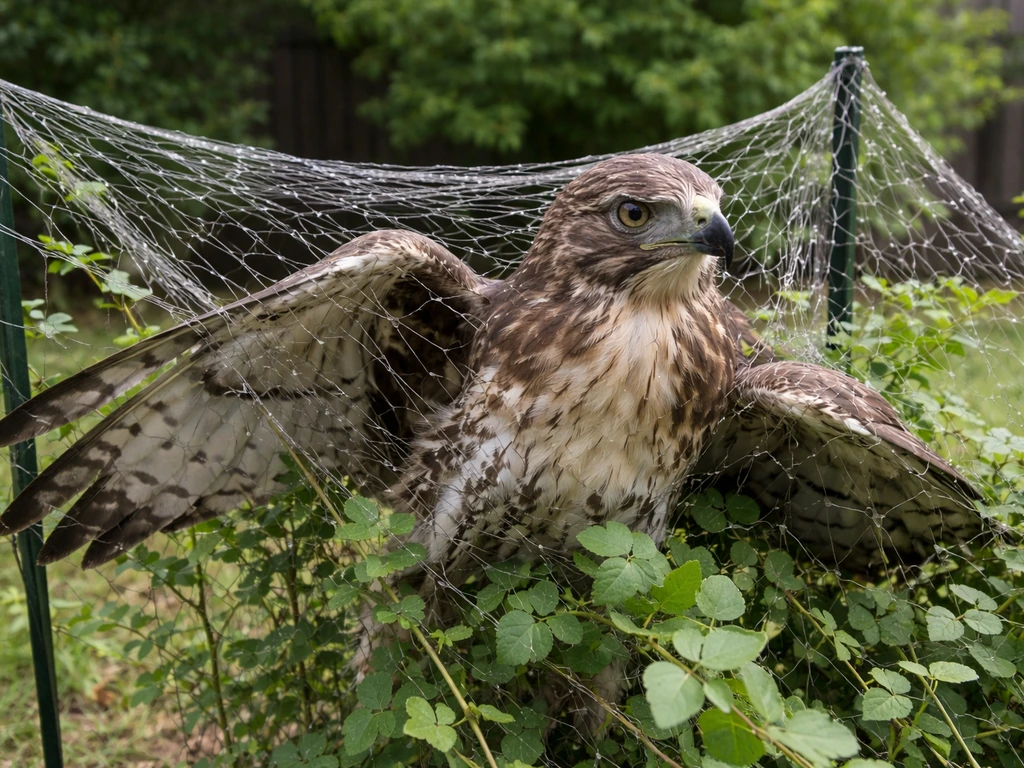
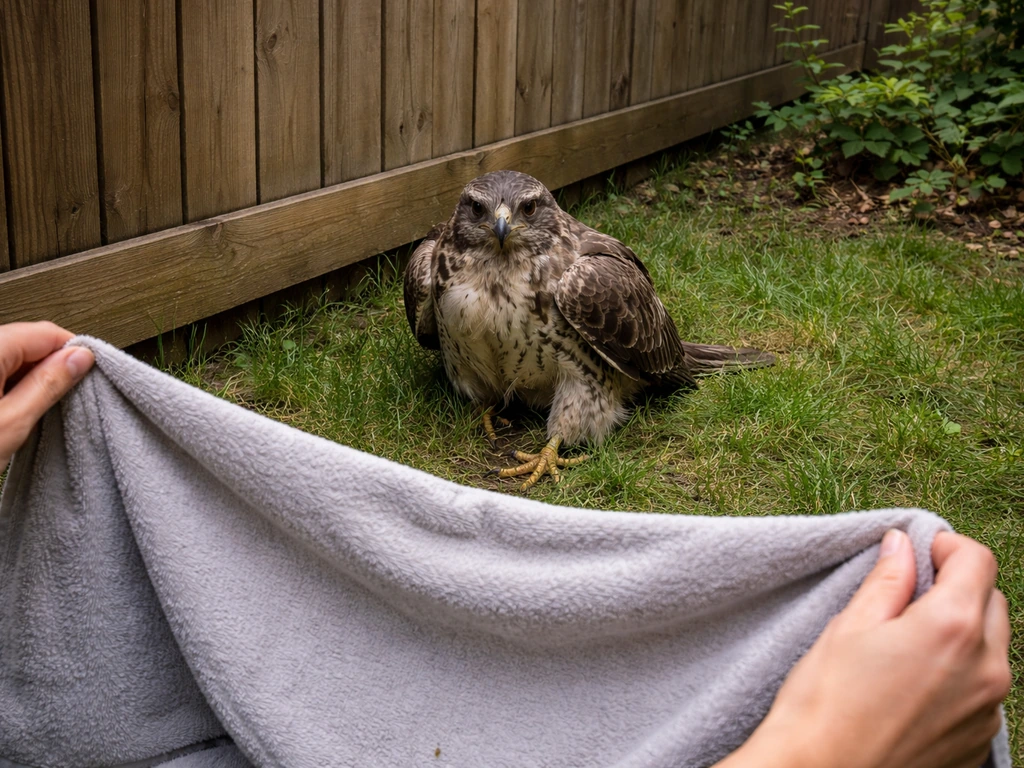
The word 'stuck' can describe several very different situations, and knowing which one you're dealing with changes everything about how you respond. Here are the main scenarios you're likely facing:
- Physically trapped: the bird is caught in netting, wire fencing, thorns, fishing line, or a glue trap and cannot free itself
- Entangled: fishing line, string, or wire is wrapped around a leg, wing, or neck, cutting off blood flow even if the bird can still move slightly
- Grounded from injury: a broken wing or leg is keeping the bird on the ground; it tries to move but cannot get airborne
- Stunned or in shock: the bird hit a window or was struck by a vehicle or a pet, and it is sitting completely still, appearing 'stuck' but actually in a dazed state
- Trapped in a structure: the bird flew into a garage, shed, or enclosed space and cannot find its way out
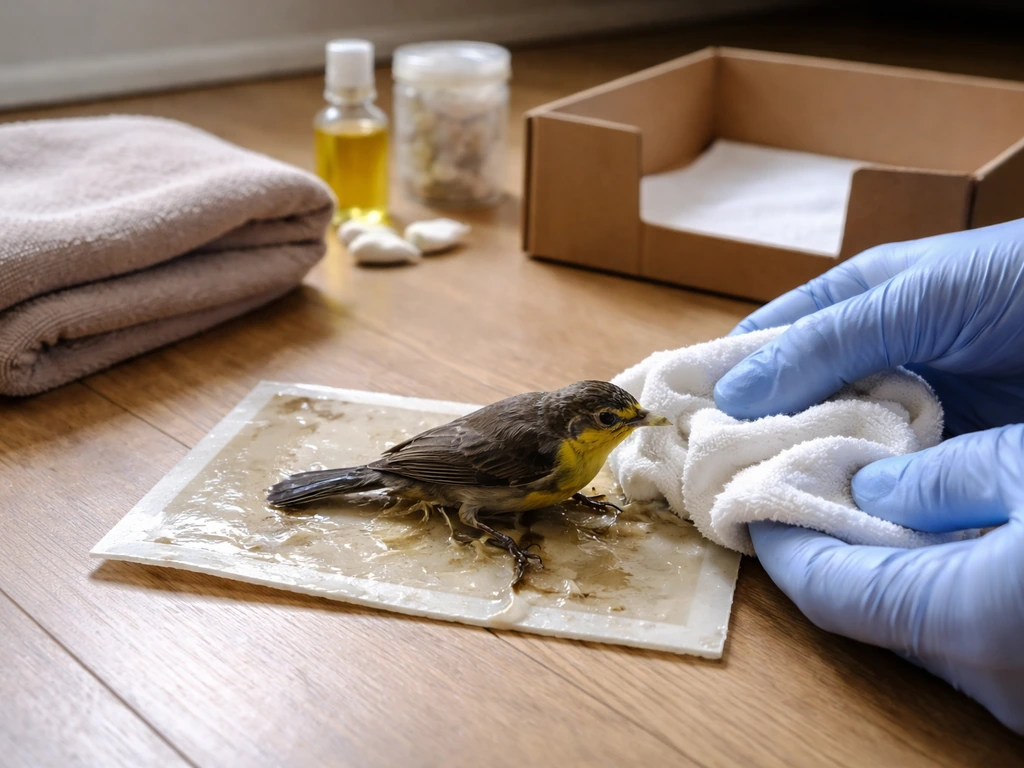
All of these look similar from a distance, and some involve combinations of problems. A bird that flew into a window may also have a broken bone and be entangled in a nearby shrub at the same time. Work through the assessment below before deciding on a course of action. And if you are dealing with a bird stuck on a glue trap specifically, that situation has its own urgent rules that are worth knowing about alongside this general guide. If your case is a my bird got stuck in a glue trap situation, treat it as urgent and follow the trap-specific steps right away.
Quick safety check: what to look for without touching
Stand a few feet back and spend 60 to 90 seconds just watching. You are trying to gather information that will guide every decision you make. Look for these specific signs:
Is the bird breathing?
Watch the chest and flanks for any movement. Birds breathe rapidly, so even shallow breaths are usually visible. If the chest is absolutely still and the bird is not blinking or reacting to your presence at all, it may have already died. If the chest is heaving heavily or the beak is open and pumping, the bird is in serious respiratory distress and needs professional care immediately.
Is there visible bleeding?
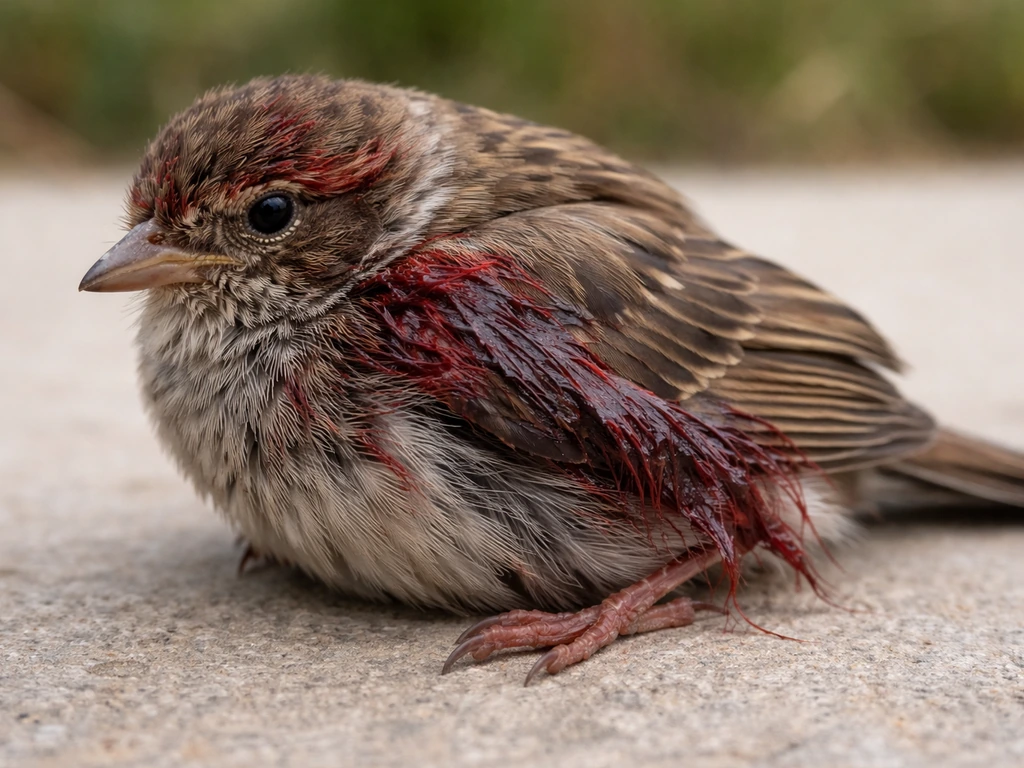
Look at the feathers around the head, wings, legs, and chest. Wet, matted, or dark-stained feathers often mean blood. Active bleeding, meaning blood that is dripping or pooling, is a medical emergency. Do not delay calling for help if you see this.
Signs of shock
A bird in shock will often sit completely upright and motionless with its eyes half-closed, or it may be flat on its side unable to right itself. Puffed-up feathers, a drooping wing, or a tail cocked noticeably to one side are also warning signs of injury or neurological impairment. A bird that lets you walk right up to it without any attempt to escape is almost certainly in shock or severely injured, not tame.
Check for entanglement from a distance
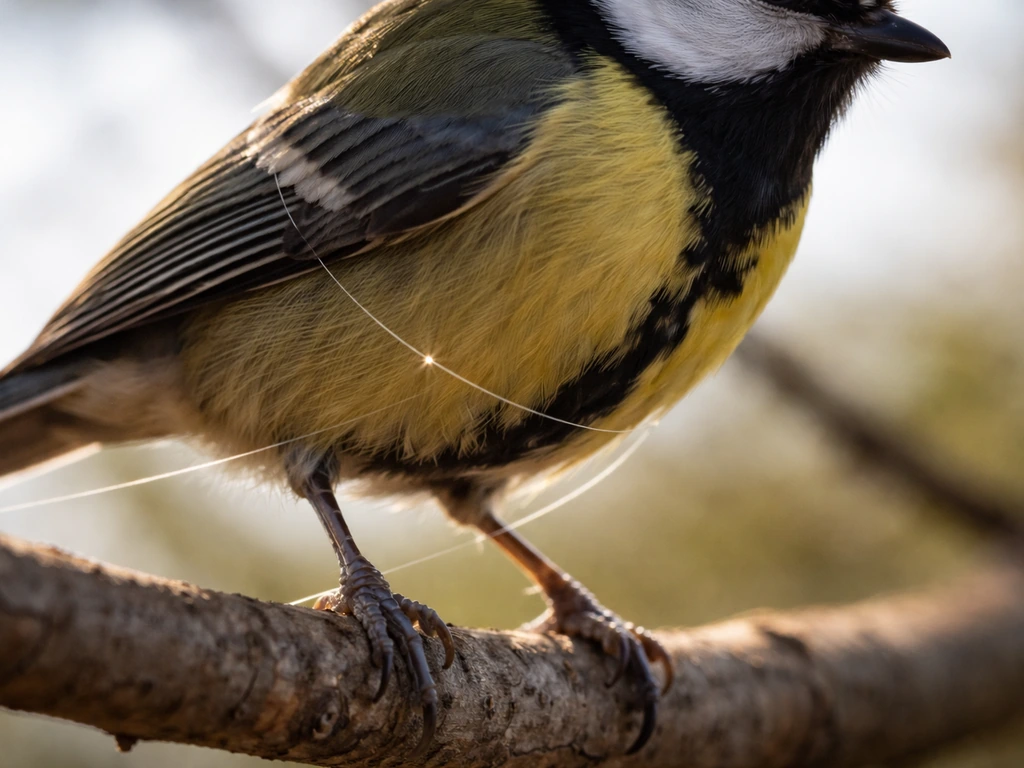
Look carefully at the legs, wing joints, and neck area for any visible line, wire, string, or netting. Fishing line is almost invisible in certain lighting, so change your angle of view. If you see any constricting material on a leg or wing, that limb is losing blood flow right now, which means time matters. Entanglement cases like this are almost always a call-a-professional-immediately situation. If you suspect a bird stuck in a glue trap, keep your hands off the feathers and contact a wildlife professional right away so they can safely remove it.
Immediate first aid: what to do while you get help
Once you have a rough read on the bird's condition, your job becomes stabilization, not rescue. The goal of first aid is to reduce further harm and stress while you arrange professional help. Here is what that looks like in practice.
Keep it warm, dark, and quiet
This is the single most effective thing you can do for a stressed or injured bird. If you can safely contain the bird (see the handling section below), place it in a cardboard box with ventilation holes punched in the sides. Line the bottom with a plain (unlooped) towel or paper towels for grip. Cover the box with a light cloth or close the flaps to keep it dark. Put the box in a warm room, away from pets, children, and loud noise. Darkness reduces panic and helps the bird conserve energy. Do not place the box on a heating pad or in direct sunlight, as overheating is a real risk.
Do not offer food or water
This is the rule that surprises almost everyone. Forcing food or water on an injured or stunned bird can cause aspiration, meaning the bird inhales liquid into its lungs, which is fatal. Unless a licensed wildlife rehabilitator has specifically told you to do so, do not put anything in the bird's mouth or beak.
If you are trying to fix a Nioh 2 “bird in a cage” that feels stuck, focus on the specific quest steps and conditions involved, since the solution usually depends on where you are in the progression nioh 2 bird in a cage stuck. If you are dealing with a bird on your shoulder in ARK instead, you will want to follow the game-specific steps for getting it off safely nioh 2 bird in a cage stuck.
This applies even if the bird seems healthy enough to eat.
Minimize your own contact as much as possible
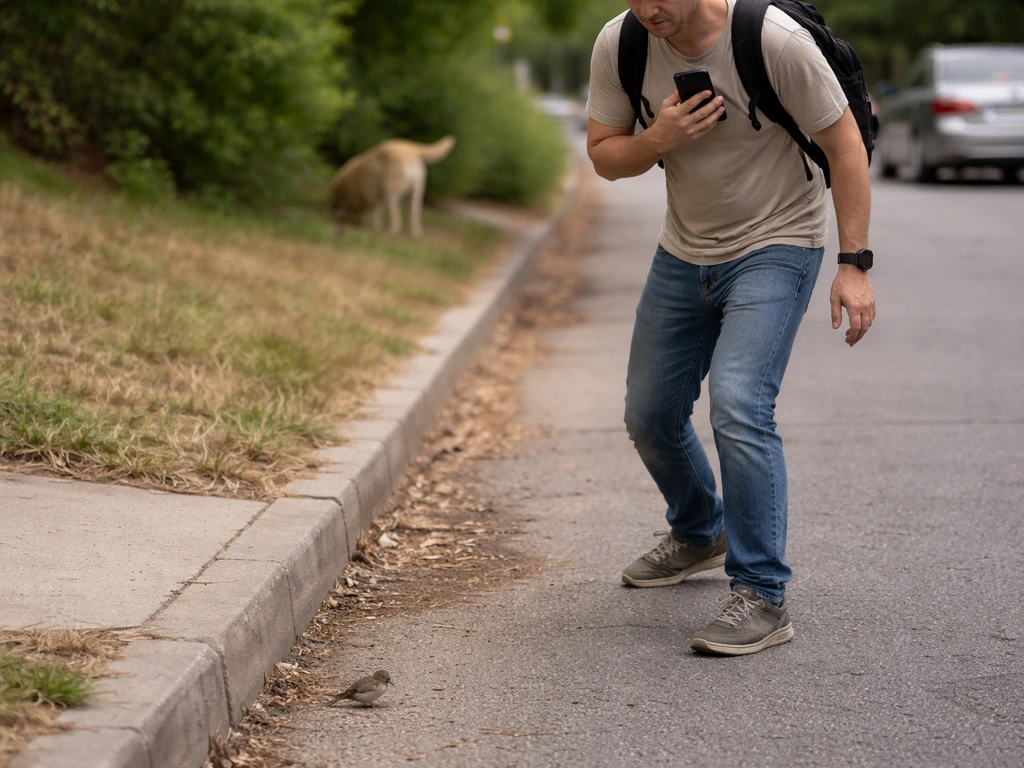
Every time you handle a wild bird, you are adding stress to an already compromised animal. Talk quietly, move slowly, and limit the number of people hovering around it. If you have already picked it up and contained it, resist the urge to keep checking on it. Leave it alone in its dark, quiet space until you speak with a professional.
When you can step in vs. when to stop and call
This is the part most guides gloss over, but it is genuinely important. Some situations call for your immediate help. Others call for you to back away and get a professional on the phone. Here is a practical breakdown.
| Situation | Your move |
|---|---|
| Bird is in immediate danger (traffic, loose pet nearby) | Gently herd or contain to remove from immediate hazard, then reassess |
| Bird is stunned from a window strike but no visible wounds | Contain in a dark box, monitor for 1 to 2 hours, release if it recovers fully |
| Bird is trapped in a structure (garage/shed) | Open exits, reduce light inside, guide toward the opening, do not grab |
| Loose netting or mesh that can be carefully lifted off | Proceed slowly if the bird is calm; stop if it panics or the material is tightening |
| Fishing line, wire, or string wrapped around leg or wing | Do not pull or cut without professional guidance; call wildlife rescue now |
| Glue trap | Do not attempt removal yourself; contain the box/trap as-is and call a rehabilitator immediately |
| Broken bone is visible or suspected | Contain gently, do not try to splint or straighten; call wildlife rescue now |
| Active bleeding or open wound | Apply very light, gentle pressure with a clean cloth if accessible; call immediately |
| Bird is fully grounded, cannot right itself, or unresponsive | Contain carefully; this is an urgent veterinary situation |
The guiding principle is this: if removing the hazard requires force, cutting, or manipulating a body part, stop. The risk of causing more harm, including driving a hook deeper, tightening a constriction, or fracturing a bone further, is very real. The professionals have the tools and training to do this safely.
Injury-specific guidance
Suspected broken wing or leg
A drooping wing that hangs lower than the other, or a leg that is bent at an unnatural angle, almost always means a fracture. Do not attempt to splint, wrap, or straighten the limb yourself. Even well-intentioned splinting applied incorrectly can cut off circulation or make a clean fracture into a compound one. Place the bird in a box where it can sit upright but cannot flap or thrash around (a snug-fitting box works well). Then call a wildlife rehabilitator or avian vet.
Fishing line or wire entanglement
Fishing line wrapped around a leg or wing is a vascular emergency. The line cuts off blood flow, and the damage accelerates quickly. Do not tug on the line and do not cut it unless a wildlife professional specifically instructs you to do so. Cutting line in the wrong place can cause it to retract into soft tissue or release a hook in a dangerous direction. If the bird is on a hook, the same applies: do not remove the hook yourself. Your job is to contain the bird calmly and get it to a professional as fast as possible.
Head or neck trauma
Birds that have hit windows, cars, or other hard surfaces may have head trauma, internal injuries, or eye injuries that are not obvious from the outside. A bird sitting very still with eyes half-open, a tilted head, or uneven pupil size may have a serious neurological injury. These birds often look like they might recover on their own, but they frequently do not without medical intervention. Do not leave a head-trauma bird outside assuming it will fly off. Contain it gently and get it evaluated.
Active bleeding or lacerations
If the bird has a visible wound that is actively bleeding and you can reach it safely, apply very light pressure with a clean, dry cloth. Do not press hard, do not use antiseptic sprays or hydrogen peroxide, and do not try to clean the wound beyond stopping active bleeding. Then get it to a professional quickly. Blood loss in birds happens fast due to their small body size, even in larger species.
Stuck in netting or fencing
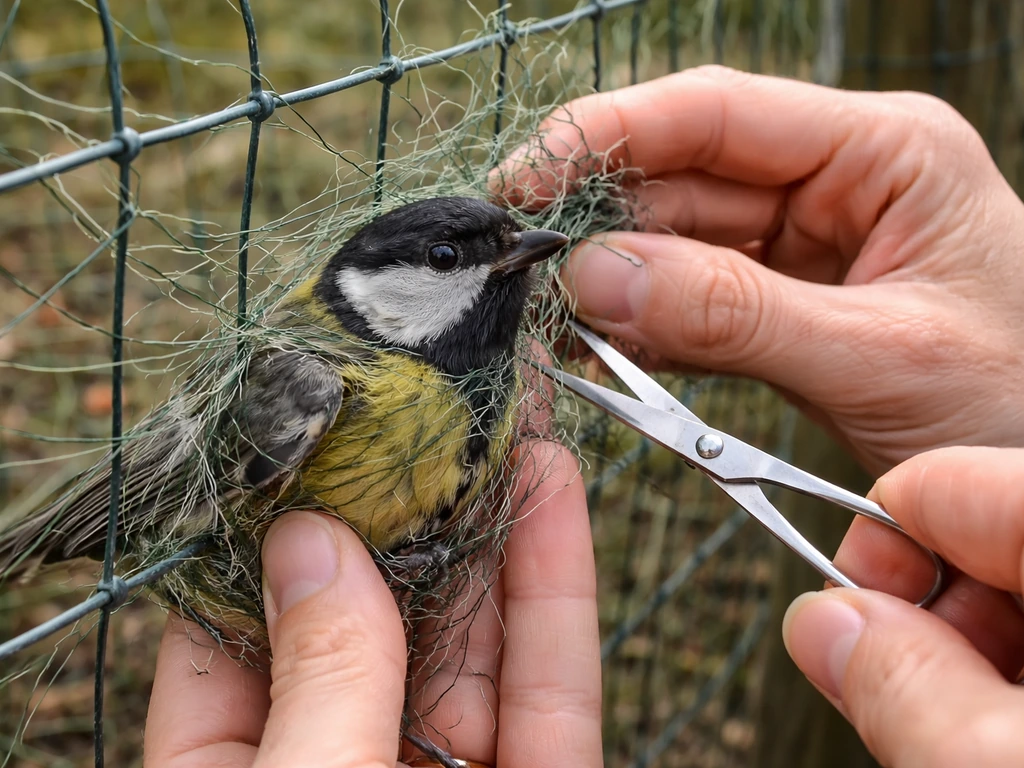
If the bird is tangled in garden netting, wire fencing, or similar material, assess whether you can gently lift or cut the material away without pulling on the bird's body at all. If the bird is calm and the material is loose, this is sometimes manageable for one person. If the bird is struggling hard, the material is tightening, or any body part appears compromised, stop and call for help. Two people working together (one supporting the bird, one managing the material) are much safer than one person trying to do both.
When to call an avian vet or wildlife rescue right now
Some situations do not have a 'wait and see' option. Call a wildlife rehabilitator or avian veterinarian immediately if you are dealing with any of the following:
- The bird is fully grounded and cannot right itself after several minutes
- There is active, visible bleeding
- A bone is visibly broken or displaced
- The bird is caught in fishing line, wire, or a hook
- The bird is stuck to a glue trap
- Breathing is labored, the beak is open and gasping, or the chest is heaving
- The bird has obvious head tilt, uneven pupils, or shows signs of neurological impairment
- The entanglement involves the neck or throat area
- You cannot safely remove the hazard without force or cutting
- The bird has been in contact with a cat or dog (even without visible wounds, puncture injuries from claws and teeth are serious and often invisible)
It is also worth calling even in cases that seem minor. A bird that looks like it is just stunned from a window collision may actually have internal injuries or eye damage that are not visible. Wildlife professionals can assess things you simply cannot see from the outside, and early evaluation dramatically improves outcomes.
How to find help near you right now
In the United States, the fastest way to find a permitted wildlife rehabilitator is to search the National Wildlife Rehabilitators Association (NWRA) or the National Directory of Wildlife Rehabilitators. You can also call your state's fish and wildlife agency directly, as they maintain lists of permitted rehabilitators by region. Many wildlife centers have phone lines staffed seven days a week during daylight hours. If you are dealing with a seabird, raptor, or waterfowl, look for a raptor center or marine wildlife rescue specifically, as they handle large birds regularly.
If you cannot reach a wildlife rehabilitator quickly, an avian veterinarian can provide emergency stabilization. Not all general-practice vets treat wild birds, so call ahead and ask specifically whether they handle wildlife. Emergency animal hospitals are also an option when the bird's condition is critical and no rehab center is reachable.
How to transport safely and what to tell the pros
Transporting the bird
Use a cardboard box that is just large enough for the bird to sit upright without being able to flap. Punch several ventilation holes in the sides, each about the size of a pencil eraser, to allow airflow without letting in too much light. Line the bottom with a plain towel or folded paper towels.
Place the bird inside, close the flaps or cover with a cloth, and put the box on the seat or floor of your car in a position where it will not slide around. Do not put the box in a hot trunk. Keep the car quiet, skip the radio, and drive calmly. The dark, enclosed space keeps the bird calmer than being handled during the drive.
What to tell the wildlife rehabilitator or vet
When you call or arrive, the professionals need specific information to triage quickly. Have this ready:
- Where you found the bird: address or specific location description, including habitat type (near water, in a suburban yard, near a road, etc.)
- What species the bird appears to be, or your best description of its size and coloring if you do not know the species
- What you observed: how it was stuck, any visible injuries, how long it has been in that condition if you know
- What you have already done: whether you contained it, how long it has been in the box, whether it has had contact with any other animals
- Your contact number in case the center needs to follow up
You do not need to have all the answers. Wildlife rehabilitators are used to working with people who have limited bird knowledge, and they will ask follow-up questions. The more specific you can be about the location and the condition you observed, the better they can prepare for what they are about to receive.
A note on common causes and what they mean for treatment
If you know what caused the bird to become stuck, share that information. Window collisions, for example, are a very common reason large birds end up grounded and apparently stuck. A bird that hit glass needs neurological assessment even if it looks physically intact. A bird that tangled in fishing line near a shoreline likely has vascular damage to the affected limb. A bird that came into contact with a pet may have puncture wounds and bacterial exposure that require antibiotics regardless of whether you can see the entry point. Context matters a lot for treatment, so do not assume the cause is obvious to the person receiving the bird.
Once you have handed the bird off to a professional, the best thing you can do is trust the process. Wildlife rehabilitators and avian vets deal with exactly these situations every day, and the steps you took, keeping the bird warm, dark, quiet, and contained without forcing food or water, gave it the best possible start. That is genuinely more than most people know to do, and it makes a real difference.
FAQ
How long can I safely keep the bird before I have to hand it off?
Only keep a wild “big bird stuck” for as long as it takes to contact a permitted wildlife rehabilitator or avian vet. If you must drive first, place the bird in a ventilated, dark box and avoid giving food or water, even if it appears alert, because aspiration risk remains during stress.
Should I give the bird water or food to help it recover?
Do not try to offer water by dripping it near the beak, and do not place the bird in a bowl of water. If the bird is dehydrated or shocked, hydration decisions require professional guidance, and placing it in water can cause inhalation or heat loss.
What if the bird looks lifeless, but I am not sure if it is breathing?
If the bird is breathing and breathing is visible, focus on containment and keep it in a warm, dark, quiet box. If you see no breathing and the chest is not moving, treat it as urgent for professional evaluation, but do not waste time trying to revive it with mouth-to-beak or forced fluids.
What container is best for a stuck big bird, and what should I avoid?
Cardboard is preferred because it holds the bird calmly without exposing feet or wings to slippery surfaces. Avoid plastic bins with smooth interiors, because they can worsen panic and make the bird thrash, raising the risk of further injury.
I see a bent wing or leg, can I wrap or splint it at home?
If you are not trained, avoid using tape, splints, socks, or duct tape on wings or legs. Improper wrapping can cut circulation or trap swelling, and even “gentle” attempts to straighten a fracture often turn a manageable injury into a compound one.
What if the bird is stuck to a glue trap, is it okay to remove it quickly?
If you suspect a glue trap, do not peel the bird free by force, and do not pull until a professional instructs you what to use and how. Glue can damage feathers and skin rapidly, and cutting or dragging can cause more skin tearing and bleeding than containment alone.
How do I tell if I can gently free it from netting or line?
If the bird is tangled in a net or line, the key decision is whether the hazard can be managed without tugging on the bird’s body. If anything feels like it is tightening, or a limb appears compromised, stop and call for help rather than trying to “just get one more pull.”
What should I do if there is visible bleeding or a wound?
Avoid antiseptic sprays, hydrogen peroxide, and aggressive cleaning. If bleeding is active, use light pressure with a clean, dry cloth just to slow bleeding, then contain the bird and call a professional immediately.
The bird seems okay after a window collision, do I still need to get it checked?
If the bird hit a window or hard surface, treat it as head trauma even if it seems steady. Place it in the dark box and get evaluation promptly, because internal injuries or eye/neurological damage may not be obvious right away.
Can I release the bird once it looks like it might fly away?
If you are tempted to “test fly” by placing it outside, don’t. Stunned or injured birds may not be able to coordinate breathing, balance, or wing motion correctly, and releasing it too soon can lead to repeated impacts or worsening fractures.
What situations should trigger an immediate call, even if I think it is not that serious?
Yes, call immediately if there is any active bleeding, visible constriction from line or wire, broken or drooping limbs, difficulty breathing, or clear shock signs like inability to right itself. Even if you think it is minor, professionals can rule out internal injury that is not visible from the outside.
What information should I prepare when I call a rehabilitator or avian vet?
Have the exact pickup location (street address or nearest landmark), where you found the bird (yard, roadway, shoreline), and what it was doing when you noticed it (frozen, struggling, leaning to one side). Also note observed breathing effort, responsiveness, and any visible hazards like line, netting, or glass debris.
What if I cannot find a wildlife rehabilitator right away?
If you cannot reach a wildlife rehabilitator quickly, call an avian veterinarian and ask specifically whether they handle wildlife. If that is not possible, emergency animal hospitals may help stabilize critical cases, but confirm they will treat birds before you arrive.
What is the safest way to transport the bird if I have to drive to care?
Limit exposure to people, keep the car ride quiet and out of direct sun, and cover the box to reduce visual stress. If the bird is upright and contained, you do not need to check it repeatedly during transport.
After I hand the bird to professionals, is there anything else I should do?
After handoff, avoid repeated follow-ups that involve coming back immediately with the bird. If the bird is still in their care, rely on the rehab center’s instructions and, if needed, ask what they need from you later (photos, exact location, or likely cause).
Next Article
Bird Stuck in Glue Trap: Emergency Rescue and First Aid
Step-by-step rescue for a bird stuck in a glue trap, first aid, shock care, and when to call vets or wildlife rescue.