
Call a local wildlife rehabilitator first. After you have identified the bird as potentially sick or injured, the RSPCA advises not to touch it at first and to take photos or videos if you can, then contact a wildlife rehabilitator for advice. They're trained specifically for this, they're usually free, and most can give you advice over the phone right now even before anyone comes out. If the bird is bleeding, was attacked by a cat or dog, or you can see an obvious injury like a drooping wing, treat it as urgent and call an avian vet or wildlife rehab simultaneously. Animal control is generally a last resort for birds, but in some areas they can help or point you to the right contact.
Trapped Bird Who to Call: Rescue, Vet, and What to Do Now
Marcus Chen
28 May 2026
How to tell "trapped" vs. "injured" at a glance
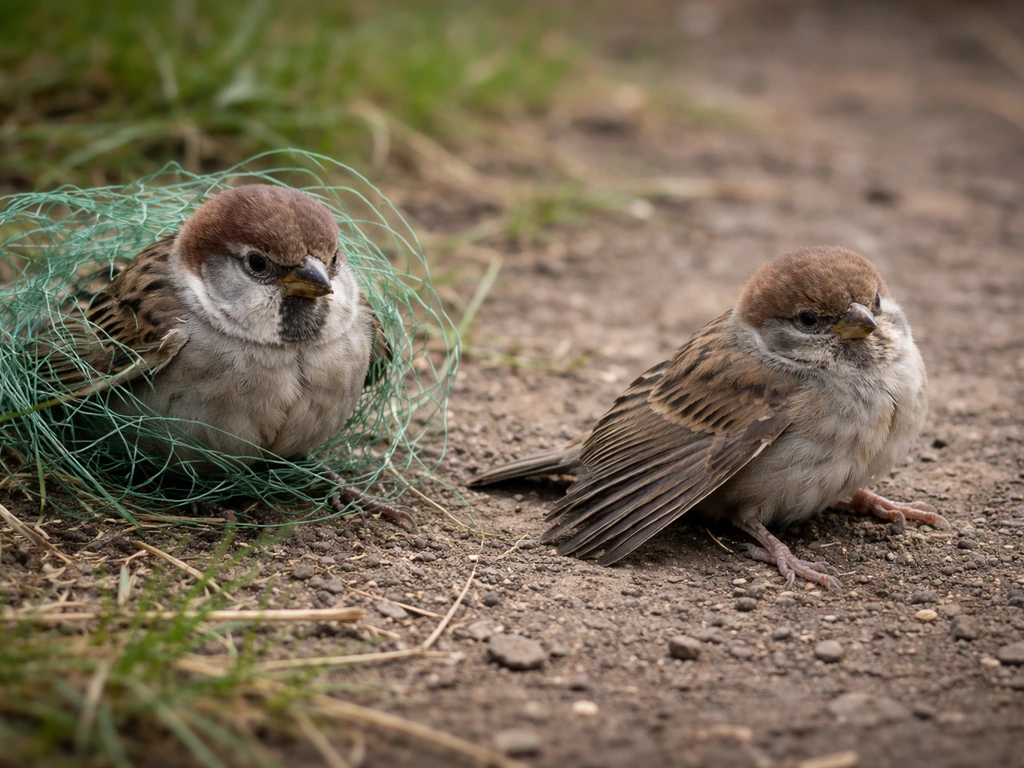
This distinction matters because it affects who you call and how fast you need to move. A trapped bird is physically stuck somewhere it can't escape on its own: think caught in netting, wedged behind a pipe, inside a building or garage, or tangled in string. An injured bird may or may not be trapped, but it has something physically wrong with it beyond just being in the wrong place.
Here's the honest truth though: wild birds are very good at hiding pain. The RSPCA explicitly states it's "often not easy" to tell from appearance alone whether a bird needs medical help. So don't rely on the bird looking obviously hurt. Instead, quickly scan for these red-flag signs that suggest injury on top of being trapped: Virginia Department of Wildlife Resources lists “needs help” injury indicators such as broken bones, lacerations or bleeding, deformity, cat bites or puncture wounds, maggots or warbles, head tilting, or large bubbles under the skin red-flag signs that suggest injury.
- One or both wings drooping or held at an odd angle
- Visible bleeding, wounds, or missing feathers in patches
- Head tilting to one side or the bird seems disoriented/spinning
- Legs bent the wrong way or unable to grip/stand
- Cat or dog bites (even small puncture wounds you can barely see)
- Maggots or unusual swelling under the skin
- The bird struck a window and is lying on its side or can't hold its head up
If you see none of those and the bird seems alert, upright, and is just physically stuck, it may genuinely be trapped without additional injury. But even then, the stress of being trapped can cause shock, which is dangerous on its own. Whether it looks hurt or not, you still need to act.
What to do before you make any calls
Before you pick up the phone, spend two or three minutes doing these things. It'll keep the bird calmer, reduce the risk of making things worse, and give rescuers much better information when you do call.
- Keep pets and children away immediately. Dogs and cats stressed a bird even through a carrier. Kids, however well-meaning, add noise and movement that spike the bird's heart rate.
- Take a photo or short video if you can do it without disturbing the bird. This helps rescuers assess the situation remotely before they arrive.
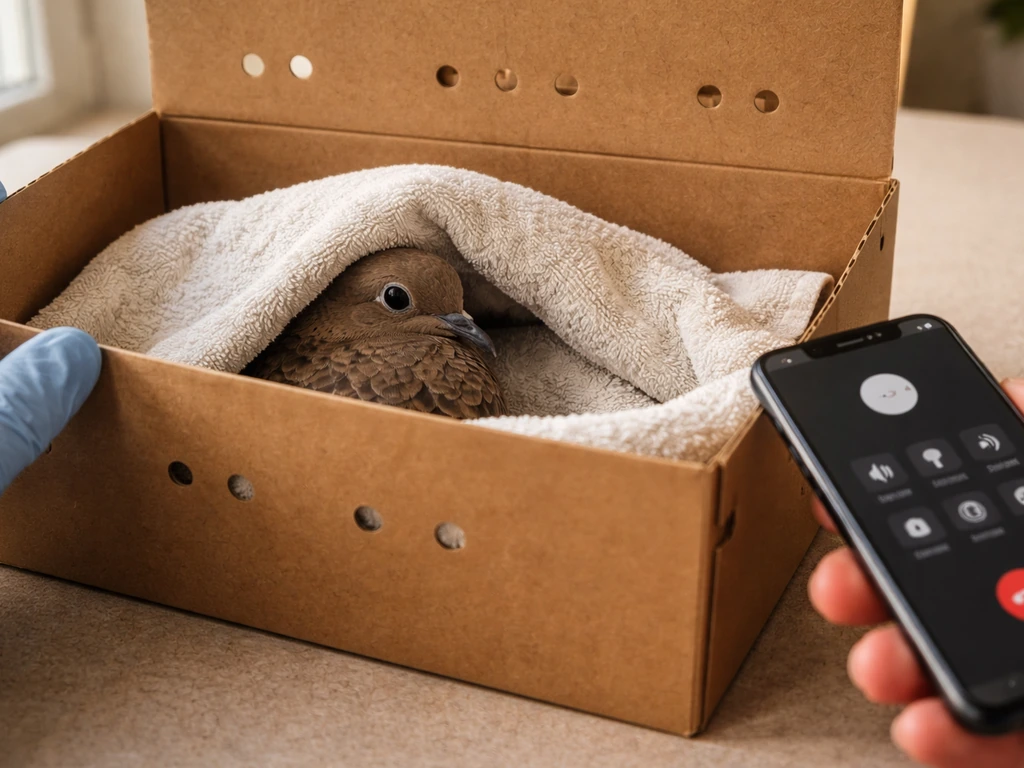
- If the bird is free enough to be gently contained, place it in a cardboard box or paper bag with small air holes. Line the bottom with a paper towel (not a fluffy towel: claws get caught). Put the lid on loosely. Darkness calms birds down fast.
- If it's cold outside or the bird feels cold to the touch, place one end of the box on a folded towel over a heating pad set on low. This creates a warm zone the bird can move toward without being forced into direct heat.
- Do not give the bird food or water. This feels counterintuitive, but the wrong food or liquids can cause serious harm or death. Rescuers and vets need to assess the bird first.
- Put the box somewhere quiet, dark, and away from household noise like TVs, kids, or pets. A bathroom or closet works well.
- Never try to throw the bird into the air to "help it fly." If it can't fly, it'll hit the ground again and worsen any injury.
That's it for now. You're not trying to fix anything, just stabilize the situation. The best thing you can do for the bird at this point is reduce its stress while you get professional help on the line.
Who to call first: wildlife rehab, avian vet, or animal control
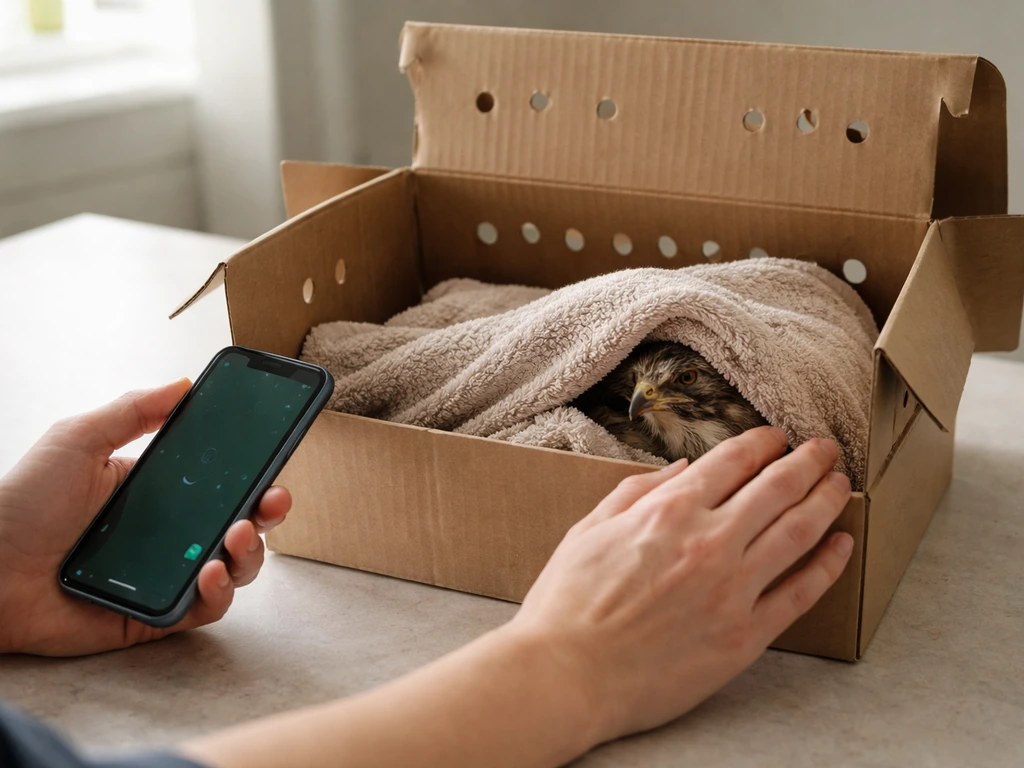
Wildlife rehabilitators are almost always your best first call for a trapped or injured wild bird. They specialize in exactly this, they handle everything from sparrows to raptors, and most operate free of charge. Many can triage your situation over the phone and tell you whether you need to bring the bird in or whether it can be released once freed. An avian vet is the right call when you can see clear injuries (bleeding, broken bones, puncture wounds) and need medical treatment fast, not just advice. Animal control varies hugely by location: in some areas they'll come out for birds, in others they'll redirect you entirely. It's worth a quick call if you're stuck, but don't count on them as a primary resource.
| Contact | Best for | Likely cost | Speed |
|---|---|---|---|
| Wildlife rehabilitator | Trapped, distressed, or injured wild birds of any kind | Usually free | Can advise by phone immediately; pickup varies |
| Avian vet | Clear injuries needing medical treatment (bleeding, broken bones, cat attack) | Consultation fee applies | Fast if you bring the bird in |
| Animal control / council | Large or dangerous birds, birds in public hazards, last resort if no rehab available | Free | Response time varies widely |
| RSPCA / USPCA (UK) | When you can't find a local rehab; they can advise and sometimes collect | Free | Phone advice immediate; collection varies |
In the UK, the RSPCA is a solid backup contact and can sometimes arrange collection for injured birds. In Northern Ireland, the USPCA handles injured wildlife calls at 028 3025 1000. For US readers, your state's Department of Wildlife Resources website will have a licensed rehabilitator list. The US Fish and Wildlife Service also recommends going straight to a professional rather than trying to handle it yourself.
When the situation is genuinely urgent
Most trapped bird situations are stressful but not immediately life-threatening if you've contained the bird safely. These situations are different and need faster action:
- Cat or dog attack: Even a small bite or scratch that barely breaks the skin can introduce bacteria (especially Pasteurella from cats) that kill birds within 24 to 48 hours. This is an avian vet situation, not a wait-and-see one.
- Active bleeding: Apply very gentle pressure with a clean cloth and get to a vet or rehab as fast as possible.
- Window collision with loss of consciousness: The bird needs monitoring. If it hasn't recovered and flown off within 20 to 30 minutes, it needs professional help.
- Nest emergency with chicks involved: Baby birds have almost no ability to regulate their own temperature. If a nest has fallen or chicks are on the ground and cold, time matters more than for adult birds.
- Visible broken bones or deformity: The bird is in pain and needs a vet, not just a box and a wait.
In any of these cases, don't wait for a callback. Call multiple contacts at once, or drive to the nearest avian vet while someone else keeps calling rescues.
What to say when someone picks up
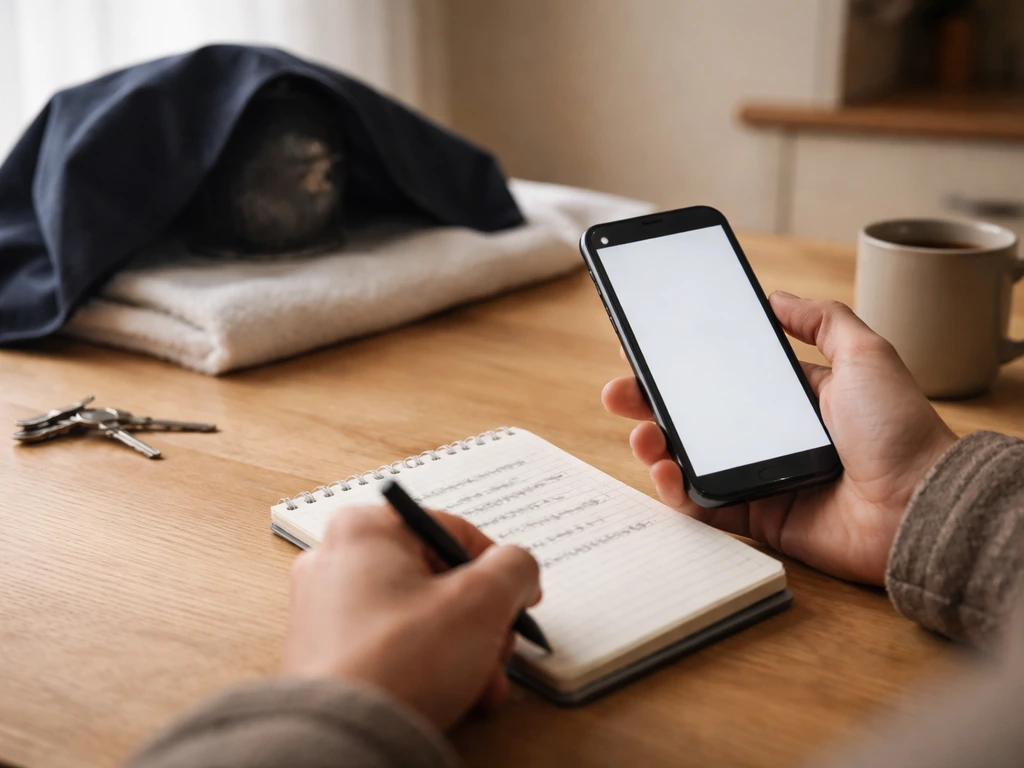
Rescuers and vets do quick phone triage, so the more specific you are, the faster they can help. Keep it short and cover these points:
- Your exact location (address or nearest landmark, town, postcode/zip)
- What species the bird is, or a rough description if you don't know ("small brown bird," "large black and white bird," "looks like a pigeon")
- How it's trapped or what happened (stuck in netting, found after window strike, fell into a chimney, etc.)
- How long it's been trapped or how long you've had it
- What injuries you can see, or if it looks uninjured but distressed
- Whether it's alert and moving or lethargic and still
- Whether it feels warm or cold
- Any hazards nearby: cats, dogs, busy road, height off the ground
- Whether you've already contained it in a box
You don't need to have all the answers. "I'm not sure what species it is" is totally fine. Just give them what you do know. The goal is to help them decide whether someone needs to come to you, whether you should drive the bird in, or whether phone guidance is enough to handle it yourself.
How to find a local bird rescuer fast
If you don't already have a number, here's how to find one quickly without going in circles.
In the UK
- Help Wildlife (helpwildlife.co.uk) runs a wildlife rescue directory of around 700 organisations and individuals across the UK. Search by postcode. They also have a HelpDesk for situations like "bird trapped in a building."
- Search: "wildlife rehabilitator [your town]" or "bird rescue [your county]"
- RSPCA (0300 1234 999) can advise and sometimes direct you to the nearest rehabilitator
- SSPCA (Scotland) and USPCA (Northern Ireland, 028 3025 1000) cover their respective regions
In the US
- Search: "licensed wildlife rehabilitator [your state or county]" or "bird rescue near me"
- Your state Department of Wildlife Resources or Fish and Wildlife Service website will have a directory
- The National Wildlife Rehabilitators Association (nwrawildlife.org) has a finder tool
- Search: "wildlife rehabilitation center [city]" for local drop-off options
When you search, look for results that specifically mention birds. Some wildlife rehabilitators only take mammals. A quick check of their website or a fast phone call will confirm whether they handle your type of bird.
If nobody answers: what to do while you wait
Wildlife rescues are often run by small teams or volunteers, and they get busy. If you've called two or three numbers and nobody's picked up, don't panic. Here's what to do:
- Leave a voicemail at every number you try. Include your name, phone number, and a one-sentence summary of the situation ("I have a pigeon that hit my window, it's in a box, appears alert but can't fly, located in [town]"). Some rescues can also receive follow-up texts.
- Keep a note of who you called and when. Help Wildlife specifically recommends this so you're not losing track across multiple calls.
- Keep the bird in its dark, quiet box. Don't keep checking on it. Every time you open the box you add stress.
- Maintain warmth if needed (heating pad on low, one end of the box only, with a towel between).
- Do not offer food or water while you wait.
- Try the next number on your list. Go wide: local vets who see birds, humane societies, even your local council's environmental health line sometimes knows who to call.
- If the bird is deteriorating fast (seizures, open-mouth breathing, complete limpness), drive to the nearest animal emergency clinic even if they don't specialize in birds. They can at least stabilize it.
The most important thing is that you've already done the right things: you've contained the bird, reduced stress, and you're actively seeking help. That alone gives it a much better chance than if it had been left where it was. Keep working down your contact list and someone will get back to you.
It's also worth knowing that related questions like whether animal control will help a hurt bird, or what happens if you call the RSPCA specifically, have their own nuances depending on where you live and what the bird's situation is. If you call the RSPCA for an injured bird, ask whether they will collect it in your area and what details they need from you first will rspca collect injured bird. The short version: wildlife rehabilitators remain the most reliable first contact in almost every case, wherever you are.
FAQ
Who should I call first if the bird is trapped but I cannot see any injuries?
Call a wildlife rehabilitator first, and mention that the bird is physically trapped but appears alert and not bleeding. Ask whether they want you to wait until it is freed, or whether they want you to bring it in immediately, since stress and shock can still develop even without obvious wounds.
Should I call an avian vet immediately or wait for a rehabilitator if the bird might be injured?
If you can see clear trauma (bleeding, drooping wing, puncture wounds, obvious fracture), call an avian vet and a rehabilitator at the same time. If the bird only looks stressed or cold, start with the rehabilitator, because they can advise on stabilization while you confirm whether medical care is actually needed.
What if the trapped bird is a baby bird and it is still in the nest area?
Treat it as urgent to get expert guidance. Call a wildlife rehabilitator and ask whether the safest move is to return it to the nest, secure it nearby, or transport it. Avoid moving it multiple times, because nestlings can overheat or chill quickly depending on weather.
The bird is in my house, should I try to chase it out while I call?
Do not chase. Keep lights low, close interior doors, and open one escape route if it is safe. Use a box or towel only to contain it if it cannot leave, and still call a rehabilitator, since a bird that flies into windows or walls may have internal injury even if it looks “okay.”
Is it safe to handle the trapped bird to move it to a container?
If the bird must be contained, do it quickly and gently, using a secure box with ventilation. Wear thick gloves if possible, and avoid feeding or giving water. Prolonged handling raises stress and can worsen minor injuries, so minimize contact and get help on the line.
What details should I give on the phone to the rehabilitator or vet?
Share your location, where the bird is trapped (garage, netting, behind a pipe, tangled string), whether there is bleeding or an obvious drooping wing, and how the bird is behaving (upright and responsive, lying flat, breathing heavily). Also tell them if a cat or dog was involved, since that changes the recommended urgency and treatment.
Do I need to identify the species before I call the rescuer?
No. “Not sure of species” is fine. If you can do so without delaying, mention size and markings (for example, small brown songbird, larger raptor-like silhouette), but priority is accurate injury and situation details so they can triage correctly.
What should I do if no one answers after calling multiple contacts?
Keep the bird stable and continue calling other licensed contacts (another rehabilitator, an avian vet, or a secondary emergency line). If you have to leave a voicemail, include clear location instructions and a short description of the trapping situation, since many rescues prioritize calls based on how quickly they can find the bird.
Will animal control come out for a trapped bird?
It depends on where you live and whether they handle birds directly. Treat animal control as a backup option. If you call and they redirect you, ask for the correct wildlife or bird-specific contact number rather than waiting for further escalation.
If the bird is bleeding, what’s the safest immediate step while I wait for help?
Focus on containment and keeping it warm and quiet. Do not try to apply home treatments. For bleeding, mention it clearly when you call an avian vet and rehabilitator so they can advise on whether immediate transport is needed versus phone stabilization first.
How can I tell if I should drive the bird to a vet instead of waiting for guidance?
If there is visible trauma, heavy bleeding, repeated labored breathing, a suspected fracture, or the bird is deteriorating quickly, driving to the nearest avian vet is often the fastest path. If the bird is trapped but appears alert, start with a rehabilitator’s phone triage and follow their “bring in vs release plan” after it is safely freed.
Where do I find a bird-capable rescuer if a site only mentions mammals?
Before you commit, filter results by wording that explicitly includes birds or “avian.” If the listing is unclear, call and ask directly whether they accept birds and what they need for triage. This prevents delays when many general wildlife centers handle only certain animal types.