If you find an injured wild bird in the UK today, your first call should be to the RSPCA on 0300 123 8960. The RSPCA can also advise on whether they will collect the injured bird and what happens next will collect injured bird. They can advise you immediately, help assess urgency, and route you to a local wildlife rescue or rehabilitator who can actually treat the bird. If the bird is in the road and causing or has been caused by a traffic incident, call 999 first. From there, the steps below will walk you through exactly what to do in the next 10 to 20 minutes while you wait for help.
Injured Bird Who to Call UK: Step-by-Step Guide
Marcus Chen
9 Jun 2026
Who to call for an injured wild bird in the UK
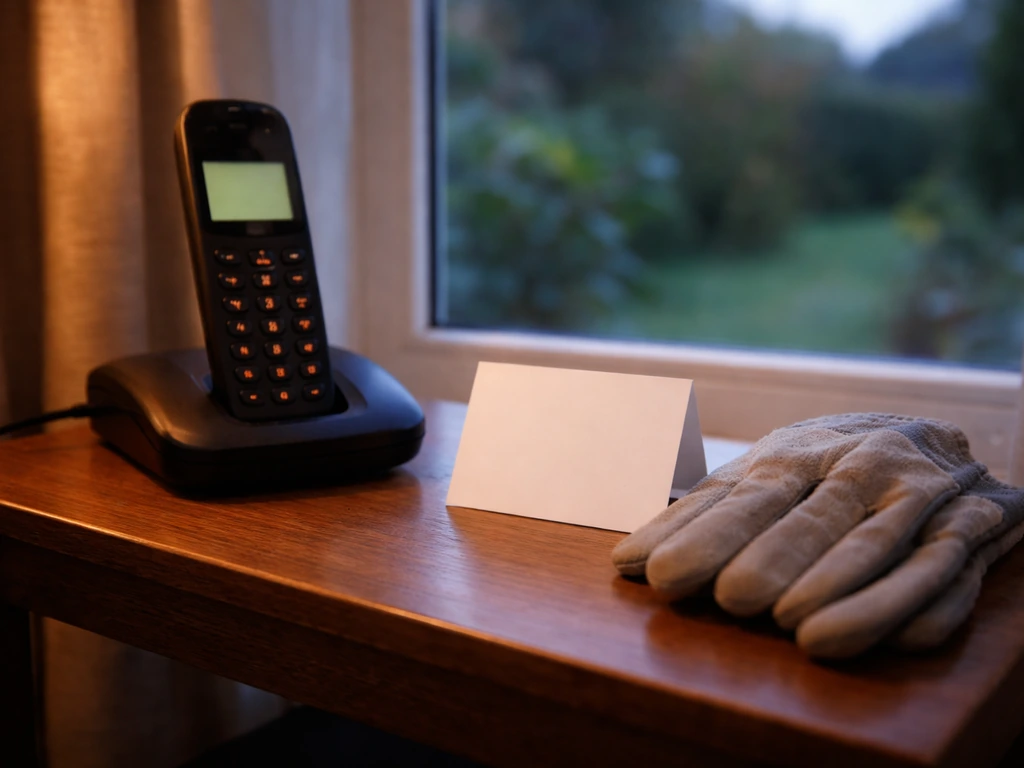
The RSPCA (0300 123 8960) is the most practical first point of contact for most people across England and Wales. They operate a 24-hour line, can triage your situation over the phone, and will tell you whether a rescue team can attend or whether you need to find a local wildlife hospital yourself. In Scotland, the equivalent is Scottish SPCA on 03000 999 999. In Northern Ireland, call the USPCA on 028 3025 1000.
Beyond the RSPCA, there are several other routes worth knowing about. The Wildlife Trust network and local wildlife hospitals (such as Tiggywinkles in Buckinghamshire or Secret World in Somerset) often have their own intake lines and may be geographically closer to you. The RSPB does not run a rescue or collection service, but their local groups sometimes have contacts who can point you toward the nearest rehabilitator. A quick search for 'wildlife rescue near me' or using the Wildlife Rehabilitators' Directory on the BWRC (British Wildlife Rehabilitation Council) website can also surface local specialists fast.
If the bird needs immediate hands-on treatment rather than just collection, any local vet is legally required to provide emergency first aid to injured wild animals free of charge under the Wildlife and Countryside Act. They cannot always rehabilitate the bird, but they can stabilise it, give pain relief, and refer it onward. So if you're close to a vet and the bird is seriously hurt, don't wait for a rescue service to arrive.
| Who to call | When to use them | Contact |
|---|---|---|
| RSPCA | First port of call for most situations across England and Wales | 0300 123 8960 |
| Scottish SPCA | Injured birds in Scotland | 03000 999 999 |
| USPCA | Injured birds in Northern Ireland | 028 3025 1000 |
| Local vet | Serious injury needing urgent treatment right now | Find your nearest via Google Maps |
| Local wildlife hospital | Specialist rehabilitation for birds and wildlife | BWRC directory or search online |
| Police (999) | Bird on the road or involved in a traffic incident | 999 |
How to choose the right service: vet vs wildlife rescue vs RSPB or Wildlife Trust
Choosing who to call is easier once you know what each service is actually set up to do. A standard vet can stabilise and relieve pain, but most general practices don't have the facilities, expertise, or permits to rehabilitate a wild bird back to full health. A wildlife rescue or rehabilitator does have those skills, but they may not be able to collect the bird themselves. The RSPCA sits in the middle: they can advise, sometimes collect, and will connect you to the right people.
- Call a vet if the bird is visibly bleeding heavily, has an open fracture, or is in severe distress and you can get there within 15 to 20 minutes.
- Call the RSPCA first if you're unsure what to do, the bird is stable enough to wait, or you need someone to collect it.
- Contact a local wildlife hospital directly if you know one nearby: they're often the best outcome for the bird because they have avian-specific expertise and proper release programmes.
- The RSPB and Wildlife Trusts are not rescue services. They don't collect birds. But calling a local branch can be useful if you're struggling to find a rehabilitator in a rural area.
- If the bird is a raptor (sparrowhawk, owl, buzzard), look specifically for a licensed raptor rehabilitator, as these birds need specialist handling.
Immediate first aid and safety steps before you call
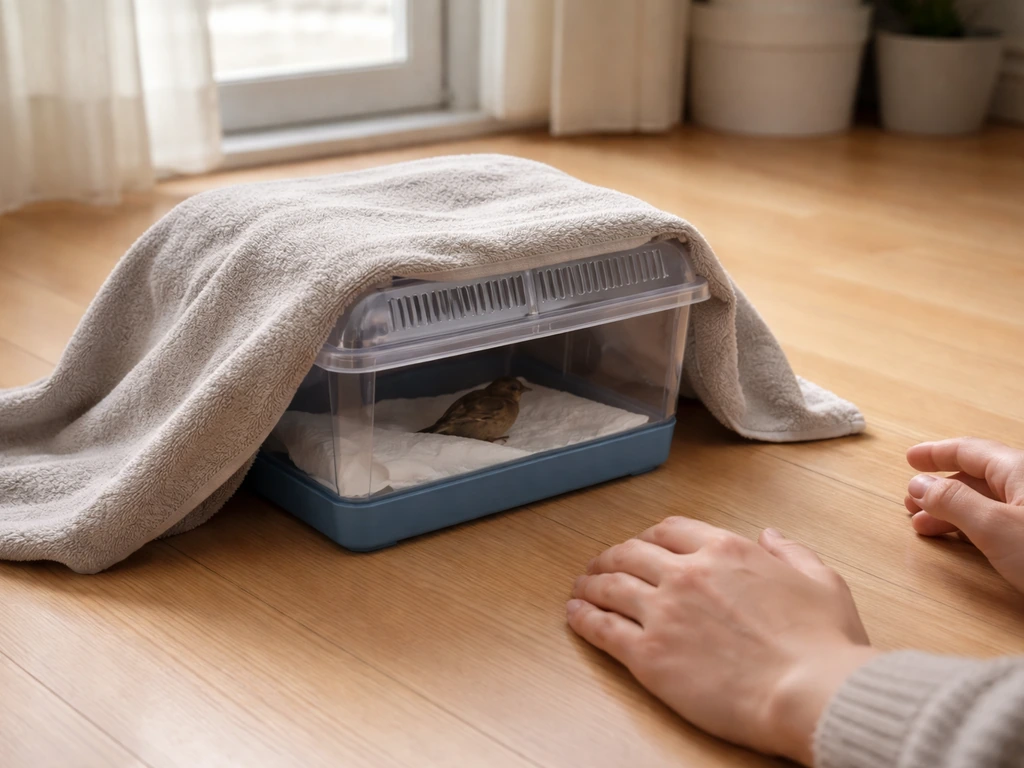
The single most important thing you can do in the first few minutes is reduce the bird's stress. A bird in shock can die from handling alone, so keep interaction to an absolute minimum. Here's what to do before you even pick up the phone.
- Stay calm and assess from a distance first. Is the bird breathing? Is it in immediate danger (on a road, near a cat, exposed to rain or direct sun)?
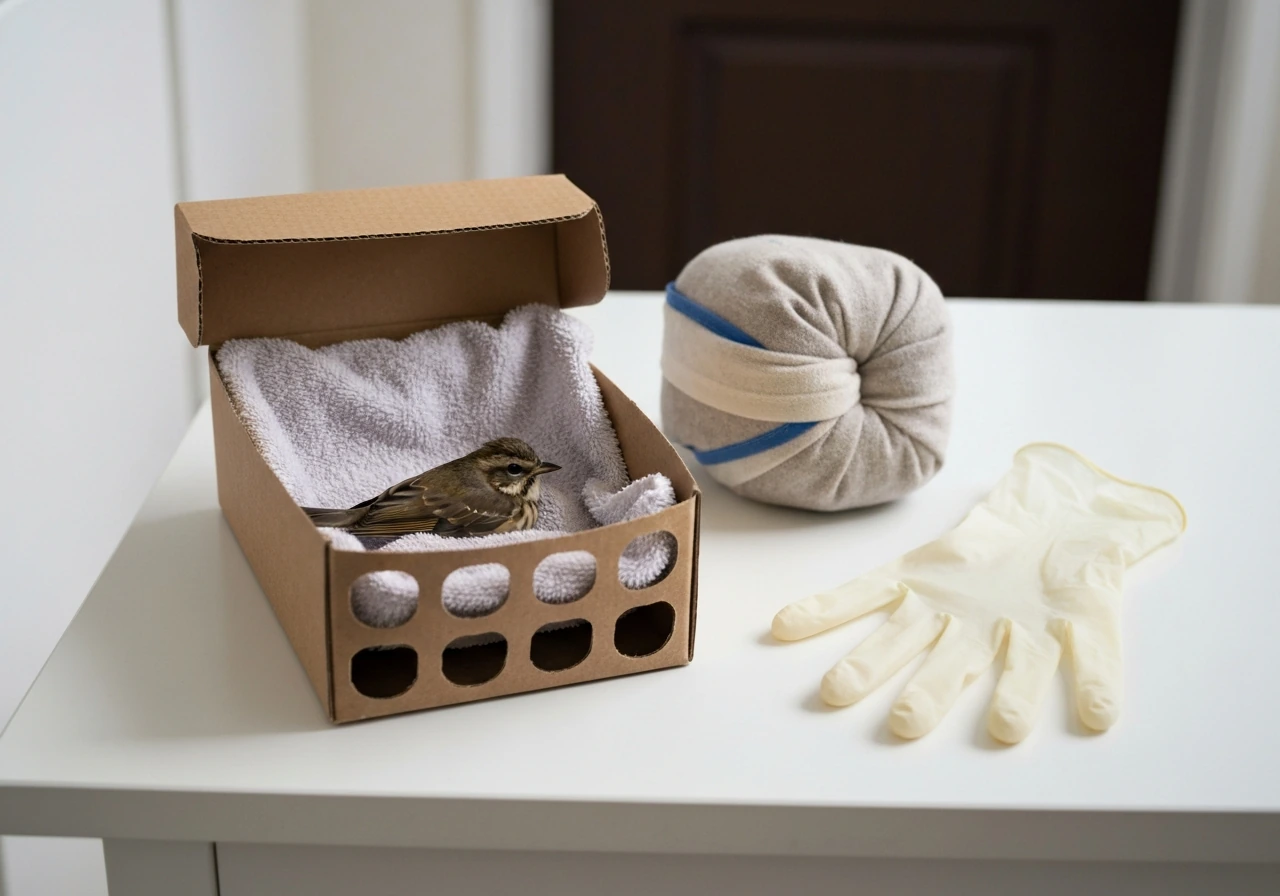
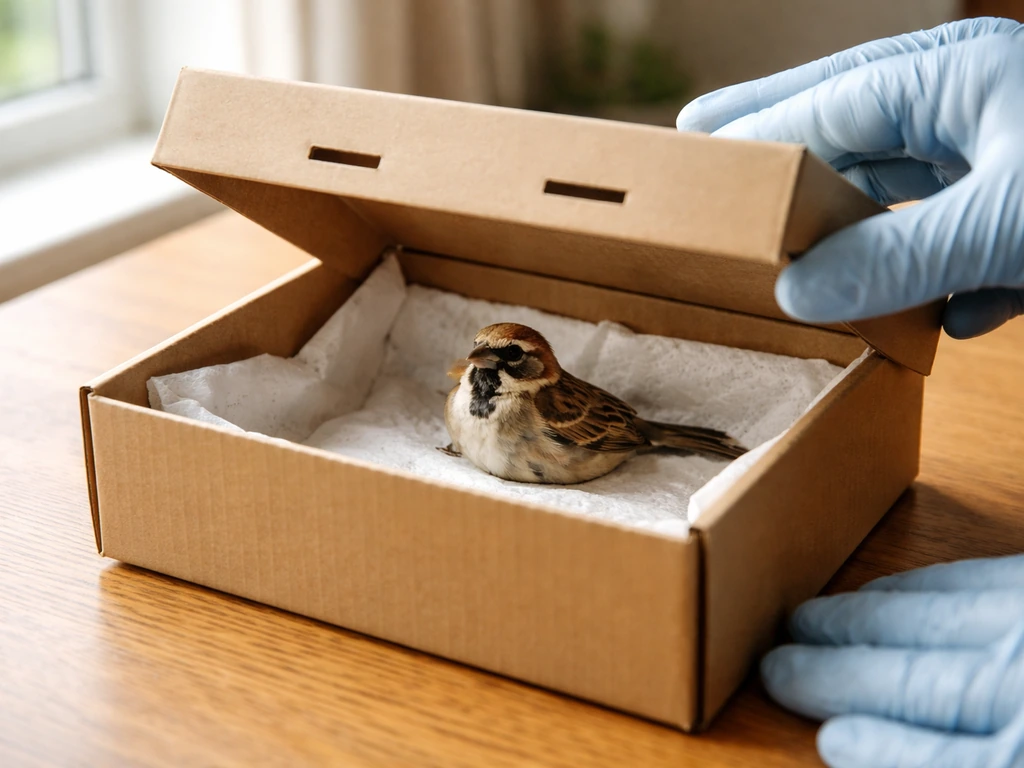
- If you need to move it, use gloves or a cloth to gently pick it up. Wrap it loosely in a towel or place it in a cardboard box with air holes. Do not squeeze or restrain it tightly.
- Put the box somewhere quiet, dark, and warm (around 25 to 30°C for most small birds). Darkness reduces panic. A warm room or an airing cupboard shelf works well. Do not put it near a radiator or in direct heat.
- Do not offer food or water unless instructed by a wildlife professional. Giving water to an unconscious bird can cause it to choke. Most birds will not eat while in shock anyway.
- Do not use human antiseptics, creams, or any medication. These can be toxic to birds.
- Minimise handling. Once the bird is in the box, leave it alone. Check on it only briefly every 20 to 30 minutes.
- Now make your calls.
If the bird is a window-strike victim and appears stunned rather than obviously injured, it may recover on its own in 20 to 60 minutes. Keep it in the quiet box outside (safe from cats and other predators) and monitor it. If it hasn't rallied in an hour, treat it as injured and call for help.
What to tell the person on the phone
The more specific you can be, the faster they can help. Wildlife rescue lines handle dozens of calls a day and need clear information to prioritise and advise correctly. Before you call, try to note down the following.
- Species if you know it (or a description: size, colour, beak shape). A photo on your phone is helpful.
- Your exact location: postcode, street name, or nearest landmark. This determines which local rescue can realistically reach you.
- Where you found it: garden, road, park, near a window, in a hedge.
- How it's behaving: can it stand? Can it fly? Is it conscious? Is it bleeding or holding a wing oddly?
- How long you've had it or how long ago you found it.
- Whether it has had contact with a cat, dog, or other pet. Cat injuries in particular carry a high infection risk and are often more urgent than they look.
- Whether you witnessed a window collision, a car strike, or found it without knowing the cause.
- If it's a young bird: is it fully feathered (fledgling) or has bare skin or fluffy down showing (nestling)? This matters a lot for advice.
- Your phone number in case they need to call you back.
If you can take a quick photo before boxing the bird up, do it. A picture often helps the person on the phone identify the species and assess the visible injury more accurately than a description alone.
Common injury scenarios and who usually handles them
Window strikes
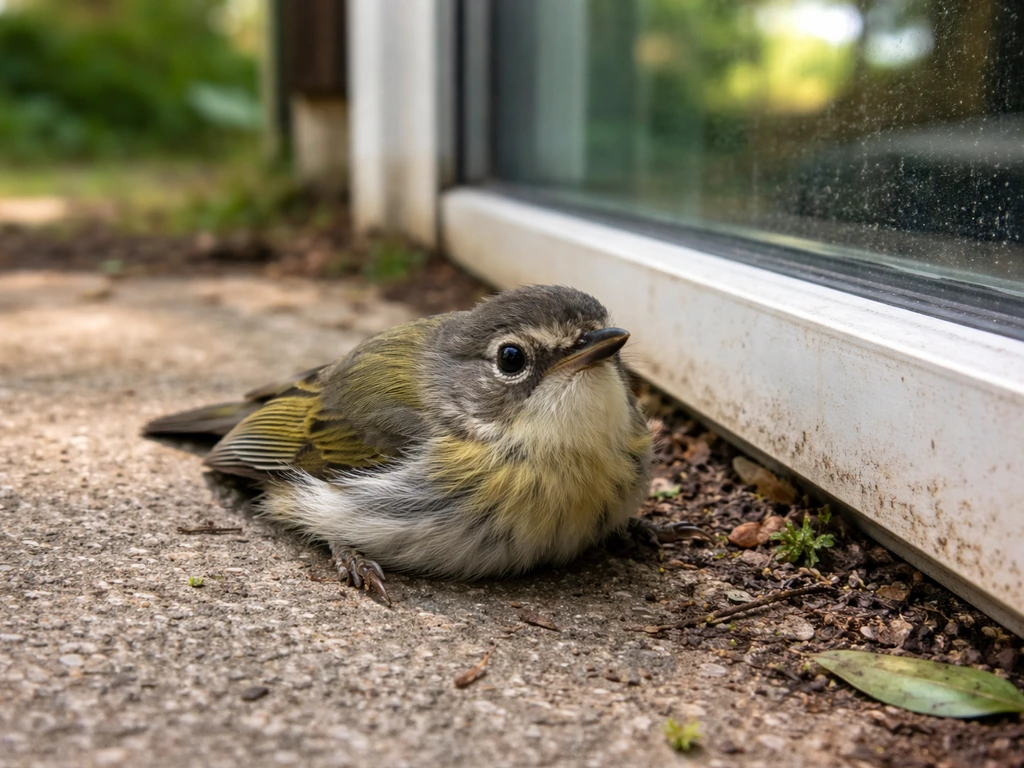
Window collisions are one of the most common reasons people find stunned birds in their gardens. If the bird hit your window and is sitting on the ground looking dazed, give it 30 to 60 minutes in a quiet, covered box before assuming the worst. Many birds recover fully. If it's still unresponsive after an hour, or if there's obvious injury (blood, drooping wing, unable to hold its head up), call the RSPCA or a local wildlife rescue.
Cat or dog attack
Don't be fooled by a bird that looks 'fine' after a cat attack. Cat saliva contains bacteria that cause fatal septicaemia in birds within 24 to 48 hours, even from punctures too small to see. Any bird that has been in a cat's mouth needs antibiotics as quickly as possible. This is a vet situation, and it's urgent. Animal control may be able to advise or direct you to the right local wildlife rescue or emergency vet for a hurt bird. Call immediately, even if the bird is walking around.
Tangled or trapped birds
If a bird is tangled in netting, fishing line, or wire, and you can safely and quickly free it without causing more damage, do so gently. If it's tangled tightly, or if freeing it requires tools or causes obvious pain (the bird is screaming or thrashing hard), call the RSPCA rather than pulling.
If freeing it requires specialist tools or isn't safe for you to help, the RSPCA advises you to report the concern to their team rather than attempting it yourself [call the RSPCA rather than pulling. ](https://www. rspca. org.
uk/en/reportaconcern). For birds trapped in a building or other enclosed space, this is a slightly different scenario covered more specifically in guidance around trapped birds. For a trapped bird, calling the RSPCA or a local wildlife rescue line is usually the fastest way to get the right help trapped in a building or other enclosed space.
Broken wing or leg
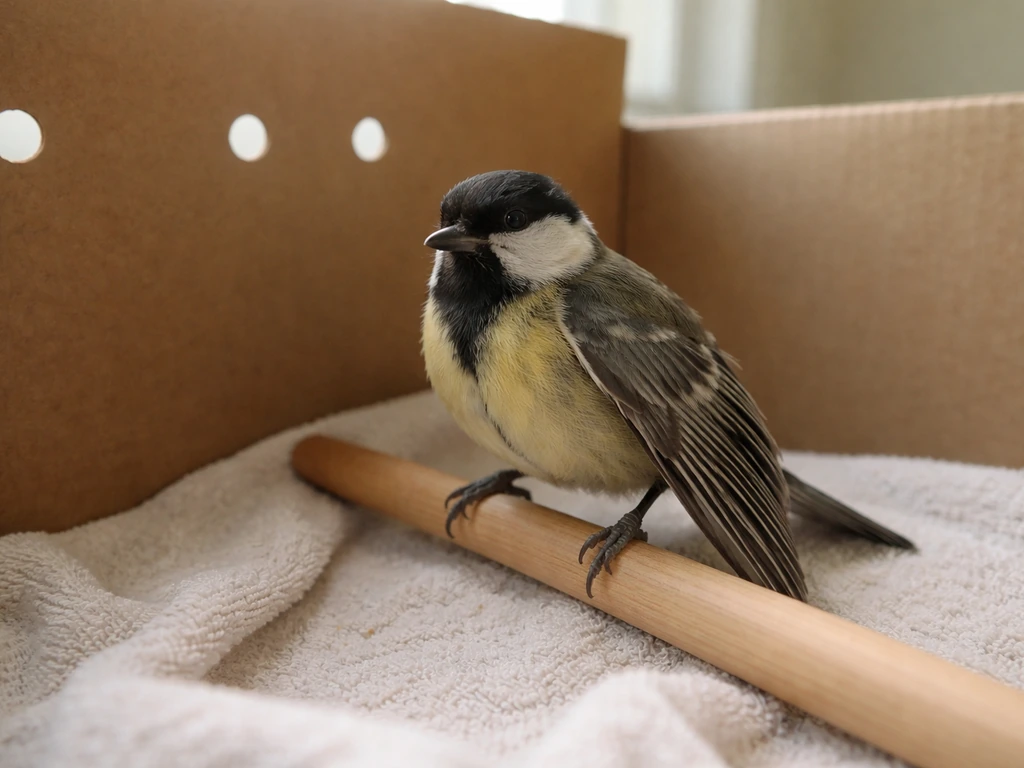
A bird with a broken wing will typically hold the wing lower than normal or have it hanging at an odd angle. A bird with a broken leg may be unable to stand or perch. Do not attempt to splint or bandage the injury yourself. Box the bird, keep it warm and quiet, and get it to a vet or wildlife hospital as quickly as you can. Fractures can often be treated successfully if the bird gets professional care within a few hours.
Nestlings and fledglings
This is where a lot of people accidentally intervene when they shouldn't. A fledgling is a fully feathered young bird that looks almost adult-sized but can't fly well yet. These birds are supposed to be on the ground: their parents are still feeding them nearby. Unless it's injured or in immediate danger from a predator, leave it alone and keep pets away.
A nestling is different: it has bare skin or fluffy down, no real feathers, and has clearly fallen from a nest too early. If you can see the nest and safely reach it, you can put it back. The parent will not reject it because of your smell. If you can't reach the nest or the bird is injured, call for help.
Do not attempt to hand-rear a nestling yourself without professional guidance.
Transporting the bird: what to do and what to avoid
If you're taking the bird to a vet or wildlife hospital yourself rather than waiting for collection, how you transport it matters. A stressed bird in a too-large container will thrash and worsen its own injuries. Use a cardboard box just big enough for the bird to sit in comfortably, with several small air holes punched in the sides and lid. Line the bottom with a non-frayed cloth or paper towel so the bird has grip.
- Keep the box dark during transport: a covered box reduces panic significantly.
- Do not play music loudly or talk to the bird constantly. It doesn't help and adds stress.
- Keep the car at a comfortable temperature. Don't leave the bird in a hot car even briefly.
- Do not offer food or water during transport.
- Do not let children or curious adults keep opening the box to look at the bird.
- Do not use a wire cage: the bird will damage its feathers and beak trying to escape.
- If you're transporting a large bird like a gull, heron, or swan, be aware these birds can injure you. Herons in particular can strike with their beak toward your eyes. Get guidance before handling.
Once you arrive at the vet or rescue centre, hand over the box and give them your notes on the situation. You don't need to stay unless they need more information from you. The best thing you can do at that point is let the professionals take over.
Finding an injured bird is stressful, and the instinct to do more is natural. But in most cases, less handling and faster professional contact gives the bird the best chance. Box it, keep it calm, make your calls, and get it to the right hands quickly. That's the most useful thing you can do.
FAQ
Do I need to call immediately, or can I wait while I check if the bird recovers?
If the bird is not in immediate danger, you should still call the RSPCA or the relevant local wildlife rescue line, but you can buy time safely by keeping it boxed, warm, and dim. Avoid feeding or giving water, and do not try “rehydration” with syringes, as this can cause choking or aspiration.
What if the injured bird might have been poisoned rather than physically hurt?
Yes. If you suspect poisoning or ingestion (for example, a bird acting weak after eating bait, finding pellets, or being near rodenticides or pesticides), treat it as urgent even if there are no obvious wounds. Call the RSPCA (or an emergency vet) and mention any suspected substance so they can advise what not to do.
Can I feed or water an injured wild bird to help it recover while waiting for help?
Don’t give food, including bread, and don’t “aid” breathing by placing your fingers near the beak. For shock, the safest help is quiet containment, gentle warmth (for example, a towel around the box, not direct heat), and minimal handling until you reach the rescue line or vet.
Where should I keep the bird while I’m waiting for the phone call or a pickup?
For most people, keep it indoors, in a quiet, covered box, away from windows and draughts. If you must move it, use a small box and avoid transferring it between locations repeatedly, because each move increases stress and the chance of injury.
Who do I call if the bird is already dead or clearly not going to recover?
If you find a dead or clearly beyond help bird, calling is still useful because some organisations can confirm whether there is a public health or disease risk and advise what to do with the remains. At minimum, wear gloves if you touch it, bag it, and wash hands thoroughly afterwards.
What if the bird is caught in string or netting, can I untangle it myself?
Yes. If the bird is tangled, the safest rule is, if you can free it without pulling or using tools, do it gently. If it’s tightly bound or you’re unsure, call first, because forced release can break wings or increase bleeding. Only attempt removal if the bird is stable and you can see exactly what is snagging it.
My neighbour’s cat brought a bird that looks okay, should I still act fast?
If a bird has been in a cat’s mouth, antibiotics and rapid veterinary advice are the priority, so call immediately rather than waiting to see if it “seems fine.” Even if punctures are small, infection can develop quickly, so treat this as urgent medical care.
How can I tell the difference between a fledgling that should stay put and an injured bird?
If it’s a fully feathered bird that cannot fly well, avoid the “fledgling rescue” instinct. Fledglings are supposed to be on the ground, so keep pets away and monitor from a distance. Only contact for help if it is injured, in traffic risk, or you can see obvious trauma.
What’s the safest way to transport an injured bird to a vet if the rescue service can’t collect?
If you have to transport it, prevent slipping and overheating. Use a small cardboard box, provide air holes, and avoid lining with loose material that can catch claws. Keep the bird level and still, and don’t use towels that wrap tightly around the body, because that can restrict breathing or increase stress.
Next Article
Will Animal Control Help a Hurt Bird? What to Do Now
Get clear steps for a hurt bird: when animal control helps, when to call a rehabber or avian vet, and urgent first aid.