
Yes, a bird can live with one wing, but the quality and length of that life depends heavily on how severe the injury is, how quickly it gets proper care, and whether it's a wild bird or a captive one. A bird that loses a wing surgically and receives professional rehabilitation can survive for years, with one study tracking amputated birds of prey to a median survival of around 1,070 days, and some living over 13 years. That said, a one-winged wild bird almost never returns to the wild. Most end up in permanent wildlife care facilities if they survive at all. So the honest answer is: survival is possible, but the path there runs entirely through professional help.
Can a Bird Live With One Wing? Survival and First Aid
Marcus Chen
15 May 2026
Realistic Outcomes: How Much the Injury Severity Changes Everything
Not every wing injury ends in amputation, and not every amputated bird does poorly. The range of outcomes is wide, so it helps to think in terms of injury type rather than just "wing problem."
| Injury Type | Likely Outcome | Chance of Release to Wild |
|---|---|---|
| Simple closed fracture (no skin break) | Good with prompt veterinary splinting | Possible with early treatment |
| Complex fracture or joint dislocation | Often requires surgery; prognosis varies | Reduced, depends on recovery |
| Open fracture (bone exposed through skin) | High infection risk; particularly devastating for small birds | Poor to very poor |
| Nerve damage (drooping wing, no movement) | Permanent disability likely | Very unlikely |
| Traumatic or surgical amputation | Survivable with ongoing care; median ~1,070 days in one study | Not possible; permanent captive care needed |
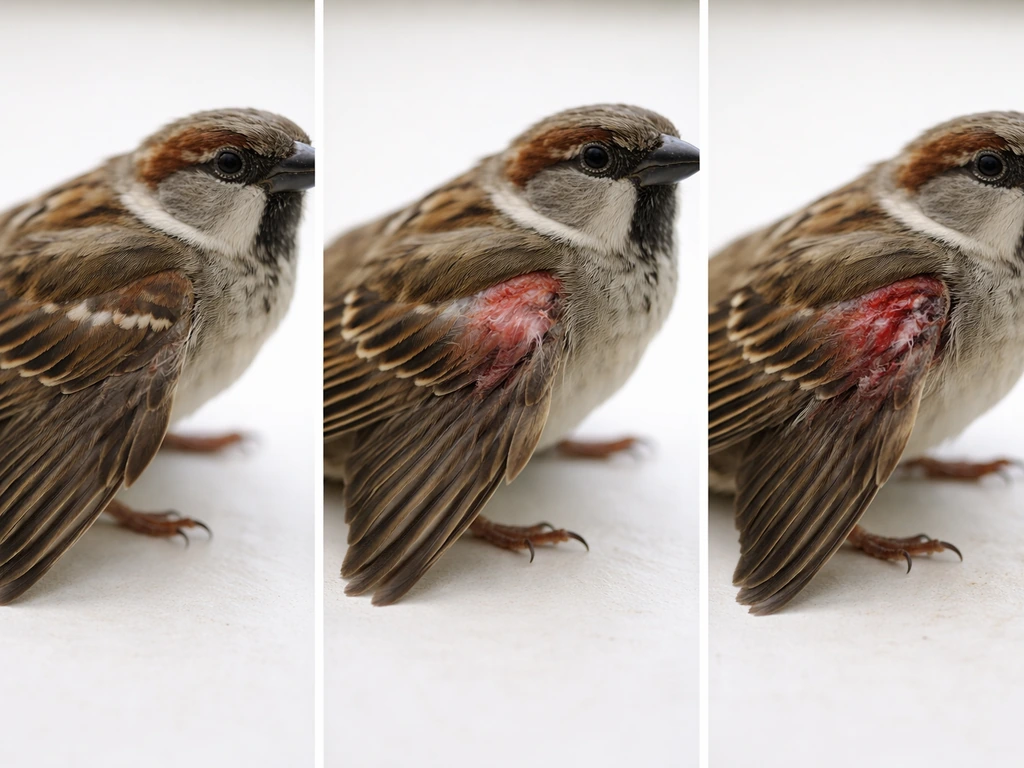
blank" rel="noopener noreferrer">Open fractures are the most urgent. When bone breaks through skin, infection sets in fast, and for small birds like sparrows or finches, the trauma alone can be fatal within hours. In severe cases, you may be wondering how fast can a bird die from a broken wing, especially when infection or major trauma is already starting. Complex fractures and dislocations often need surgery to have any real chance. Even then, 43% of birds in one amputation study had complications during recovery, and 30% developed life-threatening ones. This isn't meant to be discouraging. It means that getting a bird to a professional quickly is the single most important thing you can do.
For birds with nerve damage rather than a clean break, the outlook for a full recovery is much harder. A wing that hangs permanently at the bird's side due to nerve injury will not repair itself the way a simple fracture might. These birds sometimes adapt remarkably well in a calm captive environment, but they will never fly again. The same is true for complete amputations. Quality of life questions matter here too. Wildlife rehabilitation professionals weigh survivability against ongoing pain and functional impairment when making care decisions, and so should you when choosing how urgently to act.
How to Tell What You're Actually Looking At
When you find a bird on the ground with a wing issue, you're trying to figure out two things fast: is this an injury or something the bird was born with, and how bad is it? Here's what to look for without handling the bird more than necessary.
Signs pointing to an acute injury
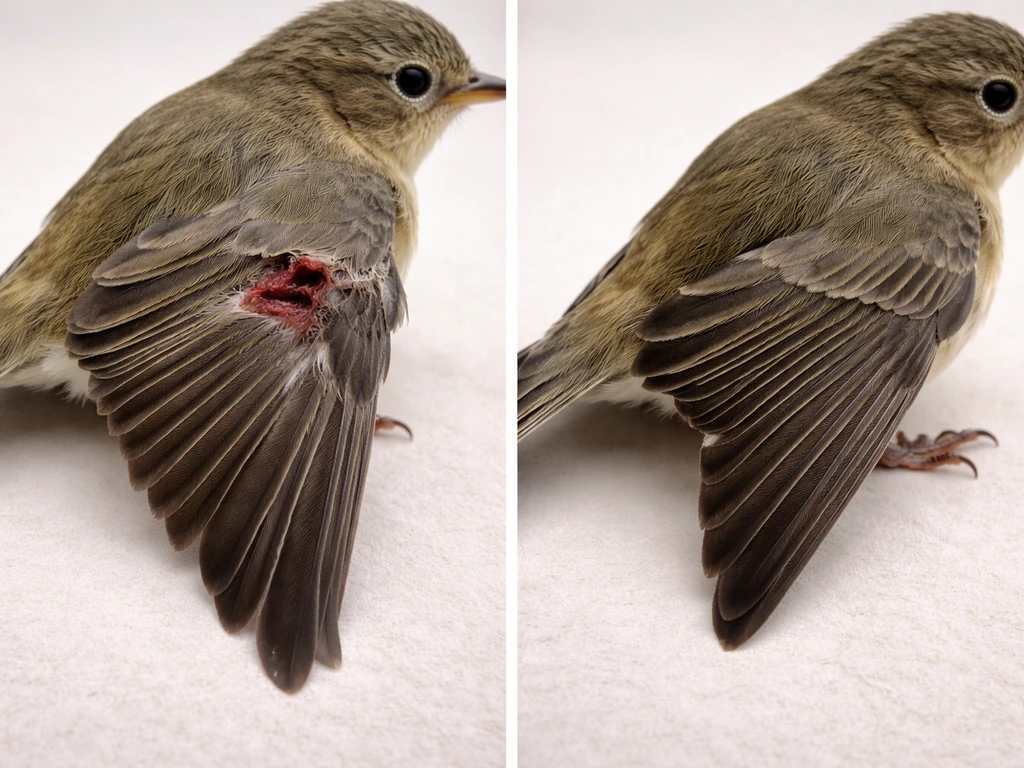
- One wing drooping lower than the other or held at an odd angle
- Visible blood, swelling, or a wound on or near the wing
- Bone or tissue visible through the skin (open fracture, treat as an emergency)
- The bird can't or won't fly after being left undisturbed for more than an hour
- Head tilt, inability to stand, or not using its legs alongside the wing problem
- The bird is alert but grounded, which usually means something is physically wrong rather than illness
Signs that might point to a long-standing deformity
- The bird looks otherwise healthy, is eating and moving around, but one wing sits differently
- No blood, no swelling, no obvious wound
- The bird seems adapted to its wing position and moves confidently
- You've seen this bird around before and it's always looked this way
Even if you suspect a long-standing deformity rather than a fresh injury, it's still worth calling a wildlife rehabilitator to describe what you're seeing. They can often help you decide over the phone whether the bird needs to come in. If there's any blood, exposed tissue, or the bird is clearly in distress, stop trying to assess and move straight to first aid and getting professional help.
Immediate First Aid for a Wing Injury
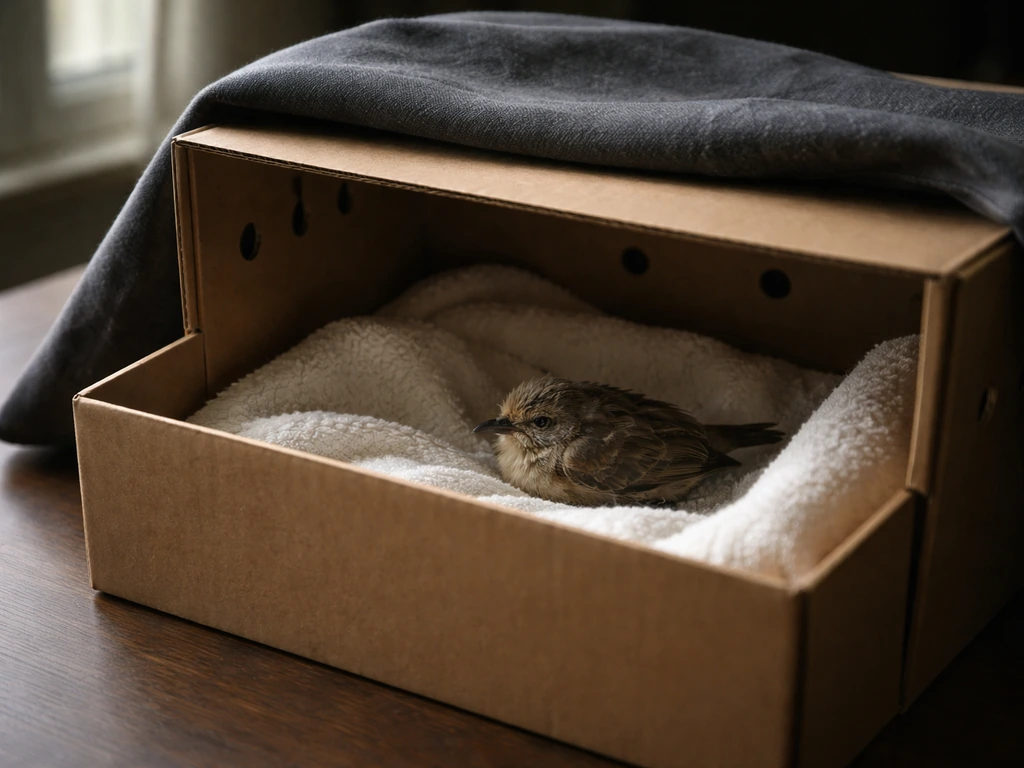
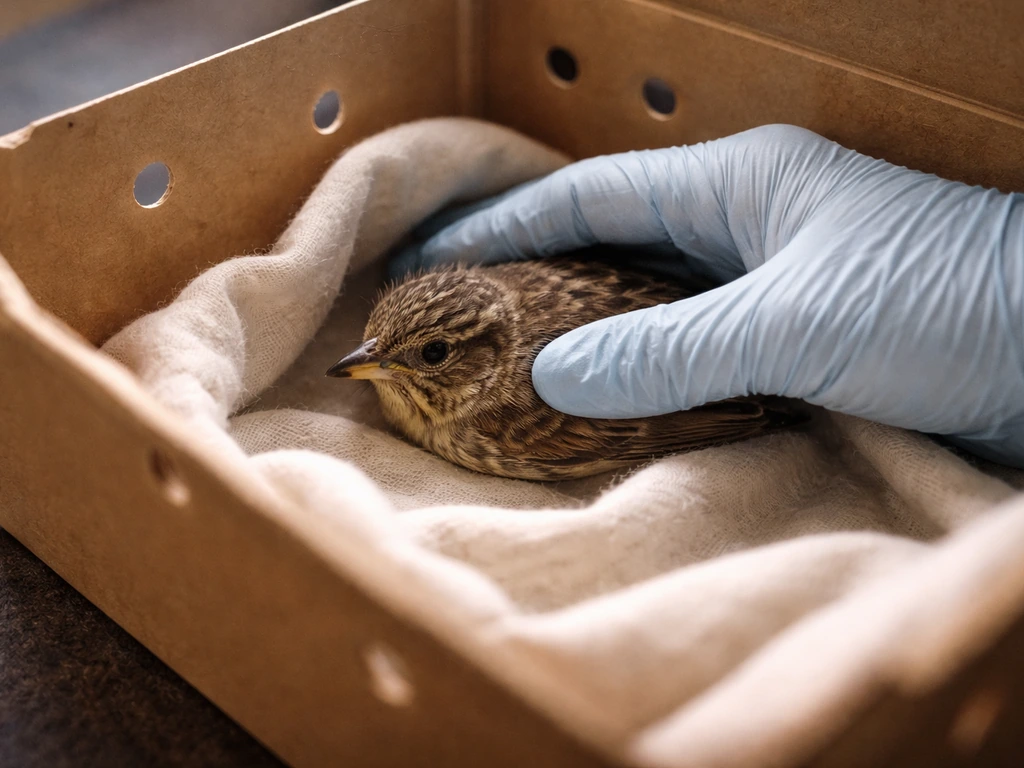
Your job right now is not to fix the wing. It's to keep the bird alive and calm until a professional can help. Everything you do in the next 30 minutes should be about reducing stress, preventing further damage, and keeping the bird warm. Use a shoebox with air holes lined with a towel or paper towel, and keep the songbird in a warm, dark, quiet place until help is available keep the bird in a warm, dark, quiet place. Here's how to do that.
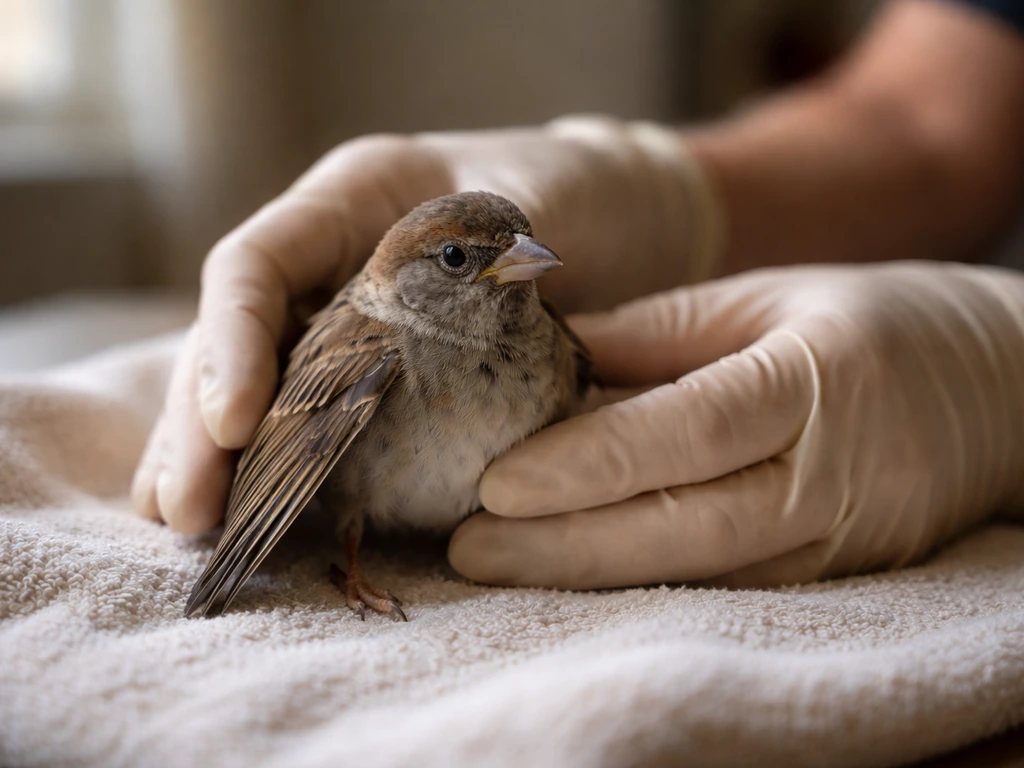
- Contain the bird gently: Use a small cardboard box (like a shoebox) with a few small air holes punched in the lid. Line it with a folded towel or a few layers of paper towels. Wearing gloves, gently scoop the bird up using both hands, keeping its wings tucked against its body, and place it in the box. Close the lid.
- Keep it warm: Birds have body temperatures of around 103 to 106°F and lose heat fast when injured or in shock. Place the box somewhere warm, aiming for at least 85°F in the environment. A heating pad on its lowest setting under half of the box works, as long as the bird can move away from the heat if needed. A warm room is better than a cold garage.
- Keep it dark and quiet: Place the box in a semi-dark, quiet spot away from pets, children, and loud noise. Darkness reduces panic and stress, which can genuinely kill an already-injured bird. Resist the urge to keep checking on it.
- Do not offer food or water: This sounds counterintuitive, but an injured bird in shock can aspirate liquids or be harmed by the wrong food. Do not try to feed or water the bird until a rehabilitator has given you specific instructions.
- Check for active bleeding: If you can see blood and it's actively flowing, apply very gentle pressure with a clean cloth or gauze for up to five minutes. Do not remove any object stuck in a wound. If bleeding doesn't stop within five minutes, treat it as an emergency.
- Do not attempt to splint or bandage the wing yourself: Improperly applied wraps can cut off circulation or cause more damage to an already fragile injury. Temporary immobilization by holding the wing against the body (the box walls do this naturally) is safer than a DIY splint.
- Call a wildlife rehabilitator or avian vet immediately: While the bird rests in the box, start making calls. Do not wait to see if the bird "gets better on its own."
When to Get Help Right Now vs. When You Have a Little Time
Some situations are emergencies. Others still need professional care but give you a short window to arrange it. Knowing the difference helps you prioritize.
Get help immediately (within the hour)
- Bone or tissue is visibly exposed through a wound
- Bleeding that won't stop after five minutes of gentle pressure
- The bird is unconscious, seizuring, or completely unresponsive
- Head tilt combined with wing injury (possible head trauma from a window strike)
- The bird cannot stand or use its legs at all
- Any sign of a cat or dog attack, even with no visible wounds (puncture wounds cause internal damage and bacteria from cat saliva are rapidly life-threatening)
Arrange care today, but you have a few hours
- Wing is drooping but there's no open wound and no active bleeding
- Bird hit a window, is conscious and alert, but still grounded after one hour
- Bird is clearly not flying but is otherwise responsive and breathing normally
- You're not sure of the injury type but the bird is stable in its box
For window collisions specifically: give the bird up to one hour in a quiet, warm, dark box. If it hasn't recovered and flown away on its own within that time, it needs medical evaluation. This is a firm guideline from wildlife centers, not a suggestion. Birds that don't recover from window strikes quickly almost never recover on their own.
To find help, search for a licensed wildlife rehabilitator in your area through your state's wildlife agency, or call an avian vet directly. Many areas have 24-hour wildlife hotlines. Keep the bird contained and warm while you make calls. If you're having trouble finding anyone, the USFWS or your local humane society can often direct you to the nearest resource.
What Recovery and Long-Term Care Actually Look Like
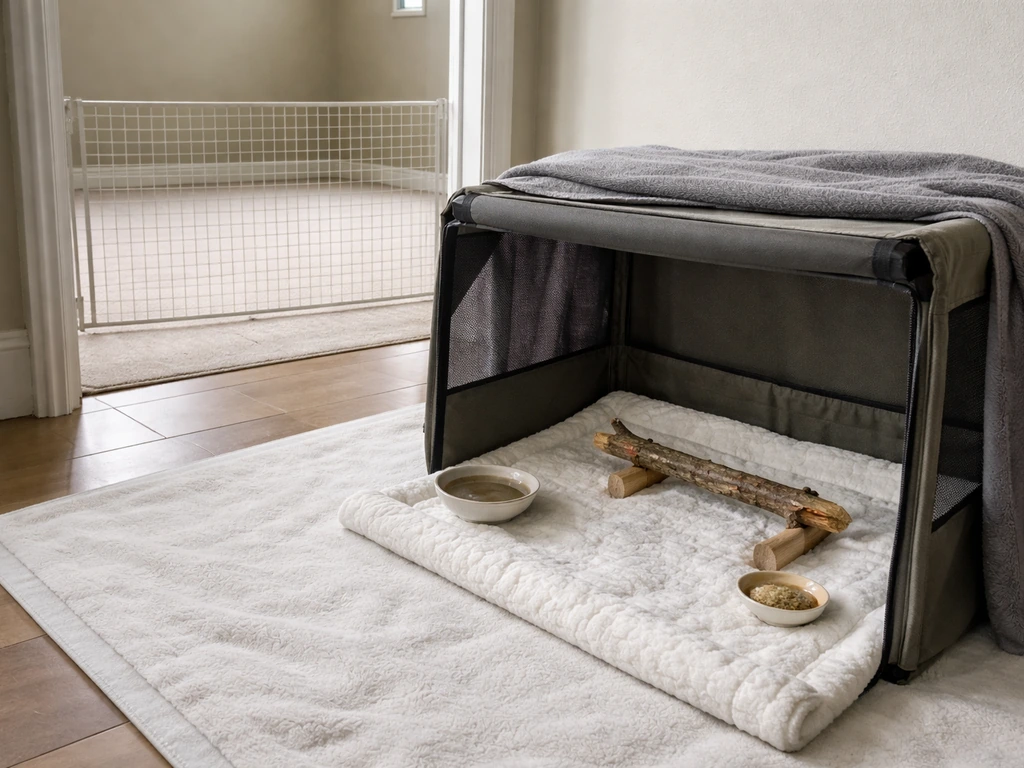
If the bird makes it through initial treatment, what comes next depends on the outcome. For birds with a repaired fracture that healed well, the goal is eventually returning them to the wild. For birds with permanent wing loss or damage, the picture is different.
During recovery (first days to weeks)
- Housing should be a small, secure enclosure that limits movement and prevents the bird from re-injuring the wing by attempting to fly
- Keep the bird away from other birds to reduce stress and disease transmission
- Warmth remains important throughout early recovery, especially for smaller species
- Monitor breathing: labored breathing, open-mouth breathing, or tail-bobbing with each breath signal a serious problem
- Watch for signs of infection at any wound site: swelling, discharge, or a bad smell
- Follow-up with the treating vet or rehabilitator is essential; don't assume a stable bird is a recovering bird without professional confirmation
For birds that won't fly again
A wild bird that permanently loses a wing is almost never a candidate for release. That's not a death sentence. Many wildlife education facilities and sanctuaries house non-releasable birds long-term, and some thrive for years. What they need is an enclosure where they can move safely without falling or injuring themselves further, a species-appropriate diet, and a quiet, low-stress environment. They should not be kept as casual pets. In most places, keeping a wild bird without the proper permits is illegal, and a one-winged wild bird genuinely needs specialized care that goes beyond what most people can offer at home.
For pet birds (parrots, cockatiels, and similar species) who lose a wing due to injury or require amputation, the outlook for a good quality of life at home is more realistic. A bird with a single leg can still have a good quality of life with the right housing, supportive care, and a veterinary plan. These birds are already adapted to human environments, and with proper housing modifications, enrichment, and veterinary follow-up, many do very well. The key is working closely with an avian vet through the whole process, not trying to manage it independently.
Wing injuries share a lot of common ground with other serious bird injuries. Birds facing broken legs, beak damage, or vision loss in one eye all follow similar principles: the severity of the injury, the speed of intervention, and access to professional care are what determine the outcome. Birds with beak damage can also survive, but they typically need fast, hands-on care to prevent infection and starvation.
A broken leg can be severe, but prompt veterinary or wildlife rehab care can make survival and recovery more likely broken legs. If you are wondering whether can a bird survive with a broken leg, the key is getting prompt medical assessment and keeping the bird warm and calm until help arrives. The good news is that birds are surprisingly resilient when they get the right help fast enough. Some people also ask whether a bird can live with one leg, and the answer depends on the injury severity, pain control, and access to proper veterinary or rehabilitator care can a bird live with one leg.
Your job is to give them that chance.
FAQ
If a bird’s wing hangs down, does that always mean it can’t heal?
Not always. Nerve or tendon injuries often prevent full flight, but some cases are primarily muscular weakness, joint stiffness, or a fracture that has healed in a poor position. The fastest way to sort this out is a professional assessment, especially if the wing position looks “wrong” compared with the other wing.
Can I give the bird pain medicine or antibiotics at home?
No. Human painkillers can be dangerous to birds, and antibiotics without a diagnosis can be ineffective or worsen outcomes if the issue is not bacterial. The safest approach is warmth, minimal handling, and contacting an avian vet or licensed wildlife rehabilitator for specific instructions.
How should I transport a bird that may have a wing injury?
Use a breathable, secure container lined with soft material, keep it dark and warm, and avoid letting the bird perch or flap. Keep the bird still during transport (no loose towels inside that can tangle the wing), and plan for a same-day drop-off or call a hotline for triage.
What if the bird seems cold but has no visible blood or exposed tissue?
Chilling can worsen shock and reduce survival time, even when the injury is not visibly severe. Focus on gentle warming (for example, a consistent warm environment around the container) and get it to professional care, since “no blood” does not rule out fractures or internal damage.
Should I try to wrap the wing to keep it from moving?
Generally, no. Splinting or bandaging without training can cut off circulation, cause pressure sores, or delay proper evaluation. If the wing is obviously injured, it’s better to immobilize only by limiting movement during transport, then let a professional decide whether splinting is needed.
Is it ever okay to keep a one-winged wild bird outdoors in a safe cage until help arrives?
It’s better not to. Outdoor temporary housing can expose the bird to overheating, predators, rain or drafts, and additional injury from unpredictable movement. For wild birds, keep them contained indoors in a quiet, warm, dark box while you contact a licensed rehabilitator.
If it’s a window strike and the bird can’t fly, do I have to bring it in immediately?
If it has not recovered and flown away within about one hour, it needs medical evaluation. Even when the wing injury is not obvious, window strikes can cause internal injuries and concussion, which may not look severe at first.
How long can a bird survive before it gets help after a wing injury?
There isn’t one number because outcomes depend on injury type, temperature, and shock. Open fractures and heavy bleeding can become life-threatening quickly, so treat the first hour as critical, prioritize warming and containment, and seek professional triage immediately.
Can a wild bird that loses a wing still be “tame” or friendly afterward?
Some injured birds appear calm, but friendliness does not replace the reality that one-winged birds often cannot evade threats or fly safely. Professionals may keep them long-term for quality of life, and releasing a bird with permanent wing loss is usually not feasible or safe.
What changes for pet birds if one wing is amputated or permanently damaged?
Home care can be very different from rescue care. A one-winged pet may need easier access to food and water at ground or low levels, perch modifications to prevent falls, and consistent avian veterinary follow-up to manage pain, skin health, and muscle balance.
Next Articles
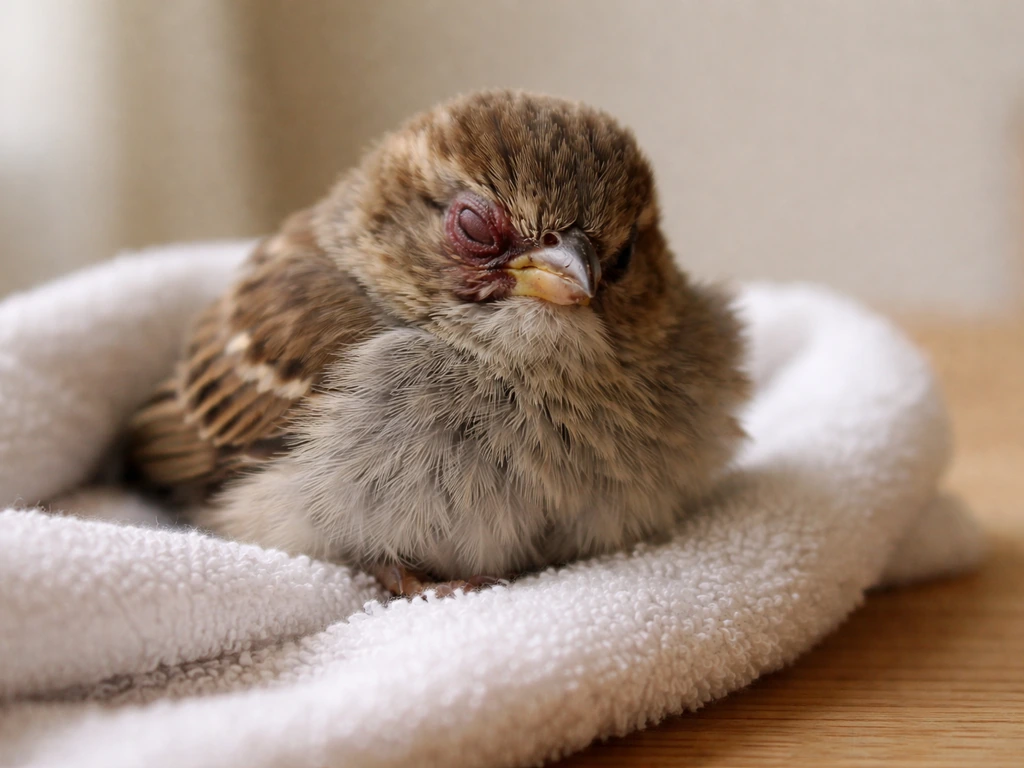
Can a Bird Survive With One Eye? What to Do Now
Learn if birds can cope with one eye and what to do now for an injured bird’s eye safely and urgently.
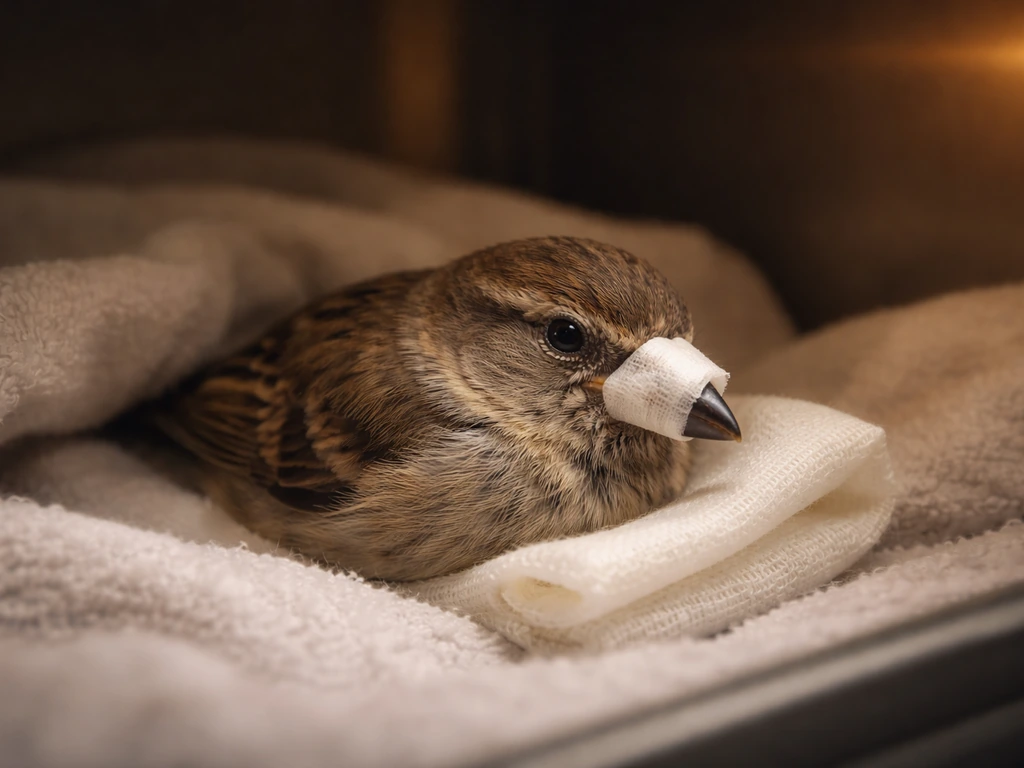
Can a Bird Survive With a Broken Beak? What to Do Now
Learn if a bird with a broken beak can survive, spot danger signs, and do safe first aid until a vet rescues it.
Can a Bird Survive a Broken Leg? First Aid and Next Steps
Can a bird survive a broken leg? Get urgent first aid, what to avoid, and next steps for wild or pet birds.