Animal control will sometimes help a hurt bird, but they are usually not your best first call. Most animal control agencies are set up for domestic animals, stray dogs and cats, and public safety situations. When it comes to injured wild birds, they may refer you to a wildlife rehabilitator, offer to euthanize the bird if it's suffering severely, or in some cases connect you with a rescue partner. The most reliable path to giving an injured bird a real chance is to contact a licensed wildlife rehabilitator or an avian vet directly, skip the middleman, and act quickly.
Will Animal Control Help a Hurt Bird? What to Do Now
Marcus Chen
3 Jun 2026
What animal control can and can't do for injured birds
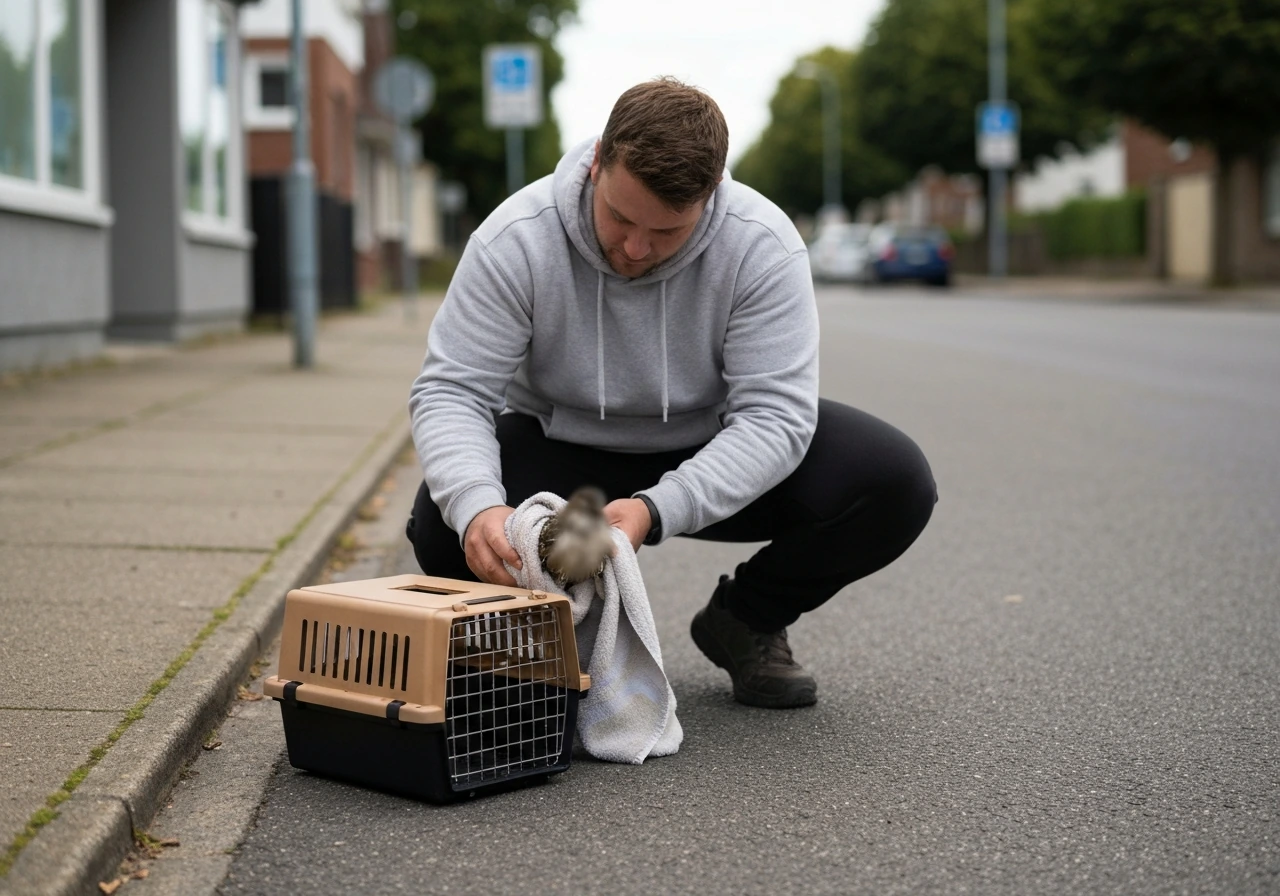
Animal control agencies vary a lot by location, so what you get depends on where you live. Some city and county agencies will pick up an injured wild bird, stabilize it, and hand it off to a permitted wildlife rehabilitator. Others will tell you flat out that wild birds are outside their scope. A few will come out, assess the situation, and if the bird is suffering badly and cannot be saved, humanely euthanize it. That is genuinely a mercy in some situations, but it is not the same as wildlife rehabilitation or treatment.
Here is what most animal control agencies are not equipped to do: treat injuries, provide ongoing rehabilitative care, or release a bird back into the wild. Virginia law, for example, allows local animal control officers to temporarily confine wildlife and euthanize under certain conditions, but that legal framework exists for public safety, not wildlife recovery. Animal control and licensed wildlife rehabilitation are two completely separate systems, even if they sometimes overlap or refer to each other.
One thing animal control can genuinely help with: if the bird is in a dangerous location (like the middle of a road) and you cannot safely contain it yourself, calling animal control to secure the scene while you line up a rehabber is reasonable. They may also know which local organizations handle wildlife in your county, so calling them is not always wasted time. Just do not assume they will handle the medical side of things.
When to call animal control vs. an avian vet or wildlife rehab
The decision tree here is pretty simple once you know what each option actually provides. As a rule, a licensed wildlife rehabilitator is your best first call for any injured wild bird. They are permitted by your state or country's wildlife authority specifically to receive, treat, and release wild animals. If you cannot reach a rehabber quickly, an avian vet is the next best option for treatment. Animal control lands third, mostly as a fallback for containment help or a referral.
| Who to call | Best for | What they can do | What they can't do |
|---|---|---|---|
| Licensed wildlife rehabilitator | Any injured wild bird | Treat injuries, provide ongoing care, release bird to wild | Usually cannot come pick up the bird themselves (you often transport) |
| Avian veterinarian | Serious injuries: fractures, bleeding, eye trauma, infection | Diagnose and treat injuries, provide pain relief, stabilize | May not be permitted to release wildlife in some states |
| Animal control | Dangerous location, severely suffering bird, referral help | Secure bird in unsafe location, euthanize if suffering, connect you with rehabbers | Cannot provide rehabilitation or release back to wild |
| State wildlife agency | If no rehabber is available | Connect you with permitted rehabilitators, advise on legal handling | Does not typically provide direct care |
If you are in the UK, the RSPCA is a strong first call for injured wild birds, and they will advise whether to transport the bird or report to your local council depending on the situation. In the UK, you can also contact the RSPCA or your local council for guidance on the injured bird who to call. Questions about who to call specifically in the UK are covered separately, as are questions about whether the RSPCA will collect an injured bird. In general, the RSPCA will advise on whether they can collect the bird or if you should contact another approved local service RSPCA will collect an injured bird.
How to quickly assess the bird's condition
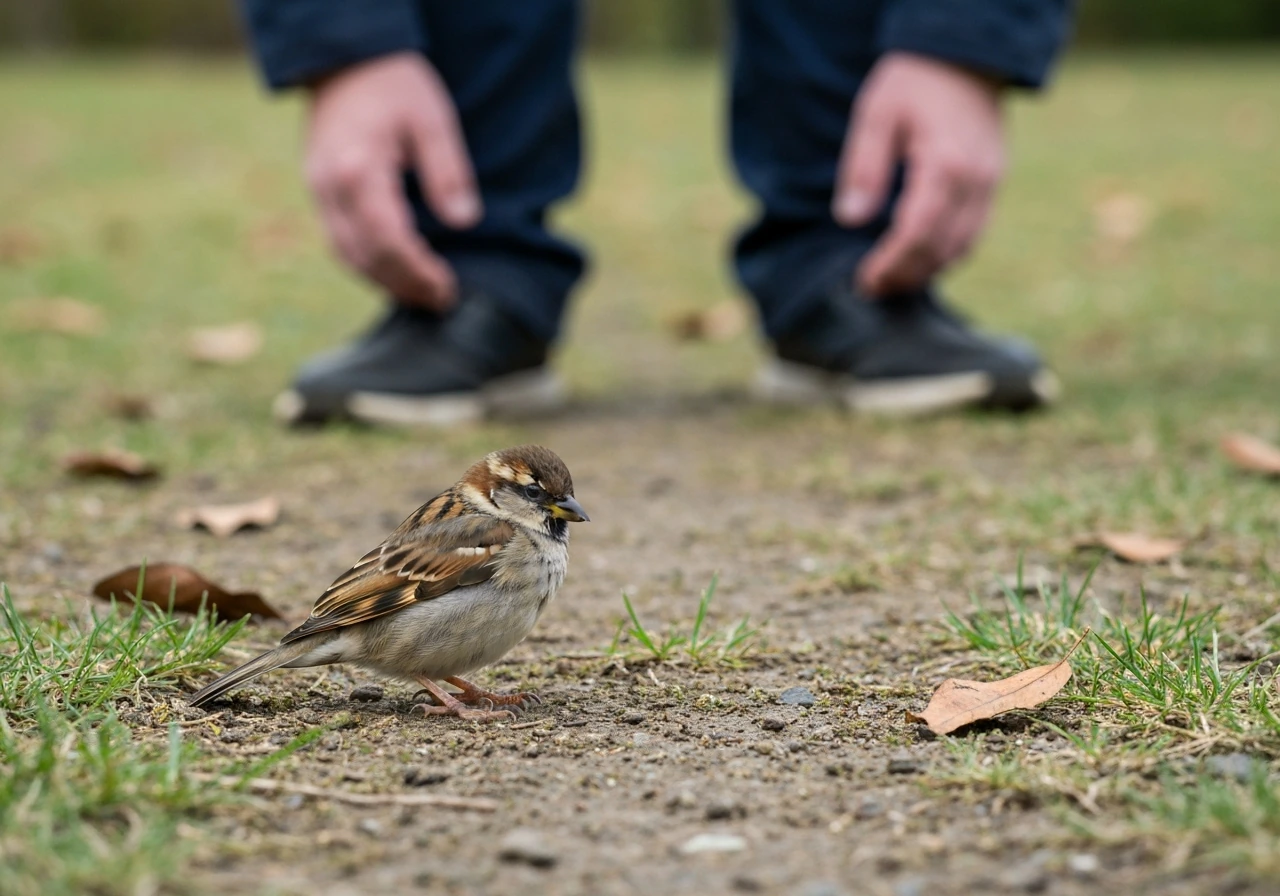
Before you do anything else, take thirty seconds to observe the bird from a short distance. Do not rush in and grab it. What you see in those first moments tells you a lot about how urgent the situation is and what kind of help the bird needs.
A bird that needs help will show one or more of these signs, according to Virginia's Department of Wildlife Resources: a visible physical injury like a drooping wing or leg, an open wound or bleeding, or the fact that it can run but cannot fly away. That last one is key. If a bird flutters off and lands ten feet away, it might be a fledgling learning to fly, not an injured adult. But if a bird is sitting on the ground, unresponsive to your approach, unable to get airborne, that bird needs intervention.
- Breathing: Is the chest moving? Is the beak open and the bird panting or gasping? Labored breathing is a red flag.
- Bleeding: Visible blood on feathers, the ground underneath the bird, or around the beak or eyes.
- Posture: Is it upright? A bird lying flat on its side or unable to hold its head up is in serious distress.
- Wings: One wing drooping lower than the other strongly suggests a fracture or dislocation.
- Eyes: Closed, sunken, or asymmetrical eyes can indicate head trauma or internal injury.
- Response to you: A wild bird that lets you walk right up to it without trying to flee is not okay. That level of tameness signals shock or severe weakness.
- Entanglement: Check for fishing line, netting, or string wrapped around legs, wings, or beak.
Head trauma and internal injuries often do not show up obviously from the outside. Virginia DWR specifically notes this: a bird struck by a car or window may look almost normal but have injuries that are not immediately apparent. If the bird was in any kind of collision or impact, treat it as potentially seriously injured even if you cannot see obvious wounds.
Immediate first aid steps you can do right now
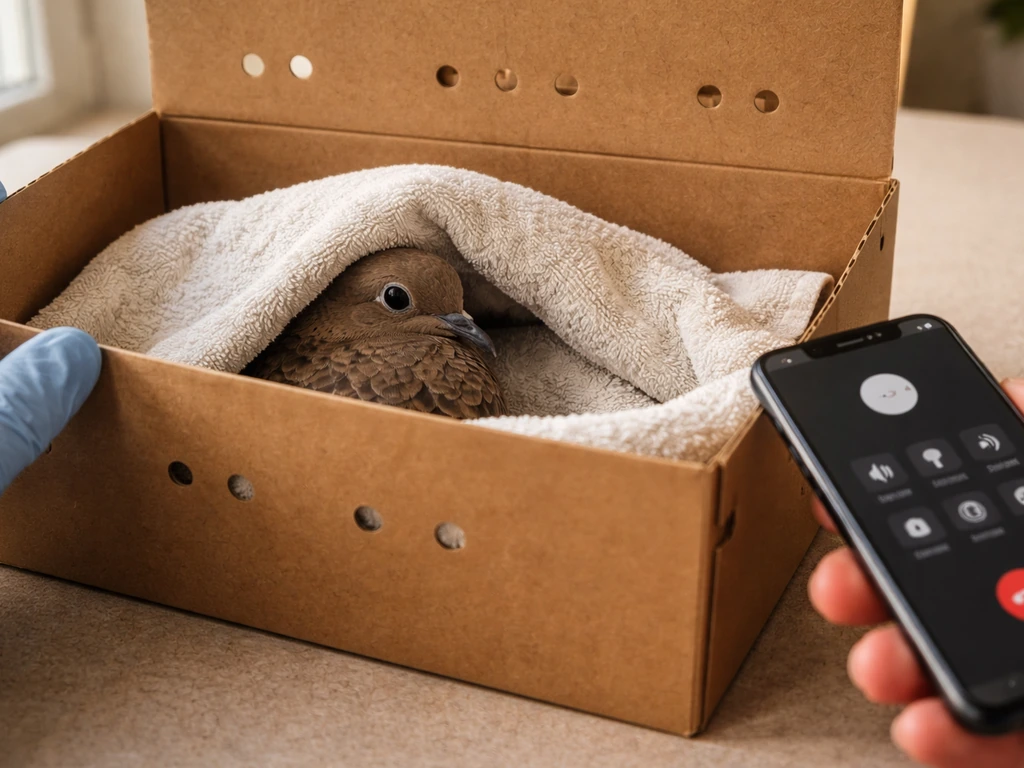
You do not need training to do the most important first aid steps. In fact, the most valuable thing you can do for an injured bird in the first hour is also the simplest: get it somewhere warm, dark, and quiet, and leave it alone while you make calls.
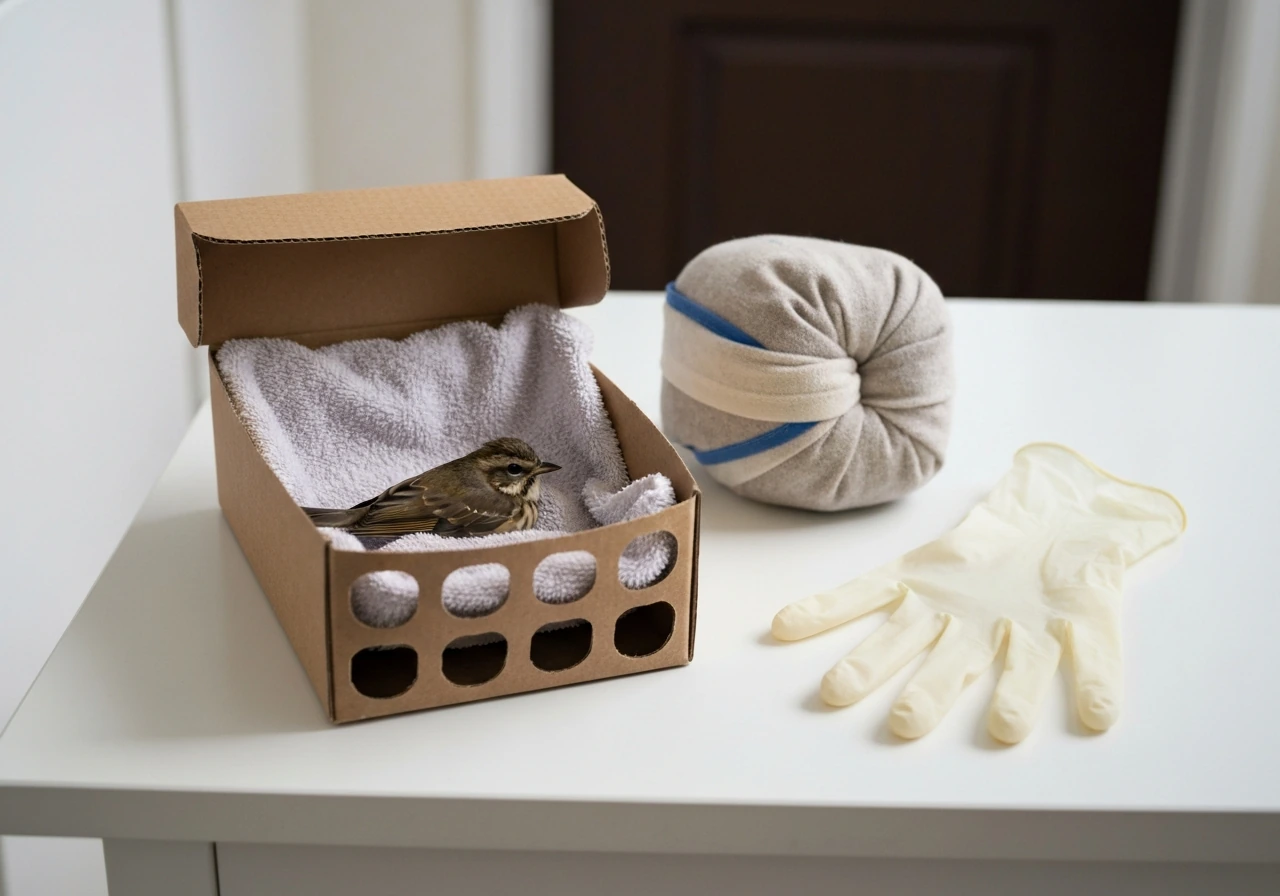
- Find a cardboard box with a lid, or a paper bag if the bird is small. Poke a few small air holes in the sides.
- Line the bottom with a soft cloth or paper towels. Do not use terry cloth or anything with loops that can catch small claws.
- Pick up the bird using a light towel or cloth, not your bare hands. Wrap it gently but do not squeeze the chest, which can restrict breathing. Hold it firmly enough that it cannot thrash and injure itself further.
- Place the bird in the box and close it. Keep the box in a warm room, away from pets, children, loud noises, and direct sunlight.
- Do not give the bird food or water. This is one of the most important things to know. Tufts Wildlife Clinic, the Wildlife Center of Virginia, and most wildlife authorities are very clear on this. Food can cause aspiration in a weak bird, and the wrong diet can make things worse. Water can cause aspiration too. Hold off until a professional advises you otherwise.
- Wash your hands after handling the bird, even with gloves or a towel.
Once the bird is contained and calm, start making calls. The Washington Department of Fish and Wildlife recommends calling a permitted wildlife rehabilitator as soon as possible and leaving a message if you cannot get through. Do not wait to see if the bird improves on its own. Even if it seems to perk up, it still needs a professional assessment.
Handling specific scenarios
Window strikes and collision injuries
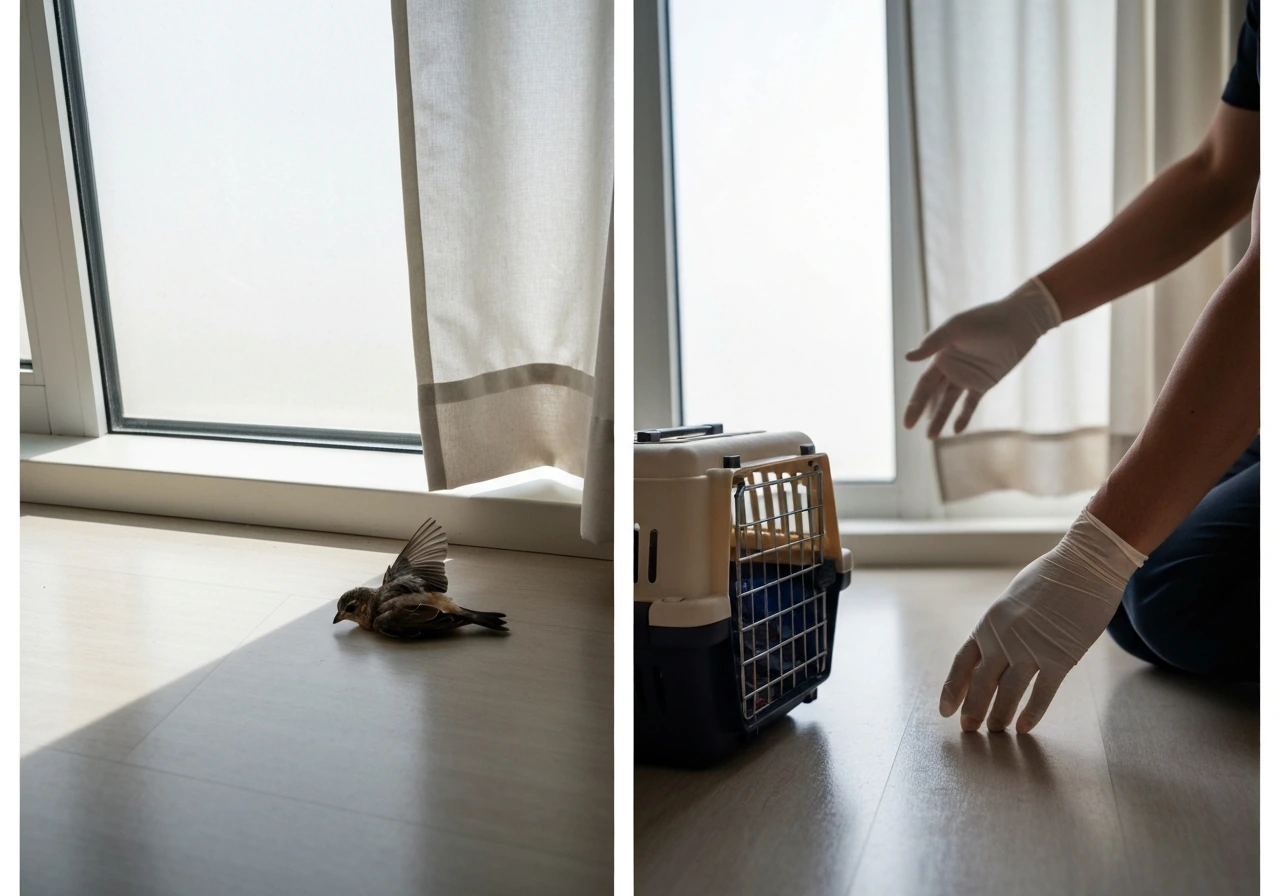
Window collisions are one of the most common bird injuries people encounter. A bird that has hit a window hard may be stunned, sitting on the ground below the glass, breathing rapidly. This can look like shock, and it often is. [The IWRC recommends placing the bird immediately in a box or paper bag with air holes](https://theiwrc.
org/resources/emergency/north-america/) and putting it in a warm, dark, quiet place. The Golden Gate Bird Alliance suggests waiting up to about an hour, then carefully opening the box outdoors. If the bird flies away strongly, it has recovered. If it does not fly, or if it staggers or falls over, contact a wildlife rehabilitator right away.
Never leave a stunned bird on the ground uncontained, even briefly. Cats and other predators can reach it very quickly.
Cat and dog injuries
If a bird has been caught or struck by a cat or dog, treat it as a medical emergency even if you cannot see obvious wounds. Cat saliva contains bacteria that can cause fatal septicemia in birds within hours, and puncture wounds from teeth or claws are often invisible under feathers. Do not wait to see if the bird seems okay. Contain it gently using the steps above and get it to a wildlife rehabilitator or avian vet the same day, preferably within a few hours. Call ahead so they know you are coming. Minimize your own contact, both for your safety and to reduce stress on the bird.
Baby birds and nest emergencies
The first thing to figure out with a baby bird is whether it is a nestling or a fledgling. This changes everything about what you should do. A nestling has few or no feathers, closed or barely open eyes, and cannot stand or hop on its own. It genuinely cannot survive outside the nest. A fledgling is fully feathered (or nearly so), hops around confidently, and is learning to fly under the watch of its parents. Fledglings on the ground are usually fine and do not need intervention.
If you find a nestling on the ground, look for the nest nearby and put it back if you safely can. The myth that parent birds reject babies touched by humans is false. If the nest is destroyed or unreachable, place the nestling in a small container lined with dry leaves or grass and attach it near where the nest was, as high as you can safely reach. Then observe from a distance to see if the parents return.
If they do not return within a couple of hours, or if the baby is injured, call a wildlife rehabilitator. Tufts Wildlife Clinic and the Washington Department of Fish and Wildlife both provide clear guidance on this, and a rehabber can walk you through the decision over the phone.
Safe transport and what to say when you call
Most wildlife rehabilitators cannot come to you. Massachusetts explicitly notes that rehabilitators are usually unable to pick up injured wildlife, and this is true in most of the US and many other places. You will likely need to transport the bird yourself. Keep the box closed and secure in your car, away from air conditioning vents blowing directly on it. Drive calmly. Sudden braking or sharp turns cause additional stress and injury.
When you call a rehabber or avian vet, be ready to describe the following clearly. Having this information ready saves time and helps them triage properly.
- What species the bird is, or your best description (size, color, beak shape, any distinguishing features)
- Where you found it and what you think happened (window strike, cat attack, found on the road, fell from a nest)
- What injuries you can see: drooping wing, bleeding, inability to stand, open wounds, eye problems
- How the bird is behaving now: is it alert, is it breathing rapidly, is it responsive or limp
- What you have already done: contained it, kept it warm, did not feed it
- Your location and how far you are from their facility
To find a licensed wildlife rehabilitator near you, search your state's fish and wildlife agency website (most have a searchable directory), or use resources like the National Wildlife Rehabilitators Association directory. The CDC also recommends contacting your state wildlife office if you cannot find a rehabber directly. If you are looking for help specifically for a trapped bird or need more details on who to call in your situation, that guidance is available in related articles on this site. If you suspect the bird is trapped or you are unsure who to call, check the guidance on this site for that exact scenario trapped bird who to call.
Signs you should not wait
Most injured birds benefit from being contained, kept warm, and assessed within a few hours. But some situations are urgent and require you to skip the wait-and-see approach entirely. If you observe any of the following, treat it as an emergency and call a wildlife rehabilitator or avian vet immediately, or head directly to the nearest avian vet without waiting for a callback.
- Active, visible bleeding that does not slow down
- The bird is completely unresponsive or limp
- Labored breathing, open-beak panting, or gasping
- The bird has been in contact with a cat, even if no wounds are visible
- A bone is visibly broken and protruding through the skin
- The bird's eyes are closed and it does not react to being gently touched
- The bird is shaking or convulsing
- The bird has been on the ground, unprotected and unable to move, for more than an hour in an area with predators
In these situations, do not wait for animal control to show up, and do not spend too long trying to track down the perfect resource. Get the bird contained, call the closest wildlife rehabilitator or avian vet you can reach, describe what you are seeing, and follow their instructions. In dangerous public situations where you cannot safely contain the bird, you can also call animal control for help getting the scene secured while you line up a wildlife rehabilitator. Acting within the first hour gives an injured bird its best chance. You do not have to have all the answers, you just have to get it into the right hands.
FAQ
What should I say when I call animal control about a hurt bird?
Lead with location and safety risk (road, window ledge, cat access), then describe what you observed (breathing normally or rapid, able to hop or cannot, visible bleeding or unresponsive). Ask whether they can secure the scene or only refer you, and confirm who will actually handle triage and transport.
If animal control says wild birds are out of scope, am I supposed to do nothing else?
No. Use animal control only for containment or scene safety if they will do it, then immediately contact a licensed wildlife rehabilitator or an avian vet. Waiting for animal control to “decide” usually costs the bird time, especially after impacts or cat attacks.
Can I bring an injured wild bird to animal control myself?
Often you should not assume they are permitted to receive wildlife for treatment. Ask directly if they accept injured wild birds for handoff to a permitted rehabber. If they only provide euthanasia or referrals, take the bird to a wildlife rehabilitator or avian vet instead.
If the bird looks better after I warm it up, do I still need a professional?
Yes. Improvement can happen with shock, but internal injuries and infections may not show right away. The article recommends assessment even if it perks up, especially after window strikes, car hits, or cat/dog involvement.
How long can a bird wait once I contain it in a box?
Try to get it assessed within a few hours, and call immediately so you can follow the clinician’s instructions. For emergencies like cat or dog injuries, do not wait, use the same-day route (rehabber or avian vet).
What if I cannot find a wildlife rehabilitator quickly, should I go to the nearest urgent vet?
An avian-experienced or avian-capable vet is the best backup. If you cannot reach a permitted rehabber fast enough, head to the nearest avian vet without waiting, and tell them it is a wild bird with the circumstances (window, collision, predator).
Should I feed or give water to an injured bird while I’m waiting?
Do not offer food or water. The safest first step is keeping it warm, dark, and quiet, then professional triage. Giving fluids can increase choking or aspiration risk.
What if the bird is in my yard and I cannot approach safely?
If the bird is in a dangerous spot or predators are nearby, focus on safety and scene control. If you can do so without escalating risk, keep other pets away, then call a rehabber for instructions. If you truly cannot contain it safely, animal control can be reasonable for securing the area.
Is it okay to use a towel, or should I use a box or bag for containment?
Use a secure, ventilated container as described for stunned birds (box or paper bag with air holes). Avoid loose towels for transport because they can obscure breathing, increase stress, and make it harder to keep the bird contained during movement.
Do I need to worry about my own safety when handling a hurt bird?
Yes. Even small birds can bite or scratch, and cats or trapped birds can lunge when restrained. Minimize handling time, keep your face away, and consider gloves if needed. If the situation involves predators or public danger, prioritize getting help rather than struggling to pick it up.
What if I find multiple injured birds, should I call animal control first?
Call the closest wildlife rehabber or avian vet first, and tell them how many birds, species if known, and the cause (window strike, collision, nest disturbance). Animal control is more useful for securing a scene than for triaging medical cases, especially when rehab resources are limited.
If I suspect the bird was trapped or tangled, who should I contact?
Use the “trapped bird who to call” guidance for your specific scenario, then contact a wildlife rehabilitator or avian vet. Do not try to free it yourself if it’s entangled in fishing line, netting, or something tight, because sudden movement can worsen injuries.
Next Article
Trapped Bird Who to Call: Rescue, Vet, and What to Do Now
Who to call for a trapped bird, how to assess injuries fast, and safe steps before contacting rescue or an avian vet