Get the bird away from the cat right now, put it somewhere warm, dark, and quiet, and call an avian vet or wildlife rescue immediately. Even if the wound looks tiny or the bird seems okay, a cat bite is a veterinary emergency. Cat saliva carries bacteria that can kill a bird within hours, and puncture wounds are almost always worse than they look from the outside. If you found a bird on the ground, treat it as urgent and contact an avian vet or a local wildlife rescue right away. Do not wait to see if the bird improves on its own.
My Bird Was Bitten by a Cat: Immediate First Aid Guide
Marcus Chen
2 Jun 2026
Immediate safety and quick triage after the bite
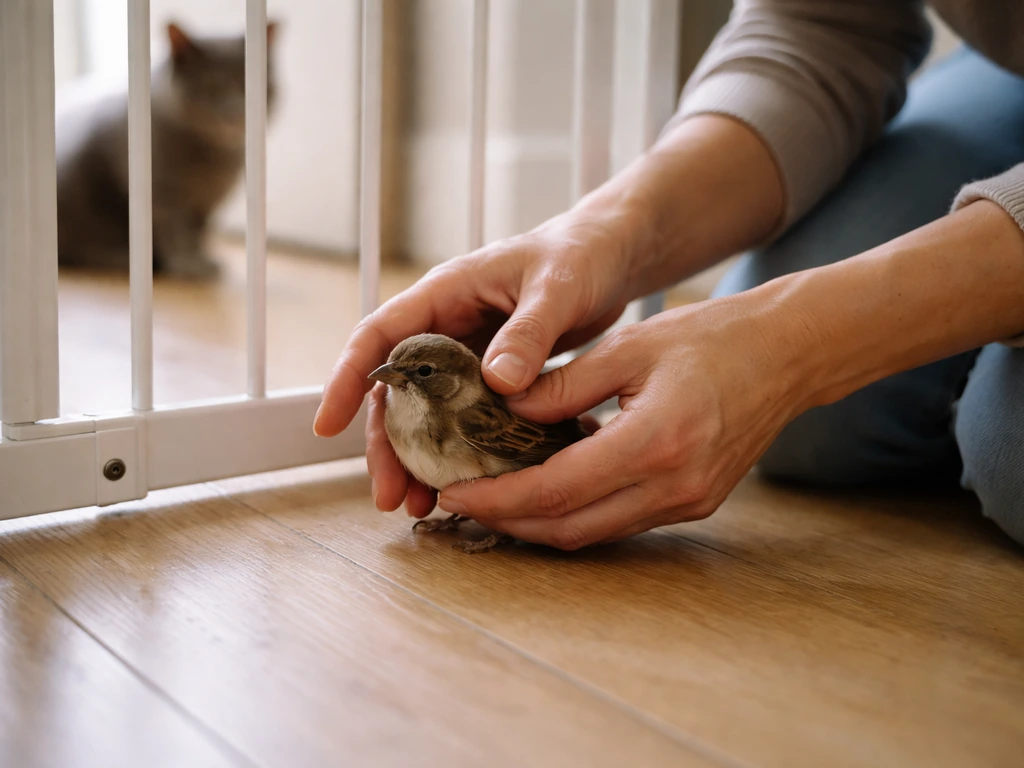
The first thing you need to do is separate the bird from the cat, gently but quickly. Even if the cat has let go, keep it out of the room. Cats will re-attack an injured bird on instinct, and the stress of a predator nearby can be enough to kill a bird that's already in shock.
Once the bird is away from the cat, do a fast visual check without handling more than necessary. Look for: obvious bleeding, wounds on the head, chest, or abdomen, a wing hanging at an odd angle, labored breathing (tail bobbing up and down with each breath is a common sign), or the bird lying flat and not trying to move. Any of these are signs of serious trauma and you need emergency help, not just a scheduled appointment.
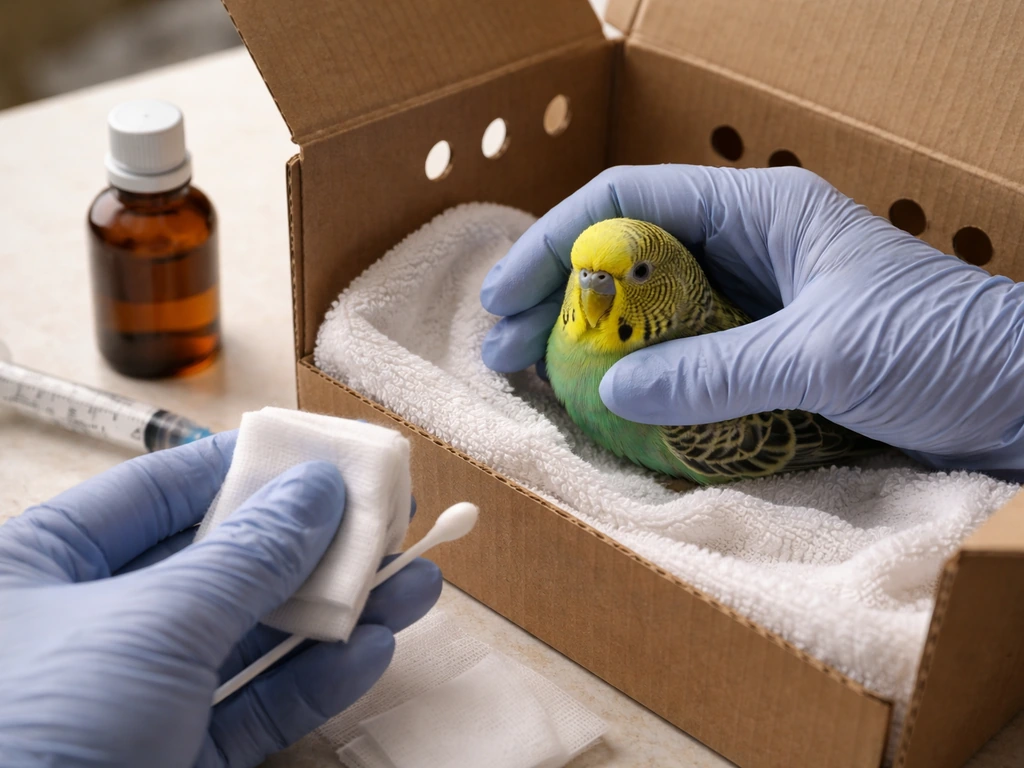
Keep the bird contained and supported. Cup it loosely in your hands or place it gently into a small box. Do not squeeze, do not try to examine every feather, and do not let it flap around. Movement burns energy a shocked bird desperately needs. Your job right now is to keep it still, warm, and calm while you make calls.
Cat bite specifics: why these injuries are urgent
Cat bites are among the most dangerous injuries a bird can sustain, and the danger is mostly invisible. A cat's teeth are sharp and narrow, which means they punch deep puncture wounds that may leave almost no mark on the surface. That tiny hole in the feathers could mean serious internal damage to muscle, air sacs, or organs underneath.
The infection risk is severe. Cat saliva routinely carries a bacterium called Pasteurella multocida, along with a mix of other bacteria. Cat bite wounds have an infection rate estimated between 20 and 80 percent, and birds are especially vulnerable because their immune systems are not built to handle this particular bacterial load. Pasteurella infection can produce visible signs like swelling and oozing as quickly as 3 to 6 hours after the bite, and septicemia (a body-wide blood infection) can follow rapidly.
Here is the part that catches people off guard: a bird can appear alert, perching, and even eating after a cat bite, and still crash and die within 24 to 48 hours if it doesn't receive antibiotics. This is not an exaggeration. I have seen birds brought in looking "fine" that were in serious danger. The rule in avian medicine is simple: every cat bite gets treated as a medical emergency, no matter how minor the wound appears.
First aid steps for bleeding and puncture wounds
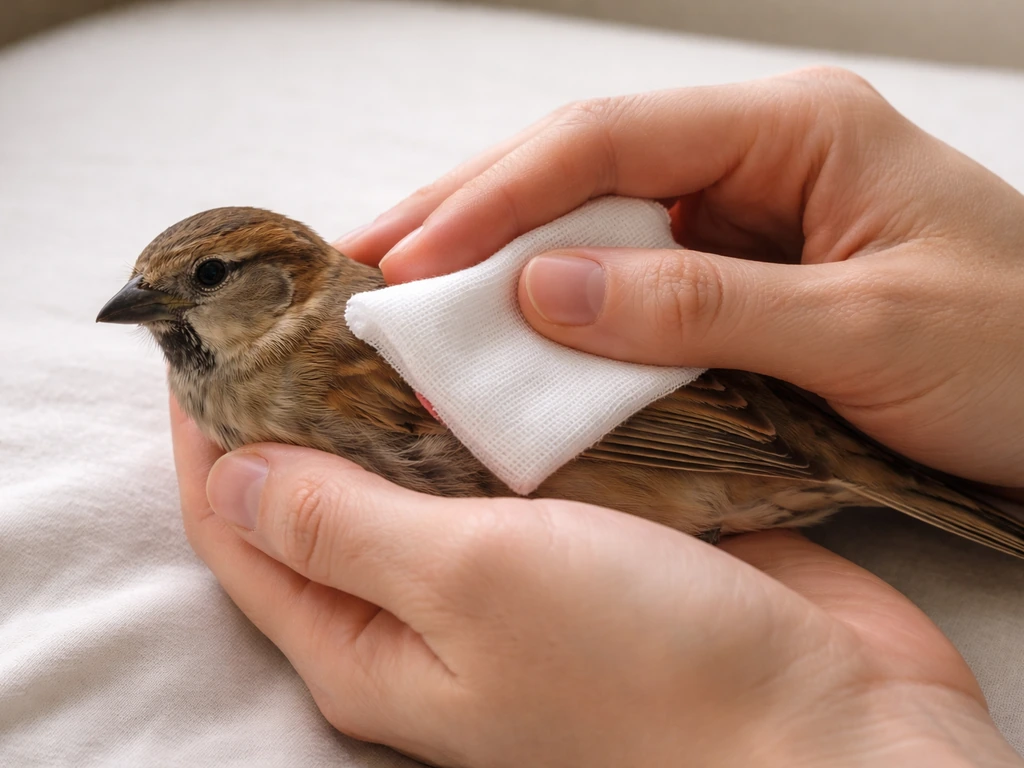
First aid for a cat-bitten bird is about stabilizing, not fixing. You are buying time until a professional can take over. Here is what to do, in order.
- Control any active bleeding first. Apply gentle, firm, continuous pressure to the wound using a clean cloth or gauze. Do not press hard enough to crush the bird. Hold steady pressure and do not keep lifting the cloth to check. If bleeding has not stopped within 5 minutes, keep the pressure on and get moving toward emergency care.
- Flush the wound gently with sterile saline solution or clean water. Use a syringe without a needle if you have one, or just let water flow over the area. This helps remove cat saliva and surface bacteria. Do not scrub the wound or probe into it.
- Do not apply hydrogen peroxide, alcohol, iodine, or any antiseptic cream not specifically approved for birds. These can damage tissue and make things worse.
- Do not try to close the wound with tape or bandage. Puncture wounds typically need to stay open for drainage, and covering them traps bacteria inside.
- Once you have done what you can with the wound, stop handling the bird. Place it in a secure, warm, quiet space and focus on getting professional help.
Monitoring for shock and infection over the next 24 to 72 hours
Shock can set in quickly after a traumatic injury. Signs include the bird sitting fluffed up on the bottom of the enclosure, eyes partly closed, rapid or labored breathing, and feeling cold to the touch. A bird in shock needs warmth immediately (more on that below) and professional care as fast as you can arrange it.
If the bird does receive veterinary treatment and you are monitoring at home afterward, watch closely over the next 72 hours for signs that things are getting worse rather than better. Infection signs can appear within a few hours or take several days to develop fully.
- Swelling, redness, or warmth around the bite site that is increasing
- Discharge (pus, fluid, or bleeding) from any wound
- The bird becoming increasingly lethargic or unresponsive
- Difficulty moving a wing, leg, or holding its head upright
- Loss of appetite or complete refusal to eat or drink
- Abnormal droppings (watery, discolored, or absent)
- Neurological signs such as tremors, head tilt, loss of balance, or seizures
- Any discharge from the beak, nostrils, or eyes
Any one of these signs means you need to contact your vet or wildlife rescue again, and describe exactly what you are seeing. Do not wait until the next scheduled appointment if something changes.
When to seek an avian vet or wildlife rescue now vs within 24 hours
The honest answer is: go now in almost every case. But here is a clearer breakdown to help you decide.
| Situation | What to do |
|---|---|
| Any cat bite, even with a tiny or invisible wound | Call an avian vet or wildlife rescue immediately |
| Active bleeding that won't stop within 5 minutes | Emergency care right now, do not delay |
| Labored or open-mouth breathing | Emergency care right now |
| Bird collapsed, unresponsive, or unable to hold itself upright | Emergency care right now |
| Wing dragging or obvious fracture | Emergency care right now |
| Bird is alert, perching, wound flushed, no active bleeding | Still call today and aim for a same-day or early next-day appointment |
| Wild bird you found after a cat attack | Contact a licensed wildlife rehabilitator immediately; do not try to treat at home |
To find an avian vet, search for one specifically labeled as "avian" or "exotic animal" vet in your area, as general veterinary practices often do not have the training or medications needed for birds. For wild birds, search for a licensed wildlife rehabilitator in your state or country. In the US, the National Wildlife Rehabilitators Association (NWRA) and the Wildlife Rehabilitators page at the NWRA website are good starting points. In the UK, the RSPCA has a 24-hour helpline. When you call, mention immediately that the bird was bitten by a cat so they understand the urgency.
When you speak to the vet or rehabilitator, be ready to share: when the bite happened, where on the body you can see wounds, whether the cat is a pet or stray, and the cat's vaccination status if you know it. This information helps them prepare the right treatment before you even arrive.
How to transport and house the bird safely until help arrives
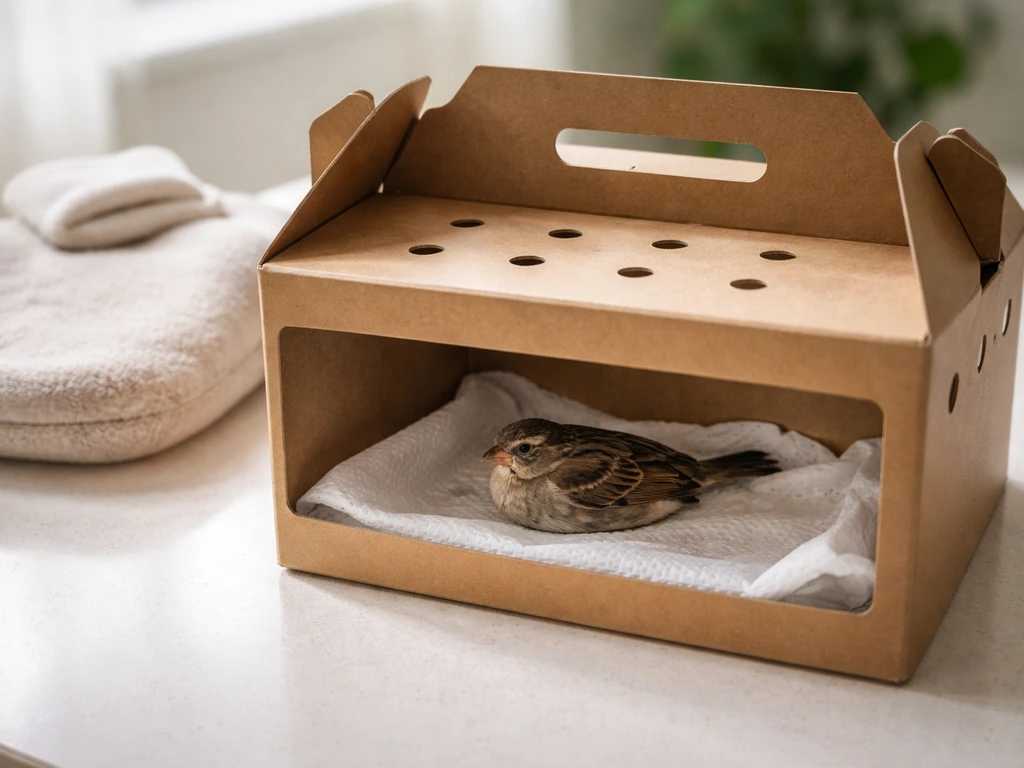
A small cardboard box with ventilation holes punched in the top is ideal for transport. Line the bottom with a paper towel or soft cloth so the bird has some grip. For very small birds, a shoebox works well. The box should be just large enough for the bird to sit comfortably but not so large that it can flap around and injure itself further. Keep the lid closed and the environment as dark as possible. Darkness reduces stress significantly and helps prevent a panicked bird from thrashing.
Temperature control is critical. An injured or shocked bird loses heat fast, and cold can kill. blank" rel="noopener noreferrer">Aim to keep the environment around 85 to 88°F (about 29 to 31°C). You can do this by placing a heating pad on the lowest setting under half of the box (leaving one side cooler so the bird can move away if it gets too warm), or by using a hot water bottle wrapped in a cloth placed beside the box. Do not put anything hot directly against the bird. Check the temperature with a thermometer if you have one. If you do not have a heating pad, place the box in a warm room away from drafts and air conditioning vents.
Keep the bird away from other pets and away from other birds in your home. Do not offer food or water during transport unless you are many hours from help, and even then, do not try to force feed or give water by dropper as this can cause choking. Keep the environment quiet. No loud music, no kids crowding around, no peeking into the box every few minutes. Every unnecessary interaction adds stress to a bird that is already fighting to survive.
Prevention and aftercare to avoid complications
If the vet prescribes antibiotics, complete the full course even if the bird looks completely recovered after a few days. Stopping antibiotics early is one of the most common reasons infections come back, sometimes in a more resistant form. Follow dosing instructions exactly and ask your vet how to give the medication if you are unsure.
Keep any follow-up appointments. A vet may want to recheck wounds for signs of abscess formation, which can develop several days after the initial bite even with antibiotic treatment. Merck also emphasizes that cat bites are often small penetrating wounds that frequently become infected and may require debridement, antibiotics, and drainage abscess formation. Puncture wounds, in particular, can trap bacteria deep under the skin and form an abscess that needs draining.
Once the bird has recovered, preventing future attacks is essential. For pet birds, the only safe solution is complete physical separation. Never allow a cat and a bird to be in the same room unsupervised, even if they have lived together peacefully for years. A cat's predatory instinct can trigger in a split second. Secure cage latches are not enough; cats can and do learn to open them. Keep the bird's room closed when you cannot directly supervise the interaction.
For wild birds, if you found one after a cat attack outdoors, consider reaching out to your local wildlife rescue about whether the release site is safe. If outdoor cats (yours or neighbors') are repeatedly injuring wildlife, a wildlife rehabilitator or local humane society can often give practical guidance on deterrents and keeping cats indoors.
Cat bites are one of the most time-sensitive bird emergencies out there precisely because the danger is so easy to underestimate. Acting fast, keeping the bird warm and calm, and getting professional eyes on the wound as quickly as possible gives the bird the best possible chance. If your bird flew away, focus on keeping it safe and getting help from an avian vet or wildlife rescue as soon as you can warm and calm. Trust that instinct to take it seriously. It is the right call. If you are dealing with a bird hit by car instead of a cat bite, follow the steps in bird hit by car what to do to stabilize it and get the right help quickly.
FAQ
My bird looks fine after the cat bite, can I just watch it at home?
No. Even a bird that is perching, alert, or eating can still develop a fast infection or internal injury after a cat bite. If the bite just happened, treat it as urgent and contact an avian vet or wildlife rescue right away, then follow their instructions about when to come in.
Can I clean the wound or put ointment on the bite before the vet sees it?
Do not tape, wrap, or close the puncture yourself. Keep handling minimal, place the bird in a small, ventilated, dark container, and get professional help. Cleaning a cat bite at home can delay antibiotics and may worsen stress or bleeding if you disturb tissue.
Should I offer my bird food or water after a cat bite while I’m waiting for the vet?
Try not to give food or water during transport unless the avian professional has specifically told you to, because weakened birds can aspirate and choke. If help is delayed many hours, call first to ask what they want you to do, instead of forcing fluids or using a dropper.
What should I use to disinfect a cat-bite wound?
Do not use hydrogen peroxide, alcohol, or antiseptics inside the puncture. If there is active bleeding, you can apply gentle, light pressure with clean gauze for a brief period while you arrange transport, but avoid extensive cleaning or probing for “depth.”
Is a tiny puncture hole always minor, or could it still be serious?
If the bird is fully feathered and can stand, you can still have internal damage. The safest approach is to do a brief look only, then contain and warm it, because the most dangerous puncture injuries can be invisible from the surface.
My bird’s wing looks abnormal after the bite, should I try to straighten it?
If a wing is hanging at an odd angle or the bird is not moving normally, it could be fracture, internal injury, or severe shock. Treat it as an emergency, keep the bird still in the dark box, and do not try to “set” the wing or restrain it for a close exam.
How exactly do I keep the bird warm without cooking it?
A heating pad or hot water bottle should warm part of the box, not directly contact the bird. Always leave one cooler side so it can move away if it gets too warm, and recheck heat periodically because small birds overheat quickly.
What’s the best container to transport a cat-bitten bird?
No, do not use a regular cat carrier with lots of space for an injured bird to flap. Use a small ventilated box just large enough for comfortable sitting, lined for grip, and keep the lid closed to prevent thrashing and further tissue damage.
What warning signs should make me call the vet sooner than my follow-up date?
Yes. If you notice swelling, oozing, increased breathing effort, unusual posture, weakness, or rapid worsening at any point, contact the vet immediately, even if it has been less than a day. Many cat-bite infections can show up within hours or take a few days.
If the bird improves, how long should I keep giving the antibiotics?
If antibiotics were prescribed, do not stop early and do not change doses without the clinic’s approval. Complete the full course, and ask how long after the last dose they want you to recheck, because abscesses can develop several days later.
What is the safest way to prevent a repeat cat attack after my bird recovers?
Do not put the bird back into any shared area with the cat, even if the cat seems calm or the bird is recovered. Use complete physical separation, and remember that cats can open cages or learn access habits, so supervision is not the same as safe housing.
What should I do if my bird flew away after the cat bite and I find it later?
If your bird flew away after the bite, focus on minimizing stress and getting help. Search nearby for a safe, quiet containment option if you can retrieve it, and call for guidance immediately when you find it. A cat bite can still progress after the bird returns home.
Next Article
My bird flew away: what to do now and how to recover it
Immediate steps to recover a lost bird, efficient search tips, injury cases, and when to call a vet or rescue.