
Get the cat away from the bird right now, put the bird in a dark, ventilated box, and call a wildlife rehabilitator or avian vet today. Even if the bird looks fine, cat bites can kill a bird within 6 to 12 hours from Pasteurella bacterial infection, so this is a same-day emergency no matter how minor it appears.
Cat Injured Bird: What to Do Right Now Step by Step
Marcus Chen
8 Jun 2026
Step one: secure the cat and keep yourself safe
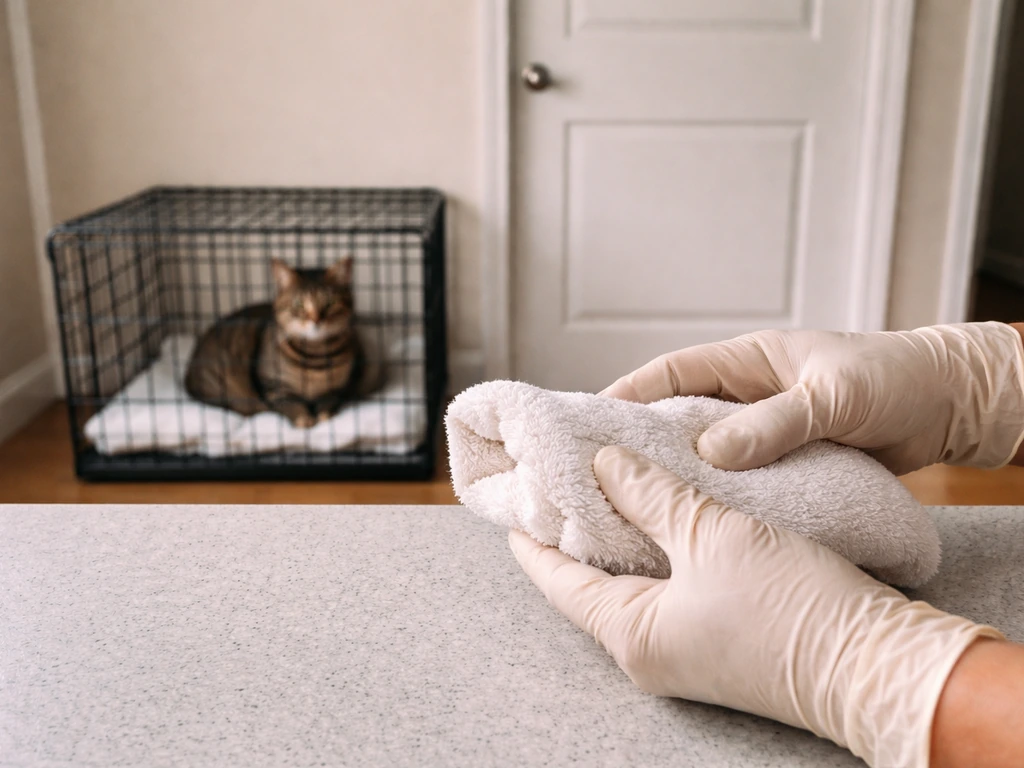
Before you touch the bird, get the cat out of the situation. Put your cat in another room, close the door, or use a carrier if needed. Do not try to handle the bird while your cat is still nearby. Cats will instinctively go back for the bird, and the stress of an approaching predator alone can cause a bird to go into fatal shock.
Protect yourself too. Even a small songbird can scratch or peck when panicked, and wild birds can carry parasites. Grab a pair of gloves if you have them, or use a small towel. You don't need heavy-duty equipment, just something between your bare hands and the bird. Stay calm and move slowly. Sudden movements increase stress for both you and the bird.
Quick triage: what to check in the first 60 seconds
You're not trying to diagnose the bird. You're just doing a fast check to understand how serious things are before you move it. Look for four things: breathing, bleeding, responsiveness, and obvious physical damage.
- Breathing: Is the chest moving? Is the bird panting or breathing rapidly? Rapid breathing that has been going on for two or more hours is a serious warning sign.
- Bleeding: Any active, visible blood? A small amount of blood on feathers is one thing, but bleeding that won't stop is urgent.
- Responsiveness: Does the bird react when you approach? A bird that barely moves, can't hold its head up, or feels limp is in shock.
- Obvious injuries: Can you see a wing hanging at an odd angle, a leg that won't bear weight, or any puncture wounds? Even tiny punctures from cat teeth are serious.
Also take note of whether this is an adult bird or a baby. The next steps differ depending on developmental stage. A fully feathered adult and a naked, pink nestling need different handling and different calls for help.
What cat attacks actually do to birds (it's worse than it looks)
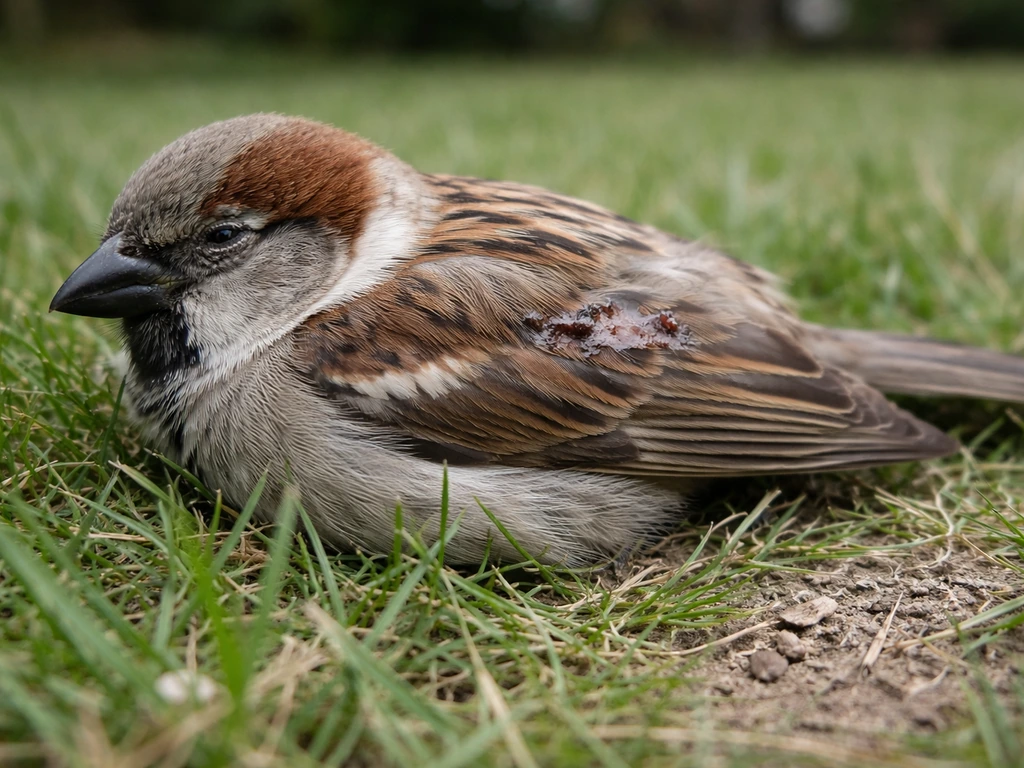
This is the part most people don't realize. A bird that walked away from a cat, or one that was dropped and seems alert, may still be in serious danger. Cat bites create small puncture wounds that seal over quickly on the surface, but the damage underneath can be extensive. Cat teeth and claws can penetrate the body cavity, injuring organs without leaving a wound you'd ever notice.
The bigger threat is bacterial infection. Cats carry Pasteurella multocida in their mouths as a normal part of their bacteria, and it gets injected directly into the bird with every bite. Research shows that among birds rescued alive after cat attacks, roughly 60 percent die from Pasteurella infection rather than from the physical bite itself. This infection moves fast. A bird that seems okay in the morning can be dead by the evening. That's why even a seemingly minor cat-caught bird situation is a same-day emergency. If the cat caught a bird and it’s still alive, act right away and get it to a licensed wildlife rehabilitator or avian vet the same day same-day emergency.
Common physical injuries from cat attacks include:
- Puncture wounds anywhere on the body, often hidden under feathers
- Broken or dislocated wings (a wing hanging lower than normal, or held away from the body)
- Fractured legs (leg hanging loosely, bird unable to perch or stand)
- Internal injuries from claw penetration of the chest or abdomen
- Shock, which can look like stillness, fluffed feathers, or a glazed, unresponsive appearance
What to do right now: gentle first aid and safe transport
Your job is stabilization, not treatment. You are buying time until you can get the bird to someone qualified. If the bird was hit by a car, use the same safe, urgent approach and follow bird hit by car what to do guidance before transport. Here's what to actually do:
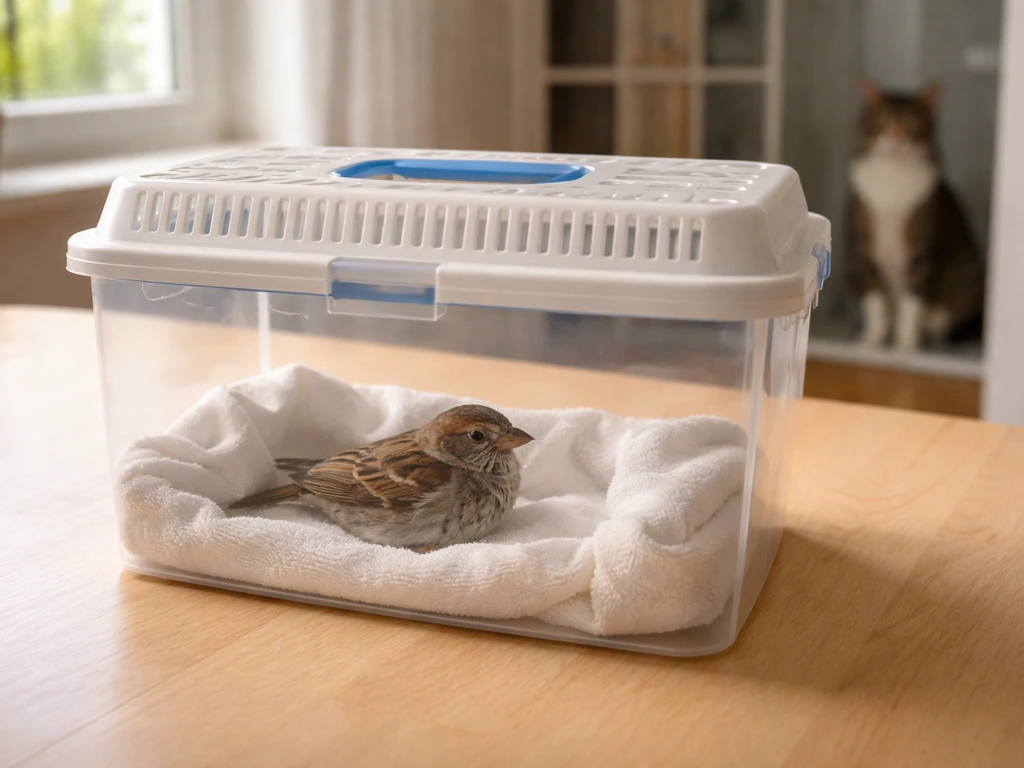
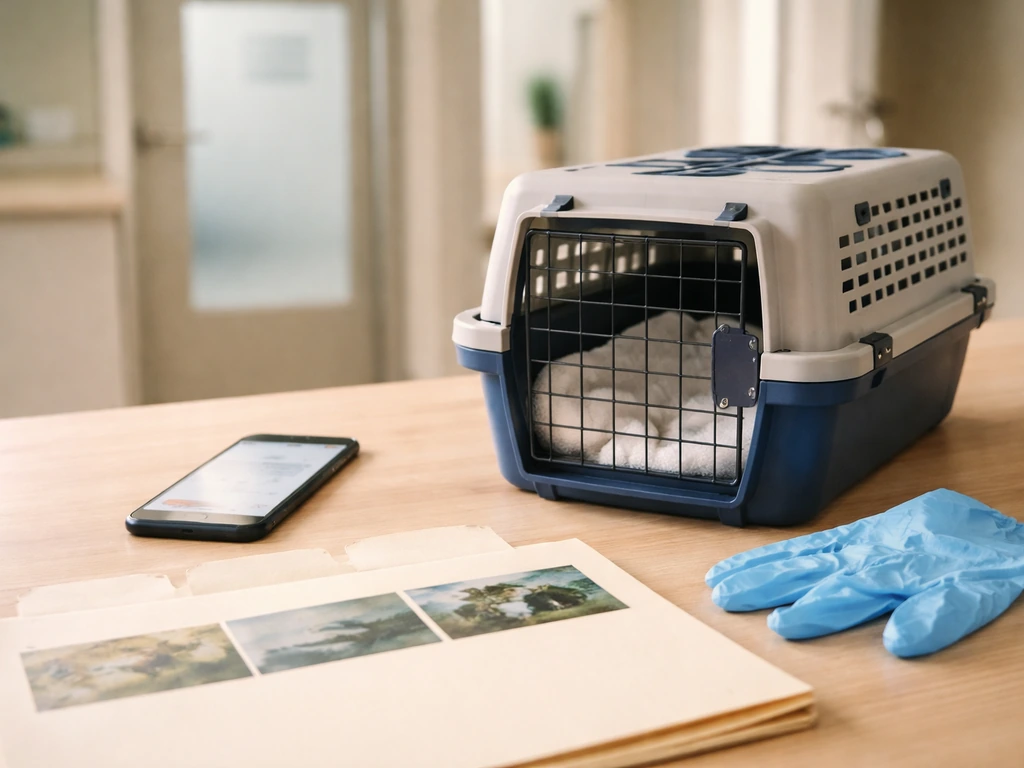
- Find a cardboard box with a lid. Make a few small air holes in the sides. Line the bottom with a folded paper towel or soft cloth. A shoebox works perfectly.
- Using a towel or gloves, gently scoop the bird up with both hands. Cup it loosely so the wings are against its body but you're not squeezing. Think: secure, not tight.
- Place it in the box on its feet if possible, or on its side if it can't stand. Close the lid.
- Put the box somewhere warm and quiet. A room-temperature indoor spot away from noise, pets, and children is ideal. Avoid leaving it in a hot car or in direct sunlight.
- Do not open the box repeatedly to check on it. Every time you open the box, you cause more stress. Leave it alone.
- Call a wildlife rehabilitator or avian vet immediately. Don't wait to see how the bird does.
If there is active bleeding, you can gently apply light pressure with a clean cloth or paper towel for a minute or two. Don't press hard. If bleeding is from a body cavity wound, do not attempt to clean or probe it. Just get it contained in the box and get moving.
What not to do (and when you need help urgently)
A few well-meaning instincts will actually hurt the bird. Avoid all of these:
- Do not give the bird food or water. It sounds counterintuitive, but an injured bird can aspirate water into its lungs easily, and feeding the wrong thing does more harm than going without for a few hours.
- Do not give any human medications or antiseptics. Products like hydrogen peroxide or Neosporin can be toxic to birds.
- Do not attempt to splint a broken wing or leg yourself. You can cause more damage and the bird needs proper imaging and professional stabilization.
- Do not keep handling the bird to check on it. Prolonged handling causes serious stress, and stress alone can kill a bird in shock.
- Do not try to release the bird outside to 'let it recover.' A cat-attacked bird that gets released is a bird that will likely die from infection within hours.
- Do not add supplemental heat like a heating pad directly under the box. It can overheat the bird and worsen certain injuries.
Call for help immediately if you see any of the following: active bleeding that won't stop, rapid panting or labored breathing, a completely limp or unresponsive bird, visible wounds to the body cavity, a broken bone, or a bird that can't hold its head up. These are all signs that the bird needs professional care right now, not tomorrow.
Where to get help today: avian vet vs. wildlife rescue
Most cat-attacked wild birds need to go to a licensed wildlife rehabilitator, not a regular veterinary clinic. General practice vets often don't have the training, equipment, or legal permits to treat wild birds. An avian vet (one who specializes in birds) can handle it, but they're not always available same-day. Wildlife rehabilitators exist specifically for this scenario and are usually your fastest, most practical option.
| Option | Best for | How to find them | Cost |
|---|---|---|---|
| Licensed wildlife rehabilitator | Wild birds (songbirds, raptors, waterfowl) | Search your local wildlife agency, NWRA directory, or call animal control | Usually free or donation-based |
| Avian veterinarian | Pet birds or when no rehabber is available | Search 'avian vet near me' or ask your regular vet for a referral | Standard vet fees apply |
| Emergency animal hospital | Last resort when nothing else is available | Google 'emergency vet near me' | Standard or higher emergency fees |
| Animal control or SPCA | If you need immediate guidance or transport help | Call local number or national hotline | Usually free |
When you call, tell them: that a cat caught or injured a bird, roughly what species or size it is (small songbird, pigeon, etc.), how long ago the attack happened, what injuries you can see, and where you are. This helps them prioritize and give you the right instructions. Take a quick photo or short video before boxing the bird if you can, since visual information is really useful for the person on the other end of the phone.
To find a wildlife rehabilitator in the US, search through the National Wildlife Rehabilitators Association (NWRA) or call your state wildlife agency. In the UK, the RSPCA helpline can advise you and direct you to local rescue services. In Canada, the BC SPCA Animal Helpline is a good starting point. Most areas have options; it just takes one phone call.
Special scenarios: when a cat isn't the only thing going on
The bird hit a window and then the cat got involved
This happens more than you'd think. A bird hits a window, lands stunned on the ground, and your cat finds it before you do. In this case, the bird may have a concussion or spinal injury on top of any cat-related wounds. The handling approach is the same (dark, quiet box, minimal contact, call a rehabber), but be aware the bird might be in worse shape than a simple cat attack victim. Don't assume it will 'snap out of it' from the window hit. Both sources of injury need professional evaluation.
You found a baby bird (nestling or fledgling) after a cat encounter
Baby birds are a different situation. First, figure out what kind of baby bird you're dealing with. A nestling is mostly naked or has only pin feathers, and it genuinely cannot survive outside a nest. A fledgling is fully feathered, a bit fluffy, with a short tail, and it's supposed to be on the ground. Its parents are still feeding it nearby.
If a cat has touched or attacked a baby bird, do not put it back in the nest. The infection risk from even a scratch means it needs professional care first. Contact a wildlife rehabilitator before doing anything else. If you're dealing with an uninjured nestling that fell before the cat got to it (say, from a storm), you can attempt to place it back in the nest only if the cat had no contact with it. If a cat touched it, the safest call is always a wildlife rehabilitator.
While you're waiting for help, keep the nestling warm. Place it in a small container lined with paper towels, put that container near (not on) a warm surface, and keep it quiet. Do not feed it anything. Do not give it water. And keep your cat secured well away from the area.
One more thing worth knowing: if you're not sure whether the parents are still around for a fledgling, watch from indoors for about an hour. Parent birds are usually nearby and will return to feed as long as threats (cats, curious humans) are removed from the area. If no parent shows after an hour, or if the bird was clearly caught by the cat, it's time to call for help.
If your bird flew away or you cannot find it right away, focus on safety and contact local wildlife help for next steps so you do not miss a window for care my bird flew away what do i do. Situations like this overlap with scenarios where birds are simply found on the ground, and the same principle applies: when in doubt, call before you act.
FAQ
Do I need to disinfect the bird or clean its wounds before calling for help?
No. For suspected cat punctures, avoid rinsing, probing, or applying antiseptics to the bird. The priority is containment in a dark, ventilated box and same-day contact with a wildlife rehabilitator or avian vet. If there is heavy debris visible on the surface, leave it alone and let the professional assess.
What if the cat did not bite, it only swatted or carried the bird around?
Treat it as a same-day emergency anyway. Even without an obvious bite, claws can puncture skin and transmit bacteria, and the bird can also suffer internal injury or shock. Call a wildlife rehabilitator with the details of what the cat actually did, and how long ago it happened.
Can I take the bird to my regular veterinarian instead of a wildlife rehabilitator?
Sometimes, but often not. Many general clinics lack permits, housing protocols, and experience with wild birds, which can delay care. If an avian vet is not immediately available, a licensed wildlife rehabilitator is usually the fastest next step. If you only have access to a general vet, call first to confirm they can treat wild birds and handle potential cat bite infection risk.
How do I choose the right container for transport?
Use a small box or carrier with ventilation holes, line it with paper towels, and keep it dark and quiet. Avoid airflow with fans or direct sunlight. Make sure the bird cannot injure itself by sliding, use a stable surface, and do not overcrowd other animals or objects in the same space.
Is it safe to give the bird water or food while I wait?
Do not feed or give water unless a wildlife professional tells you to. Panicked or injured birds can aspirate liquid, and improper feeding can worsen breathing or digestive problems. The same stabilization rule applies, warm, quiet, minimal handling, then professional care.
How warm should I keep a baby bird or injured bird while waiting?
Keep it warm but not hot, aim for a gentle warmth like a safe resting temperature, usually near a warm surface rather than direct contact with a heating pad. Avoid overheated corners, if the container feels hot to your hand, it is too warm. For nestlings, warm and quiet matter more than feeding.
What if the bird looks alert and is hopping or standing after the cat incident?
Still call right away. Internal damage and Pasteurella infection can progress quickly even when outward signs seem mild. A bird that “walked it off” can deteriorate within hours, so don’t wait for symptoms to confirm what happened.
How can I tell whether my cat might also be infected?
Monitor your cat for mouth lesions, fever, lethargy, or unusual behavior after the incident. If your cat was bitten by another animal or has any open wounds, contact your veterinarian. Humans should also wash hands thoroughly after handling and avoid touching your face, since cat-associated bacteria can pose a health risk.
Should I keep the bird in my bathroom or outside until help arrives?
Keep it indoors, dark, and quiet, avoid baths, bright rooms, and temperature extremes. Outdoor exposure increases stress and cooling risk, plus it can attract other animals. If you must wait, keep the box away from windows and other pets, and minimize noise.
What should I do if I cannot capture the bird right away?
Do not chase. Keep the cat contained first, then slowly close doors and remove other hazards, and wait for the bird to settle. Once you can approach safely, contain it in the dark box and contact a rehabilitator immediately. If the bird is flying normally and you believe it escaped after a cat encounter, still contact local wildlife help so you do not miss the care window.