
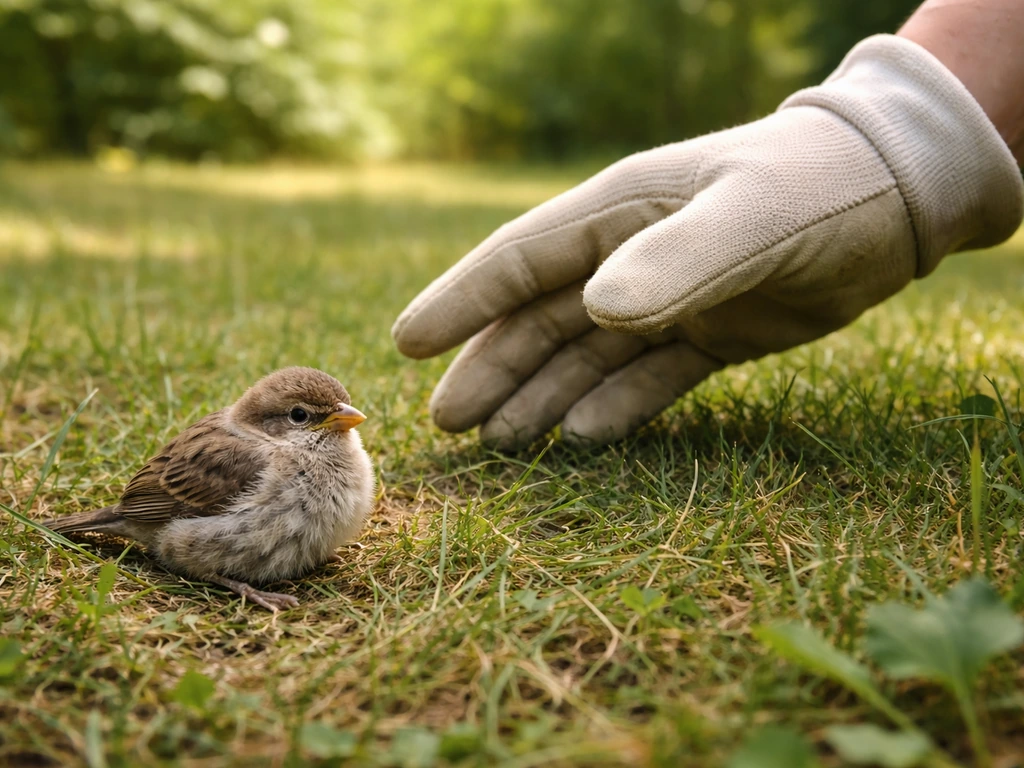
If you just found a bird on the ground and you're not sure what to do, here's the most important thing: don't rush in. Step back, keep pets and kids away, and take about 60 seconds to observe the bird before you touch it. That one pause will help you figure out whether this bird actually needs rescuing or whether you're about to interrupt a totally normal part of its life.
Found a Bird on the Ground What Should I Do Right Now
Marcus Chen
16 May 2026
Your first 60 seconds: a quick safety check
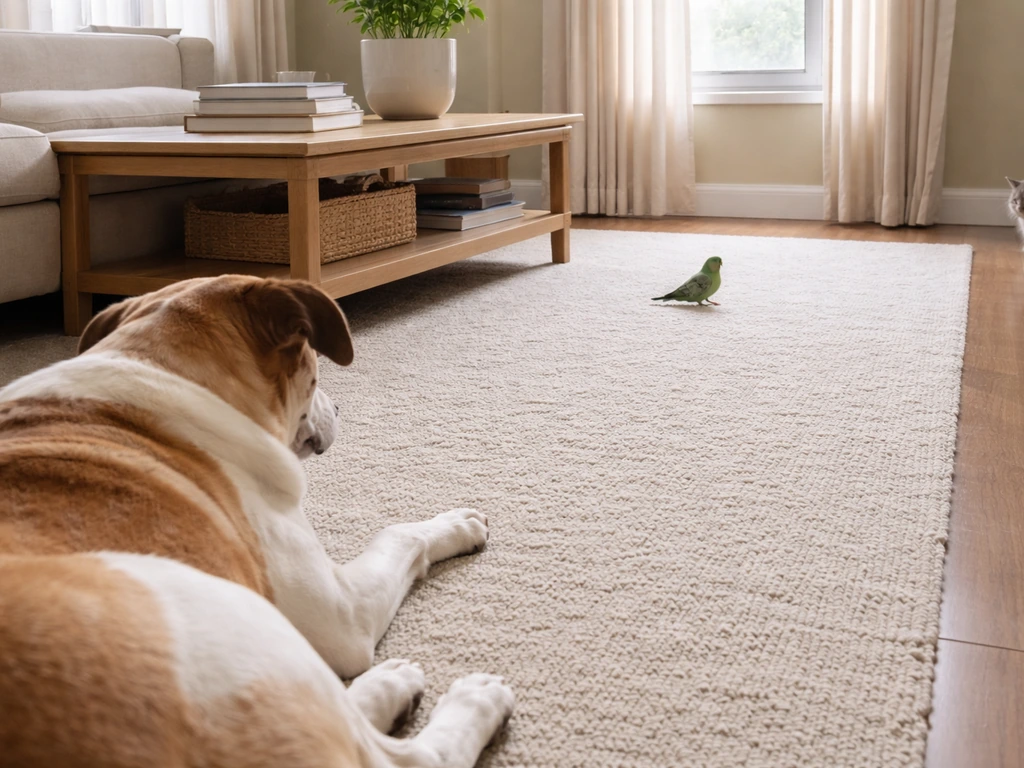
Before anything else, create a safe perimeter. Call your dog or cat inside, ask kids to step back, and give the bird a moment of quiet. Birds panic when surrounded, and a stressed bird can injure itself further trying to flee. This also gives you a chance to look without causing more harm.
If you do need to pick the bird up, wear gloves if you have them. If you don't, that's okay, just wash your hands thoroughly with soap and water afterward. Wild birds can carry bacteria and parasites, and if the bird has been in contact with a cat or dog, that's even more reason to be cautious. This isn't about fear, it's just good hygiene.
While you're observing from a few feet away, you're already gathering useful information: Is the bird moving? Is it holding a wing strangely? Is it breathing hard? Is it a tiny featherless chick or a fully feathered young bird? These answers shape everything that comes next.
Is this bird actually in trouble? Injured vs. fledgling vs. nestling
This is the most common mistake people make: assuming a bird on the ground is injured when it's actually just a fledgling doing exactly what fledglings do. If you're wondering what do I do if a bird flew away instead of needing rescue on the ground, treat it as an adjacent situation and follow the same quick safety-first approach before taking any next steps. A fledgling is a juvenile bird that has most of its feathers, hops around on the ground, and may look like it can't fly yet. That's normal. Its parents are almost certainly nearby, watching and feeding it. If you scoop it up unnecessarily, you're actually doing more harm than good.
A nestling is different. It's a very young bird with few or no feathers, closed or barely open eyes, and it definitely cannot survive on the ground. If you find a nestling and you can locate the nest nearby, you can gently place it back in. The myth that a mother bird will reject her chick if you touch it is not true, most birds have a very limited sense of smell.
According to U.S. Fish & Wildlife Service guidance, a baby bird probably does not need your help unless it is featherless or has its eyes closed. If it's fully feathered and hopping around, leave it alone and keep pets away. If it's clearly a nestling with no feathers and no nest in sight, that's when you step in.
Signs the bird genuinely needs help
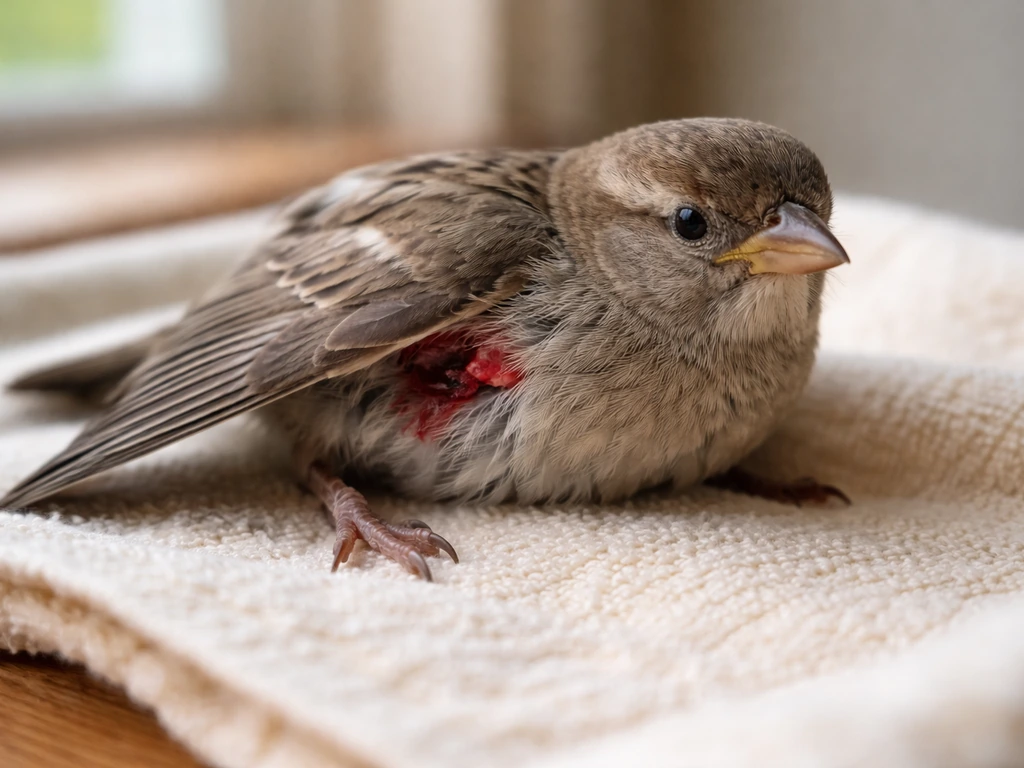
- Obvious wounds, bleeding, or visible broken bones
- A drooping or hanging wing that the bird can't hold up
- Inability to stand or hold its head upright
- Labored or open-mouth breathing
- Lethargy, shivering, or unresponsiveness
- Head tilting to one side or circling movements
- Visible parasites like maggots
- Any contact with a cat or dog (even if wounds aren't visible)
- A featherless nestling found on the ground with no nest nearby
If you see any of those signs, this bird needs professional care. The good news is that your job right now isn't to fix it, it's to keep it stable until you can get it to someone who can.
Immediate first aid: warm, dark, and leave it alone
The single most helpful thing you can do for an injured bird is reduce its stress. That means minimal handling, a quiet environment, and warmth. Birds go into shock easily, and shock kills. Here's what to do once you've decided the bird needs help.
- Gently pick up the bird by cupping it in both hands, keeping its wings held against its body. Don't squeeze — firm but gentle.
- Place it in a cardboard box or a container with ventilation holes. Line the bottom with a non-looping towel or a sheet so the bird can grip without sliding. A bath towel with loops can catch toes and cause injury, so avoid that.
- If the bird seems cold, place a heating pad set on its lowest setting under one half of the box only — not the whole floor. This lets the bird move away from heat if it gets too warm. A hand warmer wrapped in a cloth works too.
- Put the lid on. Darkness calms birds significantly.
- Place the box somewhere warm, quiet, and away from pets, children, and noise.
- Do not give the bird food or water. It sounds counterintuitive, but feeding the wrong thing can seriously harm or kill a bird, and a stressed bird can aspirate liquid. Leave feeding to the professionals.
- Call a wildlife rehabilitator or avian vet as soon as the bird is secured.
Don't keep checking on the bird. I know it's tempting, but every time you open that box you're flooding it with light and noise and sending its stress hormones spiking again. Set it up right, close the lid, and focus on making calls.
What to do in the most common scenarios
Window collision
Window strikes are incredibly common, especially during migration season. A bird that hits a window hard may be stunned but not seriously injured. Place it in a dark, quiet box as described above and give it up to two hours to recover. Many birds will regain their senses and be ready to fly. If after two hours the bird hasn't improved or is still showing signs like a drooping wing, labored breathing, or inability to stand, that's your cue to get it to a wildlife rehabilitator or vet. Don't try to force it to fly before it's ready, that can worsen internal injuries you can't see.
Broken wing or leg
If you can see a wing hanging at an odd angle or a leg that isn't supporting the bird, it likely has a fracture. If a bird was hit by a car, treat it like any other injured bird: keep it warm and calm, then contact a wildlife rehabilitator or vet for immediate next steps If you can see a wing hanging at an odd angle or a leg that isn't supporting the bird. Do not try to splint it yourself. I cannot stress this enough. Home splinting done incorrectly causes more damage and makes the rehabilitator's job harder. Your only job is to contain the bird safely, keep it still and warm, and get it to a professional quickly. The faster a fracture gets treated, the better the bird's chance of recovery.
Beak injury
A damaged or deformed beak is a serious injury because birds rely on their beak for everything from feeding to preening to self-defense. If the beak looks cracked, broken, or misaligned, get the bird to a wildlife vet as quickly as possible. Don't try to clean or repair it at home. Keep the bird warm and quiet and make transport your priority.
Cat or dog contact
This one is critical: if a cat has caught a bird, that bird needs professional care even if it looks completely fine. Cat saliva contains bacteria (particularly Pasteurella multocida) that causes fatal systemic infections in birds within 24 to 48 hours of exposure. If your bird was bitten by a cat, treat it as urgent and contact a wildlife rehabilitator or avian vet right away. A bird that appears unharmed after a cat encounter can be dead by tomorrow without antibiotic treatment. Don't wait to see if it gets worse. Get it to a wildlife rehabilitator or avian vet today. If the cat caught the bird and it is still alive, treat it as urgent and contact a wildlife rehabilitator or avian vet immediately cat caught bird still alive what to do. The same applies to dog contact, though cat bites are especially dangerous because cats' teeth are needle-sharp and drive bacteria deep into tissue.
If your own cat was involved, this is a situation covered in more detail when it comes to specific handling and treatment steps for birds caught by cats. The short version: secure the bird, contain it safely, and call for help immediately.
Nest emergency (nestling on the ground)
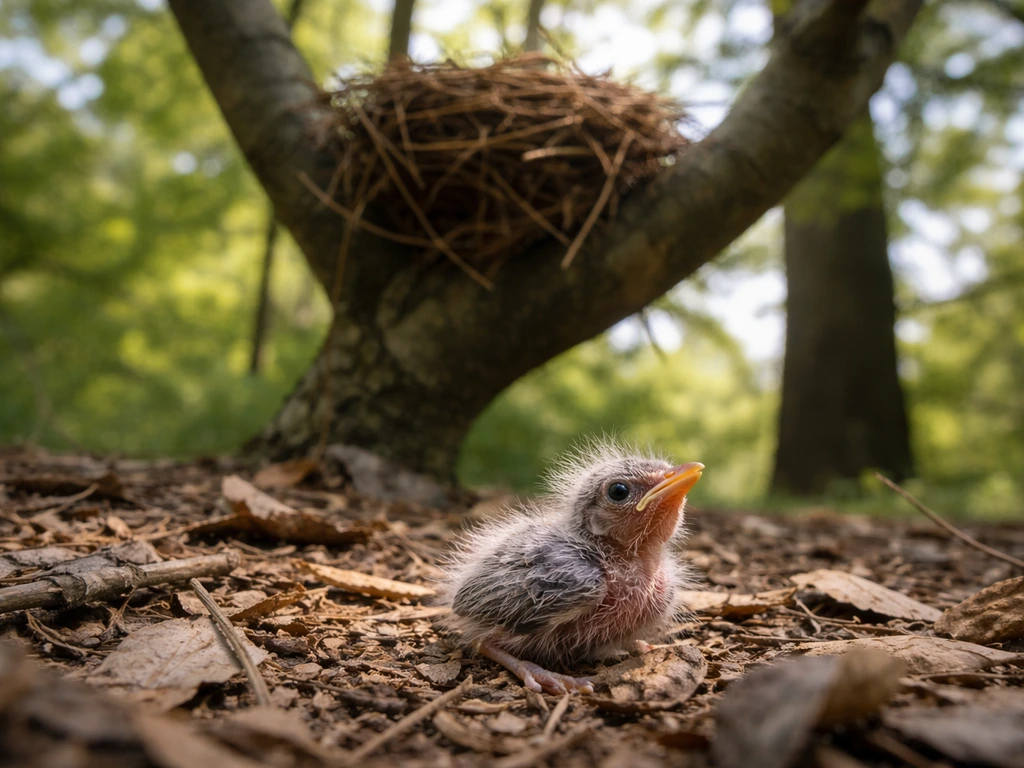
If you find a naked or barely-feathered nestling on the ground, look up. Is there a nest nearby? If you can safely reach it, place the chick back in. If the nest has been destroyed or is unreachable, place the chick in a small container (like a berry basket or a plastic container with drainage holes) lined with dry grass or tissue, and attach it to the tree as close to the original nest location as possible. Then watch from a distance for about an hour to see if the parents return. If they don't, or if the chick is cold or injured, call a rehabilitator.
When to call a professional (and how to find one)
If the bird shows any of the injury signs listed above, if it's been in a cat's mouth, if it's a featherless nestling with no accessible nest, or if a stunned bird hasn't improved after two hours, it's time to make a call. You are not equipped to treat these injuries at home, and that's completely okay. Wildlife rehabilitators go through extensive training for exactly this. Your role is stabilization and transport.
To find help quickly, try these resources:
- Search 'wildlife rehabilitator near me' or 'bird rehabilitator [your city/state]' — most states have licensed rehabilitators listed through their Department of Fish and Wildlife or equivalent agency
- The National Wildlife Rehabilitators Association (NWRA) and the Wildlife Center of Virginia both maintain online directories
- Your local humane society or animal control office can often refer you to a wildlife contact
- An avian veterinarian (not just any vet) is trained to treat wild birds in emergencies — search 'avian vet near me'
- If you're unsure, call any local vet clinic and ask who they recommend for wild bird emergencies
When you call, have this information ready: the species if you know it, where you found it, what symptoms you're seeing, and how long you've had it. This helps the rehabilitator triage whether you need to come in right now or whether you can wait until morning.
Setting up a safe temporary home until help arrives
Once you've made contact with a professional and you're waiting to transport or be seen, the setup matters. Here's what a good temporary holding space looks like:
| Element | What to use | What to avoid |
|---|---|---|
| Container | Cardboard box or plastic bin with ventilation holes and a secure lid | Wire cages, glass tanks, or containers the bird can see through |
| Lining | Non-looping towel, flat sheet, or paper towels | Terry cloth or loop-pile towels (toes get caught), newspaper (too slippery) |
| Heat | Heating pad on LOW under one half of box only, or a cloth-wrapped hand warmer | Heat lamps, full-floor heating, or anything over gentle warmth |
| Lighting | Dark — lid closed | Open tops, bright light, or placing box near a window |
| Location | Quiet room, away from pets and kids | Laundry rooms, kitchens, garages with fumes, or near speakers |
| Food and water | None | Bread, water, milk, seeds, worms — anything until a professional advises otherwise |
The goal of temporary housing is purely stabilization. You're not trying to rehabilitate the bird, you're just keeping it alive and as calm as possible until it can get proper care. Resist the urge to check on it frequently, show it to neighbors, or let kids hold it. Every unnecessary interaction is a stress event for a bird that is already in crisis.
When it's time to transport, keep the box on the seat rather than the trunk, avoid playing music, and drive smoothly. A short, calm trip in a dark box is far less traumatic than you might think. You've done the hard part just by getting this far, keeping the bird safe while you find the right help is genuinely the best thing you can do.
FAQ
How long should I wait before I call a wildlife rehabilitator, if I think the bird is injured?
If you see obvious injury signs (drooping wing, labored breathing, bleeding, or an inability to stand) or it was in a cat's mouth, call immediately. If you're unsure but it seems alert and is fully feathered, give it a quiet observation period, then call if it does not improve within about a few hours (especially after being placed in a dark, calm recovery box).
What if the bird is still chirping, moving, and looks “okay” but it was on the ground for a while?
Movement does not always mean injury is absent, especially with window strikes and predator exposure. If it was stranded after impact, place it in a dark quiet box and reassess after a couple of hours. If it cannot perch, keeps breathing hard, or seems weak, treat it as needing professional care.
Can I give the bird food or water while I’m waiting for help?
In most cases, do not offer food or water. During transport or temporary holding, you want stabilization, warmth, and minimal handling. Many birds can choke or aspirate if fed incorrectly, and giving the wrong type of food can harm them.
What should I use for a temporary “safe box” setup, and how warm should it be?
Use a ventilated container lined with soft, dry material, and keep it in a dark, quiet spot. Warmth should be gentle, not hot, for example by placing the box near (not touching) a warm source like a heating pad set low under part of the container area. If the bird looks more agitated when warmed, back off the warmth.
If I think it’s a fledgling, how can I tell the difference between “normal” and “needs rescue”?
A normal fledgling usually has most of its feathers, can hop or move around, and may not fly yet. Red flags include lying flopped over, breathing with obvious effort, holding a wing at an odd angle, cold or very lethargic behavior, or being in immediate danger (traffic, pets).
Should I put the bird back where I found it, or move it to a safer spot?
If it is in danger, you may carefully move it to a safer location without trying to “rehabilitate” it. For example, if it is in a doorway or near a cat path, relocate it a short distance to reduce threat. Do not delay calling for care if injury signs are present.
I found a bird that appears to be a nestling, but I can’t find the nest. What then?
If there is no reachable nest and the chick is featherless or barely feathered, place it in a small container with drainage holes lined with dry material, secure the lid loosely, and attach it to the tree near the original area. Watch from a distance for about an hour, and call a rehabilitator sooner if the chick is cold, injured, or the parents do not return.
What do I do if my dog or cat was nearby but did not catch the bird?
Even without a bite, treat it as a “stress and hygiene” situation. Keep the bird away from pets, wash your hands thoroughly, and monitor for signs like injury, weakness, or frantic behavior after being separated. If the bird shows injury signs or you suspect the animal got its mouth on the bird, contact a rehabilitator.
I touched the bird with bare hands. Is that a big problem?
Usually not. The bigger concern is chilling, stress, and rough handling. Once you’ve placed the bird in a quiet, safe area or contacted help, focus on minimizing further handling. Wash your hands afterward, especially if you were around cats or dogs.
Is it okay to try to “help it fly” after I recover it from shock?
Do not force flight. After a window strike, allow time in a dark, quiet box, then check if it can stand and balance normally. If it still has a drooping wing, trouble breathing, or cannot perch, get professional care instead of attempting flight.
What if the bird is bleeding or has visible bones, can I tape it up?
No. Do not attempt to bandage, splint, or tape visible injuries. Keep the bird warm and contained, apply no home treatment, and arrange urgent care. Improper wrapping can worsen tissue damage and prevent treatment from being effective.
What should I tell the rehabilitator when I call, besides where I found it?
Share the timeline (when you found it), what the bird was doing (breathing effort, ability to stand, wing position), and any hazards involved (window strike, being outdoors in extreme weather, car hit, or pet contact). If you know the likely species, mention that too, but do not delay describing symptoms.
Next Articles
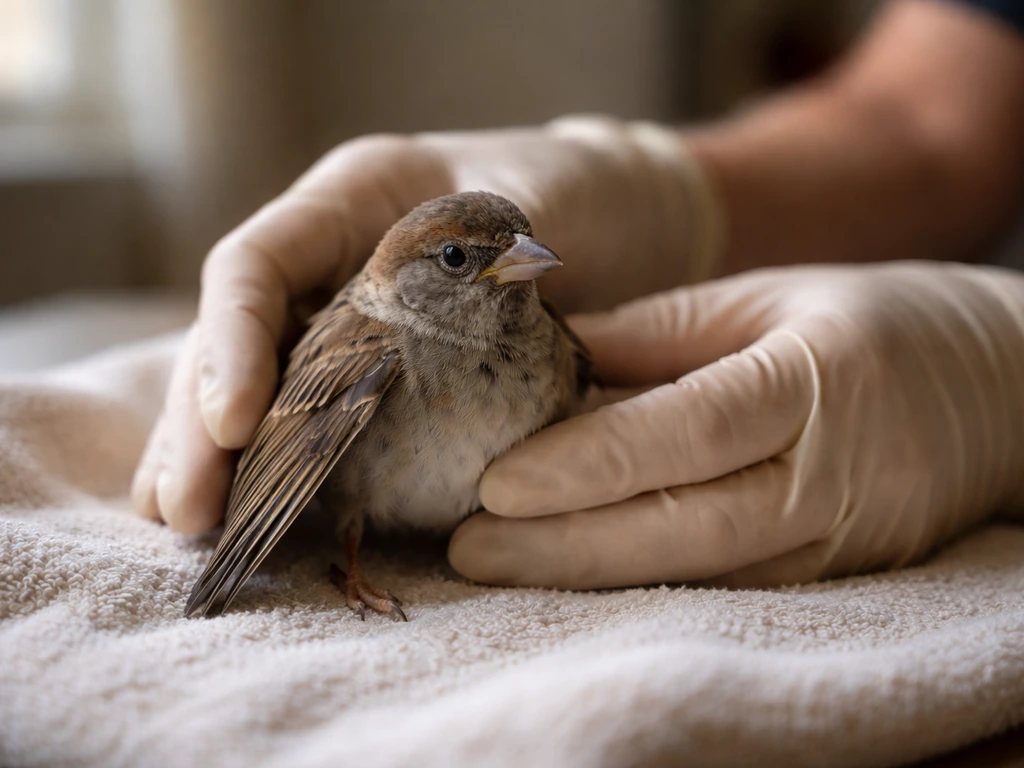
Can a Bird Live With One Wing? Survival and First Aid
Can a bird live with one wing? Injury outcomes and step-by-step first aid, plus when to get urgent help.
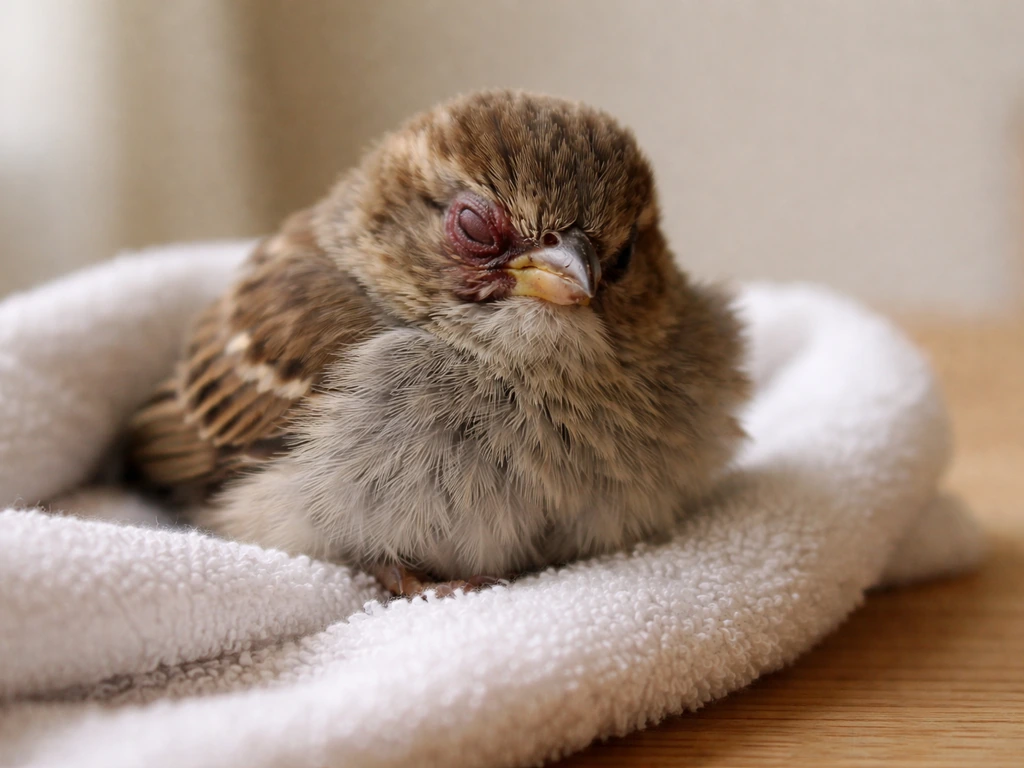
Can a Bird Survive With One Eye? What to Do Now
Learn if birds can cope with one eye and what to do now for an injured bird’s eye safely and urgently.
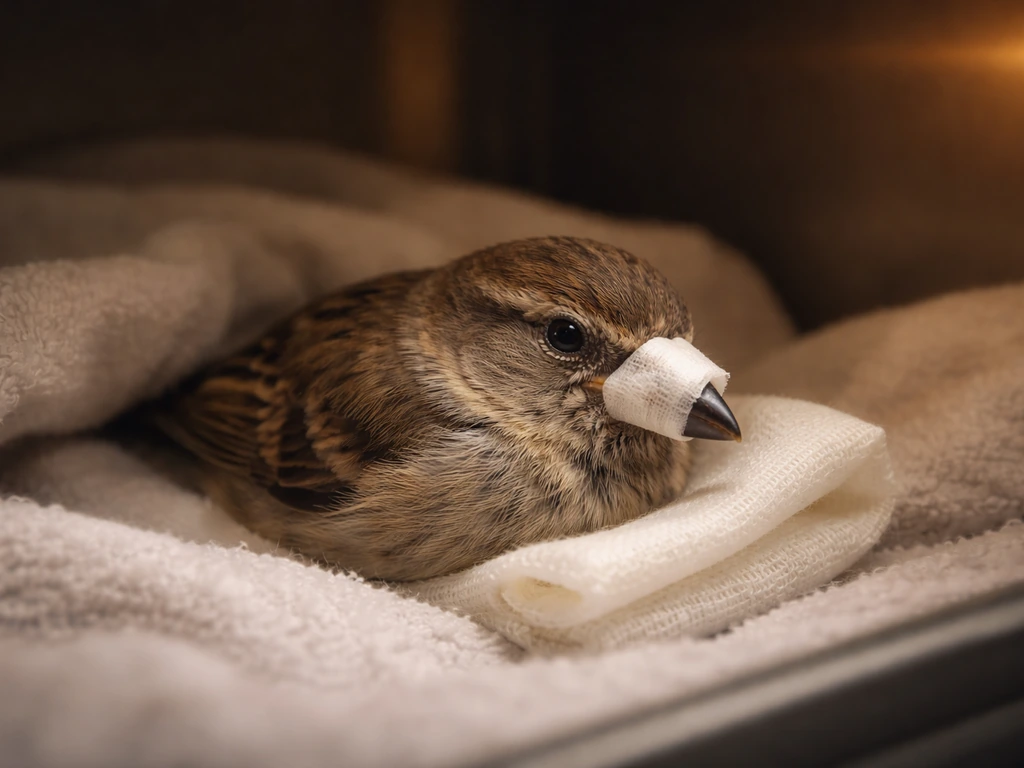
Can a Bird Survive With a Broken Beak? What to Do Now
Learn if a bird with a broken beak can survive, spot danger signs, and do safe first aid until a vet rescues it.