
A bird can die from a broken wing within hours, sometimes less, but not usually because of the broken bone itself. The real killers are shock, internal bleeding, respiratory failure, and the stress of being injured and handled. If you are reading this because you just found an injured bird, the honest answer is: you have a window of time, but it is shorter than most people think, and what you do in the next 15 to 30 minutes matters a great deal.
How Fast Can a Bird Die From a Broken Wing? First Aid
Marcus Chen
8 Apr 2026
How fast does a broken wing become life-threatening?
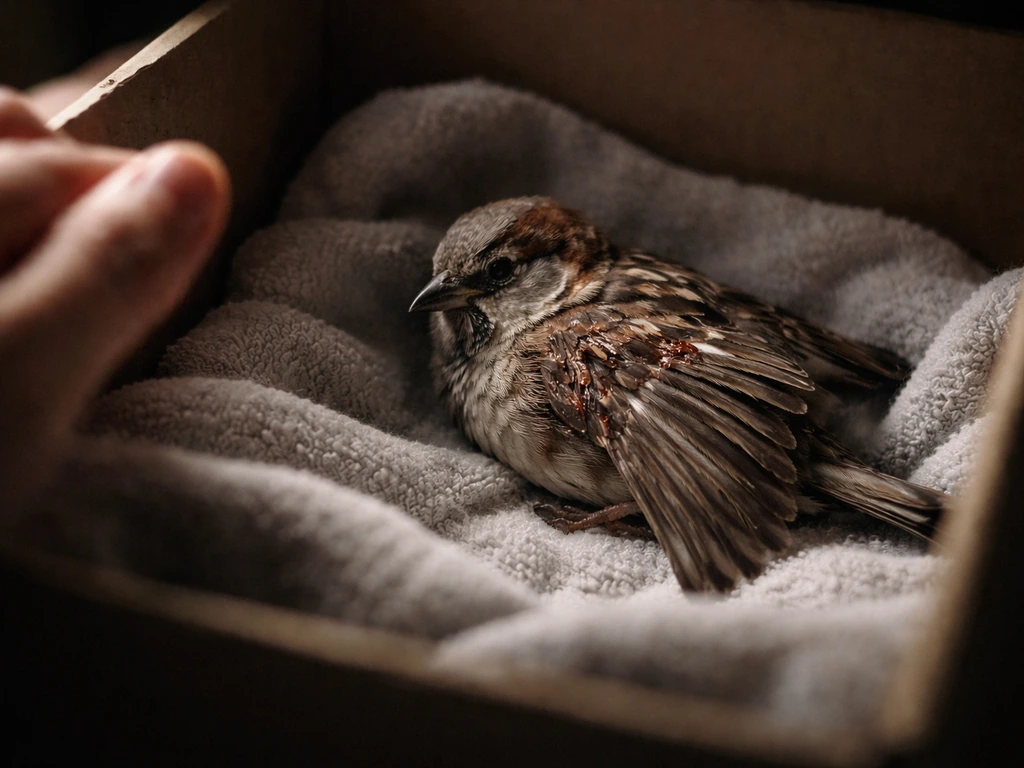
A wing fracture alone is painful but not immediately fatal. What turns it fatal are the cascading effects that follow trauma. Shock can set in within minutes of a serious injury. Internal bleeding, if present, can cause a bird to deteriorate rapidly. A bird that is cold, wet, or overheated on top of being injured is in compounding danger. Dehydration starts to matter quickly in small birds. And stress, specifically the physical stress of struggling or being handled too much, can be a direct cause of death. Merck veterinary guidance documents cases where birds died from exhaustion after prolonged struggling following an injury. For a small songbird, the margin for error is extremely narrow. For a larger bird like a crow, hawk, or pigeon, you may have a bit more time, but the window is still measured in hours, not days.
The injury context matters a lot too. A bird hit by a car or a window is almost certainly dealing with more than just a wing fracture. Blunt-force collisions frequently cause internal injuries, head trauma, and eye damage. A bird that survived a cat attack may look relatively intact but is at serious risk from bacteria introduced by puncture wounds, even tiny ones. Each of these scenarios compresses the timeline. So when someone asks how fast a bird can die from a broken wing, the answer is anywhere from minutes (if the bird is in respiratory distress and shock right now) to a few hours (if the bird is stable but untreated and exposed). Either way, the goal is the same: minimize handling, keep the bird warm and dark and quiet, and get it to a professional as fast as you can.
Red flags that mean this is an emergency right now
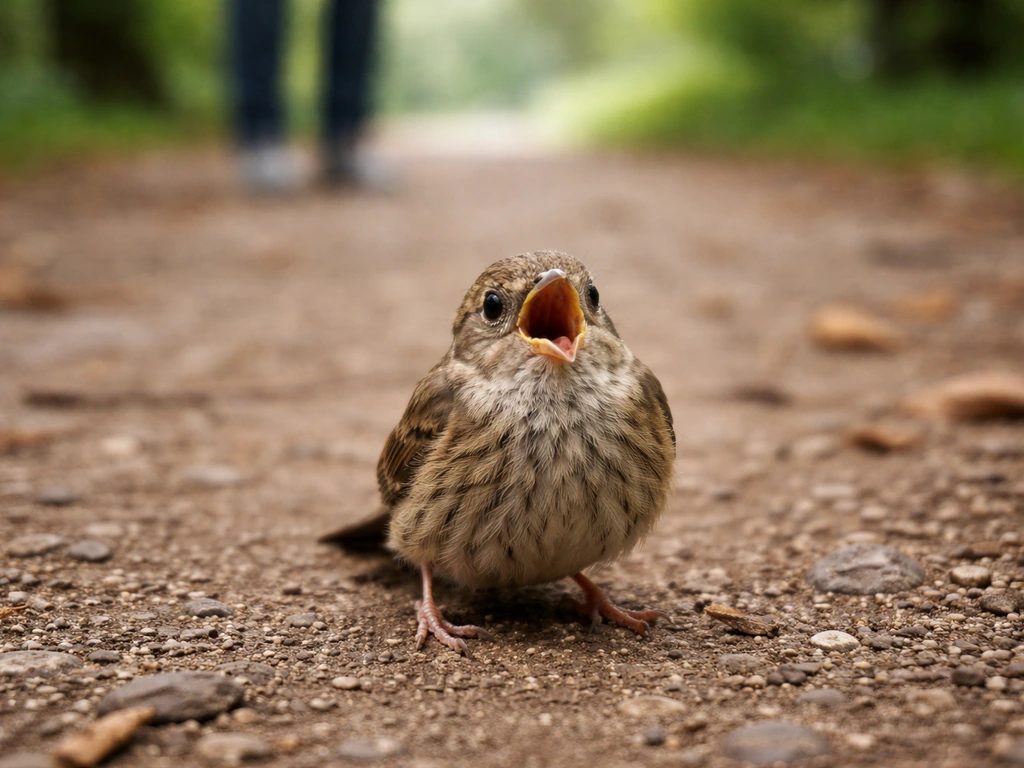
Before you do anything else, observe the bird from a short distance for 30 to 60 seconds. You want to know what you are dealing with before you touch it. Some signs tell you the bird is in immediate danger and needs professional help today, not tomorrow.
- Open-mouth breathing or gasping: This is one of the clearest emergency signs. Healthy birds breathe with their beaks closed. Open-beak breathing, tail bobbing with each breath, or visible effort in the chest (sometimes called sternal effort) all indicate respiratory distress.
- Active or persistent bleeding: A little blood around the injury site can be normal, but bleeding that continues or soaks the feathers means the clock is running.
- Inability to hold posture: A bird that cannot sit upright, keeps falling over, or cannot hold its head up is in serious trouble. This can indicate internal injury, head trauma, or advanced shock.
- Eyes closed or partially closed: A bird that keeps its eyes shut while you approach and touch it is not resting. It is in a critical state. Healthy injured birds are still alert.
- Extreme limpness or unresponsiveness: If the bird barely reacts when you pick it up, it is in shock. This is urgent.
- Visible deformity, large swelling, or bubbles under the skin: Subcutaneous air (emphysema) can develop after certain injuries and is a veterinary emergency.
- Signs of a cat attack: Any puncture wound, no matter how small, from a cat requires immediate veterinary attention. Cat bacteria are highly toxic to birds.
- Maggots or fly strike: If you see maggots, the injury has been present for some time and the bird needs professional care immediately.
If you are seeing any of the above, stop reading and go directly to the section on calling for help. For questions about whether other types of injuries carry similar urgency, it is worth knowing that a bird with a broken beak faces its own version of this triage problem, and many of the same emergency signs apply.
Immediate first aid: what to do in the next 15 minutes
The core principle here is simple: do less, not more. Your job is to stop the situation from getting worse while you arrange professional help. You are not trying to treat the bird. You are trying to keep it alive long enough to reach someone who can.
Step 1: Contain the bird calmly
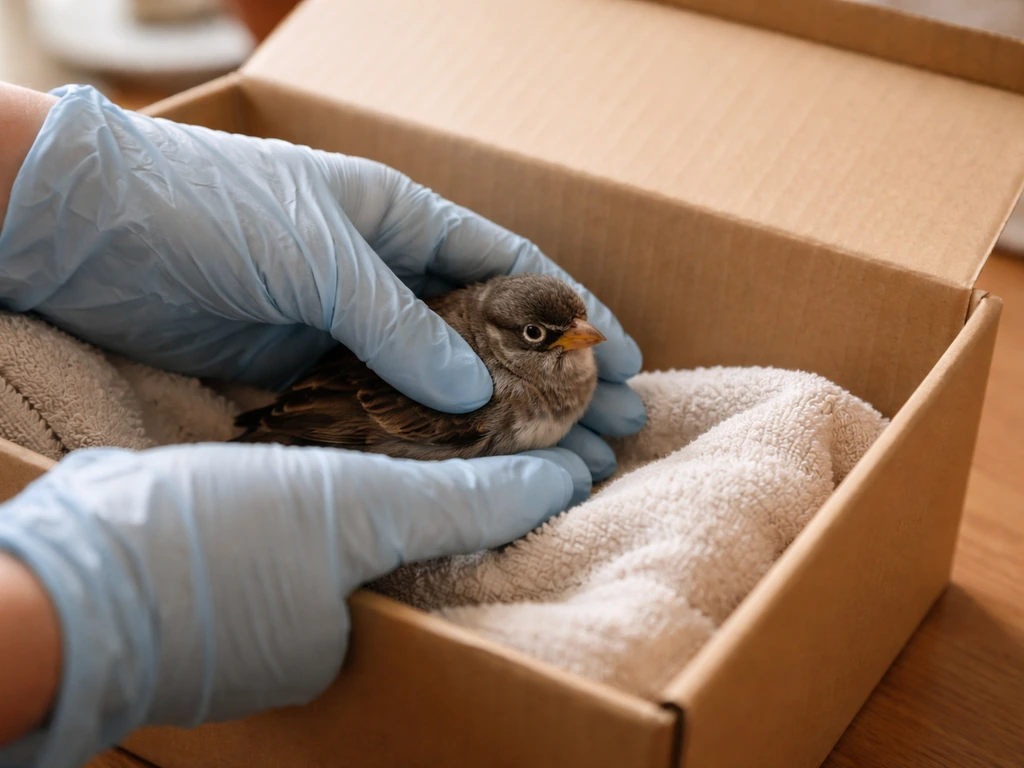
Do not chase the bird. An injured bird may still try to run or flutter away. Chasing it forces it to exert energy it does not have and increases its stress dramatically. Instead, approach slowly, cover the bird loosely with a light towel or cloth, and scoop it gently but firmly into your hands. The towel does double duty: it protects your hands and it covers the bird's eyes, which immediately reduces panic. Once covered, most injured birds become very still.
Step 2: Put it in a dark, warm, quiet box
A cardboard box with a lid is ideal. Line the bottom with a folded towel or paper towels so the bird has something to grip. Place the bird gently inside, remove the towel carefully, and close the box. Keep the box in a warm room away from children, pets, noise, and direct sunlight. The target temperature for the space around the box is roughly 80 to 85 degrees Fahrenheit. If the room is cool, you can set one end of the box on a heating pad set to low, leaving the other end unheated so the bird can move away from heat if needed. Do not put the heating pad under the entire box. Overheating is a real danger, especially in warmer weather.
Do not cut ventilation holes in the box. There is enough air exchange in a cardboard box for a bird sitting still, and holes let in light and reduce the calming darkness effect. Keep the box closed except for brief, necessary check-ins.
Step 3: Do not feed or water the bird
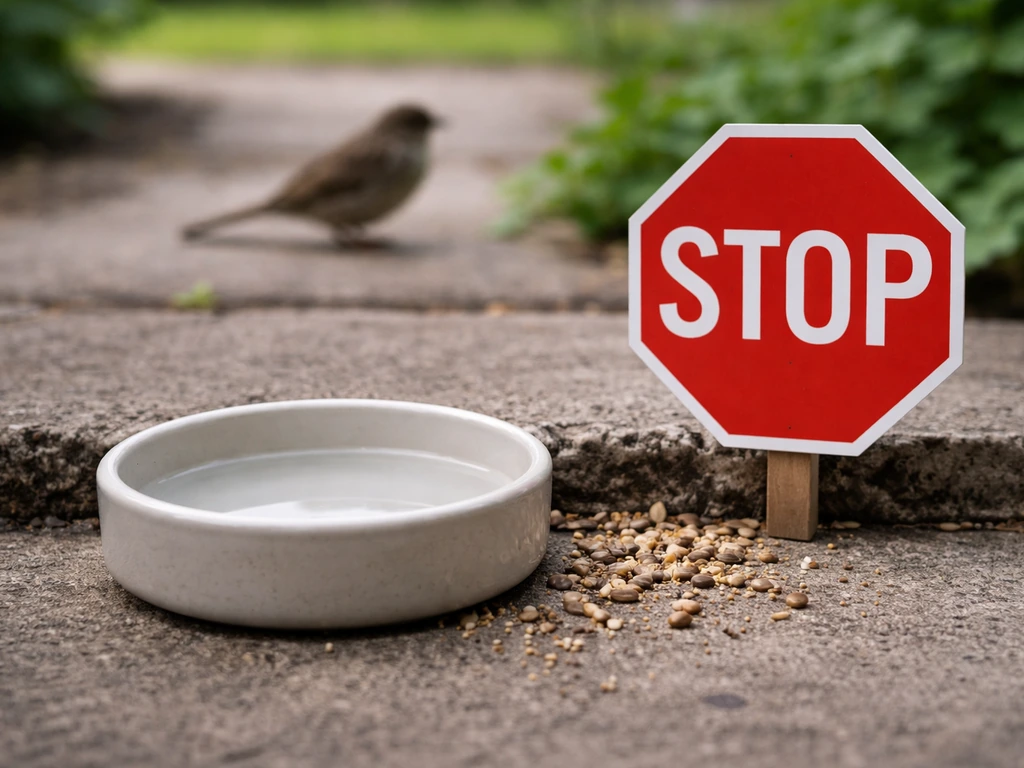
This one surprises people, but it is critical. Feeding a traumatized, cold, or dehydrated bird can kill it. When a bird is in shock, its digestive system essentially shuts down. Food sitting in the crop or gut can ferment or cause aspiration if the bird is too weak to swallow properly. Do not offer water by dropper or force it into the beak either. Aspiration (inhaling liquid into the airway) is a real and rapid cause of death. Leave food and water out of the equation entirely unless a licensed rehabilitator or avian vet specifically tells you otherwise.
Step 4: Do not attempt to splint or set the wing
Wing fracture repair is genuinely complex. Avian vets use specific techniques such as figure-of-eight splints for certain distal wing fractures, and improper immobilization can cause more damage than leaving the wing alone. Moving the wing, trying to straighten it, or wrapping it tightly can rupture blood vessels, increase pain, and dramatically worsen the injury. Keep the bird contained and still. That is the right first aid for the wing.
Getting the bird safely into transport
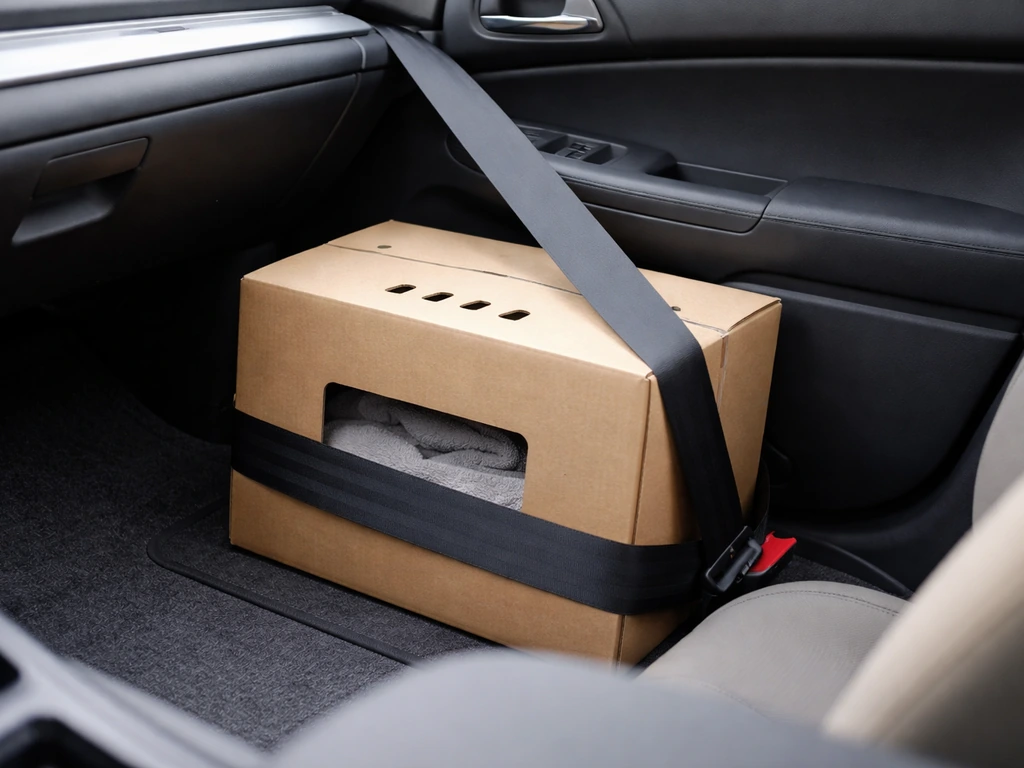
If you are driving the bird to a vet or rescue, the same cardboard box works well. Folded-flat cardboard pet caddies are another good option if you have one. Put the box on the floor of the back seat or in the footwell, not on a seat where it can slide. Keep the car quiet: no loud music, no sudden acceleration. Darkness and stillness are the two things keeping this bird alive right now.
One thing worth knowing: if the bird's only apparent issue is a window collision stun with no obvious other injuries, you can open the box every 15 minutes in a safe outdoor area to see if it has recovered enough to fly off. But if there is a clearly drooping or deformed wing, any bleeding, or any of the emergency signs listed above, skip the wait-and-see approach and go directly to a professional.
The experience of watching a bird in your hands is stressful for both of you. People often hold the bird out of a desire to comfort it, but prolonged handling increases stress hormones and can push an already-compromised bird over the edge. Box it up, put it somewhere warm and quiet, and make your phone calls. That is genuinely the most helpful thing you can do.
When to call a wildlife rescue or avian vet right now
The answer to "when" is almost always: immediately. Even if the bird seems stable in its box, a broken wing is not something that heals on its own in the wild. A bird that cannot fly cannot find food, cannot escape predators, and cannot survive more than a few days without intervention. Same-day care is the goal in every case. Here is how to find help:
- Search Animal Help Now online or use their wildlife emergency map to find a licensed rehabilitator near you. Bi-State Wildlife Hotline directs people to this tool specifically for finding local help fast.
- If you are in Virginia, you can call the Virginia Department of Wildlife Resources helpline at 1-855-571-9003, available Monday through Friday 8:00 AM to 4:30 PM, to get connected with a licensed rehabilitator.
- The Wildlife Center of Virginia has staff available seven days a week from 9: 00 AM to 5:00 PM to assist with wildlife situations.
- Many areas have local wildlife hotlines. Think Wild, for example, offers a call or text hotline for exactly this kind of guidance when you are not sure what you are dealing with.
- Your regular vet or an emergency animal hospital may be able to provide stabilization even if they are not avian specialists. Call ahead and explain the situation.
- If you cannot reach anyone immediately, leave messages with multiple organizations and keep trying. Rehabilitators are often in the field and may call back within the hour.
When you call, be ready to describe the bird species if you know it, where you found it, what happened, how it is behaving right now, and whether you can transport it. Having that information ready will speed up the triage process on their end.
What happens after the bird gets professional care
The first thing a wildlife vet or rehabilitator does is stabilize the bird, not treat the fracture. Diagnostics and surgery are usually postponed for 12 to 48 hours while the bird is stabilized. Stabilization can include warming, fluid support (subcutaneous or IV fluids in severe cases), pain management, anti-inflammatory medication, and in some cases antimicrobials, especially if a cat was involved. A bird that is too stressed or compromised to handle safely will be kept in a warm, dark, quiet space until it can tolerate examination.
Once stable, the vet will typically do a physical exam and may take X-rays to understand the fracture location and severity. Wing fractures near the shoulder (coracoid or clavicular injuries) are treated differently than those in the mid-wing or the distal bones near the wingtip. Treatment might include coaptation splinting, surgical fixation with pins or plates, or in some cases, amputation if the damage is too severe to repair functionally.
Recovery odds depend heavily on the species, the fracture type, how quickly care began, and whether there are secondary injuries. Wild birds that recover flight fully can often be released. Those that cannot regain flight face different outcomes, which is a harder conversation. It helps to understand the broader picture: whether a bird with a broken wing can survive at all depends a great deal on these factors, and a wildlife professional is the right person to make that assessment. Some birds do recover completely. Some do not. Getting help fast gives the bird its best possible chance either way.
For context, injuries to other body parts carry similar recovery complexity. Whether a bird can survive with a broken leg also depends on the fracture location, species, and how quickly it receives care. And some birds that lose full function of a limb can still live healthy lives in captivity or managed settings. A bird living with one leg is more common than most people realize, especially in managed wildlife environments.
Mistakes that can kill a bird faster than the injury
These are the things people do with the best intentions that end up making things worse. Knowing about them is not about blame. It is about giving the bird the best possible chance.
| Mistake | Why It's Harmful | What to Do Instead |
|---|---|---|
| Handling the bird repeatedly or for long periods | Stress from handling can cause cardiac arrest or exhaustion in trauma cases | Box the bird, minimize contact, and make calls instead |
| Trying to give water by dropper | Aspiration risk is high in a weak or stressed bird; fluids in the airway can be fatal | No food or water unless instructed by a professional |
| Attempting to splint or straighten the wing | Can rupture blood vessels, cause more fractures, and worsen pain | Leave the wing alone; containment is sufficient first aid |
| Leaving the bird outside to 'recover on its own' | A bird with a broken wing cannot find food or escape predators; it will not recover without help | Contain it and get it to a rehabilitator |
| Using a container with holes cut in it | Reduces the darkness that calms the bird; holes are unnecessary for air in a cardboard box | Use an intact cardboard box with a lid |
| Placing the heating pad under the whole box | Overheating is a real risk, especially in summer; the bird cannot move away from the heat | Heat only one end so the bird can self-regulate |
| Feeding the bird because it looks hungry | Digestion shuts down in shock; food can cause aspiration, fermentation, or crop impaction | No feeding until a rehabilitator advises it |
| Waiting to see if the bird 'gets better' overnight | Shock, dehydration, and untreated fractures worsen rapidly without intervention | Same-day contact with a professional is always the goal |
A note on birds with other serious injuries
Birds are remarkably resilient in some ways and surprisingly fragile in others. The same philosophy that applies to a broken wing, namely act fast, minimize stress, get professional help, applies across a range of serious injuries. Whether a bird can live with one wing is a question that depends on the species and the circumstances, and it is one that wildlife professionals deal with regularly. Similarly, a bird's ability to survive with one eye after a trauma injury is something that varies and is best assessed by someone with hands-on rehabilitation experience. The point is not to despair at the odds, but to get the bird to someone who can make that call accurately.
If you found a bird today and you are doing your best to help it, that already puts you ahead of most situations these birds face. Contain it, keep it warm and dark and quiet, skip the food and water, and make those calls now. That is genuinely everything the right person needs from you.
FAQ
What signs mean the bird could die within minutes, even if the wing looks “broken only”?
Look for open-mouth or labored breathing, gasping, repeated collapse, inability to stay upright, strong bleeding, or an extremely cold or very hot body. Those point to shock or respiratory trouble right now, so you should treat it as an emergency and call immediately rather than waiting to “see if it improves.”
Can I tell how urgent it is by whether the bird can still hop or flutter?
Not reliably. Some birds can move a little while still being in shock or dealing with internal injuries from the impact (car, window, fall). Movement can delay your judgment, so rely on breathing, posture, and overall responsiveness more than on how much it struggles.
Is it ever okay to give water for shock?
In general, no. If the bird is dehydrated, the safest approach is still to warm it and keep it quiet, because giving water or dropper feeding can cause aspiration. A rehabber or avian vet can decide on fluids and the correct route based on the bird’s condition.
What if the bird is alert and doesn’t seem in distress?
Still get same-day help. A wing fracture reduces the bird’s ability to feed and escape predators, and the first hours after trauma are when shock and internal complications can worsen. “Alert in the box” is a good sign, but it is not a green light to postpone care.
Should I try to “set” the wing or straighten it to help healing?
No. Straightening, wrapping tightly, or repositioning can tear vessels and worsen bleeding or pain. The safest first aid is containment and keeping the bird still and warm, with the wing left in the position it naturally ends up in.
How warm should the bird be, and how do I avoid overheating?
Aim for a warm, indirect environment around 80 to 85°F. If using a heating pad, warm only one side so the bird can move away. If the bird feels very hot to the touch, becomes more agitated, or pants, the box is too hot and needs immediate cooling.
Do I need to keep the box completely dark, or is partial light okay?
Keep it dim and calming. Bright light can increase panic and movement, which raises stress hormones. Also, avoid ventilating modifications that let in more light, since darkness helps many injured birds settle.
Is a plastic pet carrier or a towel-only setup better than a cardboard box?
A lidded cardboard box is usually best for the calming, dark environment. A plastic carrier can work in a pinch if it is covered to reduce light, but avoid uncovered carriers where the bird sees you and struggles. Towels alone outdoors are risky because the bird can cool down fast and be disturbed.
How long should I wait after a window collision before releasing it?
Only consider a short wait-and-see in the specific situation of a simple stun with no drooping or deformity. If the wing is abnormal, there is any bleeding, or it cannot get steady control quickly, you should skip the delay and go straight to a professional.
What should I bring when calling or transporting the bird?
Have the species (if known), where you found it, what happened, how it is breathing or reacting right now, and whether you can transport it. If you can, note the estimated time since injury. That helps decide triage priority and how urgent stabilization and exam scheduling are.
If I can’t get the bird to a professional immediately, what is the safest “holding” plan?
Keep it contained, warm, dark, and quiet, with minimal handling. Do not feed or offer water. Limit check-ins to brief intervals, because repeated handling can be what pushes a marginal bird into shock or exhaustion.