
If you have a bird in front of you showing cold-like symptoms right now, here is what to do: put it somewhere warm (around 85°F / 29°C), dark, and draft-free, handle it as little as possible, do not force food or water, and watch its breathing closely. Most birds that look like they have a cold are actually stressed, chilled, or dealing with something more serious than a simple upper respiratory bug. Your job in the next hour is not to treat the illness yourself. It is to stabilize the bird, assess how bad things really are, and decide whether this is a "wait and see" situation or a "call a wildlife rehabber right now" emergency.
How to Treat a Bird With a Cold: First Aid Steps
Marcus Chen
5 Jun 2026
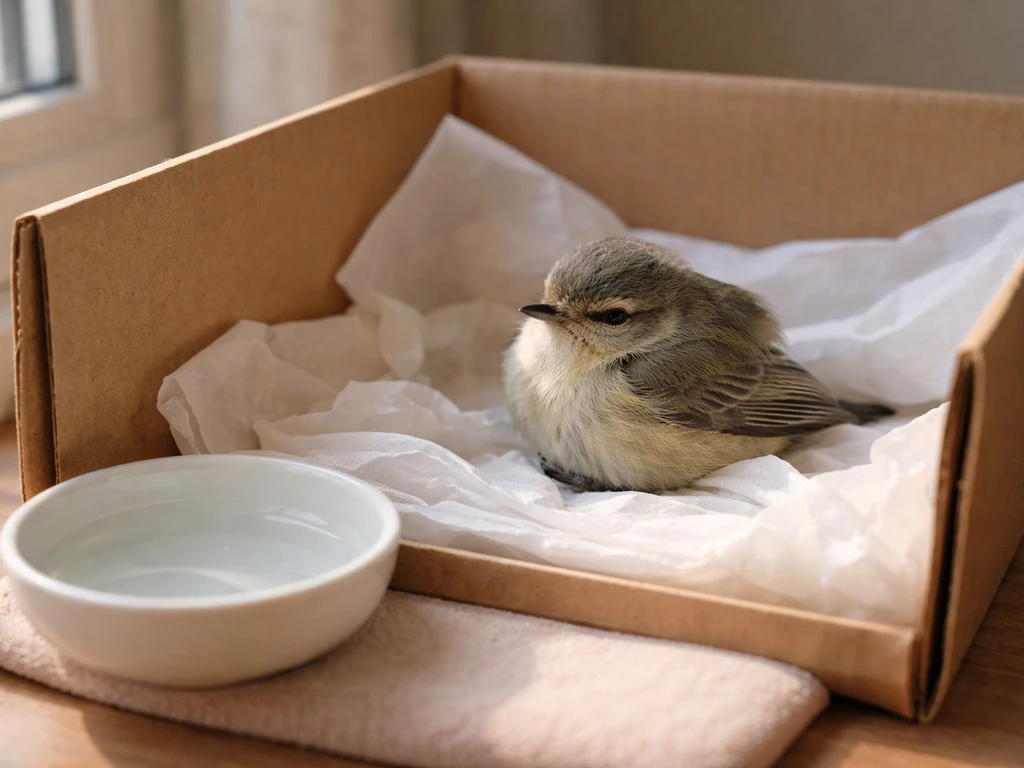
What a "cold" actually looks like in birds (and when it is something worse)
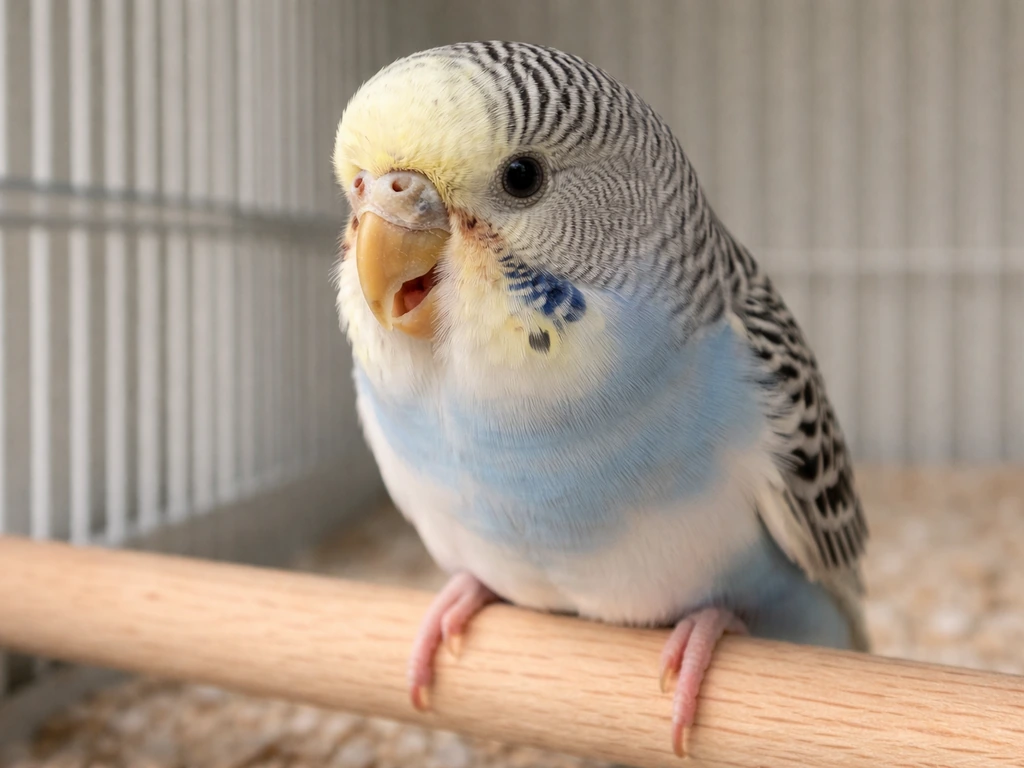
Birds cannot tell you they feel terrible, so you have to read their body language and symptoms carefully. True cold-like signs in birds include sneezing, watery or crusty discharge from the nostrils or eyes, slightly fluffed feathers, and mild lethargy. A bird that is a little quieter than normal but still alert, still reacting to you, and still able to perch is in a different situation from one that is collapsed on the bottom of a cage or enclosure.
Here is the important part: what looks like a cold often is not one. Sneezing and nasal discharge in birds can have a long list of causes including bacterial, viral, or fungal infections, aspiration of food or water into the airway, exposure to dust or fumes, stress-induced breathing changes, or something systemic and serious like Newcastle disease. If you found the bird outside on a cold or wet day, it may simply be chilled and stressed rather than sick at all. Exposure to cold and wet alone can cause a bird to look very ill very fast.
The distinction that matters most is whether the bird is having trouble breathing. Mild sniffling in an otherwise alert bird is concerning but not an emergency. Open-mouth breathing, tail bobbing with every breath, a clicking or wheezing sound, or the bird leaning forward and stretching its neck to get air are all signs of serious respiratory distress. Those are not cold symptoms you can manage at home.
A quick way to size up how serious things are
| Sign | What it likely means | Action needed |
|---|---|---|
| Sneezing, mild nasal discharge, slightly fluffed | Possible mild respiratory irritation or early infection | Warm setup, monitor closely, contact a rehabber within 24 hours |
| Lethargic but upright, not eating much | Stress, chilling, or mild illness | Warm setup, no food/water forced, reassess in 1-2 hours |
| Sitting on cage floor, not perching | Significant weakness or illness | Call a wildlife rehabber or avian vet today |
| Open-mouth breathing, tail bobbing, clicking/wheezing | Respiratory distress or serious infection | Call immediately — this is urgent |
| Discharge from both eyes and nose, very weak | Systemic infection possible | Call immediately |
| Neurological signs: head tilt, tremors, seizures | Possible serious systemic disease | Call immediately — do not delay |
Set up a warm, calm, draft-free recovery space first
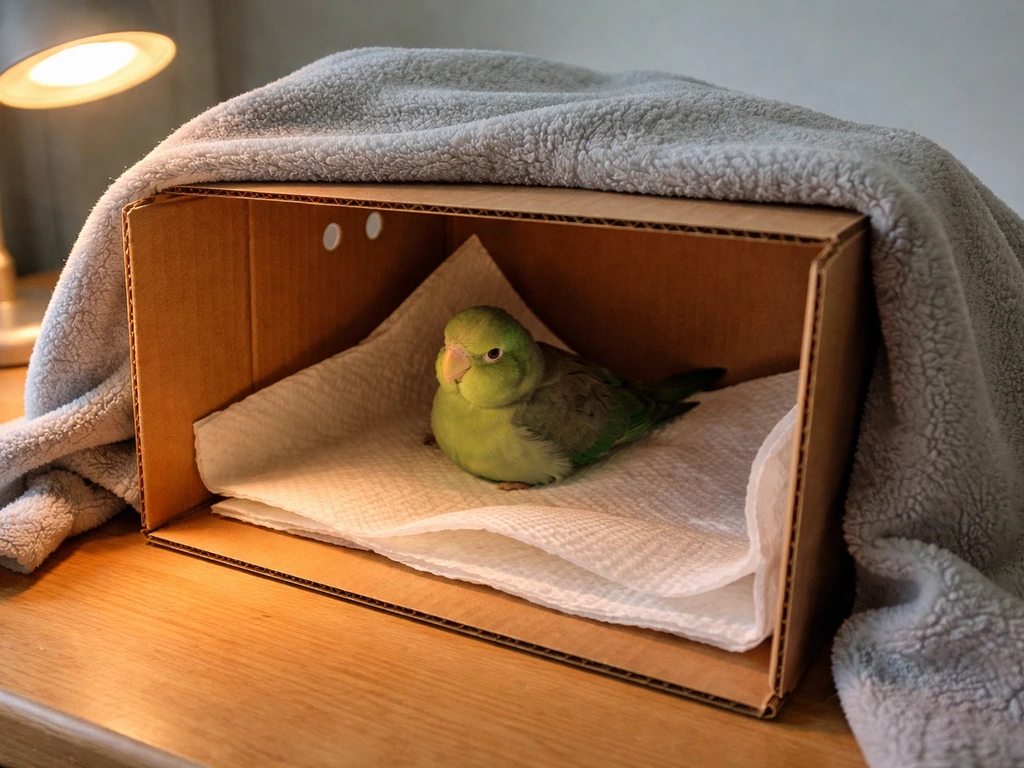
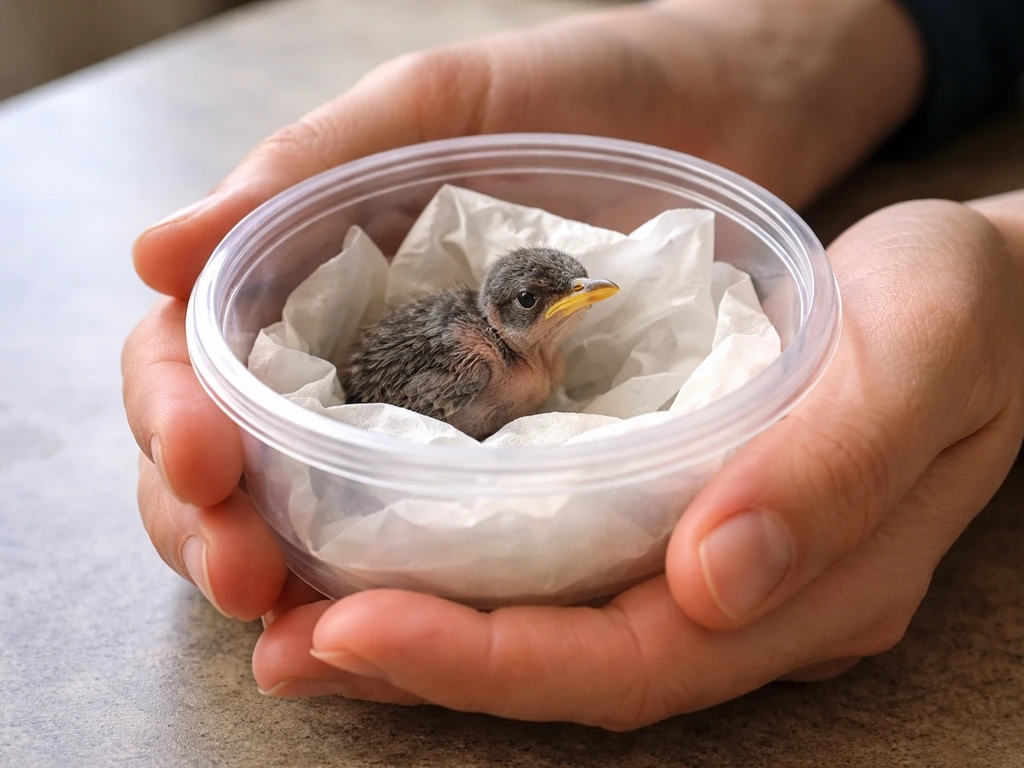
Before you do anything else, get the bird into a safe container. A cardboard box or small carrier works well. Line the bottom with a clean folded towel or paper towels so the bird has traction and is not sliding around. Make ventilation holes in the lid if using a box, but do not put a mesh or wire top on it, birds injure themselves trying to escape through openings they can see through.
Temperature matters a lot. A sick or cold bird needs warmth to start recovering. Aim for around 85°F (29°C) inside the enclosure. The practical way to get there without overheating the bird is to place the box halfway on a heating pad set to its lowest setting, with a folded towel between the pad and the box. This gives the bird a warm side and a cooler side so it can move away from the heat if it needs to. Tufts Wildlife Clinic and the Avian Welfare Coalition both recommend this half-on, half-off setup for exactly this reason. If you do not have a heating pad, a warm (not hot) water bottle wrapped in a towel tucked to one side works in a pinch.
Put the box somewhere quiet and dark. Darkness reduces stress dramatically in birds. A stressed bird breathes harder and burns energy it does not have to spare. The Maine IFW Wildlife Rehabilitation Exam Booklet also emphasizes reducing stress and handling priorities because stress can worsen a bird’s breathing effort and stability during treatment A stressed bird breathes harder and burns energy it does not have to spare.. Keep other pets, children, and noise away from the area. Do not keep checking on it every few minutes. Set a timer for an hour and leave it alone until then.
One more thing on the environment: make sure the room has no aerosols, cooking fumes, candles, air fresheners, or cleaning sprays in use nearby. Aerosolized grooming products and other household aerosols can damage a bird’s respiratory system or kill birds if used in the same area aerosols like cleaning sprays can harm a bird’s respiratory system. Birds have extremely sensitive respiratory systems designed for clean air, and fumes that seem mild to you can worsen breathing problems fast or even be fatal. This includes things like perfume, hairspray, and non-stick cookware fumes.
Breathing support and symptom care: what you can actually do at home
You cannot treat a respiratory infection at home, and you should not try. There are no safe over-the-counter bird cold remedies. What you can do is manage the environment to reduce the breathing effort the bird has to make.
If the bird is sneezing or has thick discharge from its nostrils, a small amount of humidity in the air around the enclosure can help a little. You can place a warm (not boiling) damp cloth near the box or briefly run a warm shower in an adjacent bathroom to add gentle steam to the air. Do not put the bird in direct steam or a steam tent. If there is discharge visible on the nostrils, you can very gently dab it with a slightly damp cotton ball or swab to keep the nostril clear, but only if the bird is calm and not fighting you. Handling a stressed bird that is already struggling to breathe makes things worse.
Keep the bird still and contained. Movement and stress increase oxygen demand. If the bird is a small songbird, it only needs to rest. If it is a larger bird like a pigeon, dove, or waterfowl, the same principle applies: minimize handling and maximize warmth and quiet.
Feeding and hydration: what to offer, what to avoid, and when to hold off entirely
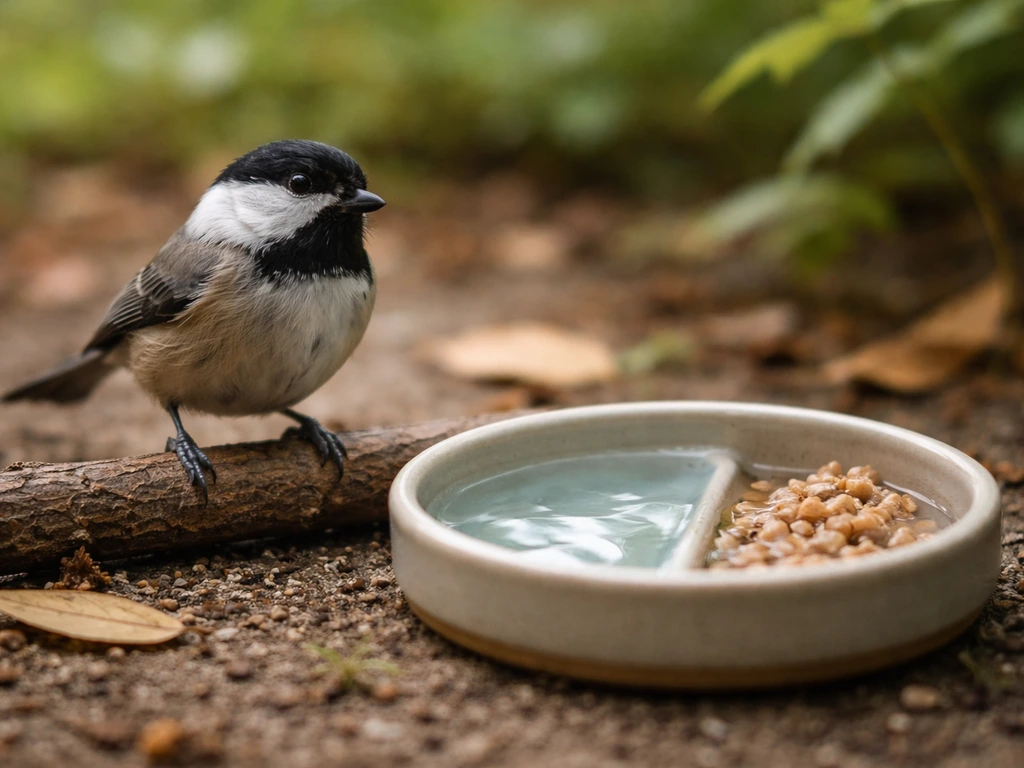
This is the area where well-meaning people most often cause harm. Do not force food or water into a bird that is weak, stressed, or having trouble breathing. Tufts Wildlife Clinic, Audubon, and the Avian Welfare Coalition all give the same advice here: do not offer food or water to a bird you just found sick or injured until you know it is stable and can swallow safely. If you are dealing with a newborn bird that fell, feeding is even more critical, so you should get wildlife rehab guidance right away before offering anything what to feed a newborn bird that fell. A bird that cannot perch properly or that is unresponsive can easily aspirate liquid into its airway, which is how a respiratory problem becomes a fatal one.
If the bird is alert, upright, and responsive after being in the warm box for an hour or two, you can place a very shallow dish of clean water nearby so it can drink on its own if it wants to. Do not put it in front of the bird's face or tip it toward the beak. For a wild bird, do not try to identify and replicate its diet unless you are specifically instructed to by a rehabber. For a pet bird, offering its normal food in a small dish is fine once it is stable.
Things to absolutely avoid giving: human foods, salt, sugar water, honey, milk, bread, human vitamin supplements, alcohol-based remedies, or anything from your kitchen cabinet that you think "might help." None of these are safe. If you are wondering about specific medications, please know that ibuprofen, acetaminophen (Tylenol), and other human pain relievers are toxic to birds and should never be given under any circumstances.
How to monitor progress and when to make your next move
Once the bird is in its warm, quiet box, check on it gently at the one-hour mark. You are looking for specific signs of improvement or decline, not just a vague sense of how it seems. Here is what to track:
- Is the bird upright or still slumped at the bottom of the box?
- Is it breathing with its mouth closed (good) or open (bad)?
- Is the tail bobbing with each breath (bad) or still (better)?
- Is it more alert and reactive to your presence than when you first found it?
- Has the eye discharge or nasal discharge changed? Is it thickening or increasing?
- If it is a wild bird, is it trying to escape or move away from you (a good sign of alertness)?
For a wild bird that was just chilled or stunned, one to two hours of warmth, quiet, and darkness is often enough to see real improvement. If a wild bird is clearly recovering, alert, and trying to get away from you after a couple of hours, you can take the box outside, open it, and let it leave on its own. If it does not leave, or if it has not improved at all after two hours, that is your cue to call for professional help. The RSPCA flags two hours of continued fast or labored breathing as a clear escalation point, and that is a solid practical benchmark.
For a pet bird showing cold-like symptoms, the timeline is shorter. A pet bird that was healthy yesterday and is now fluffed up, lethargic, and showing discharge should be seen by an avian vet within 24 hours, not monitored for several days at home. Birds hide illness instinctively and often look sicker than they act until they are very sick indeed.
Red flags that mean call for help right now
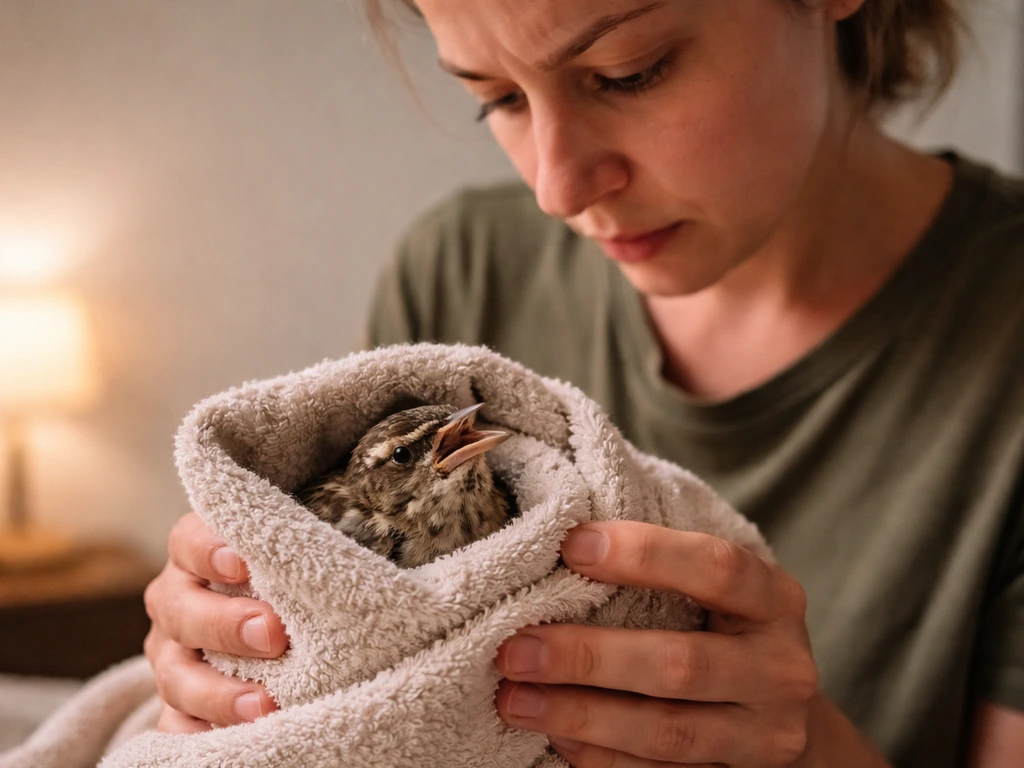
Some situations are not home-care territory at all. If you see any of the following, stop reading, and call a wildlife rehabber or avian vet immediately:
- Open-mouth breathing that does not stop once the bird is warm and calm
- Audible breathing: clicking, wheezing, rattling, or gasping sounds
- Tail bobbing with every single breath (this means the bird is working hard just to breathe)
- The bird cannot perch and is sitting flat on the bottom of the enclosure
- Discharge from both eyes and nostrils simultaneously, especially if thick or colored
- Neurological signs: head tilt, circling, tremors, seizures, inability to stand or coordinate movement
- The bird is completely unresponsive to your presence or touch
- No improvement at all after two hours in a warm, quiet environment
- Any sign the bird may have been in contact with another sick or dead bird (disease risk)
These are not signs you can wait out or treat yourself. Labored breathing in birds can deteriorate rapidly, and what looks like a sick-but-stable bird can crash within hours. Respiratory distress, inability to perch, and refusal to eat or drink together are a clear signal for immediate veterinary evaluation according to avian welfare specialists.
What not to do (common mistakes that make things worse)
People who find a sick bird want to help, and that instinct is good. But several very common "helpful" actions can seriously harm a bird. Avoid all of the following:
- Do not give any human medications. This includes ibuprofen, acetaminophen, aspirin, antihistamines, decongestants, or any cold and flu remedies. These are toxic to birds.
- Do not give antibiotics you happen to have on hand. Antibiotics without a proper diagnosis can mask symptoms, make the real cause harder to identify, and in some cases cause direct harm.
- Do not overheat the bird. A heating pad on high or a heat lamp too close can cause heat stroke. The half-on, half-off setup exists for a reason.
- Do not force food or water into the bird's beak. Aspiration into the airway is a real and serious risk.
- Do not use aerosol sprays, air fresheners, scented candles, or harsh cleaning products anywhere near the bird.
- Do not put the bird in a wire cage with a mesh top where it can see out and will try to escape. Use a dark, enclosed box.
- Do not keep handling the bird to check on it. Every time you pick it up, its stress hormones spike and its breathing effort increases.
- Do not place the bird outside in the cold to "see if it can fly away" before it has had time to warm up and stabilize.
- Do not attempt to give it wild bird seed or food from your kitchen if it is clearly unwell. Let it stabilize first.
A note on small songbirds versus larger birds
The same basic steps apply to any bird, but scale matters. A small sparrow or finch loses body heat incredibly fast and can go from "cold and weak" to "dead" in under an hour if not warmed. These birds need warmth as the absolute top priority. They are also so fragile that too much handling can be fatal on its own, so minimal contact is especially critical with small species.
Larger birds like pigeons, doves, crows, or waterfowl are more robust and can tolerate a little more time between finding them and getting them to a rehabber. That said, respiratory distress in a larger bird is still an emergency. A pigeon wheezing and open-mouth breathing needs professional help just as urgently as a sparrow in the same condition. The main practical difference is that larger birds can deliver a serious bite or scratch if they feel trapped, so use a towel to handle them and be mindful of your fingers.
Finding help nearby and what to say when you call
In the US, your first call should be to a licensed wildlife rehabilitator. You can find one through the National Wildlife Rehabilitators Association (NWRA) at nwrawildlife.org, the Wildlife Rehabilitator Directory at wildliferehabilitation.org, or by calling your state's fish and wildlife agency. In the UK, the RSPCA (0300 1234 999) handles wild bird emergencies. In other countries, search for "wildlife rescue" plus your city or region, or contact your nearest veterinary practice and ask if they accept wild bird emergencies.
When you call, have this information ready before you dial:
- The species if you know it, or a description (small brown songbird, pigeon-sized gray bird, etc.)
- Where you found it (your yard, a parking lot, a park, and the nearest cross-street or address)
- When you found it and how long it has been in your care
- The specific symptoms you are seeing right now (sneezing, discharge, open-mouth breathing, unable to perch, etc.)
- Whether it is a wild bird or a pet
- Your location so they can direct you to the nearest facility or send someone if needed
Being specific about symptoms makes a real difference. Telling a rehabber "it is breathing with its mouth open and its tail is bobbing" gets you a much faster and more accurate response than "it seems sick. If you are following a sick-bird checklist or riddle in a quiz, the key answer is the same: stabilize and get the bird to help quickly sick bird. " Do not minimize what you are seeing. If something looks wrong to you, say it.
If you cannot reach anyone immediately, continue the warm-box supportive care while you keep trying. Do not give up on finding help after one call. Try multiple resources: your local humane society, an exotic animal vet, a university with a vet school, or even a local birding club, whose members often know exactly who to call in your area.
The bottom line is that your role here is stabilizer and transporter, not doctor. This is also how it helps the bird recover: it buys time until a qualified person can diagnose what is actually causing the symptoms. Getting the bird warm, keeping it calm, avoiding the common mistakes, and connecting it with someone qualified to diagnose and treat it is genuinely the best thing you can do. That is not a small thing. It is often the difference between survival and not.
FAQ
How can I tell if a bird’s “cold” is just stress or something like an infection?
Focus on breathing effort and overall posture. If the bird is still perched (or trying to perch), alert enough to react, and breathing is quiet and normal, it is more likely stress or chilling. If you see open-mouth breathing, tail-bobbing with each breath, clicking or wheezing, or the bird stretching its neck to breathe, treat it as a respiratory emergency, not a cold you should wait on.
Is it okay to use a heat lamp instead of a heating pad to warm the bird?
Prefer a heating pad with a half-on, half-off setup. Heat lamps can overheat the bird quickly and create hot spots that force the bird to stay too warm, especially in small birds. If you must improvise heat, use indirect warmth and ensure the bird can move away from the warm side.
Should I cover the entire carrier/box or leave it partially open?
Keep it dark and quiet, but do not make it airtight. Provide ventilation holes if using a box, and avoid mesh or wire tops that the bird can injure itself against. Total enclosure sealing can trap stale, humid, or irritating air and worsen breathing.
Can I give steam from a shower to help with sneezing and nasal discharge?
Yes, gently, but keep the bird out of direct steam. The goal is to add mild ambient humidity around the box. Do not put the bird into a steamy tent or hold it in the shower stream, because overheating and increased stress can rapidly worsen respiratory distress.
When is it safe to offer water or food?
Only after the bird is stable. If it can stay upright, is alert, and you have seen improvement after warming, you can offer a very shallow dish of clean water nearby so it drinks on its own. If it cannot perch properly, looks weak, or you are unsure it can swallow safely, do not offer food or water.
What if the bird refuses to drink after a couple of hours of warming?
For a wild bird, one to two hours of warmth and quiet is often enough to show recovery signs. If it is not improving at all, or it still shows concerning breathing or remains very weak, contact a wildlife rehabilitator rather than continuing to monitor and wait.
Can I clean the crusty discharge off the bird’s nostrils to “help it breathe” more easily?
You can only gently dab discharge if the bird is calm and not struggling. If the bird resists, stop. Rough cleaning can cause bleeding or aspiration, and handling a stressed bird that is having breathing trouble can make things worse.
Are there any safe human medications I can use in the meantime?
Do not give human pain relievers or any OTC bird cold remedies. Medications like ibuprofen and acetaminophen are toxic to birds, and dosing human drugs can be dangerous even if symptoms look mild. The safest interim action is environmental stabilization, warmth, and getting veterinary or rehab help.
How long should I wait at home before calling a rehabber or vet?
If there are any signs of serious respiratory distress (open-mouth breathing, tail bobbing, wheezing, neck-stretching for air), call immediately. If the bird is not clearly improving after about two hours of warm, quiet care, escalate to professional help. For pet birds, evaluation should happen within 24 hours if symptoms started recently.
What should I do if the bird is actively bleeding, collapsed, or cannot stand?
Treat it as urgent. Collapsed posture, inability to perch, and worsening condition are not “wait and see” signs. Keep warmth and minimal handling for transport, but call an avian vet or wildlife rehabber right away.
Does giving antibiotics or herbal remedies “just in case” help?
No. Birds cannot be accurately diagnosed at home, and giving antibiotics without a confirmed bacterial cause can delay proper treatment and sometimes worsen outcomes. Stick to warming, quiet, clean air, and professional guidance.
How should I transport the bird once I decide to call for help?
Use the same warm, quiet container setup for transport, with traction on the bottom (towel or paper towels) and ventilation holes if applicable. Keep the car area free of fumes and strong scents, and minimize movement by securing the carrier so it does not slide or jostle.
Does the bird need to stay warm after it starts improving?
Yes. Warmth helps the bird’s metabolism and breathing stabilize, but do not remove heat suddenly. Let recovery happen gradually within the warm setup, and continue to avoid drafts, aerosols, and fumes while arranging care.
Is it ever safe to release a wild bird after it “looks better”?
Only if it is clearly recovering, alert, and trying to get away after a couple of hours of warmth and quiet. If it does not leave on its own, or there was no real improvement, contact a rehabber instead of attempting release.
Next Articles
What Do You Give a Sick Bird: Immediate Help Checklist
Step-by-step checklist for what to give a sick bird now, including what to avoid and when to call a rehabber.
Can I Give My Bird Ibuprofen? Safe First Aid and Next Steps
Learn why ibuprofen is unsafe for birds, what to do first after injury, and when to contact an avian vet.
What to Feed a Newborn Bird That Fell: Urgent Guide
Urgent steps on what to feed a fallen newborn bird, including warmth, safe feeding frequency, and when to get help.