
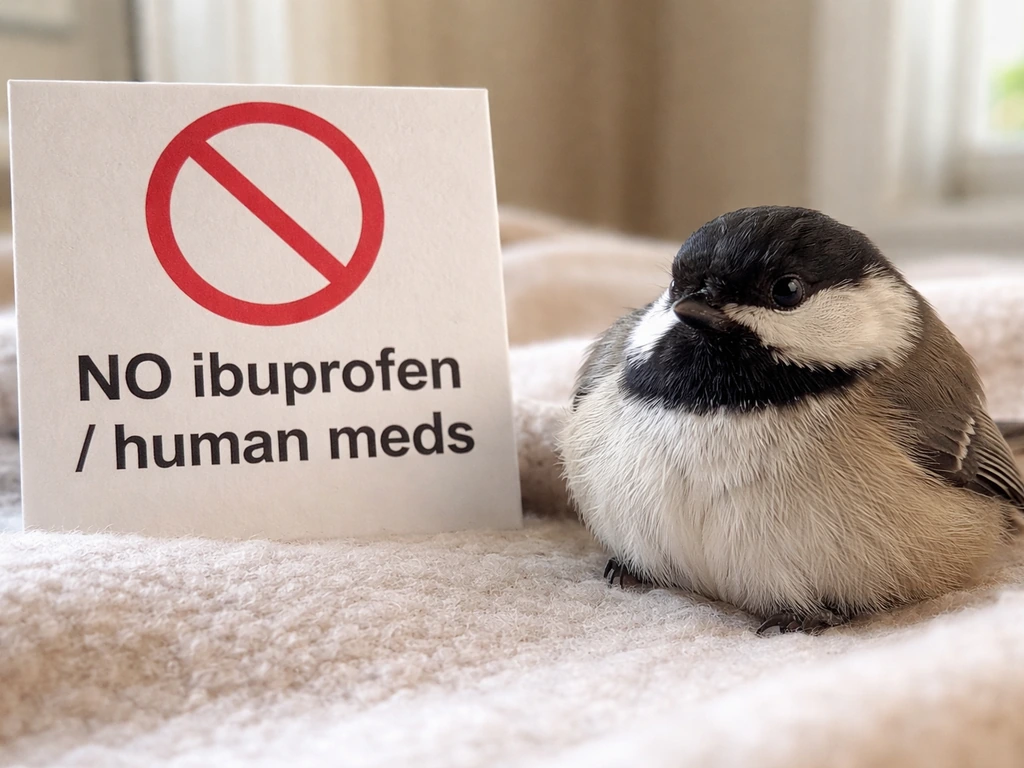
No, do not give your bird ibuprofen. It is not safe for birds and can be fatal even in very small doses. Ibuprofen is a human NSAID that birds cannot process the way we do, and giving it without direct guidance from an avian veterinarian puts your bird at serious risk of internal bleeding, kidney failure, and death. If your bird is injured or in pain right now, the best thing you can do is keep it warm, quiet, and contained while you call an avian vet or wildlife rescue for guidance.
Can I Give My Bird Ibuprofen? Safe First Aid and Next Steps
Marcus Chen
23 May 2026
Why ibuprofen is dangerous for birds
Birds have completely different physiology from humans and even from other common pets like dogs and cats. A dose that seems tiny to us can overwhelm a bird's liver and kidneys almost immediately. The Merck Veterinary Manual specifically flags human NSAID exposures, including ibuprofen, as clinically significant toxic events in animals, and birds are particularly vulnerable because of their small body mass and fast metabolisms.
Here is what ibuprofen can actually do to a bird's body:
- Cause gastrointestinal bleeding and ulceration, which can be rapid and severe
- Damage or shut down the kidneys, even from a single dose
- Stress the liver beyond its capacity to detoxify the compound
- Mask symptoms that a vet needs to see to make an accurate diagnosis, delaying proper treatment
- Cause cardiovascular changes that destabilize a bird that is already in shock
There is no safe over-the-counter ibuprofen dose you can calculate at home for a bird. Species differences affect both the effective and toxic thresholds for any medication, and even veterinary professionals rely on species-specific dosing research when managing avian pain. The Oregon Veterinary Medical Association puts it plainly: never give a bird any medication unless a veterinarian has specifically directed you to. That rule absolutely applies to ibuprofen.
Common situations that lead people to ask this
Most people searching for this are panicking over a bird that is clearly hurt and in pain. That instinct to help is exactly right. Here are the most common scenarios that bring someone to this question, and what is actually going on in each one:
Window or glass collisions
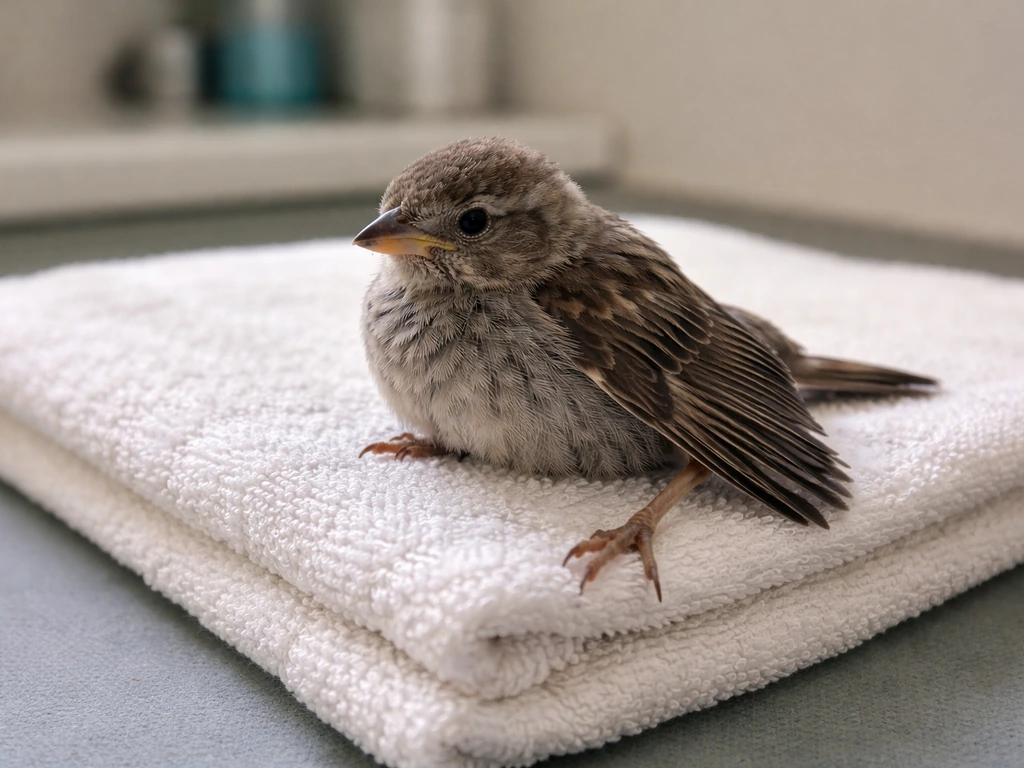
A bird hits a window hard and ends up stunned or grounded. This is one of the most common bird emergencies. The bird may look dazed, hold its wings oddly, or sit completely still. Internal head trauma or spinal injury is possible. The bird needs quiet and warmth first, not pain medication.
Broken wings or legs
A drooping wing, a leg held at a wrong angle, or a bird that cannot stand are all signs of a fracture. These injuries are painful, and it is natural to want to relieve that pain. But ibuprofen will not splint a bone, and it can complicate any treatment a vet needs to give. Stabilizing the bird safely (see below) is more helpful than any pain reliever you could offer.
Beak injuries
Beak damage from a collision, a fall, or a fight can bleed and look alarming. The beak has blood vessels and nerve endings, so yes, it hurts. But again, the priority is bleeding control and getting to a vet, not oral medication.
Cat or dog attacks
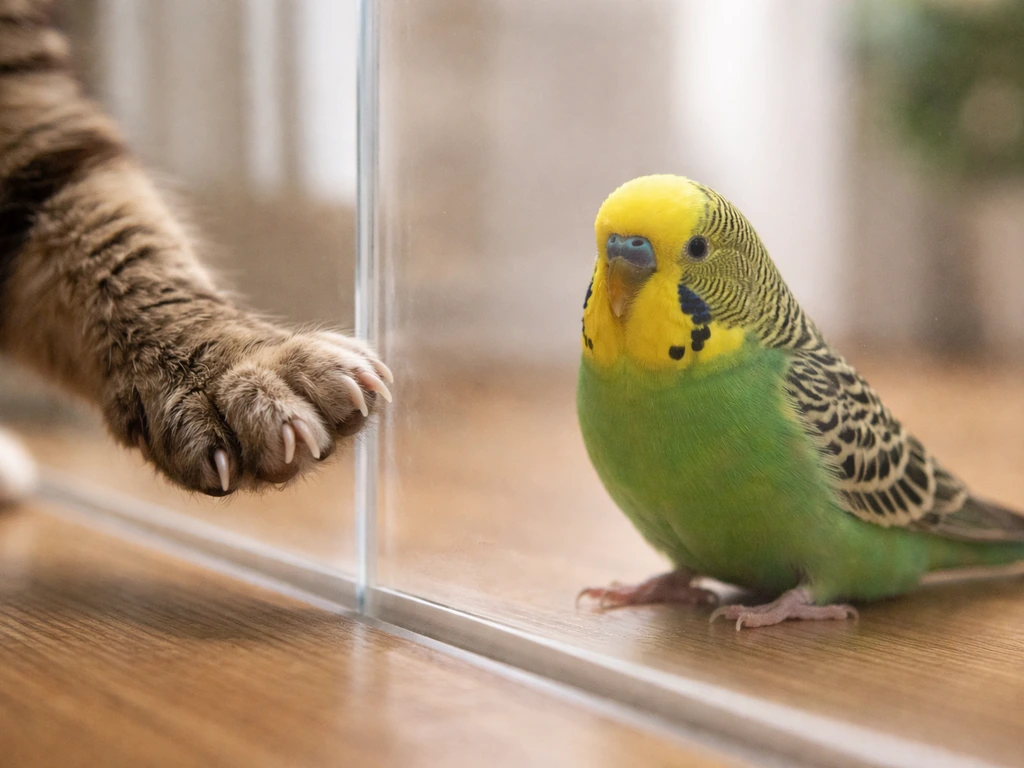
Even a brief contact with a cat's mouth is a veterinary emergency for a bird, whether or not you see obvious wounds. Cats carry Pasteurella bacteria that is almost always fatal to birds within 24 to 48 hours without antibiotic treatment. If a cat has grabbed or bitten your bird at all, stop reading and call an avian vet right now. This one does not wait. If you are wondering, “what do you give a sick bird,” the safest answer is nothing unless an avian veterinarian tells you exactly what to give.
What to do right now: stabilize first
blank" rel="noopener noreferrer">The goal of first aid for a bird is not to fix the problem. It is to keep the bird stable and as stress-free as possible until you can get professional help. If you are dealing with a newborn bird, you will also want to use the correct feeding plan for its age and species newborn bird feeding. LafeberVet's avian first-aid guidance is clear that first aid is not a substitute for veterinary treatment, but good stabilization buys critical time.
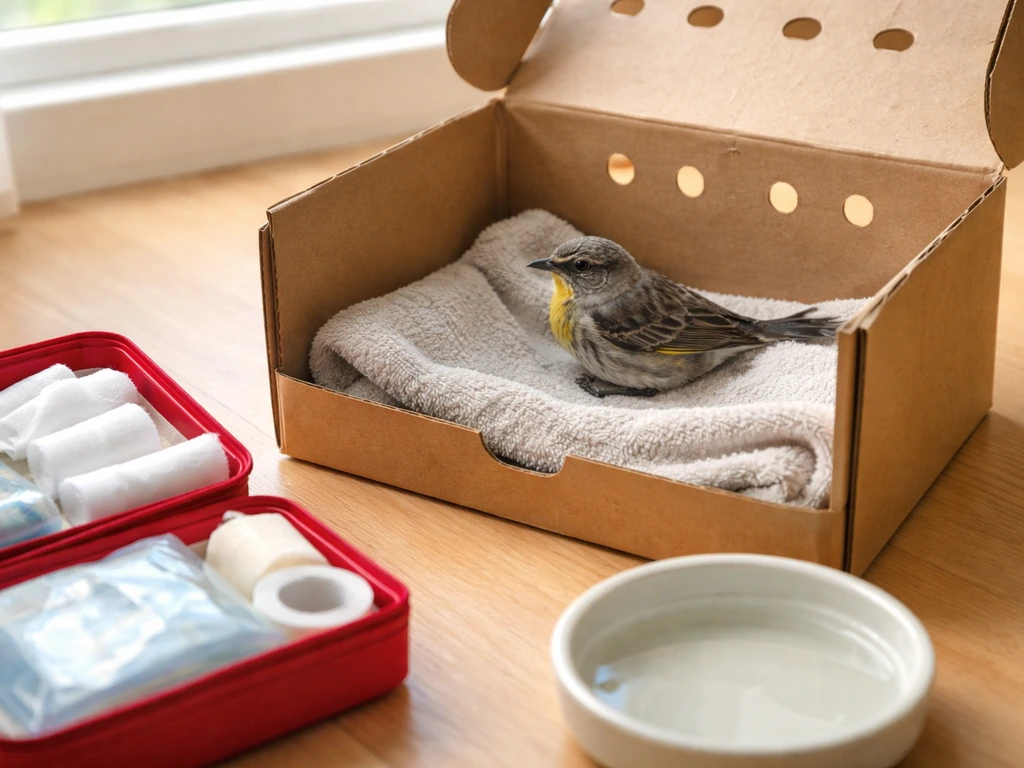
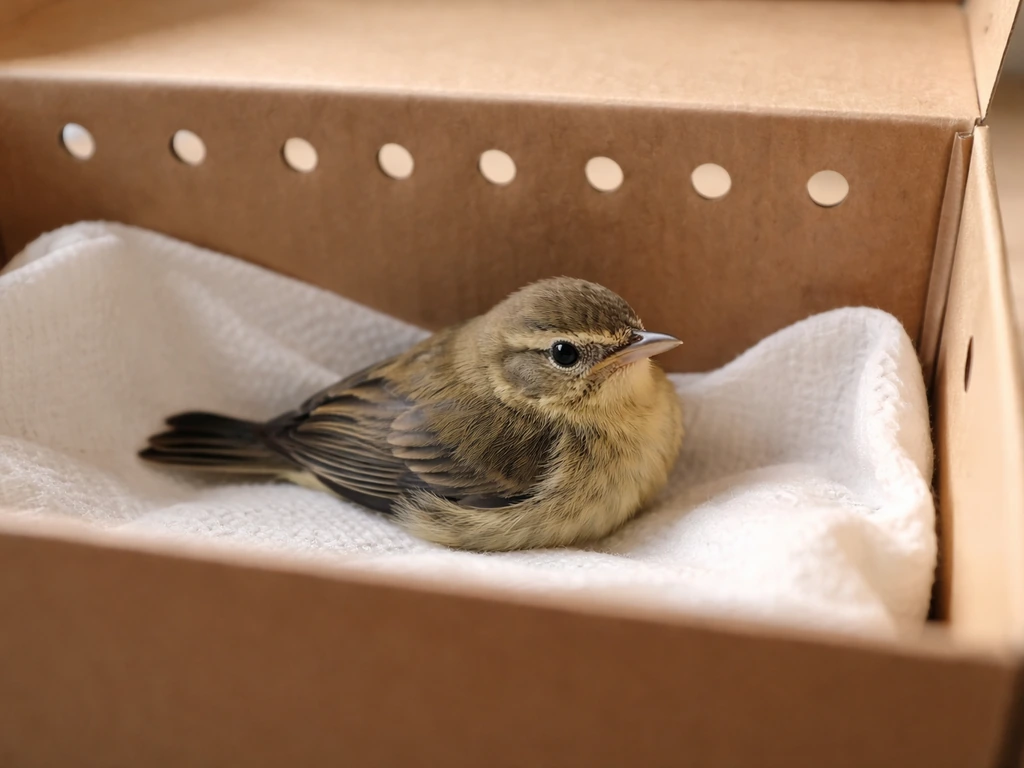
- Contain the bird gently in a small cardboard box or shoebox with ventilation holes. Line the bottom with a soft cloth or paper towels. A smaller space feels safer and prevents the bird from injuring itself further by flapping.
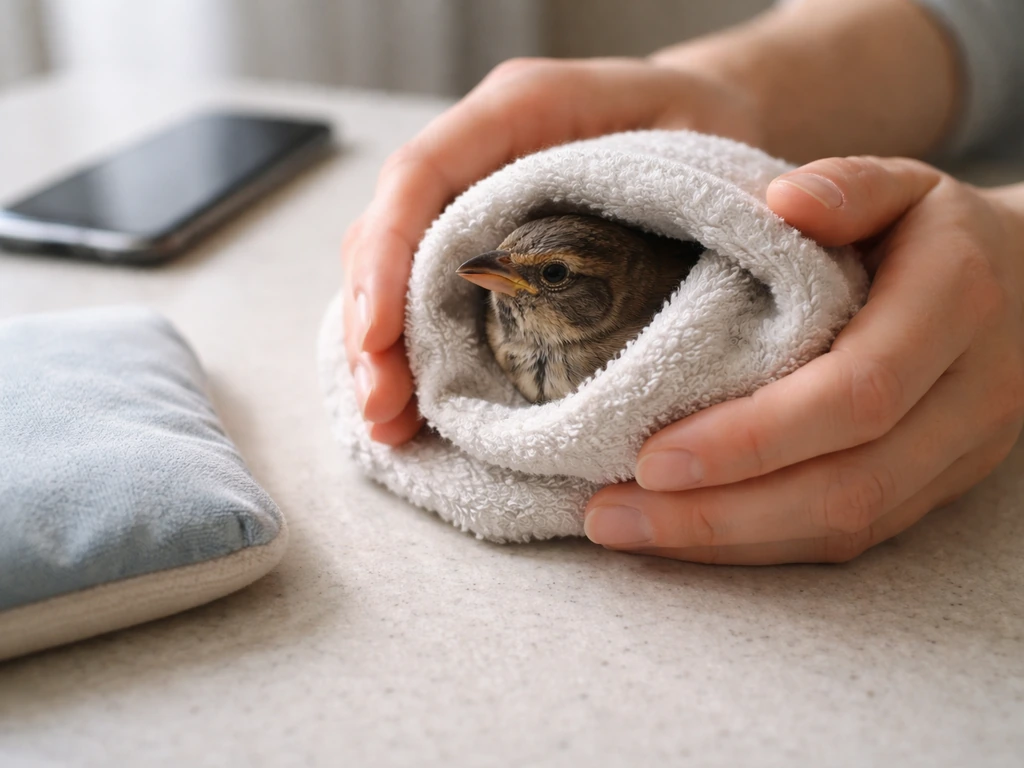
- Keep it warm. Tufts Wildlife Clinic recommends placing one end of the box on a towel over a heating pad set to low, so the bird can move toward or away from the heat as needed. Room temperature (around 85 to 90 degrees Fahrenheit) is ideal for an injured bird in shock.
- Keep it dark and quiet. Cover the box loosely with a cloth. Darkness reduces panic and stress, which is genuinely one of the most helpful things you can do.
- Minimize handling. Every time you pick up or check on the bird, you stress it. Resist the urge to keep looking. Check once, make sure it is breathing, then leave it alone.
- Control any visible bleeding with gentle, direct pressure using a clean cloth. Do not use styptic powder or any wound treatment unless an avian vet has told you to.
- Call for help immediately (see the section below on who to contact).
What not to do
When a bird is hurt, there are some very common mistakes that feel helpful but actually cause real harm. Avoid all of these:
- Do not give ibuprofen, Tylenol (acetaminophen), aspirin, or any other human medication. None of these are safe without direct veterinary guidance, and several are acutely toxic to birds.
- Do not try to give food or water. Both Audubon and Mass Audubon are explicit about this: attempting to feed or water an injured bird can cause choking, aspiration, or make a stressed bird worse. A bird in shock cannot safely swallow.
- Do not force-feed anything, including water droppers or syringes into the beak.
- Do not try to splint a wing or leg yourself unless a vet has walked you through it on the phone.
- Do not put the bird in a cage with other birds.
- Do not leave the bird outside unattended, where predators can reach it.
- Do not handle it more than necessary. Stress kills injured birds, and being held by a human registers as a predator threat.
When it is a real emergency: signs you need help immediately
Tufts Wildlife Clinic lists specific signs that mean a bird needs professional care right away, not tomorrow, not later today. If your bird shows any of the following, contact help the moment you finish stabilizing it:
- Obvious open wound or active bleeding
- Labored or open-mouth breathing
- Drooping wing that it cannot hold up
- Unable to stand or balance
- Unresponsive or barely conscious
- Seizures or tremors
- A wild bird that does not fly away or flee when approached by a human (this is almost always a sign something is seriously wrong)
- Any contact with a cat, even without visible wounds
Who to call and how to find help fast
Your two main options are an avian veterinarian and a licensed wildlife rehabilitator. Which one you need depends on whether this is a pet bird or a wild bird.
For pet birds
Search the Association of Avian Veterinarians (AAV) member directory online. It lets you search by location within the U.S. and is the most reliable way to find a vet with actual avian training, not just a general practice that occasionally sees birds. Call ahead and describe what happened clearly: what species the bird is, what the injury looks like, when it happened, and whether you suspect any toxic exposure. If your bird may have ingested ibuprofen or any other medication, call the ASPCA Animal Poison Control Center at (888) 426-4435. They are blank" rel="noopener noreferrer">available 24 hours a day, 365 days a year, and they can give immediate guidance for toxic exposures.
For wild birds
You need a licensed wildlife rehabilitator. These are people with state and sometimes federal permits to legally care for wild birds, including migratory species that require special federal migratory bird permits. The Washington Department of Fish and Wildlife advises calling a permitted rehabilitator as soon as possible and following their instructions closely. Mass.gov offers a map-based search tool for licensed rehabilitators. Your state's fish and wildlife agency website is also a good starting point. The U.S. Fish and Wildlife Service website provides general guidance as well.
When you call, tell them: the species if you know it, where you found the bird, what the injury looks like, and how long it has been since the injury occurred. The more specific you are, the faster they can help.
How to keep a bird comfortable without medication
You cannot replicate what a vet can do, but there are real, meaningful things you can do right now that genuinely reduce a bird's distress and improve its chances. If your bird has a cold, the same “stabilize first” approach applies: keep it warm, reduce stress, and contact an avian vet for the correct care how to treat a bird with a cold.
They can also tell you how did it help the bird safely, instead of guessing with ibuprofen. None of them involve pills or liquids. If you suspect the bird is a newborn that has fallen, feeding needs to be handled differently than an older bird and you should use the proper emergency guidance immediately what to feed a newborn bird that fell.
- Warmth: An injured bird in shock loses body heat fast. Gentle, consistent warmth (not hot, not a heat lamp directly on them) is one of the most effective comfort measures you have. Use the heating pad on low under one side of the box method described earlier.
- Darkness and quiet: A covered box in a quiet room does more for a stressed bird than almost anything else. This is not doing nothing. It is actively reducing cortisol and panic, which gives the bird's body a chance to stabilize.
- Minimal handling: Every touch is a stressor. Once the bird is contained and warm, step back.
- No noise or vibration: Keep the box away from TVs, loud music, other pets, and children who want to check on it.
- A safe, escape-proof container: A bird that can thrash around injures itself further. A small, snug box prevents that.
If an avian vet has examined your bird and recommends a specific pain management option, they may prescribe a bird-appropriate medication such as meloxicam, which is an NSAID formulated and dosed for avian use. That is a different situation entirely from giving a bird a human ibuprofen tablet at home. So if you are wondering, “can you give a bird Tylenol,” the answer is also no without direct instructions from an avian veterinarian giving a bird a human ibuprofen tablet at home. Follow whatever your vet prescribes exactly, and never substitute or supplement with anything over the counter.
A quick reference: safe vs. unsafe responses to a bird injury
| Action | Safe or Unsafe | Notes |
|---|---|---|
| Give ibuprofen | Unsafe | Toxic to birds; can cause fatal internal bleeding and organ failure |
| Give Tylenol (acetaminophen) | Unsafe | Also toxic to birds; never give without vet direction |
| Keep bird warm in a box | Safe | One of the most effective first-aid steps you can do |
| Give food or water | Unsafe | Risk of aspiration; do not attempt without vet guidance |
| Cover box and reduce stimulation | Safe | Reduces stress significantly; highly recommended |
| Apply gentle pressure to a bleeding wound | Safe (with care) | Use a clean cloth; do not use wound treatments unless directed |
| Call an avian vet or wildlife rehabilitator | Safe and necessary | Do this as soon as the bird is stabilized |
| Call ASPCA Poison Control if med was ingested | Safe and urgent | Available 24/7 at (888) 426-4435 |
| Try to splint a wing or leg yourself | Unsafe unless guided | Can cause more damage; only do this if a vet walks you through it |
Birds are fragile, and injuries that look manageable can deteriorate quickly. The single best thing you can do after getting the bird safely contained is to get a professional on the phone. An avian vet or licensed rehabilitator can walk you through species-specific next steps in minutes, and that guidance is worth far more than any home remedy or human medication.
FAQ
My bird already took some ibuprofen, what should I do right now?
Do not try to “balance it out” with food, water, or another medicine. Keep the bird warm and quiet, place it in a secure container with airflow, and call an avian veterinarian or an animal poison service immediately. Tell them the bird’s species, approximate weight if known, the amount and time you suspect it was given, and whether any other medications were involved.
Can I crush ibuprofen and give a tiny amount instead of a full tablet?
No. There is no reliable at home dose calculation for birds that makes ibuprofen safe, and crushing does not change the core toxic risk to the bird’s kidneys and internal tissues. Species and individual sensitivity vary widely, so the only safe path is veterinary or poison-control guidance.
What if my bird is bleeding or I think ibuprofen could help with pain and inflammation?
Pain relief is not the priority when there is bleeding or suspected internal injury. Focus on minimizing stress, keeping the bird warm, and arranging urgent professional care. Ibuprofen can worsen bleeding risk, so avoid it even if the injury seems minor.
Is it ever okay to give ibuprofen if it is clearly a pet bird and I have “human” dosing experience?
No. Pet birds still have different drug metabolism than humans, and even experienced owners can get dosing wrong because avian thresholds differ by species. If your avian veterinarian has not instructed a specific medication and dose for your exact bird, treat ibuprofen as unsafe.
My vet prescribed meloxicam for my bird, is that the same thing as ibuprofen?
They are related NSAID drugs, but they are not interchangeable for home use. Veterinary meloxicam is formulated and dosed for birds (and sometimes for specific species), while human ibuprofen products vary in concentration and additives. Follow the prescription exactly, and do not swap products or adjust the dose without the veterinarian.
Can I give ibuprofen to a wild bird I found to reduce pain while I wait for rehab?
Avoid it. Wild birds need stabilization (warmth, quiet, containment) while you contact a permitted wildlife rehabilitator as soon as possible. Providing medication at home can delay treatment and can create additional harm, especially if the bird is injured internally.
Are there “safer” human pain medicines I can use instead of ibuprofen?
Do not assume any over the counter human pain reliever is safe for birds. Some can cause severe toxicity, and mixing medications can complicate diagnosis and treatment. Until an avian veterinarian gives instructions, the safest approach is no pills or liquids, just warmth, reduced stress, and prompt professional guidance.
How can I tell if I should call right away versus waiting to see if my bird improves?
If your bird is unable to stand, is drooping a wing, seems stunned after a collision, has trouble breathing, is bleeding, is acting very lethargic, or you suspect ingestion of any medication, call urgently. For exposures like suspected medication ingestion, contact help immediately rather than waiting for a “reaction” to show up later.
If I contact poison control or an avian vet, what details will they ask for?
Expect questions about species, approximate weight or size, when the exposure happened, the product name and strength on the label, how much you think was given or touched, and any other substances involved (like cat saliva, other medications, or cleaning products). Having this information ready speeds up accurate triage.