
Yes, a bird can absolutely get stuck in a chimney, and it happens more often than you'd think. The good news is that with the right approach, you can help most birds find their way out safely without touching them at all. The key is acting quickly, staying calm, and knowing the few things that can make the situation worse before you start.
Can a Bird Get Stuck in a Chimney? Help It Get Out
Marcus Chen
27 May 2026
Can birds escape chimneys on their own?
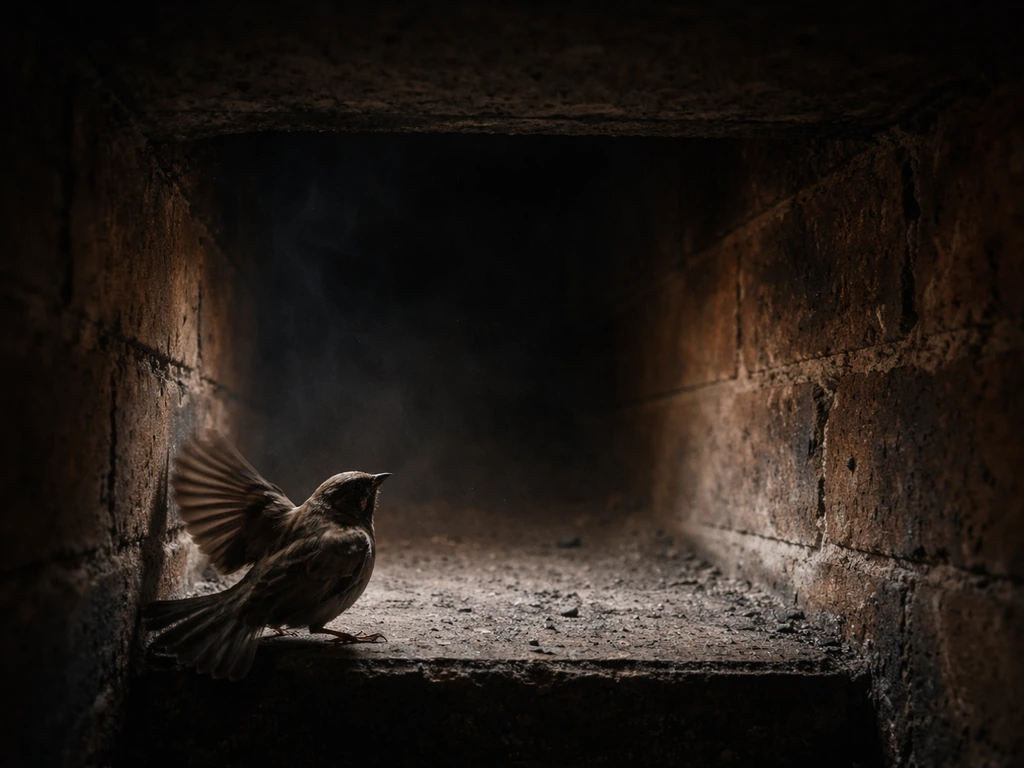
Sometimes, yes. Birds that fly into a chimney while it's open at the top can occasionally work their way back up if they aren't injured and if the chimney has ledges or rough masonry they can grip. However, most modern chimneys are smooth-lined and narrow, which makes climbing back out nearly impossible. Birds also tend to flutter downward when panicked, not upward, so they usually end up at the bottom near the firebox rather than making their way back to daylight.
In my experience, the birds that rescue themselves without help are the exception, not the rule. If you can hear a bird scratching, fluttering, or calling inside the chimney, don't just wait it out. Time matters here: the longer a bird is trapped, the more exhausted, dehydrated, and stressed it becomes, and the harder the rescue gets.
Immediate safety checks for people and the home
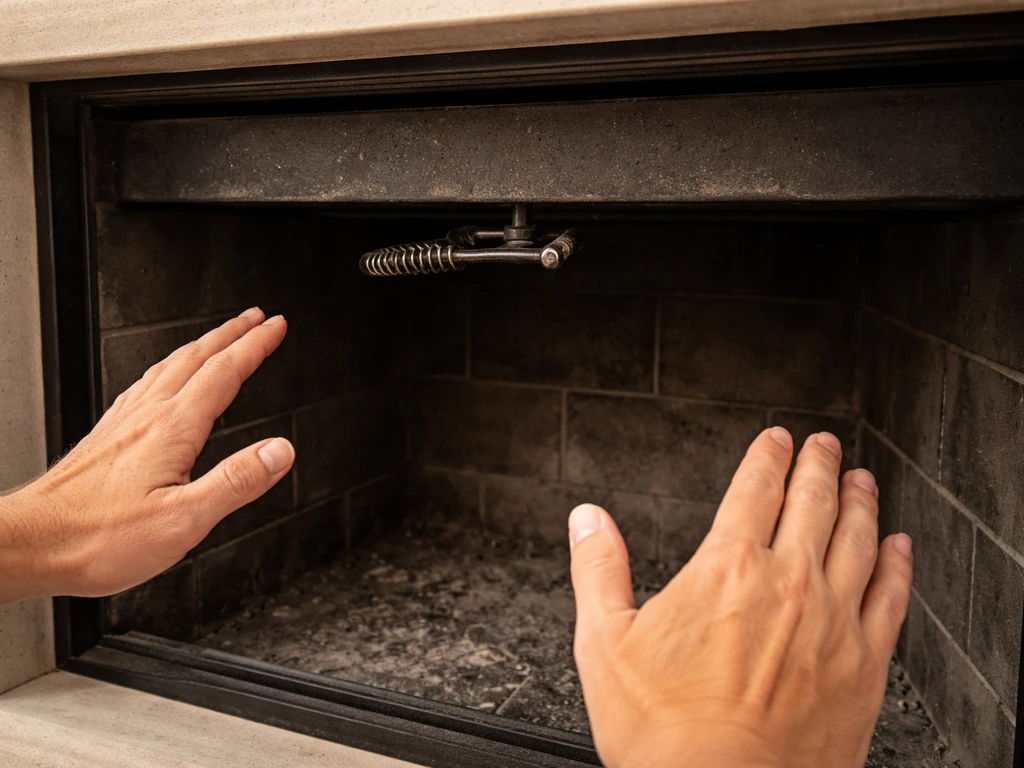
Before you do anything else, run through these checks. They protect both you and the bird.
- Make sure no fire is burning and no embers are active in the fireplace. If you had a recent fire, wait until everything is completely cold before opening the flue or damper.
- Turn off any gas lines connected to the fireplace if applicable.
- Keep children and pets out of the room. A frightened bird that enters the living space will be terrified by movement, noise, and animals.
- Close all interior doors to other rooms. You want to contain the situation to one manageable space.
- Don't use the fireplace or attempt to smoke the bird out. This is dangerous for both the bird and your home.
Once you've confirmed it's safe to proceed, figure out where the bird is. If you can hear it near the damper or firebox, it has likely descended most of the way. If the sound is higher up in the flue, it may still be clinging to the walls partway up. Knowing this helps you choose the right approach.
How to help a bird get out (step-by-step)
The goal here is to give the bird one clear, obvious exit and remove everything else that might confuse or distract it. Birds navigate primarily by light, so this whole method is built around that instinct.
- Clear and darken the room: Turn off all lights in the room where the fireplace is located. Close curtains or blinds on every window except one.
- Create one obvious exit: Open one exterior door or one uncovered window wide. This is where you want the bird to go. The light from outside is the signal it needs.
- Block off the fireplace face: If the bird is still inside the chimney and hasn't entered the room yet, hang a dark towel or sheet over the fireplace opening. This prevents the bird from flying into the room before you're ready and gives you control over the process.
- Open the flue or damper slowly: Once the room is set up, carefully open the damper. Soot may fall, so stand to the side. The bird may fly into the room immediately or take a few minutes.
- Step back and give it space: Once the bird is in the room, move to a corner and stay completely still. Noise and movement push birds into panic. Most birds will orient toward the single open exit and leave within a few minutes.
- If the bird is disoriented, dim the exit further: Sometimes birds circle near the ceiling. If they keep missing the door or window, try placing a lamp just outside the open exit to draw them toward it.
- If the bird won't leave on its own after 15 to 20 minutes: You can gently encourage it by slowly moving toward it from the back of the room to push it toward the exit. Never chase or grab a bird unless it's clearly injured and unable to fly.
The RSPCA and Cornell Lab's All About Birds both recommend this light-based approach, and it genuinely works in most straightforward cases. The biggest mistake people make is flooding the room with light from multiple sources, which leaves the bird with no idea which direction to go.
If the bird is deep in the chimney and not moving toward the firebox at all, the situation may require professional help. A chimney sweep or wildlife removal professional has the tools to safely access the flue from above. Don't attempt to reach into a chimney yourself; you can injure the bird and yourself in the process.
How to handle it safely once retrieved
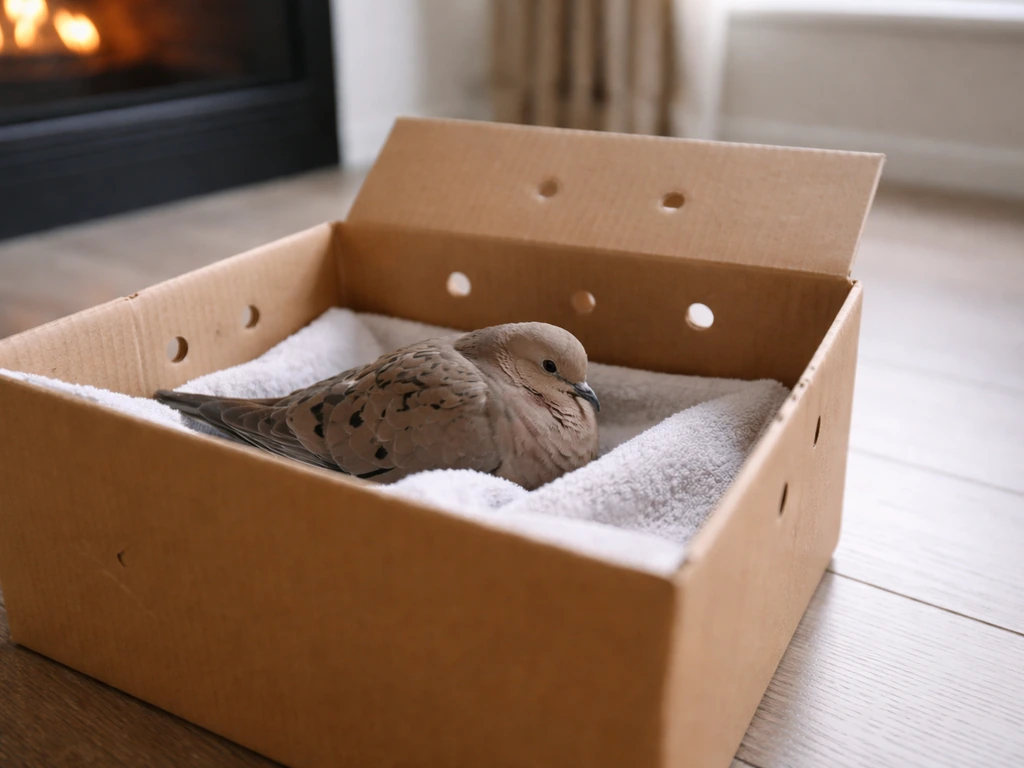
If the bird exits on its own and flies away cleanly, you're done. But if it comes out of the chimney and lands on the floor, can't seem to take off, or looks dazed, you'll need to handle it briefly to get it into a safe temporary space.
Use a small cardboard box with a lid, or a paper bag, with a few small air holes poked in the sides. Place the bird in a box or paper bag with air holes and keep it warm, dark, and quiet, then contact the nearest wildlife rehabilitator for emergency help a paper bag, with a few small air holes poked in the sides. Place a folded cloth or paper towel on the bottom for grip.
Wearing gloves or using a light cloth, gently pick the bird up by cupping both hands around its body with its wings held against its sides. Don't squeeze. Place it in the box, close the lid, and put it somewhere warm, dark, and quiet, away from pets, people, and loud noise.
Do not offer food or water unless a wildlife professional specifically tells you to. This is one of the most common well-meaning mistakes, and it can actually cause serious harm. Aspiration (inhaling liquid) is a real risk with injured birds, and the wrong foods can be toxic. The Tufts Wildlife Clinic is firm on this point: warmth, darkness, and quiet are the three things you can safely provide. Everything else should be left to a professional.
Signs the bird is injured or in danger
A bird covered in chimney soot but otherwise alert, upright, and trying to escape is probably okay. A bird that's been in the chimney for hours or that hit the fireplace walls hard during the descent is a different story. Look for these signs that the bird needs more than observation:
- Visible bleeding anywhere on the body, beak, or feet
- A wing that droops or is held at an odd angle compared to the other
- Inability to stand or perch upright (legs splayed or the bird just lying flat)
- Labored, open-mouth breathing or a clicking sound when breathing
- Eyes partially or fully closed when the bird should be alert
- No reaction when you approach, or complete stillness
- Heavy soot coating around the nares (nostrils) or eyes, which can indicate respiratory distress
- The bird is a fledgling or juvenile (smaller, with fluffy down still visible or a shorter tail)
A bird showing any of these signs should not be left to rest and recover on its own. Place it in a secure box as described above and move directly to getting professional help. Even if you're not sure whether what you're seeing is serious, err on the side of making the call.
When to call an avian vet or wildlife rescue and how to find one
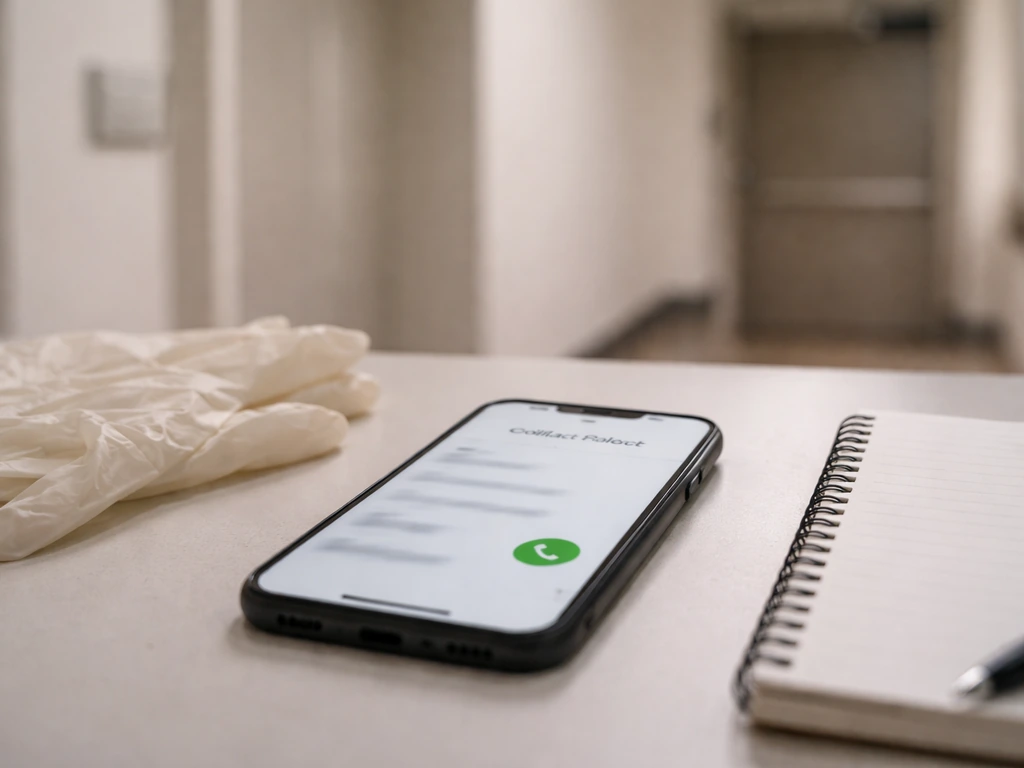
Call a professional immediately if the bird is bleeding, has a visibly broken wing or leg, can't breathe normally, or is completely unresponsive. Also call if it's a juvenile bird, or if the bird fell into an active or recently used fireplace and may have been exposed to heat, smoke, or chemicals. The Wisconsin Humane Society specifically recommends calling a licensed wildlife rehabilitator for any chimney bird that appears injured, sick, or is a juvenile.
For wild birds, your best first call is a licensed wildlife rehabilitator, not a regular vet. Most general practice vets don't treat wild birds, and avian vets who do are often specific to pet birds. Wildlife rehabilitators are trained and legally permitted to treat injured wild species, and they usually work for free or at very low cost. The US Fish and Wildlife Service also recommends contacting a wildlife professional as the right first step for injured wild birds.
Here's how to find help near you:
- In the US: Search the Wildlife Rehabilitators directory at the National Wildlife Rehabilitators Association (nwrawildlife.org) or use the Animal Help Now app (animalhelpnow.org), which locates the nearest wildlife rescue by your GPS location.
- In the UK: Call the RSPCA on 0300 1234 999, available 24 hours.
- In Canada: Contact your provincial wildlife authority or search through the Canadian Wildlife Health Cooperative.
- Globally: Search 'wildlife rehabilitator near me' plus your city, or call your local humane society or animal control office and ask for a referral.
While you wait for help or for a callback, keep the bird in that warm, dark, quiet box. Don't keep checking on it. Stress is genuinely life-threatening for birds, especially small ones that have already been through the trauma of being trapped. The less you disturb it, the better its chances.
Chimneys aren't the only tight spaces birds get stuck in. If your my bird is stuck in a tree, the safest approach is to avoid chasing it and instead let it settle or get help from a wildlife professional if it cannot free itself.
If you are dealing with a pet bird stuck in a tree, the safest move is still to keep calm, limit stress, and get help if it cannot be reached safely pet bird stuck in tree.
If you're dealing with a bird that's gotten into a wall void, an air conditioning unit, or even a tree, the same core principles apply: limit stress, secure the bird safely if needed, and don't try to force a rescue that's beyond your reach. If the bird can’t get free, contact a licensed wildlife rehabilitator right away for safe guidance air conditioner. For the same reason, a bird can also get stuck in an air conditioner and may need gentle guidance or professional help depending on where it’s trapped can a bird get stuck in an air conditioner.
Each of those situations has its own quirks, but the bird welfare priorities are always the same.
FAQ
If the bird seems calm at the bottom, do I still need to act quickly?
Yes, but look for a reason to call help: if the bird is still fluttering, calling, or visibly struggling after about 10 to 15 minutes, treat it as a trapped or injured bird and contact a licensed wildlife rehabilitator or chimney sweep. If it comes out, but can’t stand, keeps its eyes closed, is gasping, or won’t right itself, that’s also a “get help” signal.
Can I use a net, towel, or tape to grab the bird before it leaves the chimney?
Don’t use duct tape, glue, nets, or capture devices inside the chimney. These can cause wing injuries and raise stress. If you need to intervene after it exits on the floor, use the covered cardboard box or paper bag method, then contact a rehabilitator.
Is it ever safe to reach into the chimney to pull the bird out?
Never reach into the flue or climb inside the chimney. Chimneys can have sharp soot buildup, loose bricks, and falling debris, and you also risk pushing the bird deeper or injuring it. If the bird is higher up, tools and access methods are best handled by a chimney sweep or wildlife removal professional.
What if the bird can’t find the exit, should I turn on every light in the house?
If the room feels dark, turn on a single overhead light or illuminate one clear pathway, then close curtains and turn off extra lights so the bird has one obvious direction. Multiple lights from different angles can confuse the bird and keep it fluttering instead of moving toward daylight.
Should I give the bird water or food once it comes out?
Don’t offer water or food unless a wildlife professional tells you to. If the bird looks dehydrated, the safest help you can provide immediately is warmth, darkness, and quiet in the box. For longer-term care, rehabilitators will determine hydration and feeding needs appropriately.
How do I protect pets while the bird is in a box?
If you have cats or dogs, keep them completely out of the room and ideally separated from the house if possible. Predation risk and stress are immediate concerns, even if the bird seems alert, and many birds stop trying to escape once a predator enters the area.
What signs mean the bird might not survive if I wait and watch?
If it appears unresponsive, has labored or open-mouth breathing, is bleeding, or is a juvenile, don’t wait for it to “wake up.” Place it in the secure box and call a wildlife rehabilitator immediately, because delays can reduce survival chances.
What if the fireplace was used recently, does that change what I should do?
If the bird has been in a recently used fireplace or you suspect smoke, soot inhalation, or chemical exposure (for example, from a soot remover or chimney cleaner), treat it as urgent. Call a licensed wildlife rehabilitator right away and keep the bird warm and quiet while you wait.
The bird flew out but can’t take off, should I just let it rest on the floor?
If the bird is trying to fly but can’t gain height, looks dazed, or repeatedly flutters without direction, it likely needs temporary recovery support and professional evaluation. Use the box setup, minimize disturbance, and contact a wildlife rehabilitator rather than assuming it will recover instantly.
How long should I keep the bird boxed before calling or transporting it?
Keep the bird in the box until you can hand off to a professional, and avoid moving it to different rooms. If you must transport it, do it calmly, keep the box covered, and keep the temperature stable. The goal is to reduce handling time and vibration.
Who should I call first, a vet, a chimney sweep, or wildlife removal?
For calling, “licensed wildlife rehabilitator” is the best first step for wild birds. For situations that involve access, height, or the bird being deep in the flue, a chimney sweep or wildlife removal service can be the right partner, but they should still route care to a wildlife professional when treatment is needed.
Next Articles
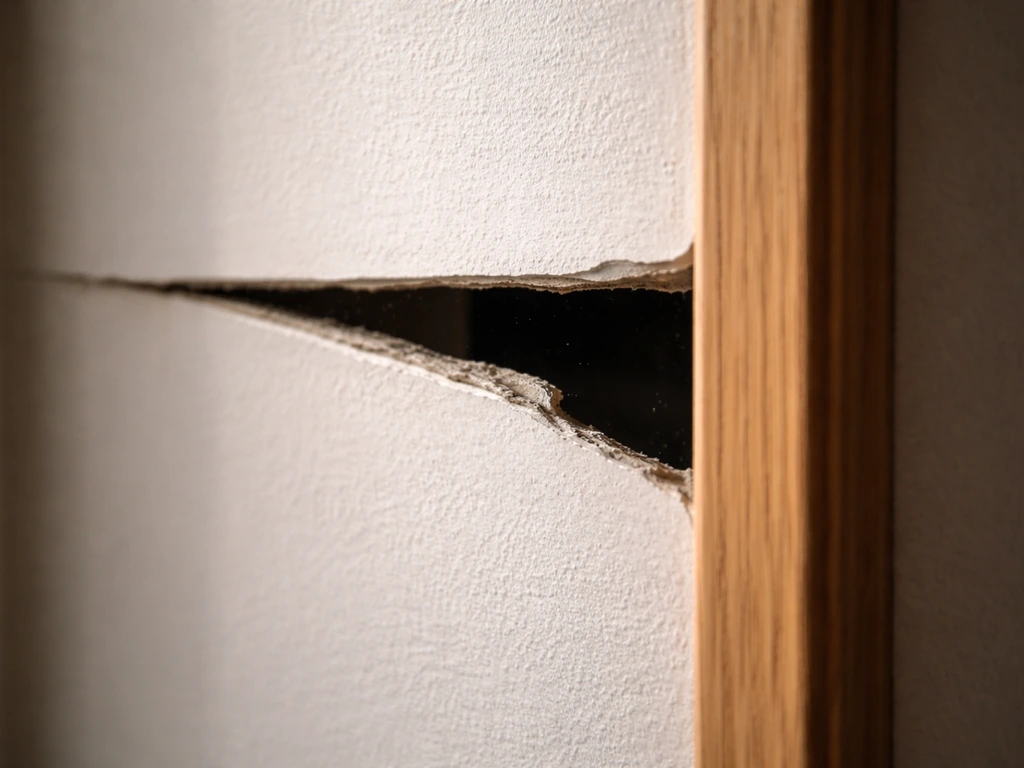
There Is a Bird Stuck in My Wall: What to Do Today
Step-by-step plan to free a trapped bird in a wall safely, know when to call experts, and prevent repeats.
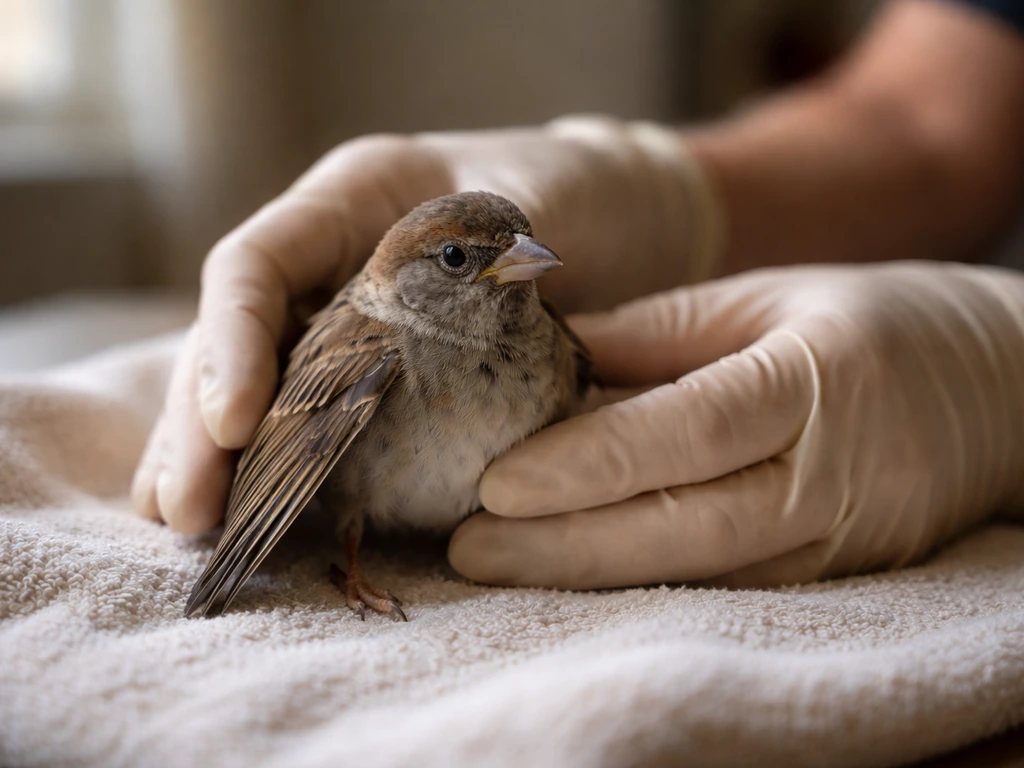
Can a Bird Live With One Wing? Survival and First Aid
Can a bird live with one wing? Injury outcomes and step-by-step first aid, plus when to get urgent help.
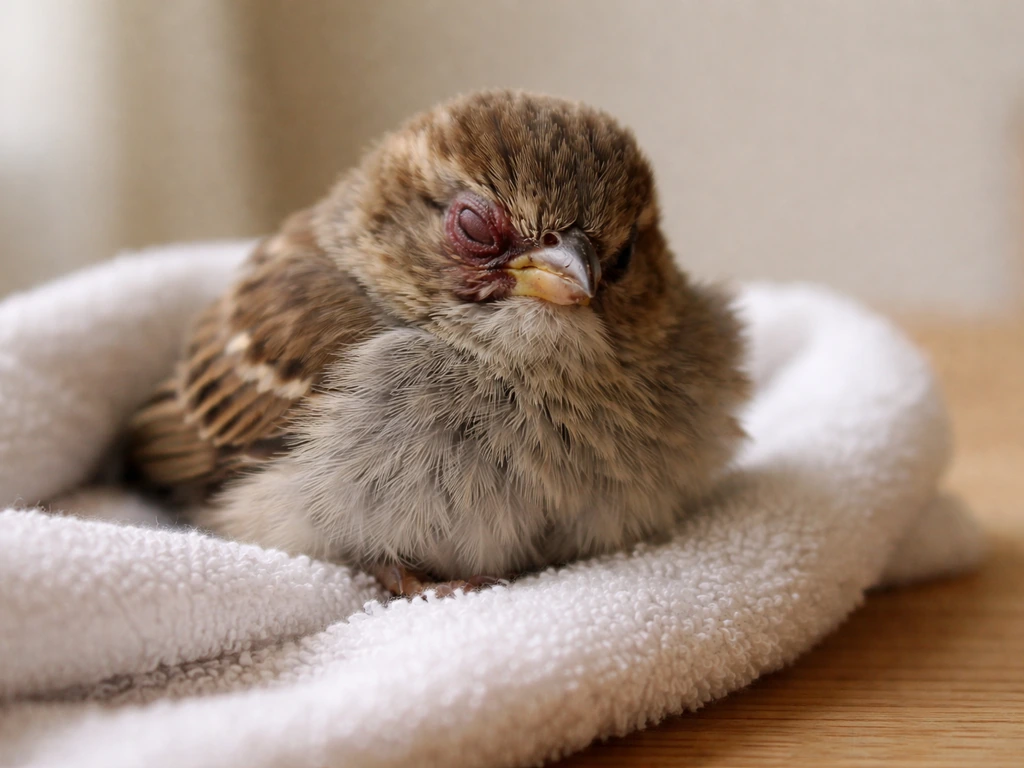
Can a Bird Survive With One Eye? What to Do Now
Learn if birds can cope with one eye and what to do now for an injured bird’s eye safely and urgently.