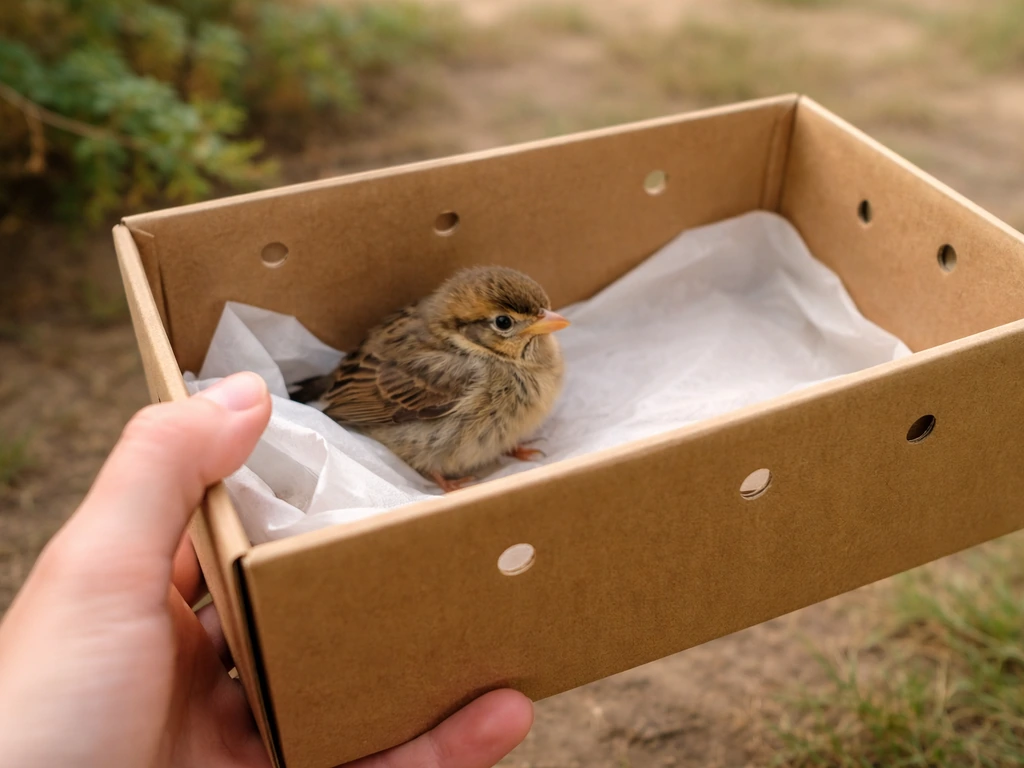
If you've found a bird on the ground that appears to have fallen from a nest, the first thing to know is this: most of the time, you don't need to do much. A healthy fledgling sitting on the ground is completely normal behavior, not an emergency. But a nestling (a tiny, mostly featherless bird with closed or barely open eyes) on the ground, or any bird that is bleeding, has a visibly broken limb, is shivering, or can't hold its head up, does need your help right now. The difference between those two situations determines everything you do next.
Bird Has Fallen Out of Nest: What to Do Today
Marcus Chen
4 Jun 2026
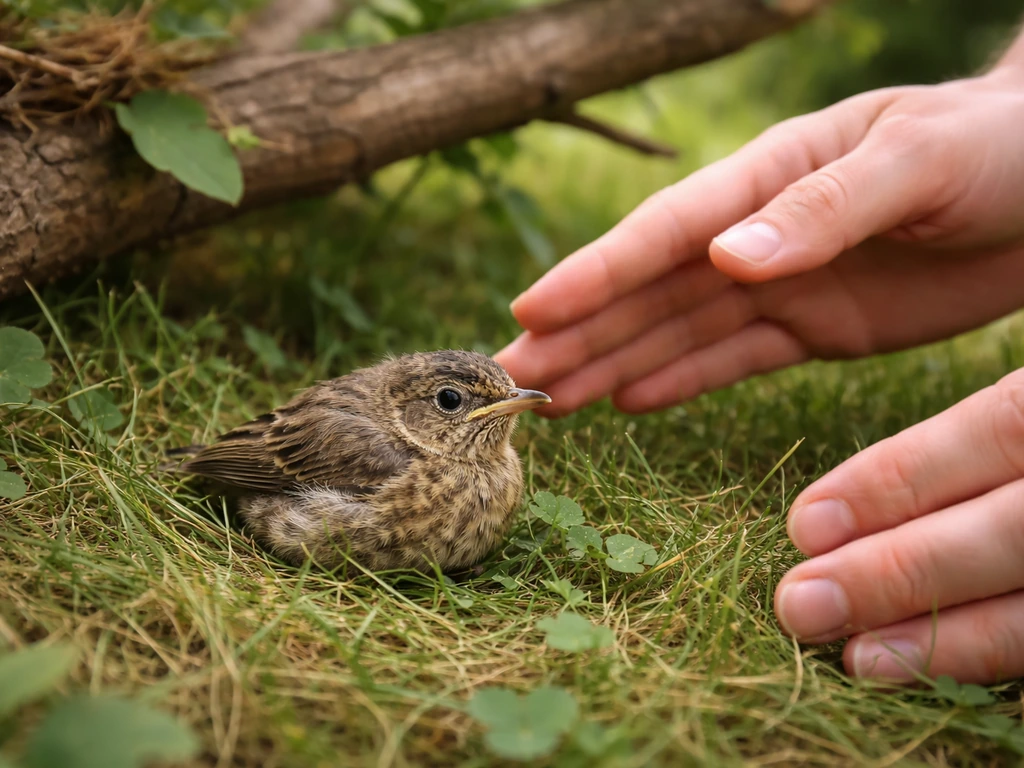
First check: fledgling doing its thing, or a bird that genuinely needs help?
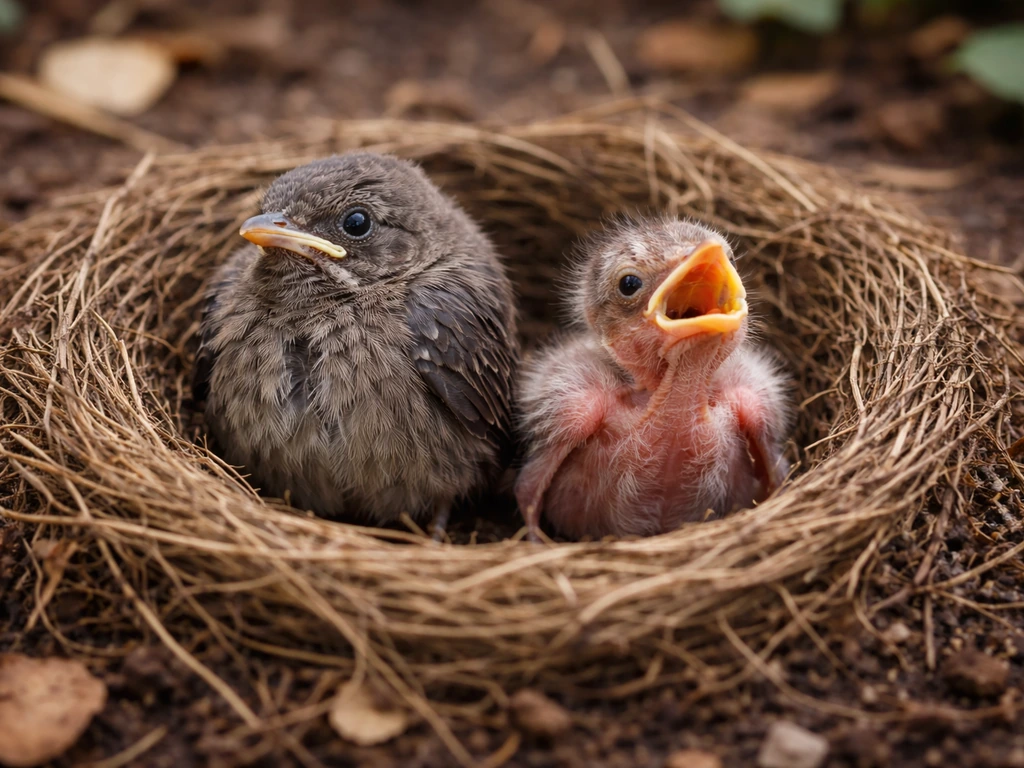
Before you touch anything, spend 30 seconds just looking at the bird. The single most useful question you can answer is: does it have feathers, or is it mostly bare skin and fluff?
A fledgling is a juvenile bird that has most of its feathers, can hop around, and may even attempt short fluttery flights. Finding one on the ground is not an accident or a crisis. It's a completely normal phase. Fledglings leave the nest before they can fully fly, and they spend several days on the ground while their parents continue to feed and watch over them from nearby branches. They look vulnerable, and that's why people panic, but they're usually fine.
A nestling is a different situation entirely. Nestlings are featherless or have only sparse downy fuzz, often have closed or barely open eyes, and cannot move around well on their own. If you're looking at a tiny, pink, helpless-looking bird, it has fallen or been pushed from the nest prematurely and it cannot survive on the ground without intervention.
On top of the fledgling vs. nestling distinction, look for these injury signals regardless of the bird's age. Any one of these means the bird needs professional care urgently.
- Visible broken limb (a wing hanging at a strange angle, a leg bent wrong)
- Active bleeding or an open wound
- Shivering or trembling
- Breathing problems (open-mouth breathing, gasping, labored chest movement)
- Unable to hold its head up or keep upright
- A dead parent bird nearby
- Evidence of a cat or dog attack, even if the injury isn't immediately obvious (puncture wounds from claws or teeth cause serious internal damage)
If the bird is a feathered fledgling with none of those signs, the right move is usually to leave it where it is, keep pets and kids away, and watch from a distance to confirm a parent returns. If it's a nestling or showing any injury signs, move on to the steps below.
Immediate safety steps: what to do in the first few minutes
Your first priority is to get the bird out of immediate danger without causing more stress than necessary. Cats are the number one killer of wild birds, and a bird on the ground is completely exposed. If there's a cat, dog, or active foot traffic nearby, act now.
- Get pets inside or secured before you approach the bird. Even a well-meaning dog sniffing the bird can cause fatal stress or injury.
- Put on gloves if you have them. Heavy garden gloves work. This protects you from a scratch or bite and minimizes the transfer of your scent, which despite the common myth does not cause parents to abandon chicks, but still good practice.
- Pick the bird up gently but decisively. Cup it in both hands without squeezing. Wild birds go into shock easily, so calm and quiet handling matters.
- Move it to the nearest safe spot: off the pavement, out of direct sun, away from the road. If it's a fledgling and you're just moving it from immediate danger, a nearby shrub or low branch in the same yard is ideal.
- If it's a nestling and you can see the nest above, you can place it back. The myth that a parent will reject a touched chick is simply not true. Birds have a very limited sense of smell and will accept a returned chick.
For nestlings, if the nest is accessible and intact, the best outcome for the bird is getting it back in there. Use a container (a small cup works) to scoop the bird rather than gripping it directly if you can. Once it's back in the nest, back away and watch from a distance for 30 to 60 minutes to confirm the parents return. If a nest was disturbed, many bird parents will still return once the area is safe and the chick is settled will a bird come back to a disturbed nest.
Warmth, shelter, and keeping the bird calm while you figure out next steps
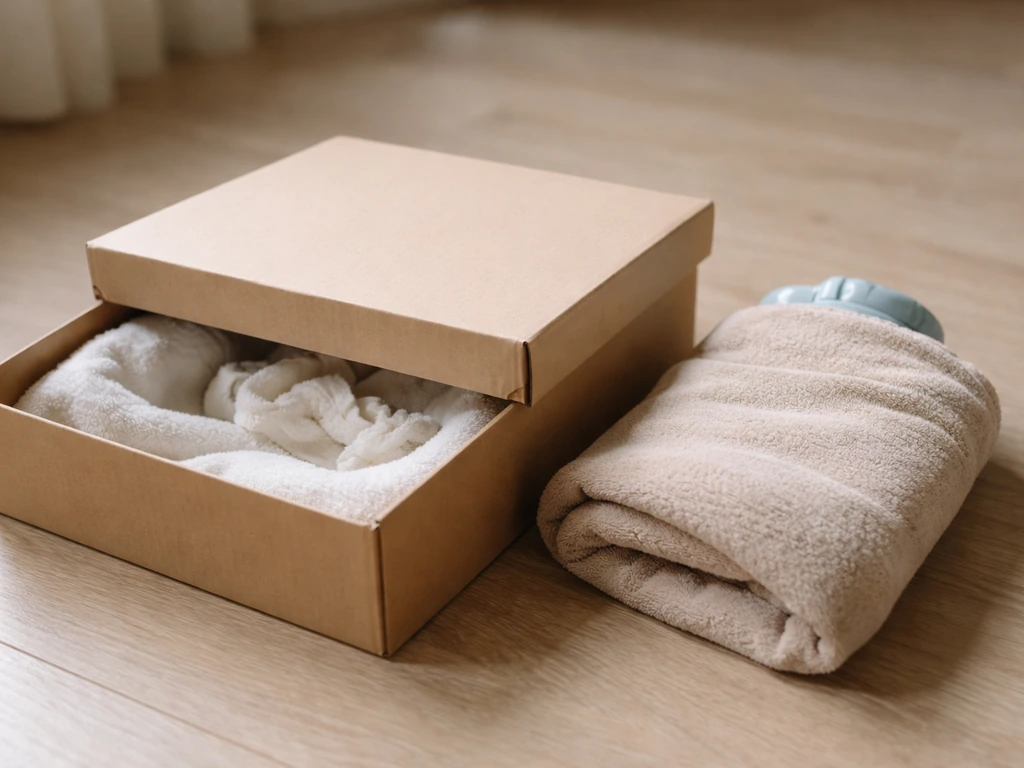
Whether you're waiting to see if a parent returns or waiting to call a wildlife rehabilitator, the bird needs to be warm, quiet, and contained. This is the most important thing you can do at home, and it buys critical time.
Get a cardboard box or shoebox and poke several small air holes in the lid. Line the bottom with a clean soft cloth or paper towels. Crumple a few paper towels into a loose nest shape in the center so the bird has something to nestle into rather than sliding around on a flat surface. Place the bird gently inside and close the lid.
Most baby birds that have been on the ground are already below their ideal body temperature. A heating pad set to its lowest setting, placed under half of the box (not the whole bottom), gives the bird a warm zone to move toward without overheating. If you don't have a heating pad, a zip-lock bag filled with warm (not hot) water and wrapped in a cloth works. The bird should feel just warm to the touch, not hot.
Keep the box in a quiet, dim room away from pets, children, loud noises, and direct sunlight. Don't peek inside every few minutes. Every time the lid comes off, the bird experiences stress, and repeated stress can push a fragile bird into shock. Once it's in the box and warm, leave it alone until you've made the call for professional help.
Assessing what you're actually dealing with: trauma, shock, injury, and dehydration
If you've had a chance to observe the bird briefly before boxing it, here's a quick rundown of what the signs you see actually mean, so you can give useful information when you call for help.
| What you see | What it likely means | Urgency level |
|---|---|---|
| Wing hanging low or at an odd angle | Possible broken wing or dislocation | Urgent: call a rehabber today |
| Leg bent unnaturally or not bearing weight | Possible fracture or joint injury | Urgent: call a rehabber today |
| Bleeding from any area | Open wound, possible internal injury | Urgent: do not delay |
| Open-mouth breathing or gasping | Respiratory distress or shock | Urgent: do not delay |
| Limp, unable to hold head up | Shock or neurological injury | Urgent: do not delay |
| Shivering or trembling | Hypothermia or shock | Urgent: warm first, then call |
| Dull sunken eyes, dry mouth visible | Dehydration (do NOT give water yourself) | Call a rehabber for guidance |
| Alert, upright, moves when disturbed | Likely healthy fledgling | Monitor; call only if parents don't return in 2 hours |
If a cat or dog attacked the bird at any point, treat it as an urgent case even if you can't see obvious injuries. Cat saliva in particular carries bacteria that are rapidly fatal to birds, and what looks like a minor scratch can cause death within hours without antibiotic treatment from a vet.
What not to do (this list matters as much as everything above)
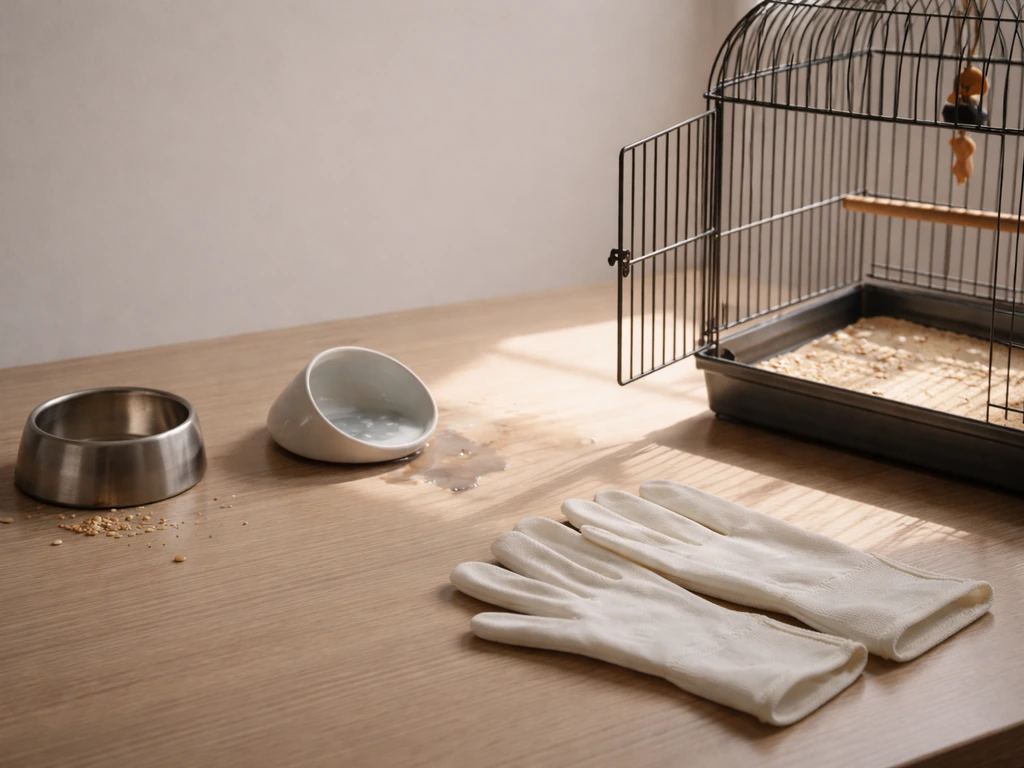
These are the mistakes that cause the most harm, and they usually come from a good place. People want to help, and these feel intuitive. But they can seriously hurt the bird. Best Friends cautions that well-intentioned “rescue” can separate baby birds from their parents, so avoid taking fledglings from where you found them or doing anything that disrupts parent care taking fledglings from their parents.
- Do not give the bird food or water. This is the single most important rule. Baby birds can inhale liquids directly into their lungs, which is fatal. Even appropriate-seeming foods like bread, crackers, seeds, or milk are harmful or dangerous. Wild birds have specific dietary needs that change rapidly through development, and getting it wrong causes more problems than hunger does in the short term.
- Do not give any human medications, vitamins, or supplements.
- Do not leave a nestling outside in a box hoping the parents will find it. Nestlings need to be in or very near the original nest for parents to locate and feed them.
- Do not keep a fledgling inside your home for longer than needed. The longer a fledgling is in human hands, the more it misses critical learning time with its parents. If it's a healthy fledgling, the goal is to get it back outside in a safe spot as quickly as possible.
- Do not place the box in direct sunlight. Heatstroke can happen quickly.
- Do not attempt to splint a broken wing or leg yourself. Improper splinting causes additional damage and pain.
- Do not assume moving the bird far from where you found it is helpful. Parents search a specific area. Moving the bird even 50 meters from where it fell can break that connection entirely.
- Do not post about it on social media and wait for crowd-sourced advice while the bird deteriorates. If it needs help, time matters.
When and where to get professional help
If the bird needs more than temporary containment, you need a licensed wildlife rehabilitator or an avian veterinarian. These are not the same as a general vet, though a general vet may be able to provide emergency stabilization if no specialist is available. Wildlife rehabilitators are specifically trained and permitted to care for wild birds, and most work for free or at low cost.
Call or contact one of these immediately if: the bird is a nestling you cannot return to its nest, the bird shows any of the injury or shock signs listed above, you know or suspect a cat was involved, the bird hasn't moved or improved after 2 hours in a warm quiet box, or you found it after a window strike and it's still not recovered after an hour. If an animal is badly injured or looks very sick, contact a wildlife rehabilitator or your state wildlife office so they can connect you with the right rehabilitator call or contact one of these immediately if the bird shows any of the injury or shock signs.
To find a licensed wildlife rehabilitator near you, try these resources:
- The National Wildlife Rehabilitators Association directory at nwrawildlife.org
- The Wildlife Rehabilitator directory at animalhelpnow.org (covers the US and Canada, searchable by location)
- Your state's Department of Fish and Wildlife or equivalent agency, which maintains a list of permitted rehabilitators
- Your local animal shelter or humane society, which can usually refer you to a wildlife rehabber even if they don't handle birds themselves
- An avian veterinarian if no rehabber is immediately available
How to transport the bird safely
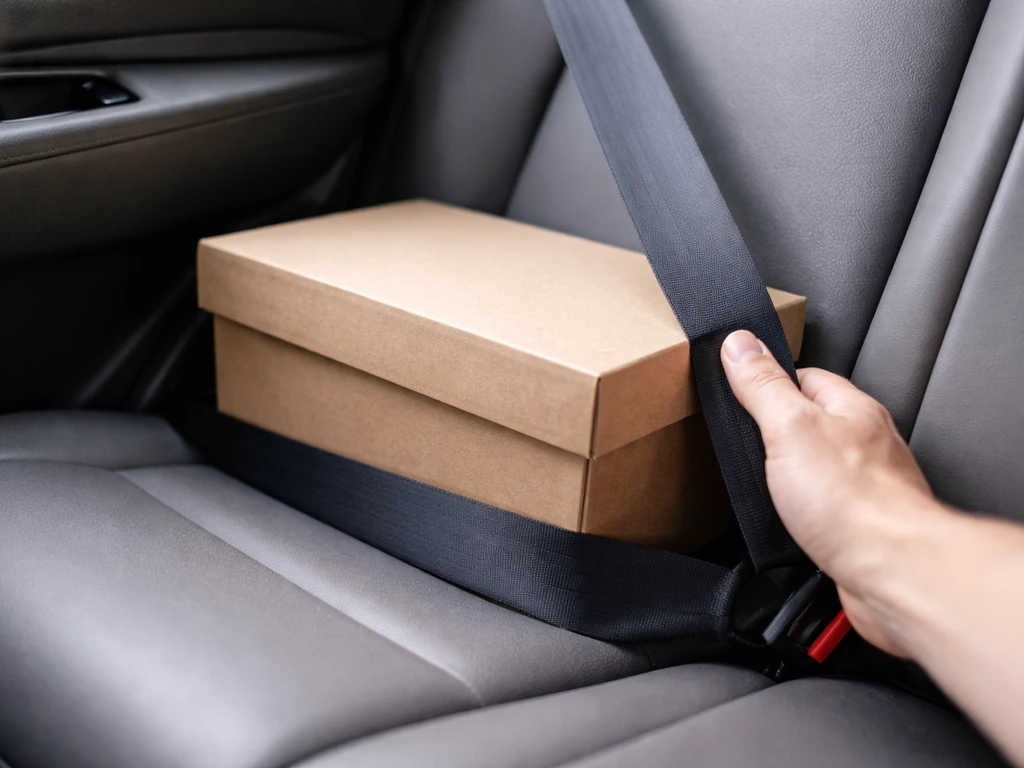
Use the shoebox setup described above. Keep the lid closed during transport. Place the box on the seat or floor of the car away from air conditioning or heating vents blowing directly on it. Drive calmly, avoid loud music, and keep the trip as short as possible. Do not open the box to check on the bird while driving. When you arrive, hand the box directly to the rehabilitator and give them a clear description of where and how you found the bird, what condition it was in, and whether any animals were involved.
Reuniting vs. rehab: what happens next and how to monitor the situation
For a healthy fledgling that you've moved to a safe spot nearby, the job now is patient observation from a distance. Use binoculars if you have them. You're looking for a parent bird to appear and feed or call to the chick within a couple of hours. Parents are almost always nearby; they just won't come close if you or a pet is hovering. Keep everyone back and give it space.
If no parent appears after 2 hours, or if the bird seems weaker, more lethargic, or is calling constantly without response, that's when you call for help. A fledgling left overnight without parental contact is in trouble and should not be left until morning without at least a call to a rehabber for guidance.
If you returned a nestling to its nest, check the next morning (again from a distance) to confirm the nest looks active and a parent is visiting. If the nest appears abandoned or the chick is crying nonstop through the following day, contact a rehabber.
If the bird has gone to a wildlife rehabilitator, most organizations will give you an update if you ask at drop-off, and some allow follow-up calls. Understand that not all injured birds survive, especially very young nestlings or birds that suffered trauma. The best outcome you can create is getting the bird to professional care quickly, in a warm and calm state, without having fed it or caused additional handling stress. That genuinely makes a difference to the outcome.
One last note: if the whole nest came down in a storm with eggs or other chicks still in it, or if the bird fell and still can't fly after being a fledgling for several days, those situations have some nuances worth understanding in more detail. The core approach is always the same though: identify what you're dealing with, keep the bird safe and warm, avoid feeding or medicating, and get professional help for anything beyond a healthy fledgling doing its normal ground phase.
FAQ
If I think it is a healthy fledgling, can I move it to a different spot right away?
Yes, but only for fledglings that are otherwise normal. If the bird is feathered, alert enough to move, and has no bleeding or broken-limb signs, you can place it in nearby shade or on a low branch where it is safe from pets and traffic, then watch. If it is a nestling (mostly bare skin, closed eyes) or shows any injury or shock signs, do not keep moving it around, instead warm, contain, and contact help.
Should I feed the bird or give it water when it has fallen out of nest?
Do not feed it or give water by mouth. Even if you think it is “just hungry,” improper food, wrong consistency, and choking risk are common. If you are waiting for a parent to return or a rehabilitator to respond, focus on warmth, quiet, and keeping it contained while you arrange professional guidance.
What if I am not sure whether it is a fledgling or a nestling?
A simple check is whether it can sit up, prop its body, and respond to surroundings (some head movement, attempts to shift position). A nestling typically cannot do these things, it looks very small and bare, and it often has closed or barely open eyes. If you are unsure, treat it as a nestling until a professional confirms, because the “warm and contained” approach is safer than leaving it out.
I found the bird after a window strike. Does that change what I should do?
If a window strike is involved, you should treat it as time-sensitive trauma even when the bird seems “okay” at first. If it has not recovered within about an hour, contact a rehabilitator for direction. Keep it warm and contained, and avoid moving it to the sun to “see if it wakes up.”
The bird looks uninjured, but I suspect a cat or dog got to it. What should I do?
Yes. If a cat or dog was involved, keep it treated as urgent even when you do not see wounds. Offer warmth and containment, and contact a rehabilitator right away because bite wounds can be small externally but dangerous internally, and saliva bacteria can cause rapid deterioration.
If I leave a fledgling outside nearby, how do I choose the safest location?
For outdoors, you generally should not leave the bird exposed in open ground. For fledglings, use a safe nearby cover option such as a low shrub or the edge of the yard, and then give distance so parents feel comfortable returning. For nestlings or injured birds, place it back in the nest if you can do so safely and the nest is intact, otherwise warm containment and professional help are the priority.
How often should I check inside the box while waiting?
Avoid prolonged holding or repeated checks. Once it is boxed and warm, keep the lid closed and observe through minimal handling. Frequent opening raises stress and can worsen breathing or body temperature in fragile birds, especially in the first hour.
Can I heat the whole box to warm the bird faster?
No. Heating pads and hot-water methods should be used to create a warm zone, not to fully heat the whole container. The bird should be just warm to the touch, not hot, and it must be able to move away from the warm side. Overheating can be as harmful as being cold.
What if the nest is hard to reach or looks damaged?
If the nest is accessible and intact, returning a nestling is usually best. But if the nest is unsafe to reach (dangerous height, unstable structure) or the nest is clearly destroyed, do not improvise by building a new nest. Instead, warm and contain the chick and contact a rehabilitator for the correct next step.
Do I need to call emergency services, or is a wildlife rehabilitator enough?
It is not usually necessary to call an emergency line unless the bird is actively in danger or clearly critical (bleeding, broken limb, severe shock signs) and you cannot secure it. For urgent cases, contact a licensed rehabilitator or avian-capable service immediately, and keep the bird warm and contained while you wait for instructions.
Next Article
When Bird Falls Out of Nest: What to Do Now, Safely
Step-by-step guide for when a bird falls out of nest: safety check, fledgling vs nestling, urgent injury signs, rescue s