
Yes, in most cases a bird will return to a disturbed nest. Birds are resilient parents, and a brief human intrusion, a curious pet, or even a nest that's been lightly touched is rarely enough to make them abandon their eggs or chicks permanently. The key word is "briefly." What happens next depends on how long the disturbance lasts, whether you give the parents space, and a handful of species-specific quirks. Here is exactly how to read the situation and decide whether to wait it out or make a call for help.
Will a Bird Come Back to a Disturbed Nest? What to Do
Marcus Chen
16 Apr 2026
What counts as a "disturbed nest" and what birds usually do right after
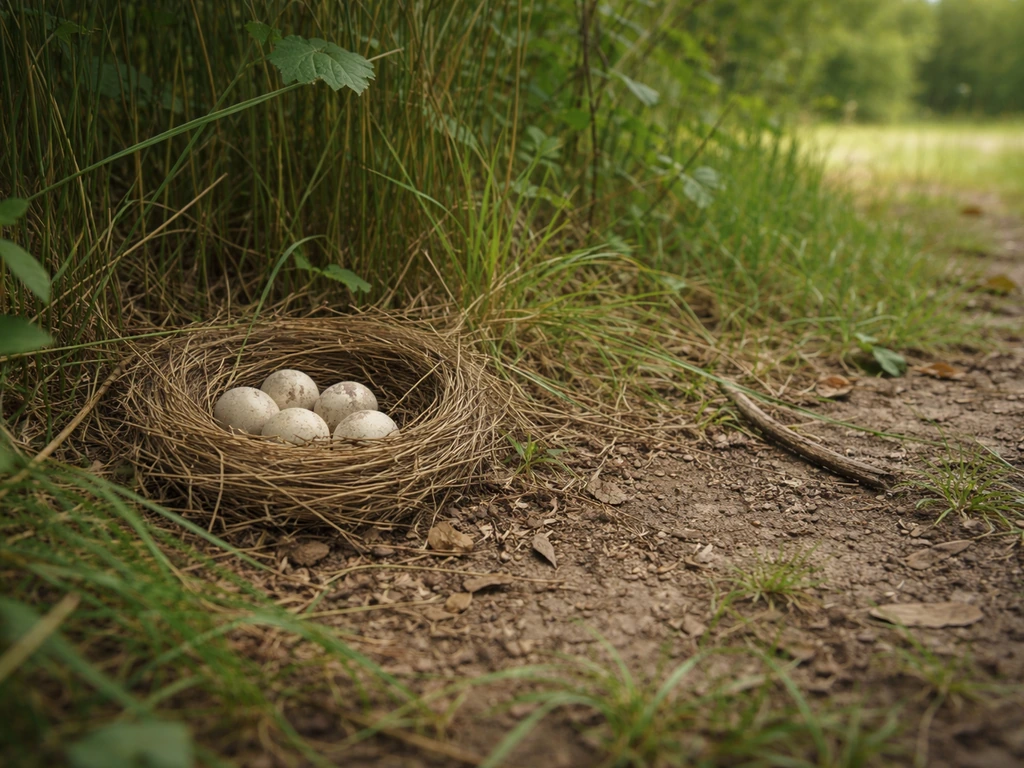
A disturbed nest is any active nest (one containing eggs or live chicks) where something interrupted normal parental behavior. That includes a person walking too close, a pet sniffing around the base of a shrub, a branch falling on or near the nest, gardening or construction nearby, a child touching the eggs, or a predator passing through. It also includes situations where the nest itself got knocked out of position or fell partially. What it does not include is a nest that is fully empty and clearly inactive, which is a different scenario entirely.
When a parent bird feels threatened, its first instinct is to leave and put distance between itself and the danger. This is completely normal and is not a sign of abandonment. The bird is trying to draw attention away from the nest, or simply waiting at a safe distance until whatever spooked it is gone. Most adults will temporarily vacate the nest the moment a human gets close, which is why you should never read an empty nest as proof that the parents have left for good.
What matters most is whether the nest is still structurally sound, whether the eggs or chicks are still in it (or can be placed back in it), and whether you are going to give the parents the quiet they need to come back. The situation that tends to cause real trouble is not a one-time disturbance but repeated visits. Research from NC Wildlife makes this clear: if a mother bird is disturbed at her nest again and again before her eggs even hatch, she may eventually decide the area is not safe and abandon the nest entirely. One incident is usually forgivable. Ongoing human traffic near the nest is a much bigger problem.
How to tell if the parents are still around
The most important thing to understand here: not seeing a parent does not mean the parent is gone. Adults routinely leave the nest to forage, and some species spend much less time sitting on the nest than others. If you walk up, look at the nest, and see no bird, that tells you almost nothing on its own. What you need to do is step back, get at least 30 to 50 feet away (more if you can), and watch quietly for a while before drawing any conclusions.
Here are the signs that parents are actively caring for a nest:
- You see an adult bird perched nearby, watching the area, even if it has not returned to the nest yet
- You hear alarm calls or agitated chip notes from birds in the nearby trees or shrubs, which often means parents are close and stressed
- After you back away, the adult returns to sit on the nest or deliver food
- Nestlings in the nest are calling (a soft peeping sound) when an adult comes near
- The nest contents look undisturbed and the eggs or chicks appear warm (not stiff or cold to the touch)
- You observe feeding trips, where an adult arrives with food in its beak and departs a few seconds later
One of the most common mistakes people make is checking the nest repeatedly and concluding the parents have abandoned it because they never see an adult actually sitting there. Audubon and NestWatch both flag this as a persistent misconception. Adults are often doing exactly their job, just out of your line of sight. The more you hover, the more you are actually the reason they are not returning.
When a mother bird will return vs. when she probably won't
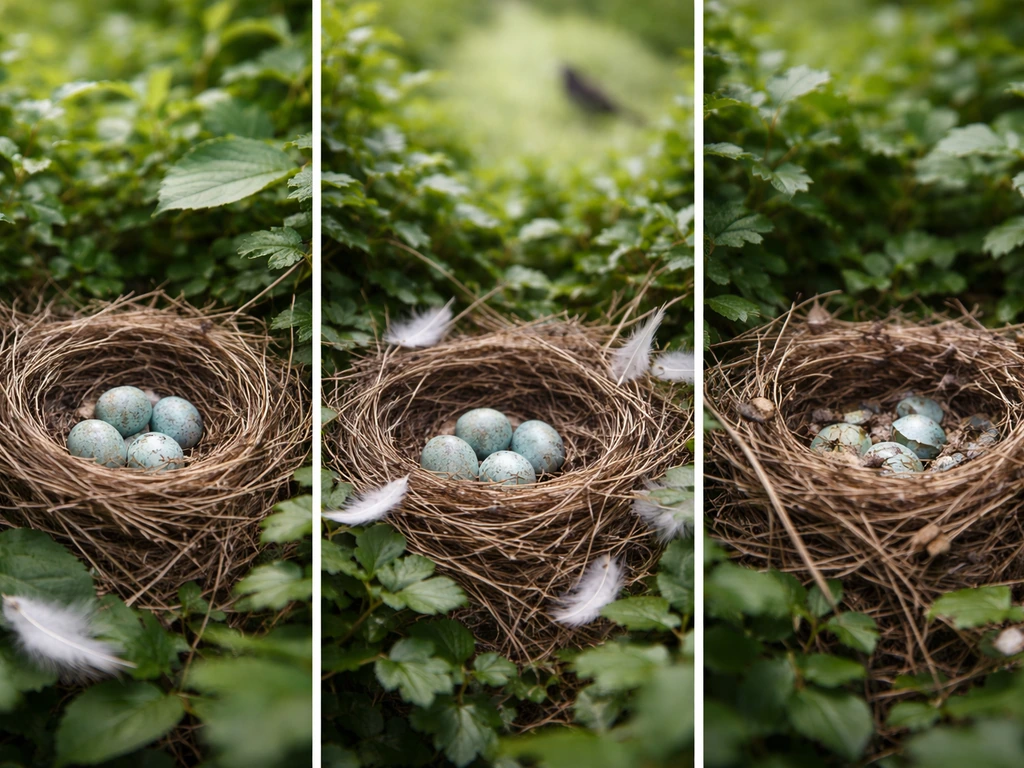
The honest answer is that most parent birds will return after a single disturbance if you give them a real chance. The factors that reduce that likelihood are worth knowing:
| Factor | Effect on return likelihood |
|---|---|
| Single, brief disturbance (seconds to a few minutes) | High likelihood of return, usually within 20 to 60 minutes once area is quiet |
| Repeated disturbances on the same day or across days | Moderate to low; may trigger nest abandonment, especially before hatching |
| Humans or pets still lingering near the nest | Parent will not return until the perceived threat is gone |
| Nest physically knocked down or eggs moved | Return possible if nest is repositioned quickly and area is left quiet |
| Severe weather (cold, rain, wind) | Faster return is critical; eggs and small nestlings chill quickly |
| Active predator threat still present in the area | Low until predator leaves; parent may not risk returning |
| Very late in nesting season or chicks are near fledging | Parents especially motivated to return and continue feeding |
Time of day matters too. Early morning is when nestlings are most vulnerable to cold if the parent stays away. If you have disturbed a nest first thing in the morning and the weather is cool, getting yourself and any pets away from the area quickly is especially important. Eggs and very young nestlings can become dangerously cold faster than most people realize.
Species differences are real but mostly secondary to the basics above. Most songbirds, raptors, and waterfowl will return after a brief disturbance. Ground-nesting birds can be more skittish and may take longer. The behavior that looks like "she left and never came back" is often just the parent waiting you out from a hidden perch.
What to do right now if you just disturbed a nest
This is the part that matters most in the first hour. Follow these steps in order:
- Back away from the nest immediately. Get at least 30 to 50 feet away, ideally more. If you are inside, step indoors and watch from a window.
- Remove pets from the area. A dog or cat nearby is functionally a predator to a parent bird. Even a leashed pet sitting quietly nearby will prevent most parents from returning. Get them inside.
- Do not go back to check. Every time you return to look at the nest, you reset the clock and give the parent another reason to stay away. Resist the urge.
- Wait at least one to two hours before deciding anything. Audubon recommends watching from a safe distance and waiting at least two hours without any sign of an adult before escalating. Some sources say one hour is enough; two hours is the safer standard and matches guidance from multiple wildlife centers.
- If the nest was knocked down or eggs were displaced and you can safely reach the nest, gently put it back or prop it up as close to its original position as possible. The parent will find it. Birds rely primarily on location memory, not smell, so handling is not the disqualifying factor most people assume.
- Note any injury signs while you are near (before backing away): are chicks bleeding, shivering, or unresponsive? Is a parent bird dead nearby? If yes to any of these, the timeline for escalation shortens considerably.
The biggest mistake I see people make in these situations is repeated checking. They go look after 15 minutes, don't see a parent, feel anxious, go look again at 30 minutes, still nothing, and by the time two hours have passed, the parent bird has been kept away the entire time by continuous human presence. Back away, stay away, and let time do the work.
What to do if the parents genuinely don't come back
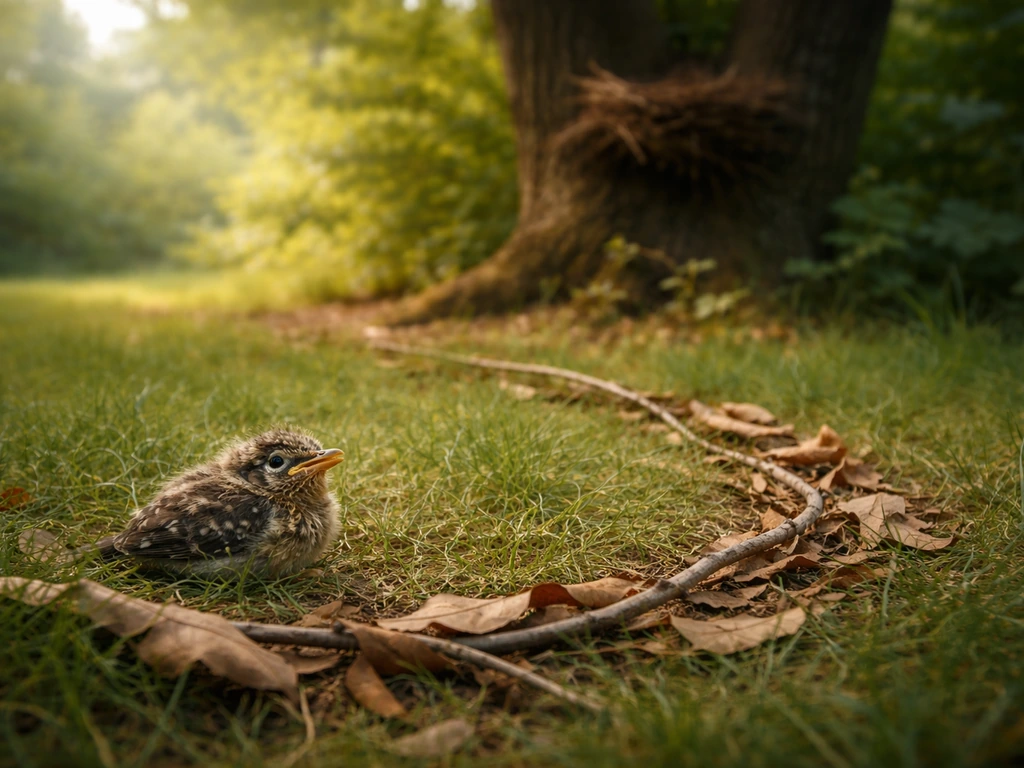
If two hours have passed, you have stayed well back, pets have been removed, and you have seen zero sign of an adult bird, then it is time to think about next steps. If the bird still has not been returned and there are no signs of parents, Audubon advises contacting a wildlife rehabilitation center if it does not improve within an hour When You Should. Before touching anything, try to confirm real abandonment rather than assumed abandonment. Check again from a distance. Are the nestlings calling? Do they look alert or are they drooping and silent? Are the eggs cold? These are more reliable signals than simply not seeing an adult.
If you have a situation where a baby bird has actually come out of the nest, the guidance differs a bit depending on its age. If you are dealing with an emergency like when bird falls out of nest, the steps can change depending on the chick’s age. When a bird falls out of a nest, the steps you take in the first few minutes can make a real difference to whether it survives. A featherless nestling with closed eyes needs to go back into the nest, not on the ground. A fledgling with feathers and open eyes is probably supposed to be on the ground and its parents are almost certainly nearby, still feeding it.
For nestlings that are genuinely stranded, here is what is safe to do at home while you arrange for help:
- Keep the bird warm: place it in a small box lined with a soft cloth and put the box on a heating pad set to low, or near (not on top of) a warm lamp
- Do not give it water or food. Baby birds have specific dietary needs and force-feeding the wrong thing can kill them faster than hunger. Leave feeding to professionals.
- Keep it in a quiet, dark space to reduce stress
- Handle it as little as possible, and only with clean hands or gloves
- Do not try to "nurse" a nestling back to health at home. Even experienced rehabbers use specialized equipment and formulas. Home care is a bridge to professional help, not a substitute.
If the nest itself has been seriously compromised, for example if it fell out of a tree with eggs that broke, the situation is more urgent. Broken eggs cannot be saved, but surviving unhatched eggs or chicks in the same nest may still be viable if you can get professional guidance quickly.
When to skip the waiting and call wildlife rescue right away
The two-hour monitoring window assumes an uninjured bird and a nest that is structurally intact. There are situations where you should not wait, and should contact a wildlife rehabilitator or avian vet immediately:
- A nestling or adult bird is visibly injured: bleeding, a wing or leg held at an odd angle, unable to hold its head up
- A parent bird is dead at or near the nest
- Chicks are shivering, limp, or unresponsive
- The nest was destroyed by a cat or dog (cat saliva carries bacteria that are fatal to birds even without visible wounds, and birds that have been grabbed need antibiotics within hours)
- Severe weather is moving in and the nest is fully exposed with no shelter
- The nest is in a location where disturbance will continue (active construction, a repeatedly trafficked path) and cannot be moved safely
To find help, search "wildlife rehabilitator near me" or call your state's fish and wildlife agency. blank" rel="noopener noreferrer">The National Wildlife Rehabilitators Association (NWRA) and the Wildlife Center of Virginia both maintain online directories. Many areas also have local Audubon chapters that can point you to the nearest licensed rehabber. If a bird was injured in a collision or by a pet and appears to have a broken wing, beak, or leg, treat it the same way you would any injured bird: if a bird has fallen out of its nest and shows injury signs, that's a call-now scenario, not a wait-and-see one.
It is also worth knowing that in the U.S., active nests (those containing eggs or live chicks) are protected under the Migratory Bird Treaty Act. You cannot legally remove or destroy an active nest without a permit, and those permits are issued only in very specific circumstances involving human health or safety. If someone else disturbed the nest (a contractor, a neighbor) and you are unsure of your options, contacting your local U.S. Fish and Wildlife Service office is a reasonable step.
The fledgling confusion: when "abandoned" is actually fine
A large number of the calls that wildlife rehab centers receive every spring involve fledglings that are not actually in trouble. A fledgling is a young bird that has left the nest but cannot yet fly well. It hops around on the ground or sits in low shrubs looking lost and vulnerable. It looks like it needs rescuing. It almost certainly does not.
In many species, all of the chicks leave the nest on roughly the same day, scatter into nearby vegetation, and their parents continue feeding them for another one to three weeks. If you see what looks like a bird that has fallen out of its nest and can't fly, check its feathers first. If it is mostly feathered, has its eyes open, and can hop or flutter, it is almost certainly a fledgling doing exactly what it is supposed to do. Back away, keep pets away, and let the parents continue their job.
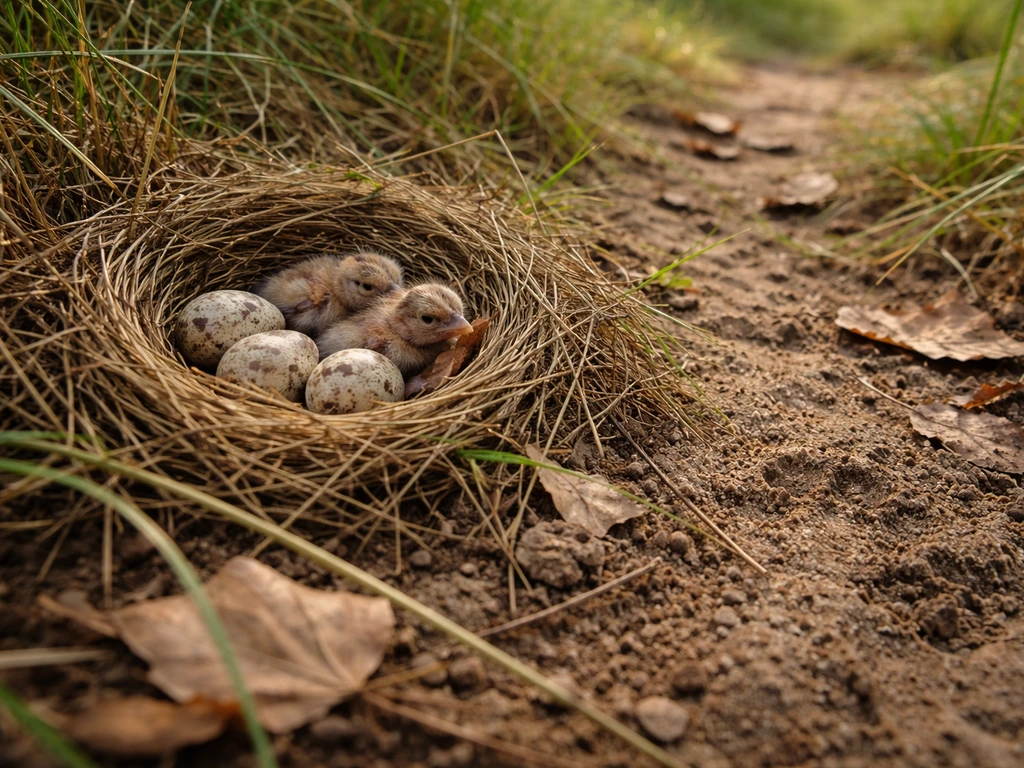
The birds that genuinely need intervention are nestlings: tiny, mostly featherless, eyes still closed, completely helpless. If you find one of those on the ground and the nest is accessible, put it back. If the nest is gone or unreachable, that is when you need help quickly.
How to avoid this situation next time
Nest disturbances are usually accidental, but a few simple habits can dramatically reduce the chances of creating an emergency. Start by checking for nests before any yard work between April and August, which is peak nesting season for most North American species. Before you trim a hedge, clear brush, or start any landscaping, look and listen. A pair of birds making repeated trips to the same shrub is a reliable indicator of a nest inside.
- Delay pruning, mowing, or trimming in areas where you have spotted nesting activity until the season ends
- If you find a nest during landscaping, stop work and wait until the nest is inactive (chicks have fledged and nest is empty)
- Keep outdoor cats indoors during nesting season, not just for bird welfare but because cats are the single biggest human-associated cause of bird mortality in North America
- If you have bird feeders, place them away from dense shrubs where ground-level predators can approach unseen
- Teach children to observe nests from a distance rather than approaching or touching them, framing it as an opportunity to watch rather than a rule to enforce
- If construction or roof work is unavoidable, check the area carefully before starting; this is especially important for rooftop nesting species that sometimes go unnoticed until work is already underway
The situation that concerns me most from a prevention standpoint is repeated disturbance without awareness. A person who unknowingly walks past a ground nest every day on their usual path can cause abandonment without ever meaning to. Once you know a nest is there, a small detour for a few weeks is genuinely all it takes.
Your decision guide for the next few hours
To pull this all together into something you can act on right now: if you have just disturbed a nest or found one in trouble, run through this sequence. First, are there obvious injuries or a dead parent? If yes, call a wildlife rehabber now. If no, remove yourself and all pets from the area immediately and do not return for at least two hours. After two hours, check from a distance: have parents returned or shown any sign of activity? If yes, leave them alone and check back in a day to confirm things are stable. If no, and chicks look cold, drooping, or distressed, it is time to make the call.
If a nestling has come out of the nest during all of this, the guidance in our article on what to do when a bird falls out of its nest walks through exactly those steps. The short version: featherless nestling goes back in the nest if at all possible, fledgling with feathers stays on the ground with parents nearby, and any bird showing injury signs goes to a professional without delay.
The parents almost always come back. Give them the space and time to do it, and you will have done everything right.
FAQ
If I disturbed a nest and I do not see the parents for an hour, will they still come back?
Yes, many birds will continue to incubate or feed even if they stop showing up right away. After you retreat, give them time to settle and resume normal behavior before checking again. A practical cue is whether nestlings’ calls change from quiet or sporadic to consistent begging, which often happens when parents return to feed.
Should I move a disturbed nest back into place to help the parents return?
In most cases, relocating an undamaged nest is unnecessary and can reduce survival, especially if you do not know the species or where the parents were foraging. If the nest is knocked to the ground or partially displaced, you should focus on restoring the eggs or nestlings to a structurally safe spot only with quick, informed action, and then keep the area quiet. If the nest is broken, eggs are exposed, or chicks seem cold or injured, contact a licensed rehabilitator for guidance instead of improvising.
How can I tell the nest is abandoned versus the parents are just away?
No, a nest can be “abandoned” in your eyes while still being cared for. Adults often forage away and only approach when you are not nearby. That is why repeated returns to look are so likely to prevent the parents from coming back. Use distance viewing for longer windows, and avoid lingering at the nest or inspecting the surrounding branches repeatedly.
What should I do if I have to mow or trim near an active nest?
If the nest is active, mowing or trimming nearby can cause repeated, escalating disturbance, which is a common pathway to abandonment. The safest approach is to pause yard work in that area until the young are no longer vulnerable, or move the work to avoid the nest entirely. Once you know nesting is in the area, the “best” time to resume is after chicks have fledged and the nest is clearly inactive, not just because the adults are briefly hard to spot.
Can I remove eggs or clear an active nest if the parents do not return quickly?
Do not remove the eggs. Even if you think the birds left, active nests and eggs of most wild birds are protected, and handling can also make abandonment more likely. If you believe the nesting effort has failed due to disturbance or predation, your next step is to confirm inactivity from a distance over time, then follow local guidance for disposal. When in doubt, a wildlife rehabilitator can tell you what is permissible and what to watch for.
What if I find a featherless chick outside the nest and I cannot put it back?
If a baby bird is featherless with closed eyes, it is typically a nestling that needs to be returned to the nest when possible, not kept indoors. If the nest itself is inaccessible, chilled, wet, or clearly compromised, or you cannot safely place the bird back, that is when you should contact a rehabilitator promptly. Feeding, hydrating, and attempting to raise it without training can seriously harm the chick.
Does the “two-hour wait” guideline change in cold or hot weather?
Yes, weather can change how fast you should act. In cool, breezy, or rainy conditions, nestlings can chill quickly when parents are forced away, so you should shorten the time you monitor and contact help sooner if you see no signs of care. In hot weather, leaving the nest area repeatedly can also increase stress, but the biggest urgent drivers are injuries, structural damage, and signs of chilling or distress.
If a bird flew off when I got close, does that mean my disturbance was severe?
Not necessarily. A single brief “alarm” moment, like a bird flying up when you walk near, is often reversible once you leave the area. Repeated disturbances, especially low-altitude approaches, dogs that keep re-entering the area, or people hovering near for extended periods, are what tend to push parents toward abandonment. The decision aid is whether your presence continues to interrupt their normal approach and feeding.
What signs mean the parents are caring for the chicks even if I never see them on the nest?
If you see an adult bird carrying food to the nest area from a distance after you retreat, that is a strong sign that the nest is being cared for even if you still do not see the adult sitting. Consider the nest “active” until you have verified chick condition changes and parent behavior from a distance across time, rather than judging solely by one visit where no bird is visible.
Is it okay to use a drone or camera to check on a disturbed nest?
Using a drone or repeatedly approaching from multiple angles can create the same problem as human hovering, because it can cause ongoing stress and keep parents away. If you use any method at all, keep it brief, do not alter the nest area, and prioritize stepping back and waiting. If the parents still do not return after you have given quiet time, switch to next-step troubleshooting like assessing chick condition and calling a rehabilitator if there are distress signs.
Next Articles
Can a Bird Live With One Wing? Survival and First Aid
Can a bird live with one wing? Injury outcomes and step-by-step first aid, plus when to get urgent help.
Can a Bird Survive With One Eye? What to Do Now
Learn if birds can cope with one eye and what to do now for an injured bird’s eye safely and urgently.
Can a Bird Survive With a Broken Beak? What to Do Now
Learn if a bird with a broken beak can survive, spot danger signs, and do safe first aid until a vet rescues it.