
If a bird has just fallen out of its nest, the first thing to do is take a breath and assess the situation calmly. Most baby birds on the ground are not in immediate danger, but a few quick checks in the next two to three minutes will tell you whether you need to act fast or simply keep watch. The steps below walk you through exactly what to do, in order, starting right now.
When Bird Falls Out of Nest: What to Do Now, Safely
Marcus Chen
22 May 2026
Do a fast safety check first (before you touch anything)
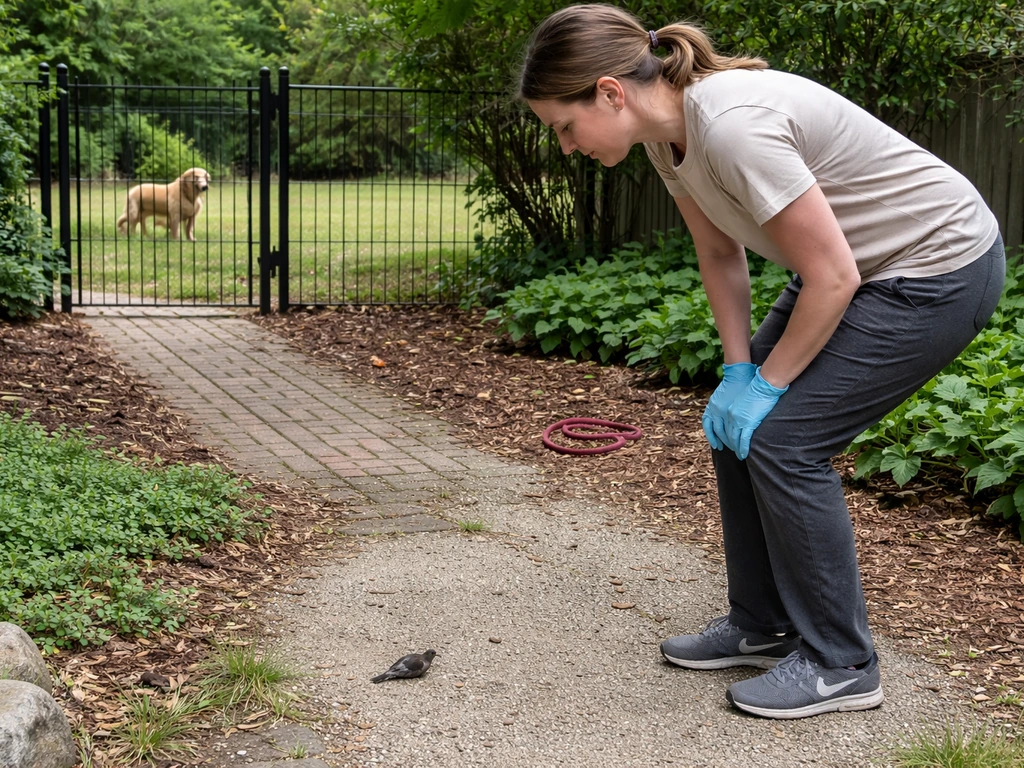
Before you get anywhere near the bird, scan the surrounding area. Cats and dogs are the biggest immediate threat: a single puncture wound from a cat's tooth can cause fatal infection within hours, even if the bird looks fine. If there is a cat or dog nearby, move it indoors or leash it immediately. Then check for traffic. If the bird is on or near a road, that needs to be resolved before anything else. Ideally, have someone direct traffic or shield the bird with a box while you work.
Once you have cleared the area of immediate threats, look at the bird without touching it. Is there visible bleeding, a wing hanging at an odd angle, or is the bird lying on its side? Any of those signs means you will need professional help, and you should start making calls while you set up temporary care. More on that in the injury section below. If the bird looks alert, is sitting upright, and there is no blood or obvious deformity, take a moment before you do anything else.
Nestling or fledgling? This one question changes everything
The most important thing you need to figure out right now is whether this is a nestling or a fledgling. These are two very different situations, and the right action for one is the wrong action for the other. You can tell them apart just by looking. Audubon’s quick rule is that if a baby bird has feathers and can hop around on the ground, it is likely a fledgling; if it is naked or has very few feathers or eyes closed, it is likely a nestling.
Nestling (needs to go back in the nest)
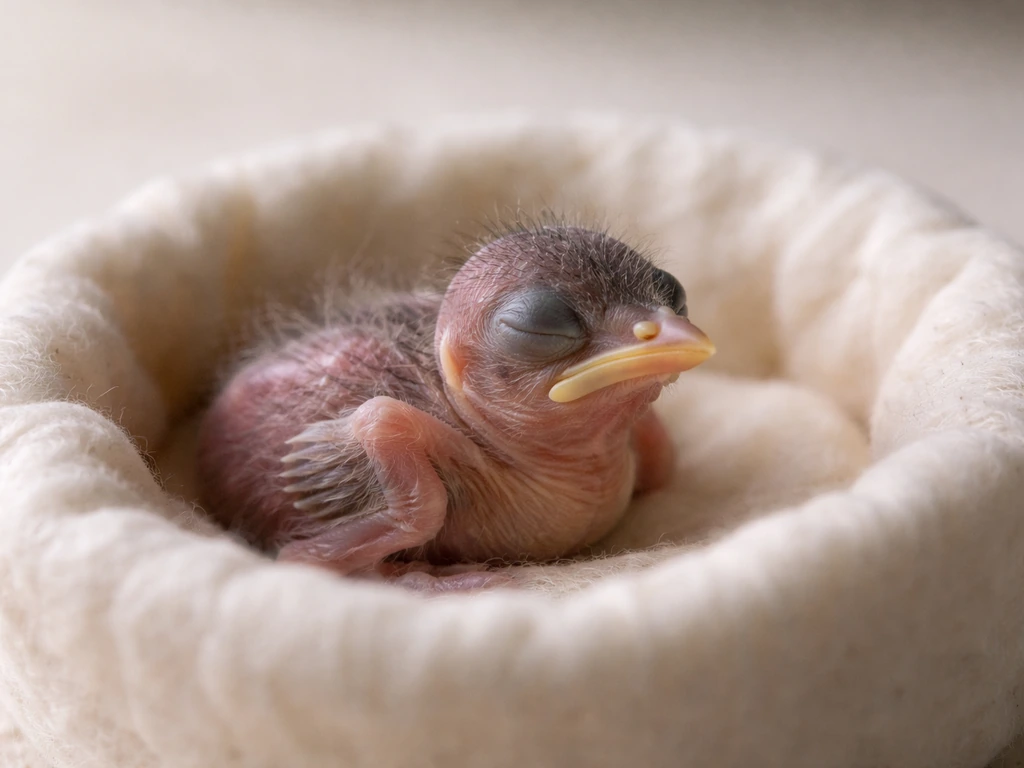
- Featherless or with only a sparse covering of fluffy down
- Eyes closed or barely open
- Cannot stand, hop, or hold its head up for long
- Looks helpless and barely moves around
- Clearly belongs in a nest, not on the ground
Fledgling (probably supposed to be on the ground)
- Well-covered in feathers, though the tail may be very short
- Eyes wide open and alert
- Can hop, walk, and flap its wings
- May flutter a short distance or briefly into low branches
- Wing feathers may look like tubes or sheaths as they finish growing in
Fledglings are supposed to be on the ground. This is a normal and necessary stage of bird development. The bird is not lost or in trouble just because it cannot fly well yet. If a bird fell out of its nest and still cannot fly after some time has passed, it needs closer guidance and possibly professional help cannot fly well yet.
Parents are almost always nearby, even if you cannot see them, watching and returning every few minutes to feed. The RSPCA, Audubon, Mass Audubon, and virtually every wildlife authority agree: it is very common to find fledglings on the ground in spring and summer, and the worst thing you can do is assume they are abandoned and take them inside. If a fledgling looks alert and can move around, leave it alone unless it is in a genuinely dangerous location.
What to do right now: warm it, secure it, reduce stress
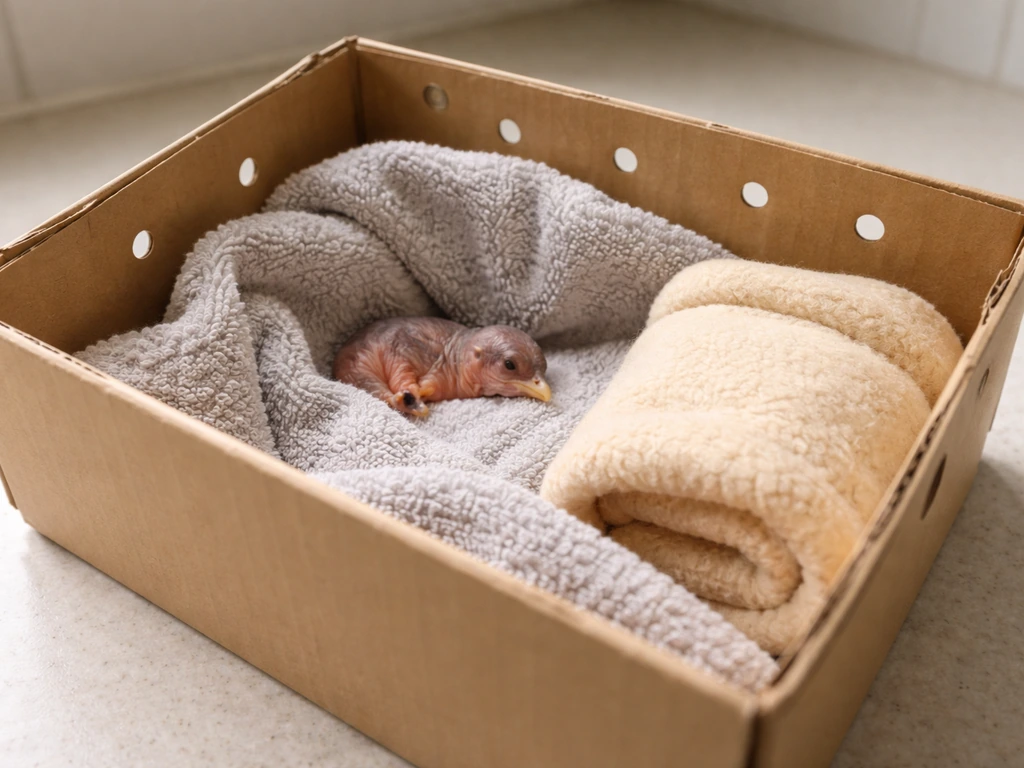
If you have determined that the bird is a nestling (featherless, helpless, eyes closed), or if you have an injured bird of any age that needs to be contained while you make calls, here is how to set up safe interim care.
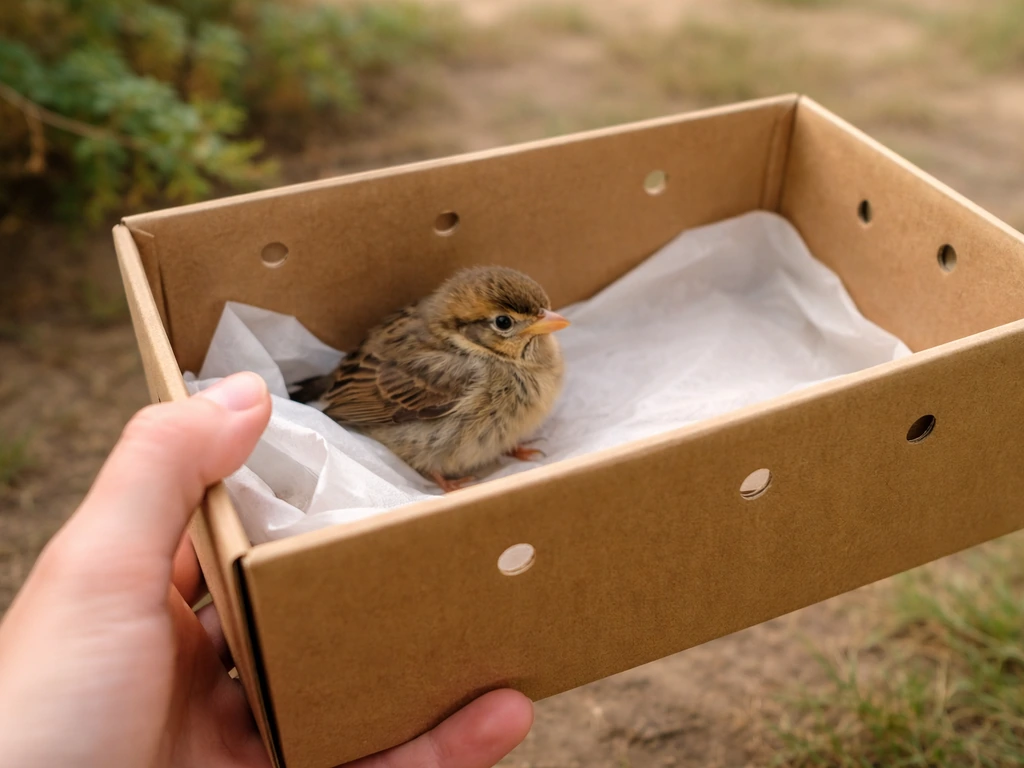
- Find a small cardboard box or shoebox and poke a few air holes in the sides.
- Line the bottom with crumpled paper towels formed into a rough nest shape. Do not use loose materials like shredded paper that can tangle around legs.
- Place a heating pad set to its lowest setting under one end of the box only, with a folded towel between the pad and the box. This lets the bird move away from the heat if it gets too warm. The target surrounding temperature for very young nestlings is around 85 to 90 degrees Fahrenheit.
- If you do not have a heating pad, fill a zip-lock bag or a water bottle with warm (not hot) water, wrap it in a washcloth, and place it at one end of the box. Check it every 20 to 30 minutes so it does not go cold, because a cold bottle will pull heat away from the bird rather than warming it.
- Put the bird gently in the box and close the lid. Keep it in a warm, dark, and quiet spot away from kids, pets, and noise.
- Do not give the bird any food or water. This is important. Even well-meaning feeding can cause aspiration, the wrong nutrients, or serious harm. A wildlife rehabilitator will handle nutrition.
The point of this setup is to stabilize the bird while you decide on next steps or wait for professional help. It is not a long-term solution. Minimize how often you open the box and resist the urge to check on it constantly. Stress is genuinely dangerous for baby birds.
Reunite with parents, or call for rescue? Here is how to decide
The best outcome for any baby bird is to stay with its parents. Birds take far better care of their own young than any human can, so reuniting should always be your first option if it is safe and possible.
When to put a nestling back in the nest
If you can see the nest and reach it safely, and the nestling appears uninjured, put it back. If the nest is disturbed or partially damaged, you can still have a good chance of reuniting the nestling, but monitoring parent activity is especially important disturbed nest. The old myth that touching a baby bird causes its parents to reject it is not true.
Birds have a limited sense of smell and will not abandon a chick because a human handled it. Use a clean cloth or gloves if you prefer, but the main goal is simply to get the bird back in the nest as quickly and gently as possible. If the nest has been partially damaged but is still in place, you can gently reshape it.
If the original nest is gone or completely unreachable, you can create a substitute. Use a small plastic container like a berry carton or a wicker basket lined with dry grass or paper towels, attach it as close to the original nest location as you can (wire it to a branch or ledge), and place the nestling inside. Keep it out of direct sun and check from a distance to see if parents return.
How to monitor for parent activity
Once you have returned a nestling or confirmed a fledgling is in a reasonably safe spot, step well back from the area. Thirty to forty feet is a good starting distance. Parent birds often will not approach if you are standing close by. Watch patiently for at least 30 to 60 minutes. You should see a parent fly in every few minutes to an hour to check on or feed the chick. Feces dropping near the bird is also a positive sign that ongoing care is happening. If you see no parent activity at all after a full hour of quiet observation, contact a wildlife rehabilitator.
When to call for help instead of reuniting
- You cannot locate the nest or reach it safely
- The bird was attacked by a cat, dog, or other predator (even with no visible wound)
- The bird has any of the injury signs listed in the next section
- No parent activity is seen after 60 minutes of quiet monitoring
- You cannot tell whether the bird is a nestling or fledgling and are unsure what to do
- Severe weather is imminent and you cannot return the bird to shelter
Why birds fall out of nests (and what it means for their care)
Understanding why the bird ended up on the ground helps you figure out whether it is likely okay or whether something more serious is going on.
| Reason for fall | What it usually means | Likely next step |
|---|---|---|
| Normal fledging (older chick left on its own) | Bird is developmentally ready, parents nearby | Leave it alone, monitor from distance |
| Knocked out by wind or storm | May be uninjured, just displaced | Attempt nest return if uninjured; monitor for parent visits |
| Nest overcrowding (sibling pushed it out) | Bird may be weak or underfed | Return to nest if possible; watch for feeding activity |
| Predator attack (cat, crow, squirrel) | High risk of puncture wounds even if bird looks okay | Contact wildlife rehabilitator immediately |
| Nest fell from tree entirely | Whole brood affected, all need help | Contain safely, call for help; see related guidance on nests with eggs |
| Unknown cause, bird found on ground | Cannot rule out injury or illness | Assess carefully; call rehabilitator if any doubt |
If the bird came down because of a predator or because the entire nest fell, err on the side of calling for help rather than trying to handle everything yourself. Cat and dog bites in particular carry bacteria that require antibiotic treatment, and a bird that looks perfectly fine after being caught by a cat can still die within 24 to 48 hours without treatment.
Injury red flags that mean you need professional help now
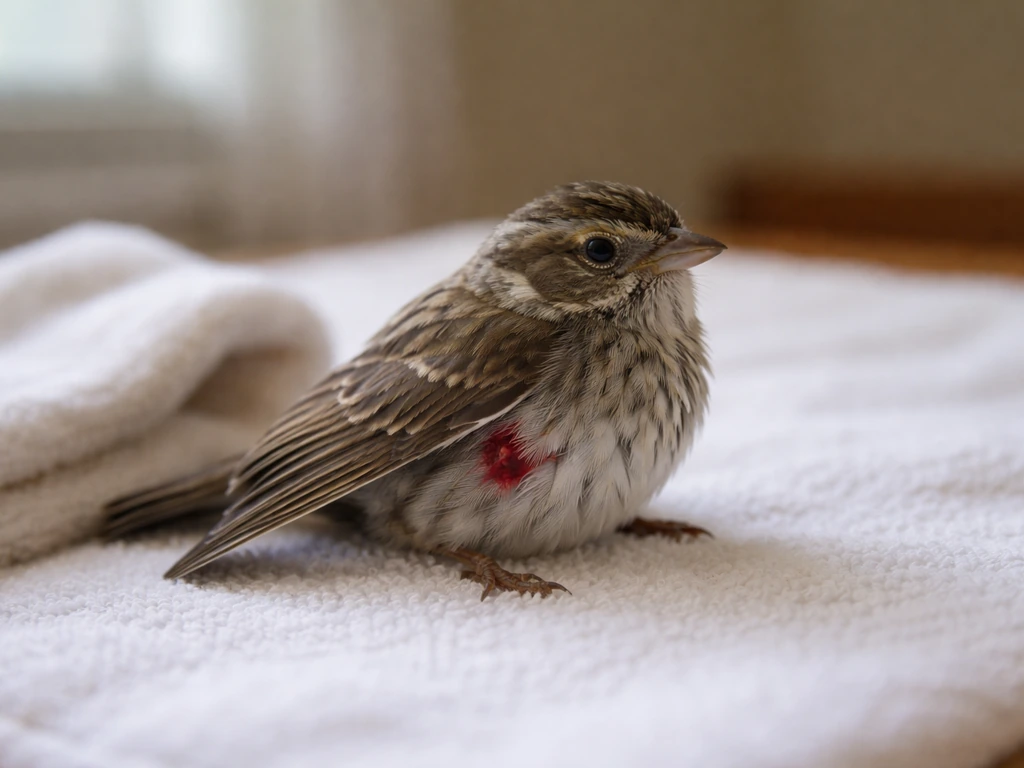
Even if you are planning to reunite the bird with its parents, check it over quickly for any of these signs. If you spot any of them, skip straight to contacting a wildlife rehabilitator or avian vet. Do not wait and watch.
- Bleeding or an open wound anywhere on the body
- A wing drooping at an unnatural angle, or held out to one side
- A leg that looks broken or is being dragged
- The bird is lying on its side and not trying to right itself
- Visible trouble breathing: labored, open-mouth breathing, wheezing, or pumping chest
- Head tilting to one side or in circles (signs of head trauma)
- Eyes closed and unresponsive when you approach
- Extreme lethargy or shivering that does not stop
- Puncture wounds, swelling, or any signs of a cat or dog attack
- Maggots, bubbles under the skin, or any obvious deformity
If a fledgling cannot hop or stand normally, that is also a sign something is wrong, even if it has a full covering of feathers. A healthy fledgling should be mobile. Inability to stand or hop suggests injury or illness and warrants a call to a professional.
How to find help and what to say when you call
In the United States, you are looking for a permitted wildlife rehabilitator. These are licensed professionals with the federal migratory bird rehabilitation permits required to legally care for most wild birds. Your state's fish and wildlife agency website usually has a searchable directory, and sites like the Wildlife Center of Virginia can refer you to someone in your area if you call with your location. In the UK, the RSPCA has a helpline (0300 1234 999) and Help Wildlife maintains a directory of over 700 rescue contacts that you can search by location. In Australia, WIRES (1300 094 737) covers many regions and can direct you to a local group.
When you call, leave a message if no one answers immediately and try the next number on the list. Wildlife rehabilitators are often working in the field and cannot always pick up right away. Have the following information ready so you can describe the situation clearly and quickly.
- Your location (address or nearest intersection, and whether you can transport the bird)
- The species if you know it, or a description (size, coloring, beak shape)
- Whether it is a nestling or fledgling based on what you observed
- How long the bird has been on the ground
- Any visible injuries or concerning behaviors
- Whether a cat, dog, or predator was involved
- What you have done so far (containment, warming, no food or water)
While you wait for a callback or transport, keep the bird in its dark, warm, quiet box. Do not keep checking on it, do not offer food or water, and do not let children or pets near it. The less stimulation it receives, the better. If the rehabilitator cannot be reached and the bird is clearly injured, an avian veterinarian can provide emergency triage and stabilization while you work on finding a licensed rehabilitator for longer-term care.
One final note: if you find the entire nest has fallen with eggs or multiple chicks involved, or if you are dealing with a bird that fell and still cannot fly after some time has passed, those are distinct situations with their own specific guidance worth reading through separately. If the bird nest fell out of a tree and the eggs are broken, treat it as an urgent case and follow the nest-fall guidance to reduce stress and get help fast. The core principle is the same though: stay calm, reduce stress on the bird, and get qualified eyes on the situation as quickly as possible.
FAQ
If I am not sure whether the bird is a nestling or a fledgling, what should I do while deciding?
Yes. If you cannot immediately confirm it is safe, take the quickest steps to remove threats (leash pets, clear traffic, keep people back), then keep the bird contained and in shade until you can determine nestling versus fledgling. The “leave it alone” approach for fledglings only applies after the area is made safe and you have a clear plan to watch for parent activity.
Can I move a fledgling to a safer location if it is in danger right now?
If a fledgling is in the exact middle of a hazard, like a driveway or under a bush where cats can reach it, you can move it a short distance to a safer nearby spot while keeping it low to the ground. Avoid carrying it far, changing its location repeatedly, or relocating it to an area with different threats.
Should I feed or water a bird that fell out of the nest while I wait for help?
Do not give food or water unless a licensed rehabilitator or an avian vet instructs you. Even well-intended feeding can cause choking, aspiration, or incorrect diet. The waiting period you described is for warmth, darkness, and minimal handling, then professional guidance.
What specific warning signs mean I should stop watching and call immediately?
Look for signs like fast breathing, open-mouthed gasping, heavy bleeding, a wing that is hanging or twisted, inability to stand or hop, or persistent loss of coordination. If any of those show up, treat it as urgent and contact a wildlife rehabilitator or avian vet without doing the full parent-activity watch.
What if I think a cat or dog touched the bird, but I did not see any blood?
If you suspect a cat or dog was involved, assume there may be internal damage even when the bird looks fine. Contact a rehabilitator or avian vet right away, because bite wounds can worsen quickly, including within 24 to 48 hours.
How long should I wait to see if parents are caring for the bird before calling for help?
If you see a parent returning and feeding, you still should keep distance and avoid repeated “checks.” The safest window to intervene is only to re-nest a nestling or remove a hazard. If the parents do not return after an hour of quiet observation in a safe area, contact a rehabilitator.
What should I do differently for a nestling that seems cold or not moving normally?
A nestling that is cold, unusually limp, or has visible injury should be stabilized and kept warm and dark while you contact help. If the nest is intact and reachable, you can reassemble it and replace the chick quickly, but only if you can do so without leaving the bird exposed to predators or traffic.
Is it okay to clean the bird or apply ointments if I think it is dirty or scraped?
Do not use household remedies or ointments. Cover loosely with a clean cloth to prevent exposure while in the box, but avoid cleaning the beak or forcing fluids. For suspected dehydration or shock, the correct next step is professional triage, not home treatment.
Do I need gloves, and will handling make the parents reject the chick?
Wear gloves or use a clean cloth if you need to handle the bird, and wash hands immediately after. Even though parent rejection is unlikely from handling, minimizing contact reduces stress and lowers the chance of transferring germs between you and the bird.
What if the whole nest fell and there are multiple chicks or eggs on the ground?
If multiple chicks are on the ground, eggs are involved, or the entire nest is down, treat it as a separate urgent scenario because you may need rapid professional assessment and a coordinated return plan. In the meantime, prioritize safety and reduce exposure to heat, sun, and predators while you arrange help.