
If you've found a bird that is unable to fly, the most important thing you can do right now is contain it gently in a cardboard box lined with a towel, put the box somewhere warm, dark, and quiet, and contact a licensed wildlife rehabilitator or avian vet as soon as possible. Do not try to feed it, give it water, or diagnose the injury yourself. That's the short version. Keep reading and I'll walk you through exactly what to look for, what each scenario likely means, and how to get the bird the help it actually needs.
This Bird Is Unable to Fly: What to Do Next
Marcus Chen
14 May 2026
Do this first: your quick safety check
Before anything else, take a slow breath. A stressed bird and a stressed rescuer is a bad combination. Your first job is safety for both of you, not treatment.
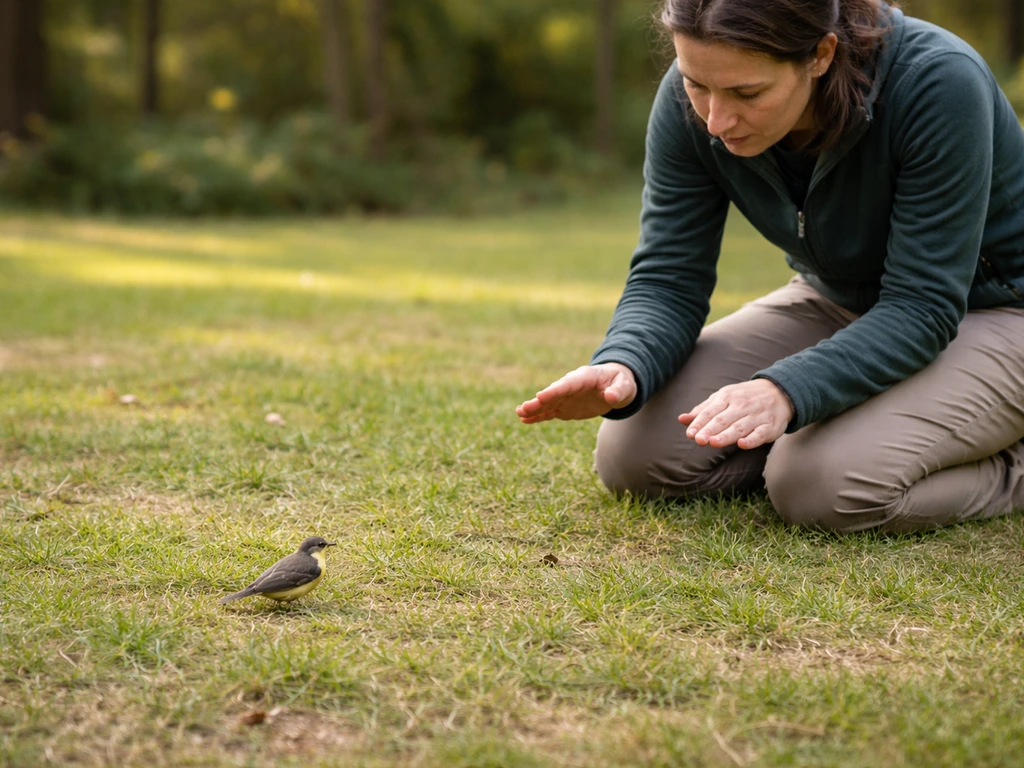
Keep your distance for a moment and just watch. Is the bird flapping, calm, or barely moving? Is it a small songbird or something larger like a hawk, heron, or gull? Larger birds can do real damage with talons and beaks, so approach with extra caution and consider thick gloves if you have them. For smaller birds, gentle handling with bare hands is usually fine as long as you keep a firm but soft grip.
If the bird is trying to move away from you or still attempting to fly, you may need a net or a light towel to catch it safely. Drape the towel over the bird and scoop it up. Avoid grabbing at it repeatedly since each failed attempt adds stress and can worsen shock. Once it's contained, the next goal is getting it into a box quickly.
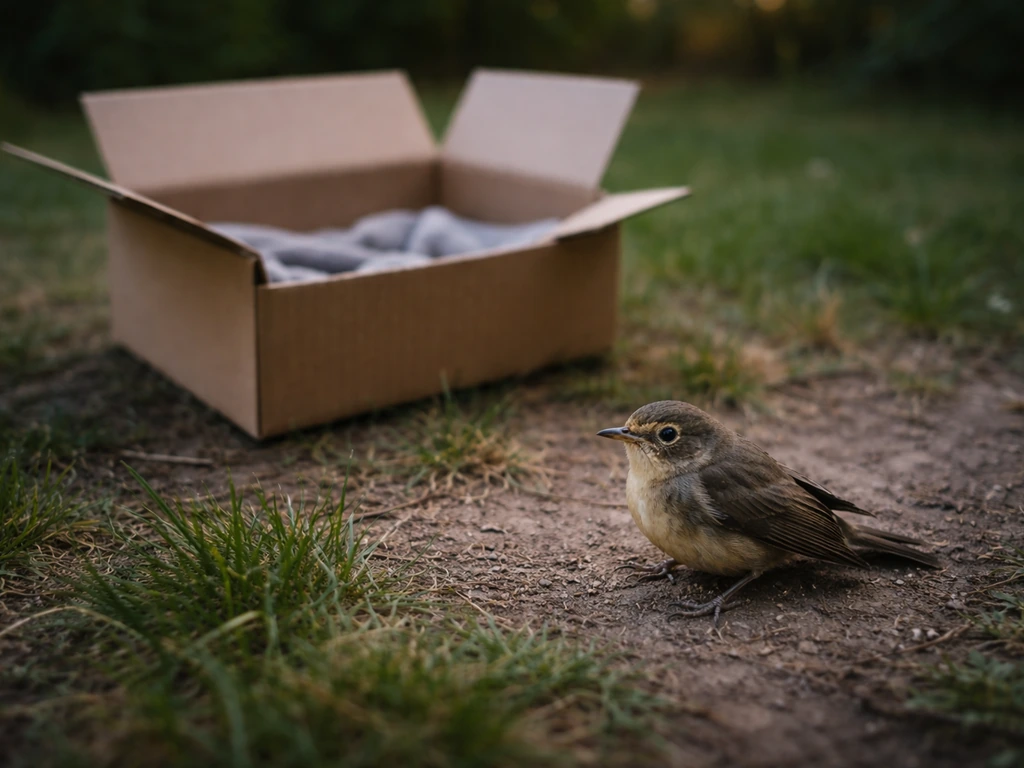
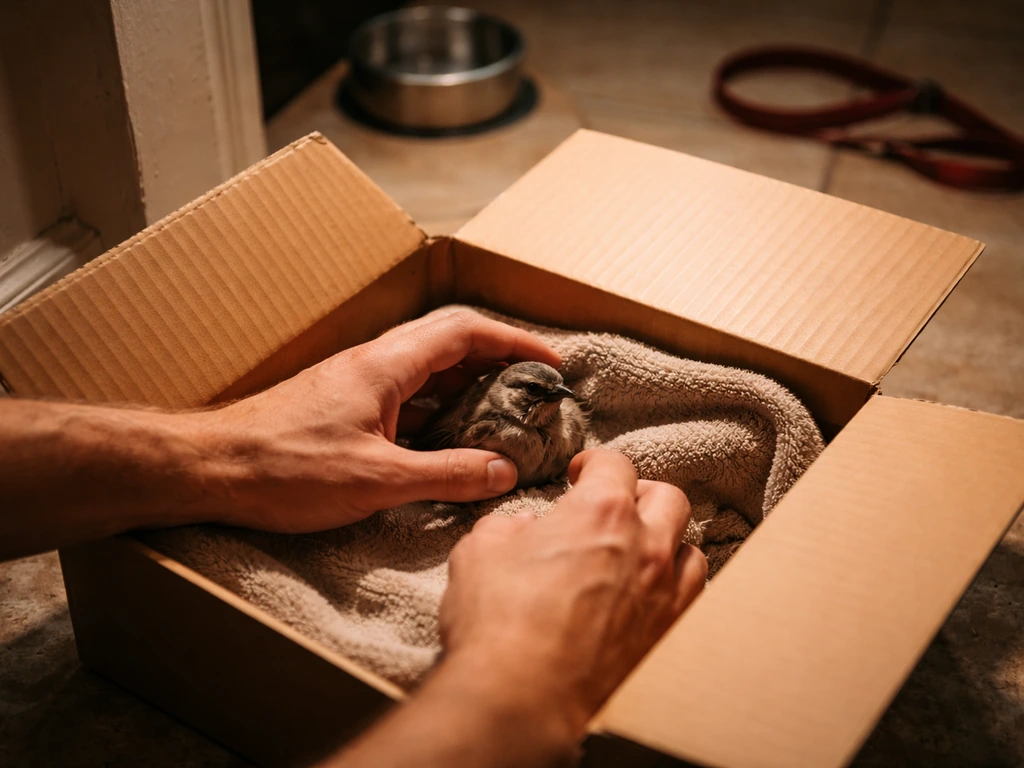
- Grab a cardboard box with a lid (a shoebox works well for smaller birds)
- Punch several small ventilation holes on all sides before placing the bird inside
- Line the bottom with a folded towel or several layers of paper towels
- Place the bird inside and close the lid securely
- Put the box in a warm, quiet room away from children, pets, and noise
- Do not offer food or water at this stage
- Take a photo or short video if you can do so without extra handling — a wildlife rehabilitator may ask you to describe what you saw
That's your first aid. It sounds simple because it is. Warmth, darkness, and quiet are genuinely the best things you can do while you figure out your next move. Wrong food, well-intentioned water, and excessive handling cause more harm than most people realize.
Why can't the bird fly? Common causes to consider
There are several reasons a bird ends up grounded, and knowing the most likely cause helps you ask better questions when you call for help. Here are the situations you're most likely dealing with:
Wing injury
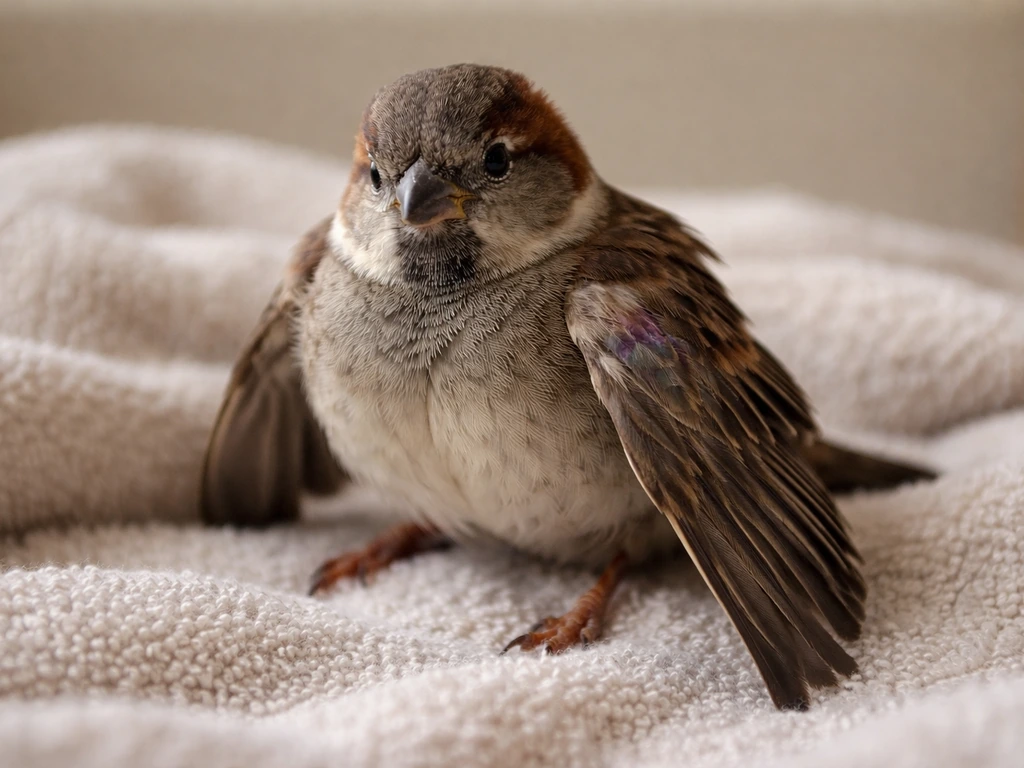
This is the most obvious reason. A broken or badly bruised wing means the bird physically cannot generate the lift it needs. You might see one wing drooping lower than the other, or the bird may hold a wing at a strange angle. It may not be able to fold one wing against its body the way a healthy bird does. Wing injuries are serious and almost always require professional care.
Leg injury
An injured leg won't stop a bird from flying directly, but it can prevent it from launching properly or landing safely, so it ends up stuck on the ground. Look for a leg sticking out at an unusual angle, swelling, or the bird refusing to put weight on one foot.
Window or vehicle collision (stunning and trauma)
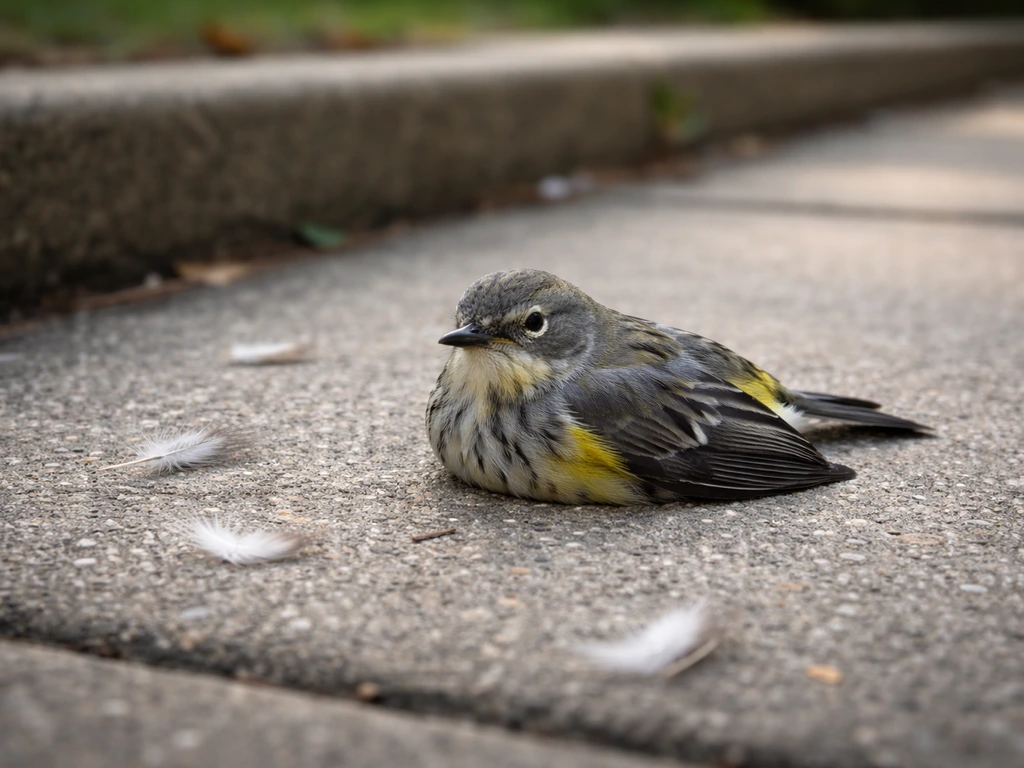
Window strikes are extremely common. A bird hits the glass, falls to the ground, and sits there looking dazed or barely responsive. Internally, the impact can be similar to a car crash for a human, so even a bird that looks physically fine after a window hit may have a concussion or internal bleeding. Don't be fooled by the lack of visible wounds.
Cat or dog attack
Even a brief contact with a cat's claws or teeth is a genuine emergency. Cats carry bacteria, particularly Pasteurella multocida, that can kill a bird within 24 to 48 hours even when wounds look minor or aren't visible at all. If a cat was involved, do not wait to see if the bird improves. Get it to a wildlife rehabilitator or avian vet the same day.
Shock
A bird in shock may be grounded not because of a single obvious injury but because its system is overwhelmed. Signs include extreme stillness, puffed-up feathers, eyes half-closed, rapid or shallow breathing, and not reacting much to your presence. Warmth and quiet are genuinely helpful here while you arrange transport.
It's a fledgling, not an injured bird
This one surprises a lot of people. Many grounded birds aren't injured at all. They're fledglings, which are young birds that have left the nest but haven't mastered flying yet. They're supposed to be on the ground. They're often hopping around, have some feathers but look a bit scrappy, and may already be receiving food from a parent nearby. If the bird looks alert, can hop or walk, and doesn't have obvious wounds, you may be looking at a fledgling doing exactly what it should be doing.
Entanglement
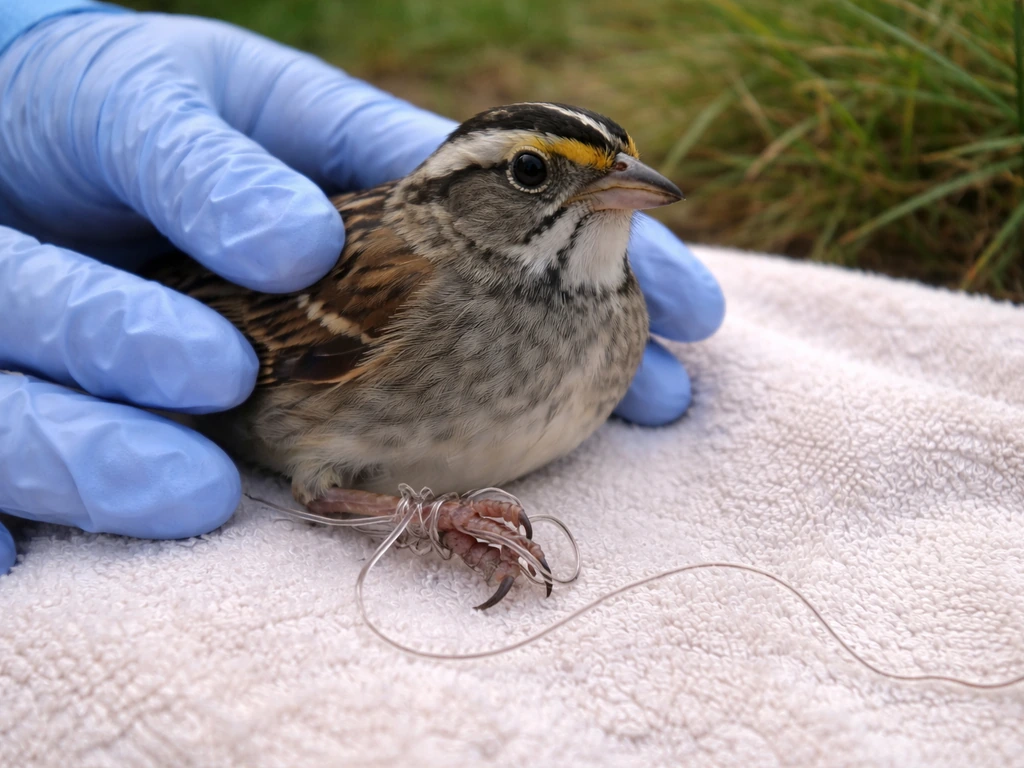
Fishing line, wire, string, or netting can trap a bird completely. It may look injured when really it's just stuck. Don't pull at fishing line or try to remove hooks yourself, especially if the hook is embedded. That job belongs to a wildlife rehabilitator or vet.
What you can see: assessing the injury
You don't need to touch the bird to do a basic visual assessment. In fact, minimal handling is better. When you look at the bird in or near the box, here's what to check:
| What to look for | What it might mean | Urgency level |
|---|---|---|
| One wing drooping or held asymmetrically | Broken or dislocated wing | High — needs professional care |
| Leg sticking out at an odd angle or not used at all | Fractured or dislocated leg | High — needs professional care |
| Visible blood or open wound | Laceration, puncture, or impact injury | High — seek help today |
| Bird dazed, barely moving, eyes half-closed | Shock or concussion (common after window strike) | High — monitor closely, arrange transport |
| Puffed feathers, hunched posture, slow breathing | Shock, hypothermia, or internal injury | High — warmth and call for help |
| Wings held normally, hops or walks fine, alert | Likely fledgling; possibly minor exhaustion | Lower — observe from a distance first |
| Wrapped in string, line, or netting | Entanglement | High if hooks involved — do not remove yourself |
The honest truth is that birds are good at hiding how badly they're hurt. By the time a wild bird looks obviously unwell, things have usually been off for a while. If you're seeing any of the high-urgency signs above, or if you just have a gut feeling something is seriously wrong, trust that instinct and get professional help rather than waiting to see if the bird improves on its own.
Home care vs. calling the pros: how to decide
Let me be direct about this: for a genuinely injured wild bird, home care is almost never the right long-term answer. It's not a criticism of your intentions, it's just that wild birds need specialized treatment, and feeding the wrong thing can injure or kill them. What you can do at home is stabilize the bird while you arrange professional help. That's the lane you want to stay in.
Call a wildlife rehabilitator or avian vet immediately if you see any of the following:
- Visible blood, open wounds, or exposed tissue
- A wing or leg held at an unnatural angle
- A cat or dog was definitely involved, even briefly
- The bird is completely unresponsive or barely reacting to touch
- Rapid, labored, or audible breathing
- The bird has not improved after one hour of quiet and warmth following a window strike
- You found a nestling (a very young bird with few or no feathers) out of the nest
The situations where watchful waiting makes sense are limited. A fledgling that is alert and uninjured is the main one. A window-collision bird with no visible injuries can be given about an hour in a dark, quiet box to see if it recovers enough to fly away on its own. Check on it by opening the box every 15 minutes or so. If it's still not flying after an hour, treat it as injured and make that call.
To find a wildlife rehabilitator near you, search the National Wildlife Rehabilitators Association directory, your state's fish and wildlife agency website, or simply call a local animal shelter or humane society, they usually keep a list of contacts. Most rehabilitators can't come to you; you'll typically need to bring the bird to them. If you're in Washington State, after-hours wildlife emergencies can be reported to WILDCOMM at 360-902-2936, option 1. Note that rehabilitators sometimes return calls when they're able rather than immediately, so leave a clear message with your location and a description of the bird.
Specific scenarios and what to do in each
Window collision
The bird hit your window and is now on the ground beneath it. Place it in a lined shoebox or small cardboard box with ventilation holes, close the lid, and put it somewhere quiet and warm, away from pets and foot traffic. Don't offer food or water.
Leave it alone for up to an hour and check every 15 minutes by gently opening the box outside. If it flies away, great. If it's still there after an hour, or if it showed signs of injury right after the hit (holding wings unevenly, one leg out), contact a wildlife rescue group.
At night, if no rescue is available, keep the bird in the dark box overnight in a safe location and call for guidance first thing in the morning.
Cat or dog attack
This is the scenario where speed matters most. Even if the bird looks fine, cat saliva bacteria can be fatal without antibiotics within 24 to 48 hours. Contain the bird gently, get it to a wildlife rehabilitator or vet today, and tell them a cat was involved. Don't wait until tomorrow. Keep cats and dogs well away from where you found the bird while you make arrangements.
Entangled or grounded bird
If the bird is tangled in fishing line, wire, or netting, your goal is to gently contain the bird (towel over it, then into a box) without making the entanglement worse. Do not try to cut or remove fishing line if there is any chance a hook is attached. Once the bird is safely contained, call a wildlife rehabilitator or vet. If the entanglement looks like simple string with no hooks and you can clearly see how to remove it without pulling, you can try carefully, but when in doubt, leave it for someone with more experience.
Nestlings and fledglings
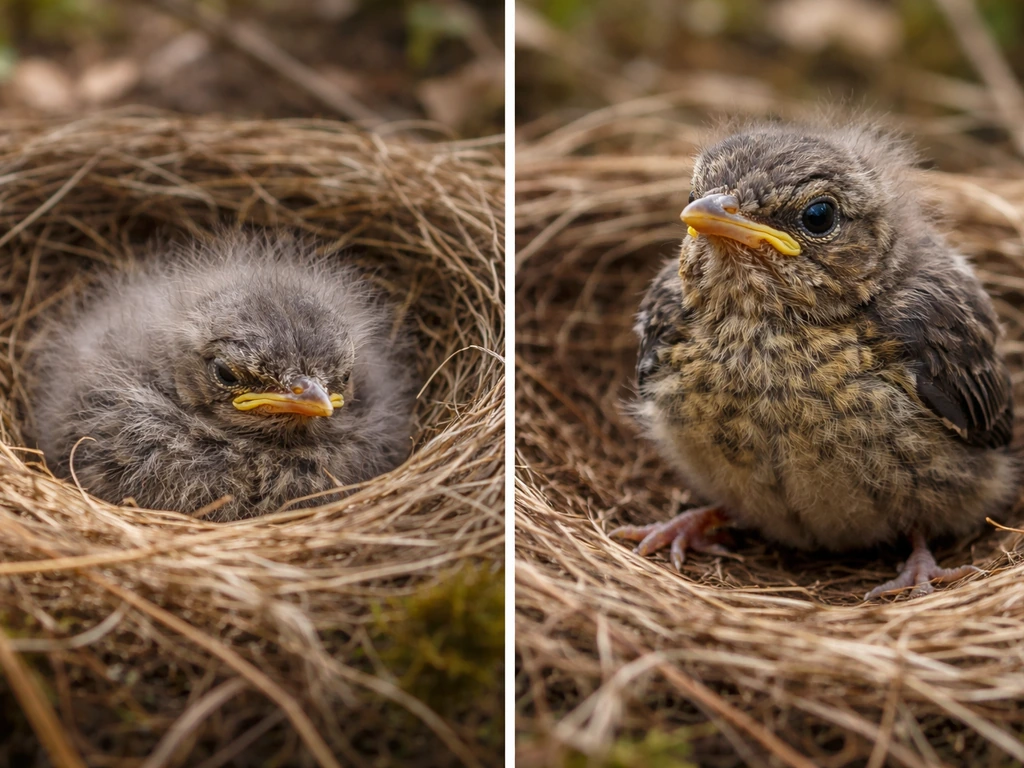
First, figure out which you're dealing with. A nestling is very young, mostly naked or covered in fine down, with eyes that may still be closed. It genuinely cannot survive outside the nest. If you can safely locate and reach the nest, you can place it back in, tucking its feet gently underneath its body. The myth that parent birds abandon young touched by humans is not true. If you can't find the nest or can't reach it, this bird needs a rehabilitator.
A fledgling looks more like a small bird with patchy feathers, can usually hop around, and may already be on the ground intentionally as part of normal development. The best thing you can do is leave it alone, move cats and dogs inside or on a leash, keep children and lawn equipment away, and let the parents continue feeding it. If the fledgling is in immediate danger (on a busy road, directly in a pet's path), you can move it a short distance to a nearby bush or low branch. Contacting a local wildlife rehabilitator to confirm the situation is always a reasonable call if you're unsure.
Getting the bird ready for transport
Once you've made contact with a rehabilitator or vet and you know you're bringing the bird in, here's how to set things up properly for the journey.
The transport box
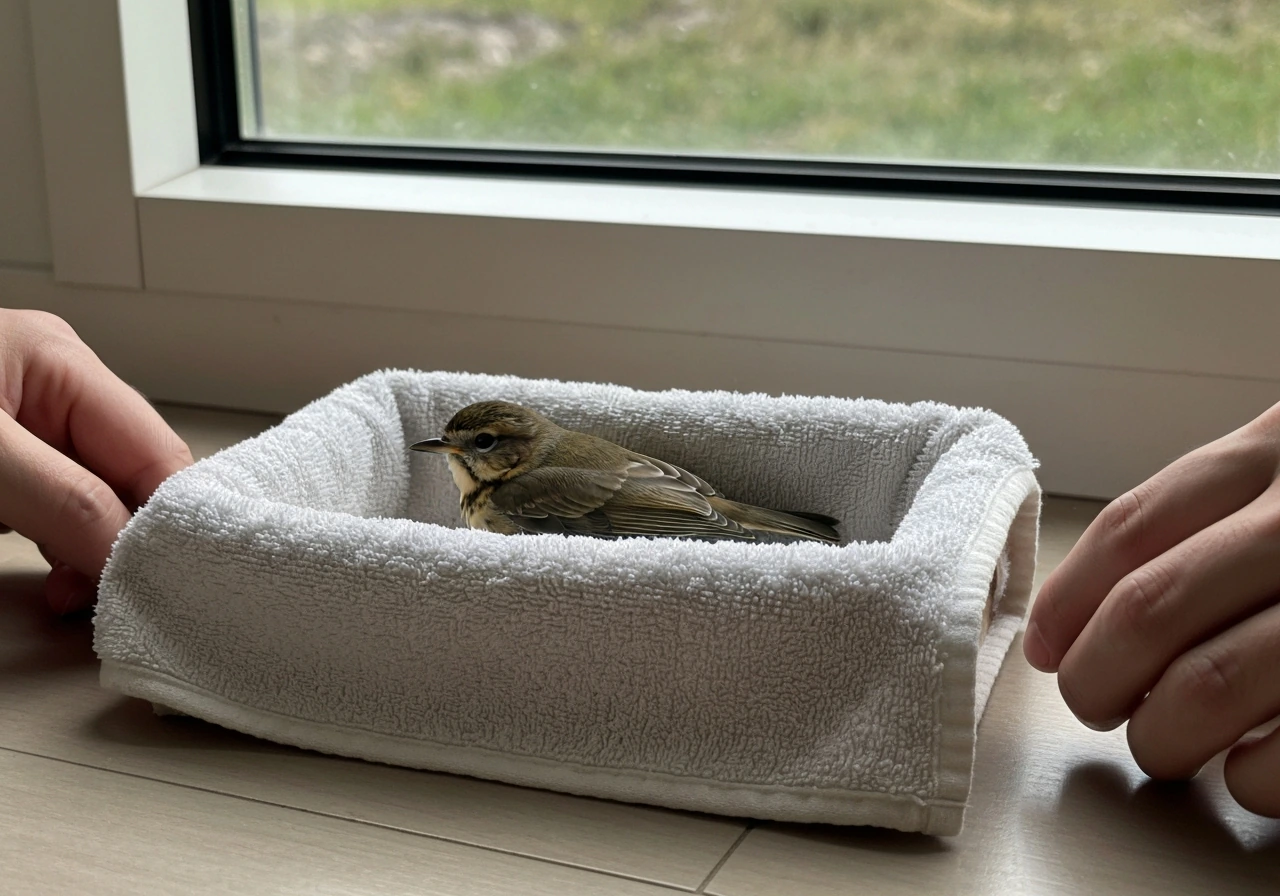
A cardboard box with a secure lid is ideal. Punch ventilation holes on all sides, not just the top. Line the bottom with a folded towel so the bird has something to grip and a bit of cushioning. The box should be just large enough for the bird to sit comfortably without being able to thrash around too much. Avoid wire cages for transport since an injured bird can hurt itself more trying to climb or push against the bars.
Warmth
If the bird is cold, you can add gentle warmth. Place a heating pad set on its lowest setting on a flat surface, drape a towel over it, and set the box on top so only part of the box is over the heat source. This lets the bird move toward or away from the warmth as needed. Alternatively, wrap a warm (not hot) water bottle in a towel and place it beside the bird in the box, not directly under it. The bird must always be able to move away from the heat source.
During the drive
Keep the car as quiet as possible. Turn the radio off or keep it very low. Avoid sudden braking or sharp turns. Don't open the box during transport or let other people handle it. The goal is minimal additional stress on an animal that's already overwhelmed.
What to tell the rehabilitator or vet
When you arrive or call, be ready to share: where you found the bird (exact location or address), what you think happened (window strike, cat attack, just found it on the ground), how long ago you found it, what it looked like when you found it and any changes since, and whether you gave it any food or water. Photos or a short video taken at the scene are genuinely useful and can help the team assess the bird before you even arrive.
You've done the hard part by stopping to help. Getting the bird to the right hands is what makes the difference in whether it survives. Keep things calm, keep things simple, and don't be afraid to call a professional and say you're not sure what you're looking at. If you are unsure what to do, RSPCA guidance recommends taking photos or videos and contacting a wildlife rehabilitator for advice rather than handling the bird more than necessary say you're not sure what you're looking at. That's exactly what they're there for.
FAQ
Should I put the bird outside so it can “fly off” if it recovers quickly?
No. Until a wildlife rehabilitator advises otherwise, keep it warm, dark, and quiet in a box. Outside conditions (light, noise, predators, and temperature swings) can worsen shock or let an injured bird re-injure itself.
What if the bird seems alert and doesn’t look hurt, but it’s still unable to fly?
That can happen with concussions from window strikes or early shock. If it is not flying normally within about an hour after a window collision, treat it as injured and contact a rehabilitator, even if there are no visible wounds.
Can I offer bird seed, bread, or mealworms just to “help it” while I wait?
Avoid feeding wild birds. Food type and portion are species-specific, and the wrong diet can cause digestive injury or aspiration. Stabilize with warmth and containment, then let a rehabilitator determine the correct feeding plan.
Is giving water safe if the bird is panting or looks thirsty?
Skip water. Many grounded birds are injured or in shock and may aspirate fluids. The safer approach is to keep the bird calm and get professional guidance quickly.
How warm should the box be, and how can I tell if it’s too hot?
Use gentle warmth on a low setting, with only part of the box warmed so the bird can move away. If the bird is overheating, it may look overly lethargic or feel hot to the touch through the towel, in which case remove heat immediately and re-warm gradually.
Do I need to wear gloves for a small bird?
For most small birds, bare hands can be acceptable with a firm but soft grip, but gloves are a good option if you’re dealing with a larger species, a very defensive bird, or if you have cuts on your hands. The priority is minimizing handling time and stress.
What if the bird is tangled but I’m sure there’s no hook or line embedded?
If it is clearly simple string with no hook and you can remove it without pulling on the bird or tightening the knot, you may try carefully. If there is any uncertainty, especially with wire, netting, or visible hooks, contain it and let a rehabilitator handle it.
How do I tell a nestling from a fledgling without guessing wrong?
Nestlings are extremely young, mostly naked or with fine down, and cannot survive outside the nest. Fledglings are more feathered and can usually hop. If you cannot confidently identify it or locate the nest, call a rehabilitator rather than attempting to place it.
If a fledgling looks injured, should I assume it’s a fledgling and leave it alone?
Not always. If it is bleeding, dragging a wing, unable to stand or move, or shows clear shock signs, treat it as an injured bird and contact help. “Grounded” in development does not mean it should be immobile.
Is it safe to keep cats and dogs away after I put the bird in a box?
It’s still essential. Many attacks occur quickly through gaps or if the pet gets curious. Keep pets out of the room entirely, and if you cannot, secure them on leash in another area while you arrange transport.
Do I need to provide ventilation holes if the bird is already calm?
Yes. Use ventilation holes on all sides of the transport box and keep the lid closed to prevent escapes. Ventilation matters even if the bird seems quiet, because stress and overheating can develop in enclosed boxes.
What should I do if I cannot find a wildlife rehabilitator right away?
Continue to stabilize the bird and call again if you do not reach someone. If your area has an after-hours line, use it for guidance. In the meantime, do not feed, do not administer medications, and keep handling to a minimum.
Should I bring the bird to the vet even if it might be a fledgling?
If it is truly alert, uninjured, and behaving like a fledgling, you may not need immediate transport. If you are unsure, it is reasonable to contact a rehabilitator to confirm what it is, because misidentification leads to either needless disruption or delayed treatment.
Can I keep the bird overnight if it’s late and no one is available?
Yes only as a short-term bridge. Keep it in a dark, safe box away from people and pets overnight, and contact guidance first thing in the morning. If the bird is a result of a cat attack or other high-risk cause, do not wait overnight.
Next Articles
Injured Bird Can’t Fly: Step-by-Step Rescue and First Aid
Step-by-step help for an injured bird that can’t fly: assess injuries, give safe first aid, and know when to call a vet
Bird Can’t Fly: What to Do Right Now and Next Steps
Step-by-step help for a bird that can’t fly: assess safely, stabilize common injuries, and get it to rescue fast.
Found a Bird That Can’t Fly: What To Do Now
Immediate steps to help a grounded bird safely, spot likely causes, warm and contain it, and contact vets or rehab.