
If you've found an injured bird that can't fly, do this right now: gently place it in a small cardboard box lined with a paper towel, put a few air holes in the lid, close it, and set the box somewhere warm, dark, and quiet. blank" rel="noopener noreferrer">Don't offer food or water. Then call a licensed wildlife rehabilitator or avian vet. That's the core of it. The next 30 minutes are about keeping the bird calm and stable, not fixing it yourself, and this guide will walk you through exactly how to do that.
Injured Bird Can’t Fly: Step-by-Step Rescue and First Aid
Marcus Chen
4 May 2026
Why the bird can't fly: injury, shock, or just a fledgling?
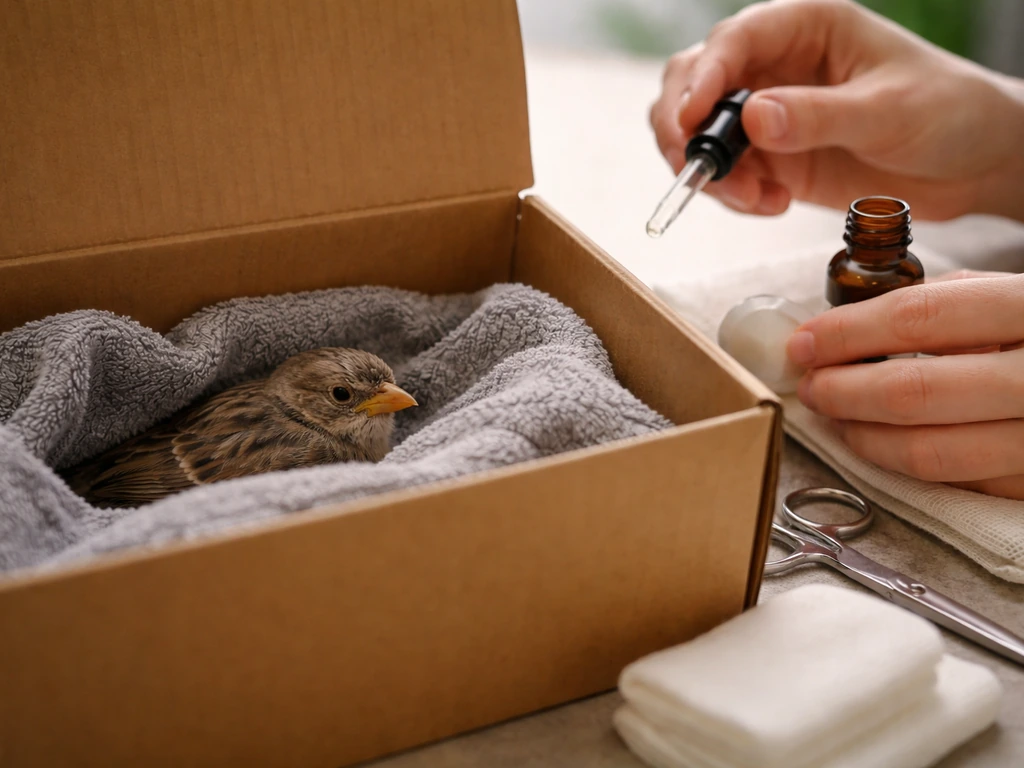
Before you do anything else, it helps to quickly figure out what you're actually dealing with. Not every bird on the ground is injured. There are three main possibilities: it's hurt, it's in shock, or it's a fledgling that's supposed to be on the ground.
It might be a fledgling, not an injured bird
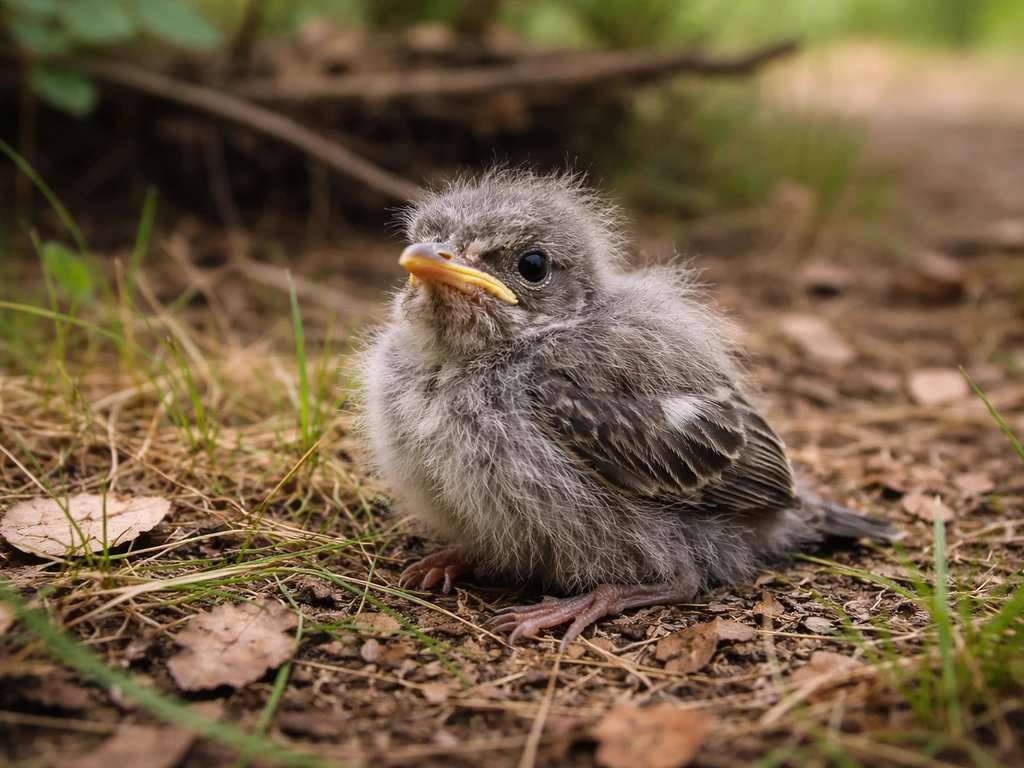
Fledglings are young birds that have left the nest but haven't mastered flying yet. They're supposed to be on the ground. They usually have a mix of fluffy down and adult feathers, short tails, and they hop around looking a bit awkward. If the bird you've found looks like this and has no visible wounds, it may not need rescuing at all.
If it looks like a fledgling, that can explain why it cannot fly yet, even though it may not be badly hurt fledgling that's supposed to be on the ground. The parents are almost certainly nearby and still feeding it. The best thing you can do in that case is leave it alone and keep pets and children away from the area.
It might be in shock
Window collisions are one of the most common reasons an otherwise healthy adult bird ends up grounded and unable to fly. The bird hit glass at speed, stunned itself, and is now sitting dazed, feathers puffed up, eyes possibly half-closed. This is shock, and it can look identical to serious injury from the outside. Some birds recover from window strikes within an hour or two on their own, but internal injuries from the impact may not show up visibly at all, and they can worsen quickly. Don't assume a window-collision bird is fine just because it looks uninjured.
It might be genuinely injured
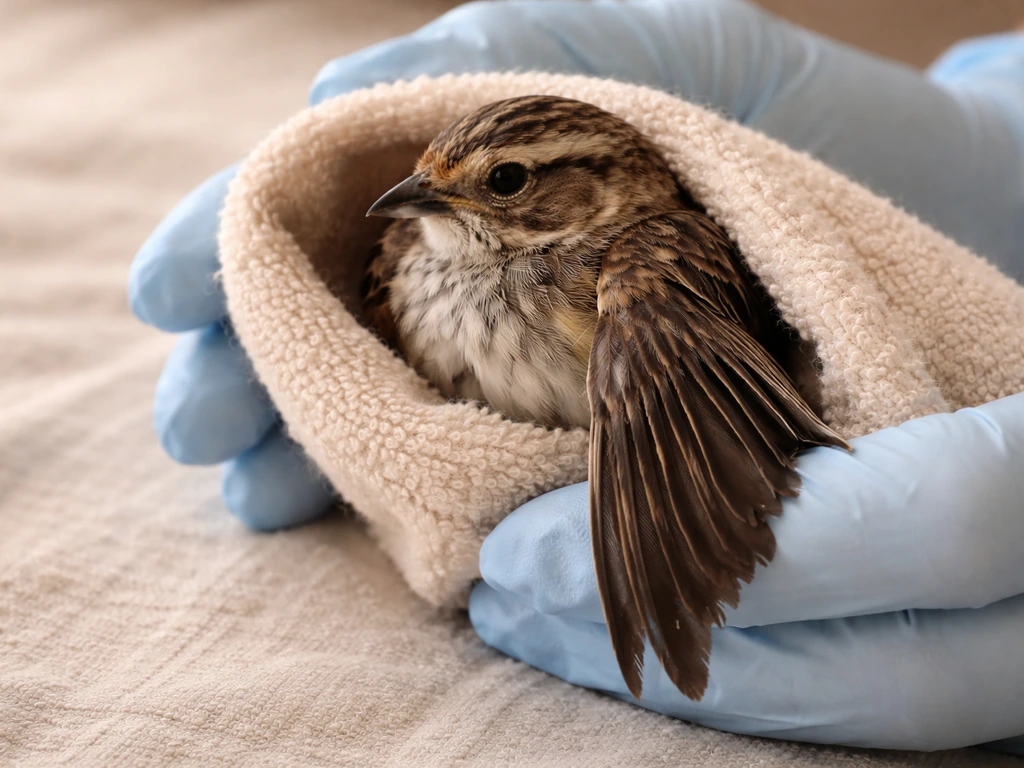
A bird that was caught by a cat or dog, hit by a car, or struck by something is likely injured. Signs that point to real injury include a drooping or oddly angled wing, an inability to stand, obvious wounds, bleeding, labored breathing, or the fact that it let you walk right up to it and pick it up without any struggle. Wild birds don't normally let humans get that close, if one does, something is seriously wrong.
Quick safety steps first, for you and the bird
Before you touch the bird, a few things to keep in mind. If the bird can't fly what to do next is to keep it warm, dark, and calm, then call a licensed wildlife rehabilitator or avian vet won't fly. Even small birds can scratch or peck hard enough to break skin, and wild birds can carry parasites. Use a light towel, cloth, or even a folded piece of clothing to pick the bird up, never grab it with bare hands if you can help it. Wear gloves if you have them nearby.
If there are cats, dogs, or kids nearby, move them away from the scene first. A stressed bird that gets startled mid-handling can injure itself further. Move slowly and speak quietly. Avoid sudden movements or loud noises near the bird.
For raptors (hawks, owls, eagles), don't attempt to pick them up bare-handed under any circumstances. Their talons can cause serious injury. Use thick gloves or a heavy jacket, or contain them in a large box by guiding them gently, and call a wildlife rehabilitator immediately.
Immediate first aid: warmth, dark, and quiet
Once the bird is contained, your job is stabilization, not treatment. Here's what that looks like in practice.
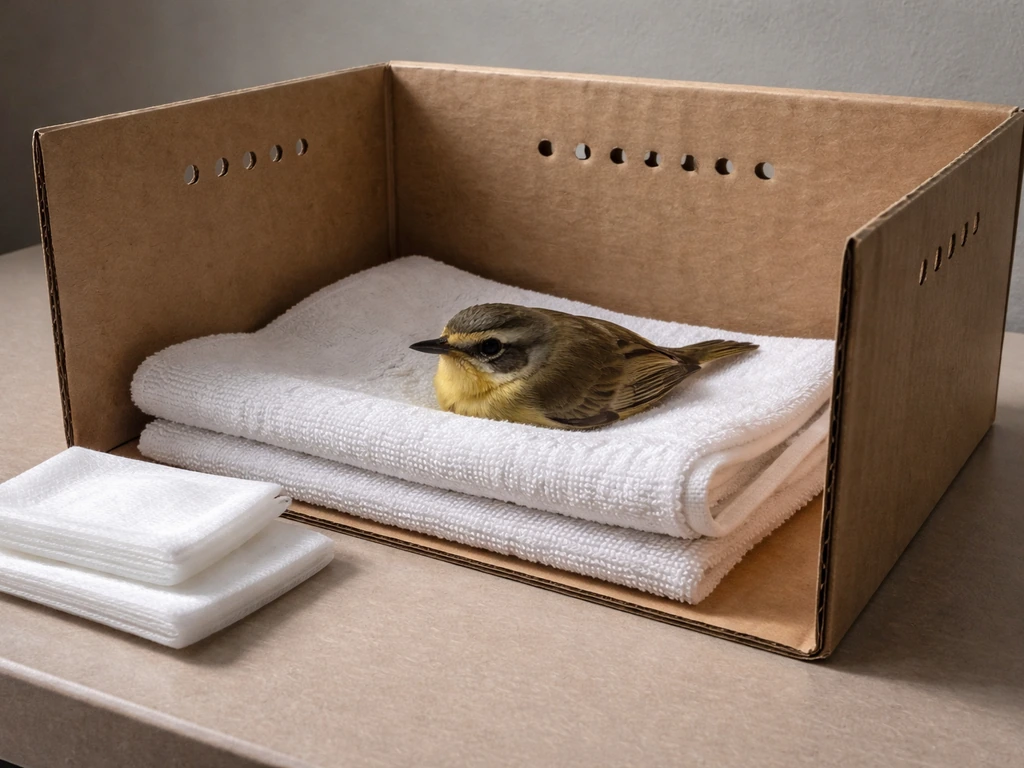
- Find a cardboard box that's just slightly bigger than the bird. Too much space lets the bird thrash around and injure itself further.
- Line the bottom with a paper towel or a piece of clean, unfrayed cloth (no loose threads that can tangle around feet or toes).
- Poke several small air holes in the lid and sides.
- Place the bird gently inside, covering it with the cloth if it's struggling.
- Close the lid and put the box somewhere warm, dark, and quiet — away from drafts, direct sunlight, noise, and pets.
- If the room is cool, you can place the box on top of a heating pad set to its lowest setting, but only under half the box so the bird can move away from the heat if needed.
- Do not feed the bird. Do not offer water. Do not open the box repeatedly to check on it.
The dark, enclosed space calms the bird's nervous system. Darkness reduces visual stimulation, which lowers stress hormones. A stressed bird burns through its energy reserves fast, and that alone can kill it before any injury does. The box is genuinely the most helpful thing you can do right now.
Avoid wire cages or open containers. A bird in a wire cage can see everything happening around it, which keeps it in a constant panic. A closed box with air holes is much better.
How to check for common injuries
You don't need to do a full examination, leave that to the professionals. But a quick look while you're containing the bird can help you give accurate information when you call for help. Handle the bird as little as possible during this check.
Wings
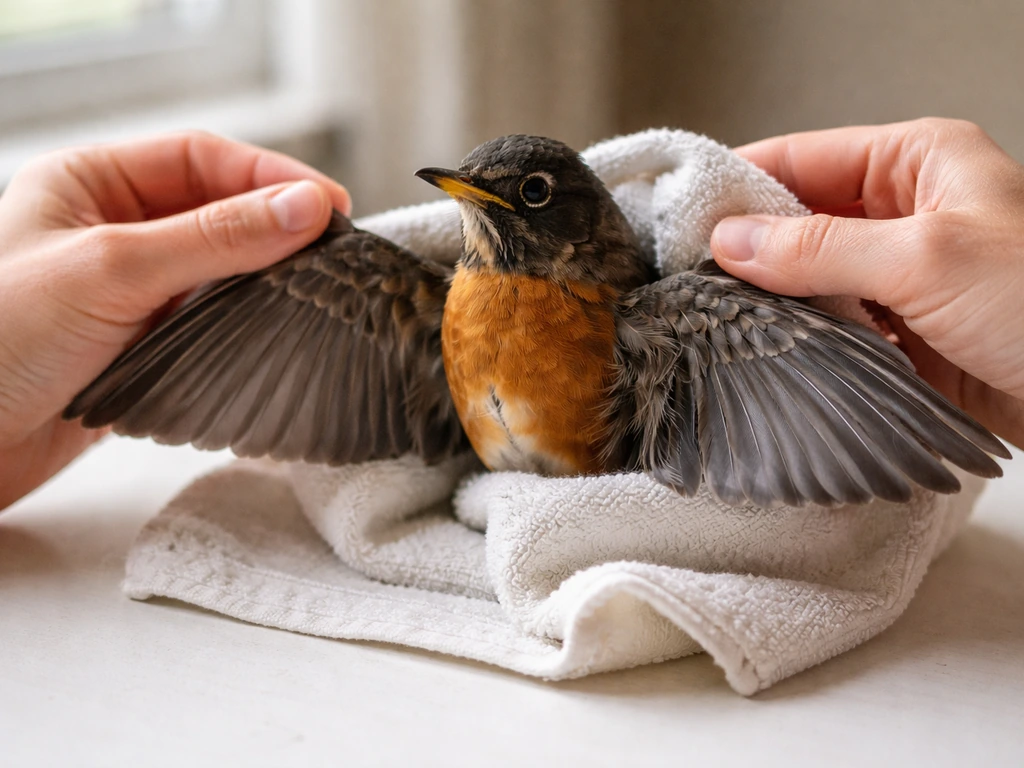
Look at both wings while the bird is in your hands or in the towel. A broken wing often droops lower than the other, hangs at an odd angle, or the bird holds it out away from its body. You might see a visible wound or bone. Don't try to splint or wrap the wing yourself, a wrap that's too tight can cut off blood supply to the limb and cause permanent damage.
Legs and feet
A bird with a broken or injured leg will often be unable to stand, or will hold one leg up off the ground and not put weight on it. Check for swelling, an unnatural angle, or any wound. Again, don't try to splint it. Just note what you see so you can describe it when you call.
Beak
Beak injuries are less common but can happen from collisions or pet interactions. A misaligned beak, visible crack, or bleeding from around the beak are all things to flag. A bird with a damaged beak can't feed itself and needs professional attention quickly.
Bleeding
If you see active bleeding, apply gentle direct pressure with a clean cloth or gauze for a few minutes. Don't use a lot of force, bird bones are lightweight and fragile. Once the bleeding has slowed or stopped, leave it alone. Don't remove any object that may be embedded in the bird (like a thorn or splinter), stabilize it so it can't move, and let the vet handle it.
General signs of trauma
Puffed-up feathers, closed or half-closed eyes, labored or open-mouth breathing, a head tilted to one side, seizure-like trembling, or blood around the nostrils or eyes are all serious signs. These birds need professional help as soon as possible.
What NOT to do (this part really matters)
A lot of well-meaning people accidentally make things worse. Here's what to avoid:
- Don't give the bird food or water. This is the big one. You might cause the bird to aspirate liquid into its lungs, which can be fatal. Food and water stuck in feathers can also cause hypothermia. Leave feeding to the professionals.
- Don't try to make it fly by tossing it into the air or forcing it off a surface. This can worsen a fracture or injury dramatically.
- Don't keep it in a wire cage or open box where it can see its surroundings and keep panicking.
- Don't handle it more than necessary. Every time you pick it up, you stress it. Minimize contact.
- Don't assume it's fine because it looks calm. Shock and internal injuries are invisible. A quiet bird isn't always a recovering bird.
- Don't leave it outside unattended, even for a few minutes. Cats, other animals, or even crows can find it very quickly.
- Don't try to bandage a wing or leg yourself unless you have specific training. A too-tight bandage blocks blood flow and can cause the limb to die.
- Don't keep it as a pet or delay calling for help because you're not sure. In many places it's also illegal to keep native wild birds without a permit.
When to get help right now: red flags and who to call
Some situations are time-sensitive. If you see any of the following, treat this as an emergency and make the call immediately rather than waiting to see if the bird improves on its own:
- Visible broken bone or bone protruding through skin
- Heavy or ongoing bleeding that isn't slowing down
- Open-mouth breathing or gasping
- Seizures or trembling
- Head tilt or inability to hold the head upright
- The bird was in a cat's mouth (cat saliva carries bacteria that cause fatal infection in birds within hours, even without visible wounds)
- The bird was hit by a car
- No improvement after 1 to 2 hours for a suspected window-strike bird
Avian vet or wildlife rehabilitator: which one do you call?
Both are valid options and the right choice often depends on what's available near you and how quickly you need help. Here's how to think about it:
| Option | Best for | Cost | How to find one |
|---|---|---|---|
| Wildlife rehabilitator | Wild birds of all species, especially songbirds, raptors, waterfowl | Usually free or donation-based | Search your state or country's wildlife agency website, or call your local animal control |
| Avian vet | Urgent care when no rehabilitator is reachable, or for pet birds that are also injured | Standard vet fees apply | Search 'avian vet near me' or contact the Association of Avian Veterinarians (AAV) |
In most cases, a licensed wildlife rehabilitator is the right first call for a wild bird. They're trained specifically for this, they have the permits to legally care for native species, and their services are typically free. If you can't reach one quickly and the bird is in bad shape, an avian vet can provide emergency stabilization. A general vet can help in a pinch, but their experience with birds varies widely, ask when you call if they have bird experience.
How to transport the bird and what to say when you call
When you call a rehabilitator or vet, have this information ready so they can advise you quickly:
- What type of bird it is (or your best description: size, color, beak shape)
- Where you found it (backyard, roadside, near a window, etc.)
- What you think happened (window strike, cat attack, unknown)
- What you can see in terms of injuries (drooping wing, bleeding, breathing problems)
- How long ago you found it
- Your location and how far you can travel
For transport, keep the bird in the same closed box you've been using. Tufts advises keeping the bird in a small, ventilated box with air holes during transport and keeping the car quiet. Don't transfer it to another container unnecessarily. Place the box on the floor of your car rather than on a seat where it might slide. Keep the car quiet, avoid blasting the heat or air conditioning directly at the box, and drive calmly. The less the bird is jostled and stimulated during transport, the better.
If the rehabilitator or vet gives you specific instructions over the phone, follow those over anything you've read here. They know the situation in your area, they know what species you might be dealing with, and they can give you real-time guidance. Your job is to get the bird there safely, and you're already doing that by keeping it warm, dark, and calm.
Finding an injured bird is stressful, but the steps really are simple: contain, stabilize, call, transport. You don't need to fix it, you just need to give it the best possible chance of getting to someone who can. That's more than enough.
FAQ
Should I give the injured bird can't fly water or food to help it recover?
No. Even if it seems thirsty or hungry, do not give water, milk, or food. Many birds aspirate fluids, and forcing feeding can worsen shock or mask serious internal injuries. Keep the bird warm, dark, and still, then call a licensed wildlife rehabilitator or avian vet for species-specific instructions.
What if I think the injured bird can't fly is a fledgling, should I still rescue it?
It depends on whether it looks like a true fledgling. If it has a mix of down and adult feathers, short tail, and no visible injuries, it may be normal on the ground and the parents may be nearby, so leave it alone and block pets and people from the area. If there is bleeding, an inability to stand, a drooping or angled wing, or it lets you pick it up easily, treat it as injured and call for help.
Is a birdcage or open container okay for an injured bird can't fly while I wait?
Do not put it in a wire cage, an uncovered pet carrier, or anywhere it can see and panic. Use the same small closed cardboard box lined with paper towel, with air holes in the lid. Darkness helps it calm down, which reduces energy burn while you arrange professional care.
Can I examine the injured bird can't fly more closely to figure out the damage?
Yes, but handle only to the level needed to stabilize and note injuries. A quick look at both wings and legs for obvious misalignment or swelling, then stop. Avoid prolonged touching, and never try to “exercise” the bird or test its ability to fly.
What should I do if the injured bird can't fly has a broken wing or leg?
Do not splint, wrap a wing, or attempt to set a leg. Improvised wraps can be too tight, cut off circulation, and create permanent damage. Instead, stabilize the bird in the box, avoid further stress, and describe what you see to the rehabilitator or vet.
How should I safely handle an injured bird can't fly, and what changes for raptors?
Use light fabric or a towel as a barrier, and consider gloves if you have them. If it is a raptor, do not attempt bare-handed pickup under any circumstances, use thick gloves or a heavy jacket, and contain it in a large box by guiding it. Wild birds can scratch or peck, and raptors can cause severe trauma.
What’s the correct way to manage bleeding on an injured bird can't fly?
If there is active bleeding, apply gentle direct pressure with clean gauze or a clean cloth for a few minutes, then leave it alone once bleeding slows. Do not remove embedded objects such as a thorn or splinter, just stabilize the bird so it cannot move and let the vet handle removal.
If the injured bird can't fly is breathing oddly or looks puffed up, is that an emergency?
Yes, treat the call as urgent. Signs like puffed-up feathers with closed or half-closed eyes, open-mouth or labored breathing, blood around the nostrils or eyes, head tilt with abnormal movement, or seizure-like trembling mean the bird needs professional help immediately.
Can I warm the injured bird can't fly with a heating pad or hot water bottle?
Do not bathe it, spray it with water, or use heat lamps or a heating pad directly under the box. Instead, place the box somewhere warm but not hot, and keep it out of direct sun. If the bird feels very cold, warming should be gentle and indirect until help arrives.
Who should I call first for an injured bird can't fly, wildlife rehabilitator or vet?
Try to minimize movement, but do not delay getting help. If you cannot reach a rehabilitator quickly and the bird is in bad shape, an avian vet can provide emergency stabilization. A general vet can be an option in a pinch, but ask specifically about their bird experience when you call.
How should I transport an injured bird can't fly to the rehabber or vet?
Transport it in the same enclosed box you used for stabilization, and keep the car quiet. Put the box on the floor so it cannot slide, avoid direct airflow or blasting air conditioning or heat toward the box, and drive smoothly. Transferring to another container mid-transport can increase stress and delays.
While I’m waiting for a callback, should I keep checking the injured bird can't fly or leave it in the box?
If it is safe to do so, you can leave the bird in the warm, dark, quiet box while you call, then only move it if the situation changes (such as children or pets getting access, threats like rain or cold, or you need to start transport). Do not keep taking it out to check on it, because repeated handling increases stress and energy use.