
If you've just found a bird that can't fly, the most important thing you can do right now is stay calm and resist the urge to immediately scoop it up. In most cases you have a few minutes to assess the situation before acting, and taking those minutes will actually help the bird more than rushing in. Here's exactly what to do, step by step.
Found a Bird That Can’t Fly: What To Do Now
Marcus Chen
12 Apr 2026
First, figure out why it can't fly
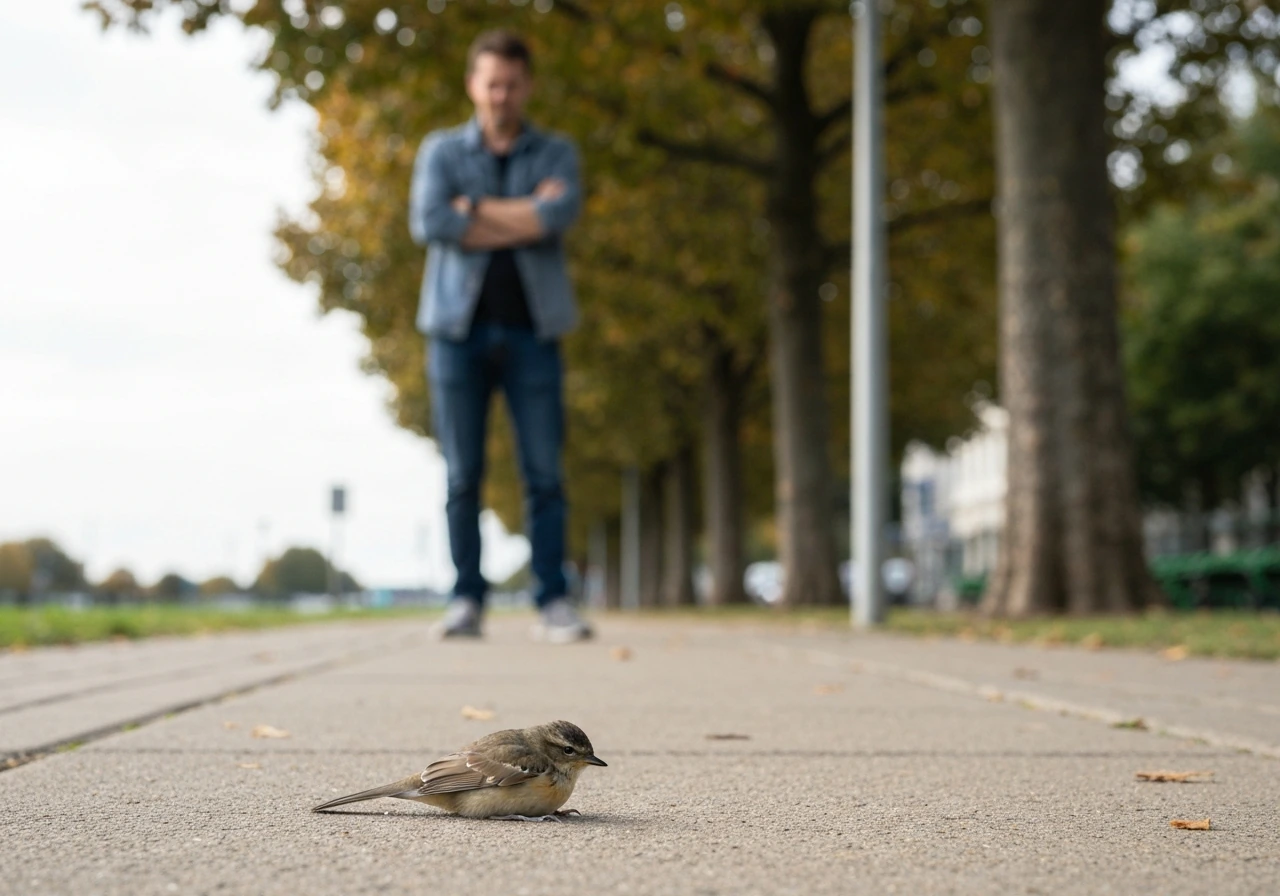
Before you touch anything, spend 60 to 90 seconds just watching from a few feet away. The reason a bird can't fly matters a lot, because it changes what you should do next. There are three main situations you're likely dealing with: the bird is stunned from a collision, it has a genuine injury, or it's a young bird that simply hasn't learned to fly yet.
A stunned bird, most often from a window strike, will typically sit very still, look dazed, and may have slightly puffed feathers. It might be upright but unresponsive to your presence. A genuinely injured bird often shows more obvious signs: a drooping or held-out wing, visible blood or wounds, a head tilt, not standing or using its legs properly, or open-mouth breathing.
A fledgling (a young bird that's recently left the nest) looks different from both of those: it has short stubby tail feathers, fluffy patches mixed with adult feathers, and it moves around actively, hopping and flapping, but just can't get airborne yet. Fledglings can spend several days on the ground before they're fully capable of sustained flight, and that's completely normal.
The key rule of thumb: if an adult songbird doesn't immediately try to fly away when you approach, treat it as needing help. A healthy adult bird's first instinct is to escape. If it stays put while you walk toward it, something is wrong. On the other hand, if it's clearly a fledgling with fluffy down mixed into its feathers and no obvious wounds, your best move is often to leave it alone and keep people and pets at a distance while its parents continue to feed it from nearby.
Quick safety steps at the scene
Before you handle the bird, think about keeping both yourself and the bird safe. Stand back and watch for a minute, as described above. If you have pets nearby, get them inside or on a leash right now. Even a brief contact between a cat and a bird can introduce bacteria that causes serious infection hours later, so distance is critical even if the bird looks unharmed by the interaction.
When you do approach, move slowly and keep low. Sudden movements and looming over the bird from above trigger a stress response that can genuinely harm a bird already in shock. If the bird is in immediate danger (on a busy road, exposed to rain, or near a cat), then yes, pick it up promptly. Otherwise, give it a minute. Use a light towel or cloth to pick it up rather than bare hands, both to protect you from scratches and bites and to reduce the stress the bird feels from direct skin contact. Wild birds carry some bacteria and parasites, though the risk to healthy adults is low. Wash your hands before and after.
Getting the bird contained safely
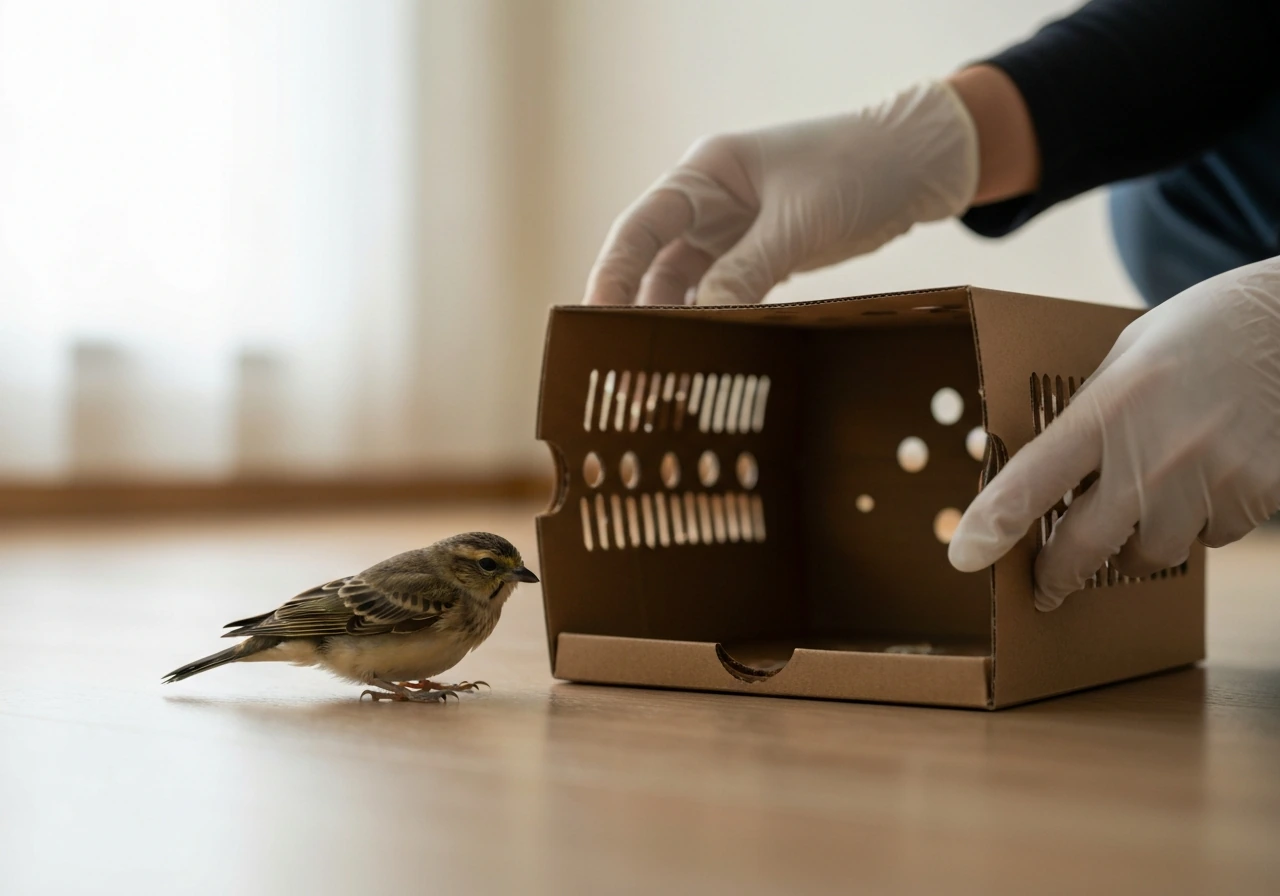
Once you've decided the bird needs help, your goal is to get it into a container quickly and with minimal handling. A cardboard box, roughly the size of a shoe box for small birds, works well. Poke several small ventilation holes in the sides (not the top, where light would stress the bird). Line the bottom with a paper towel or an old t-shirt so the bird has something to grip with its feet. A bird that's sitting on a smooth surface can't stabilize itself and that adds to its distress.
Gently place or guide the bird into the box, close the lid, and put the box somewhere quiet, warm, and away from noise, pets, and children. A bathroom or a quiet corner of a room works fine. This setup is almost identical to the guidance used by wildlife rescue intake teams when a window-strike bird comes in: dark, ventilated, just the right size so the bird can't flap around and hurt itself further. A bird that is unable to fly needs containment and calm above almost everything else in the first hour.
Basic first aid while you wait
There isn't much "first aid" you can or should do for a bird beyond keeping it warm, dark, quiet, and contained. Tufts Wildlife Clinic similarly advises keeping a sick or injured songbird warm, dark, and quiet while you wait, and contacting a local wildlife rehabilitator for next steps keep it warm, dark, quiet, and contained. That's not a cop-out; it's genuinely the most effective intervention available to someone without veterinary training.
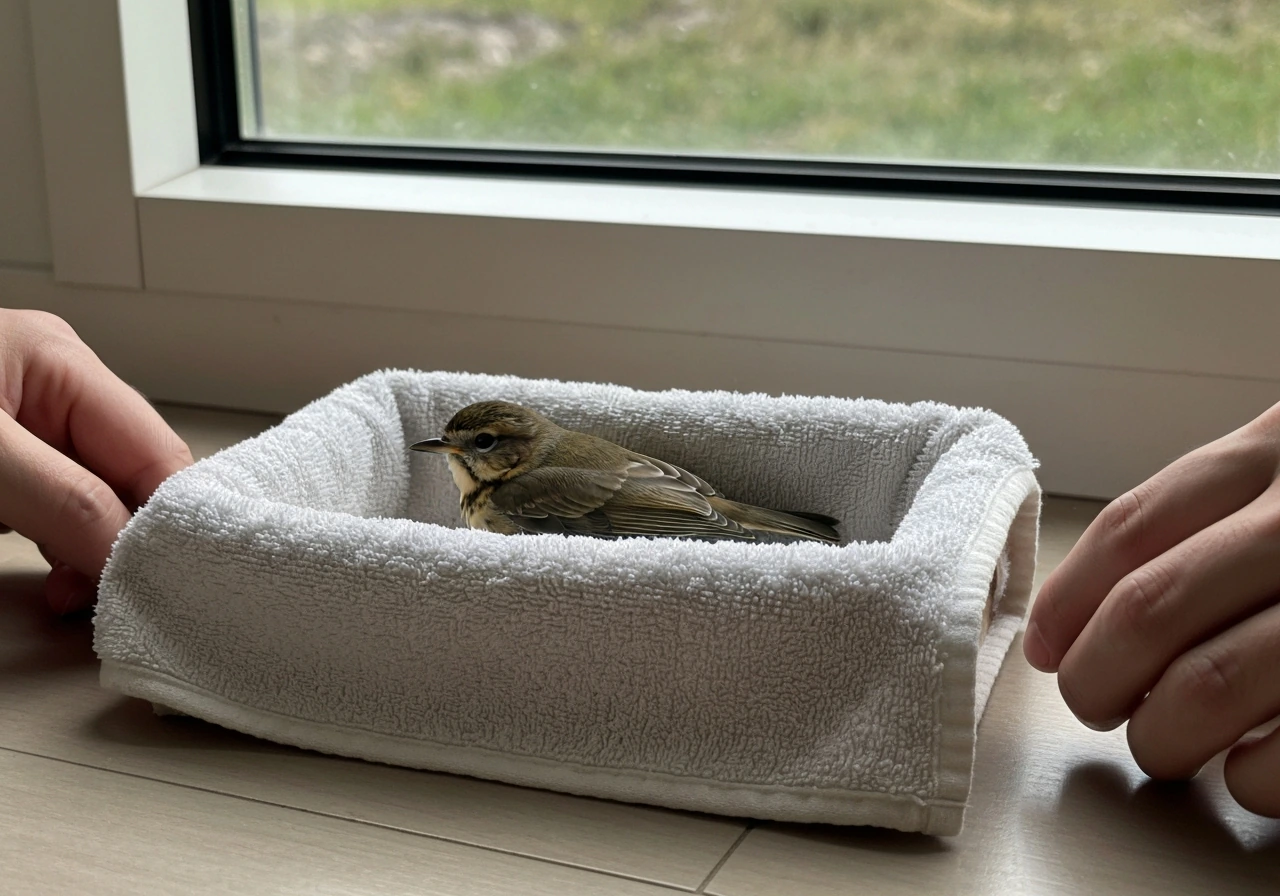
Warmth matters most if the bird is in shock or has been outside in cold weather. You can place a heating pad set to its lowest setting under half of the box (only half, so the bird can move away from the heat if it gets too warm), or place a small cloth-wrapped hot water bottle next to the box. The target temperature is around 85 to 90 degrees Fahrenheit for an adult bird in shock. Don't use a heat lamp directly over the bird; it's too easy to overheat them.
Keep the box in a dark, quiet spot. Darkness reduces the bird's stress hormones significantly. Resist the urge to keep peeking in to check on it. Every time you open that box, you're triggering a fear response. Check once every 30 minutes at most. And do not offer food or water unless a wildlife rehabber or vet specifically tells you to. Giving water to a bird in shock can cause aspiration, and most people don't know what's safe for a given species. The exception is if a licensed rehabber gives you very specific guidance over the phone.
Recognizing common injuries up close
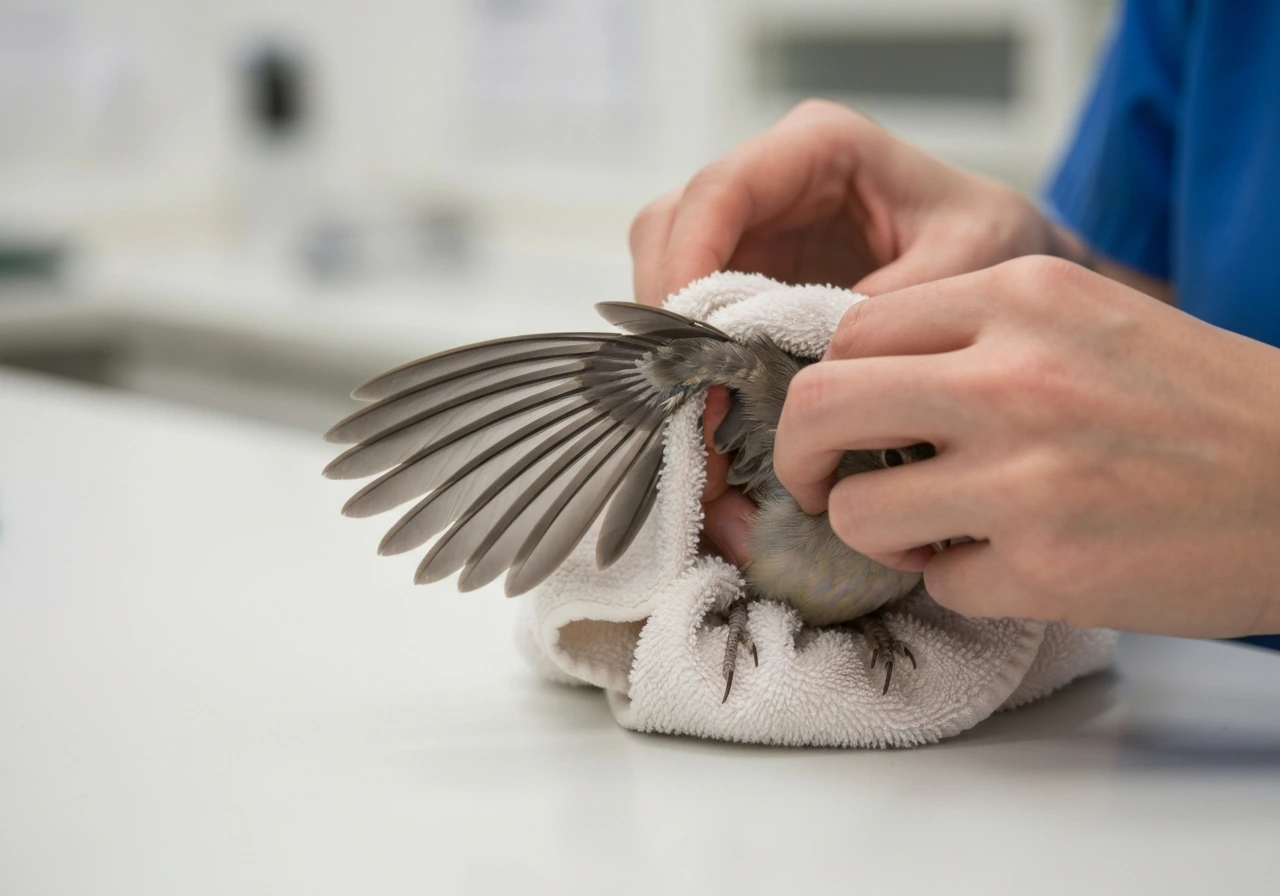
If you need to do a quick visual check before boxing the bird, here's what to look for. Keep the bird gently wrapped in a towel and don't prod or poke.
- Drooping or held-out wing: almost always means a wing fracture or dislocation. Don't try to set or splint it yourself.
- Head tilt or circling behavior: sign of head trauma, common after window strikes and collisions with vehicles.
- Visible blood or open wounds: note the location but don't attempt to clean or bandage; this needs professional attention.
- Not using one or both legs, or legs splayed outward: suggests a leg fracture or spinal injury.
- Beak damage (cracks, misalignment, bleeding at the base): beak injuries affect feeding and need expert care quickly.
- Open-mouth breathing or clicking sounds while breathing: sign of serious respiratory distress or internal injury.
- Extreme lethargy or inability to hold head up: indicates shock or severe illness; this bird needs help urgently.
Window collision injuries deserve a special mention because they're one of the most common reasons people find a grounded bird. If a bird doesn't fly away after you approach it, or shows any of the signs above after hitting a window, it almost certainly needs rescue. Even if it looks okay after 10 minutes, internal bruising and head trauma often don't show clearly at first. When in doubt, contact a professional. Knowing what to do when a bird can't fly due to injury early makes a real difference in outcome.
What not to do (these mistakes are common)
Just as important as what you should do is what you should avoid. These are the most common mistakes people make with good intentions.
- Don't force the bird to try to fly. Tossing a bird into the air or encouraging it to flap won't test whether it's okay; it will add trauma and risk further injury.
- Don't give food or water without professional guidance. Bread, crackers, milk, and most human foods are harmful to birds. Even "bird-friendly" seeds can be the wrong type for the species, and water given to a dazed bird can go into the lungs.
- Don't use a sealed container with no ventilation. Birds suffocate or overheat quickly in an airtight box.
- Don't put the bird in a wire cage if you can help it. Wire edges can damage feathers and cause more injury if the bird panics.
- Don't attempt to splint a broken wing or leg yourself. Improvised splints applied incorrectly cause more damage than leaving the injury alone until a vet can assess it.
- Don't leave the bird outside unattended, even in a box. Cats, raccoons, and other animals can find it. Exposure to temperature swings also worsens shock.
- Don't keep the bird for days hoping it gets better on its own. If it can't fly after an hour or two in a quiet, warm container, it needs professional help today.
When to call a wildlife rescue or avian vet
Call a wildlife rehabilitator or avian vet as soon as you've got the bird safely contained. You don't need to wait to see if it improves first; make the call while the bird is resting in its box. Most wildlife rehab hotlines can talk you through what you're seeing and tell you whether the bird needs emergency transport or can wait until morning. Don't assume it can wait overnight without checking.
To find help, search for a licensed wildlife rehabilitator in your area through your state or regional wildlife agency, or through national directories like the National Wildlife Rehabilitators Association or the Wildlife Rehabber Finder. Your local animal control office, humane society, or even a regular veterinary clinic can often point you to the nearest avian vet or bird rescue. If you're dealing with a protected migratory species, handling is technically regulated, but Good Samaritan rules typically apply when you're acting to save a life and handing it off to licensed professionals.
When you call, have this information ready: the type of bird if you know it (or a rough description), where you found it and what happened, what symptoms you're seeing, and what you've done so far. The more specific you can be, the faster they can advise you. Knowing exactly what to do with a bird that can't fly before you call means the conversation goes quickly and the bird gets to the right hands sooner.
Transporting the bird safely
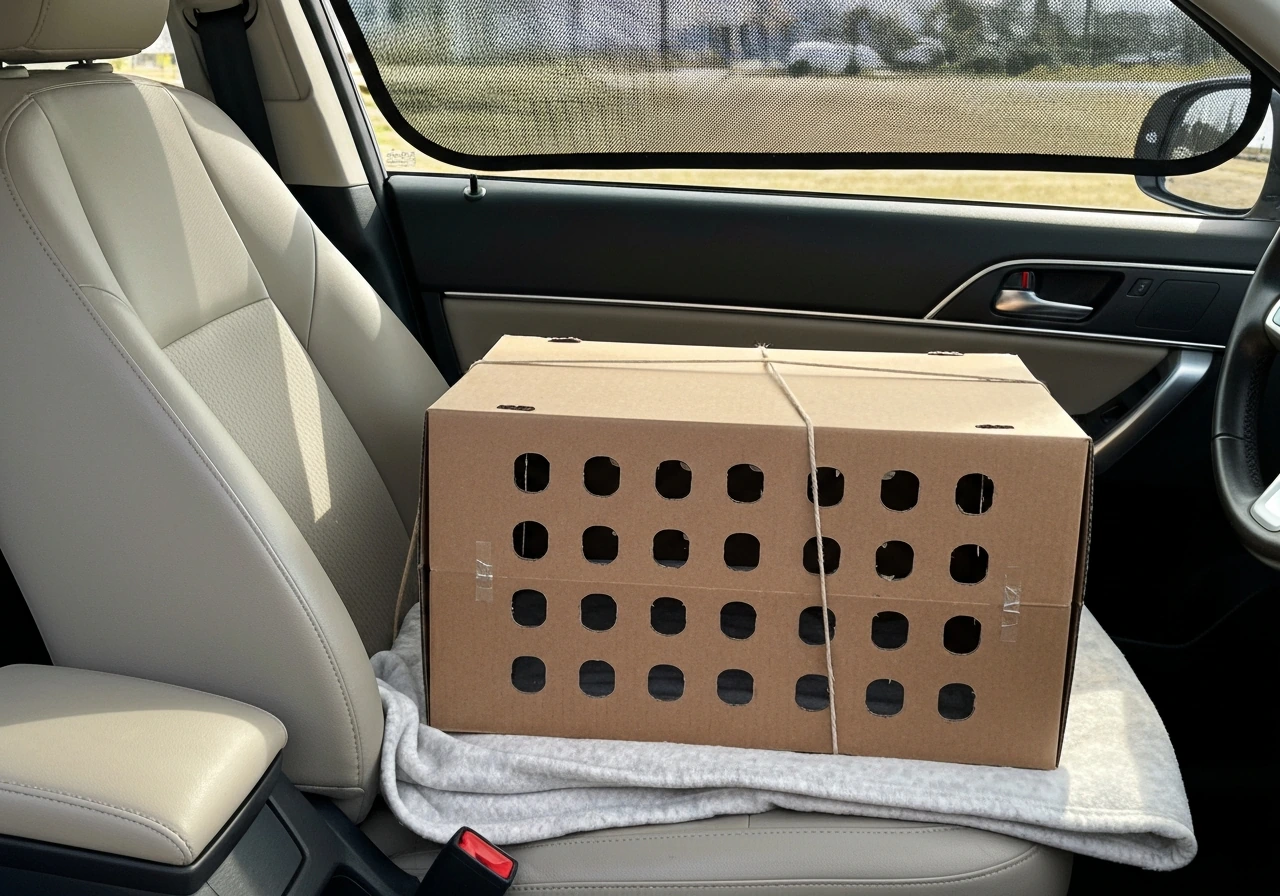
If you need to transport the bird to a vet or rehab center yourself, keep it in the ventilated cardboard box. Place the box on the seat next to you or on the floor, and keep the car quiet (no loud music, no passengers talking loudly near the box). Drive smoothly. If it's cold outside, you can place the box on a low-heat car seat warmer or pre-warm the car before getting the bird in. Don't put the box in a cold trunk.
Don't open the box repeatedly during transport. Don't place the box where direct sun will hit it through the window; a bird can overheat in minutes inside a hot car. If you're more than an hour from a rehab center, call ahead so they can advise whether to drive immediately or wait for a volunteer transporter in your area. Many rehab networks have drivers who can meet you partway.
Stunned vs. truly injured: a quick comparison
| Sign | Stunned (window strike/impact) | Injured (fracture, wound, illness) |
|---|---|---|
| Responds to approach | Dazed but may react slowly | Often doesn't respond at all |
| Posture | Upright, may look "glazed" | Drooping wing, tilted head, or lying flat |
| Visible wounds | Rarely | Often (blood, swelling, asymmetry) |
| Improves within 1 hour | Often yes, flies away | No, stays grounded or worsens |
| Leg use | Usually normal | May not stand or use one leg |
| What to do | Box it, wait up to 1 hour, release if recovered | Box it, call rehab/vet immediately |
What comes next after you've handed it off
Once a wildlife rehabber or avian vet has the bird, your job is mostly done. If they accept the bird, ask whether you can check in for an update, and whether there's anything you should know about preventing the same situation in the future (like applying window decals to prevent future strikes, or identifying and blocking a nest hazard). Most rehab facilities won't provide daily updates due to workload, but many will let you know if the bird was successfully released.
If the situation is a fledgling that turned out to be healthy, your aftercare is simple: monitor from a distance for the next day or two, keep pets away, and trust that the parents are still around and feeding it. Fledglings are often loudly calling for their parents, which is a good sign. Only intervene again if the bird is in direct danger or appears visibly injured. For everything else, a grounded bird that genuinely can't fly deserves professional care, not a wait-and-see approach at home. Getting it to a licensed rehabber quickly is the single biggest thing you can do to improve its chances.
FAQ
How can I tell if it is an adult bird that is stunned versus a fledgling that can’t fly yet?
Look at the tail and feathering. Fledglings usually have short, stubby tail feathers and a mix of fluffy down with more developed adult feathers, and they often hop around or flap actively. An adult stunned bird is more likely to be still, dazed, and to show a “puffed” look to the feathers, and it typically does not try to escape when you get close.
Should I give the bird water or food if it seems alert?
Usually no. In shock or after a window collision, offering water can increase the risk of aspiration (breathing it into the lungs), and many everyday foods or water methods are unsafe. Only offer food or water if a licensed rehabber or avian vet tells you exactly what to give and how.
What if the bird is bleeding or its wing looks drooped, but I can’t reach a rehabber immediately?
Keep it contained, warm, dark, and calm while you contact help, and prioritize getting it to an avian-capable professional as soon as possible. If bleeding is active or the bird cannot stand or breathe normally, treat it as urgent and ask the hotline or clinic whether immediate transport is needed rather than waiting overnight.
Is it okay to hold the bird in my arms until I can get the box ready?
Minimize handling time. If you must move it, use a towel and keep pressure gentle, but the best practice is to get the bird into the ventilated container quickly with minimal fuss. Long holding sessions increase stress and can worsen shock, especially with window-strike injuries.
Can I use a plastic container instead of cardboard?
Cardboard is preferred because it is lightweight, easy to vent with holes, and less likely to cause condensation buildup. If you only have plastic, ensure plenty of ventilation, cover the container partly to reduce visual stress, and avoid a smooth bottom that prevents the bird from stabilizing.
How warm is “warm enough” without overheating the bird?
Aim for roughly 85 to 90°F for an adult in shock, but create a temperature gradient by heating only half the box. If the bird moves away from the heat, it is telling you the box is too warm, so reduce the heat source or stop using it.
How often should I check the bird once it is in the box?
Check infrequently, about once every 30 minutes at most. Peeking more often can keep the bird in a fear response. If you need to assess, do it quickly without prodding, and then close the lid immediately.
What should I do if the bird is on the ground outside and there is no obvious injury?
First determine whether it is likely a fledgling. If it looks like a fledgling with no visible wounds and is not in immediate danger (road, predators, active yard), the safest move is to leave it and keep pets and people away so parents can continue feeding it. If it is exposed to danger, intervene and contact a professional for guidance.
Can I release the bird on my own after it seems better?
Avoid release unless a licensed rehabber tells you it is ready. Birds that “look okay” after a collision can still have internal bruising or head trauma, and rehabbers can assess function before release. If it is a fledgling and clearly uninjured, monitor from a distance, but do not treat an improvement as proof it is fully recovered.
What if the bird is a different type, like a raptor or a waterbird?
Same core approach, but with faster escalation to a professional. Larger birds, birds of prey, and waterbirds can require species-specific handling and feeding guidance, and they may be more easily injured during improper containment. Call a wildlife rehabilitator or avian vet promptly and follow their instructions.
Is it safe to pick up the bird with bare hands if it feels calm?
Prefer a towel or cloth even if it seems calm. Wild birds can still bite or scratch, and even a “friendly” bird can suddenly react when startled. The towel also reduces direct skin contact and makes it easier to place the bird into the container correctly.
What are the best next steps after the bird is accepted by a rehabber?
Ask whether you can check in for an update and what to do to prevent the same problem, especially window strikes. If the bird came from a collision area, ask about practical fixes such as window decals or temporary barriers, and clarify whether you should bring any new information (like time of collision or observed symptoms) if you notice changes.