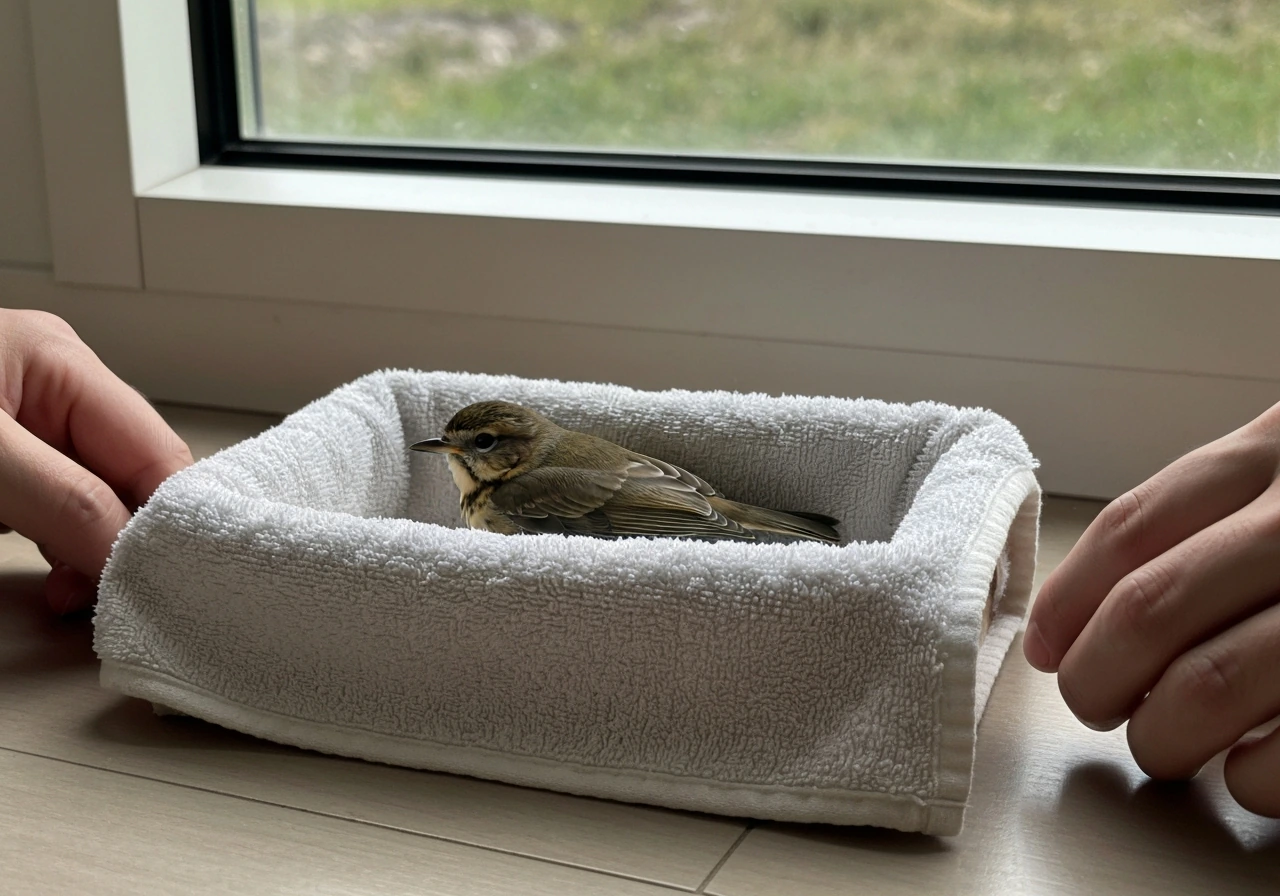
If you've found a bird that can't fly, here's what to do right now: don't panic, don't try to feed it, and don't leave it exposed. The next five minutes matter a lot, but most of what helps this bird is simpler than you think. Your job right now is to keep it safe, calm, and warm while you get it to someone qualified to help. If the bird is injured or orphaned, contact a licensed wildlife rehabilitator or authorized facility, since bird rehabilitation is regulated and not everyone is allowed to do it someone qualified to help. This guide walks you through exactly that, step by step.
Bird Can’t Fly: What to Do Right Now and Next Steps
Marcus Chen
16 Apr 2026
The first 5 minutes: quick safety checks

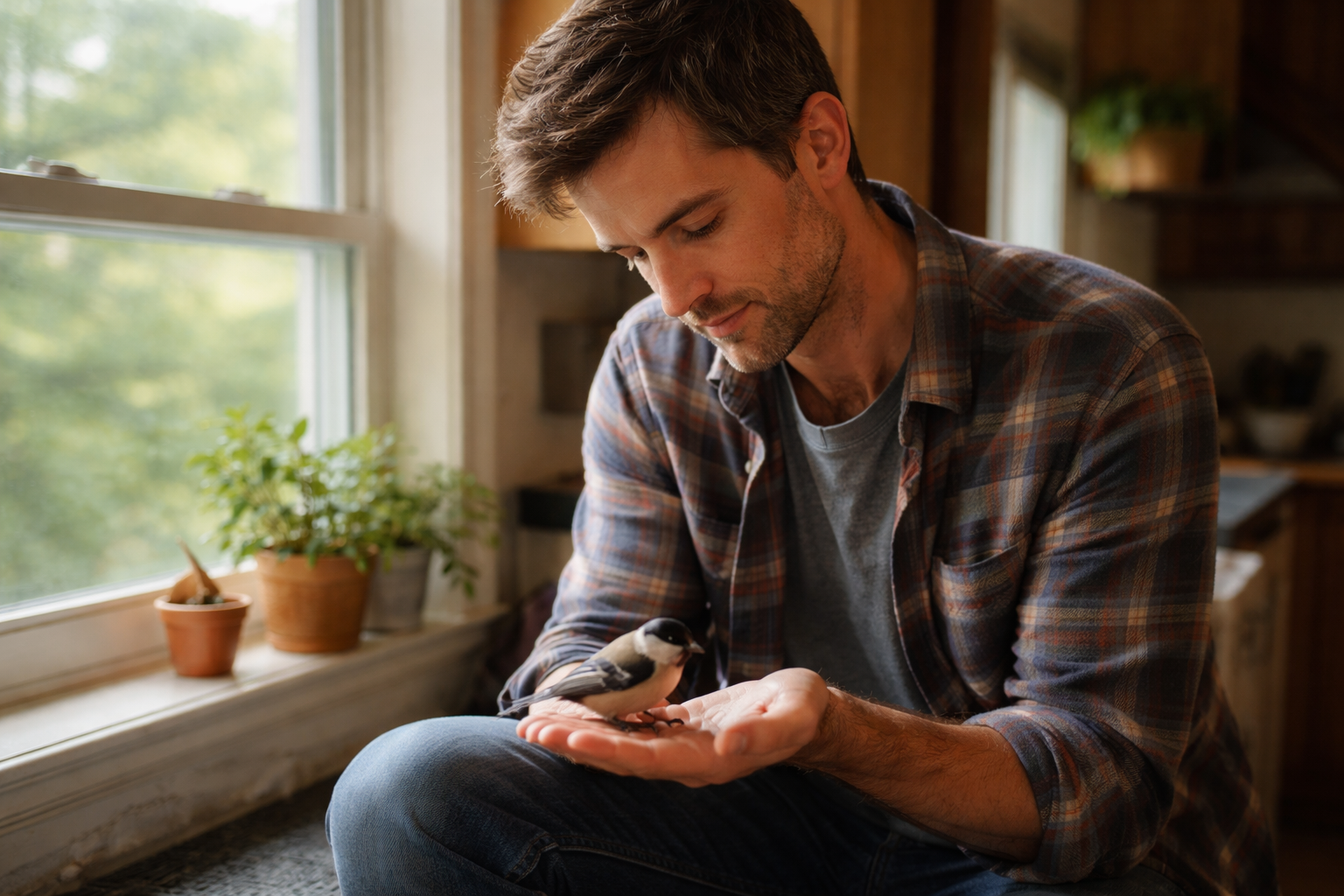
Before you touch the bird, scan the scene. Remove any cats, dogs, or other pets from the area immediately. This is the first thing the U.S. Fish and Wildlife Service recommends, and it matters because a stressed bird will make itself worse trying to escape a perceived threat. Even if the pet seems calm, get it inside or on a leash.
Look at the bird from a few feet away first. Is it breathing? Is it upright or flopped on its side? Is there visible blood? Is its head twisted or tilted at an odd angle? You're doing a quick visual triage here, not a full examination. What you see in these first moments will tell you whether this is a "stabilize and monitor" situation or a "move fast and call someone" emergency.
Protect yourself before you get closer. Bird beaks and talons can scratch and puncture skin, and if a cat or dog was involved, there's an added exposure risk. Use gloves if you have them, or at minimum wrap your hands in a thick towel. Keep children away from the bird during this step.
Why the bird can't fly: common causes
Understanding why a bird can't fly helps you assess how serious the situation is. The most common causes fall into four categories: wing injury, leg injury, shock or weakness, and trauma from an impact or attack.
- Wing injury: A drooping wing, held out at an angle from the body, or a wing that looks bent or twisted often signals a fracture or dislocation. In severe cases you may see the bone itself. This is a genuine emergency.
- Leg injury: A bird standing on one leg, unable to grip with one foot, or dragging a leg may have a leg fracture or joint injury. These birds can still panic and try to flap, so handle with care.
- Shock or weakness: Birds that are quiet, dull-eyed, and barely responsive may be in shock from blood loss, dehydration, illness, or trauma. They need warmth and calm above everything else.
- Collision or impact trauma: Window strikes are a top cause of sudden flightlessness. The bird may look fine externally but have a concussion or internal injuries. Pet attacks, especially cat strikes, can cause wounds that close over quickly but leave serious internal damage.
If you're not sure what happened, that's okay. Treat the bird as if it has an injury and follow the steps below. Identifying and responding to an injured bird that can't fly is really about applying the same safe principles regardless of the exact cause.
Immediate first aid: calm, warm, and contained
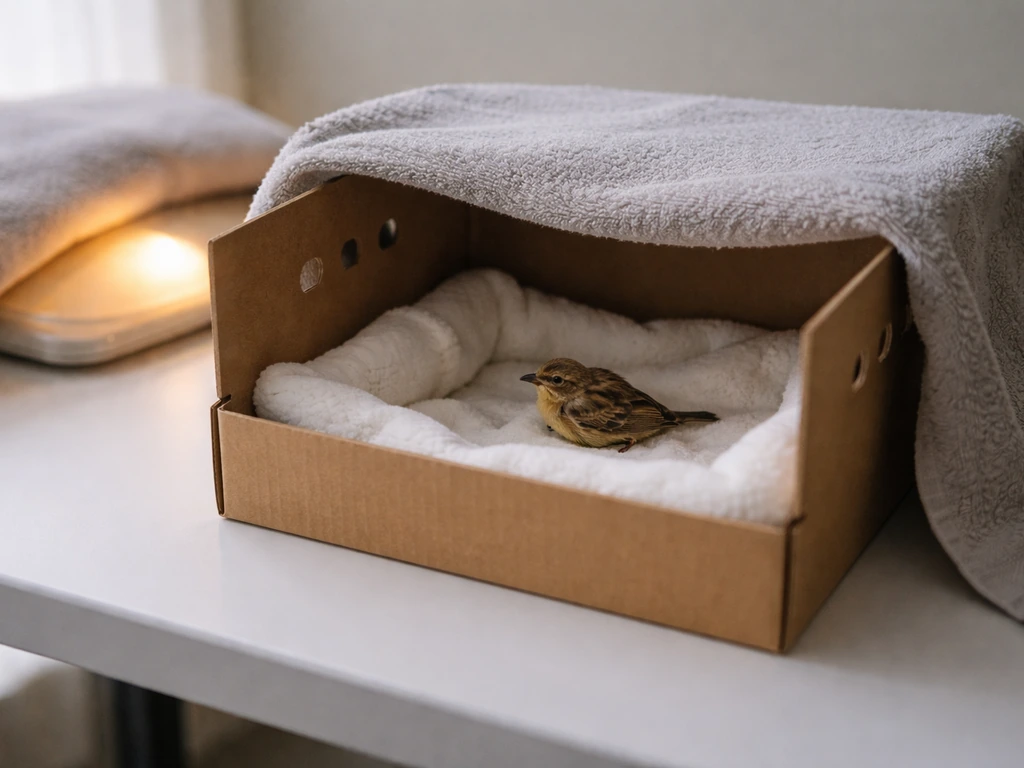
The three priorities right now are heat, dark, and quiet. Almost every wildlife rescue organization I've seen work with agrees on this triad. A stressed bird burns energy it doesn't have, and noise and light make that worse. Your goal is to create a small, calm, contained environment where the bird can stop panicking.
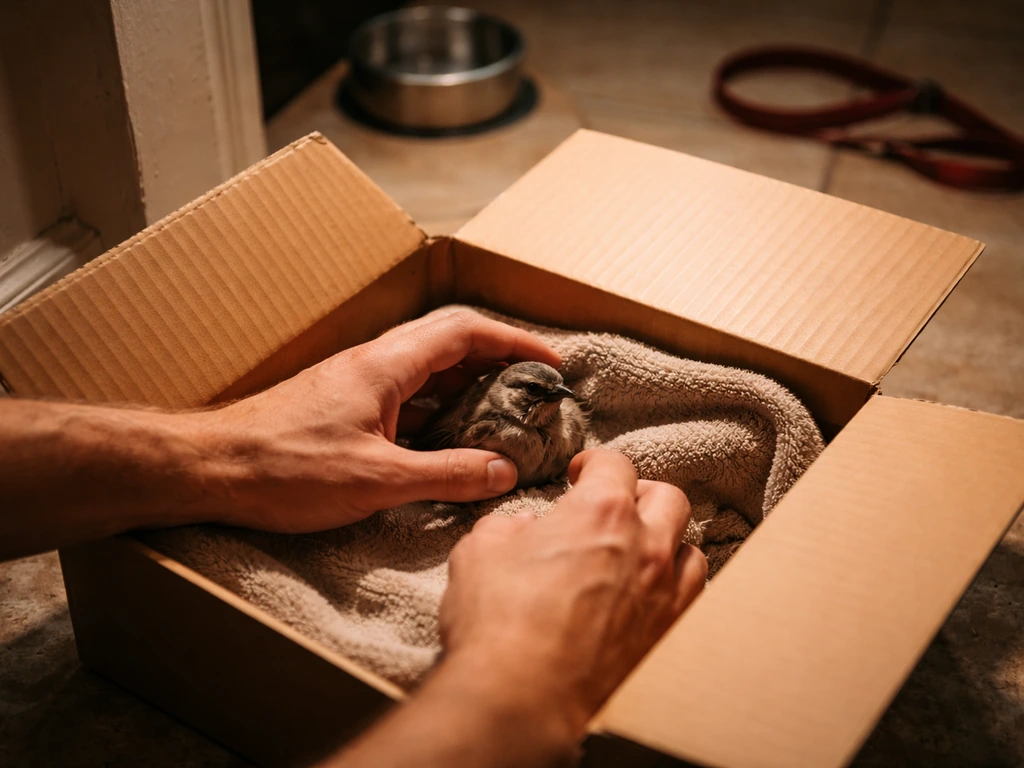
- Find a cardboard box large enough that the bird isn't tightly crammed inside. A shoebox works for small birds; a larger moving or storage box for waterfowl or raptors.
- Line the bottom with a folded towel or paper towels. This gives the bird something to grip and keeps it from sliding around.
- Drape a light towel over the bird's eyes to reduce fear, then gently scoop the bird up from behind using both hands wrapped in a towel, keeping its wings against its body.
- Place the bird in the box and close or fold the lid. Poke a few small air holes if the box is fully sealed.
- Put the box in a warm, dark, quiet room, away from pets, TVs, kids, and foot traffic. Keep room temperature around 75 to 85°F if possible.
- Do not check on the bird repeatedly. Every time you open that box, you restart the stress response.
If the bird is unresponsive and not reacting to your approach at all, use gloves and a towel to pick it up the same way. Unresponsive doesn't mean dead, and handling it gently still matters. Once it's in the box, treat warmth as your top priority: place the box on a heating pad set to low under half of the box (not the whole bottom, so the bird can move away from the heat if needed).
What NOT to do
This is where a lot of well-meaning people accidentally make things worse. When you find a bird that clearly needs help, it feels instinctive to offer water or try to get it back in the air. Don't. Here's why each common mistake causes problems.
- Do not give food or water. This is the single most universal instruction from wildlife rehabilitators. An injured bird may inhale liquid into its lungs, and feeding the wrong foods or giving water at the wrong time can be fatal. Wait until you've spoken to a rehabber or vet.
- Do not lay the bird on its back. Birds have difficulty breathing in that position, and it dramatically increases their stress.
- Do not try to 'test' the wing or force the bird to fly. If there's a fracture, moving the wing makes it worse. If the bird is in shock, forcing it to exert energy can kill it.
- Do not try to splint or wrap the injury yourself. Improper immobilization causes more damage. Leave this to trained hands.
- Do not keep checking on it. Open the box only when necessary.
- Do not give any medication, including human pain relievers. Many common medications are toxic to birds.
- Do not put the bird in a wire cage where it can injure itself further trying to grip or flap against the bars.
When you're dealing with a bird that is unable to fly, the hardest part for most people is doing less, not more. Resist the urge to intervene beyond what's described here.
Signs this bird needs urgent professional help right now
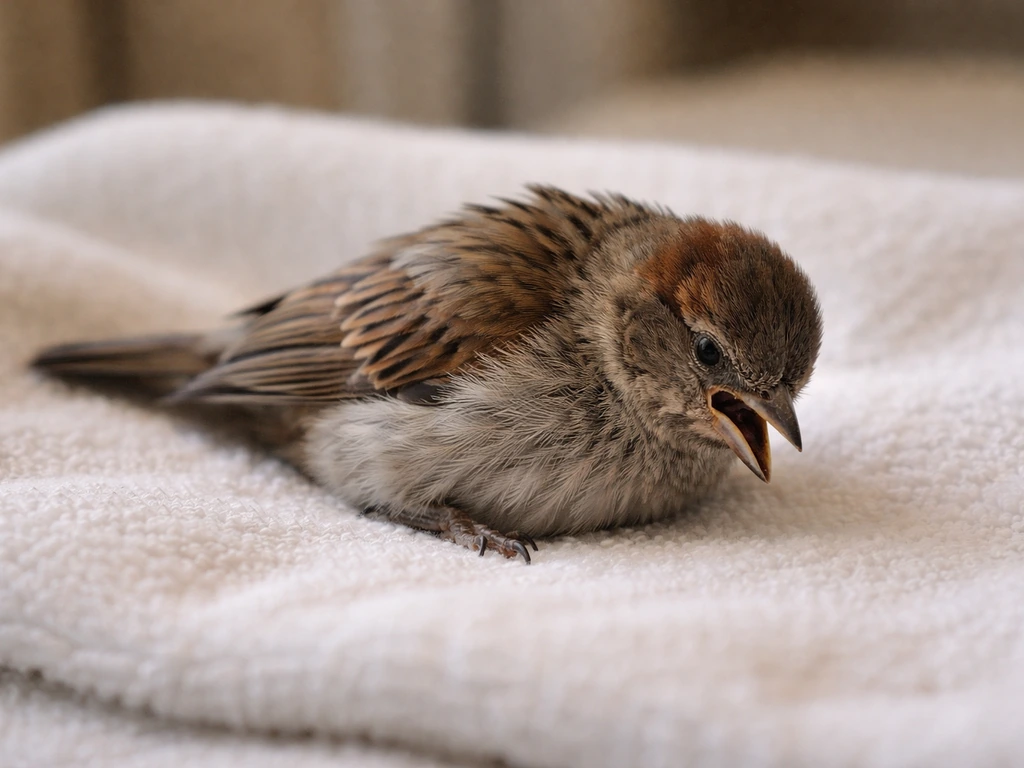
Some situations call for immediate action, not a wait-and-see approach. Contact a wildlife rescue or avian vet right away if you see any of the following:
- Gasping, labored, or open-mouthed breathing
- The bird cannot stand or keep its head up
- Head is twisted sharply or appears tilted at an unnatural angle
- Visible bone, bleeding that isn't stopping, or a wound you can see into
- Wing or leg held out rigidly from the body
- Eyes squinting or unable to open
- The bird was involved in a cat or dog attack, even if it looks okay
- No response to your presence at all (fully unresponsive)
If the bird is showing any of these signs, don't delay getting it into a box and making calls. Stabilize first (box, dark, warm), then call while the bird is already contained. Time matters with fractures, internal injuries, and shock.
How to transport the bird and what to tell rescuers
Transport the bird in the same box you used to contain it. Keep the car quiet, avoid the radio, and place the box on the floor or seat where it won't slide. Don't keep opening the lid to check. Maintain a warm, calm environment the entire ride.
When you call a wildlife rehabilitator or avian vet, be ready to give them the following information clearly and quickly:
- What kind of bird it is, or your best description (size, color, beak shape)
- Where you found it (city, neighborhood, type of environment)
- When you found it and what you've done so far
- What you observed: how it was positioned, any visible injuries, whether it was responsive
- What you think may have happened (window strike, cat attack, unknown)
- Whether it's currently in a box, and how it's behaving now
Most wildlife rescue lines and avian vet offices will ask these questions in some form. Having the answers ready moves the call along faster. If you're not sure how to find local help, search for "wildlife rehabilitator near me" or "avian vet [your city]." The National Wildlife Rehabilitators Association and state wildlife agencies maintain searchable directories. Many areas also have 24-hour wildlife hotlines.
If you genuinely cannot transport the bird immediately, keep it in the warm, dark, quiet box and call for instructions. As Lafeber's guidance puts it: contact the rehabilitator and keep the bird covered and still until you can get there. Do not attempt longer-term at-home care without professional guidance.
Scenario-specific steps
Window strikes
Window strikes are one of the most common reasons people find a bird that can't fly. The bird may be sitting stunned on the ground nearby, sometimes looking almost normal. Don't assume it's fine. Concussion and internal injuries are common even when there's no visible external damage. Audubon is clear on this: get a window-strike bird to a wildlife rehabber. They can administer anti-inflammatory medication that you can't provide at home, and internal bleeding is impossible to assess without professional tools.
If the bird seems conscious and responsive, it may recover from the initial stun within a short window (15 to 30 minutes), but watch for signs of trouble: inability to keep its eyes open, labored breathing, or drooping to one side. If those appear or if it doesn't improve, box it and go. Even if it seems to stabilize, a vet check is still worth making.
Pet attacks (cat or dog)
Cat and dog attacks are urgent, full stop. Cat saliva contains bacteria that can cause fatal infection in birds within hours, even from a minor scratch. A wound that looks small on the surface can close over quickly while leaving serious damage underneath. If a cat or dog was involved, treat the situation as a veterinary emergency and get the bird to a wildlife rehabber or avian vet the same day, not tomorrow.
Also protect yourself: if you were scratched or bitten during the rescue, clean the wound well and consider consulting a doctor about tetanus and any other exposure risks. Your safety matters too.
Nest emergencies and young birds
If the bird is very young, covered in down or pin feathers, and clearly fell from a nest, this is a different scenario than an injured adult. Young birds that cannot fly are often fledglings or nestlings, and the approach differs depending on their age. What to do when you've found a bird that can't fly depends heavily on whether you're dealing with a young bird that simply hasn't learned to fly yet versus one that's injured.
For a nestling (eyes closed, mostly bare or downy), if you can safely reach the nest and it's intact, place it back. The parent will return. If the nest is destroyed, put the nestling in a small container lined with dry tissue and hang it as close to the original nest location as possible. Then leave and watch from a distance for at least an hour.
For a fledgling (fully feathered, hopping on the ground), it may actually be normal. Many fledglings spend days on the ground while their parents continue to feed them. Unless it's in immediate danger from pets, traffic, or visible injury, leave it alone and keep pets indoors. If it's clearly injured, treat it the same as any injured bird above.
Choosing the right next step
Here's a quick comparison to help you decide what to do based on what you're seeing:
| What you're seeing | What to do |
|---|---|
| Bird is stunned, upright, responsive, no visible injury (window strike) | Box it, keep warm and dark, monitor 30 min, contact rehabber |
| Wing drooping, leg dragging, or visible wound | Box it immediately, call wildlife rescue or avian vet now |
| Gasping, head twisted, can't stand, unresponsive | Box it and go to emergency wildlife vet immediately |
| Cat or dog attack, any contact with pet | Treat as emergency, get to rehabber same day |
| Young bird (nestling), fallen from nest | Replace in nest or improvised cup if possible, watch for parents |
| Young bird (fledgling), hopping on ground, no injury | Leave alone if safe, keep pets away, watch from distance |
If you're still unsure which situation you're in, reading through guidance on what to do with a bird that can't fly can help you match your specific scenario to the right response. The most important thing you can do right now is keep the bird contained, warm, and quiet, and make that call to a professional. You don't need to fix this yourself. You just need to get the bird to someone who can.
FAQ
Should I offer food or water to a bird that can’t fly?
No. Feeding can cause choking or aspiration, and water offered at the wrong time can also enter the airway. Instead, focus on the heat, dark, and quiet setup, then ask the wildlife rehabilitator what to do based on the bird’s condition and age.
How do I know if the bird is actually hurt or just temporarily stunned?
Look for more than movement. If the bird cannot stand upright, keeps its eyes closed, has labored or open-mouth breathing, droops to one side, or shows worsening responsiveness, treat it as injured and contain it while you contact a professional.
What’s the safest way to make a temporary “bird box” at home?
Use a small cardboard box with ventilation holes, line it with something soft and dry, and keep the bird in partial darkness. Place a heating pad on low under half the box so the bird can move away from heat. Avoid covering the entire box with plastic or anything that traps heat and fumes.
Can I use a towel to restrain the bird even if I don’t have gloves?
Yes. Wrap your hands with a thick towel for protection, and handle gently to reduce struggle. If the bird is unresponsive, do not assume it is dead, but use a towel and gloves if you can to minimize scratches and contamination.
Is it okay to remove the bird from the location if it’s in a yard or on a sidewalk?
Often yes, but only if you can do it safely and without chasing. The key is to keep it from overheating, being attacked, or being stepped on. Once you relocate it into the box, avoid repeated trips back to “check on it.”
If I wait to call until I finish work, will the bird be okay?
If there are emergency signs like heavy bleeding, visible fractures, an inability to stand, disorientation, or any cat or dog exposure, delay is risky. Stabilize first with the box, dark, and warmth, then call as soon as possible, and follow the instructions for transport timing.
What should I do if the bird is bleeding but I can’t get to help right away?
Contain it first, keep it warm and quiet, and minimize handling. Avoid trying to apply creams, powders, or home bandages because they can worsen tissue injury or interfere with later medical assessment.
Do I need to clean or disinfect the box before placing another bird in it later?
Yes if it was used for an injured bird. After you’re done, wash the box or replace it, and disinfect the area you used for handling. Birds can carry mites or bacteria, and the risk increases when there’s blood or fluid.
Should I keep the bird near a window or outside to “let it calm down”?
No. Sunlight, drafts, and noise can increase stress and heat loss or overheating. Keep it in an indoor, dark, quiet, contained environment until a rehabilitator advises next steps.
What if the bird looks like a fledgling and is just sitting on the ground?
It may be normal for fledglings to stay on the ground for days while parents feed them. The practical rule is danger check first: if it is not injured and isn’t threatened by pets, traffic, or people, keep pets inside and monitor from a distance. If you see injury, inability to hop/stand, or obvious harm, treat it like an injured bird.
How quickly should a window-strike bird be checked, even if it seems awake?
Even if it recovers from the initial stun, window strikes can involve concussion or internal injuries. If it cannot keep its eyes open, has labored breathing, or hasn’t improved after a short observation period, box it and contact a wildlife rehabber the same day.
If I find a baby bird, do I always put it back in the nest?
Not always. For nestlings that appear mostly bare or with eyes closed, returning them to an intact nest is often the best option if you can do it safely. For fledglings that are fully feathered and hopping, it may be normal to leave them where they are unless there’s injury or immediate danger.
What should I tell the rehabilitator when I call?
Be ready with location (where you found it), time found, what you observed (upright or flopped, breathing effort, any bleeding, head tilt), whether a window strike or cat/dog interaction is suspected, and the bird’s approximate size. Those details help them prioritize urgency and determine whether you should keep it contained for transport.
What if the bird is small and I can’t safely pick it up into a box?
Use a box and gentle capture rather than grabbing. If you can’t pick it up safely, guide it toward the box with calm movements, using a towel as needed for grip. Prioritize your safety and keep noise low, then call for instructions if you are unable to contain it quickly.
If a cat or dog might have touched the bird, do I need to treat it as urgent even without visible wounds?
Yes. Cat saliva can cause rapid, severe infection, and underlying damage may be hidden even when the scratch looks minor. Treat it as a same-day veterinary or wildlife rehab emergency and keep the bird warm, dark, and contained while you arrange transport.
I got scratched or bitten while helping, what should I do next?
Clean the wound thoroughly right away and consider medical advice for tetanus and exposure risk, especially if there is puncture or deep skin break. Your recovery and safety matter, and you should still contact a professional about the bird.
Next Article
Found a Bird That Can’t Fly: What To Do Now
Immediate steps to help a grounded bird safely, spot likely causes, warm and contain it, and contact vets or rehab.