
If you've found a bird on the ground that can't fly, you need to do a few things right now: keep yourself and the bird safe, get the bird into a warm, dark, quiet container, and contact a wildlife rehabilitator or avian vet as soon as possible. That's the short version. The longer version, including how to tell what's actually wrong, what to do in the next hour, and what not to do, is below.
Dirty Bird Can’t Fly With a Broken Wing: What to Do Now
Marcus Chen
15 May 2026
What 'dirty bird can't fly' usually means
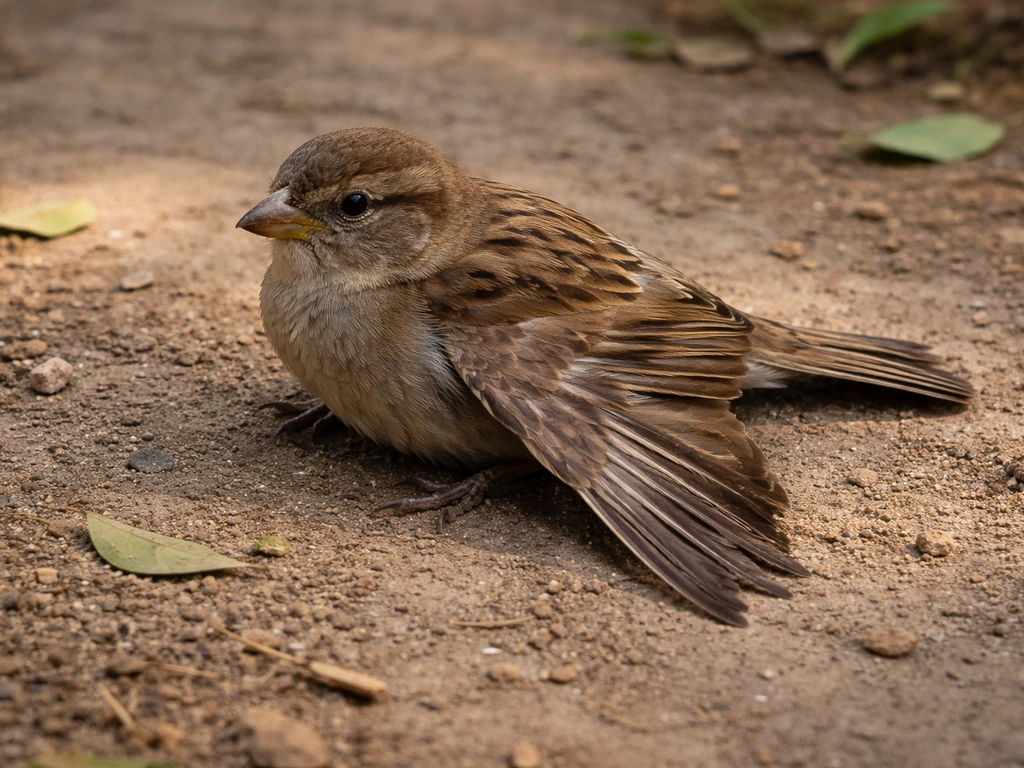
When someone finds a grounded bird that looks rough, messy, or disheveled, it usually means one of three things: a physical injury (most commonly a broken or damaged wing, but also a broken leg, beak damage, or a wound from a cat or window strike), an illness (infections, parasites, or neurological problems), or shock. These can look almost identical at first glance. A bird sitting still on the ground with ruffled, fluffed-up feathers and dull eyes could be injured, sick, or in shock from trauma, and you often can't tell the difference without professional help.
There's one important exception worth knowing: a young bird (a fledgling) that hops around but doesn't fly is often completely normal. Fledglings spend a few days on the ground learning to fly while their parents watch nearby. If the bird is clearly young, has short tail feathers, and is hopping confidently, it may not need rescuing at all. But if the bird looks adult-sized, is visibly injured, is bleeding, or seems unable to hold itself upright, it needs help. When in doubt, take a photo and call a rehabilitator before you do anything else.
Quick safety steps before you touch the bird
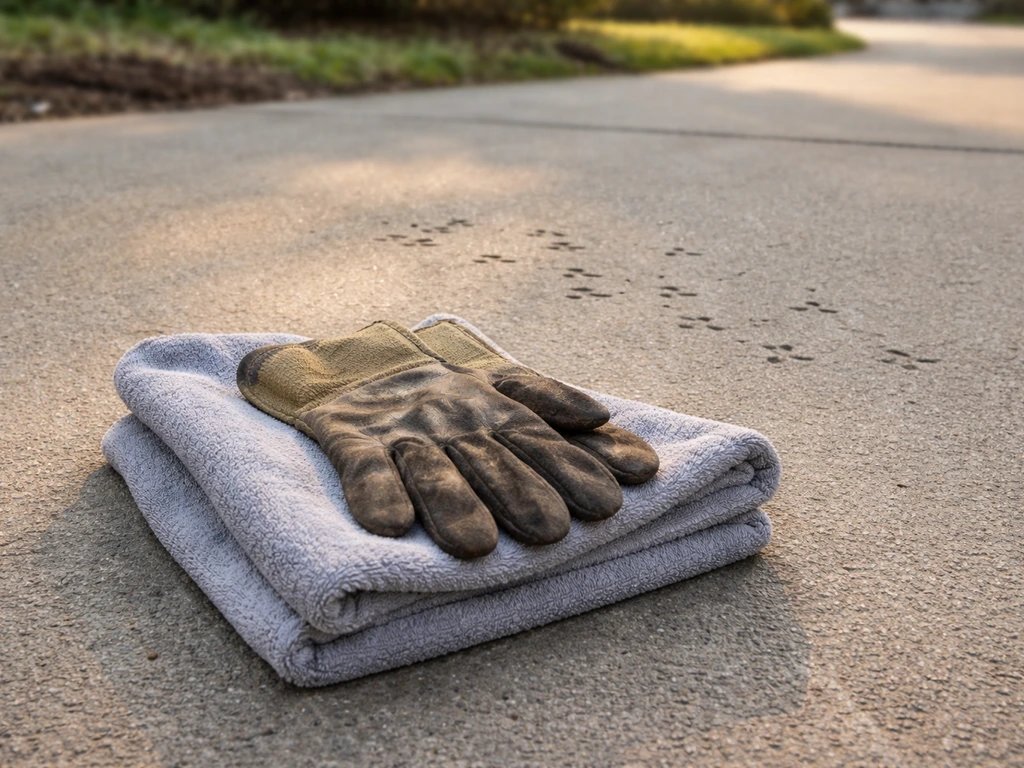
Before you go near it, get gloves. Even a small injured bird can scratch or bite in a panic, and wild birds can carry bacteria, parasites, and other pathogens. If you don't have gloves, grab a folded towel or thick cloth instead. Keep children and pets well away from the area, both for the bird's safety and yours. An injured bird that gets spooked by a dog or curious child is already in shock, and adding more stress can be fatal.
Approach slowly and quietly. Drape the towel over the bird before you try to pick it up. Covering the bird so it can't see you reduces panic significantly. When you lift it, cup it gently but firmly with both hands so it can't flap. The goal is to minimize movement and handling time. Every extra minute of struggling burns the bird's energy reserves and worsens shock.
How to assess a broken wing vs. other problems at home
You don't need to be an expert to do a basic visual check, but keep it brief and hands-off. Once the bird is in a container and calm, look at it carefully without touching or prodding. Here are the signs that point to different problems:
| What you see | What it might mean | Urgency level |
|---|---|---|
| One wing drooping or hanging lower than the other | Possible broken wing or soft tissue injury | High, contact a rehabber today |
| Visible bone, blood, or obvious deformity | Broken bone with open wound | Urgent, go now |
| Cat or animal bite/puncture wound (even small) | Deep wound, high infection risk | Urgent, go now |
| Bird can't stand or keeps falling over | Possible head injury, neurological issue, or shock | Urgent, go now |
| Head tilting to one side | Possible head trauma or inner ear damage | Urgent, go now |
| Panting or fast breathing for more than 2 hours | Respiratory distress, shock, or illness | High, contact a rehabber today |
| Ruffled feathers, dull eyes, sitting still | Shock, illness, or general injury | High, contact a rehabber today |
| Visible maggots or worm-like parasites | Fly strike, advanced injury/illness | Urgent, go now |
| Hops and moves but won't fly | May be a fledgling, or mild injury | Lower, observe and call for advice |
A drooping or dragging wing is one of the most reliable signs of a broken wing you can spot without handling the bird. If one wing sits lower than the other at rest, or the bird holds one wing out awkwardly, that's a red flag. But don't try to manipulate the wing to check. You can do real damage by trying to move or straighten it, and the bird will panic. Your job at this stage is observation only.
Immediate first aid for a suspected broken wing
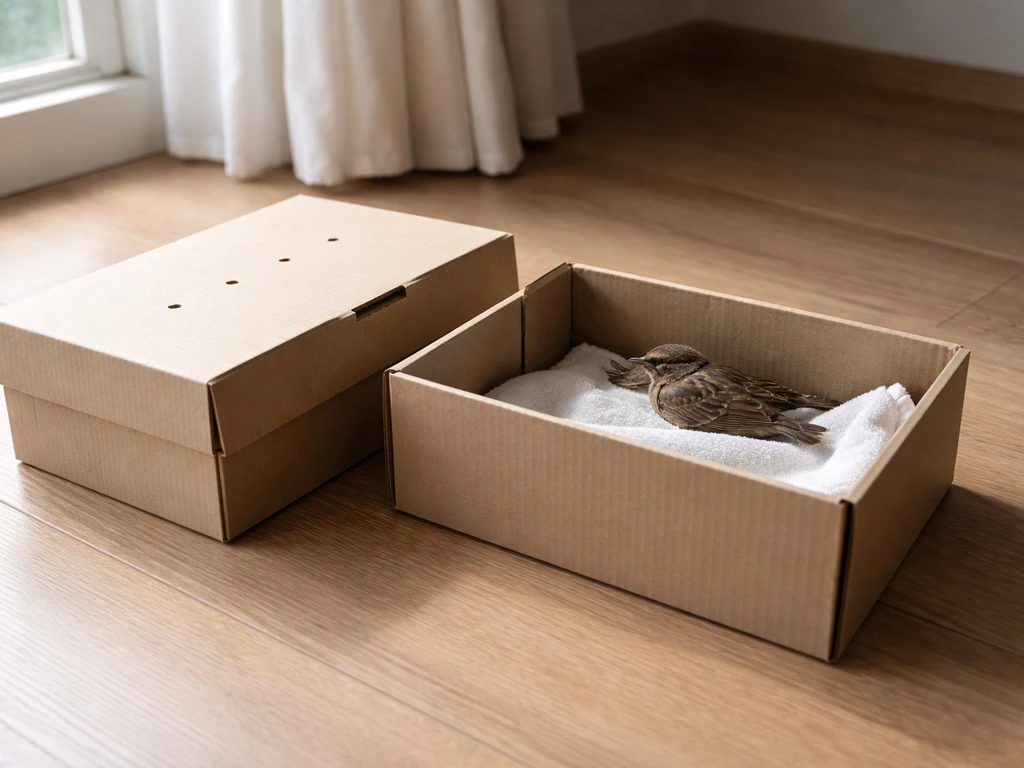
The most important thing you can do right now is get the bird into a safe, contained, quiet space. That's genuinely the biggest first-aid step there is for a wild bird with a broken wing. Here's how to do it correctly:
- Find a cardboard box or shoebox with a lid. Poke several small holes in the lid and sides for ventilation.
- Line the bottom with a cloth, paper towel, or crumpled newspaper. Avoid anything with frayed edges or loops that toes can get caught in.
- Place the bird gently inside, still wrapped loosely in the towel if needed. Don't force the wing into any position. Let it rest naturally.
- Close the lid. Darkness calms birds significantly and reduces stress.
- Provide warmth. Set a heating pad on its lowest setting, place a folded towel on top, and set the box on the towel. Or fill a plastic bottle with warm (not hot) water, wrap it in a towel, and place it beside (not under) the bird. Leave part of the box floor unheated so the bird can move away from the heat if needed. The box should feel comfortably warm, around 85°F if you can measure it.
- Put the box somewhere quiet, away from pets, loud noise, and sunlight. A spare bathroom or utility room works well.
- Contact a wildlife rehabilitator or avian vet immediately. Don't wait to see if it improves.
That's it. You're not trying to set the bone, clean the wound, or fix anything. You're stabilizing the bird, reducing shock, and buying time until a professional can help. The less you handle it between now and then, the better.
What NOT to do (mistakes that make things worse)
This section matters as much as everything above. Well-meaning people often do things that seriously harm injured birds, so read this carefully before you do anything beyond boxing the bird up.
- Do not give food or water. This is the most common mistake. Wild birds often don't drink standing water the way pets do, and forcing liquid into a bird can cause aspiration pneumonia. Injured or shocked birds can't safely eat or drink anyway. Leave food and water out of the box entirely.
- Do not try to splint the wing yourself. Home splinting almost always makes fractures worse and causes the bird intense pain. It also restricts circulation. Leave the wing alone.
- Do not try to straighten or reposition the wing. Even if it looks obviously broken, do not touch or move it. Support the body, not the wing.
- Do not bathe or aggressively clean the bird. Getting a bird wet when it's in shock can cause fatal hypothermia. If there's visible dirt or light debris on feathers, leave it. Professionals handle wound cleaning.
- Do not apply human antiseptics, creams, or ointments. Products like hydrogen peroxide, Neosporin, or antiseptic sprays can be toxic to birds. Nothing goes on the skin or feathers unless a vet has specifically told you to do it.
- Do not keep it in a cage with perches or in a large open space. A big space means the bird will try to move and will injure itself further. A small, dark, enclosed box is safer.
- Do not leave it outside to 'see if it recovers.' A grounded injured bird is extremely vulnerable to predators, including neighborhood cats and dogs.
- Do not post about it on social media and wait for advice. Time matters. Call a professional.
When to call an avian vet or wildlife rescue right now
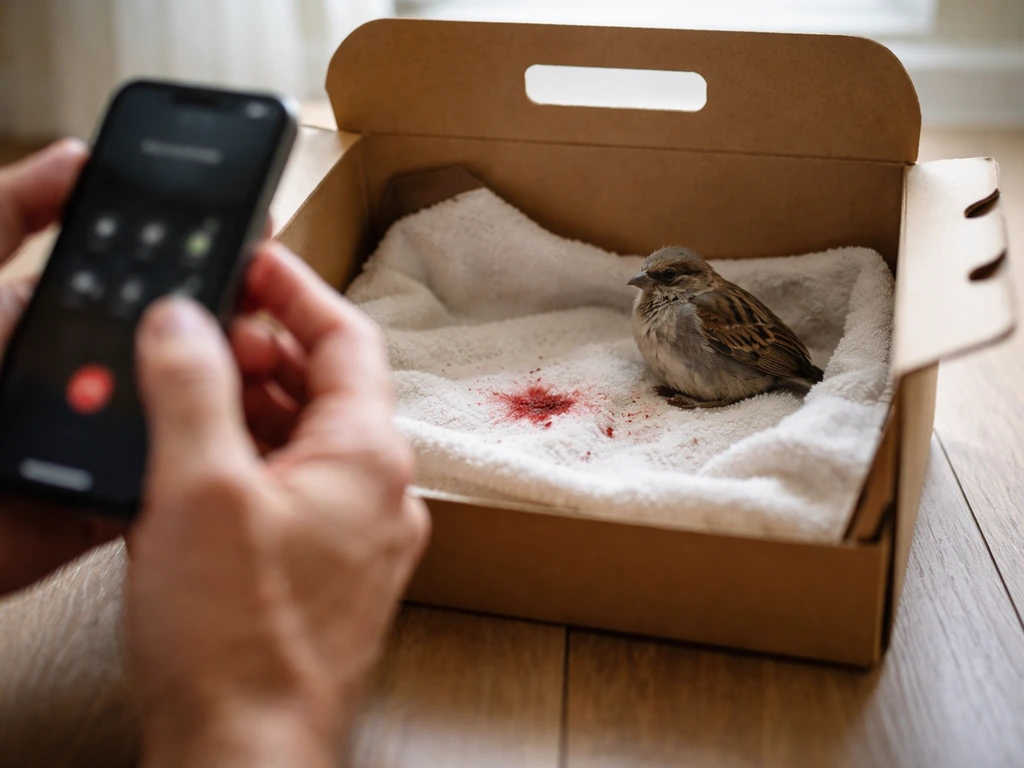
Honestly, if you're reading this article because you found a bird that can't fly, you should already be making calls while you read. If you are wondering whether a caged bird seal can be removed, the safest step is to contact an avian vet or wildlife rehabilitator first, because removal attempts can injure the bird can the caged bird seal be removed. But these situations are absolute "call immediately" emergencies, with no waiting:
- Visible bleeding or an open wound
- Bone visibly breaking through the skin
- The bird was caught or bitten by a cat or dog (even a tiny puncture wound introduces bacteria that causes fatal infection within 24 to 48 hours)
- The bird can't stand up or keeps falling over
- Head tilting to one side
- Rapid panting or labored breathing for more than two hours
- Visible maggots, fly eggs, or unusual parasites
- Shivering or feeling cold to the touch
- The bird is completely unresponsive or lying flat on the ground
To find help, search "wildlife rehabilitator near me" or "bird rescue [your city/state]" right now. In the US, the National Wildlife Rehabilitators Association (NWRA) and the Wildlife Center of Virginia both have online directories. In the UK, the RSPCA has a 24-hour helpline. Your local animal shelter or animal control office can also point you toward permitted rehabilitators even if they can't take the bird themselves. If you have an avian vet nearby (not just a general vet), they're an excellent option too. When you call, describe what you see: drooping wing, bleeding, inability to stand, what happened if you know, and what you've already done.
Recovery timeline, at-home support, and follow-up care
Recovery for a bird with a broken wing is almost always handled by a professional, not at home. A wildlife rehabilitator will assess the fracture, determine if it's surgically repairable, and start treatment. Simple fractures in small birds can heal in as little as two to four weeks with proper immobilization. More serious fractures, especially compound fractures or those involving the shoulder joint, can take six to eight weeks or longer, and some birds don't regain full flight. That's not a prognosis you can assess yourself at home.
While you're waiting to transport the bird (or if you're told by a rehabber to hold it overnight), here's how to support it in the box:
- Keep the environment at roughly 85°F and definitely not cold
- Check on it visually once every hour or two, but don't handle it
- Keep the room dark and extremely quiet, no TV, radio, or loud voices nearby
- Transport as soon as possible, ideally the same day
- During transport, keep the car radio off, drive smoothly, and keep the box in a stable spot where it won't slide around
After the bird has been handed off to a professional, follow up with the rehab center if they allow it. Many wildlife rehab organizations will update you on the bird's progress, especially if you found a local bird. If the bird recovers fully and is cleared for release, releasing it near where it was found (its home territory) gives it the best chance of survival.
Aftercare and preventing repeat injuries
Once this bird is in good hands, it's worth thinking about how to prevent this from happening again, whether it was a window collision, a pet attack, or a nest emergency.
Window collisions
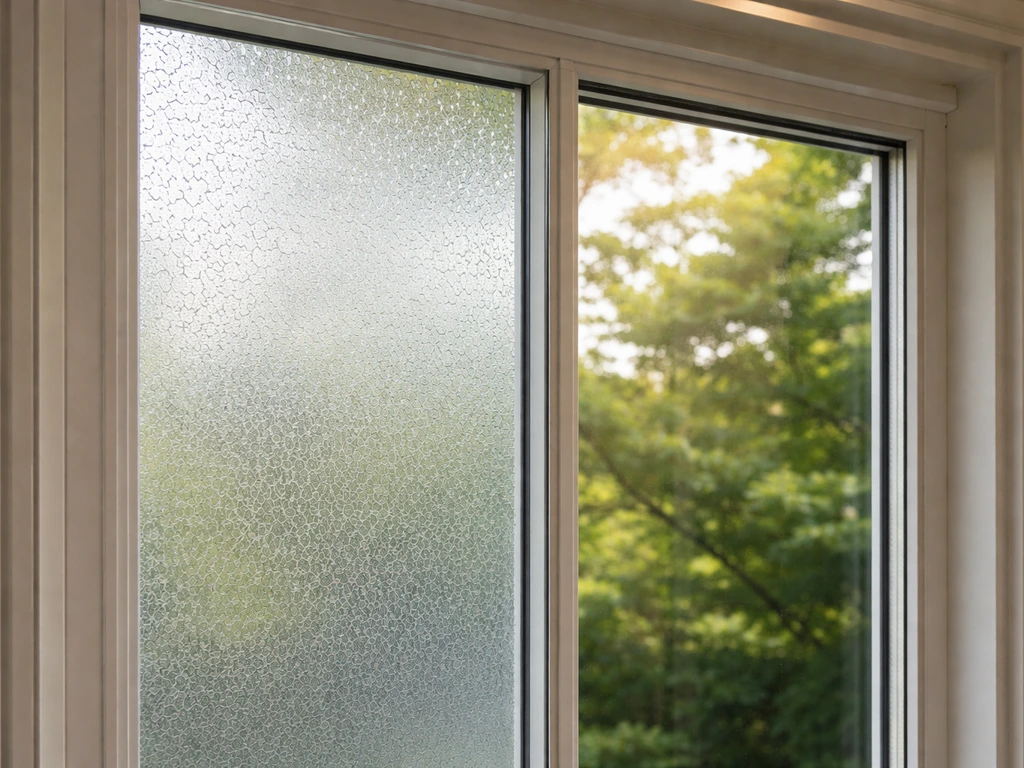
Window strikes are one of the most common causes of grounded, injured birds. Nearly half of all strikes happen at residential homes, not commercial buildings. A single decal or sticker on a window generally doesn't work because birds need to see a pattern covering most of the glass with gaps no wider than two inches high or four inches wide. Frosted window films, external screens, and commercially available bird-safe window tape (applied in a grid) are all much more effective than a single hawk silhouette sticker. If you've found a window-strike victim, check which window it hit and take steps to treat that window before it claims another bird.
Pet-related injuries
Cats are a leading cause of bird injuries and deaths in residential areas. If you have outdoor cats, the most effective prevention is keeping them inside, especially during peak bird activity in early morning. Even a supervised outdoor cat can move faster than you can react. Bell collars help slightly but aren't reliable. If a neighbor's cat is the issue, a conversation (or a physical barrier around bird-friendly parts of your yard) may be necessary.
Nesting and young bird hazards
Nest emergencies are a separate category worth understanding. Young birds that have fallen from nests, or fledglings on the ground, are sometimes mistaken for injured birds. Knowing the difference between a nestling (no feathers, helpless, belongs in a nest) and a fledgling (mostly feathered, hopping, learning to fly) can save you a lot of anxiety and prevent unnecessary intervention. Sometimes a bird does not sing when it is injured, ill, or stressed, so singing (or not) can be another clue when can a bird not sing. If you're seeing a pattern of grounded young birds around your yard, check whether nests nearby are exposed to predators or in unstable locations.
The bottom line is that finding a grounded bird that can't fly is stressful, but your role is relatively simple: contain it safely, keep it warm and dark and quiet, don't feed it or treat it, and get it to a professional as fast as you can. The bird's best chance comes from expert care, not home remedies. You doing your part well, and quickly, is what gives it a real shot at recovery.
FAQ
I’m worried the bird is in shock. How do I tell if it’s getting worse while I’m waiting for help?
If you have to move it, do so only once: lift with gloves or a towel, place directly into a ventilated container, then stop handling. Avoid “repositioning” the wing or checking for responsiveness after it is boxed, because agitation can increase shock and worsen bleeding.
Can I feed or water the bird while I wait for the wildlife rehabilitator?
No. Do not give food, water, or supplements. Even a small amount of water can go into the windpipe if the bird is weak or in shock. If the rehabber asks you to do anything later, follow their instructions, but the default is containment only.
What kind of container should I use, and what should I put in it for comfort?
A good container choice is something rigid and secure with airflow (like a lidded box with small holes) plus a dark cover. Line the bottom with paper towels or a clean cloth, then keep the bird mostly still and undisturbed. Avoid fluffy bedding that can snag claws or make the bird slip.
Is it safe to add a heat source to keep the bird warm, and how do I avoid overheating?
Lightly warming the container is okay if the bird feels cold, but do not overheat. Use a gentle heat source placed outside the box (for example, a heating pad on low under half the container) so the bird can move away from heat. If the bird is panting or very hot to the touch, remove the heat source.
What should I do if the bird is bleeding from the wing or wound area?
If it is bleeding, keep pressure away from the wing or shoulder area unless a professional tells you otherwise. Your role is to prevent additional stress and contamination: gently stabilize the bird in the box and minimize movement. If there’s a lot of blood, prioritize immediate transport or rapid call-back to the rehabber.
Can I clean the wound or apply antibiotic ointment at home?
Do not bathe, clean, or apply ointments. Many topical products can be toxic if the bird preens later, and scrubbing can damage tissue and increase bleeding. Keep the area as-is and let the rehab team handle wound care.
Is it okay to cover the bird with a towel completely, and how do I manage airflow and darkness?
A towel over the bird is useful, but do not cover vents or make the container airtight. Keep it in a quiet, dark place and provide airflow through small holes. Also, use indirect warmth rather than placing it directly under a lamp or in a hot car.
What details should I tell the rehabilitator when I call so they can guide me better?
Yes, have this ready for the call: where you found it (indoor or outdoor, window or cat exposure if known), whether it can stand, whether there is bleeding, how the wing looks at rest (drooping, held out), approximate size/species if you can estimate, and the time you found it. This helps them triage transport priority and what supplies to expect.
I think it might be a fledgling. When is “leave it alone” no longer the right choice?
If the bird might be a fledgling, don’t assume it will recover on its own if it appears unable to stand, is bleeding, looks adult-sized, or is clearly injured. When in doubt, take a quick photo for ID and call, especially if there is a drooping wing or the bird cannot right itself.
How should I transport the bird to the vet or rehab center, and what should I avoid in the car?
During transport, keep the container upright and stable, reduce noise, and avoid repeated checks. If the bird is struggling hard in the box, slow down and keep the environment calm rather than trying to calm it by re-handling. Drive directly, because delays increase stress and risk of deterioration.
Once the bird is cleared for release, what’s the safest way to choose where and when to let it go?
After handoff, follow their instructions about timing and location. If they recommend release, release at the spot they specify, typically close to where you found it and during safer daylight hours. If you can’t release immediately, ask what they want you to do instead of improvising care.
If it hit a window once, how do I prevent repeat strikes at the same house?
If the strike came from a window, treat the whole window, not just one spot, with a pattern covering most of the glass and gaps small enough to be hard to see through. After an incident, double-check the same window orientation birds use in the morning and evening, since collisions often repeat at the same times.
Next Articles
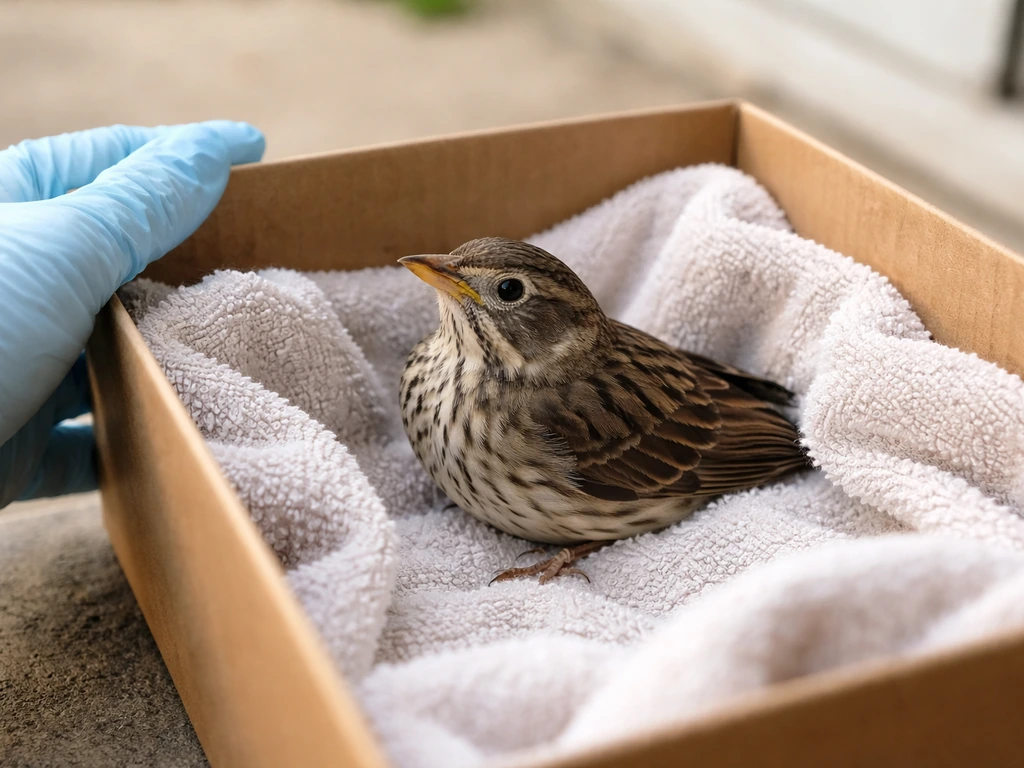
Can the Caged Bird Seal Be Removed? Safe Steps After Trapping
Learn if the caged bird seal can be removed safely, step-by-step release tips, first aid, and when to call wildlife expe
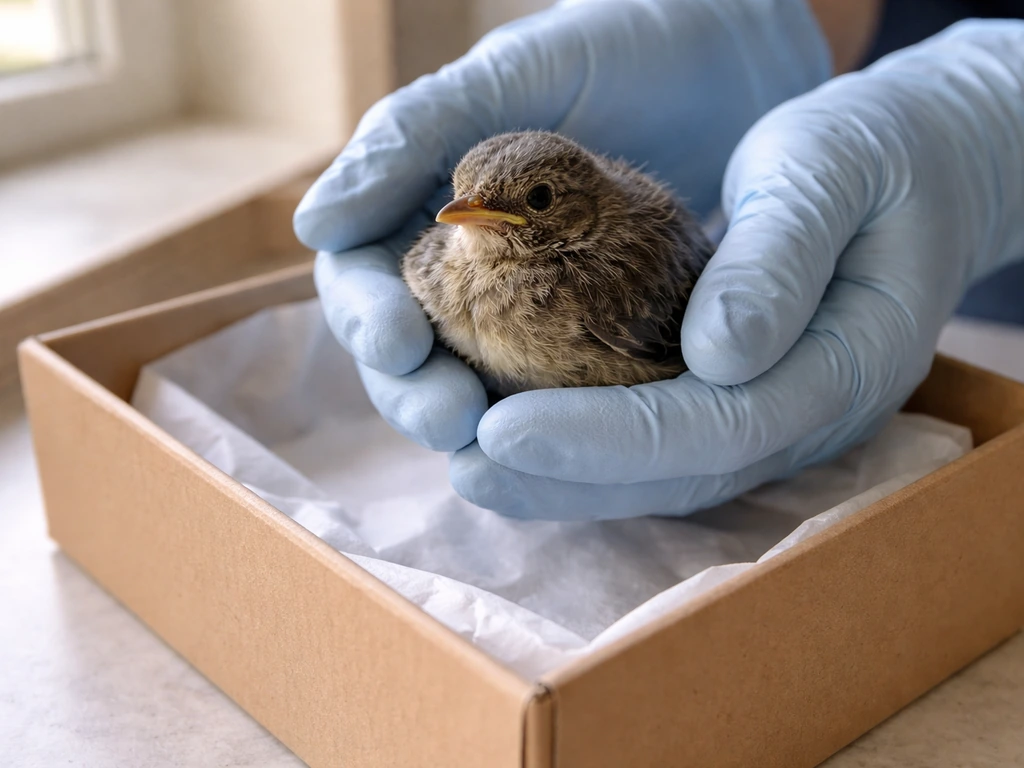
Found Young Bird Can’t Fly: Step-by-Step Rescue Guide
Step-by-step rescue for found young bird that can’t fly: age check, safe care, feeding, red flags, and next steps.
When Can a Bird Not Sing? Red Flags and What to Do Now
Know when a bird’s silence signals injury or illness, plus quick first-aid checks and when to get urgent help.