If you've found a young bird on the ground that can't fly, there's a good chance it doesn't need rescuing at all. Most young birds people find are fledglings doing exactly what they're supposed to do: sitting on the ground or hopping awkwardly while their parents watch nearby. But some genuinely are injured or in danger, and knowing which situation you're dealing with changes everything you do next. Here's how to figure it out fast and take the right steps.
Found Young Bird Can’t Fly: Step-by-Step Rescue Guide
Marcus Chen
13 May 2026
First: figure out what kind of bird you're looking at
The single most important thing you can do right now is look at the feathers. This one observation will tell you whether the bird is a nestling, a fledgling, or potentially an injured adult, and it changes everything about what you should do.
Nestlings: too young to be out of the nest
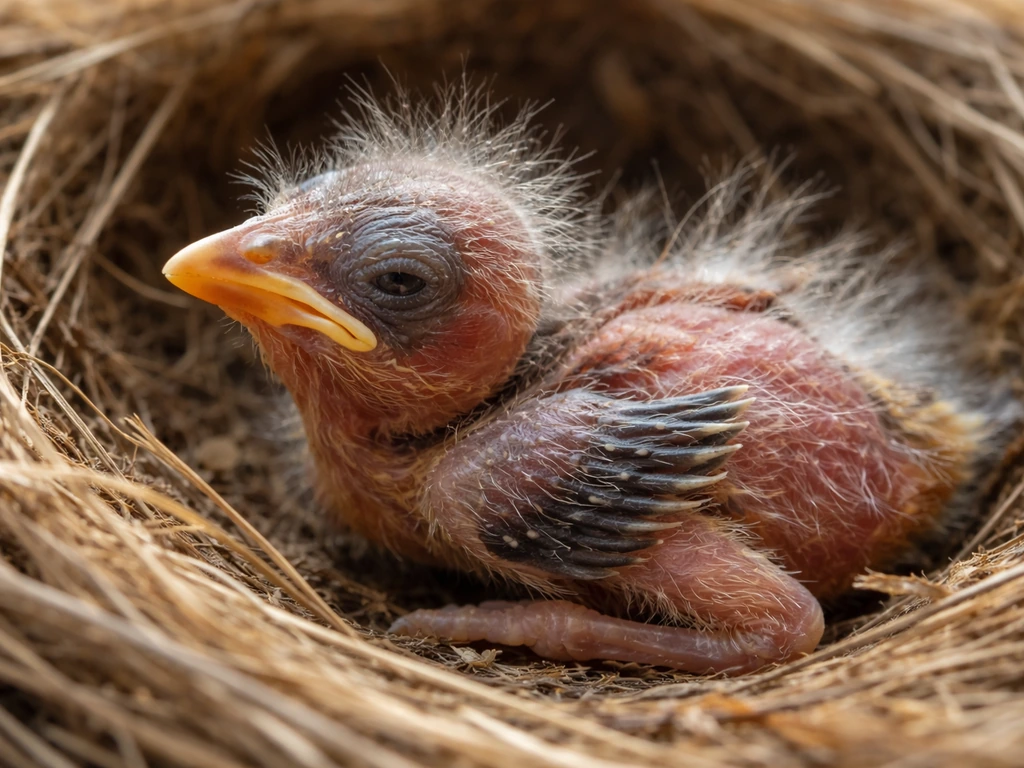
A nestling is a very young bird that's missing most or all of its adult feathers. You might see bare pink or dark skin, patchy tufts of fluffy down, or short stubby feather shafts poking through. The eyes may be closed or just barely open. If this is what you're looking at, the bird has genuinely fallen or been knocked out of its nest too early. It cannot survive on the ground and does need your help.
Fledglings: normal, temporary ground dwellers
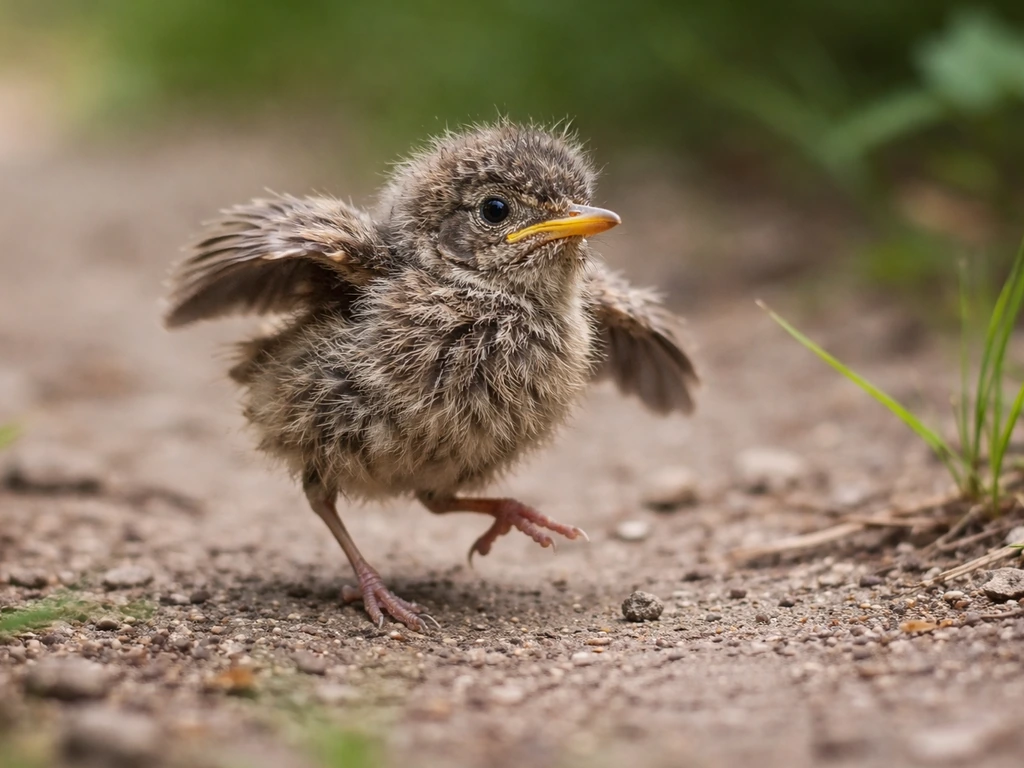
A fledgling has most or nearly all of its feathers, looks like a small, slightly scruffier version of an adult bird, and can hop, perch briefly, and flap its wings. It may look clumsy and helpless, but the RSPCA and wildlife clinics are emphatic: fledglings leave the nest just before they can fly, and spending a few days on the ground or on low branches is completely normal development.
The parents are almost always still around, watching and feeding them, even if you can't see them. The US Fish and Wildlife Service specifically says to leave a bird alone unless it's featherless or has its eyes closed. If you suspect a bird has been kept in a cage or otherwise restrained, ask a qualified wildlife rehabilitator for safe next steps rather than trying to remove any protective coverings or restraint yourself.
If your bird is fully feathered, perching, and alert, it almost certainly does not need intervention.
Injured birds: when something is genuinely wrong
Whether the bird is a nestling, fledgling, or older juvenile, certain signs tell you it's hurt rather than just young. In some cases, a bird may not sing because it is stressed, injured, or sick, so treat it as a possible health or safety issue when can a bird not sing. A bird that can't stand at all, is lying on its side, has a drooping or dangling wing, has visible wounds, blood, or swelling, or seems unable to hold its head up is injured. A bird sitting with its eyes half-closed, feathers puffed out, and breathing heavily is in shock or seriously unwell. These birds need care regardless of their age stage.
Look the bird over: common reasons young birds can't fly
Once you've identified the likely stage, do a quick head-to-tail visual check from a short distance before you touch anything. You're not trying to diagnose the bird, just looking for obvious problems that will help you describe what you're seeing when you call for help.
- Wings: Is one wing drooping lower than the other? Does it hang at an odd angle? A wing that looks asymmetrical at rest or flops when the bird moves likely has a fracture.
- Legs and feet: Can the bird stand? Does it keep falling over to one side? Are the toes clenched in an abnormal fist, or is a leg bent the wrong way? Leg fractures and tendon injuries are common in young birds.
- Head and neck: Is the bird holding its head tilted to one side, spinning in circles, or falling over repeatedly? This suggests head trauma or neurological injury, often from a window strike or cat attack.
- Eyes: Are both eyes open and equally responsive? A bird with one eye closed, swollen, or that won't track movement has likely suffered head trauma.
- Beak or face: Bleeding from the beak or nostrils, visible swelling, or a deformed beak are all injury signs.
- Skin and feathers: Part the feathers gently with a finger. Look for puncture wounds, especially small ones from cat claws, which are easy to miss but always serious.
- Overall posture: A healthy fledgling sits upright and reacts to your presence by trying to move away. A sick or injured bird often lets you walk right up and pick it up without resistance.
If a cat, dog, or vehicle was involved, treat the bird as injured even if you can't see any wounds. Cat saliva carries bacteria that cause fatal infections within hours, and impact trauma can cause internal injuries with no external signs at all.
Immediate first aid and safe containment
Whether you're dealing with a nestling that needs to go back to its nest or an injured bird that needs professional care, the immediate handling steps are almost the same. The goal is: minimize stress, keep the bird warm, and don't make things worse.
How to pick it up
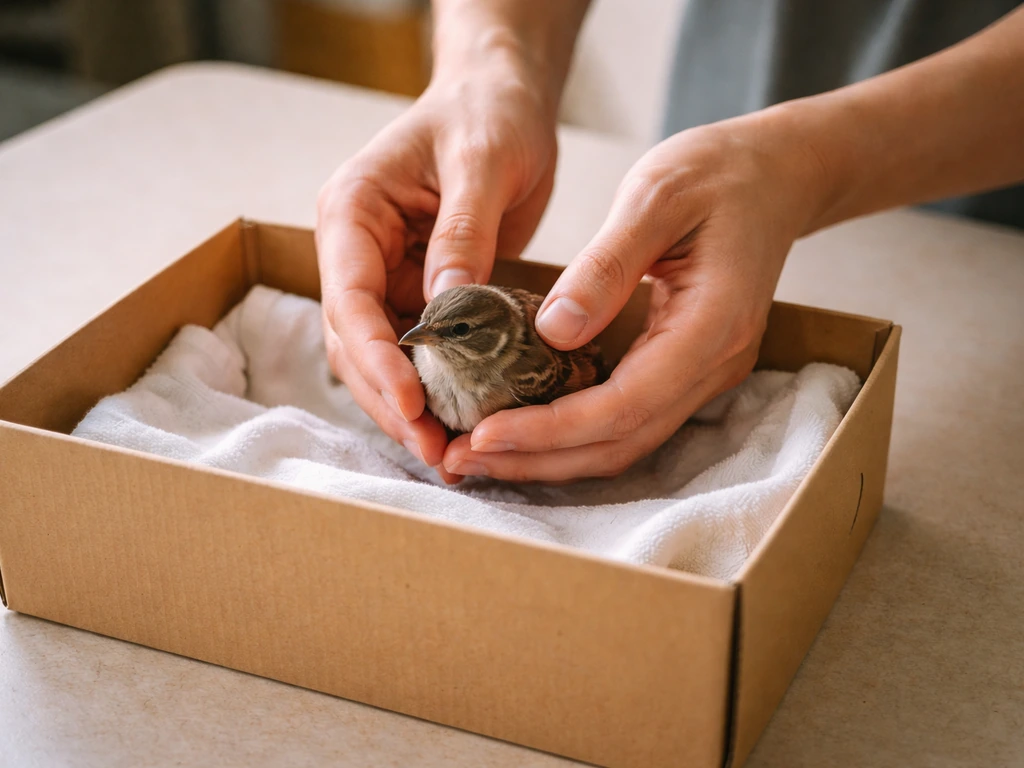
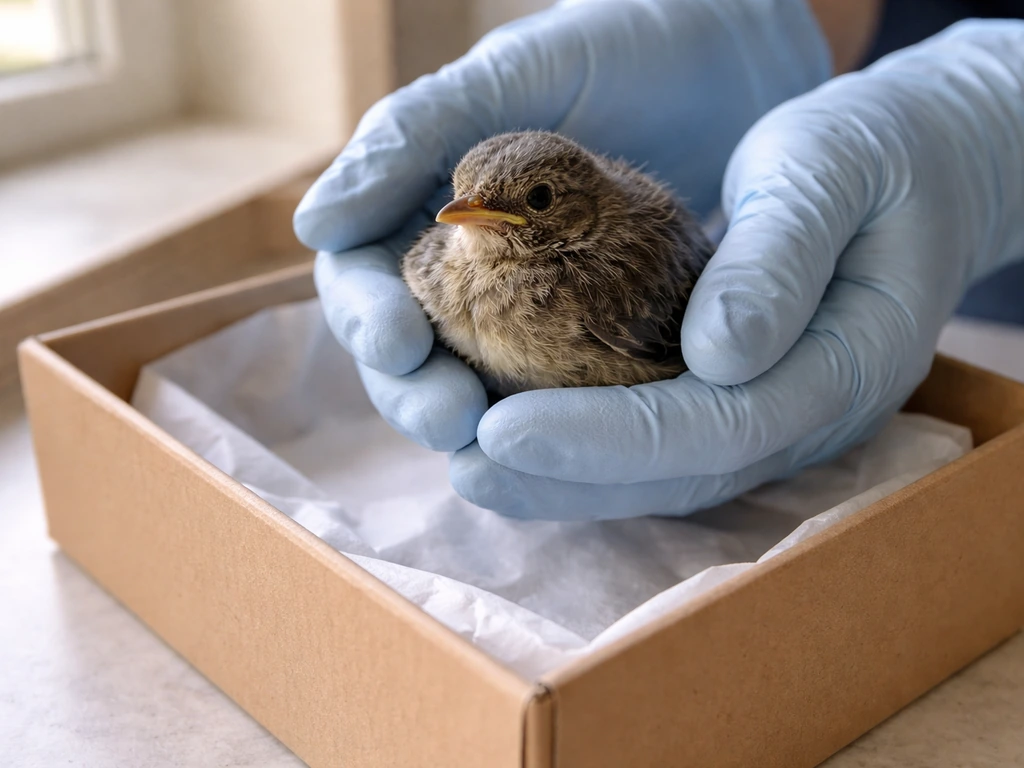
Wear thin gloves if you have them, but bare hands are fine if not. Gently cover the bird with both hands, letting it rest in your cupped palms. Keep your grip loose enough that it can breathe but firm enough that it can't thrash and injure itself further. Avoid squeezing the chest. Birds breathe by expanding their ribcage, so any pressure on the body can interfere with breathing. Don't grab a wing to lift the bird.
Set up a temporary container
Put the bird in a small cardboard box lined with a soft cloth, paper towel, or a loose layer of tissue. The box should be just big enough that the bird can't throw itself around. Poke a few small air holes in the lid or sides. A shoebox works well. Close the lid. Darkness calms birds and reduces stress hormones, which genuinely improves survival odds.
Keep it warm
Young birds lose body heat quickly, especially if they've been on cold ground. Place the box in a warm, quiet room away from children, pets, and noise. If the bird is a nestling or appears cold (unresponsive, lethargic), you can put a heating pad set on the lowest setting under half the box, so there's a warm side and a cooler side. Never put a heating pad inside the box or cover the whole bottom, as this can overheat and kill the bird.
Food and water: mostly don't
Do not give water by dropper or syringe. It goes into the lungs easily and can cause drowning or fatal aspiration pneumonia. Do not offer bread, milk, cat food, worms, or seed unless a wildlife rehabilitator has specifically told you to. Most well-meaning attempts to feed baby birds cause harm. The only exception: if the bird is alert and a wildlife rehabilitator won't reach you for several hours, a tiny pinch of plain soft cat food (no gravy) placed near the beak is less harmful than most other options, but this is a last resort. For a short transport window of a few hours, the bird will be fine without food.
What to do next based on what you found
If it's a nestling: try to return it to the nest
The old idea that a parent will reject a baby bird because you touched it is a myth. Birds have a very limited sense of smell and will not abandon a chick because it smells like a human. If you can see the nest and safely reach it, place the nestling back. Watch from a distance of at least 30 feet for an hour to confirm a parent returns.
Tufts Wildlife Clinic and other wildlife experts confirm that returning a nestling to its nest is the best possible outcome. If the nest is destroyed or unreachable, you can create a substitute using a small plastic container with holes punched in the bottom for drainage, fill it with dry grass or leaves, attach it to the same tree as close to the original nest location as possible, and place the bird inside. Then watch and wait.
If it's a fledgling with no injuries: leave it alone
If the bird is fully feathered, standing, alert, and there's no cat threat or immediate danger, the best thing you can do is step back and leave it. Move pets and people away from the area. The Washington Department of Fish and Wildlife explicitly advises that healthy fledglings on the ground should be left where they are. If you're in Tufts' words, the little bird "seems content" and you can see adult birds in the area, assume it's being cared for. You can gently move it to a nearby shrub or low branch if it's in a dangerous spot like a road or driveway, but don't take it inside.
If it's injured: contain it and call for help
An injured bird needs a wildlife rehabilitator or avian vet, not home treatment. Get it into a box as described above, keep it warm and quiet, and make the call. Do not attempt to splint a wing or treat wounds yourself. Broken bones in birds require professional care, and improper splinting can cause permanent damage. Your job at this stage is safe containment and fast transport.
Red flags that mean call for help right now
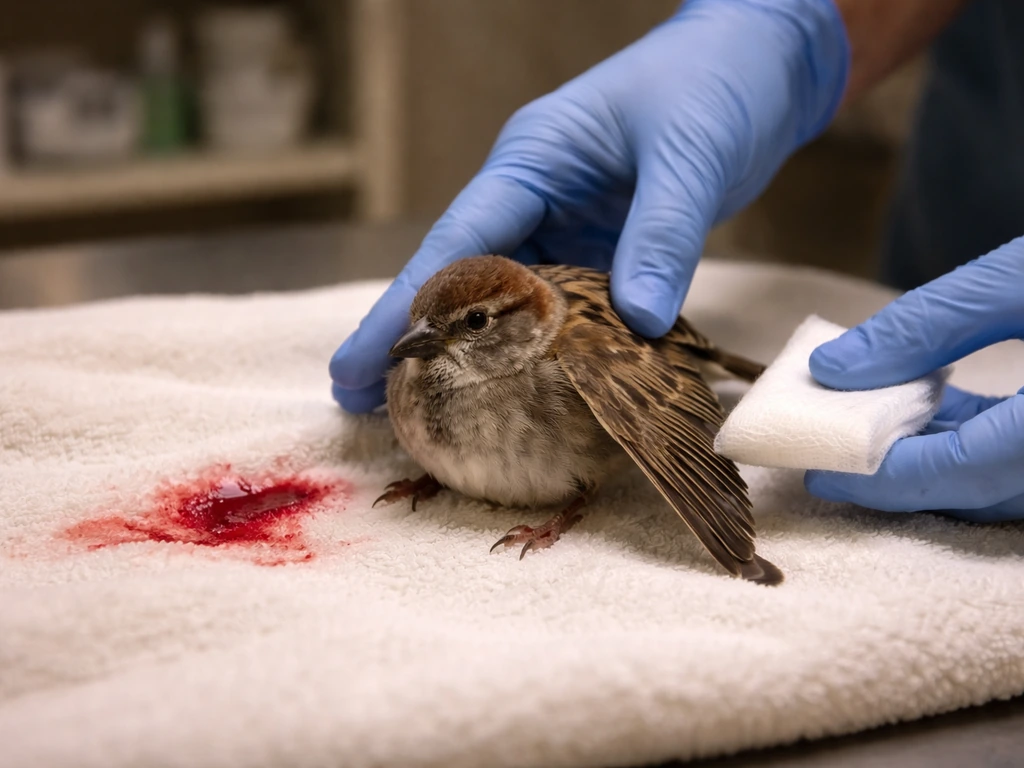
Some situations require urgent professional attention with no waiting. If you see any of the following, skip the "watch and wait" step entirely and get on the phone to a wildlife rescue or avian vet immediately.
- Active bleeding from anywhere on the body
- A wing or leg hanging at a clearly abnormal angle, or a visibly broken bone
- The bird cannot stand or keep its balance and keeps falling over
- Head tilting to one side, circling, or seizure-like movements (these suggest neurological damage)
- The bird was in a cat's or dog's mouth, or was struck by a vehicle
- The bird was hit by a window and is not recovering after 30 minutes
- Visible puncture wounds or open lacerations
- The bird is cold, limp, or completely unresponsive
- Eyes are swollen shut or there is discharge
- Labored breathing, open-mouth breathing, or clicking sounds while breathing
- The bird is a nestling (featherless or barely feathered) and no nest is findable
Window strikes deserve a specific note here. A bird that hits a window may sit stunned on the ground for 15 to 30 minutes and then recover fully. Keep it in a dark box, check after 30 minutes, and if it's alert and responsive, release it in the area where it was found. But if it's still unresponsive after 30 to 45 minutes, has blood around the beak or nostrils, or is showing any of the neurological signs above, treat it as an emergency. Wing and leg injuries in the context of broken bones are covered in more detail in related articles on this site.
How to get the bird to professional help
Finding help near you
To find a wildlife rehabilitator, search for your state or country's wildlife agency online, as most have a licensed rehabilitator directory. In the US, the National Wildlife Rehabilitators Association (NWRA) and the Wildlife Center of Virginia both have searchable databases. You can also call your local animal shelter, humane society, or even a veterinary clinic, since many will know the nearest bird-specific rehabilitator even if they don't treat wildlife themselves.
When you call, lead with: "I have a young bird that can't fly" and then describe what you saw in your visual check. If the bird is a young chicken or another juvenile bird, tell the professional exactly what you see so they can advise the right next steps I have a young bird that can't fly. Mention if a cat or dog was involved, as that dramatically changes urgency.
Transporting the bird safely
Keep the bird in the closed, ventilated box for the entire journey. Place the box on the seat or floor of the car where it won't slide around. Don't peek in repeatedly or talk to the bird, as even gentle handling adds to stress. Keep the car quiet and at a comfortable temperature. If the trip is long (more than an hour), place a lightly damp piece of fruit like a grape inside the box as an optional moisture source, but do not force feed. When you arrive, hand over the box and let the professionals do the assessment.
What to tell them
When you hand the bird over or call ahead, tell them: where exactly you found it (yard, road, park, near a window), when you found it, what it looked like when you found it (its posture, any injuries you noticed), whether a cat, dog, or vehicle was involved, and what you've done so far (food, water, warmth). This information directly affects treatment decisions. Don't guess at the species if you're unsure, just describe the size, color, and beak shape.
Common mistakes that hurt more than help
Most people who find a young bird want to do the right thing, but some very common instincts make things worse. Here's what to avoid.
| What people do | Why it causes harm | What to do instead |
|---|---|---|
| Try to feed the bird water by dropper | Causes aspiration pneumonia; can kill within hours | No water by dropper; leave feeding to professionals |
| Give bread, milk, or seed | Wrong nutrition; can cause choking, crop impaction, or organ failure in young birds | Don't feed unless instructed; cat food is last resort only |
| Keep the bird as a pet or for days "just to see" | Delays professional care; imprints the bird on humans, ruining release prospects | Call a rehabilitator within hours, not days |
| Try to "teach" a fledgling to fly by tossing it | Stresses the bird; can cause injury; parents won't help if you keep interfering | Let the fledgling develop at its own pace on the ground |
| Release an injured bird back outside too soon | Bird reinjures itself or is killed by predators before healing | Only release when cleared by a professional |
| Put the bird back in the wrong nest | Wrong species nests may reject or harm the bird | Return to original nest or close substitute only |
Prevent this from happening again
If you found the bird because a cat brought it in, window collisions are the second most common cause of young bird injuries. Both are largely preventable. For windows, apply window collision tape, decals, or external screens, especially on large clear panels or windows that reflect sky and trees. Collisions happen because birds can't see glass, and the solution is making the glass visible from outside. Spacing decals about 2 inches apart vertically and 4 inches apart horizontally breaks up the reflective surface enough to work.
For cats, keeping them indoors during fledgling season (typically late spring through early summer) makes a real difference. If that's not possible, a collar with a brightly colored cover or a bell reduces hunting success significantly. Avoid leaving food sources like bird feeders at ground level, and make sure your yard doesn't have hiding spots where cats can ambush birds in low shrubs near feeding stations.
If you find young birds in your yard regularly during nesting season, that's actually a good sign. It means your yard is good habitat. Leaving some low, dense shrubs untrimmed gives fledglings safe places to hide while they develop. Resist the urge to "tidy up" heavily during May and June. The occasional awkward bird on the ground is part of the process, and the best thing you can give it is the space to figure things out on its own.
FAQ
What should I do if the bird looks feathered but keeps wobbling or falling over when I try to move it away from danger?
Treat it as potentially injured rather than “just young.” If it cannot perch or holds its head up poorly, keep it in the box and contact a wildlife rehabilitator instead of relocating it again. Repeated handling usually worsens shock in birds.
How long should I wait before assuming a fledgling needs help after I find it?
For a healthy, fully feathered fledgling, a brief check is reasonable, then stop interfering. If the bird remains unresponsive, cannot sit up normally, or shows worsening breathing or balance, call for help. If window strike is suspected, use the specific timing in the guide (around 30 to 45 minutes) before deciding it is an emergency.
If I put a nestling back in the nest, should I watch the parents from inside my house or from close by?
Watch from a distance, at least 30 feet, and avoid lingering right next to the tree or nest. Returning to check repeatedly from close range can keep the area stressful for both parents and the chick, so choose one observation window and then back away.
Is it safe to pick up a found bird to take a better look for injuries or to identify the species?
Limit handling and do a short visual assessment first. If you need to move it for safety or containment, do it quickly and with minimal touching. For identification uncertainty, describe the bird’s size, color pattern, and beak shape rather than trying to confirm the exact species on the spot.
What if the bird is covered in ants or appears dirty, should I clean it before transport?
Do not wash or bathe it. Instead, use the box containment and keep it warm and quiet, then let the rehabilitator assess. If insects are actively crawling and you have to move it from a hazardous surface (road, mulch, grass that’s wet with chemicals), move it gently into the box.
Can I give water to a found bird if it seems dehydrated?
Do not offer water by dropper or syringe, that can go into the lungs and cause fatal aspiration. For transport, just keep the bird warm and follow the rehabilitator’s instructions when you reach them. A brief moisture source like fruit is only mentioned as an optional option during long car trips, not as a substitute for proper care.
I found a bird near a window and it seems stunned. Do I release it the moment it wakes up?
Release only after it is alert and responsive, not just when it opens its eyes. If there is any blood around the beak or nostrils, or it shows neurological issues like uncoordinated movement or weakness, treat it as an emergency and do not attempt release.
What should I tell the rehabilitator if I think the bird was restrained, caged, or handled at home?
Mention any visible restraints or protective coverings you noticed, how long you suspect it was restrained, and whether the bird appears stressed or injured. Ask for instructions tailored to that situation rather than trying to remove any protective material yourself.
If I’m unsure whether it’s a nestling or a fledgling, should I treat it as injured?
Use the feather-and-eye check first. When you cannot confidently classify it, the safer default is to minimize handling, contain it in a ventilated box, keep it warm, and contact a wildlife rehabilitator. That approach avoids the risk of leaving a truly nestling out too long or mishandling an injured bird.
What’s the best way to prevent my pets from “checking” the bird during rescue or transport?
Keep cats and dogs out of the room where the box is placed, and do not carry the bird through a place your pets can access. During transport, secure the box on a stable surface and keep the car calm, so pets do not repeatedly lunge or trigger stress responses.
Next Article
When Can a Bird Not Sing? Red Flags and What to Do Now
Know when a bird’s silence signals injury or illness, plus quick first-aid checks and when to get urgent help.