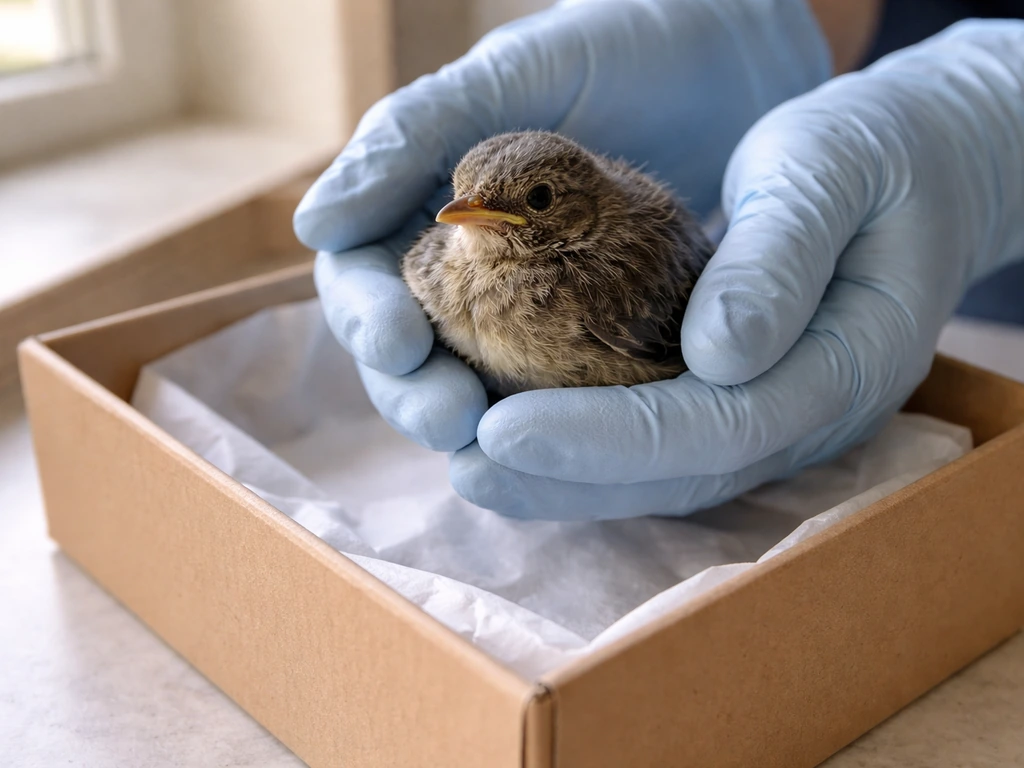
Yes, in most cases a bystander can safely remove a bird from a trapped or restrained situation, but only after checking a few critical things first. The decision comes down to two factors: what the bird is stuck to or trapped in, and how badly it appears to be injured. Get those two things right and you'll know immediately whether to act yourself or call a wildlife rescue first.
Can the Caged Bird Seal Be Removed? Safe Steps After Trapping
Marcus Chen
14 May 2026
What 'caged bird seal' actually means (and what to look for first)
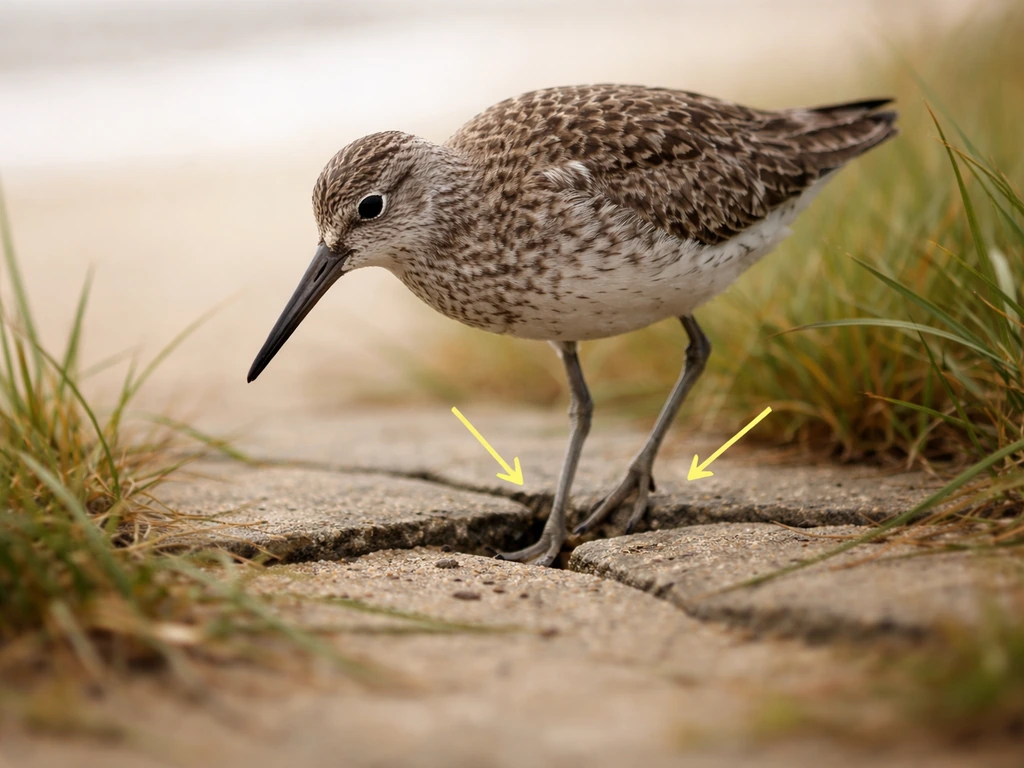
Most people searching this phrase are dealing with a bird that is physically stuck or entrapped rather than anything involving a commercial product. In the field, we see this fall into a handful of real scenarios: a bird stuck to an adhesive surface like a glue trap, weather-stripping, or fresh caulk or sealant; a bird wedged behind a window screen, door gap, or mesh; a bird tangled in string, netting, or wire; or a bird that flew into a window and is now dazed and wedged into a tight spot. Wildlife rehabbers call these situations 'entanglement' (for string, line, or mesh) or 'bird on a glue trap' (for adhesive situations). The word 'seal' in common use often refers to the caulk or weatherproofing seal on a window or door frame, which birds do get stuck to.
Before you do anything else, look at the bird without touching it. Give yourself about 30 seconds to assess. You are checking for:
- Breathing: is the chest moving? Is the beak open and gasping?
- Bleeding: any visible blood on feathers, beak, or feet
- Wing position: one or both wings drooping or held at an odd angle
- Leg position: legs dangling, twisted, or unable to grip
- Beak or feet stuck: is the bird physically adhered to or caught in something?
- Level of consciousness: alert and trying to escape, or limp and unresponsive?
A bird that is alert, eyes open, and actively struggling is stressed but likely has a better prognosis than one that is limp, eyes half-closed, or not reacting to your approach at all. That distinction matters for every step that follows.
When it's safe to remove vs. when to leave it alone
This is the most important call you will make. Removing a bird incorrectly, especially one with a broken wing or spinal injury, can cause more harm than leaving it temporarily while you get professional help on the phone.
Remove immediately if:
- The bird is stuck to a glue trap or adhesive surface and is still alive (adhesive situations are time-sensitive; the longer it stays, the more feather and skin damage occurs)
- The bird is tangled in string, fishing line, or netting and is actively thrashing (thrashing worsens entanglement fast)
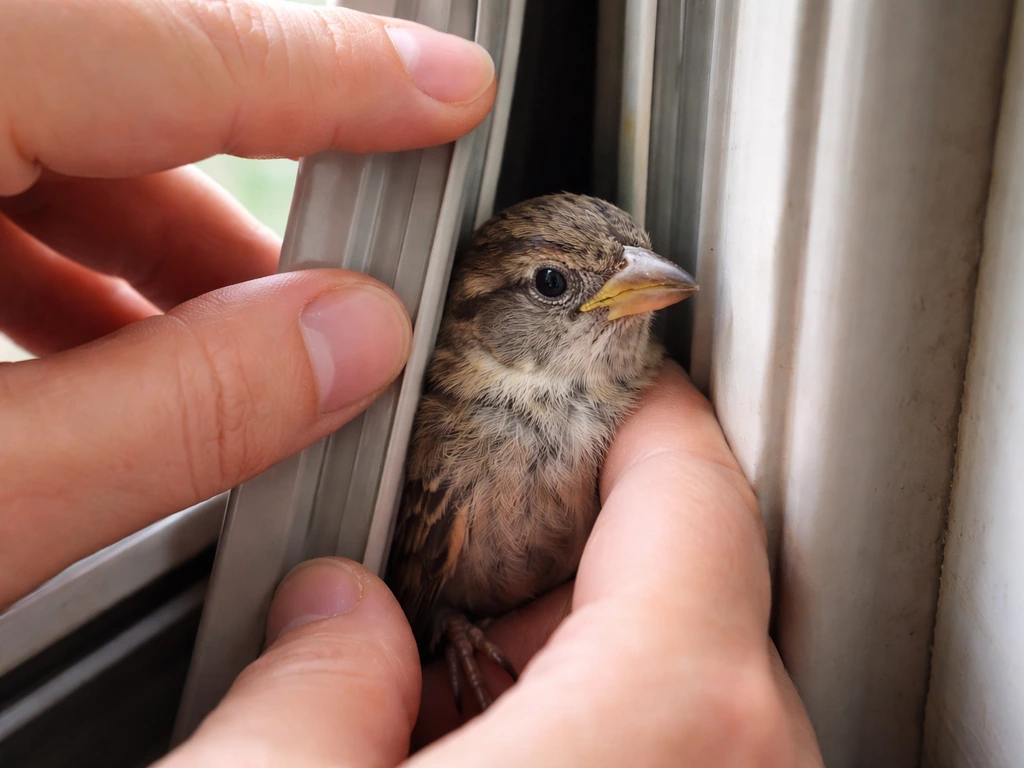
- The bird is trapped in a closing gap, like a window frame or door hinge, where continued pressure could cause further injury
- The bird is in immediate danger from a predator, traffic, or extreme weather and cannot escape on its own
Call a wildlife rescue or avian vet BEFORE attempting removal if:
- The bird is bleeding heavily from the beak, head, or body
- A wing or leg appears severely broken (bone visible, limb at a very unnatural angle)
- The bird is completely limp, unresponsive, or appears to be in shock
- The bird is tangled in wire or a trap mechanism that you cannot safely manipulate without tools
- You cannot identify what the bird is stuck to and pulling it may rip skin or feathers
- The bird hit a window and is now wedged in a position where it cannot fall further (window-strike birds are often just stunned and may recover on their own in 15 to 30 minutes in a quiet, contained space)
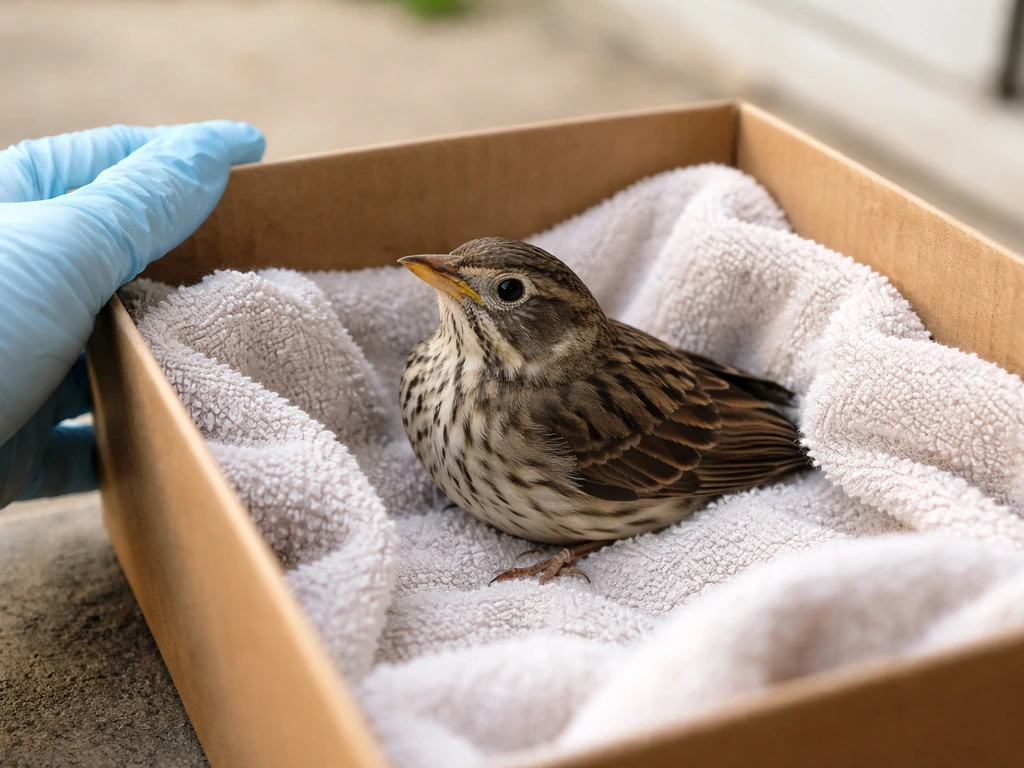
Window collision situations are a special case. A bird that has struck a window and is sitting dazed on a ledge or in a corner is not necessarily 'trapped' in the entanglement sense. The best immediate action there is blank" rel="noopener noreferrer">containment in a dark, ventilated box to reduce shock, then monitoring. If it is still unable to fly after 30 to 60 minutes, that is when you make the call for professional help. A found young bird that can't fly should be treated as a potential injury and may need a wildlife rehabber to assess it unable to fly after 30 to 60 minutes.
Step-by-step removal for the most common scenarios
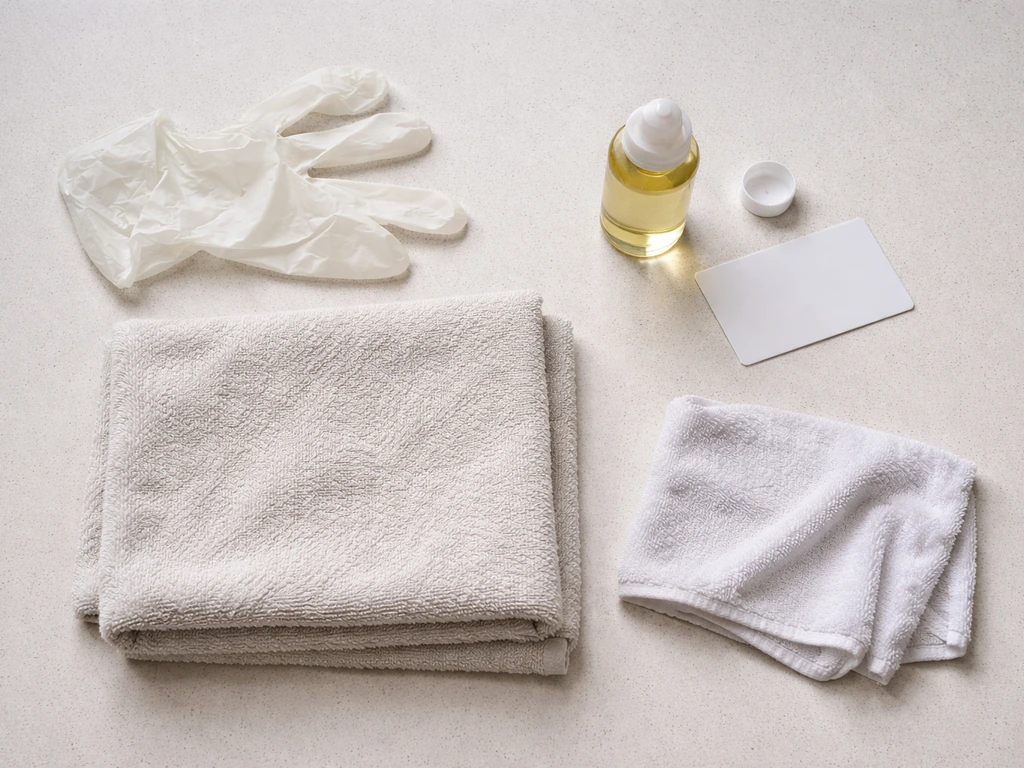
Always wash your hands before and after handling any wild bird. Use thin gloves if you have them, but do not let finding gloves delay you in a true emergency. Move slowly and speak quietly. Sudden movements massively increase a bird's stress.
Bird stuck to a glue trap, fresh caulk, or adhesive sealant
- Do not pull the bird directly off the surface. You will tear skin and feathers.
- Drizzle a small amount of vegetable oil, coconut oil, or olive oil onto the adhesive around the stuck areas. Avoid getting oil in the eyes or beak.
- Wait 60 to 90 seconds, then very gently and slowly work the stuck feathers or feet free using your fingers or a soft cloth, moving in the direction of feather growth.
- If feet are stuck, support the body of the bird with one hand while using the other to ease the foot free. Do not yank.
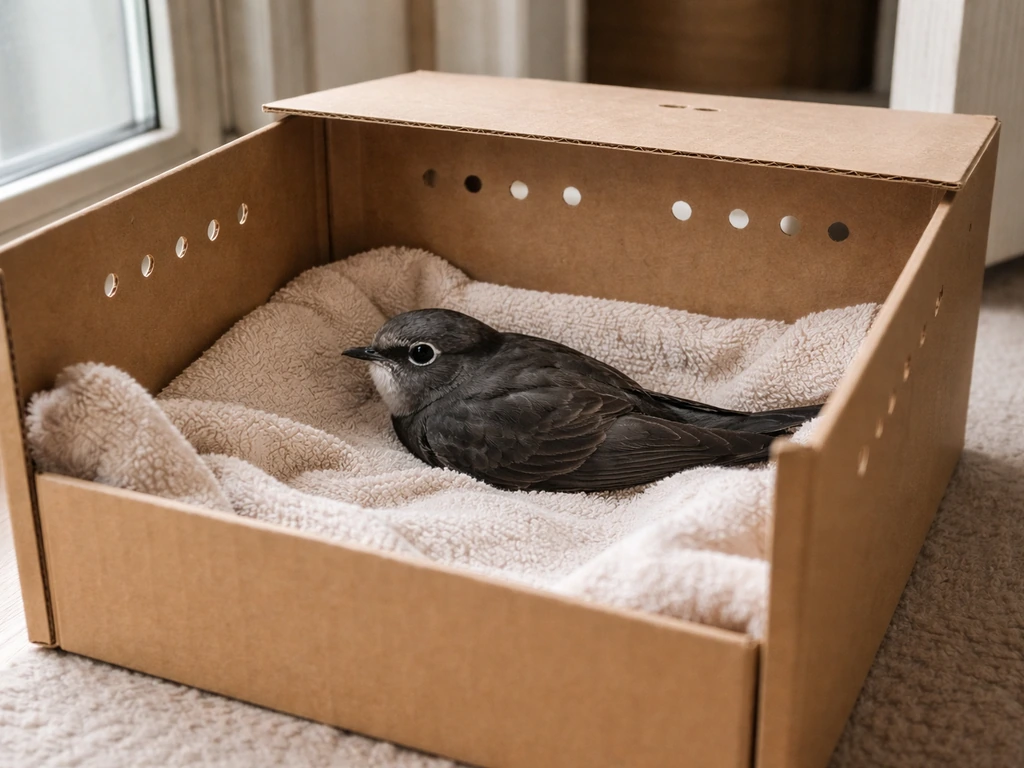
- Once free, place the bird in a small, ventilated box lined with a soft cloth and assess for injuries before doing anything else.
- Wipe as much residual oil from the feathers as you safely can with a dry cloth. Do not bathe the bird in water; it can cause dangerous chilling.
Bird tangled in string, netting, or mesh
- Approach slowly and cover the bird loosely with a light cloth or towel to calm it before attempting anything. This reduces thrashing significantly.
- With one hand, gently hold the bird's body against yours to keep it still. Never squeeze.
- Use small scissors (nail scissors or thread snips work well) to cut string or line. Cut away from the bird's body and cut in small sections rather than pulling.
- Work one entangled limb at a time, starting with whatever is most tightly wrapped.
- Check each foot and toe individually; line can wrap tightly around individual toes and cut off circulation.
- Once free, place the bird in a box and examine for swelling, color change (dark purple on feet or toes indicates circulation loss), or wounds from the line.
Bird wedged in a window frame, door gap, or fixture
- First, determine if the bird is being actively compressed. If a window or door is pressing against it, carefully and slowly open or release that pressure first.
- Support the bird's body with both hands before it can fall. Cup it gently with your palms.
- Do not tilt or rotate the bird's head or neck. Support the whole body as a unit.
- Place the bird in a box immediately and evaluate. A bird that was wedged may have internal injuries even if it looks okay externally.
Immediate first aid once the bird is free
The moment the bird is out of the entrapment, your job shifts to reducing shock and keeping it stable. This is not about treatment; it is about buying time until professional help is available.
Containing and warming the bird
Place the bird in a small, dark, ventilated cardboard box lined with a non-fluffy cloth like a thin tea towel or paper towel. Darkness immediately reduces panic. Keep the box in a warm (not hot) room, away from noise, pets, and children. A temperature of around 80 to 85 degrees Fahrenheit is ideal for an injured bird in shock. You can place one end of the box on a heating pad set to its lowest setting, leaving the other end unheated so the bird can move away from the heat if needed.
Managing bleeding
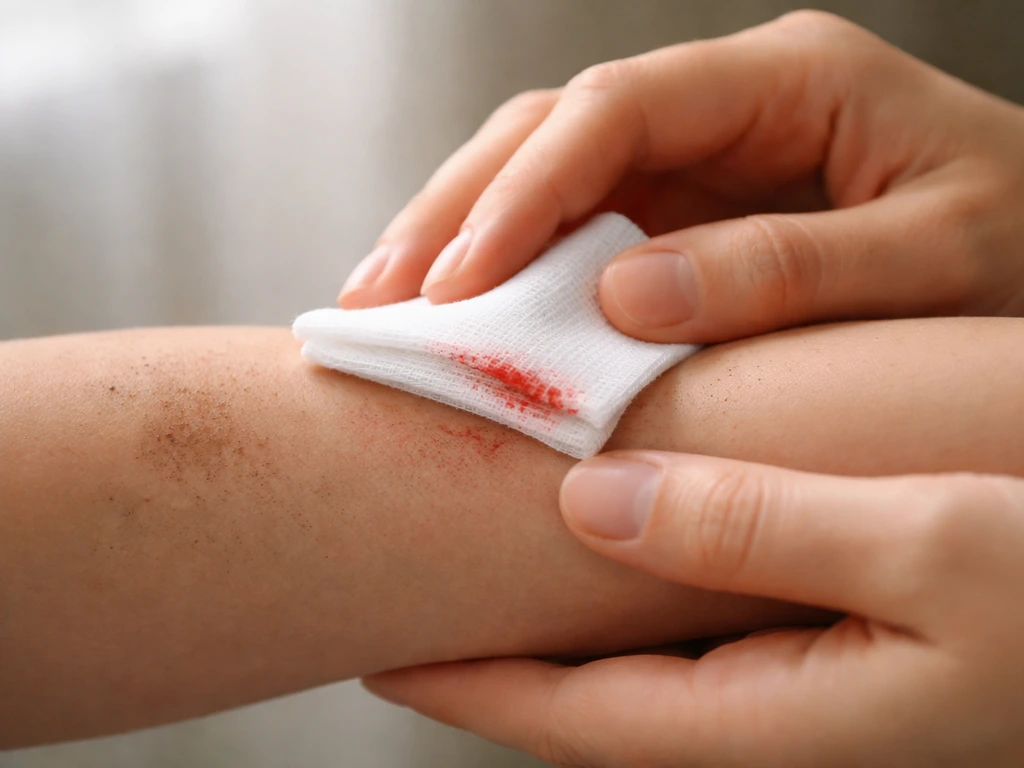
If you see active bleeding, apply very gentle pressure with a clean dry cloth or gauze for one to two minutes. Do not use cotton wool directly on wounds; the fibers catch on injuries. For a broken blood feather (a pin feather that is bleeding), gentle pressure usually works. Do not attempt to pull out a broken blood feather yourself; that can cause significant blood loss and pain and is a job for a vet or rehabber.
What not to do
- Do not give the bird water by dropper or syringe; aspiration (water going into the airway) is a serious risk
- Do not give food unless the bird is clearly alert and you are certain what species it is and what it eats
- Do not handle the bird more than necessary; every time you pick it up, its stress hormones spike
- Do not place it in direct sunlight or a drafty area
- Do not leave it in the open where cats, dogs, or other predators can reach it
When to call a wildlife rescue or avian vet right now
Some situations are beyond what a bystander should handle alone, and the honest truth is that most injured wild birds need professional care to survive. Call a licensed wildlife rehabilitator or avian veterinarian immediately if you observe any of the following:
| Sign you're seeing | Why it needs professional care |
|---|---|
| Heavy or ongoing bleeding | Internal or vascular injury; requires proper wound care and possibly surgical intervention |
| Obvious fracture (dangling wing or leg, visible bone) | Fractures need splinting or surgery; improper handling makes them worse |
| Bird is limp, eyes closed, or unresponsive | Severe shock or neurological injury; needs oxygen, fluids, and monitoring |
| Feet or toes appear dark purple or black | Circulation loss from entanglement; tissue can die within hours without intervention |
| Beak is cracked, broken, or bleeding | Beak injuries affect eating and breathing; needs specialized repair |
| Bird cannot stand or balance after 30 minutes in quiet containment | Possible concussion, spinal injury, or internal trauma |
| You cannot fully free the bird from the entrapment safely | The risk of further injury from continued DIY attempts is too high |
To find help, search for a licensed wildlife rehabilitator in your area through your country's wildlife agency website. In the US, the National Wildlife Rehabilitators Association (NWRA) and the Wildlife Rehabilitators Directory are good starting points. Many areas also have 24-hour wildlife hotlines. When you call, describe the species if you can, the type of entrapment, and any injuries you can see. The more specific you are, the faster they can triage.
If you are in a rural area with no immediate access to a rehabber, an avian vet (a vet who specializes in birds) is your next best option. General practice vets can sometimes help stabilize a bird even if they cannot fully treat it. Do not assume that because you cannot find a specialist, there is nothing to do.
Aftercare and stopping it from happening again
Once the immediate situation is resolved, it is worth taking 10 minutes to figure out how the bird got into trouble in the first place. Most entrapment situations are preventable.
If the bird got stuck to a window or door sealant
Fresh caulk and certain weatherstripping adhesives are extremely dangerous to birds while curing. If you are doing any sealing or caulking work outdoors, cover the area until the product is fully cured (check the manufacturer's drying time, typically 24 to 72 hours for full cure). Consider placing temporary deterrents like strips of tape or netting around fresh sealant work so birds cannot land on it.
If the bird struck a window
Window collisions are one of the leading causes of bird injury and death. Applying window collision tape (available in most hardware stores), external screens, or window films that are visible to birds but largely transparent to humans can dramatically reduce strikes. Placing bird feeders either within 3 feet of the window (so birds cannot build up dangerous speed) or more than 30 feet away (far enough that birds orient away from the glass) also helps.
If the bird was tangled in netting or string
Check your yard for loose netting, garden mesh, or old string and remove or secure it. Use wildlife-friendly bird netting (with a fine enough mesh that birds cannot get their heads or feet through) if you need to protect garden areas. Regularly inspect it for damage or gaps. Monofilament fishing line is particularly dangerous; dispose of it carefully and never leave it loose outdoors.
Glue traps
Glue traps placed for rodents catch birds, bats, and other non-target animals regularly. Wildlife rehabbers from WCNGA also advise treating glue or adhesive incidents as emergencies and using the term "glue trap" or "glue board" rather than euphemisms like "caged." Glue traps placed for rodents catch birds, bats, and other non-target animals regularly.. If you use them, place them only in fully enclosed areas that birds cannot access. Better yet, switch to snap traps or live traps where bird entrapment risk is much lower.
If the bird you rescued was a young or fledgling bird that cannot yet fly, the situation has some different considerations around whether it actually needs intervention at all. Similarly, a bird that is not singing or vocalizing after a rescue can be a sign of continued stress or injury worth monitoring closely. The most important thing in all of these situations is the same: stay calm, move slowly, minimize handling, and get professional eyes on the bird as soon as you can if there is any doubt about its recovery.
FAQ
Can the caged bird seal be removed myself, or should I call someone first?
Only if it is truly stuck to a surface like caulk or adhesive, and you can free it without yanking on feathers or skin. If the bird is tangled in line, string, netting, or wire, it is usually safer to cut the material away from the bird rather than pull the bird out (and in tight wire entanglements, call a pro first).
What if I cannot tell what the bird is stuck to right away?
Yes, but do it with the smallest, least-stressful movement possible. If you cannot identify what the bird is stuck to within about 30 seconds, or if it appears limp, unresponsive, or has visible injury, stop and contact a wildlife rehabilitator or avian vet before attempting removal.
What should I do if the bird is stuck on caulk or weather-seal adhesive?
Do not pull. For adhesive or sealant, you can sometimes work slowly to peel the bird’s body free while supporting the bird’s legs and wings, but avoid any force on the wing joints. If the adhesive is heavy on feathers, it can trap the bird’s skin and impair breathing, which is a strong reason to call a wildlife professional.
Is a bird hit by a window considered trapped, and can the caged bird seal be removed in that case?
If you suspect a window collision but the bird is in a corner or on the floor, do not keep trying to “wake it up.” Contain it in a dark, ventilated box and monitor for 30 to 60 minutes, then get help if it still cannot fly.
Can the bird be freed if it is tangled in netting or string?
If you must cut, use small scissors or wire cutters and cut the material closest to the trap point, leaving as much slack as possible so you are not tugging on the bird. Keep cutting away from the face, and if the line is wrapped around a leg or wing several times, professional help is safest.
Do I need gloves before I attempt removal?
Wear thin gloves if available, but do not delay. The more important risk is stressing the bird into worsening injury, so move slowly, speak quietly, and limit the handling time to what you need to assess and contain.
Can I remove the bird quickly if it is bleeding?
If the bird has any bleeding, do not try to stop it by stuffing materials into the wound. Apply gentle pressure with clean dry gauze or cloth for 1 to 2 minutes, then switch to containment, warmth, and professional care.
What symptoms mean I should not attempt removal at all?
If the bird is unable to right itself, has a tilted or hanging wing, is repeatedly collapsing, or seems unable to breathe normally, treat it as potentially injured and do not attempt extended removal. Call for help immediately after containment.
After removing a trapped bird, what hygiene steps should I follow?
Washing hands is important because birds can carry pathogens and because adhesive or sealant can irritate skin. After handling, wash thoroughly with soap and water even if you wore gloves, and keep pets away from the rescue area.
What is the best immediate setup after the bird is freed?
Yes. To reduce shock, a small dark ventilated box is usually safer than a big open container, and warmth helps only if it is not overheated. Avoid placing the bird under direct heat, and keep the box one end warmer so the bird can move away if needed.
If the bird is a young one, is removal still the right step?
If it is a fledgling that cannot fly, it may still survive outside a rescue scenario, but the article’s same caution applies. If there is any entanglement, injury signs, continuous distress, or it seems trapped against sealant or a gap, get professional advice rather than assuming it will recover on its own.
Can I prevent repeat incidents after a bird got stuck to sealant?
If the sealant is still curing, do not access the area repeatedly. Keep birds from landing on fresh product during the cure window, and if you already triggered an incident, do not re-expose the bird to the same untreated area after rescue.
Next Article
Found Young Bird Can’t Fly: Step-by-Step Rescue Guide
Step-by-step rescue for found young bird that can’t fly: age check, safe care, feeding, red flags, and next steps.