
If you just found an injured bird, here is the short answer: call a licensed wildlife rehabilitator first. If you cannot find one quickly, an avian or exotic-animal veterinarian is your next best option. Animal control is a distant third, mostly useful for birds in dangerous locations or public safety situations. The sections below will help you figure out exactly who to call in your situation, what to say, and what to do in the meantime to give the bird the best chance.
Who to Call for an Injured Bird Near Me: Fast Guide
Marcus Chen
2 Apr 2026
Call the right place based on the situation
Not every injured bird needs the same phone call. The type of bird, what happened to it, and how serious it looks will point you toward the right contact. Here is a quick breakdown.
| Situation | Who to call first | Backup option |
|---|---|---|
| Wild bird, any injury (wing, leg, bleeding, shock) | Licensed wildlife rehabilitator | Avian or exotic vet |
| Window strike / collision | Licensed wildlife rehabilitator | Avian vet if bird is deteriorating fast |
| Bird attacked by a cat or dog | Licensed wildlife rehabilitator (urgent) | Avian vet |
| Bird in immediate public danger (road, predator) | Wildlife rehabilitator + animal control if needed | Call 911 if there's a public safety risk |
| Domestic or pet bird (canary, parrot, etc.) | Avian veterinarian | Emergency exotic animal vet |
| Domestic or feral animal involved (cat/dog injured the bird) | Animal control / Humane Society | Wildlife rehabilitator for the bird itself |
Wildlife rehabilitators are licensed by your state wildlife agency specifically to treat and release wild birds. They are trained for this, and in most states it is actually illegal for anyone without a permit to rehabilitate a wild bird beyond providing basic transport. That is why they are your first call, not a last resort. Avian vets can provide emergency stabilization and are essential for pet birds, but they may refer you to a rehabilitator for wild species. Animal control handles situations involving public safety or dangerous animals, and can be useful if a bird is in a road or inaccessible location.
One important distinction: if your concern is about a domestic or feral animal that injured the bird, contact your local Humane Society or Animal Services agency about that animal. For the bird itself, you still want a wildlife rehabilitator.
Find "near me": wildlife rehab, avian vets, and animal control
The fastest way to find help right now is to use a location-based directory. Here are the most reliable options, in order of how quickly they work:
- Animal Help Now (animalhelpnow.org): Enter your zip code and it pulls up licensed wildlife rehabilitators in your area immediately. This is the tool recommended by multiple wildlife hotlines for emergency situations when you do not know who serves your region.
- WWRA's map-based rehabilitator finder: The Wildlife Rehabilitation Association runs a map tool that shows the rehabilitation center closest to you. Their guidance is clear: call the center before you take any action beyond containment.
- Your state wildlife agency website: Search '[your state] licensed wildlife rehabilitators' or call the state hotline. For example, Florida's FWC Wildlife Alert Hotline is 1-888-404-FWCC (3922), and the Florida Wildlife Rehabilitators Association also runs a Find a Wildlife Rehabilitator map for anyone in the state.
- National Wildlife Rehabilitators Association (NWRA): Their 'Found Bird' resource directs you to a local rehabilitator directory and provides interim guidance while you wait for a callback.
- Google search: 'wildlife rehabilitator near me' or 'avian vet near me' plus your city. Check that the vet specifically sees birds or exotic animals, not just dogs and cats.
If you are in Florida specifically, you have a few extra resources. The FWC Wildlife Health Hotline (866-293-9282) handles certain wildlife reports, and finding the right help for an injured bird in Florida can look a little different from other states because of how FWC organizes its permitted rehabilitators by region. blank" rel="noopener noreferrer">Using the FWRA locator map is the most efficient starting point if you are anywhere in the state.
Rehabilitators are often volunteers running small operations. You may reach voicemail. Do not hang up. Leave a detailed message with your name, phone number, the bird's location, what it looks like, and what happened. Then try your next option while you wait for a callback. Time matters here.
What to do immediately after you find an injured bird
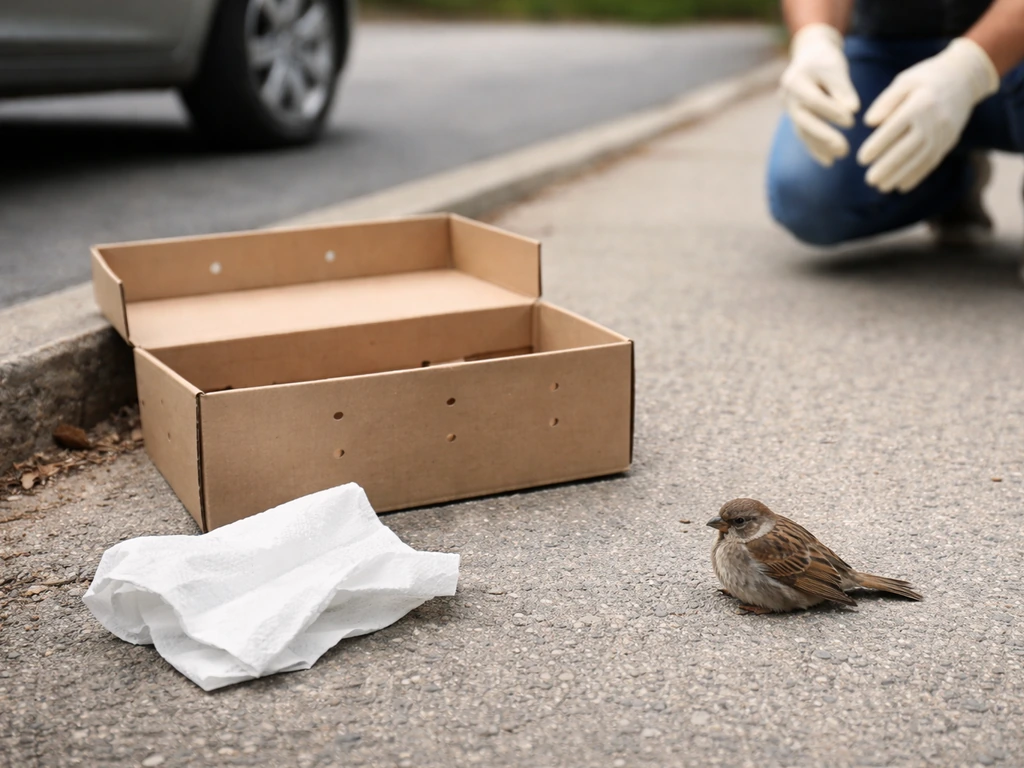
Before you make a single call, spend two minutes doing these things. They can make the difference between a bird that survives transport and one that doesn't.
- Observe first. Watch the bird for a minute or two without approaching. Is it actually injured, or is it a fledgling that belongs on the ground? Fledglings (young birds with short tail feathers, hopping around) are often fine and their parents are nearby. A truly injured bird cannot fly, is bleeding, has a drooping wing, or looks glassy-eyed and unresponsive.
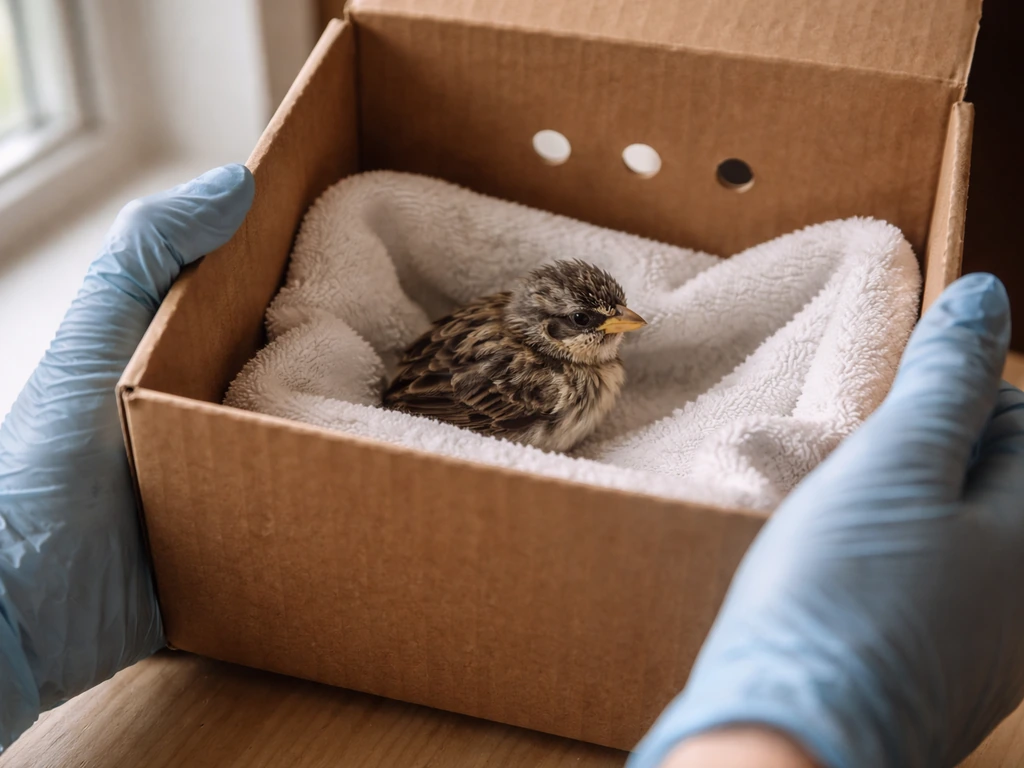
- Contain it carefully. Use a cardboard box no larger than about twice the size of the bird. A shoebox works well for smaller birds. For window-strike birds, an unwaxed paper bag is also fine. Wear gloves if you have them, or use a light towel to pick the bird up gently.
- Cover or close the container. Darkness calms the bird and reduces stress, which is genuinely life-saving when a bird is already in shock.
- Keep it warm. Place the container somewhere warm and quiet, away from pets, children, and noise. If you have a warm (not hot) water bottle, wrap it in a towel and set it next to the bird inside the box, not directly against it.
- Do not give food or water. This is one of the most common mistakes. Injured birds can aspirate water, and the wrong food can cause serious harm. Unless a wildlife rehabilitator specifically tells you otherwise, nothing goes in the box but the bird.
- Note the exact location and time. You will need this when you call.
If you are unsure whether to intervene at all, that hesitation is worth listening to. Knowing how to report an injured bird the right way, rather than jumping straight to picking it up, is genuinely important. Some situations, like a healthy fledgling on the ground, resolve on their own without any human involvement.
Injury-specific guidance for common scenarios
Window strikes
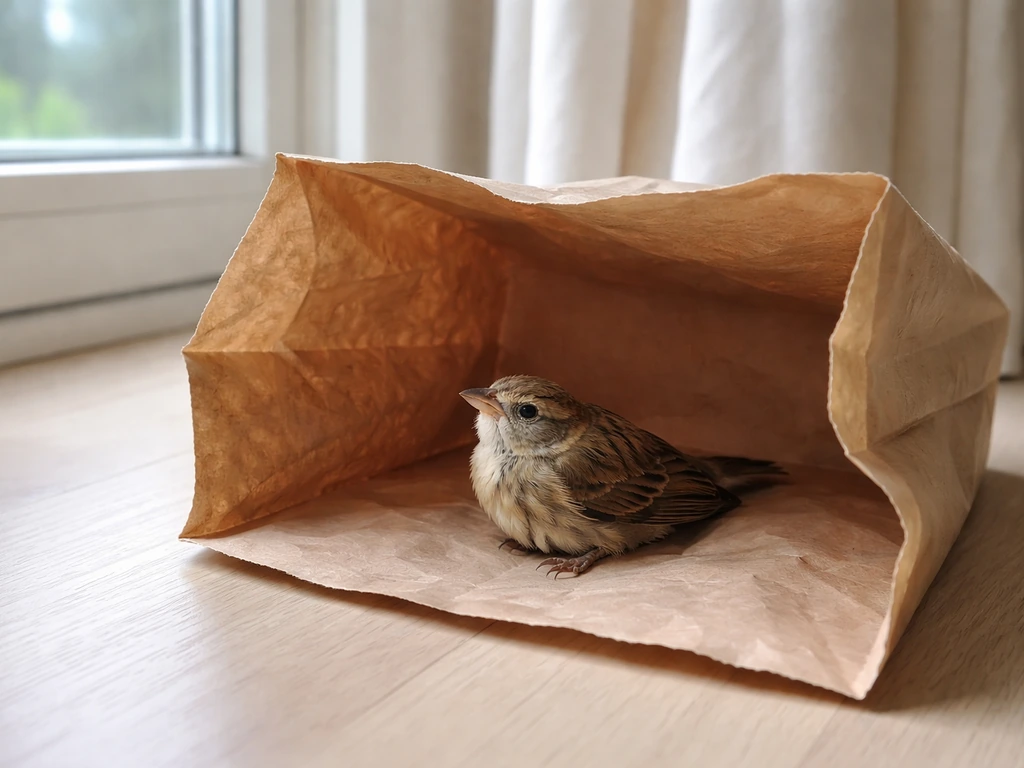
Window collisions are one of the most common reasons people find dazed birds on the ground. If the bird is stunned but not visibly wounded, place it in a shoebox or paper bag and keep it dark and quiet for up to an hour. If after that time it is alert and upright, you can try releasing it outside in a safe spot. But if it is struggling to keep its eyes open, breathing heavily, or not improving, contact a licensed wildlife rehabilitation facility immediately. Those symptoms mean internal injury or head trauma that needs professional treatment.
Cat or dog attacks
This is genuinely urgent. Even if the bird looks okay on the outside, cat saliva carries bacteria that can be fatal to birds within 24 to 48 hours without antibiotic treatment. A bird that was caught by a cat needs to be seen by a wildlife rehabilitator or avian vet the same day, no exceptions. Contain it the same way as above and make your calls immediately.
Broken wing or leg
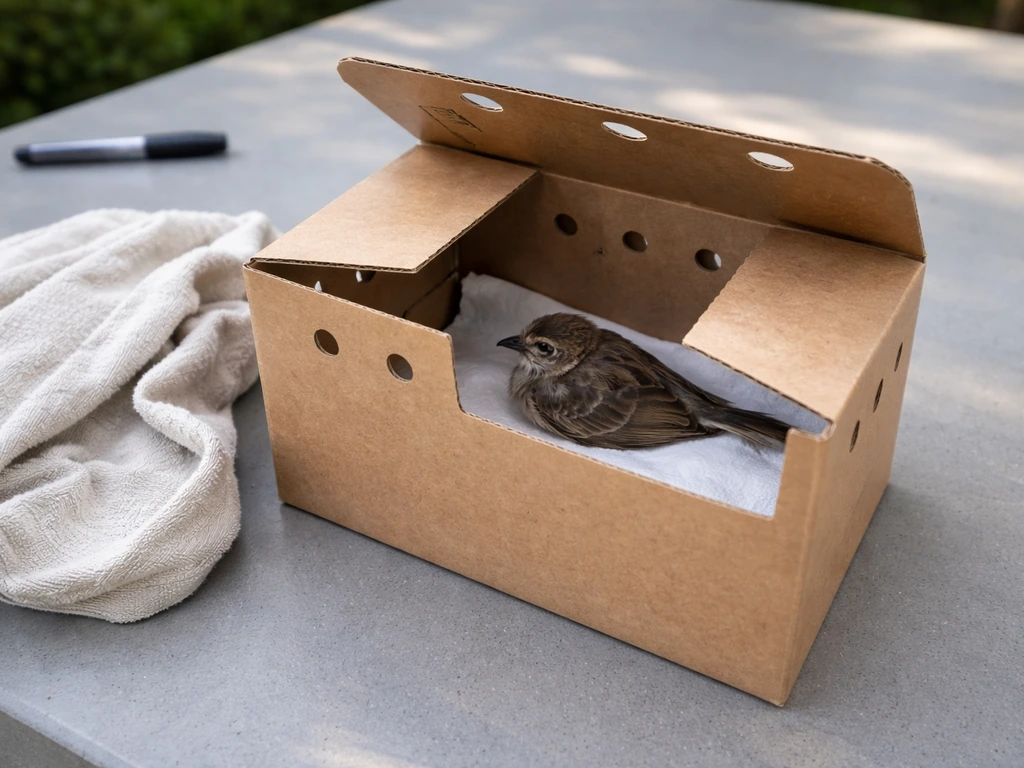
Do not try to splint or wrap the injury yourself. You can cause more damage, and handling a bird too much puts it into deeper shock. Your job is to contain it safely and get it to a professional. A drooping or oddly angled wing is a clear sign of a fracture. Keep the bird still, dark, and warm, and call a rehabilitator right away.
Bleeding
If the bird is actively bleeding, you can apply very gentle pressure with a clean cloth or gauze for a minute or two, but do not wrap or bind anything tightly. Bleeding birds need professional help fast. This is a case where an avian vet may actually be faster than waiting for a rehabilitator callback, so call both simultaneously if you can.
Shock or unresponsiveness
A bird sitting still with fluffed feathers, eyes half-closed, and not reacting to you is in shock. Warmth, darkness, and quiet are your tools right now. Do not handle it more than necessary. Shock can be fatal on its own, and stress from handling makes it worse. Get it contained and call immediately.
Nest emergencies and orphaned chicks
If you find a nest that has fallen, you can try to place it back in the tree. The parents will not abandon it because of human scent (that is a myth). If a very young, featherless chick (a nestling) has fallen out and you can see the nest, gently place it back. If you cannot, contain it and call a rehabilitator. If you are dealing with a situation more like a missing or stray pet bird, the steps are different, and knowing where to report a lost bird will point you in the right direction.
How to handle pickup and transport after you call
Here is something a lot of people do not realize until they have already called: most wildlife rehabilitators do not have pickup or transport service. Tufts Wildlife Clinic, for example, explicitly states they do not have ambulatory service. The same is true for the vast majority of rehab centers across the country. That means in most cases, you will be responsible for getting the bird there yourself.
Once you have spoken to a rehabilitator or vet and confirmed they can accept the bird, here is how to transport it safely:
- Keep the bird in the closed, dark container the entire trip. Do not peek in repeatedly to check on it.
- Place the box on a flat surface in your car, not on a seat where it can slide. The floor of the back seat works well.
- Keep the car quiet and at a comfortable temperature. No loud music, no AC blowing directly at the box.
- Drive directly and calmly. Every extra minute of stress counts.
- Do not stop to show people or take photos. Get it there.
If you genuinely cannot transport the bird, ask the rehabilitator if they know of volunteer transport networks in your area. Some regions have organized wildlife transport volunteer systems. Animal Help Now can sometimes help identify these. You can also ask neighbors or friends to help with the drive.
What to say when you call and what to expect
When someone answers, or when you leave a voicemail, have this information ready:
- Your name and callback phone number
- The exact location where you found the bird (address, cross streets, or GPS coordinates)
- The time you found it
- What kind of bird it is, if you know (size, color, any identifying features)
- What you observed: is it bleeding, is a wing drooping, is it alert or unresponsive?
- What happened, if you know (window strike, cat attack, found on road, etc.)
- What you have done so far (contained it, kept it dark and warm, no food or water)
Be patient. Rehabilitators are often handling multiple animals and may call back within 30 minutes to a few hours. If you reach voicemail, leave the message and immediately try your next contact. Do not wait. Keep the bird in its dark, warm container the whole time.
Expect the rehabilitator to ask follow-up questions and give you specific instructions based on what you describe. Follow those instructions even if they differ slightly from general guidance, because they are basing it on your specific situation. They may also tell you the bird does not need help, which is useful information too.
If you are in the UK and wondering about your options there, the question of whether to call the RSPCA for an injured bird is worth understanding before you dial, since the RSPCA's role in wild bird rescue is more limited than many people expect. And wherever you are, the right way to report an injured bird matters as much as who you call, because how you describe the situation affects how quickly and appropriately help arrives.
The most important thing you can do right now is start making calls. The bird cannot wait, and you do not need to know everything to help. Contain it, keep it calm, and get a professional on the phone. That is genuinely enough.
FAQ
What should I do if I cannot reach a wildlife rehabilitator after multiple calls?
Keep the bird contained and immediately switch to the next best contact, an avian or exotic-animal veterinarian, while you continue calling rehab centers. If you have both contacts available, ask a vet if they can evaluate first and then advise whether to route the bird to a specific rehab after stabilization.
If the bird has a tag or looks like a pet bird, who should I call?
Treat it as a domestic or pet animal first. Call your local animal services or Humane Society for guidance on ownership and intake, and also contact an avian vet for urgent care, because a pet bird may need treatment that differs from wild-bird protocols.
Should I call animal control if the bird is injured but not in a dangerous place?
Usually skip animal control for typical driveway or yard injuries. Reserve animal control for road hazards, aggressive animals involved, or situations where public safety is the primary issue, otherwise a licensed wildlife rehabilitator or an avian vet will be the more effective clinical path.
Can I give the bird water, food, or medication while I wait for help?
No. Do not feed or medicate, and avoid offering water by hand, because it can cause choking, aspiration, or worsening shock. The safer interim step is dark, quiet containment and keeping it warm enough to prevent further decline.
Is it okay to try to take photos or videos of the bird for the rehab center?
Yes, as long as you do it quickly from a safe distance and minimize handling. Photos of visible injuries, posture, breathing effort, and whether there are featherless areas can help the rehab center triage, but do not delay transport or calls to capture perfect images.
What if the bird is bleeding and I cannot tell how serious the injury is?
Apply only gentle pressure to a bleeding spot for a short period using clean gauze or cloth, then stop and get professional help. Ask the vet or rehab on the phone whether they want you to continue pressure while waiting, but do not wrap the bird tightly or try to immobilize fractures yourself.
What should I do if the bird was attacked by a cat or dog?
Call immediately for same-day help and keep the bird contained as directed, even if injuries look minor. Cat bites and saliva can lead to rapid infection, so ask whether the first contact should be a vet for fast antimicrobial treatment before transport.
How warm should the bird be during transport without overheating it?
Use warmth only to the level where the bird feels comfortably warm to the touch, not hot, and keep it shaded and calm. A common approach is placing the container near, not against, a gentle heat source like a warm (not hot) heating pad covered by cloth, and checking periodically to ensure it is not overheated.
If the bird is a fledgling with no obvious wounds, do I still need to call someone?
Not always. If it is alert, upright, and responsive, it may be okay to place it in a safe spot nearby and observe briefly, then only call for help if it appears weak, cooling, or unable to stand. If you are unsure, call anyway and describe behavior, not just appearance.
Do rehabilitators ever provide transport or pickup?
Many do not. Before counting on pickup, ask directly when you reach someone, and if they cannot take the bird to their facility, ask whether they have a volunteer transport network or recommended local drivers. If they cannot accept immediately, ask what to do with the bird until drop-off.
What information should I tell the rehab center to speed things up?
Provide your exact location (nearest cross streets or landmark), the bird species if known, time found, what happened (window hit, cat attack, injured wing, on road), visible symptoms (bleeding, drooping wing, breathing changes), and the container setup you are using (dark, ventilated box, paper bag). Mention whether a pet or feral animal might have been involved.