
If you're in Florida and you've found an injured wild bird right now, here's the short answer: call the Florida Fish & Wildlife Conservation Commission (FWC) Wildlife Alert Hotline at 888-404-3922. They can direct you to a licensed wildlife rehabilitator in your area and tell you exactly what to do next. That number works statewide, any time, and it's the fastest single call you can make. Everything below helps you decide whether to call immediately or handle a few safe first steps first.
Who to Call for an Injured Bird in Florida: Fast Guide
Marcus Chen
12 Apr 2026
Quick decision: rescue vs. call now
Not every situation is the same, and the first thing to figure out is whether the bird needs hands-on rescue right now or whether you have a few minutes to assess. Run through this fast checklist before you do anything else.
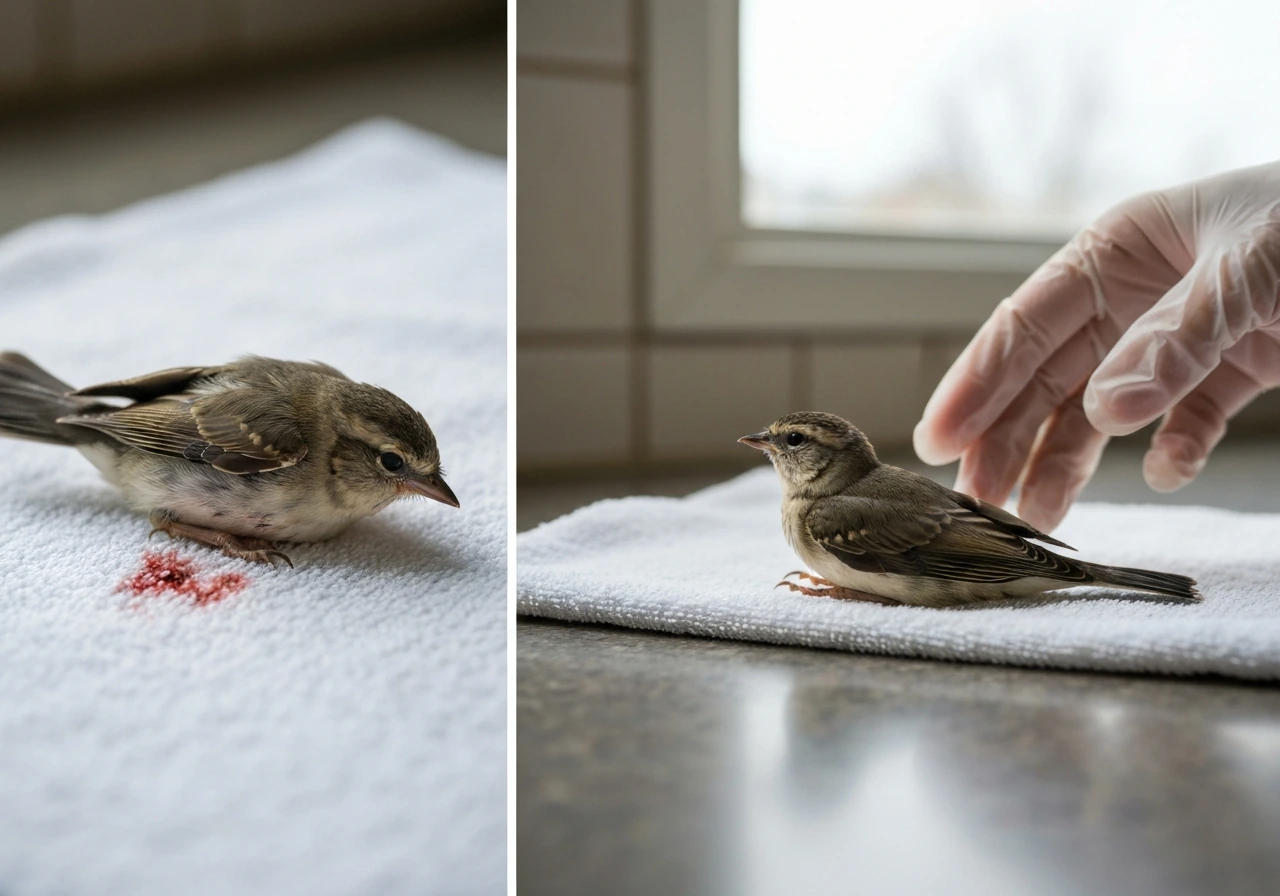
Call immediately if the bird is: actively bleeding, has a visibly broken or dangling wing or leg, is unable to hold its head up, is unconscious or barely responsive, has been in a cat's or dog's mouth, or is in immediate danger from traffic or a predator. These are emergencies and every minute counts, especially with cat attacks, because even a tiny puncture wound from a cat's beak can cause fatal infection within hours.
You have a few minutes to assess if the bird is alert, blinking, and upright but just sitting in an unusual place. Some birds, especially after a window strike, are stunned and will recover on their own in 20 to 30 minutes if they're kept safe and quiet. A fledgling (fully feathered, short tail, hopping on the ground) is usually not injured at all and is supposed to be there. If you're unsure whether a bird on the ground is an emergency or not, understanding who to call for an injured bird can help you think through the decision before you pick up the phone.
Who to call in Florida for injured birds
Florida has a solid network of resources, but knowing which one fits your situation saves you from bouncing around. Here's a practical breakdown of your options.
FWC Wildlife Alert Hotline: 888-404-3922
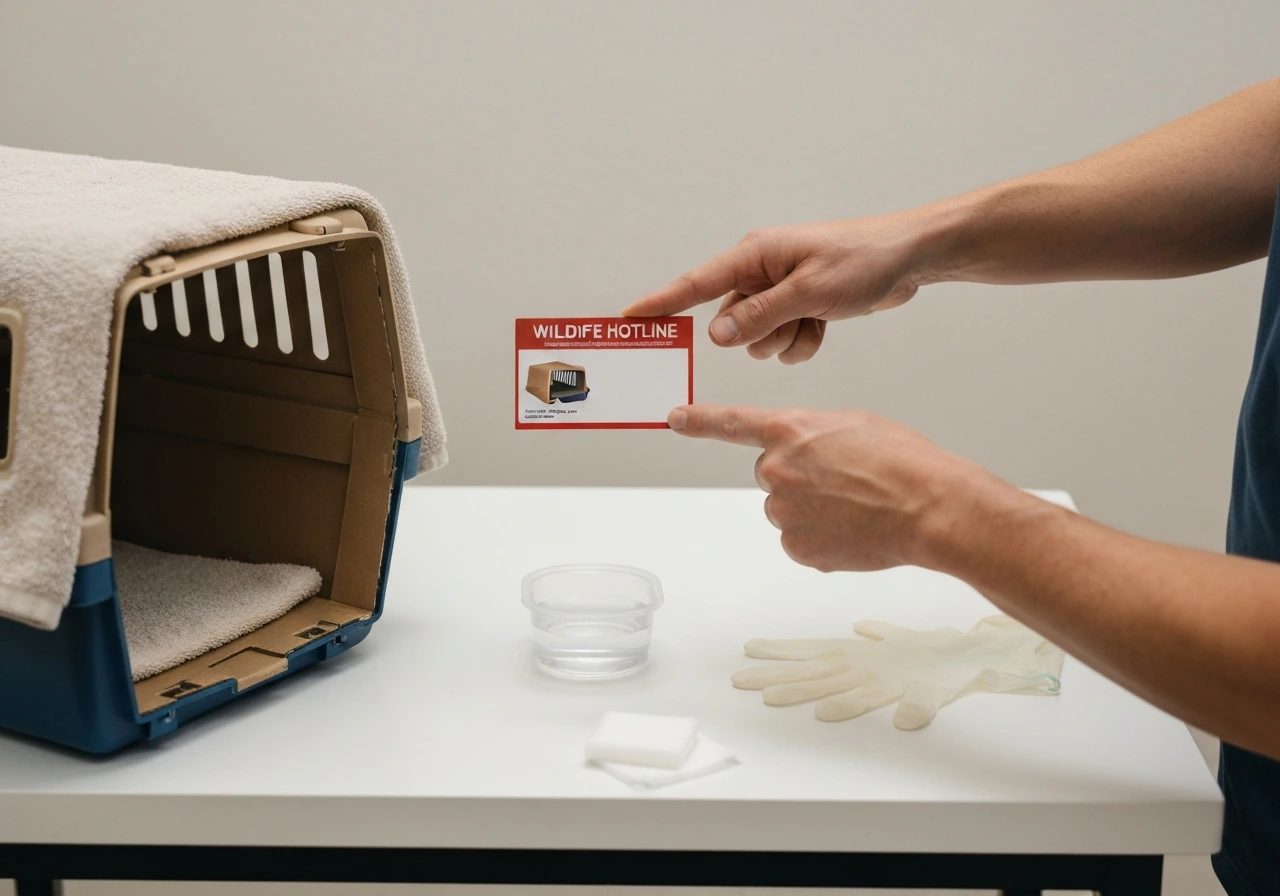
This is your best first call when you can't immediately identify a local rehabber. The Florida Fish & Wildlife Conservation Commission (FWC) hotline handles reports of injured, sick, orphaned, and dead wildlife across the whole state. When you call, they can connect you with a permitted wildlife rehabilitator near you. This number is also the right call for reporting sick or dead birds if you're concerned about disease. Save it in your phone right now: 888-404-FWCC (3922). FWC also publishes the Wildlife Alert Hotline contact number as 888-404-FWCC (888-404-3922).
Licensed Wildlife Rehabilitators (your best hands-on option)
In Florida, a Wildlife Rehabilitation permit is legally required to do anything beyond getting the bird safely into a box and transporting it to someone who holds that permit. That means your job is containment and transport, not treatment. Licensed rehabbers are trained specifically for wild bird care, and they're the right destination for almost every injured wild bird you'll find. The Florida Wildlife Rehabilitators Association (FWRA) has an interactive map at their website where you can find a rehabber by county. You can also ask FWC for the same list when you call the hotline. Well-known facilities like CROW (Clinic for the Rehabilitation of Wildlife) on Sanibel Island serve southwest Florida; Gulf Coast Wildlife Rescue covers the Tampa Bay area; and Pelican Harbor Seabird Station serves Miami-Dade. Search your county to find whoever is closest.
Avian or exotic veterinarians
If the bird is bleeding heavily, has an open fracture, or has obvious trauma that needs immediate medical care, an avian or exotic vet is the right call, even before you reach a rehabber. Not all vets treat wild birds, so call ahead and ask specifically whether they see wild birds or wildlife emergencies. Many avian vets will stabilize a bird and then coordinate transfer to a licensed rehab facility. The U.S. Fish & Wildlife Service also directs people toward local veterinary offices that can handle wildlife as a first step when a rehabber isn't immediately reachable.
Animal control and local shelters
Animal control is generally not set up for wild birds, and FWC is clear that they're the right call only for domestic or feral animals like dogs, cats, and horses. That said, if you're in a rural area with no other option and the bird needs to be off the street right now, your local animal services office may be able to temporarily hold the bird and connect you with a rehabber. It's a last resort for wild birds, not a first call.
When first aid is okay vs. when to stop and hand off
There's a short list of things you can safely do while waiting for professional help, and a longer list of things that feel helpful but actually cause harm. Stick to the safe zone.
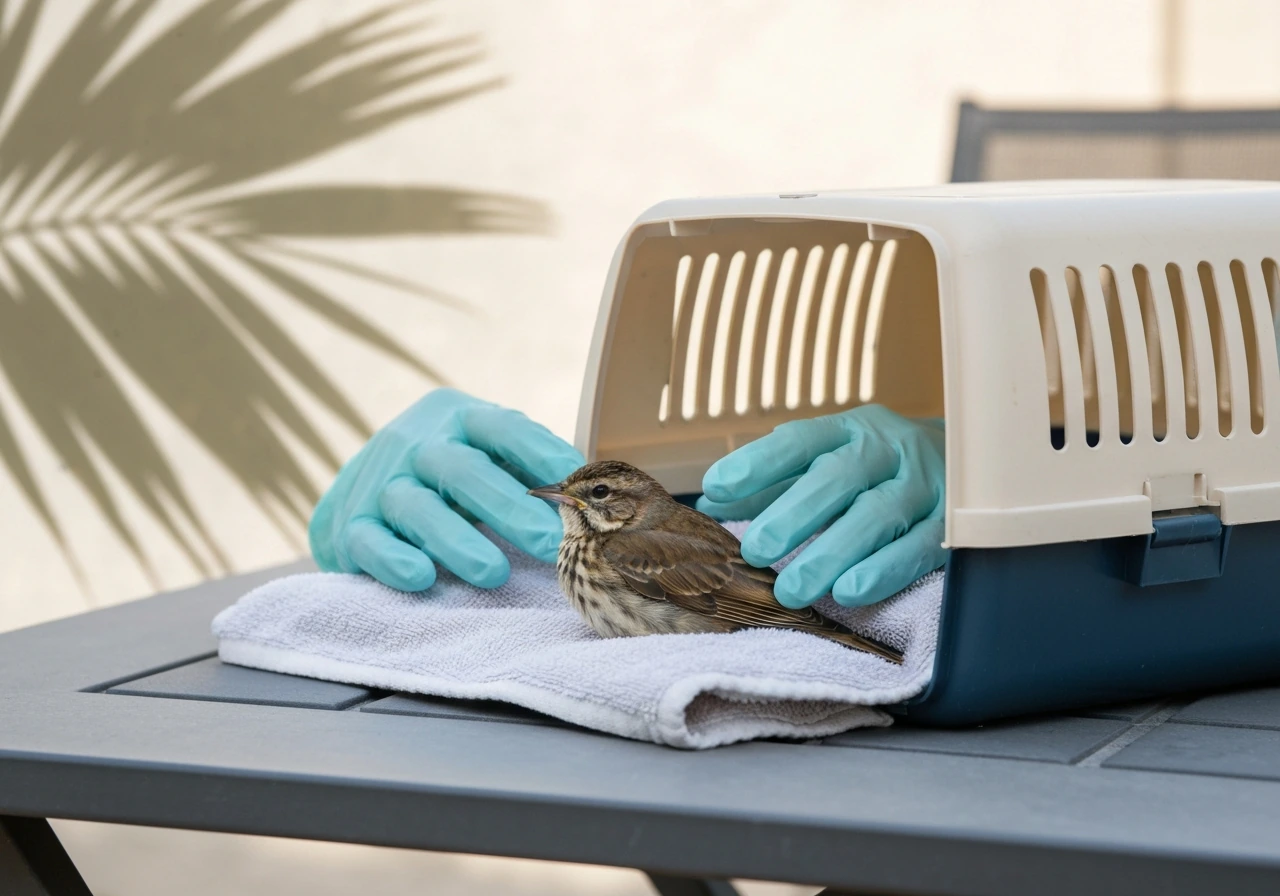
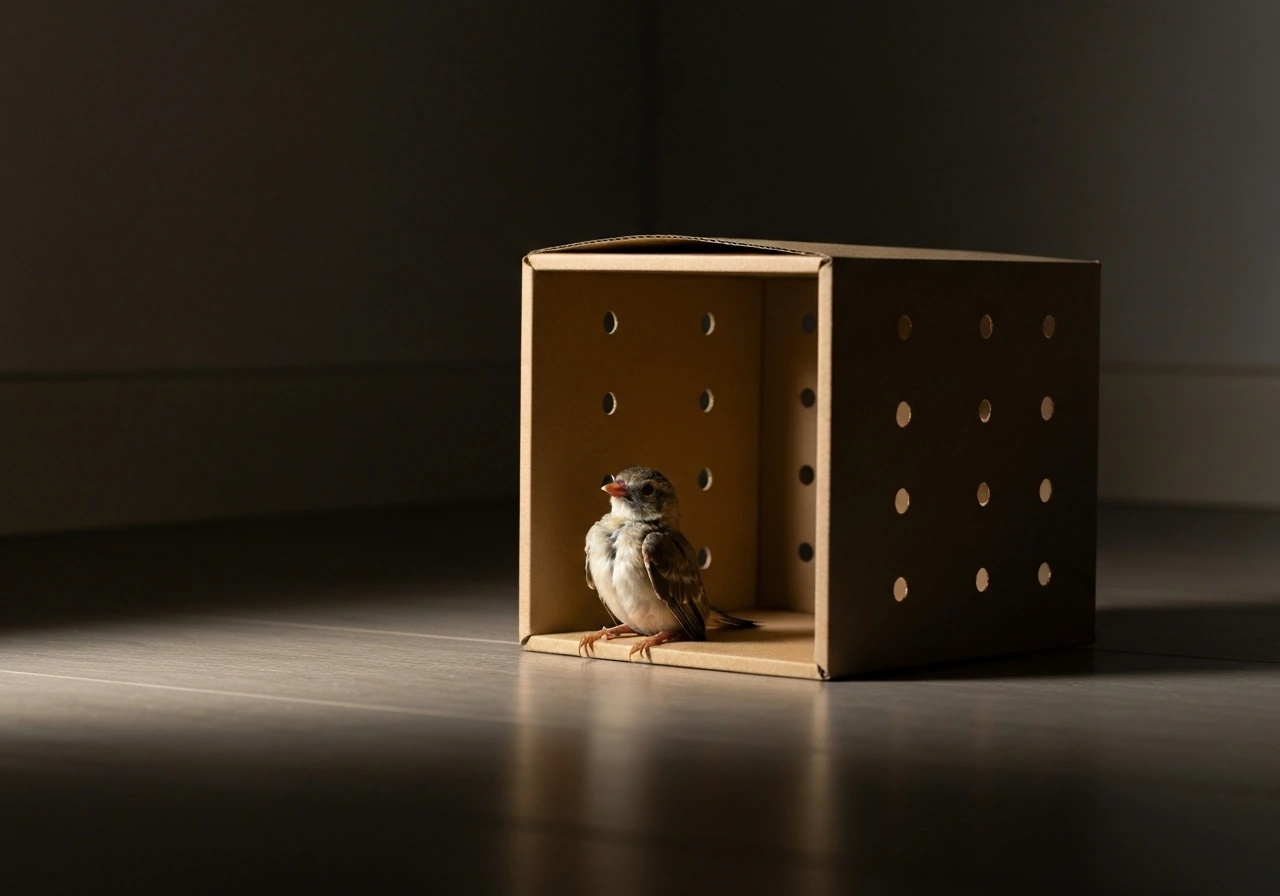
What you can do: gently pick the bird up using a light towel or cloth (never bare hands, both for your safety and to reduce stress on the bird), place it in a cardboard box with small air holes, put a folded towel on the bottom for traction, and put the box in a quiet, dark, room-temperature spot away from pets and noise. That's it. Darkness calms birds down significantly and reduces the stress that can kill an already-injured animal. Tropical Audubon Society recommends exactly this approach: a ventilated cardboard box, a towel over the top, kept in a cool and safe place.
When to stop and hand off immediately: if you see an open wound with exposed bone, if the bird is seizing or trembling continuously, if it's been bitten by a cat or dog at all (even without visible wounds), or if you're not sure what's wrong and the bird seems to be getting worse. Don't wait to see if it improves on its own in those cases. Call the FWC hotline or a local rehabber and describe what you're seeing.
How to find the right local avian vet or wildlife rehab
Beyond the FWC hotline, here are the fastest ways to find the right local resource in Florida.
- Go to the FWRA website (fwrawildlife.org) and use their county-based map to find a licensed rehabilitator nearest to you.
- Search Google for '[your county] wildlife rehabilitator' or '[your city] bird rescue Florida' to find locally active organizations.
- Search '[your city] avian vet emergency' if you need immediate medical care for a bleeding or critically injured bird.
- Call 888-404-3922 (FWC) and ask them to match you with the nearest permitted rehabilitator for birds.
- Check if a local Audubon chapter (like Tropical Audubon in Miami-Dade) has a rescue referral line or maintains a local rehabber list.
When you call a rehabber or vet, ask directly: Do you take wild birds? Do you have space right now? Can I transport the bird to you, or is there someone who can pick it up? Most rehabbers are volunteers working limited hours, so the sooner you call, the better your chances of getting same-day help. If you find yourself unsure how to navigate the process, reviewing the steps on how to report an injured bird can walk you through what to expect once you make contact.
Specific scenarios: window strikes, pets, bleeding, and nest emergencies
Window strikes
A bird that hits a window and is stunned but still upright may recover on its own. Place it in a ventilated box in a dark, quiet room for 20 to 30 minutes, then take the box outside and open it. If the bird flies off, great. If it's still lethargic, can't fly straight, or has blood around its beak or nostrils after that time, it needs a rehabber. Don't keep waiting past 30 to 45 minutes if the bird isn't improving.
Cat or dog attacks
This is the most urgent scenario outside of active bleeding. Cat saliva contains bacteria that cause fatal septicemia in birds within 24 to 48 hours, even from a scratch with no visible wound. If a cat or dog has touched the bird at all, treat it as an emergency and get it to a rehabber or avian vet today, not tomorrow. Don't wait to see how the bird does overnight.
Visible bleeding or broken bones
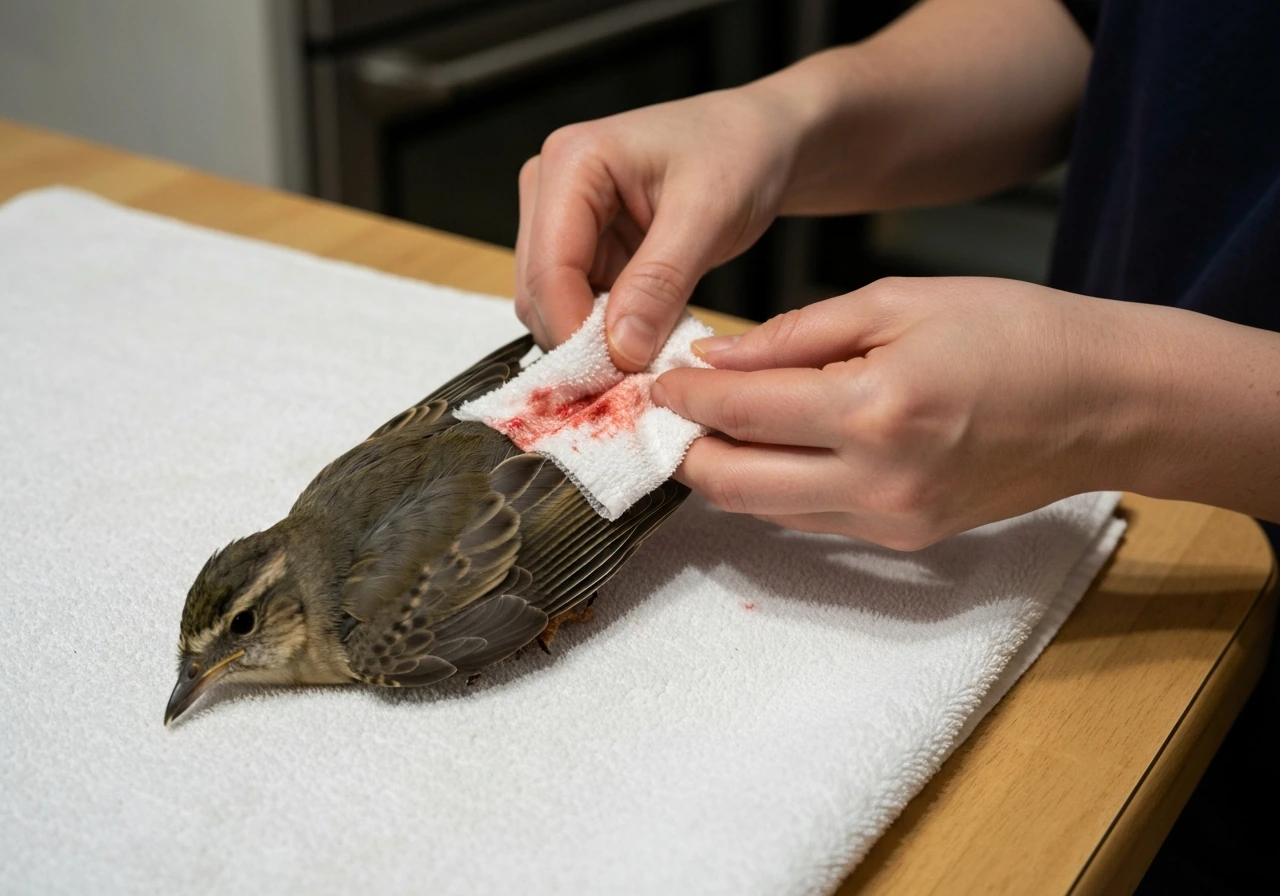
If a bird is actively bleeding, you can apply very gentle, light pressure with a clean cloth for a minute or two while someone else calls for help. Do not wrap the wing tightly, apply tape, or try to splint a broken bone yourself. Incorrect splinting causes more damage. Get the bird in a box and get it to professional care as quickly as possible. A bird with a broken wing or leg can survive with proper rehab care, but only if it gets there without additional handling damage.
Nest emergencies and baby birds
First, figure out what you actually have. A nestling is pink, mostly featherless, and clearly too young to be out of the nest. A fledgling is fully feathered with a short tail and hops around on the ground, which is completely normal behavior. Fledglings do not need rescuing. Their parents are almost certainly nearby and feeding them on the ground.
If you have a true nestling and can see or reach the nest, put it back. The myth that parents abandon chicks touched by humans is false. Birds have a very poor sense of smell and will not reject a chick you've handled. If the nest is destroyed or unreachable, CROW advises trying to reunite the baby at the find location first. If the parent doesn't return after a reasonable wait (around an hour in daylight), bring the bird inside in a ventilated box and call your nearest wildlife rehabilitator. If you're not sure whether the bird you've found actually needs to be reported or just monitored, guidance on where to report a lost bird can help you figure out the right path.
What to tell the dispatcher and how to prep the bird
When you call the FWC hotline or a wildlife rehabilitator, they'll be able to help you much faster if you have this information ready before you dial.
- Your exact location (city, county, and address or nearest cross street)
- The species if you can identify it, or a description (size, color, beak shape, any distinctive markings)
- How the bird was found (window strike, cat attack, fell from nest, found on road, etc.)
- Visible injuries: bleeding, broken wing or leg, inability to stand, head tilt, eye problems
- Whether the bird is alert and responsive or unconscious
- Approximate age if visible (nestling, fledgling, adult)
- Whether you've already contained it in a box
To prep the bird for transport: use a cardboard box that's just big enough for the bird to stand and turn around but not so large it can bounce around. Punch several small air holes in the sides (not the top, where light comes in). Put a folded cloth or paper towels on the bottom for grip. Do not add food, water, sticks, or perches. Close the box securely and keep it level in your car. Keep the radio off and the car calm. Heat and noise are stressors that can push an already-injured bird into fatal shock.
What NOT to do and safety tips while you wait
This is where well-meaning people accidentally cause the most harm. Every one of the following feels like the caring thing to do, and every one of them can hurt or kill the bird.
- Do not give the bird food or water. This is the single most repeated instruction from CROW, Gulf Coast Wildlife Rescue, Tropical Audubon, and nearly every wildlife rehabber in Florida. Aspiration (inhaling fluid into the lungs) is a common cause of death in handled birds. Even if the bird looks dehydrated, do not attempt to give it water by dropper or syringe.
- Do not give the bird any medication, including human pain relievers or anything marketed for pets. Many are fatal to birds at tiny doses.
- Do not attempt to splint a broken wing or leg yourself.
- Do not keep the bird in a cage with open bars where it can injure itself trying to escape.
- Do not place the box in direct sunlight or a hot car, even briefly.
- Do not handle the bird more than necessary. Every time you open the box, you are creating stress.
- Do not let children or other pets near the box.
- Do not release the bird yourself if it's been injured, even if it seems better. It needs a professional assessment before release.
On safety for you: most Florida wild birds will not seriously injure you, but large wading birds like herons and egrets can jab with their beaks with surprising force and can aim for the eyes. Cover your face if you're picking up a large bird. Always wash your hands thoroughly after handling any wild bird. Gloves are recommended if you have them.
One more thing worth knowing: if you're in the UK rather than Florida and landed here by mistake, the process is different. You'd want to look into whether to call the RSPCA for an injured bird instead, since that's the relevant organization for wildlife rescue there. But in Florida, the blank" rel="noopener noreferrer">FWC hotline at 888-404-3922 is always your starting point, and from there you'll be connected to someone who can take it from here.
The most important thing you can do right now is make the call. A licensed rehabber or avian vet can give this bird a real chance. Your job is to keep it safe, keep it calm, and get it there.
FAQ
If I find an injured bird but I am not sure where it happened, who do I call in Florida?
Call the FWC Wildlife Alert Hotline (888-404-3922) anyway. Tell them the nearest city or cross streets, and they will route you to a permitted wildlife rehabilitator in the correct service area, even if you cannot name the exact address.
Can I take the bird to a wildlife rehabber without calling first?
Yes only if you already know the specific facility and can transport it safely and quickly. Otherwise, calling first helps confirm they accept wild birds, have intake space, and know how they prefer the bird be packaged (box size, cover, and timing).
What should I do if the bird is injured at night, does the hotline still help?
Yes. The FWC hotline is staffed for statewide guidance any time of day, and they can tell you whether to hold the bird until the next available intake window or arrange an urgent transfer path.
Should I call 911 or report it to animal control for an injured bird in Florida?
Usually no. 911 is not the right channel for most wildlife injuries, and animal control generally prioritizes domestic or feral animals. If the bird is in immediate danger from traffic or a predator, use the safest quick containment steps and then call FWC or a wildlife rehabber.
If the bird is bleeding, is it okay to wrap it in a towel or hold it until I find a rehabber?
Use only gentle, light pressure with a clean cloth for a minute or two if someone else is calling. Avoid tight wrapping, tape, or splinting, and get the bird into a ventilated cardboard box as soon as help is on the way.
What if I already tried to help and the bird seems worse, who do I contact next?
If the bird is deteriorating, call FWC (888-404-3922) or a local rehabber immediately. Tell them what you noticed before and after your actions (activity level, breathing, bleeding, and any cat or dog contact).
Can I feed or give water to an injured wild bird while waiting?
No. Do not add food, water, or perches. For transport, keep the bird in a small ventilated box, darken it, and minimize handling, because fluids and feeding attempts can worsen shock or aspiration.
I found a bird that looks like a baby, how do I know if I should call for it?
If it is fully feathered and hopping on the ground, that is usually a fledgling and typically does not need rescue. If it is pink, mostly featherless, or clearly not able to perch normally, that is more consistent with a nestling, and you should follow the nest check and reunite guidance rather than assuming it is injured.
If I suspect window strike but there is no visible bleeding, do I still need to call someone?
You can try the short recovery window, about 20 to 30 minutes in a dark, quiet, ventilated box. If it still cannot fly normally, stays very lethargic, or has blood around the beak or nostrils, contact a rehabber or FWC for next steps.
Do I need to disinfect after handling a sick or injured bird?
Wash your hands thoroughly after handling any wild bird. If you are worried about disease due to sick appearance or dead bird reports, mention that when you call so FWC can advise on safer handling and next actions for your situation.
What information should I have ready when I call, besides my location?
Have the bird species or best description (size and color), what happened if you know it (window strike, cat exposure, found on the ground), visible injuries (bleeding, broken wing/leg), and the bird’s behavior (alert, upright, unable to hold head up, breathing). This speeds up routing and triage.
Next Articles
Who to Call for an Injured Bird Near Me: Fast Guide
Find who to call for an injured bird near you, plus quick first aid, whom to contact by situation, and transport tips.
Can a Bird Live With One Wing? Survival and First Aid
Can a bird live with one wing? Injury outcomes and step-by-step first aid, plus when to get urgent help.
Can a Bird Survive With One Eye? What to Do Now
Learn if birds can cope with one eye and what to do now for an injured bird’s eye safely and urgently.