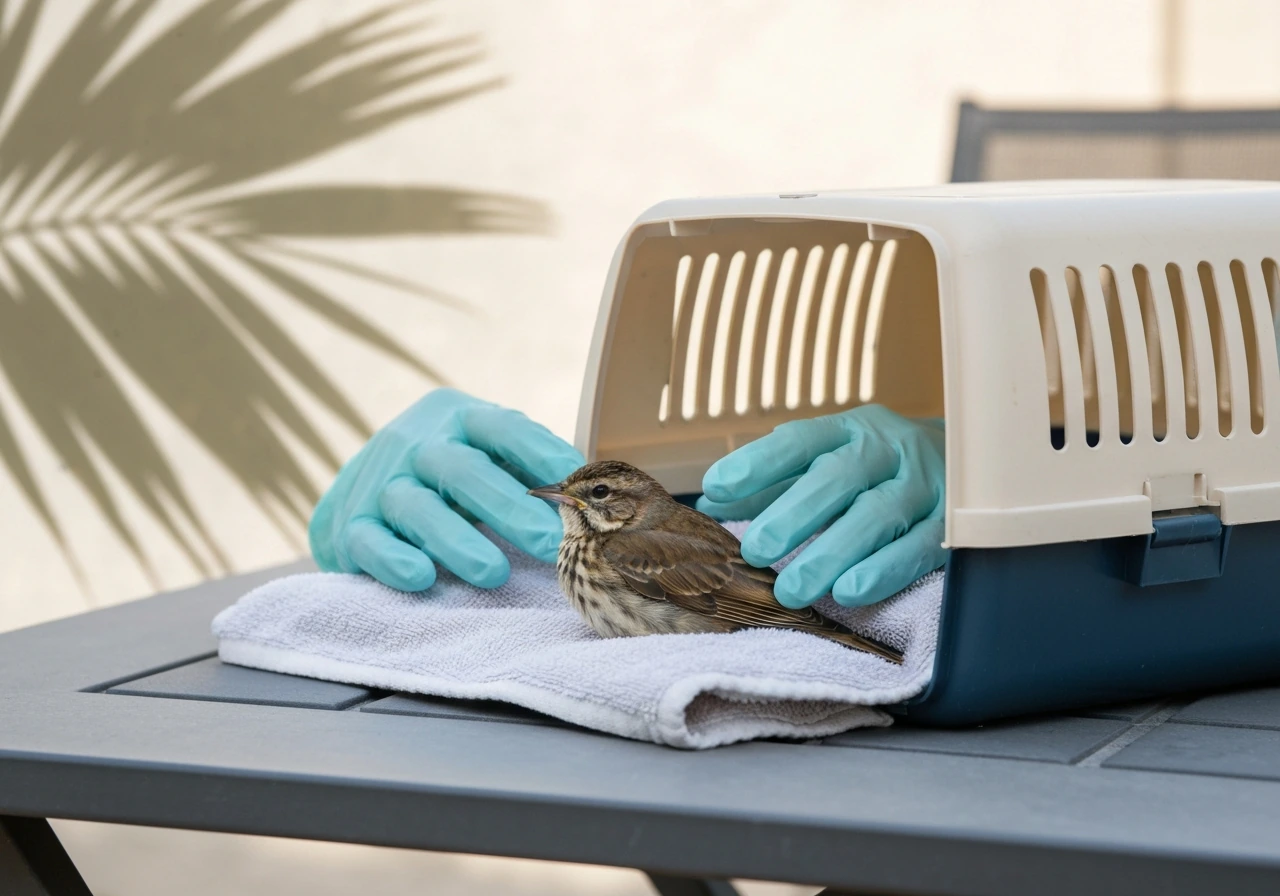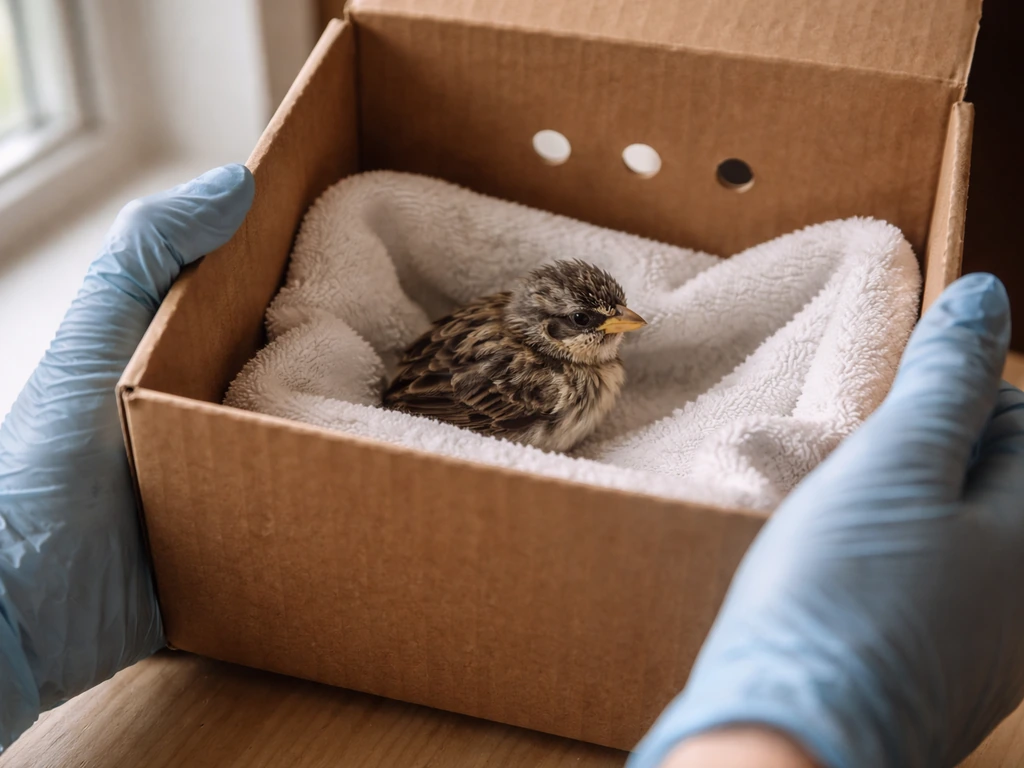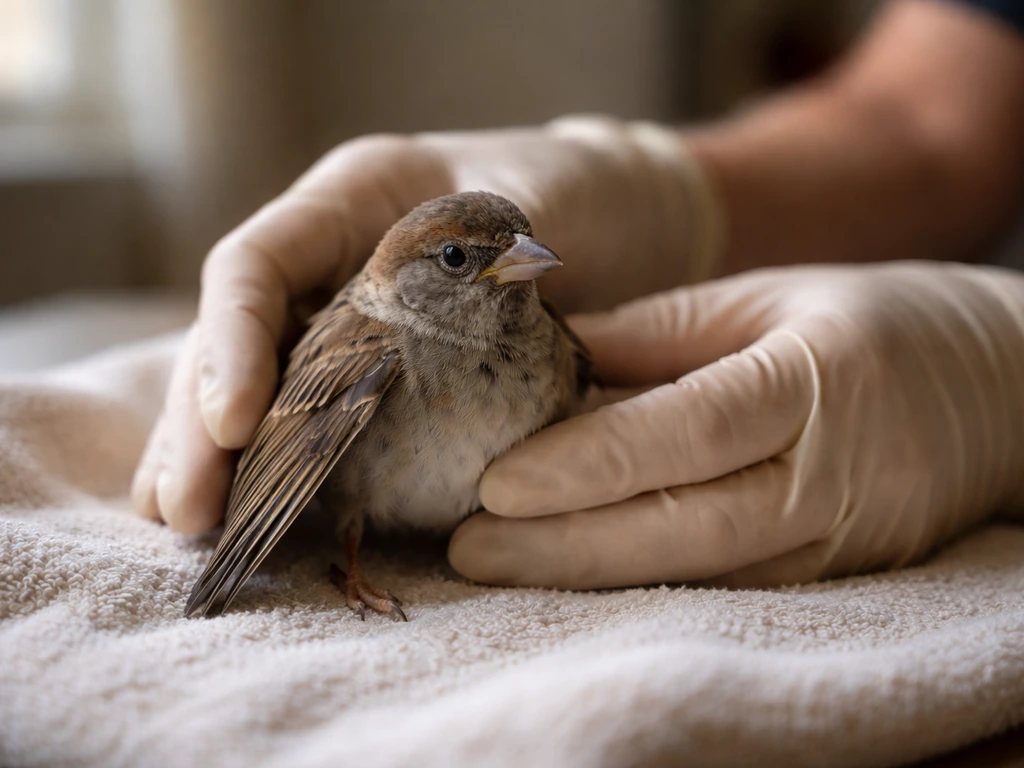
If you've found an injured bird and aren't sure what to do first, here's the short answer: keep the bird contained, dark, and quiet, then call your nearest licensed wildlife rehabilitator. That combination covers the most urgent priorities. Everything below walks you through each step in detail so you can move fast and feel confident you're doing the right thing.
How to Report an Injured Bird: Where to Call and What to Say
Marcus Chen
18 Apr 2026
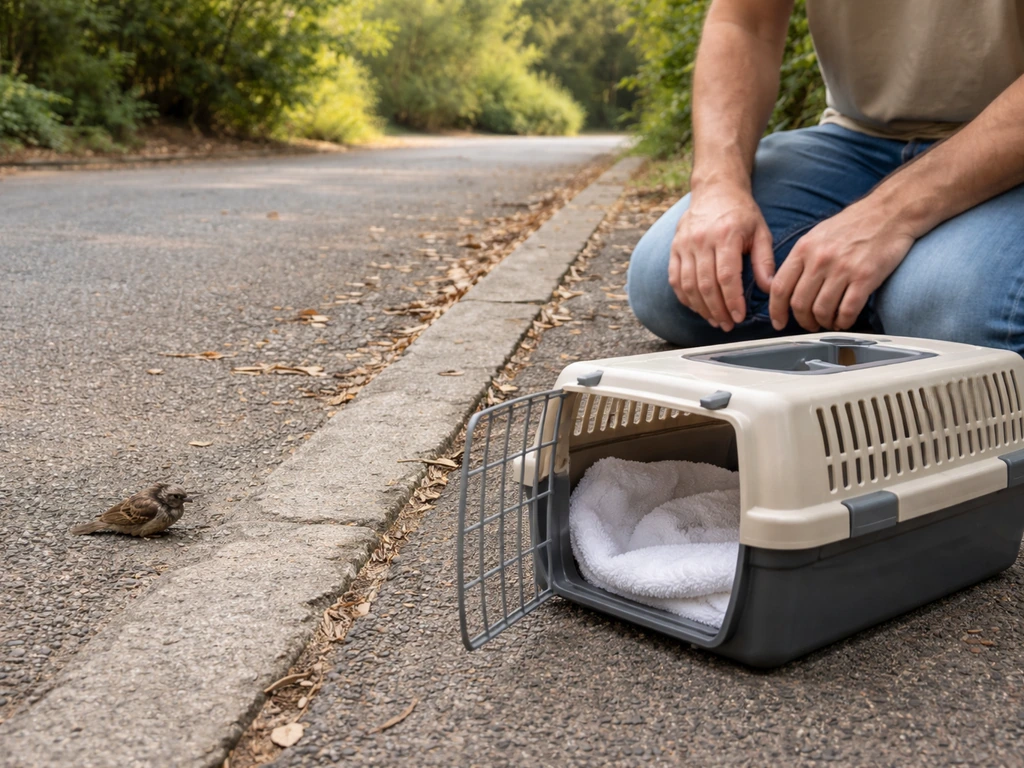
Confirm safety and decide your immediate next steps
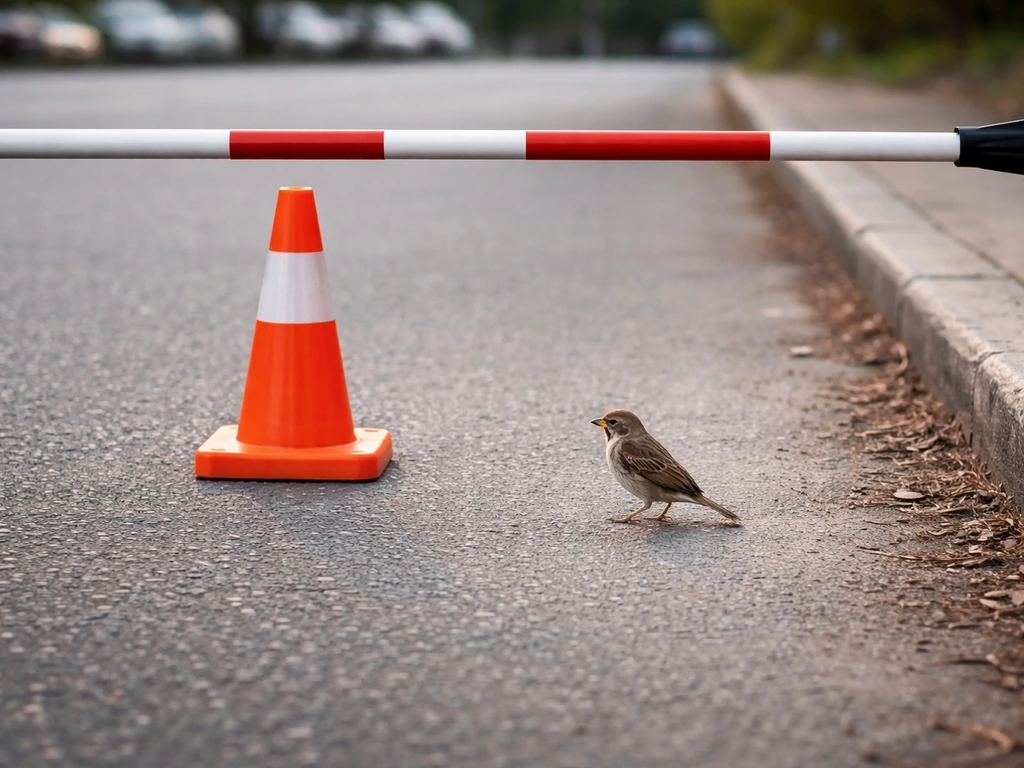
Before you touch anything, take 30 seconds to assess the situation. Is the bird in immediate danger from traffic, a cat, a dog, or another predator? If yes, remove the threat first, or gently move the bird to a safer spot nearby. Your safety matters too, so if you're near a road, watch traffic before crouching down.
Next, look at the bird without picking it up yet. Is it obviously injured (blood, a wing drooping at an odd angle, unable to stand) or does it just look dazed? A bird that flew into a window might simply be stunned. Audubon's guidance notes that a small bird after a window strike may just need a few minutes to recover its senses. If it's not bleeding and not being threatened, give it up to 15 minutes before intervening. If it flies off on its own, great. If it doesn't, move on to containment and reporting.
One more quick check: is this a baby bird, and does it have feathers? A fully feathered fledgling on the ground is often totally normal. Its parents are likely nearby watching and feeding it. According to Washington Department of Fish and Wildlife guidance, the right move is usually to leave the fledgling alone and keep pets and children away so the parents can keep caring for it. The cases that genuinely need intervention are when the bird is drooping, shivering, lethargic, visibly bleeding, or has been grabbed by a cat or dog.
Identify what type of injured bird situation you have
Knowing what you're dealing with helps you describe it accurately when you make the call, and it helps the rehabilitator decide how urgent the situation is. Here are the most common scenarios:
- Window collision: Bird is stunned, may be upright but not moving. Often recovers in minutes. If it doesn't fly away or if it's bleeding, treat as injured.
- Broken wing or leg: Wing hanging at an unnatural angle, bird hopping instead of walking, visible bone or wound. Needs professional care immediately.
- Cat or dog attack: Even if the bird looks fine, bacteria from a cat's claws or teeth can be fatal within 24 to 48 hours without antibiotics. Always call a rehabber in this case, no exceptions.
- Baby bird (nestling, no feathers): Needs warmth and prompt professional help. Do not attempt to feed it.
- Baby bird (fledgling, has feathers): Usually fine on the ground. Intervene only if injured or if you've confirmed the parents haven't returned in several hours.
- Shorebird or seabird on a beach: Contact the nearest wildlife rehabilitation clinic as soon as possible. Species-specific care is often required.
- Domestic or feral pigeon, chicken, or duck: These are not covered by wildlife rehabilitators in most states. Contact your local Humane Society, Animal Services office, or Animal Control agency instead.
Knowing which category applies shapes every part of the reporting call you're about to make.
Find the right place to report an injured bird locally
The correct contact for most injured wild birds is a licensed wildlife rehabilitator. These are people (and organizations) who hold state and, where relevant, federal permits to legally care for injured wildlife. You do not need a permit yourself to pick up and transport the bird to one. Under the U.S. Fish and Wildlife Service's Good Samaritan provision (50 CFR 21.31(a)), any member of the public can take possession of an injured migratory bird for the sole purpose of immediately transporting it to a permitted rehabilitator. That covers a huge range of songbirds, raptors, waterfowl, and shorebirds.
The fastest way to find someone near you is to use Animal Help Now (AHNow.org), a wildlife emergency resource that asks for your location and gives you contacts for nearby rehabilitators and other experts within seconds. It works in most parts of the U.S. and is genuinely the quickest lookup tool available. Beyond that, here are your options by contact type:
| Contact type | Best for | How to find them |
|---|---|---|
| Licensed wildlife rehabilitator | Most injured wild birds | Animal Help Now, your state fish and wildlife agency website, or a web search for '[your city] wildlife rehabilitator' |
| Avian veterinarian | Severe injuries, after-hours emergencies, or if no rehabber is available | Search '[your city] avian vet' or call a general vet clinic and ask for a referral |
| State fish and wildlife agency | After-hours emergencies, reporting dead wildlife, or if you can't reach a rehabber | FWC Wildlife Alert Hotline in Florida: 1-888-404-FWCC (3922) |
| Humane Society or Animal Control | Domestic or feral animals (pigeons, chickens, ducks, feral cats) | Search '[your city] animal control' |
| RSPCA (UK and Australia) | Injured wild birds in the UK or Australia | RSPCA UK or RSPCA Australia websites and phone lines |
If you're in Florida, the process has a specific path. finding out who to call for an injured bird in Florida means starting with FWC's list of licensed rehabilitators, and if you can't reach one after hours, calling the FWC Wildlife Alert Hotline at 1-888-404-FWCC (3922). Florida also has the Florida Wildlife Rehabilitators Association, which maintains a wildlife hotlines page you can reference.
If you're outside the U.S., the RSPCA is often the right starting point. Whether calling the RSPCA for an injured bird is the right move depends on your country and the species, but in the UK and Australia, they're generally equipped to advise and often dispatch help or connect you with a wildlife carer.
One thing to clarify upfront: if what you've found looks like it might be someone's lost pet bird (a brightly colored parrot, cockatiel, or similar), that's a different situation entirely. Reporting a lost bird involves different channels like local lost pet registries and social media groups, rather than wildlife rehabilitators.
What to include when you report (script, details, photos)
When you call or message a wildlife rehabilitator, your goal is to give them enough information to triage the situation and tell you exactly what to do next. The more specific you are, the faster they can help. Here's what to have ready:
- Your exact location: street address or intersection where you found the bird. If it's a park or beach, name it and describe where within it (north parking lot, near the lifeguard stand, etc.).
- The species if you know it, or a description: size (sparrow-sized, crow-sized, large raptor), color, any distinctive markings.
- What you observed: Is it moving? Can it stand? Is it bleeding? Is a wing drooping? Did it hit a window, get grabbed by a cat, or fall from a nest?
- How long ago you found it.
- Whether you've already contained it or if it's still on the ground.
- Photos if you can take them safely: a clear shot of the bird's full body and a close-up of any visible injury. Text these to the rehabilitator or email them if the intake person asks.
Here's a simple script you can use on the phone: 'Hi, I've found an injured bird at [location]. It looks like a [description] and [describe the injury or behavior, e.g., one wing is drooping and it can't fly]. I found it about [time] ago. Can you advise me on what to do and whether you can take it?' That's all you need. Keep it short. Rehabilitators are often busy and will ask follow-up questions if they need more.
What NOT to do during the call: don't tell them you've already given the bird water or food (more on why below), don't suggest you'd like to keep it temporarily to nurse it yourself, and don't ask for a species identification before you've described the injury. Lead with the injury. That's what determines urgency.
How to transport or secure the bird while waiting for help
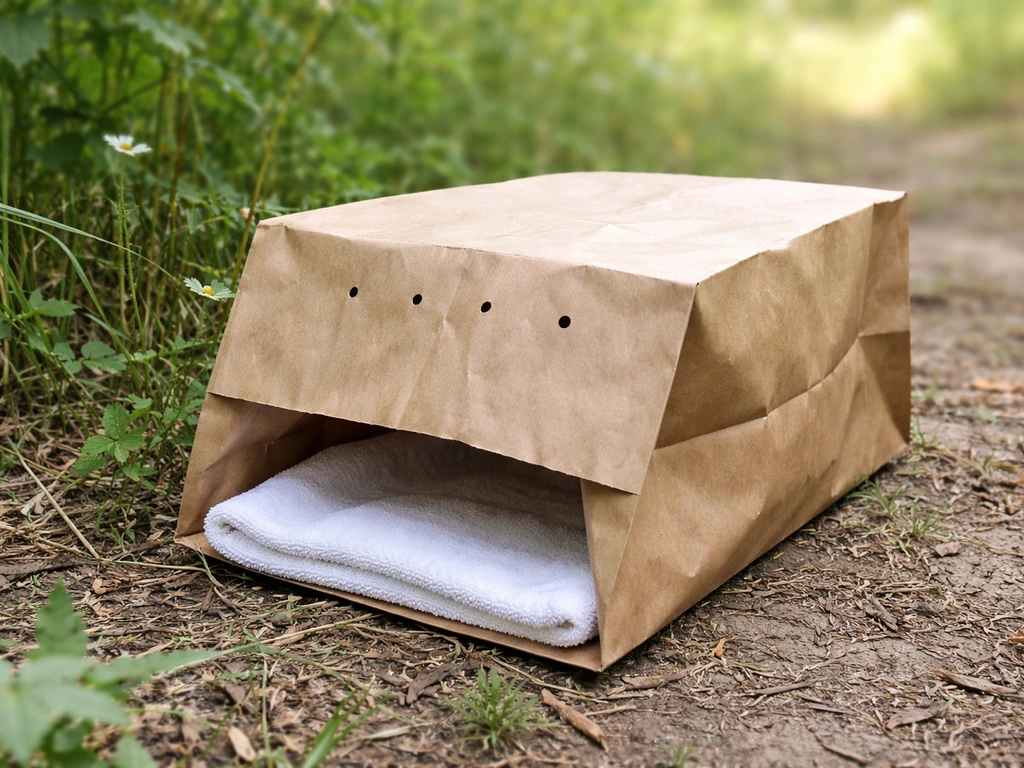
While you're waiting to get through to a rehabilitator or waiting for someone to arrive, the best thing you can do is contain the bird properly and leave it alone. Stress kills injured birds fast. Handling, noise, and bright light all add to that stress.
Gently place the bird in a cardboard box or an unwaxed paper bag that has small air holes poked into the sides. Line the bottom with crumpled paper towels or a piece of tight-knit cloth so the bird has something to grip. Do not use terry cloth or anything with loops that could catch claws or beaks. Close the box. Move it indoors to a dark, warm, quiet room away from pets and children. A bathroom works well. Do not peek at the bird every few minutes. Leave it alone.
Do not offer food or water. This is one of the most common mistakes people make with the best intentions, and it can cause serious harm. Birds have very specific nutritional requirements, and feeding the wrong thing (bread, milk, water forced into the beak) can cause aspiration, malnutrition, or worse. Every major wildlife organization, from the California Wildlife Center to The Raptor Trust, repeats the same instruction: no food, no water, unless a licensed rehabilitator specifically tells you otherwise.
If you need to transport the bird yourself to a rehabilitator or avian vet, keep the box in a warm, quiet spot in the car. No radio. No air conditioning blasting directly at the box. Drive calmly. If the bird is a raptor (hawk, owl, eagle), be extra cautious because their talons can cause serious injury. In that case, wear thick gloves and wrap the bird loosely in a towel before placing it in a box, but only if it's absolutely necessary to move it.
What if your first contact can't help?
Wildlife rehabilitators are often volunteers running small operations, and they fill up fast, especially during spring baby season. If the first number you call can't take the bird, ask them for a referral. Most rehabilitators know their local network and can point you to someone who has capacity. Don't give up after one call.
If you're stuck, knowing exactly who to call for an injured bird in your area is worth bookmarking before you need it. A quick search for your state's fish and wildlife agency will usually pull up a rehabilitator directory. In the U.S., the USFWS migratory bird office can also point you toward permitted rehabilitators in your region.
Here's your escalation path if the first call doesn't work out:
- Ask the first rehabilitator you reach for a referral to someone with capacity.
- Try Animal Help Now (AHNow.org) and look at the next two or three contacts listed near you.
- Call a local avian vet or general wildlife vet and ask if they can do an intake or advise.
- Call your state fish and wildlife agency's emergency line (in Florida: 1-888-404-FWCC).
- Call your local Humane Society or Animal Control and ask who in the area handles wild birds.
The bird is safer in a quiet, dark box while you work through this list than it would be in your hands. Keep the calls short, keep the box closed, and don't stop until you get a live person who can advise you. Most people who go through this process find the right help within two or three calls. You've got this.
FAQ
Can I take an injured bird to an avian veterinarian instead of a wildlife rehabilitator?
Yes, but only if the clinic agrees to treat wild birds and you ask how they will handle wildlife permitting. Many avian vets can stabilize an animal, then transfer it to a permitted rehabilitator for longer-term care.
What should I do if I cannot find a rehabilitator right away or they are closed?
Keep the bird contained, dark, and quiet, then call again or ask for a referral. If your area has an after-hours wildlife hotline, use that, and do not keep the bird in a bright room or allow repeated checking while you wait.
Is it okay to give the bird water or sugar water if it seems dehydrated or weak?
No, unless a licensed rehabilitator specifically instructs you to. Dehydration still should not be treated with forced liquids because aspiration risk is high and the bird’s nutrition needs are species-specific.
How do I tell whether the bird is a fledgling I should leave alone versus one that needs intervention?
Use behavior and condition, not just feathers. If it is drooping, shivering, lethargic, bleeding, or was grabbed by a cat or dog, treat it as urgent. A fully feathered fledgling that is alert can often be left in place with pets and children kept away.
What if the bird looks fine but keeps running in circles or can’t find a safe spot?
That can happen after a window strike or disorientation. Give it a short observation period only if there is no threat, then report if it stays unable to stand, cannot fly, or you notice bleeding or visible wing/leg problems.
Should I try to identify the species before I call?
Focus on what you observed (injury, posture, breathing, bleeding, wing droop, inability to stand). Species ID is helpful, but detailed injury description is what determines urgency and what questions the rehabilitator will ask.
Can I post online to ask for help if I’m waiting on a call?
Yes, but include your general location and clear injury notes, and avoid sharing close-up photos that show the bird being handled. Do not delay contacting a permitted rehabilitator, since stress and bleeding can worsen quickly.
What if the bird is a raptor and I’m worried about being hurt while containing it?
Keep your distance and minimize handling. If movement is absolutely necessary to remove a hazard, use thick gloves and a towel as a temporary barrier, but keep the bird in a closed, ventilated box and prioritize getting a rehabilitator on the phone.
Is it ever okay to keep the bird overnight to “nurse it,” just until help arrives?
It’s strongly discouraged unless you are directed by a permitted rehabilitator. If you must hold it briefly, keep it dark and quiet in a ventilated box, do not feed or water, and call immediately for instructions.
Do I need permits to transport an injured migratory bird?
In the U.S., you generally do not need your own permit to transport an injured bird to a permitted rehabilitator under the Good Samaritan concept, but the key is immediate transport for care. If you are outside the U.S., follow local rules and call your regional wildlife contact first.