Yes, call the RSPCA (0300 1234 999) if the bird is bleeding, can't stand or balance, is panting heavily, has a visibly broken wing or leg, is entangled, or has been caught by a cat. If none of those apply and the bird looks alert and upright, give it 20 to 30 minutes of quiet observation from a distance before picking up the phone. Most injured bird calls come down to that one question: is it actively in distress right now, or just temporarily grounded?
Should I Call RSPCA for an Injured Bird? A Checklist
Marcus Chen
12 May 2026
Call RSPCA now or wait? Use this checklist first
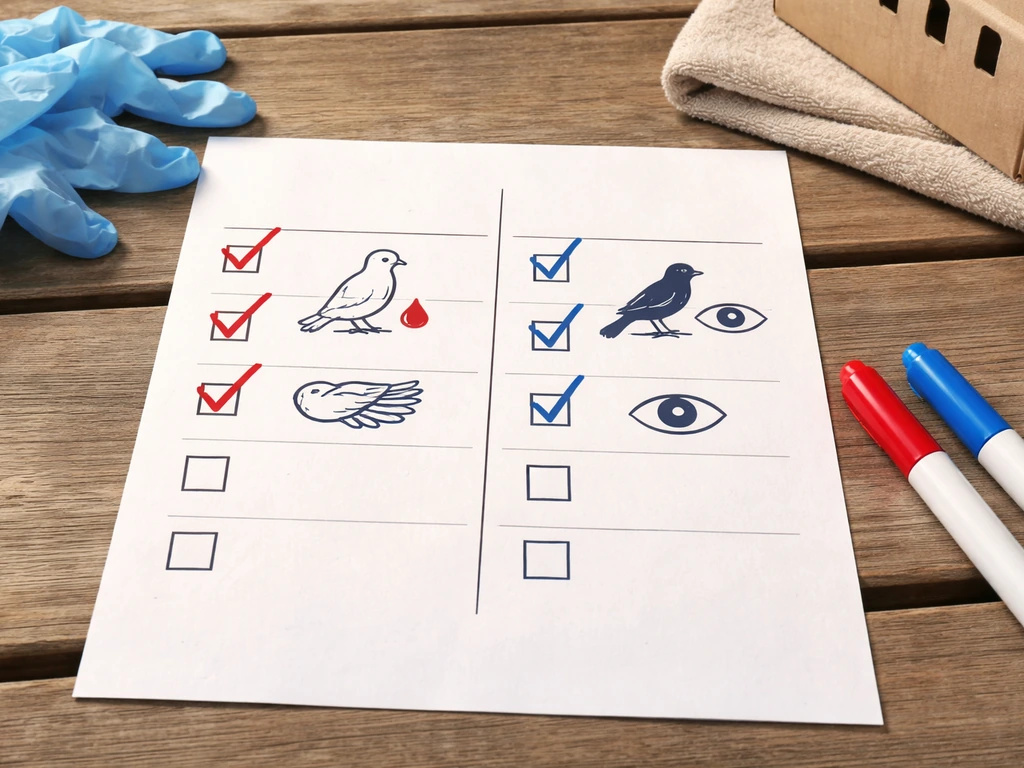
Run through these signs before doing anything else. If you tick even one box in the 'call now' column, don't wait.
| Call RSPCA or wildlife rescue now | Watch and wait (observe from a distance first) |
|---|---|
| Visible wound, bleeding, or blood on feathers | Bird is upright and alert, just not flying |
| Can't hold head up straight or keep balance | Fledgling on the ground with feathers visible (likely normal) |
| Panting or breathing fast for two or more hours | Bird appears to have hit a window but is sitting up |
| Visibly broken or dangling wing or leg | No visible wounds, no balance problems, no blood |
| Caught or scratched by a cat or dog | Bird moves away from you when you approach |
| Trapped, tangled, or unable to free itself | |
| Covered in oil, maggots, or severe matting | |
| Collapsed, unresponsive, or extremely weak | |
| Chick fallen from nest with no safe way to return it |
If the bird is in the 'watch and wait' column, step back at least 10 metres and observe quietly for 20 to 30 minutes. A bird that flies off or hops away on its own doesn't need your help. One that's still in the same spot, looking worse, or showing any signs from the left column after that window, does.
What the RSPCA and wildlife rescues actually deal with
The RSPCA handles genuinely injured, sick, or trapped wild birds across England and Wales. Scottish SPCA covers Scotland separately. These are the situations where calling is absolutely the right call:
- Window or vehicle collision birds that can't fly or are showing neurological signs (head tilt, circling, inability to stand)
- Birds with broken or fractured wings or legs that are visibly misaligned or hanging
- Birds that are bleeding from any wound, including small puncture wounds from cat claws
- Entangled birds caught in netting, fishing line, wire, or fencing
- Birds covered in oil, chemicals, or heavily matted feathers
- Severely weak or collapsed birds that can't right themselves
- Nest emergencies where chicks have fallen and there's no way to safely return them
- Birds with maggots present (this means they've been down for some time and need urgent care)
- Any bird showing signs of bird flu such as sudden death nearby, severe respiratory distress, or staggering
One thing worth knowing: Garden Wildlife Health is a reporting and surveillance service, not a rescue service. Their vets cannot treat or collect birds. If you're reporting a sick wild bird for disease surveillance purposes, you can contact them, but for any actual rescue situation, your call goes to the RSPCA on 0300 1234 999. If you’re in Florida, contact a local wildlife rescue or wildlife rehabilitator for injured birds right away reporting a sick wild bird for disease surveillance purposes.
When you probably don't need to call (and what to do instead)
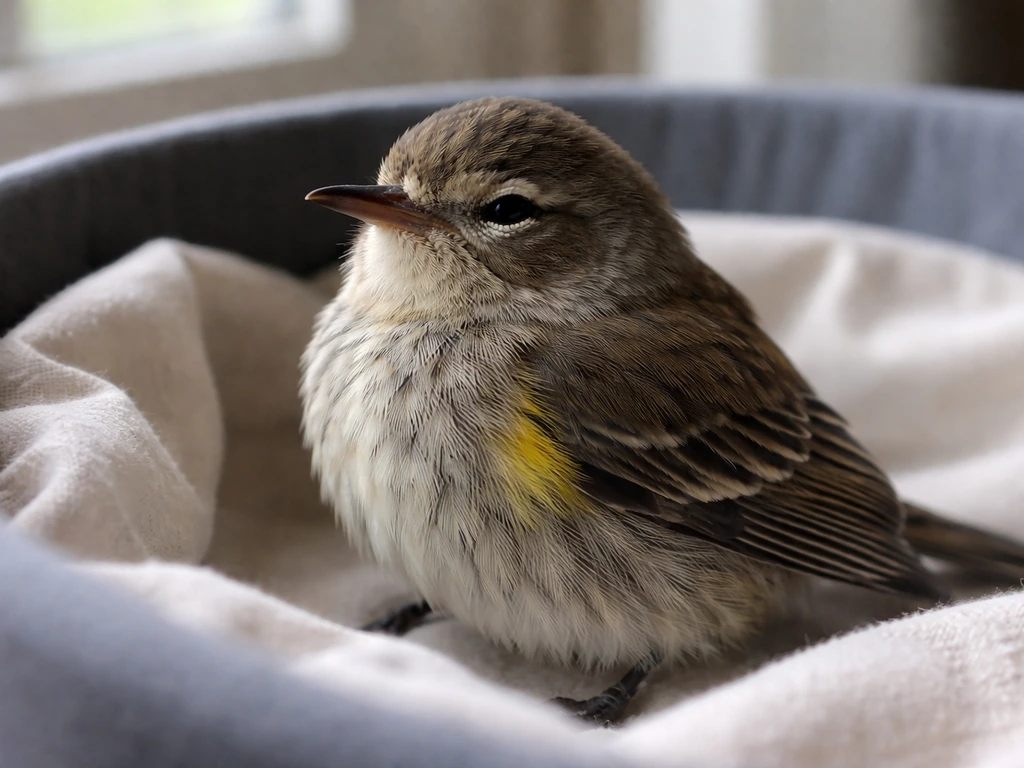
Not every bird on the ground needs rescuing, and well-meaning intervention can actually cause harm. The two situations I see mishandled most often are post-window-strike birds and fledglings.
Post-window-strike birds that are alert
If a bird has just hit a window and is sitting upright and blinking, it may just be stunned. Move it to a quiet, sheltered spot away from cats and direct sun, and check back in 30 minutes. Many birds recover fully on their own. If it's still grounded, showing balance problems, or has been there over an hour, then call.
Fledglings on the ground
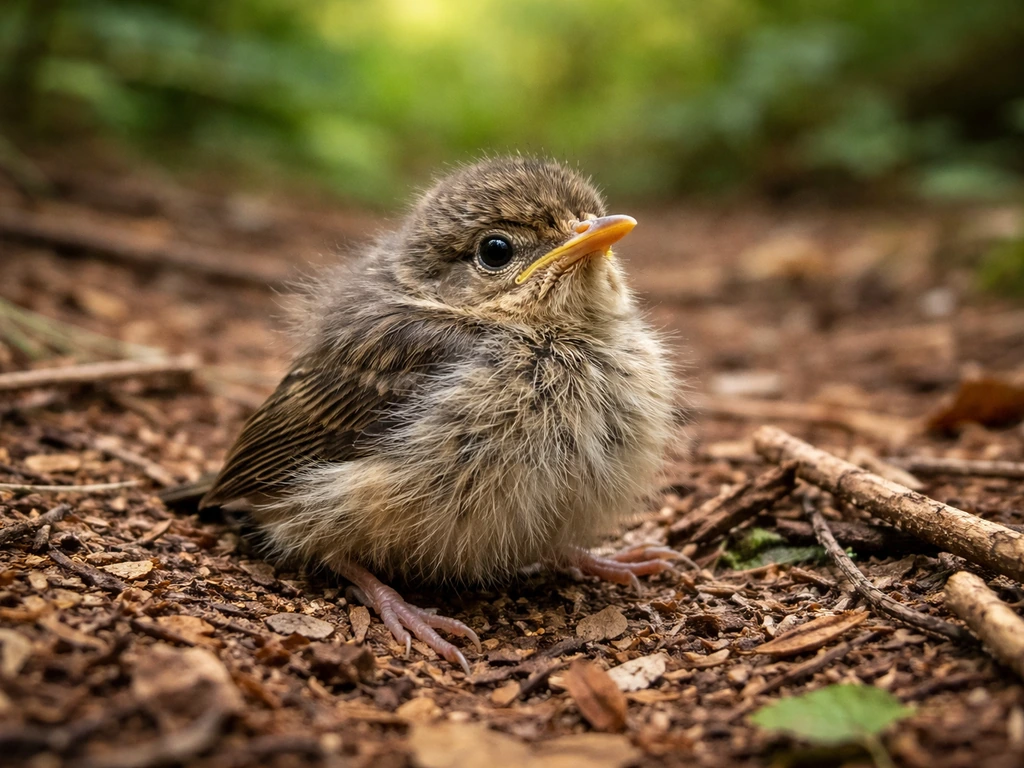
A fledgling with a mix of fluffy down and real feathers sitting on the ground is almost always supposed to be there. This is a normal stage of development where the bird is learning to fly and the parents are still feeding it nearby. Unless it's in immediate danger from a cat or a busy road, leave it alone. Moving a fledgling can separate it from its parents and actually reduce its chance of survival. If it's in danger, move it only a short distance to a safe nearby spot, not inside and not far away.
Minor issues with no functional impairment
A bird that is flying, foraging, and moving normally but has a small bald patch or looks a bit scruffy is usually managing fine. Monitor it if you can, but it doesn't need emergency intervention. Call if anything changes.
What to do right now while you wait for help
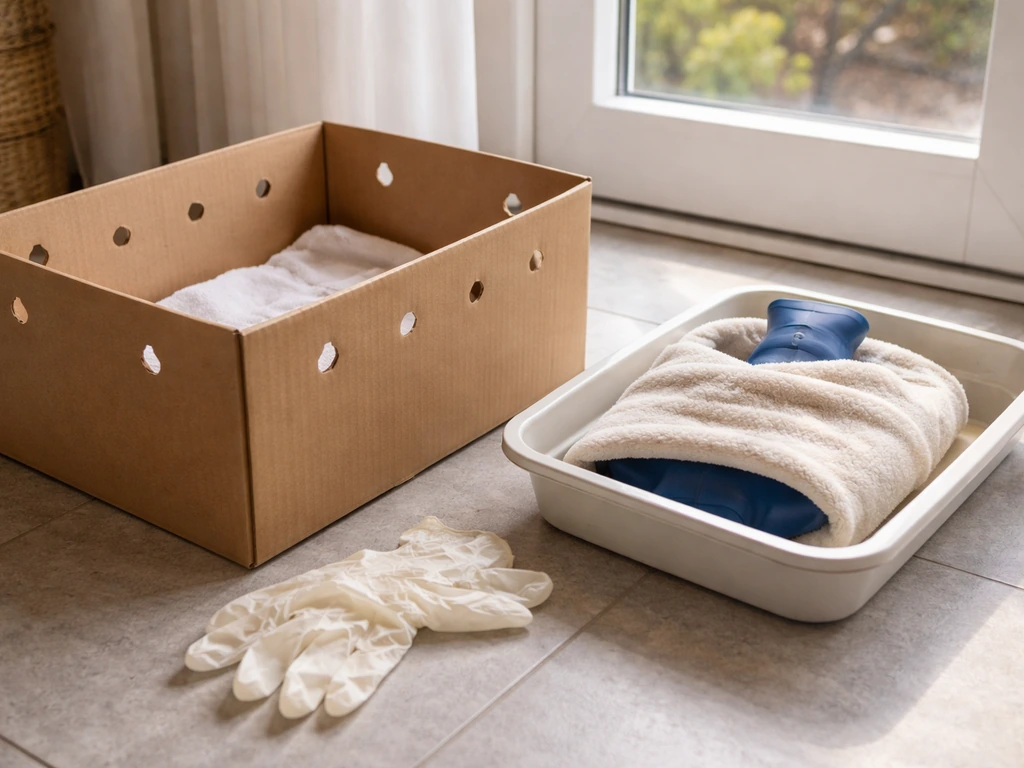
If you've decided the bird does need help, there are things you can do in the next few minutes that make a real difference to its chances. The goal is to keep it alive, calm, and safe until a professional can take over.
Contain it safely
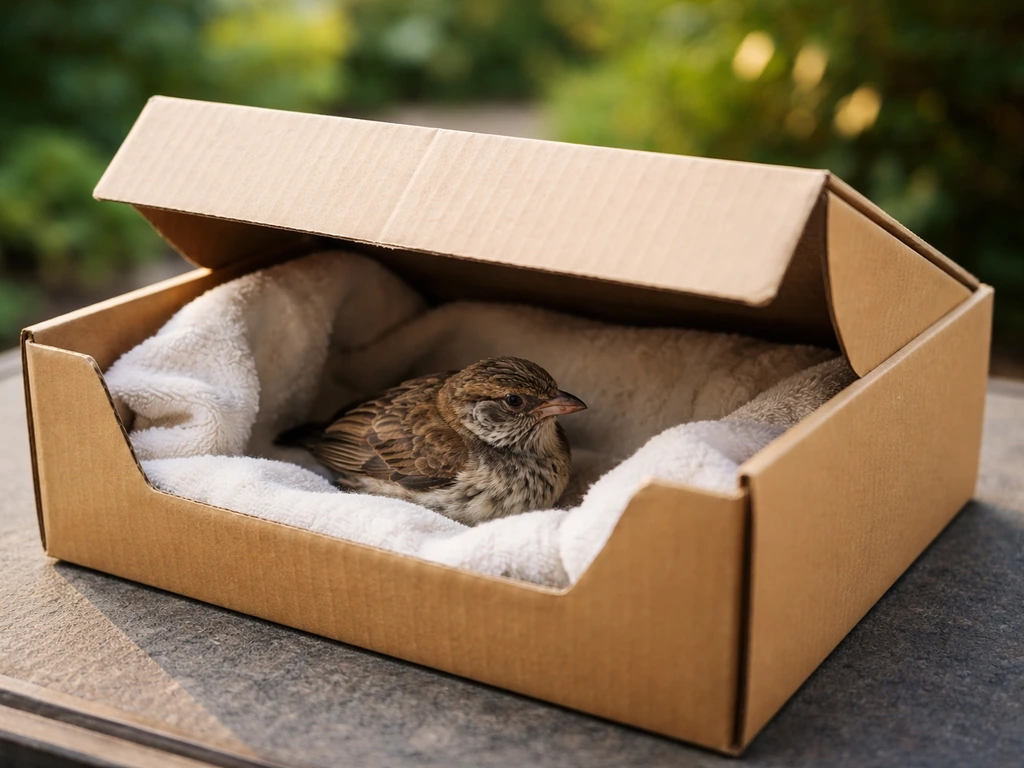
If you need to handle the bird, cover your hands with gloves or a cloth and pick it up gently but firmly, folding the wings against its body. Place it in a cardboard box with ventilation holes, lined with a clean, non-frayed cloth or paper towel. Do not use a wire cage or transparent container. Birds in clear or wire-sided containers can injure themselves trying to escape. Close the box to keep it dark.
Keep it warm and dark
Warmth is critical, especially for small birds and chicks. Place the box in a warm room, away from draughts, loud noise, and pets. If the bird feels cold to the touch, you can place the box on a towel that's been draped over a warm (not hot) heat pad set to low, with one end of the box off the pad so the bird can move away if it gets too warm. Don't wrap the bird itself in anything fluffy like a towel, as fibres can catch on feathers and cause more injury.
Control visible bleeding
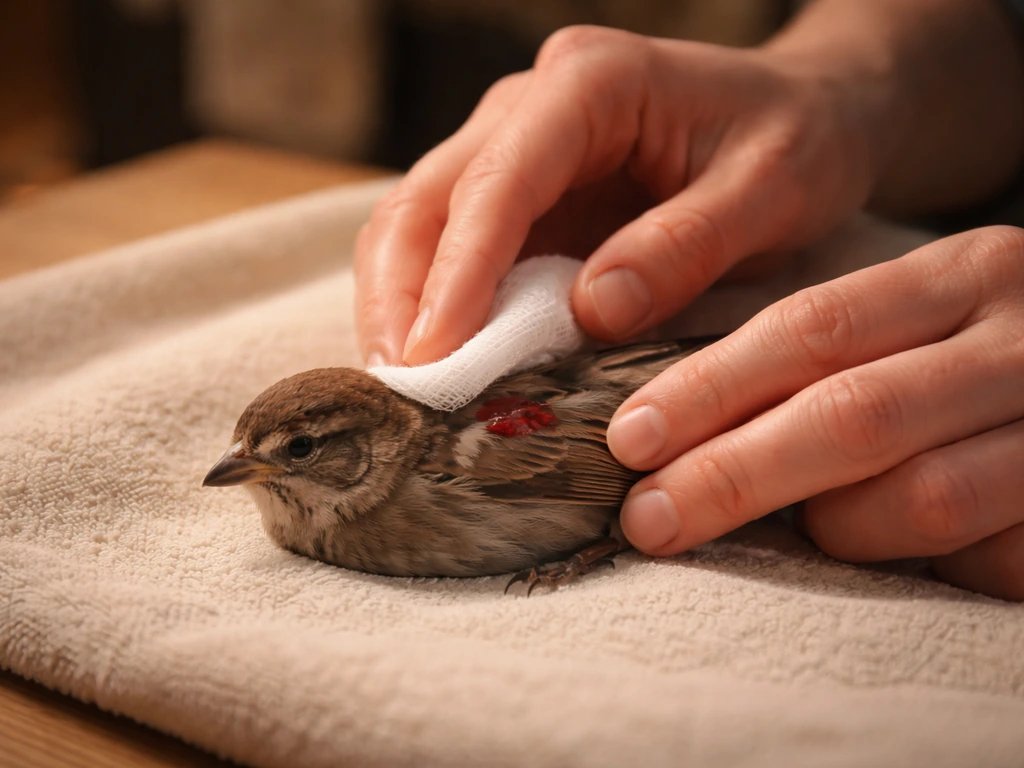
If there's active bleeding, apply gentle, steady pressure with a clean cloth or gauze. Don't remove the cloth if it soaks through; add more on top. Don't attempt to clean wounds deeply or apply antiseptic creams, as many products safe for humans are toxic to birds.
What not to do (this is important)
- Do not give food or water. A stressed or injured bird can aspirate liquid or go into shock. Leave feeding to the professionals.
- Do not try to splint or bandage a broken bone yourself. You can cause further damage and significant pain.
- Do not keep checking on it. Every time you open the box, you stress the bird. Look once, then leave it alone until you're ready to transport.
- Do not release it back outside if it's clearly injured. A bird that can't fly will be quickly taken by a predator.
- Do not offer bread, milk, or human food of any kind.
The RSPCA advises against touching sick or injured birds where possible, partly because of bird flu risk. If you do need to handle the bird, wash your hands thoroughly before and after, and avoid touching your face.
How to contact the RSPCA and what to tell them
The RSPCA's 24-hour line is 0300 1234 999. In Scotland, contact the Scottish SPCA on 03000 999 999. When you call, they'll ask for specific information to assess urgency and decide whether to send someone or advise you to transport the bird yourself. Have this ready:
- Your exact location, including the nearest postcode or landmark. If the bird is somewhere other than your home, give the location where the bird is.
- A description of the bird: size, colour, any distinctive markings. You don't need to know the species, just describe what you see.
- What you observed: is it moving? Standing? Can it fly? Is there bleeding or visible injury?
- How long it's been like this, if you know.
- Whether it's been in contact with a cat, dog, or vehicle.
- Whether you've already contained it or it's still in the open.
- Any photos or short video you've taken on your phone.
Photos and videos are genuinely useful. A short clip showing how the bird is moving (or not moving) helps the person on the line assess severity without seeing it in person. The RSPCA specifically recommends this as a way to get better remote advice before deciding on next steps. If the bird is in an unusual or hard-to-describe location, a photo of the surroundings helps too.
If the situation is urgent and you're able to get the bird to help faster by transporting it yourself, the RSPCA says that can get it care more quickly. Ask the call handler whether it's better to bring the bird in and where the nearest intake point or avian vet is.
If the RSPCA can't help right away, here's what else to try
The RSPCA is busy, and response times vary. If you can't get through or they advise you to find an alternative, you have options.
Local wildlife rescue centres
The Wildlife Trust, British Wildlife Rehabilitation Council (BWRC), and the Wildlife Aid Foundation all maintain directories of local wildlife rescue centres. Search 'wildlife rescue near me' or use the BWRC's online finder. Many are run by volunteers and can take injured birds directly, often faster than waiting for an RSPCA officer.
Avian vets
A registered avian veterinarian can assess and stabilise an injured wild bird. Search the Association of Avian Vets (AAV) directory or ask your nearest regular vet to refer you. Some general vets will see wild birds in genuine emergencies even if they don't specialise. Costs can vary, and some vets will treat wild birds for free or at reduced cost, so it's worth asking.
Species-specific rescues
For raptors like owls, hawks, and kestrels, the Hawk Conservancy Trust and local falconry clubs often have contacts or can advise. For swans and geese, the Swan Lifeline and local councils can help. If you're dealing with a seabird, contact your local coastal wildlife trust. Knowing who to call for a specific type of bird can get it better care faster, and the topic of who to call for an injured bird more broadly covers more of these options in detail. If you are wondering how to report an injured bird, start with the location and the symptoms so the right service can be contacted how to report injured bird. Knowing who to call for an injured bird helps you choose the right local service for the situation.
Safety, legal, and ethical things to keep in mind
Handling risks
Wild birds can scratch, peck, and bite when stressed, and larger birds like herons, gulls, and raptors can cause real injury. Always use gloves or a thick cloth. Beyond physical injury, there's a small risk of disease transmission including Salmonella, Campylobacter, and currently bird flu (H5N1). Always wash hands thoroughly after any contact, avoid touching your face, and if you're immunocompromised, it's better to contain the bird without direct handling if possible and let the professional collect it.
Keep your pets away
Even a brief contact with a cat can be fatal for a bird, even without visible injury. Cat saliva contains bacteria that cause rapid fatal infection in birds. If your cat has caught or touched a bird, that bird needs to be seen by a vet or rescue as a priority, even if it looks uninjured. Keep pets out of the room where you're holding the bird, and don't allow any contact at all.
Nests and eggs
Under the Wildlife and Countryside Act 1981, it is illegal to blank" rel="noopener noreferrer">intentionally take, damage, or destroy the nest of any wild bird while it's in use or being built, or to take or destroy an egg. Don't move a nest that has eggs or chicks in it. RSPB explains that it is illegal to intentionally take, damage or destroy the nest of any wild bird while it is in use or being built. If a nest has fallen from a tree and you can safely replace it close to where it was, do so, and then step well back and watch to see if the parents return. Report unusual situations to the RSPCA for guidance rather than acting alone.
Don't try to rehabilitate the bird yourself
It's tempting to want to nurse a bird back to health at home, especially if it's a chick. But wild birds have very specific dietary, environmental, and social needs that are almost impossible to replicate at home without training. Hand-rearing wild birds can lead to imprinting, which makes them unable to survive in the wild. Your job is to keep the bird stable and get it to a professional as quickly as possible, and that's genuinely the most helpful thing you can do.
FAQ
What if I’m not sure whether the bird is “in distress” right now, what should I do before calling RSPCA?
If it seems borderline, use the quiet observation approach first, 20 to 30 minutes from at least 10 metres away. Call immediately if its condition worsens, it can’t balance, it keeps panting, or it stays grounded and looks increasingly uncoordinated. If you can take it, a short video of its breathing and movement helps the call handler judge urgency.
Does it matter if the injured bird is in my garden versus on a pavement or in a park?
Yes, location affects urgency and where you might be able to take it. If it is beside a busy road, in a car park, or in a place where it could be hit again, call sooner rather than waiting out the full observation window. When you call, mention nearby hazards and whether you can safely transport it to avoid delay.
Should I call RSPCA if a bird is sitting quietly but not moving much after a short time?
If it is alert and upright, stillness alone can be temporary, so the advice is to watch for 20 to 30 minutes. If it is not moving normally, is staying put as time passes, or shows any coordination or breathing problems, treat it as a call-now scenario. Don’t try to “test” it by poking or chasing.
What if the bird looks like it’s just stunned after hitting a window, do I still need to call?
Usually no, if it is upright, blinking, and you can keep it safe and quiet. Move it to a sheltered spot away from cats and direct sun, then check again after about 30 minutes. Call if it remains unable to balance, cannot regain normal movement, or has been on the ground for over an hour.
Is it ever okay to move a fledgling without calling anyone?
Only when it is in immediate danger, for example a cat reach, a road, or imminent harm from foot traffic. In that case, move it a short distance to the nearest safe spot and do not carry it far. If it is not in immediate danger, leaving it where the parents can find it is usually best.
If I can’t get through to RSPCA, what’s the fastest alternative in the meantime?
Try local wildlife rescue centres listed by the Wildlife Trust, BWRC, or Wildlife Aid Foundation, many can take injured birds directly. If you can safely do so, you can also transport it to an appropriate intake point if the call handler tells you that’s better. If the bird is deteriorating, don’t wait for one service to answer if you have another option available quickly.
Should I keep the bird in a box without any heat, or is warming always required?
Warmth is important, but only warm enough to support recovery, especially for small birds and chicks. If it feels cold, use a low heat pad under the box with one end off the pad so it can move away, and avoid overheated or direct-hot sources. The bird should be calm, dark, and protected from drafts, noise, and pets.
Can I clean the bird’s wound or put antiseptic or creams on it?
Avoid deep wound cleaning and avoid human antiseptic creams, many can be toxic to birds. If there is bleeding, apply gentle steady pressure with a clean cloth or gauze, and if it soaks through, add more on top rather than removing the original layer.
Is the bird flu risk a reason to avoid touching entirely, or is handling okay in emergencies?
The guidance is to avoid touching where possible due to disease risk, but handling is justified if it’s necessary to prevent further harm or to transport safely. If you do handle it, wash hands thoroughly before and after, avoid touching your face, and if you are immunocompromised, try to limit direct contact and arrange professional help sooner.
What’s the safest way to pick up a bird if I can’t call immediately?
Use gloves or a thick cloth and pick up gently but firmly. Fold the wings against the body and place the bird in a ventilated cardboard box lined with clean cloth or paper towel, then keep it dark by closing the box. Avoid wire cages or transparent containers, since birds often injure themselves trying to escape.
What should I say when I call, and how can I speed up the decision about urgency?
Have a photo and, ideally, a short video ready showing movement and breathing. Also describe exactly where it is, what happened if you know (cat, window strike, road, unknown), and whether the bird is bleeding, panting, entangled, or unable to stand. Clear details help the handler decide whether someone is needed or whether you should transport it.
If my cat has caught a bird but it looks fine, should I still get help?
Yes. Even if there are no visible injuries, cat saliva bacteria can cause rapid fatal infection in birds. Contact a vet or wildlife rescue as a priority, and keep the bird away from your cat and other pets while arranging care.
Are there legal or practical reasons not to touch a nest or fledglings at home?
Don’t move nests that contain eggs or chicks. If a nest has fallen, you can replace it close to where it was if it can be done safely, then step back and watch for parents to return. For unusual nest situations, get guidance rather than acting alone.