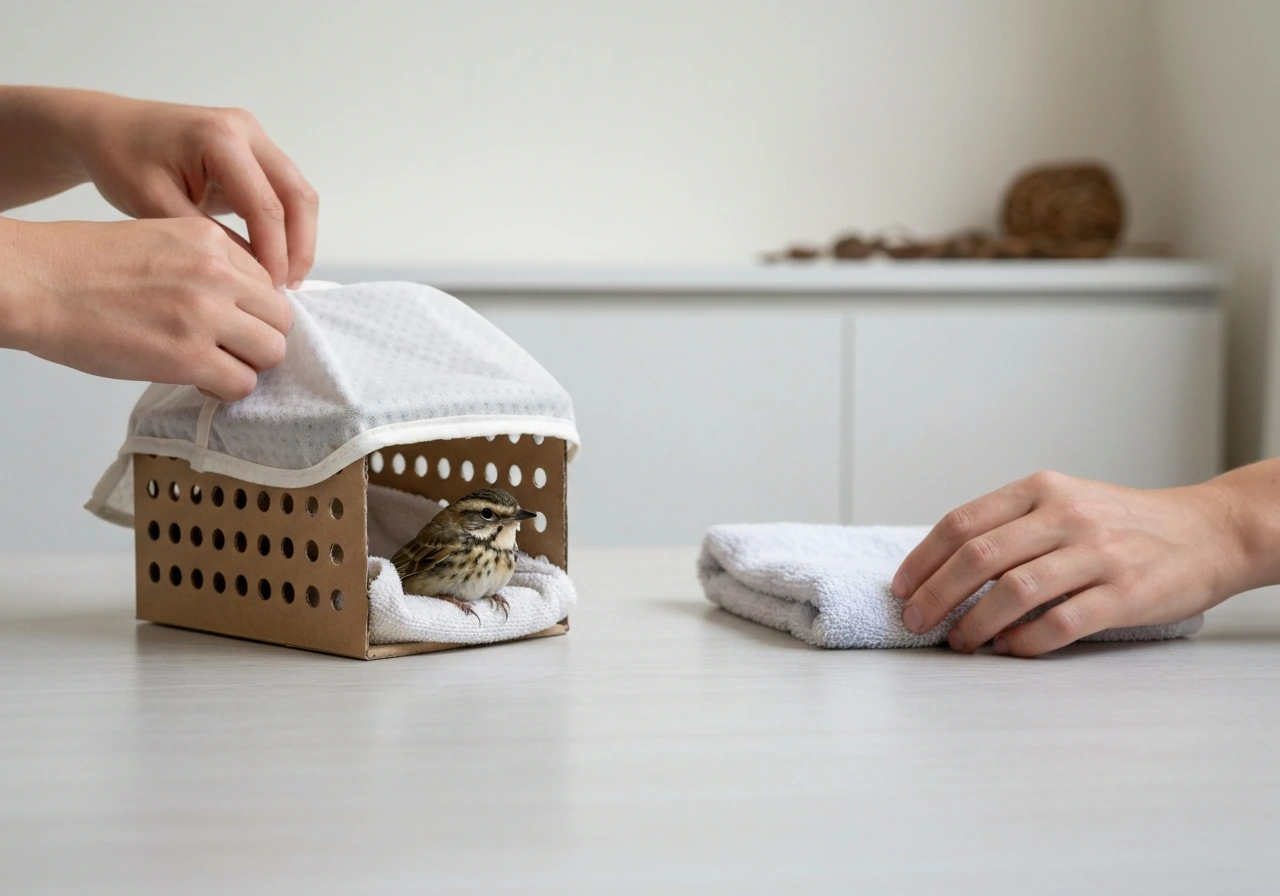
If you've found a sick or injured wild bird, call a licensed wildlife rehabilitator first. They are the single best option in almost every situation. While you track one down, put the bird in a shoebox lined with a paper towel, poke a few small air holes in the lid, and keep it somewhere warm, dark, and quiet. Do not give it food or water. That's the core of it. Everything below helps you handle the specifics of your situation.
Where to Take a Sick Wild Bird: Quick First Steps and Contacts
Marcus Chen
9 Jun 2026
Quick triage: is the bird actually sick or just grounded?
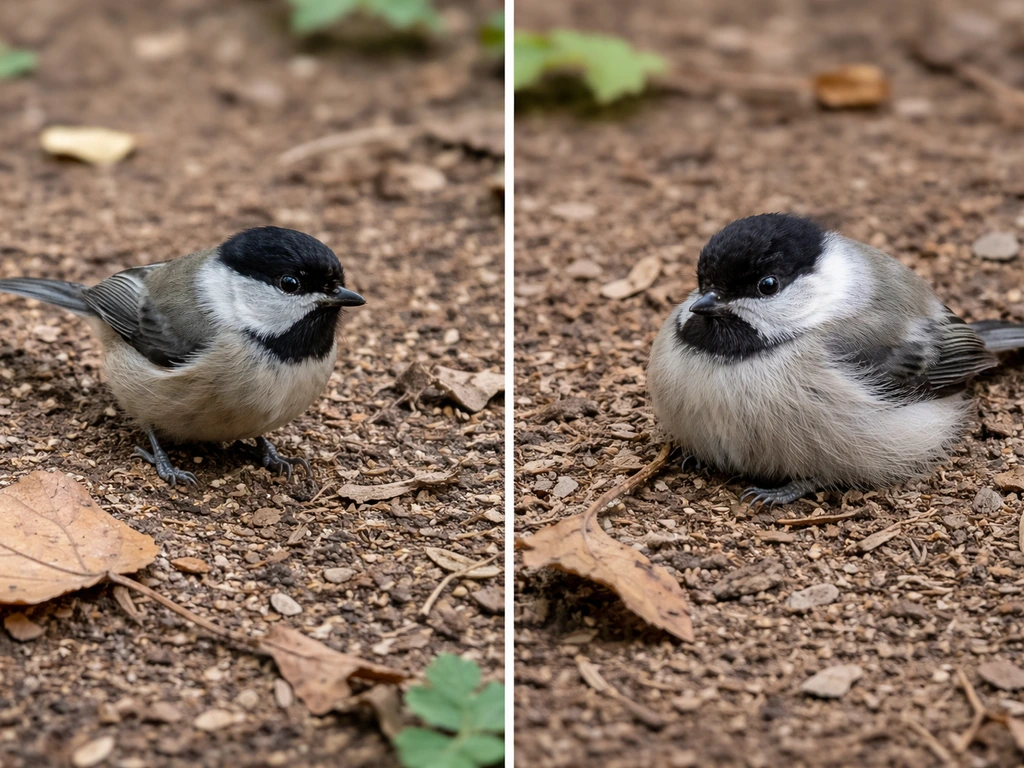
Before you scoop a bird up, take 30 seconds to watch it. A lot of birds that look like they need rescuing actually don't. Adult songbirds sometimes sit on the ground while foraging. Fledglings (young birds with some feathers, short tails, and hopping ability) regularly spend days on the ground while their parents are nearby teaching them to fly. Picking them up removes them from parental care, which is the last thing you want to do.
A bird that genuinely needs help will usually show at least one of these signs:
- A wing or leg held at a clearly abnormal angle, dragging, or dangling
- Visible bleeding, open wounds, or missing feathers from a large area
- Eyes closed or half-closed, head drooping, or unable to hold the head upright
- Lying flat on its side and not trying to move away from you
- A baby bird (no feathers, or just pin feathers) that is cold, still, or bloody
- Any bird that lets you walk right up and pick it up without trying to escape
If you watched a bird hit a window, it may look awful but just be stunned. Give it up to two hours in a contained, safe space (more on that below) before assuming the worst. Many recover and fly off on their own. If it's still not moving normally after that window, it's time to transport.
Keep yourself and the bird safe before you do anything else
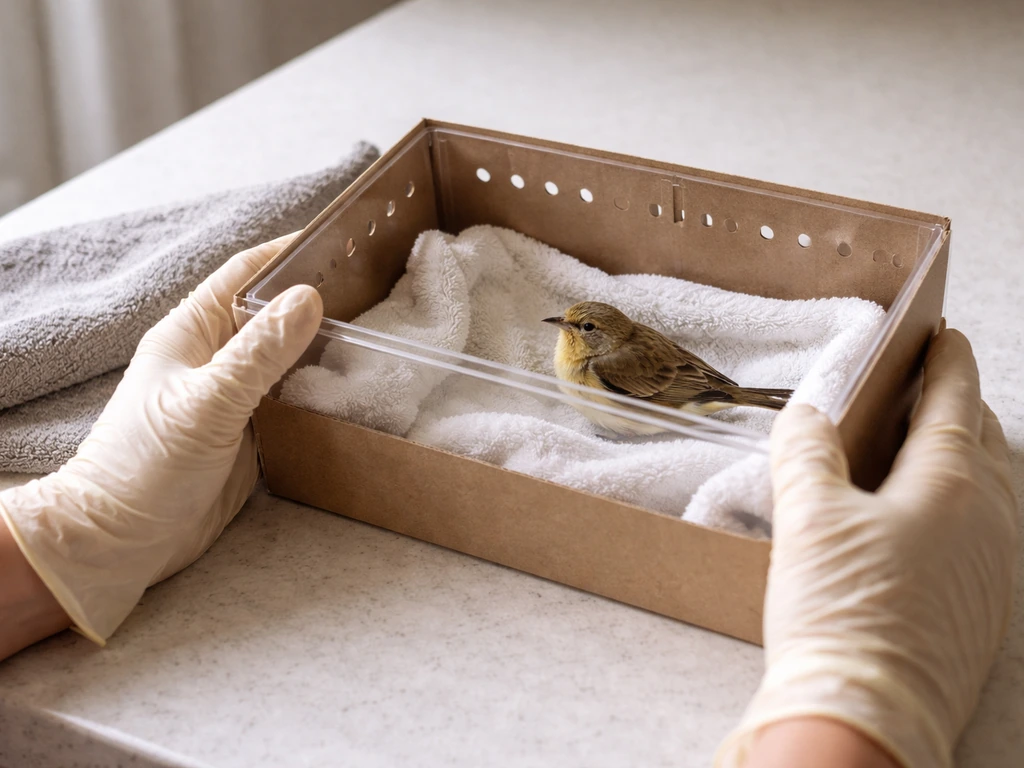
Wild birds can carry bacteria, parasites, and in some cases, illnesses like avian influenza. The CDC is clear: don't handle birds that are obviously very sick or found dead without protection. For a bird you're going to transport, that means wearing gloves if you have them, or using a towel to pick the bird up without direct hand contact. Wash your hands thoroughly afterward. This isn't alarmist, it's just smart.
For containment, a shoebox or small cardboard box works perfectly. Line it with a paper towel or a cloth you don't mind discarding. Poke several small holes in the lid for ventilation. Place the bird gently inside, close the lid, and set the box in a warm, dark, quiet spot away from pets, kids, and noise. Do not put it in the sun, a car trunk, or near a heater vent.
If the bird feels cold to the touch, you can place one end of the box on a heating pad set to low, leaving the other end off the pad so the bird can move away if it gets too warm. Never heat the whole box. And resist the urge to offer food or water, no matter how well-intentioned it is. Force-feeding a stressed bird can cause it to aspirate (inhale liquid into its lungs), and wild birds have very specific dietary needs that are easy to get wrong. Every wildlife organization from Tufts Wildlife Clinic to Mass Audubon gives the same guidance: no food, no water.
Where to actually take a sick wild bird
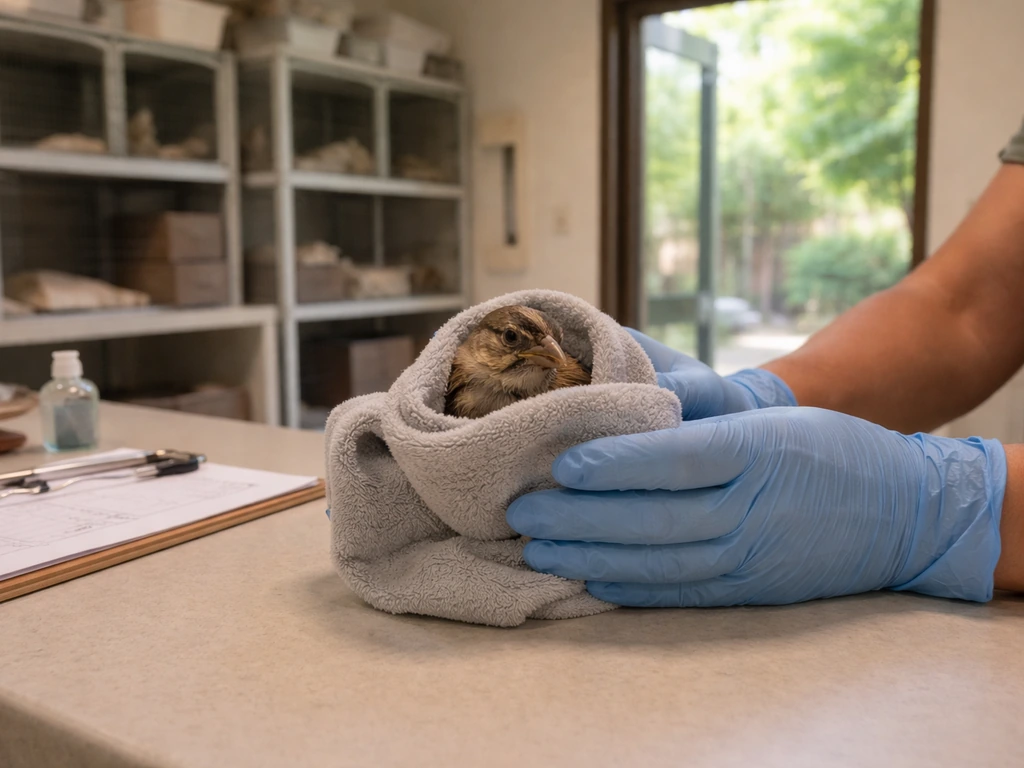
You have a few realistic options, and the right one depends on what's available near you today. In general, you can take an injured bird to a licensed wildlife rehabilitator as your best first call where to actually take a sick wild bird. Here's what each one can do for the bird. If you are wondering where to take a hurt bird, the first and best call is usually a licensed wildlife rehabilitator.
Licensed wildlife rehabilitators (your best first call)
Wildlife rehabilitators are specifically trained and legally permitted to care for injured and sick wild animals. In most states they must pass a licensing exam, hold a state permit, and for birds specifically, they also need a federal Migratory Bird Rehabilitation permit to legally treat songbirds, waterfowl, and raptors. That permitting matters because it means they know what they're doing and they're authorized to do it. Your state wildlife agency (like MassWildlife or New York's DEC) maintains a directory of currently licensed rehabilitators. Search your state's wildlife agency website or use a national database like the Wildlife Rehabilitators Directory to find someone near you. If you're looking for one right now, check your state wildlife agency’s directory or a national rehabilitators database to find a bird rescue near you.
One important heads-up: most rehabilitators cannot come to you. They operate out of their homes or small facilities, often as volunteers, and they're not set up for pickup service. Expect to transport the bird yourself, and call ahead so they know you're coming and can advise you on the specific species if they recognize it. Expect to transport the bird yourself, and call ahead so they know you're coming and can advise you on the specific species if they recognize it; if you're wondering who will take an injured bird, this is often the licensed rehabber.
Avian veterinarians
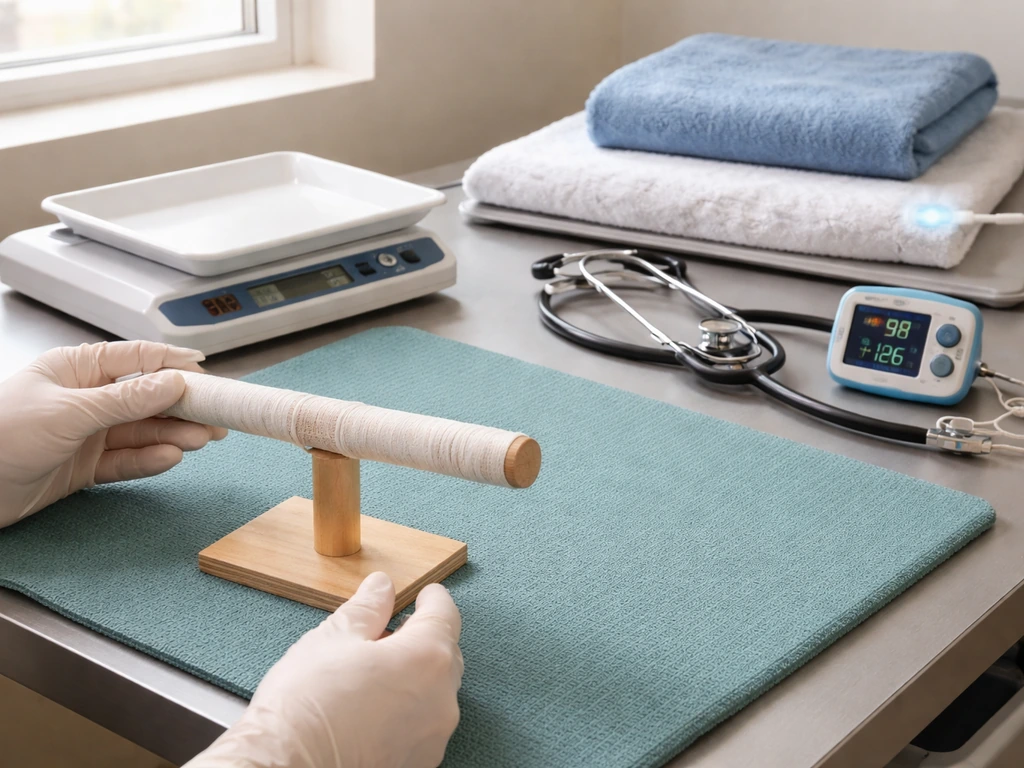
An avian vet can provide emergency medical care, pain management, and stabilization that most rehabilitators aren't equipped to do. If the bird has a severe injury, is in obvious pain, has been attacked by a cat or dog, or looks like it's in critical condition, an avian vet is the right first call. The downside is cost: vet care for wildlife isn't free, and not all general vets see wild birds. Search specifically for "avian veterinarian" plus your city, or call your local humane society and ask for a referral. Many avian vets will at least stabilize the bird and then transfer it to a rehabber for ongoing care.
Animal shelters and animal control
Most animal shelters aren't equipped to treat wild birds, but they can be a useful bridge. Many have relationships with local wildlife rehabbers and can point you to the right contact quickly. Boston Animal Care & Control, for example, connects callers to wildlife rehabilitators as part of their standard service. If you're stuck and can't find a rehabber directly, call your local animal control. They've usually seen this situation many times and know who handles wild birds in your area.
Rescue vs. vet vs. rehab: how to choose quickly
| Situation | Best First Option | Notes |
|---|---|---|
| Window strike, stunned but no visible injury | Wait 1-2 hours, then wildlife rehabber | Many recover; contain safely and monitor first |
| Broken wing or leg | Wildlife rehabber or avian vet | Vet if bird is in obvious pain or wound is open |
| Cat or dog attack (even minor punctures) | Avian vet first, then rehabber | Puncture wounds cause hidden internal damage; bird needs antibiotics fast |
| Baby bird (nestling, no feathers) | Wildlife rehabber | Try to return to nest first if you can reach it |
| Fledgling (feathered, hopping) | Leave it; watch for parents | Only intervene if parents absent for 2+ hours or bird is injured |
| Very sick, lethargic, or neurological signs | Wildlife rehabber or avian vet | Call ahead; describe symptoms; follow their guidance on transport |
| Dead or obviously diseased bird | Do not handle; call animal control | Report to local or state wildlife agency if multiple birds found |
What to have ready when you call or show up
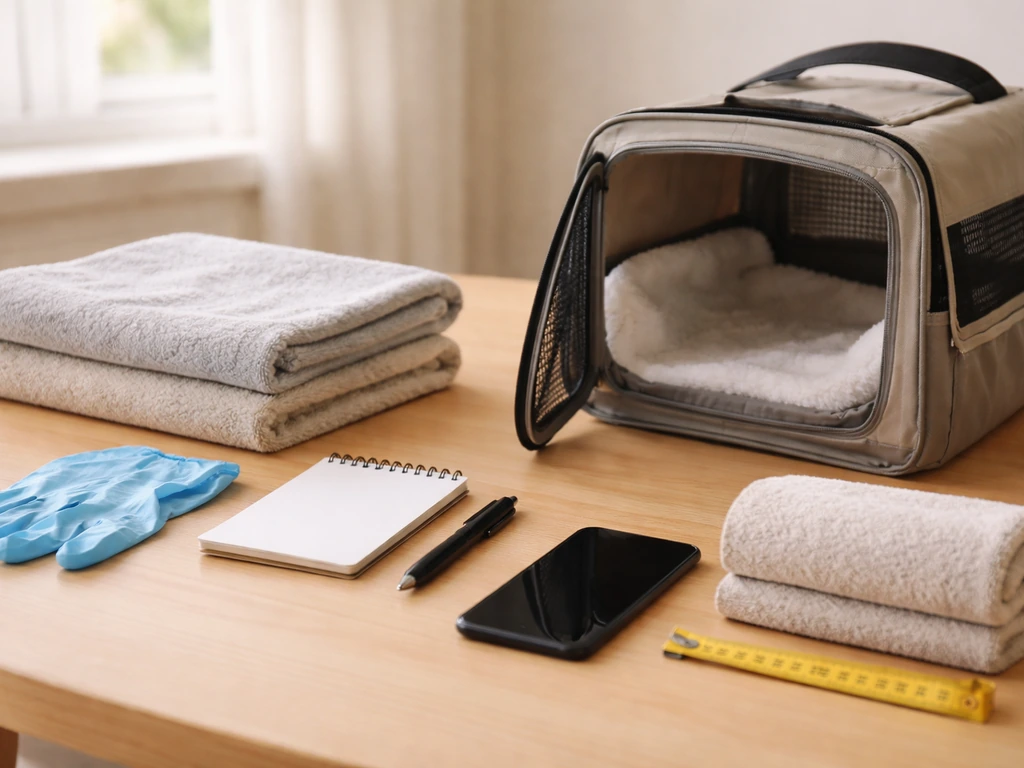
When you call a rehabber or vet, they'll ask you several questions to triage the situation and give you the right advice. Having this information ready will speed things up considerably, especially if the organization is busy.
- What species is it, or your best description (size, color, beak shape, any field marks)
- Where you found it: specific address or intersection, and what type of habitat (backyard, park, roadside)
- What you think happened: window strike, found on ground, cat brought it in, fell from nest
- What symptoms you're seeing: wing position, eye condition, whether it's alert or unresponsive
- How long ago you found it
- What you've done so far: contained it, kept it warm, whether you gave it food or water
You don't need to know the exact species. Describing it as "small brown songbird, maybe robin-sized, found under a window" is plenty of information for a rehabber to start helping you. Photos taken at a safe distance can also help with identification.
Special situations worth knowing about
Nestlings (baby birds with no or very few feathers)
If you find a very young bird on the ground with few or no feathers, look for the nest first. If you can see it and safely reach it, put the bird back. The myth that parent birds abandon babies touched by humans is exactly that: a myth. Birds have a poor sense of smell and will continue caring for their chick. If the nest is destroyed or unreachable, you can fashion a substitute nest from a small container (like a margarine tub with drainage holes) lined with dry grass or leaves, mount it as close to the original nest location as possible, and watch to see if the parents return. If the baby is cold, limp, or bloody, skip all of this and go straight to a wildlife rehabber. If you find baby birds that are cold, limp, or bloody, MassWildlife advises skipping trying to help yourself and going straight to a wildlife rehabilitator.
Window strikes
Window collisions are one of the most common reasons people find stunned birds. The bird hits the glass, falls, and looks dead or dying. Often it's just concussed. Contain it in a shoebox with a lid, keep it warm and dark, and leave it alone for up to two hours. Don't keep checking on it, the darkness and quiet are part of the recovery. If after two hours it's still not alert or is clearly injured, take it to a wildlife rehabber or avian vet. If the bird doesn't recover in a couple of hours after a window strike, Tufts Wildlife Clinic advises taking it to a vet or wildlife rehabilitator take it to a wildlife rehabber or avian vet.
Cat and dog attacks
This one is urgent. Even if the bird looks fine, a cat attack is a veterinary emergency. Cat saliva carries bacteria (particularly Pasteurella) that can kill a bird within 24 to 48 hours from infection alone. A bird that's been in a cat's mouth and seems to be walking around normally can be dead the next morning without antibiotic treatment. Get it to an avian vet the same day, not a rehabber first. The vet will stabilize and treat, then hand off to a rehabber for recovery if needed.
When the bird might be diseased (not just injured)
If the bird shows neurological symptoms (spinning in circles, unable to hold its head up, seizure-like movements), or if you've found multiple dead or dying birds in the same area, treat this differently. The CDC advises against handling birds that are obviously sick with no clear injury, and the National Park Service echoes this. Do not pick these birds up with bare hands. Use gloves or a thick layer of paper towels, contain the bird minimally if at all, and call your state wildlife agency or local animal control to report it. Multiple sick birds in one location can signal disease outbreaks worth reporting to wildlife authorities.
How to find someone near you right now
The fastest routes to finding local help today:
- Search your state wildlife agency website for their licensed rehabilitator directory. Most states (including New York and Massachusetts) publish these publicly and update them regularly.
- Call your local humane society or animal control office and ask who they refer wildlife cases to.
- Search the National Wildlife Rehabilitators Association (NWRA) or the Wildlife Rehabilitators Directory online.
- Call a local avian vet even if you end up going to a rehabber. They often know the local network and can point you to the right person fast.
- If you're in a rural area with limited options, call any licensed vet and explain the situation. Many will at least stabilize the bird or hold it while you arrange transport to a specialist.
The main thing to know is that you don't have to figure this out alone. The wildlife rehabilitation network exists specifically because people find hurt birds and don't know what to do. Call early, describe what you're seeing honestly, and follow their instructions. You've already done the hardest part by stopping to help.
FAQ
What should I do if I cannot find a licensed wildlife rehabilitator near me right now?
Call your state wildlife agency or local animal control and ask who handles wild birds in your area today. If you cannot reach either, contact your local humane society for a referral. If the bird appears severely injured, in obvious pain, or was attacked by a cat or dog, prioritize an avian veterinarian if one is available. Shelters often cannot treat wildlife long term, but they can usually direct you quickly.
Can I bring the bird to a pet emergency clinic or a regular ER?
If they are not set up for birds, they may be unable to treat it properly. A regular ER is reasonable only if they can triage and stabilize promptly, but an avian veterinarian is the better option when the bird is in critical condition. If you go to any clinic, call first so you do not waste time if they cannot accept wild birds.
If the bird is just sitting still after a window strike, do I still need to transport it?
Not right away. Keep it contained and undisturbed for up to two hours in a warm, dark, quiet space, then reassess. Transport to a wildlife rehabilitator (or avian vet if severe symptoms appear) if it is still not alert, cannot move normally, or is clearly injured after that window period.
What if the bird is bleeding or has exposed tissue, can I tape or wrap it at home?
Avoid trying to improvise bandages or splints unless a professional instructs you. Improper wrapping can restrict breathing or circulation. The safest step is containment in a ventilated box, warmth if cold to the touch using a low heating pad on only part of the container, and same-day delivery to a rehabber or avian vet depending on severity.
Should I try to feed the bird if it is chirping or begging?
No. Even if it seems responsive, wild birds have specialized diets, and offering food or water can cause aspiration or other complications. Focus on warmth, darkness, and minimal handling until a licensed wildlife professional takes over.
How warm is “warm enough” for a sick bird in a shoebox?
A good target is comfort without cooking. If the bird feels cold, warm only one side of the box with a low heating pad so it can move away. Do not place the entire box on heat, and avoid sun or heater vents that can overheat the container quickly.
Is it okay to keep checking on the bird in the box every few minutes?
Limit checking to a minimum. Frequent disturbances increase stress and can slow recovery, especially after window collisions. Re-check only to confirm it is breathing and that it remains contained safely, then leave it alone until reassessment time or the moment you transport it.
What information should I have ready when I call a rehabilitator or vet?
Have the location and exact circumstances (window hit, cat encounter, found on the ground, collision, visible bleeding), the time you found the bird, whether it is awake and responsive, its approximate size, and whether you noticed neurological signs. If possible, include a few photos taken from a safe distance and tell them the bird’s behavior (standing, hopping, unable to hold head up).
Can I transport the bird in a carrier I already own, like a dog crate or aquarium?
Prefer a small, ventilated, escape resistant container like a shoebox or small cardboard box. The key requirements are secure containment, ventilation holes, and a calm, dark environment. If you use another container, make sure it is not too large (the bird can injure itself moving around) and it stays warm and quiet without overheating.
If I find a fledgling on the ground, should I call for help anyway?
Not always. Many fledglings are intentionally on the ground while parents supervise nearby. Before you pick it up, check whether it is hopping and whether the parents are nearby. If it has signs of serious injury, is bleeding, is cold and limp, or you cannot safely reunite it with its parents or nest, then call a wildlife rehabilitator.
What if I’m worried it might be an outbreak, for example multiple dead birds nearby?
Do not handle sick or dead birds with bare hands. Use gloves or a thick barrier like paper towels only for necessary containment, if at all, then contact your state wildlife agency or local animal control to report the cluster. Multiple affected birds can signal disease and should be handled as a reporting and safety issue first.
If the bird seems “fine” but I suspect it was in a cat’s mouth, what is the right first step?
Treat it as urgent even if it looks normal. Cat-related infections can be fatal within a day or two. Get the bird to an avian veterinarian the same day for stabilization and treatment, then follow up with a wildlife rehabilitator if the vet advises transfer.
Next Article
Who Will Take an Injured Bird? Get Help Today
Find who will take an injured bird now, with triage, safe care steps, and who to call by scenario