
If a bird hit your window and can't fly, here's what to do right now: gently pick it up with a towel, place it in a small cardboard box or paper bag lined with a paper towel, close it up, and set it somewhere dark, quiet, and warm away from pets and kids. Don't offer food or water. After an injury or window collision, place the bird in a warm, dark, quiet place such as a shoebox lined with cloth or paper towel, and blank" rel="noopener noreferrer">do not attempt to provide food, water, or first aid beyond containment. Then give it up to two hours to recover. If it's not alert and flying within that window, or if you see bleeding, a drooping wing, or labored breathing, contact a wildlife rehabilitator or avian vet immediately.
Bird Hit Window: What to Do When It Can’t Fly
Marcus Chen
2 Jun 2026
First: check how serious this actually is
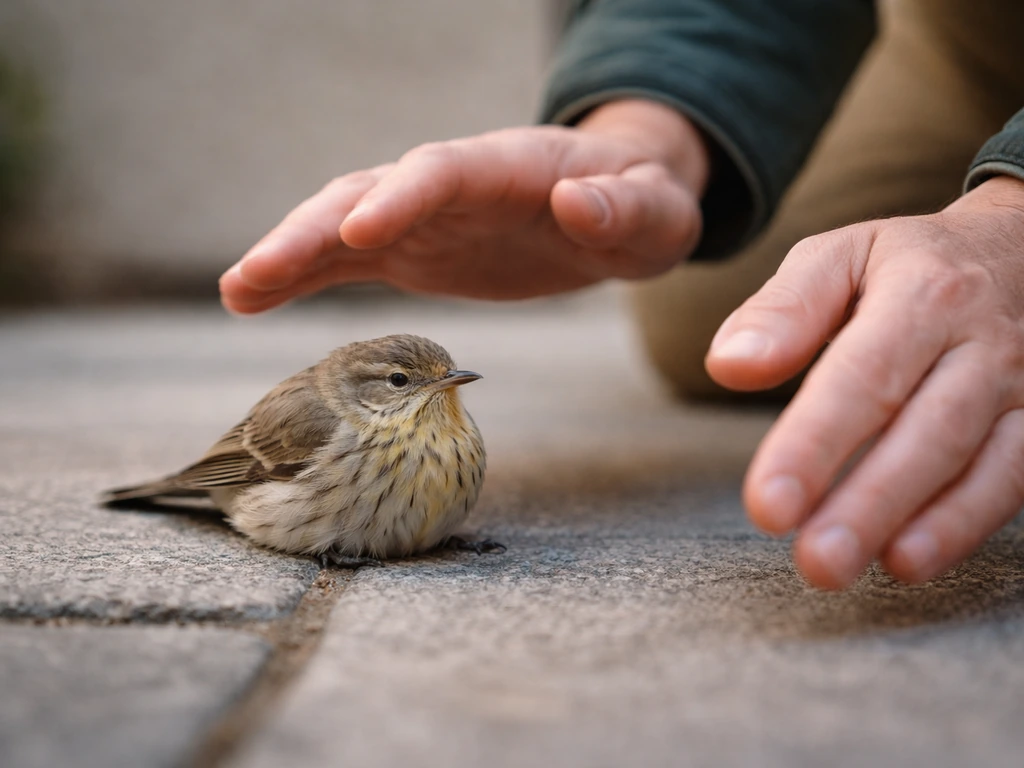
Before you do anything else, take 30 seconds to look at the bird without touching it. What you see right now tells you a lot about what you're dealing with and how urgently you need outside help.
A stunned bird often looks dazed, sits still on the ground with eyes half-open or closed, and may be breathing faster than normal. That's a concussion-like response to head trauma, and it can be temporary. A bird that's already trying to hop, perch, or move its wings is a good sign. One that isn't moving at all, especially with eyes fully closed, needs more attention.
Scan quickly for these warning signs that move this beyond a simple stun:
- Visible bleeding anywhere on the body, beak, or around the eyes
- A wing drooping or held at an odd angle compared to the other side
- The bird's head tilted to one side or twisting uncontrollably (neurological sign)
- Labored or open-mouth breathing
- Inability to hold itself upright or keep its head up
- Obvious leg or beak damage
- No movement at all, even when gently approached
Any of those signs means you're dealing with something more than a stun. The bird still needs the same immediate first aid steps, but you should also be calling for professional help while you're doing them, not waiting to see how things go.
Immediate first aid: warmth, dark, quiet, and hands off
The goal here is to reduce stress and keep the bird stable, not to treat or fix anything. WCNGA says that even when a bird shows no visible injuries and is grounded, it may still be stunned or concussed and injuries can worsen, so keep it safely contained in a ventilated box lined with towel or paper towels in a dark, quiet location and do not put water in the bird’s mouth or into the box. Stress alone can kill an already-injured bird, so the less handling the better.
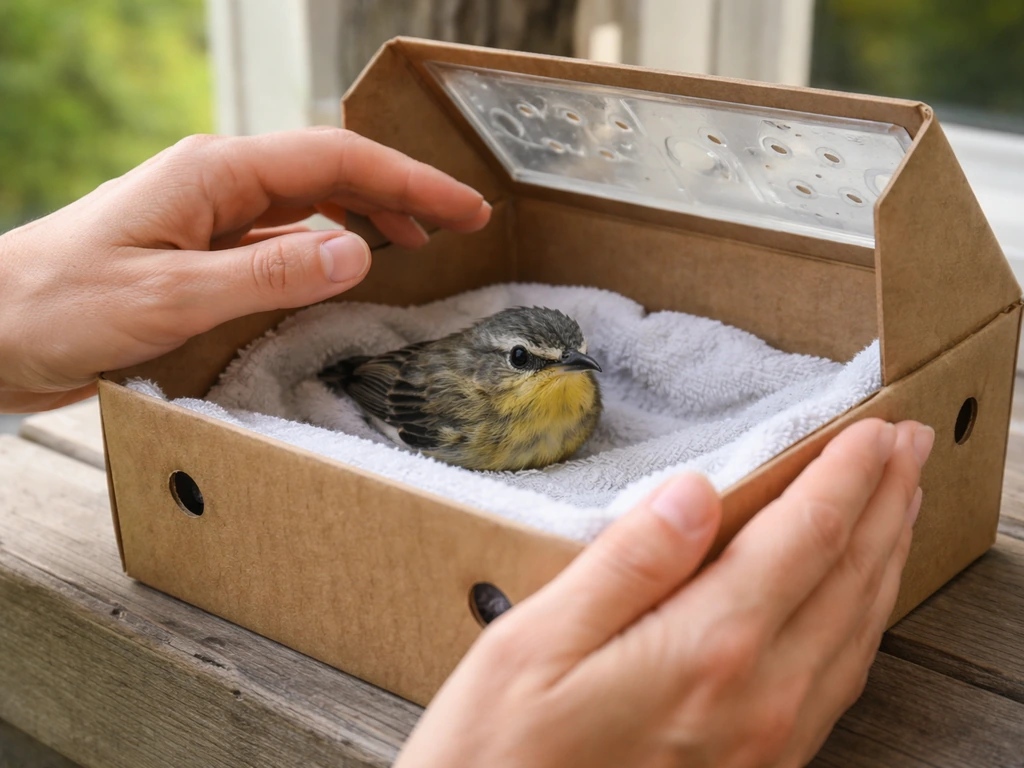
- Grab a small cardboard box (a shoebox works great) or an unwaxed paper bag. Line the bottom with a paper towel or a piece of tissue. Do not use a mesh cage or anything the bird can grip and flap around in.
- Wrap your hands in a light towel or wear thin gloves. Approach the bird calmly and scoop it up gently but firmly with two hands cupped around its body to keep its wings against its sides. Avoid squeezing.
- Place the bird into the box and close the lid. Poke a few small air holes in the top if the box is fully sealed. The darkness helps calm the bird significantly.
- Set the box somewhere warm, quiet, and completely out of reach of cats, dogs, and curious kids. Indoors in a bathroom or laundry room works well. Room temperature around 70-75°F is ideal.
- Do not put food or water in the box. Do not drip water into the bird's mouth. Do not try to splint anything. Do not hold the bird in your hands or keep checking on it. Every peek adds stress.
That's it for now. You've done the most important thing. The bird is safe from predators, sheltered, and has a real chance to stabilize.
How to tell if the bird is recovering (and how long to wait)
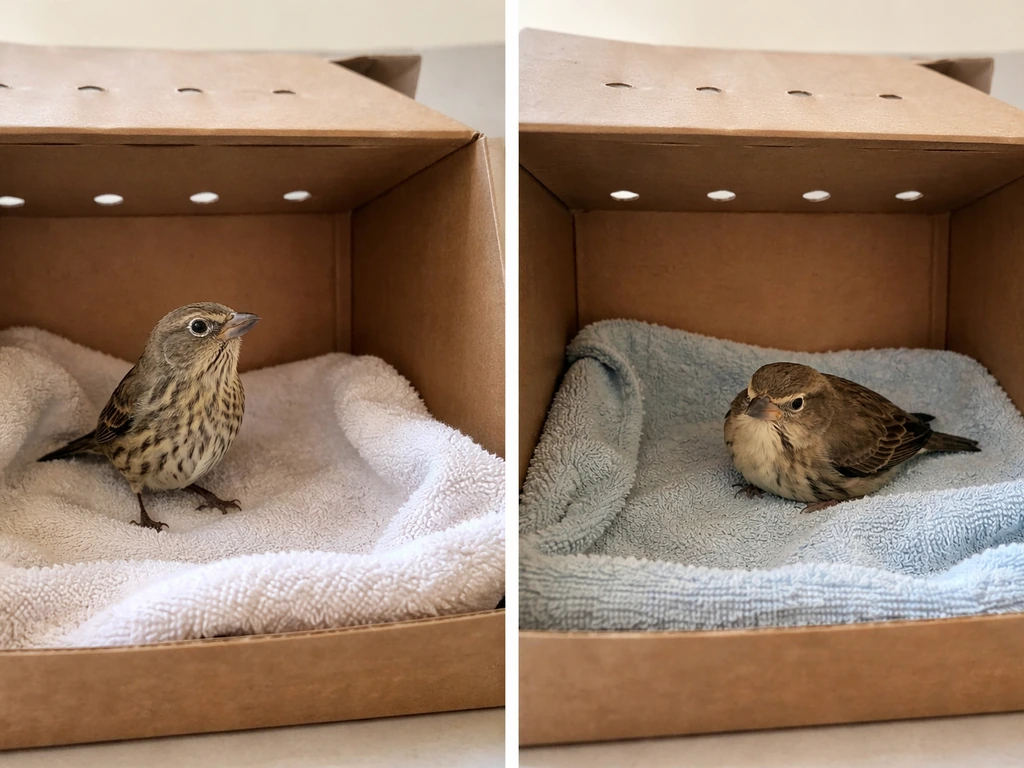
Some birds recover from a window strike in minutes. Others need a couple of hours. The key is knowing what recovery actually looks like and having a clear cutoff for when waiting stops being helpful.
After about 30 to 45 minutes, take the box outside to a quiet, sheltered spot away from foot traffic and pets. Slowly open the lid just a few inches and observe without reaching in. A bird that's recovering will be alert, upright, and reactive to the open lid. It may hop around the box or immediately fly out. That's a great outcome. Let it go.
If the bird is still lethargic but upright, close the box and give it another 30 to 45 minutes. Small birds can sometimes hop, run, or perch during the recovery phase without being ready to fly yet, which is normal. But two hours is a reasonable outer limit for a stunned-only bird. If it hasn't shown clear signs of improvement by then, it is not just stunned. Window collisions can cause internal injuries and brain swelling that aren't visible from the outside, and that's when a wildlife rehabilitator needs to take over. If the bird can't fly after hitting a window, it often needs urgent evaluation for injury or internal trauma.
Do not keep waiting past two hours hoping it will turn around on its own. The longer an injured bird goes without professional care, the harder recovery becomes.
When to skip the waiting and call for help right now
Some situations don't need a two-hour observation period. If you saw any of the warning signs in the initial check above, or if the bird is showing any of the following, contact a wildlife rehabilitator or avian vet immediately while you prepare the box:
- Active bleeding that isn't stopping
- A visibly broken or dangling wing or leg
- The bird is completely limp or unresponsive
- Breathing is labored, gurgling, or the beak is open and the bird is gasping
- The head is tilted or the bird is spinning or circling (signs of brain trauma)
- The bird is a larger species like a hawk, heron, crow, or duck (larger birds need professional handling more urgently)
- A cat caught the bird even briefly (cat saliva causes fast-moving bacterial infections that are fatal without antibiotics within 24 to 48 hours)
To find help, search for a licensed wildlife rehabilitator in your area through the National Wildlife Rehabilitators Association directory or your state's fish and wildlife agency website. In the US, you can also call a local wildlife control office, humane society, or nature center and they can usually refer you quickly. Don't assume the bird is fine just because it looks okay on the outside. Internal injuries from window strikes are common and require care that no amount of box rest will fix. A broken neck can happen in a window hit, so if you notice signs like trouble moving or an abnormal posture, seek avian help right away bird hit window broken neck.
Keeping a window-hit bird breathing and calm
Once the bird is in the box, the most important thing you can do for its breathing and survival is leave it alone. That sounds counterintuitive when you want to help, but handling causes a stress response that can literally stop a bird's heart if it's already compromised.
Keep the room the box is in at a comfortable temperature. Avoid cold drafts or direct sun. Don't place the box on a surface that vibrates, like near a washing machine or speaker. Keep voices low and movement near the box minimal. If children or other people in the house want to check on the bird, ask them to wait. Every time the box is opened or jostled, you're adding a stress spike.
If you need to transport the bird to a vet or rehabilitator, keep the box closed and the car as quiet as possible. Skip the radio. Drive smoothly. The darkness inside the box is already helping keep the bird's stress hormones lower, which directly supports stable breathing and heart rate. That box environment is doing more than it might seem.
Stop this from happening again: making your windows safer
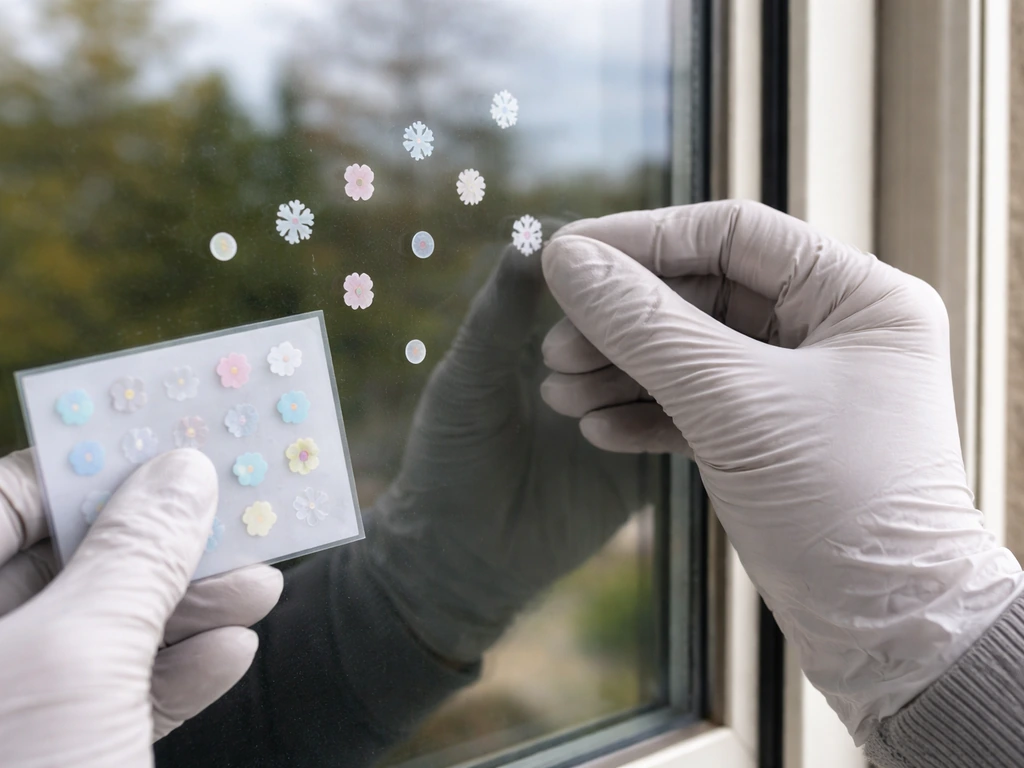
Window strikes happen because birds can't see glass. They either see a reflection of sky and trees and fly toward it, or they see through two windows on opposite sides of a room and aim for what looks like an open passage. The fix is always the same: make the glass visually obvious from the outside.
The most reliable approach is applying external markers to the glass. The U.S. Fish and Wildlife Service and National Park Service both point to the same spacing standard: markers should be placed no more than 2 inches apart both horizontally and vertically across the window surface. That tight spacing prevents birds from thinking they can fly through the gaps. Decals, dots, tape strips, or window film all work as long as they're on the outside of the glass and spaced to that 2-inch-by-2-inch rule.
One important note: decals or blinds placed on the inside of the window do not work during the day. Light makes the glass reflective from the outside, so interior treatments are essentially invisible to a bird in flight. Whatever you apply has to go on the exterior surface.
If you use bird feeders, position them either within 3 feet of the window or more than 30 feet away. Feeders placed 3 feet away don't give birds enough space to build dangerous momentum before a collision. Feeders placed beyond 30 feet are far enough that birds aren't associating the window zone with feeding activity. The danger zone is that middle range of 5 to 30 feet, where birds leave at full speed and hit the glass before they can react.
| Prevention Method | Where It Goes | Effectiveness | Cost |
|---|---|---|---|
| External dot or stripe decals (2" x 2" spacing) | Outside of glass | High | Low |
| Window collision tape or films (external) | Outside of glass | High | Low to medium |
| Exterior window screens | Outside of glass | Very high (also cushions impact) | Medium to high |
| Interior blinds or decals | Inside of glass | Not effective during daylight | Low |
| Feeder repositioning (within 3 ft or beyond 30 ft) | No window changes needed | High for feeder-related strikes | Free |
| Tempera or soap-based paint patterns (external) | Outside of glass | High (temporary, washable) | Very low |
If a particular window is a repeat problem, it's worth putting up a temporary exterior screen or hanging paracord strips or ribbon in front of the glass while you source a longer-term solution. Anything that physically breaks up the reflection from the outside will help.
A note on what comes next
If the bird flew away after its recovery time in the box, that's a genuinely good outcome and you handled it well. If you're taking it to a rehabilitator, you've also done everything right. The situation where things go wrong is when people either handle the bird too much while waiting, or wait too long before getting professional help. You've avoided both. Related scenarios like a bird that ran into a window rather than striking it at full speed, or concerns about a broken neck, involve some of the same steps but also have their own specific signs to watch for.
Window strikes are one of the most common bird injuries people encounter, and most people who find the bird in time give it a real chance. Trust the process: dark, quiet, warm, and professional help when it's needed.
FAQ
Should I give the bird food or water after a window hit if it can’t fly yet?
No. During the recovery window, do not offer food or water because it adds stress and increases the risk of aspiration (food or liquid going into the airway) if the bird is still weak or breathing oddly.
Can I let the bird “walk it off” outside the box if it seems calm?
Not right away. Even if it looks settled, keep it in the box and limit movement, especially if it is not clearly upright and reactive. Walking attempts can worsen internal injuries or breakings, and it also removes the low-stress dark environment that supports breathing.
What if the bird seems awake but still can’t fly after an hour?
If it is alert and upright, that can still fit a stunned-only recovery phase. Continue the observation in the box, keep the lid closed, and only do the brief lid-open check when instructed. If there is no clear improvement by the two-hour limit, switch to urgent professional help.
How do I check breathing without handling the bird?
Look from outside the box and observe chest movement and the ease of breathing, not the bird’s posture up close. If breathing looks labored, open-mouth, or unusually fast, treat it as urgent and contact a wildlife rehabilitator or avian vet immediately.
Is it okay to use a towel with my hands to hold the bird securely?
Use the towel only as a gentle barrier for lifting, and minimize grip time. The goal is transfer to the box, not prolonged holding. If you need repeated repositioning, that increases stress and handling time, so prepare to keep the bird undisturbed afterward.
What should I do if the bird is bleeding or has a drooping wing?
Do not try to stop bleeding yourself or splint anything. Keep it warm, dark, and still in the lined box, and contact a wildlife rehabilitator or avian vet right away. Bleeding and wing droop are clear indicators of more than a temporary stun.
Can I keep the bird warm using a heating pad or hot water bottle?
Yes, but only indirectly and carefully. Do not place a heat source directly against the bird. Instead, warm the surrounding area of the box (for example, keep the room comfortably warm) to avoid overheating. If the bird seems warmer than the environment or the box gets hot to the touch, reduce heat immediately.
Do inside-window treatments like decals or blinds prevent day-time strikes?
No, not reliably. Day light makes the glass reflective from the outside, so decals and blinds placed on the inside typically do not block a bird’s view. For most situations, apply markers to the exterior surface of the glass.
Where should I place temporary markers if I can’t cover the whole window?
Apply enough exterior markers to break up the flight path across the window surface, not just a small spot. Use the 2-inch by 2-inch spacing rule (no more than that spacing horizontally and vertically) so birds cannot interpret the gaps as an opening.
Why does window film or tape strips work better than a single big sticker?
Birds can still see and aim for an “open” gap if coverage is sparse. Tight, evenly spaced exterior markers prevent birds from concluding there is a passage through the glass, reducing collisions during high-speed approaches.
If a feeder is near the window, how close is too close?
For safer placement, avoid the 5 to 30 foot range. Put feeders within about 3 feet of the window (birds change approach timing) or place them more than 30 feet away so birds are not accelerating from the same zone toward the glass.
What if the bird ran into the window instead of hitting hard and now it’s moving around?
If it is moving and improving, you can still use the box recovery approach and limit handling. However, if you notice any warning signs such as abnormal posture, inability to perch, or labored breathing, treat it as urgent and contact a rehabilitator. Movement alone does not rule out internal injury.
After it flies away, do I still need to call anyone or monitor?
Usually, if it flies away on its own after the recovery period, it is a good sign and you can stop intervention. Still, if you later find the bird injured or acting strangely (limping, heavy breathing, inability to land normally), contact a local rehabilitator for guidance.
How can I find help quickly if I can’t locate a rehabilitator online?
Call your local wildlife control office, humane society, or a nature center and ask for a referral. If the bird shows bleeding, labored breathing, or drooping wing, don’t wait for email or online forms, use the fastest phone option available.
Next Articles
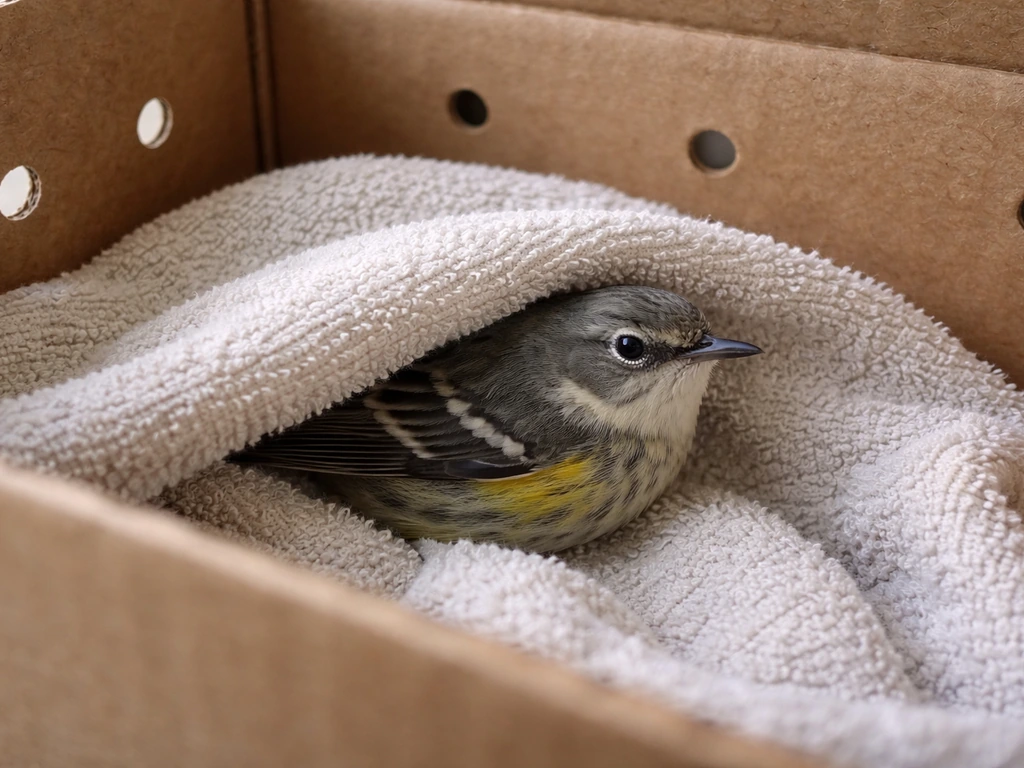
Bird Hit Window Broken Neck: Emergency First Aid Steps
Step-by-step first aid for a bird with broken neck after a window strike, including do and not to do, and when to call v
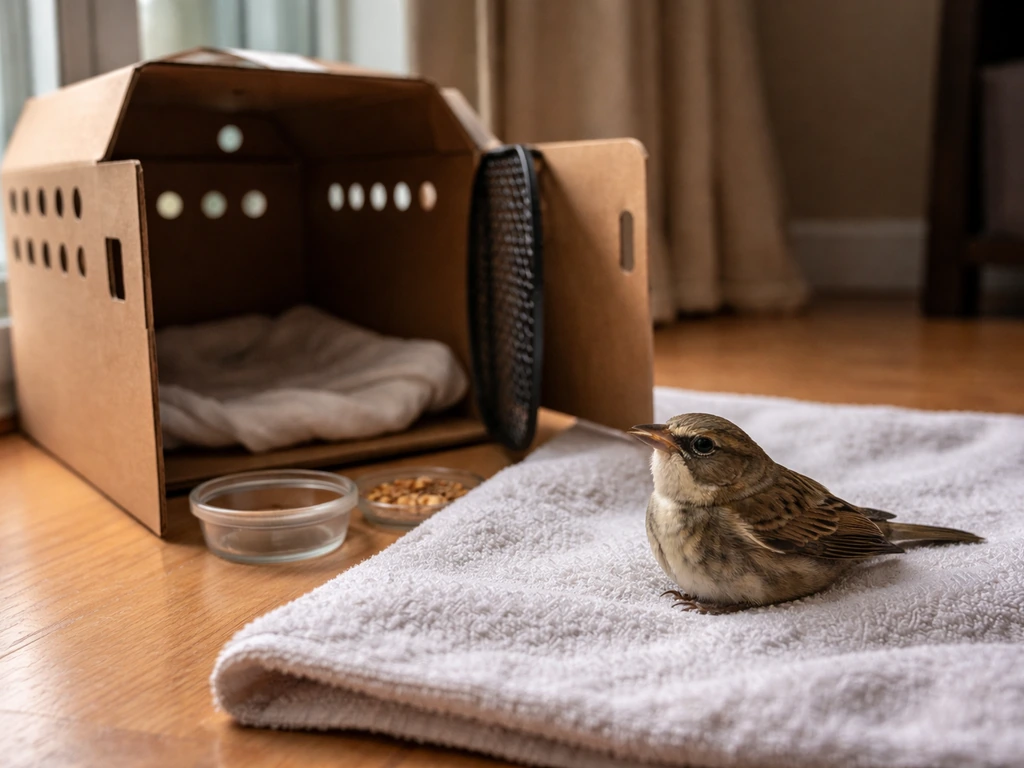
Bird Ran Into Window What to Do Right Now and Next Steps
Step-by-step help for a bird stunned or injured by a window: assess, create recovery space, decide vet or rescue.
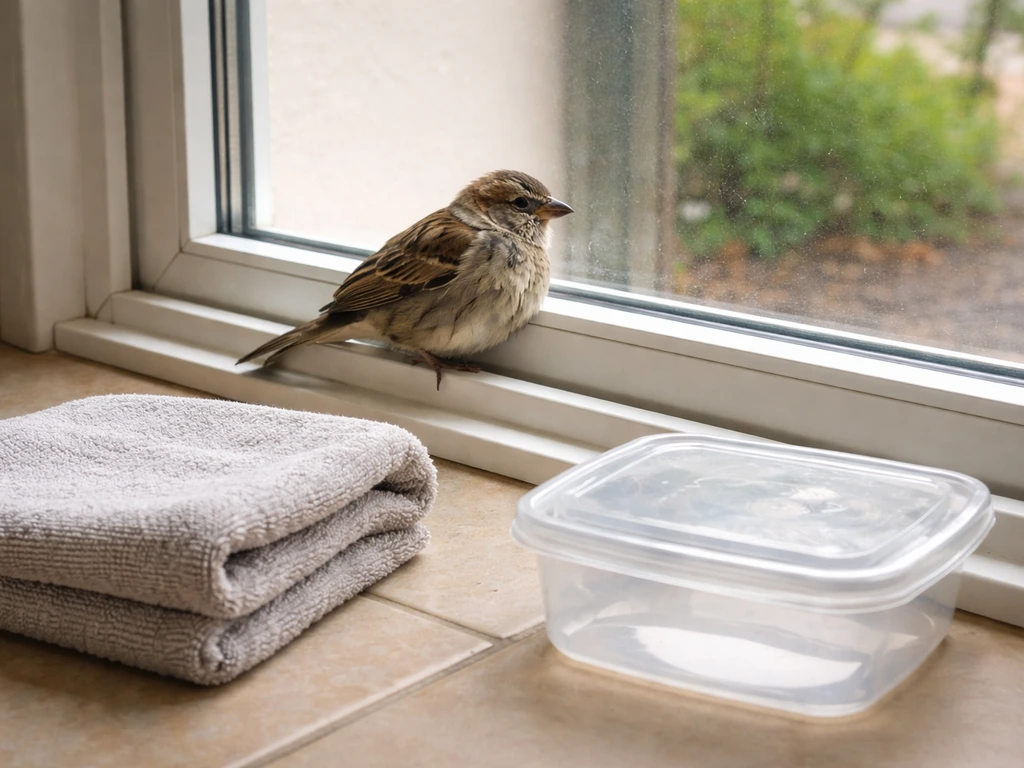
Bird Flew Into Window: What to Do Next Step by Step
Step-by-step help for a bird that hit your window, including first aid, safe handling, cleanup, and when to call a pro.