
If a bird just hit your window and can't fly, the most important things you can do right now are: get it off the ground, put it somewhere dark and quiet, and leave it alone while you figure out whether it needs a wildlife rehabilitator. Most window-strike birds are stunned, not dead, and many recover within an hour or two. But some have broken wings, internal injuries, or shock that won't resolve without professional help. The steps below will walk you through what to do in the next 10 to 30 minutes. If you want step-by-step guidance right away, use the sections below on keeping the bird safe, assessing injuries, and arranging help bird just hit your window and can't fly.
Bird Can’t Fly After Hitting a Window: What to Do Now
Marcus Chen
7 Jun 2026
First: keep yourself and the bird safe
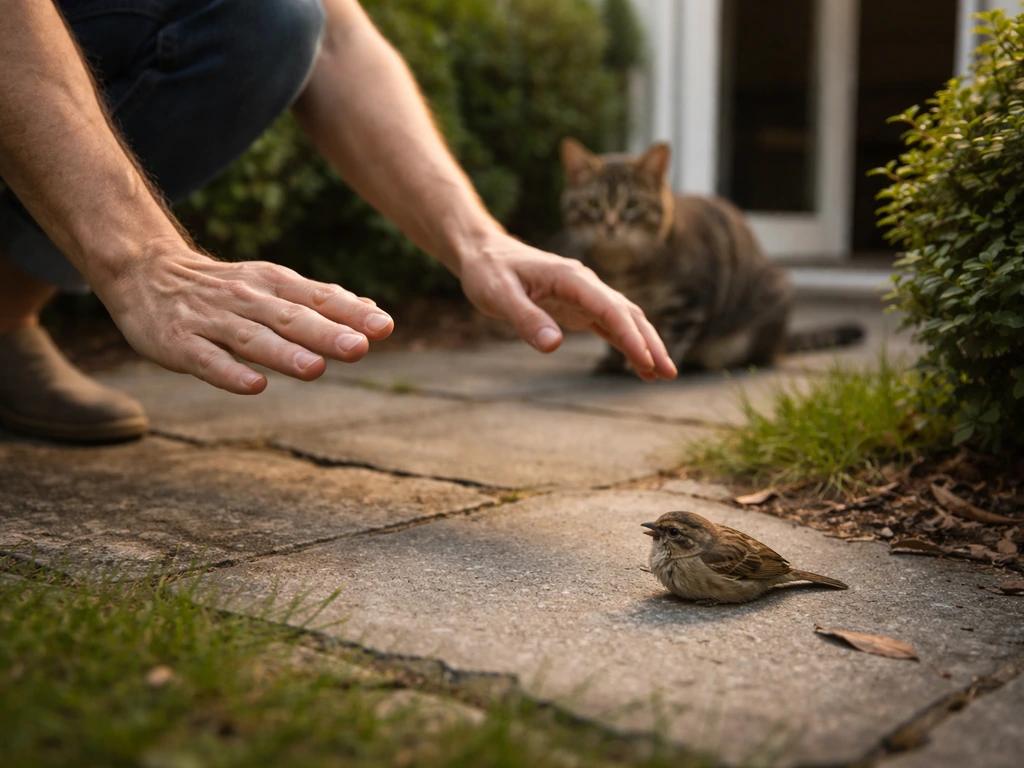
Before you touch the bird, take five seconds to look around. Is there a cat, dog, or other pet nearby? Get them inside or away from the area immediately. A stunned bird on the ground is extremely vulnerable to a pet attack, even a friendly one, and a bite or scratch on top of a window strike is often fatal. Also check whether the bird is in the path of foot traffic, near a road, or in direct sun and heat. If it's in a dangerous spot, you'll need to move it right away. If it's on a shaded patch of grass away from immediate threats, you have a minute to grab a container before you touch it.
Your own safety matters here too. Most backyard birds are small and won't hurt you, but larger birds like hawks or herons can scratch or bite hard when stressed. If the bird is a raptor or a large waterbird, don't attempt to handle it with bare hands. Use a thick towel or gloves. For songbirds and other small birds, bare hands are fine as long as you're gentle.
Quick assessment: what are you actually looking at?
You don't need to be a vet to do a useful check. Stand back for a moment before picking the bird up and notice a few things. Is it upright, or is it lying on its side? Is it blinking and looking around, or does it seem completely unresponsive? Is it breathing with its beak open, or is its tail bobbing noticeably with each breath? Can you see any blood? Is one wing hanging lower than the other, or held out at an odd angle? These quick observations will tell you a lot about urgency, and they're easier to make before you pick the bird up and it goes into panic mode.
- Upright but dazed, eyes open, breathing normally through closed beak: likely stunned, may recover with quiet rest
- Lying on its side or unable to hold its head up: serious concern, treat as urgent
- One wing drooping or held out at an angle compared to the other: possible fracture, needs professional evaluation
- Breathing with beak open, tail bobbing visibly with each breath: respiratory distress, this is an emergency
- Active bleeding from any part of the body: urgent
- Eyes closed, no response to your presence: could be shock or serious head trauma, don't wait
How to pick up and contain the bird without making things worse
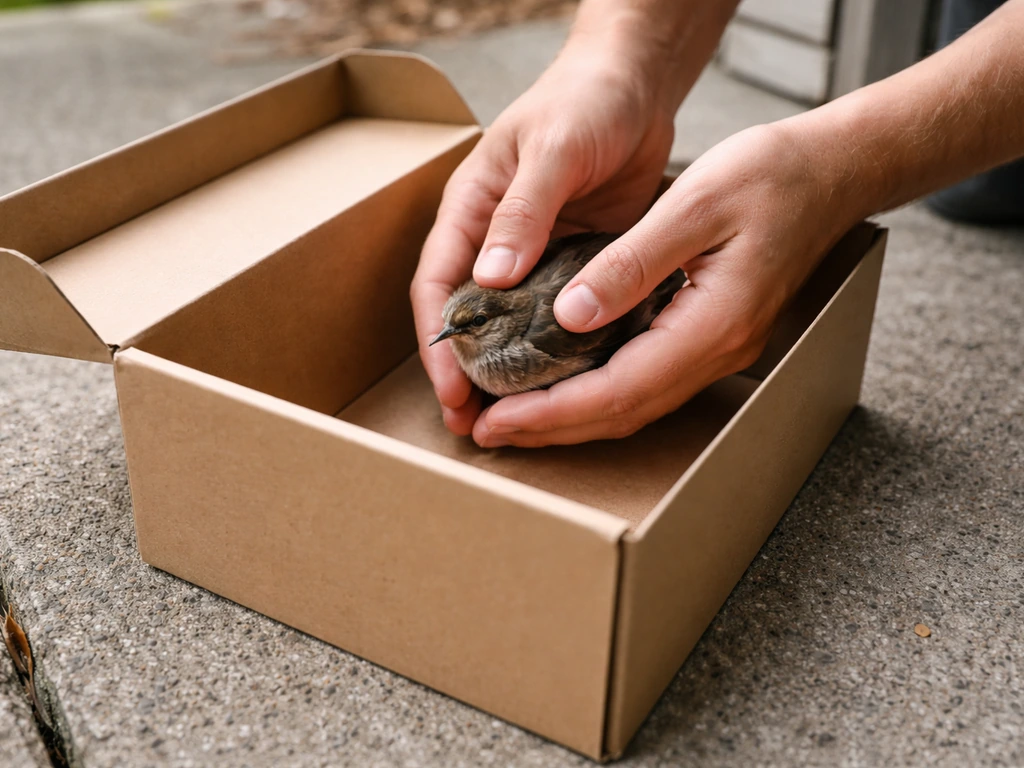
Go get a container before you pick up the bird. A shoebox with a lid is perfect. A cardboard box, a paper bag, or a cloth tote bag will also work. Avoid clear plastic containers because they let light in and increase stress. Poke a few small air holes in the lid if using a box. Line the bottom with a folded paper towel or a piece of cloth so the bird has something to grip. Do not use a wire cage or anything the bird can catch its feet or feathers on.
To pick the bird up, cup both hands gently over its body and wings at the same time, holding the wings against its sides so it can't flap. Don't grab it by the wings or tail. Lower it gently into the container and close the lid. If the bird is on a wall or ledge and you're worried about it falling, hold the open box right up against it and let it step or fall in. The whole process should take about ten seconds. The less handling the better.
If the bird won't let you near it, that's actually a good sign. It means it has enough awareness to be afraid, which suggests it isn't critically injured. In that case, use the box to herd it gently into a corner where you can scoop it up, or drape a light towel over it before picking it up so it can't see you coming.
Signs that mean you need help right now
Some window-strike injuries look mild on the outside but are serious. Birds can have internal bleeding or organ damage that doesn't show until the bird deteriorates quickly. That's why the American Bird Conservancy recommends that all window-collision birds be taken to a rehabilitator regardless of how they look. A bird that has struck a window and appears to have a broken neck should be assessed by a wildlife rehabilitator right away window-collision birds. But some situations are clearly urgent and should prompt you to start calling for help immediately rather than waiting to see if the bird improves.
- The bird is bleeding actively and the bleeding doesn't slow
- It's lying on its side and can't right itself
- It's breathing with its mouth open or the tail is pumping with each breath
- One or both wings appear broken (drooping, bent at an unnatural angle, or the bird is using one leg to hold a wing up)
- It's completely unresponsive and doesn't react when you approach
- It can't hold its head up or keeps falling over
- It's been more than two hours and shows no improvement at all
- It keeps trying to flap into the walls of the container in a panicked, uncoordinated way
If you're seeing any of these, start making calls while the bird is already in its container. If you need a quick checklist for what to do after a bird hits a window, follow the steps right above. Don't wait another hour hoping it improves. Window strikes can cause internal injuries that aren't visible at all, and a bird that looks like it's just resting may actually be deteriorating.
Setting up a safe recovery space at home
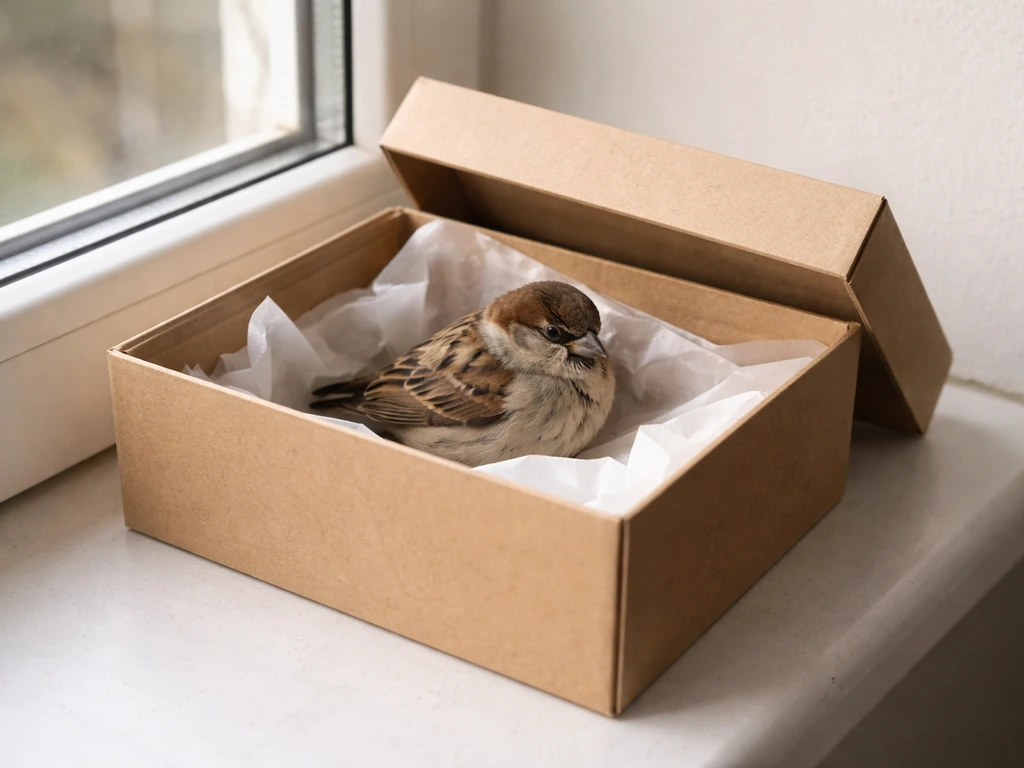
Once the bird is in its container, put it somewhere genuinely quiet. Not a busy kitchen or living room. A bathroom with the door closed, a laundry room, a garage if it's not too hot or cold, or a bedroom with the door shut all work well. The key things are: dark, quiet, warm, and away from pets and kids. The dark helps reduce stress significantly. Birds calm down much faster in low light.
Temperature matters. A stunned or injured bird can go into shock, and shock is made worse by cold. The room should be comfortably warm, around 70 to 80 degrees Fahrenheit. If the space is cooler than that, you can place a hot water bottle or a heating pad set to low under half of the container, so the bird can move away from the heat if it gets too warm. Never put a heat source under the whole container, and never use a heating pad on high.
Do not offer food or water. I know it feels helpful, but a stunned or injured bird can't swallow safely, and you risk choking it or causing aspiration pneumonia. Do not try to drip water into its beak. Do not attempt to treat wounds with antiseptic creams or any medication. The best thing you can do while you arrange help is leave the bird completely alone. Check on it once every 30 minutes by quietly opening the box for a few seconds, not more than that.
How to find an avian vet or wildlife rescue near you, fast
Your fastest option is to search online for your state or region's wildlife rehabilitation network. In the US, the Wildlife Center of Virginia maintains public advice resources and can point you in the right direction. The website wildliferehabfinder.com lets you search by zip code. The National Wildlife Rehabilitators Association (nwra.net) and the International Wildlife Rehabilitation Council (iwrc.org) both have finder tools. You can also call your local humane society, animal control office, or a wildlife-focused veterinary clinic and ask who handles wild bird injuries in your area. Most of them know who to call even if they don't take wildlife themselves.
When you call, tell them the species if you know it, what happened, what symptoms you're seeing, and how long it's been since the strike. They may be able to triage over the phone and tell you whether you need to come in immediately or whether you can monitor at home for a couple of hours. Wildlife rehab centers often have intake hours, so calling ahead saves you a wasted trip.
If you genuinely can't find a wildlife rehabilitator and an avian vet isn't reachable, keep the bird quiet and dark, do not feed or water it, and keep trying. Many rehabilitators will talk you through care over the phone even if they can't take the bird that day. The US Fish and Wildlife Service also has guidance online and can direct you to licensed facilities in your area.
What happens after: release, aftercare, and preventing the next strike
If the bird recovers and flies away on its own
Some stunned birds recover within 15 minutes to a couple of hours. If you open the box after an hour or so and the bird is alert, upright, and looks around actively, you can take it outside, open the box near a tree or shrub, and let it fly away on its own. Don't throw it into the air or force it out. Just open the container and wait. If it flies off strongly, great. If it hops out but won't fly, or immediately crashes back to the ground, put it back in the container and call for help. That bird needs professional assessment even if it seemed okay at first.
If the bird goes to a rehabilitator or vet
Once you hand off the bird, ask for a follow-up contact method if possible. Many wildlife rehab centers don't have the staff to call you back individually, but some will if you ask. In the meantime, there's nothing more for you to do at home. The rehabilitation process for a window-strike bird can take days to weeks depending on the injury. A broken wing, for example, requires splinting and supervised recovery before any release is attempted.
Stopping this from happening again
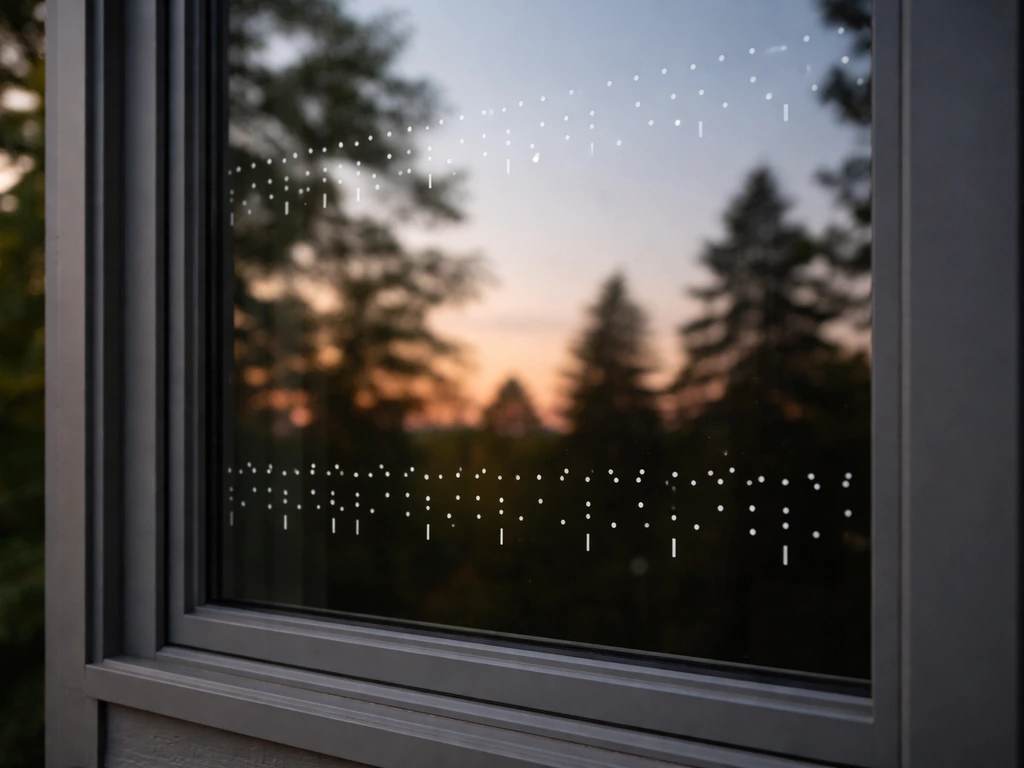
Birds hit windows because they see the reflection of sky or trees in the glass and think it's open space. They don't perceive glass as a barrier. The fix is to break up that reflection or make the glass visible to them. American Bird Conservancy notes that birds see the world differently than humans, and that preventing collisions involves providing cues that signal glass presence, such as making glass visible birds see the world differently than humans and making glass visible helps prevent collisions. The most effective solutions create a pattern on the outside surface of the glass with spacing of 2 inches or less (horizontally) or 4 inches or less (vertically), because birds try to fly through gaps, not into surfaces. A few proven options:
- Tempera paint or window paint applied in dots or stripes on the outside of the glass (easy to remove, inexpensive)
- Window collision tape or ABC BirdTape applied in a grid pattern on the exterior surface
- WindowAlert UV decals, which are visible to birds but nearly invisible to humans
- External screens or netting hung a few inches in front of the window, which cushion any impact if a bird does hit
- Moving bird feeders either within 3 feet of the window or farther than 30 feet away: birds right next to the glass don't build up enough speed to injure themselves; birds far away are less likely to be flying toward the reflection
Interior window film, curtains, or blinds help somewhat, but exterior treatments work far better because they interrupt the reflection itself. If you have a window that's hit birds multiple times, it's worth treating the outside surface this season rather than waiting. It's one of the most common and preventable causes of bird injury, and most fixes cost under $20.
FAQ
How long should I wait before deciding the bird needs urgent help?
If the bird cannot right itself within about 30 minutes, is still on the ground after an hour, or you notice worsening signs (unusual breathing, blood, limp posture, one wing drooping), start contacting a wildlife rehabilitator immediately rather than waiting longer.
What if the bird seems awake and breathing normally but still can't fly?
That can happen after shock, but window strikes can also cause internal injuries that are not obvious. Even if it looks alert, follow up with a rehabilitator for guidance, especially if it is acting uncoordinated or cannot take off when placed near cover.
Should I tape a broken wing or use a home splint?
No. Wing splinting done incorrectly can worsen damage and prevent proper healing. Keep handling minimal, contain the bird, and let a rehabilitator decide if stabilization is needed.
Is it okay to put the bird near open windows or outside to “calm down”?
Only move it outside after at least an hour or two and only if it is alert, upright, and trying to move away. Do not force it out or leave it unattended in a dangerous area, because it may re-strike the glass or be easy prey.
Can I use a clear plastic container if that is all I have?
Avoid clear containers. They increase light and visibility, which can keep the bird stressed and thrash. Use a box or tote that blocks the view, and add ventilation holes if needed.
How often should I check on the bird once it is in the dark?
Check no more than once every 30 minutes. Open the lid just briefly to confirm breathing and posture, then close it again. Frequent checking is more stressful and can prolong shock.
Is it safe to give water in a shallow dish to prevent dehydration?
Do not offer water or food. A stunned bird may not swallow correctly, and aspiration pneumonia can develop. Let the rehabilitator handle fluids and feeding if needed.
What should I do if a cat or dog gets near the bird?
Bring pets inside immediately and keep the bird away from the area. If the bird was bitten or scratched, treat that as an urgent injury because infection risk rises quickly, and you should alert the rehabilitator right away.
Do I need to worry about legality or permits if I keep the bird temporarily?
In many places, wild birds are protected and transporting or keeping them can be regulated. Your short-term goal is containment and transfer to a licensed rehabilitator, and you should ask the rehab center what they require in your area.
What if I do not know the species?
Tell the responder what you can observe (size, color, beak shape, whether it is a songbird or raptor if you can tell), plus the circumstances and symptoms. If you are unsure, describe behavior instead of guessing, and focus on providing accurate timing and injury signs.
How can I tell the difference between a stunned bird and one with serious injury?
Stunned birds often become more upright and alert over time. Serious injury signs include blood, repeated open-mouth breathing, pronounced tail bobbing, wing held at an odd angle, continuous unresponsiveness, or inability to sit upright after an hour.
After the bird flies away, should I still report or follow up?
Usually you can stop monitoring if it flies strongly and continues moving normally. If it drops to the ground, acts lethargic immediately, or you notice limping or wing droop, put it back in the container and contact a rehabilitator.
Next Articles
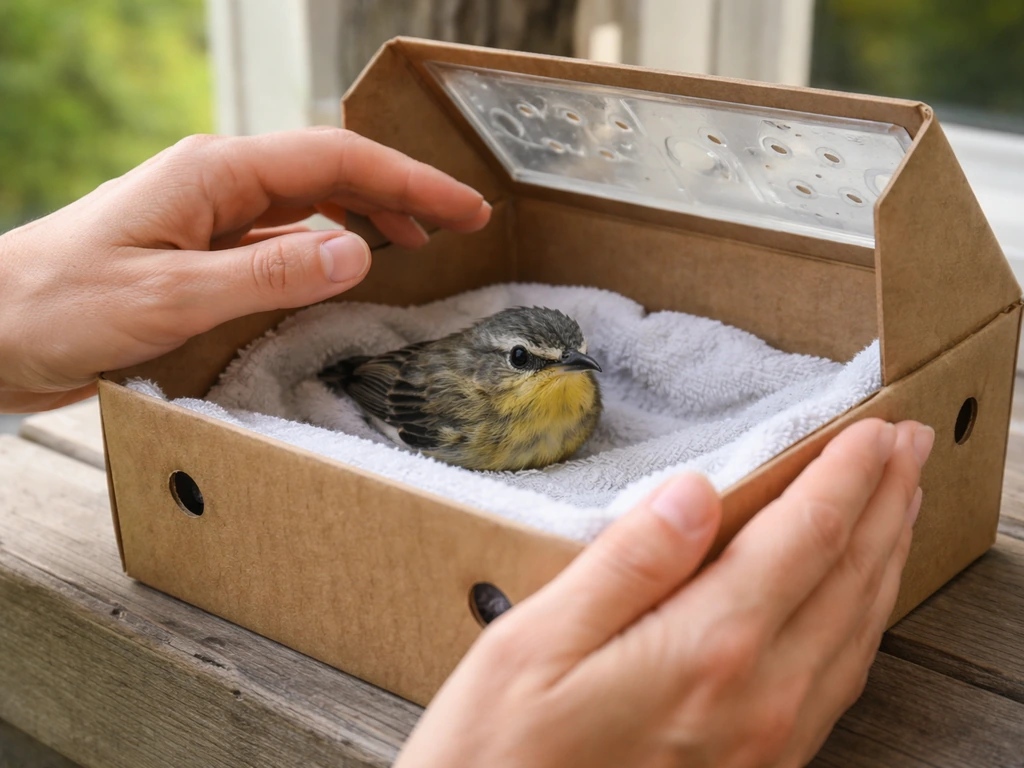
Bird Hit Window: What to Do When It Can’t Fly
Steps for bird window strike: assess injuries, give first aid, decide when to call a wildlife vet, prevent repeats.
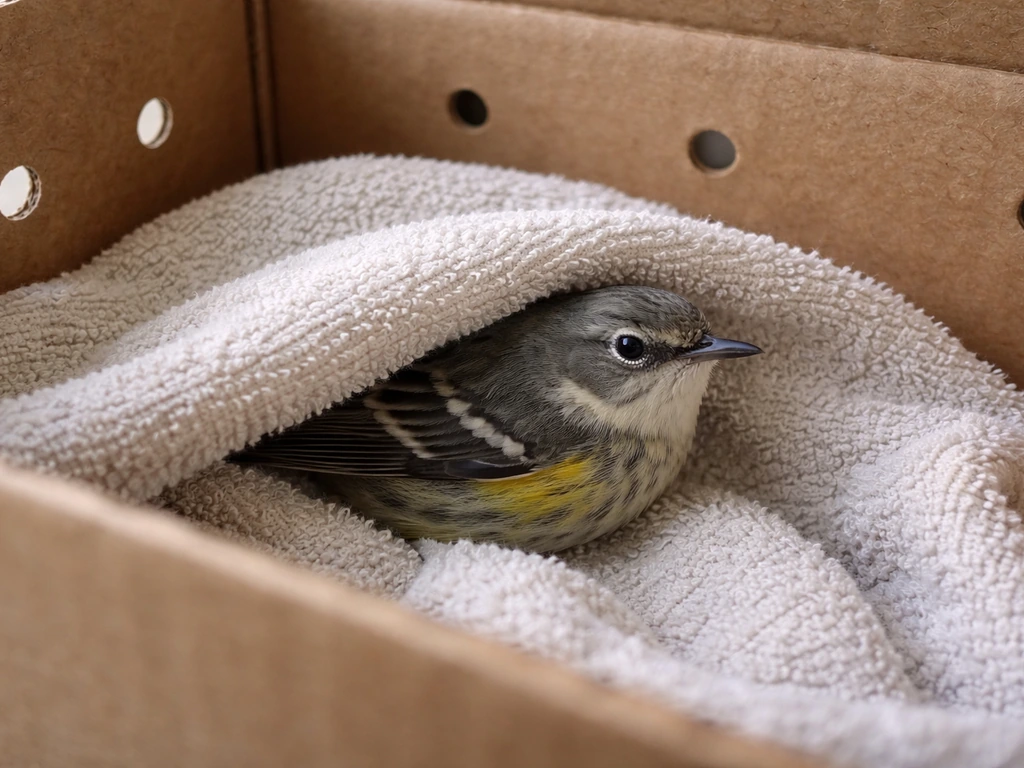
Bird Hit Window Broken Neck: Emergency First Aid Steps
Step-by-step first aid for a bird with broken neck after a window strike, including do and not to do, and when to call v
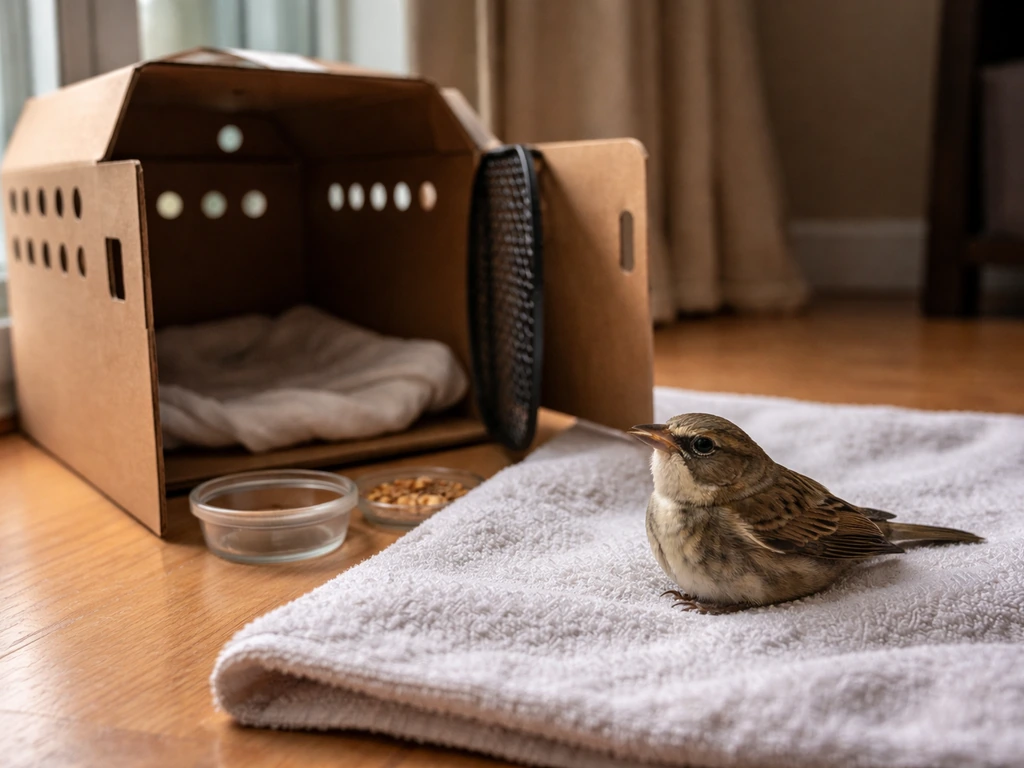
Bird Ran Into Window What to Do Right Now and Next Steps
Step-by-step help for a bird stunned or injured by a window: assess, create recovery space, decide vet or rescue.