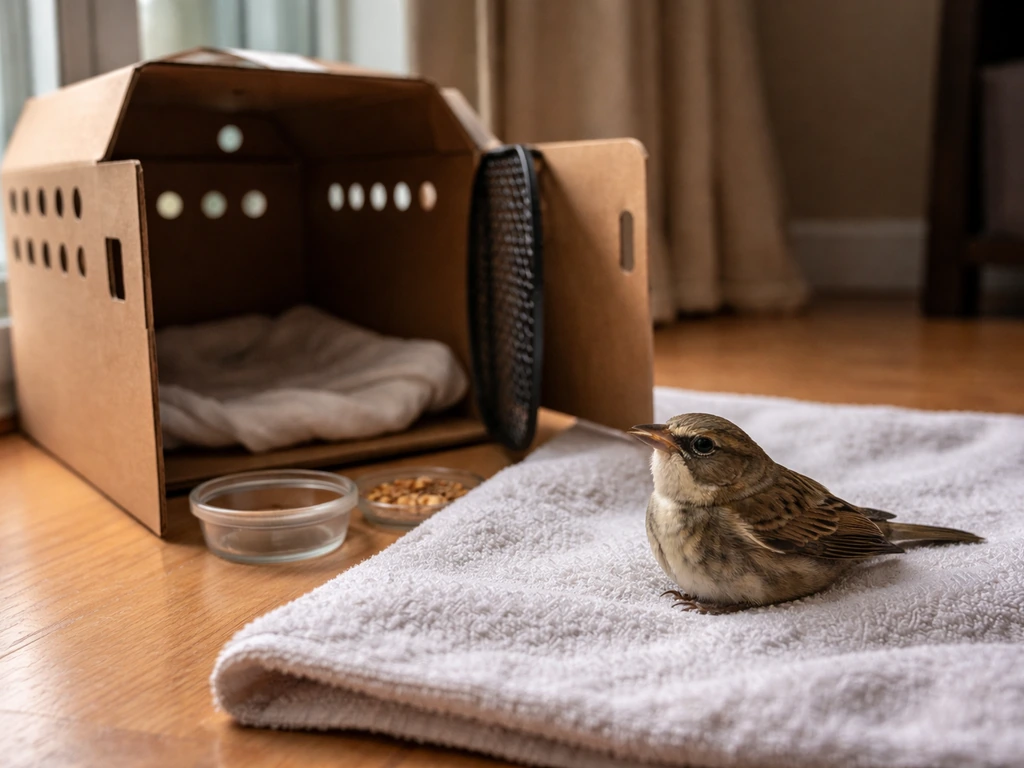
If a bird hit your window and its head is twisted, it can't hold itself upright, or it looks paralyzed, treat this as an emergency. A suspected broken neck or spinal injury is not a wait-and-see situation. Your job right now is to stop all unnecessary movement, keep the bird warm and dark, and get it to a wildlife rehabilitator or avian vet as fast as possible. Do not try to straighten its neck, feed it, or give it water. The steps below will walk you through exactly what to do in the next few minutes.
Bird Hit Window Broken Neck: Emergency First Aid Steps
Marcus Chen
26 Apr 2026
Make the scene safe first
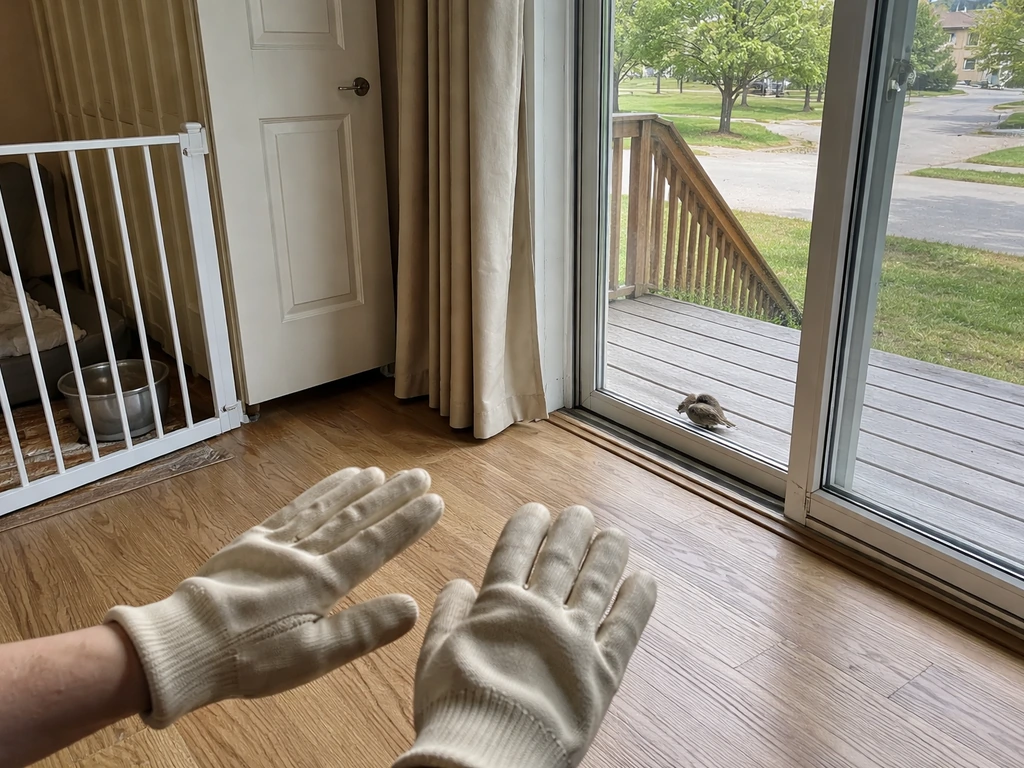
Before you touch the bird, take five seconds to protect yourself. Even a small bird that's badly hurt can bite or scratch hard when it's frightened, and doing so is pure instinct, not aggression. Keep your face away from the bird's beak at all times, and grab a pair of gloves if you have them nearby. You don't need to rush so fast that you skip this step.
Also check your surroundings quickly. If the bird is on a deck or driveway with cats, dogs, or traffic nearby, you need to move it. Approach slowly and from behind if you can, keeping your movements quiet and deliberate. Sudden motion makes the bird panic, and panic causes further injury to an already compromised spine or neck.
Reading the signs: is this a broken neck or just shock?
Window collision birds fall into two very different groups, and telling them apart changes what you do next. The first group is stunned but not severely injured. These birds may sit dazed for a few minutes but their posture looks fairly normal. The second group has real trauma, and a possible broken neck or spinal injury falls squarely here. The signs below are the ones that tell you this bird needs urgent professional care, not a two-hour monitoring period.
- Head or neck is twisted, tilted sharply to one side, or held at an abnormal angle the bird can't correct
- Can't hold its head up at all, or the head droops and bobs without control
- Body is limp, paralyzed, or the bird can't move its wings and legs normally
- Staggering, falling over, or unable to stay upright even when placed gently on a flat surface
- Tail cocked noticeably to one side (a recognized sign of possible spinal injury)
- Breathing is labored, very rapid, or you can see the chest heaving with obvious effort
- Visible bleeding around the head, neck, or beak
- Unresponsive or minimally responsive to gentle stimulation near it
If you're seeing one or more of those signs, this is not simple shock. The RSPCA is explicit: a bird that can't hold its head straight or has a twisted neck position needs help, not monitoring. A bird that hit a window and can't hold its head straight should be treated as an emergency and taken to a wildlife rehabilitator right away bird hit window can't fly. Birds do go into shock easily after trauma and can die from it quickly, so the window between finding the bird and getting it professional care genuinely matters.
If the bird's posture looks roughly normal, it's blinking, and it's just sitting quietly on the ground looking dazed, that can be consistent with a milder collision. In that scenario, a quiet two-hour observation period is reasonable, checking every 15 minutes to see if it recovers and can fly off on its own. But the moment you see any of the injury signs listed above, move straight to emergency care.
What to do (and absolutely not do) when you suspect a broken neck
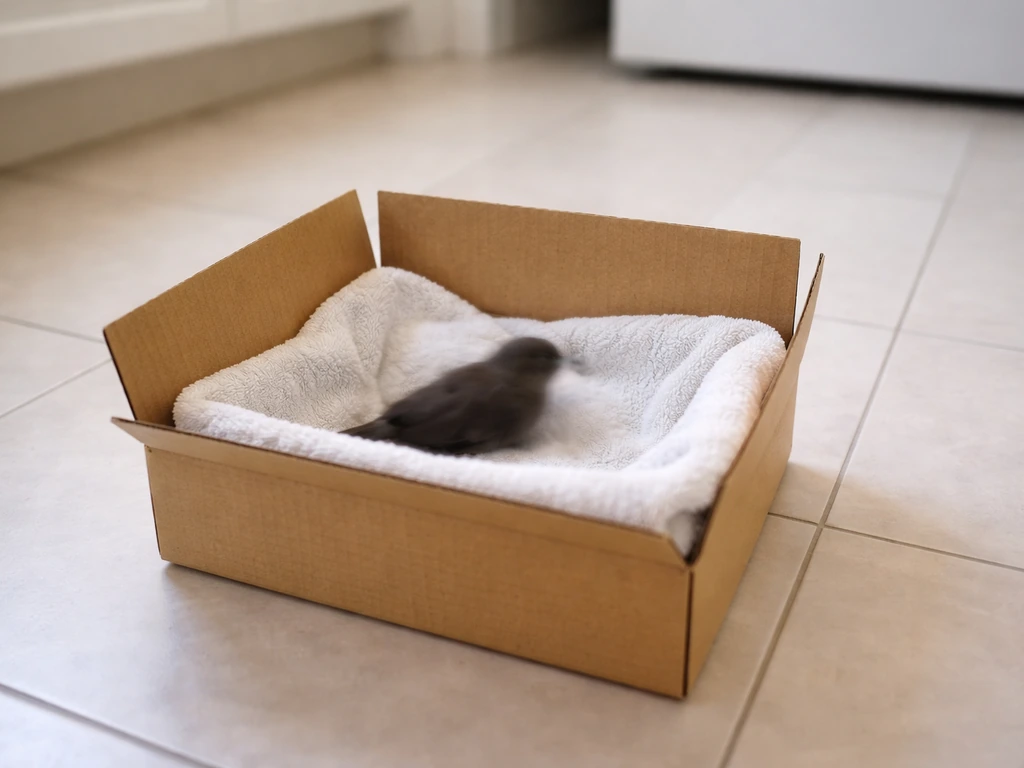
The do's
- Move the bird as little as possible. If it's not in immediate danger, minimize handling entirely until you have a box ready.
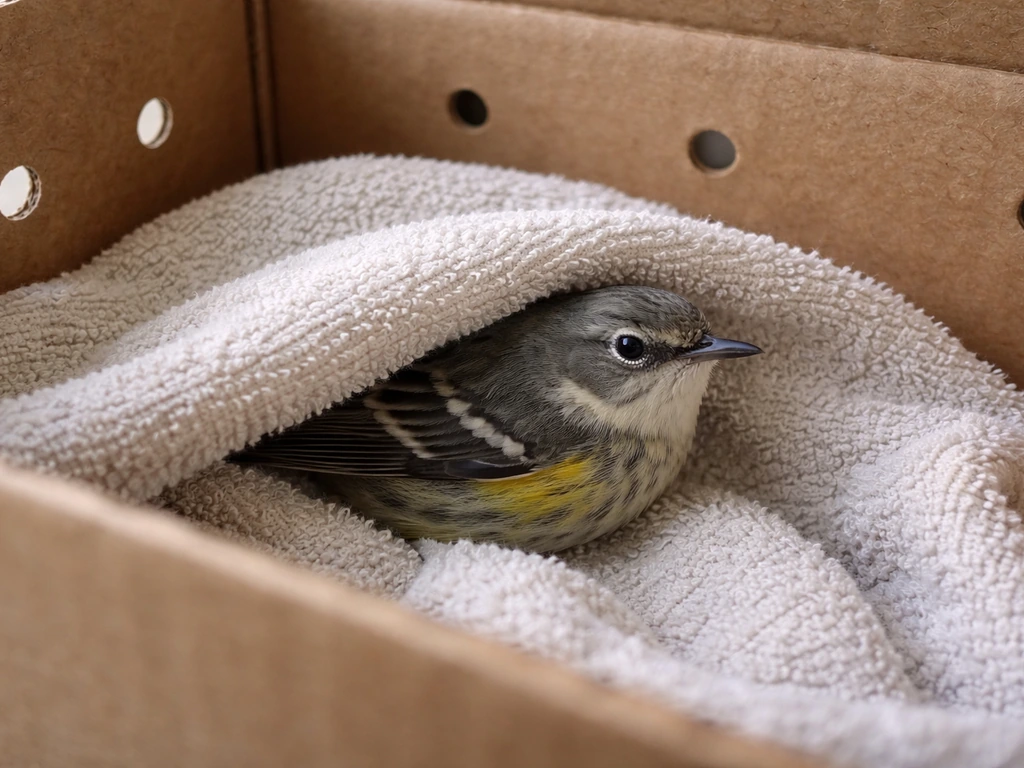
- Use a small cardboard box with a towel or cloth layered on the bottom. Scoop the bird gently using both hands cupped around its body, supporting its weight from underneath.
- Keep the head and neck in whatever position they're already in. Do not try to reposition or straighten the neck. You cannot fix this, and forcing movement risks making a partial injury catastrophic.
- Place the bird in the box upright or slightly propped, never on its back. Birds have more difficulty breathing when on their back.
- Close the box to make it dark and quiet. Darkness calms birds quickly and reduces the stress response that can tip a shocked bird into fatal cardiac failure.
- Keep the bird warm. If you have a heating pad, place the box so only half of it sits on the pad, and keep the setting low. This lets the bird shift away if it gets too warm.
- Call for help immediately while the bird is contained. Don't wait to see if it improves.
The don'ts
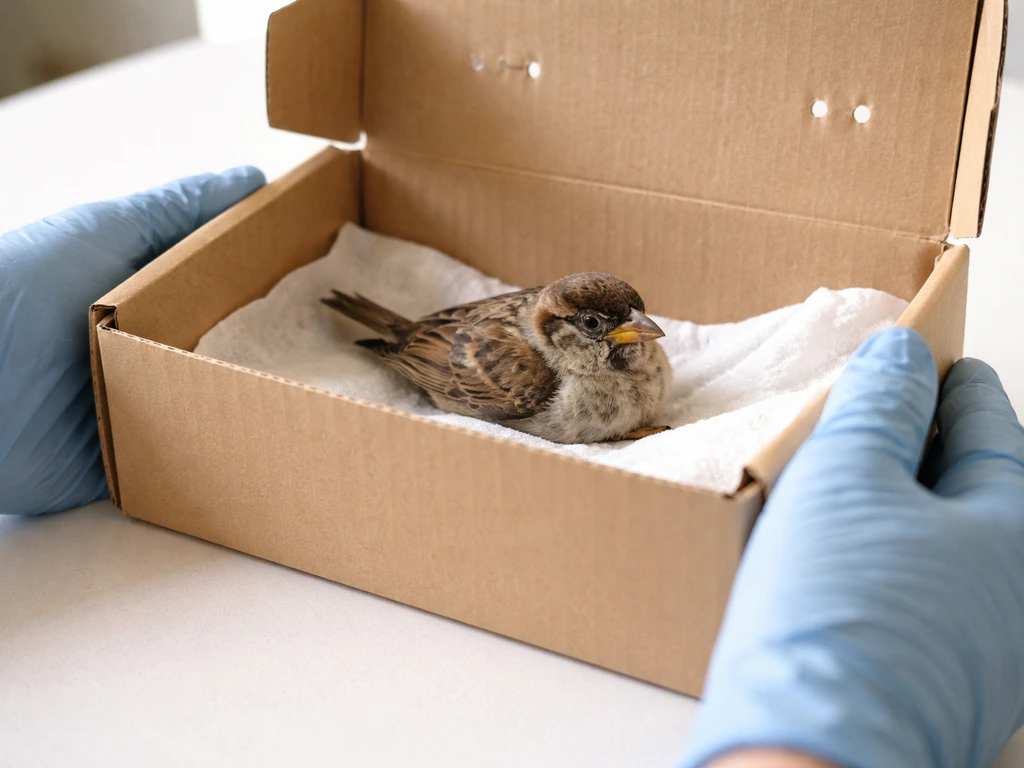
- Do not attempt to straighten or splint the neck. This is one of the most harmful things you can do and can convert a survivable injury into a fatal one.
- Do not give food or water. This is consistent advice from every major wildlife rehab organization. An injured bird with compromised muscle control can aspirate liquid into its lungs, and feeding adds stress.
- Do not repeatedly open the box to check on it. Every time you open the box, you spike the bird's stress hormones.
- Do not try to do DIY medical treatments of any kind, including wrapping, taping, or makeshift bracing.
- Do not shake or jostle the container during transport. Drive smoothly and keep the box on a flat surface.
What about CPR?
If the bird appears to stop breathing and has no heartbeat, CPR is technically possible but only worthwhile if you can present the bird to a vet or emergency clinic within minutes. The approach involves clearing the airway and compressing the chest very gently (birds are fragile), continuing until the bird breathes on its own or you can hand it off to a professional. Be aware that mouth-to-beak breathing carries disease transfer risks and is difficult to perform correctly. In most real-world situations, the best action is to get the bird to professional care as fast as possible rather than attempting resuscitation on your own.
Keeping the bird stable until help arrives
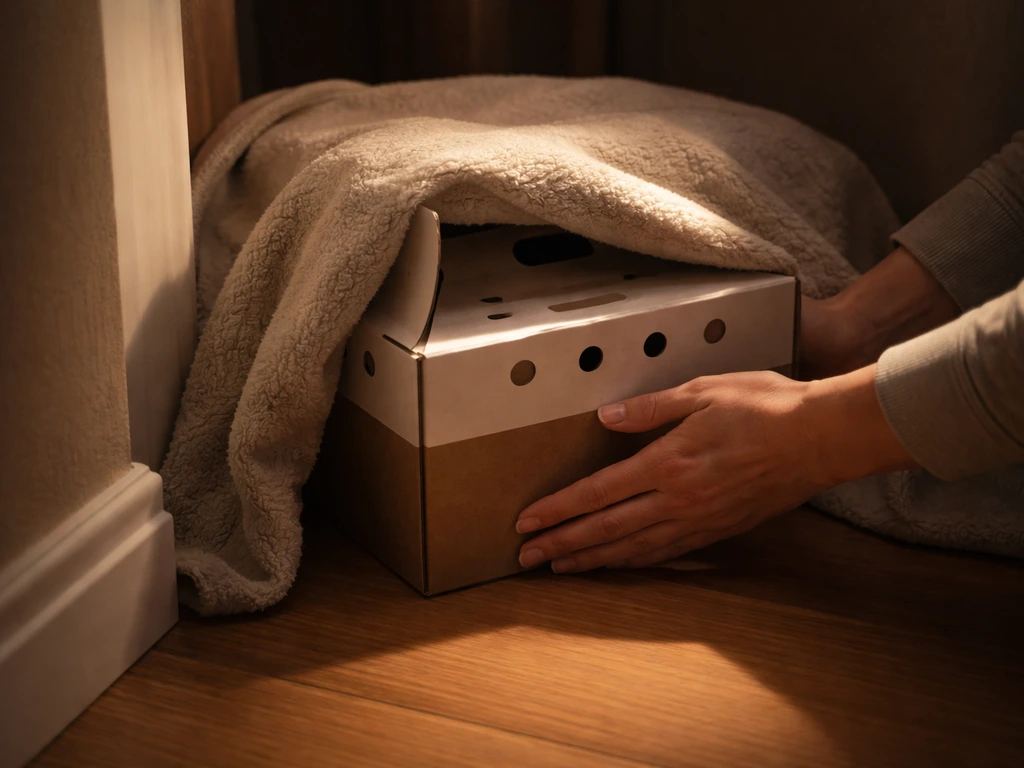
Once the bird is in the box, your goal is to do as little as possible. Put the box somewhere quiet, semi-dark, and warm indoors. Keep children and pets away from the area entirely. Resist the urge to open the box and check, even though it's hard not to. The bird needs calm above everything else right now.
If transport is going to take more than 30 minutes, monitor for sounds from the box periodically without opening it. Sounds of movement are a good sign. Silence is neutral but not necessarily bad. Any sound of labored, clicking, or rattling breathing warrants calling the rehab center or vet immediately to let them know the bird's condition has changed.
Emergency vs. home monitoring: how to decide
| What you're seeing | What it likely means | What to do |
|---|---|---|
| Head/neck twisted, can't hold head up | Possible neck or spinal injury | Emergency: call wildlife rehab or avian vet now |
| Paralysis or limpness in wings/legs | Possible spinal trauma | Emergency: do not delay |
| Labored or visibly difficult breathing | Shock or internal trauma | Emergency: get moving immediately |
| Bleeding from head, beak, or neck | Trauma injury | Emergency: transport now |
| Dazed but upright, normal head position | Likely concussive shock | Monitor quietly for up to 2 hours |
| Alert, blinking, can grip perch or towel | Mild collision, recovery likely | Monitor; release if flying normally after 2 hours |
The honest truth is that with a suspected broken neck, home monitoring is not appropriate. Once you've identified the injury signs described above, the clock is ticking. The sooner the bird reaches a licensed wildlife rehabilitator or avian vet, the better its chances. This isn't a situation where waiting a few hours to see if it gets better is a safe strategy.
Getting professional help fast
You have two main options: a wildlife rehabilitator or an avian veterinarian. Wildlife rehabilitators are often the faster, lower-cost path for wild birds, and many operate specifically for window-collision cases. Avian vets can provide immediate medical stabilization and pain management, which matters enormously for spinal trauma. If you can reach an avian vet quickly, that may be the better first call for a severe injury.
How to find help right now
- Search 'wildlife rehabilitator near me' or 'bird wildlife rescue [your city/state]' to find local licensed rehabbers.
- The USDA Animal and Plant Health Inspection Service and your state's fish and wildlife agency both maintain directories of licensed rehabilitators.
- Call your nearest animal shelter or humane society: they almost always have direct referral contacts for wildlife rehab even if they don't take wild birds themselves.
- Search 'avian vet near me' or call a general emergency animal hospital and ask if they see birds or can refer you immediately.
What to say when you call
Keep it short and factual. Tell them: a bird hit a window, it has a twisted or drooping neck (or whichever signs you observed), it's in a dark box, and you need to know where to bring it right now. Ask if they have capacity to receive the bird today and what the transport time expectation is. If the first place you call can't help, ask for an immediate referral rather than hanging up and starting from scratch.
Transporting the bird
Drive as smoothly as you can. Keep the box secured on a flat seat or footwell so it doesn't tip. Don't run the radio loudly. If you have someone with you, have them hold the box steady rather than leaving it loose in the back seat. Keep the interior of the car at a comfortable temperature, around 70 to 75 degrees Fahrenheit if possible. Do not open the box during the drive.
If the bird seems to be recovering on its own
This section applies only if you're confident the bird does not have neck or spinal injury signs. If it struck the window, sat dazed, and is now looking alert with normal head posture and attempting to move around the box, that's a much better picture.
If the bird struck the window, sat dazed, and then can't fly after hitting window, treat it as injury-related and focus on getting it to a wildlife rehabilitator or avian vet fast bird can't fly after hitting window. blank" rel="noopener noreferrer">Keep it contained and dark for at least 30 to 60 minutes, then take the box outside and open it gently at ground level in a safe spot. If the bird flies off cleanly, that's a good outcome.
Even birds that fly away after a window collision can have subtle internal injuries. The American Bird Conservancy notes that getting the bird checked by a wildlife rehabilitator is still the best outcome, even if it seems to recover. If you can arrange it, that's worth doing. But if the bird is clearly flying well and you can't easily catch it, you've done your part.
Window collisions with signs of neck or spinal trauma are genuine emergencies, and most people who find themselves in this situation feel completely unprepared. That's completely normal. The key things you've just read, don't move the neck, keep it warm and dark, skip the food and water, and get to a professional fast, are genuinely what gives this bird its best chance.
If you are dealing with a bird ran into window situation, act quickly and focus on stability, warmth, and fast professional care bird ran into window what to do. If you need more detail, see our guide on what to do for a bird hit window can't fly situation. You've already done the most important thing by looking up what to do rather than guessing.
FAQ
How can I tell the difference between “stunned” and a likely neck or spinal injury after a bird hit a window broken neck?
Stunned birds usually keep a roughly normal head position and can blink normally, even if they look dazed. If the head is twisted, droops unnaturally, the bird cannot hold itself upright, or it looks paralyzed, treat it as spinal trauma and do not continue observing at home.
Should I wrap or hold the bird in a way that keeps its neck straight if I’m afraid it will move?
No. Avoid any attempt to straighten or restrain the neck. If you need to handle the bird for transfer, use minimal contact and keep the body supported, so you do not force the head into a new position.
Is it ever okay to give a bird that hit a window broken neck water or food if it seems alert?
No. Do not feed or offer water. Even if it seems somewhat responsive, swallowing and choking risks are higher when the bird is injured, and movement can worsen a suspected spinal injury.
What if the bird is breathing but has a twisted neck, should I still treat it as an emergency?
Yes. Breathing does not rule out spinal injury or shock. Keep it warm and dark, avoid movement, and contact an avian wildlife professional immediately.
If the bird looks dead after a window collision, should I wait to see if it revives?
If you cannot detect breathing and there is no heartbeat, a “wait and see” approach is not appropriate. Only attempt CPR if you can deliver it to a vet or emergency clinic within minutes, otherwise focus on rapid transport.
Can I put the bird back outside or release it if it improves in the box?
Do not release based on quick improvement alone. Even birds that later seem fine can have internal injuries after window trauma, and a professional check is still recommended.
What’s the safest container and setup for transport when I suspect bird hit window broken neck?
Use a secure, ventilated box or carrier that prevents tipping, with no loose items inside. Place it in semi-darkness and keep the bird warm, but do not cover it in a way that blocks airflow.
How should I secure the box in my car, especially during turns or stops?
Keep the box on a flat seat or footwell so it stays stable. Have someone hold it steady if possible, and avoid sudden braking or turning that could jostle the bird and worsen a spinal injury.
How often can I check on the bird while waiting for transport?
If neck or spinal injury signs are present, do not open the box. For longer waits, listen periodically without opening. Call the rehab center immediately if you notice labored, clicking, or rattling breathing.
What should I say when I call a wildlife rehabilitator or avian vet?
Give a clear summary: you found a bird after a window collision, it has a twisted or drooping neck and is not holding posture normally (use the specific signs you see), it is contained in a dark box, and you need the earliest intake option and expected transport time.
If I call one facility and they cannot take the bird today, what should I do next?
Ask for an immediate referral or alternative intake contact rather than ending the call. You are looking to minimize time to professional care, so a handoff to a nearby capable provider matters.
What if the bird is small enough that I can’t safely pick it up, but it still has a twisted neck?
Minimize handling time and avoid forceful grabbing. Use a method that gently guides the bird into the container (for example, approaching slowly and guiding with a light barrier) so you can transport without adding neck motion.
Is it okay to move the bird if cats, dogs, or traffic are nearby, even if I suspect bird hit window broken neck?
Yes. Move it if the surroundings are unsafe, but do so slowly and with minimal disturbance. The priority is to remove it from immediate danger while still preventing unnecessary movement.
Next Article
Bird Ran Into Window What to Do Right Now and Next Steps
Step-by-step help for a bird stunned or injured by a window: assess, create recovery space, decide vet or rescue.