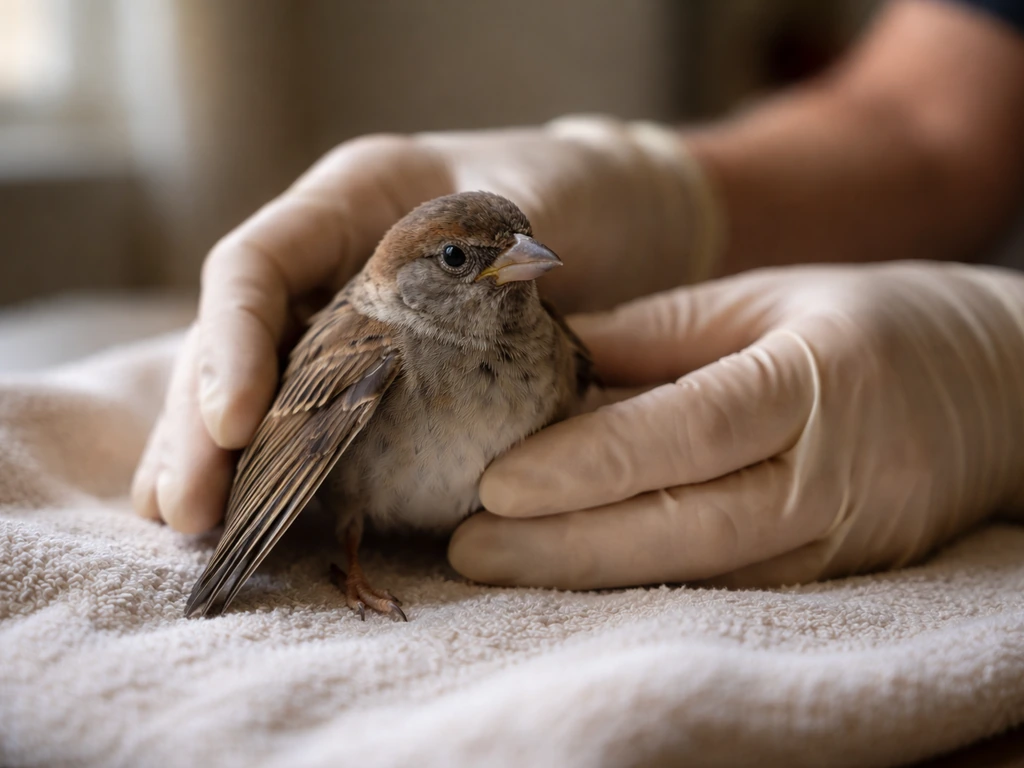
If you've found a bird that can't hold its head up, can't stand, or went down hard after hitting a window or being grabbed by a cat, you need to act carefully and quickly. A suspected broken neck or serious neck injury is one of the most alarming things to witness, and the instinct to do something is strong. But the most important thing right now is to do as little as possible while doing it correctly. Here's exactly what to do.
Bird With Broken Neck Help: What to Do Today
Marcus Chen
3 Apr 2026
How to tell if it might be a broken neck
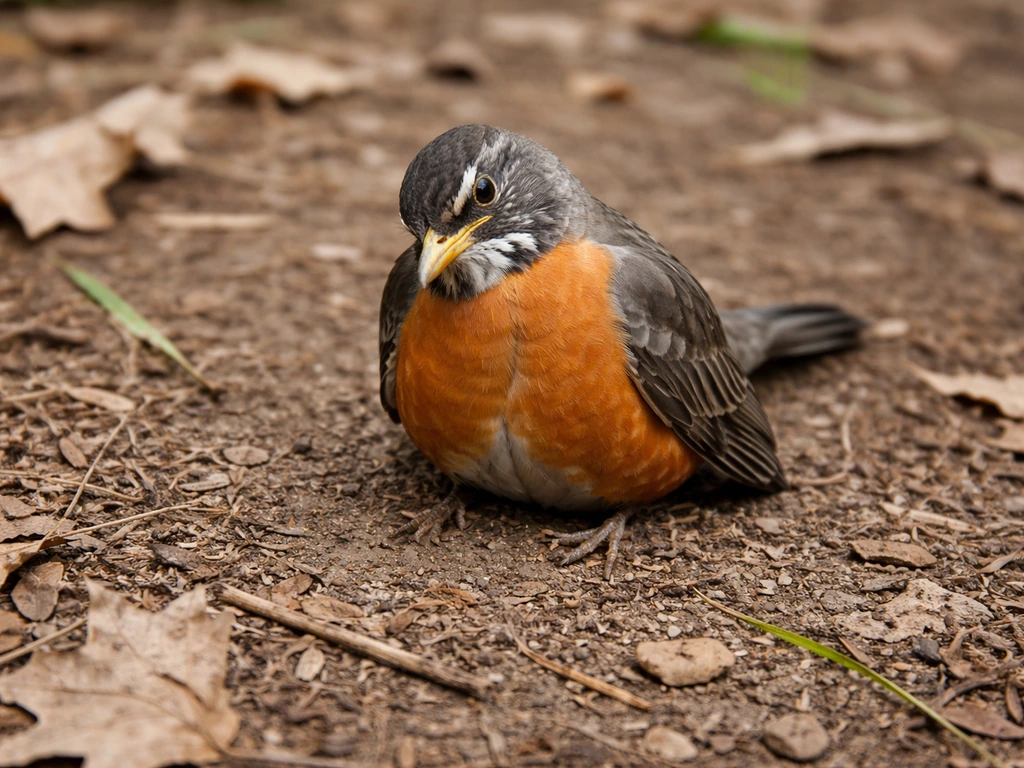
A true broken neck is a cervical spinal injury, and it can look very different from what most people expect. The bird won't necessarily have a visibly twisted or dangling head. In fact, many birds with serious neck or spinal trauma look almost normal at first glance, which is part of what makes the situation so confusing.
The signs you're most likely to see in the field include: the bird is grounded and can't fly or stand, the head is held at an abnormal angle or is drooping and floppy, the legs aren't working properly even though nothing looks broken on them, the bird is unusually still or completely unresponsive to nearby movement, and there may be labored or visible breathing distress. After a fall, window strike, or pet attack, any combination of these is a serious red flag.
The most common causes are window collisions (the bird strikes glass at speed and the force transfers through the spine), cat and dog attacks (even a brief grab can fracture cervical vertebrae), and falls from height. You won't always see obvious external damage. Internal trauma, including spinal cord injury, can be present even when feathers look perfect and there's no blood. People often wonder about whether a bird can break its own neck through thrashing or struggling, and yes, that can happen too, especially after a bird becomes trapped or entangled.
How to tell it apart from other injuries
A broken wing looks different: the bird can usually stand and perch normally but holds one wing low or at an odd angle. If the legs are working and the bird is standing, the injury is likely limited to the wing rather than the spine. A concussion from a window strike can also mimic spinal injury, with an abnormal head position, disorientation, or even vomiting, but a concussed bird often shows gradual improvement over 20 to 60 minutes. A bird that is not improving, or is getting worse, needs professional help regardless of what the cause turns out to be. The key rule: if the bird can't stand, can't perch, or shows any paralysis or weakness in its legs, treat it as a spinal emergency.
Immediate safety steps for you and the bird
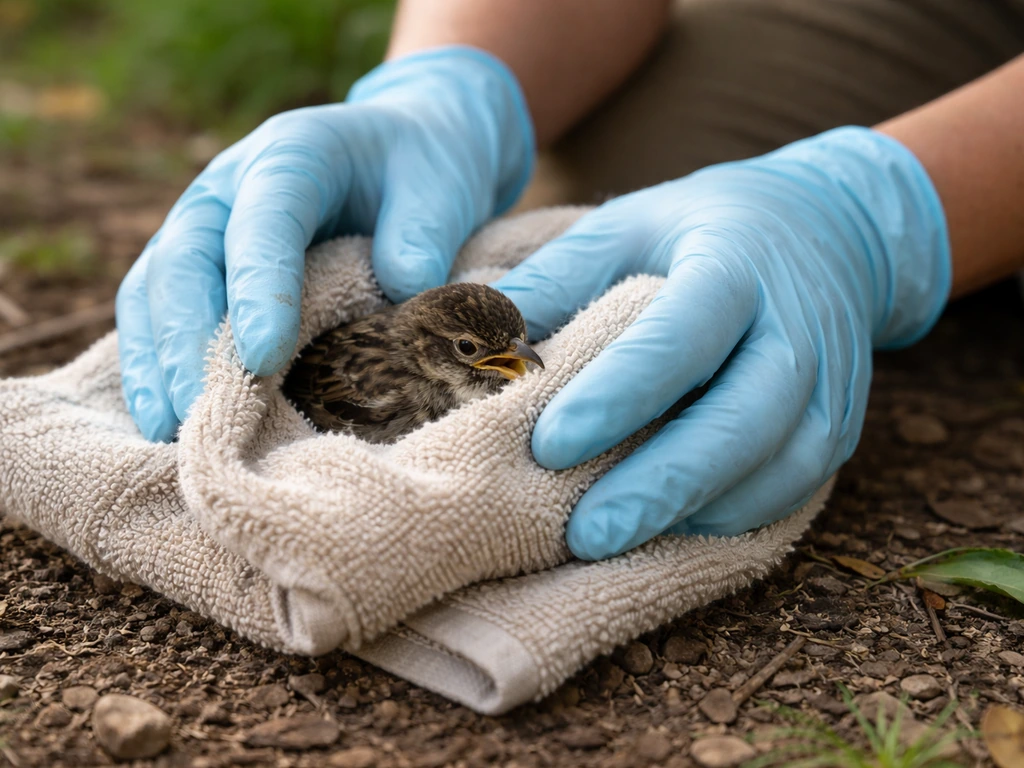
Before you touch the bird, protect yourself. Even a severely injured bird can bite hard and scratch with its talons. Grab a pair of gloves if you have them, or use a folded towel. Approach slowly and quietly. Sudden movements spike the bird's stress, and a bird in shock can die from that stress alone. Keep children and pets away from the area immediately.
If the bird is in immediate danger, such as on a road or in a spot where a cat can reach it, gently drape the towel over it and scoop it up without squeezing. Support the body from underneath. Do not hold it tightly around the wings or chest. Do not attempt to straighten the head or neck. Do not flip the bird over. Just get it to safety with the minimum necessary handling.
If the bird is in a safe spot already, such as under a bush away from traffic and predators, you may choose to contain it without moving it far. The goal is to interrupt the danger, not to diagnose or treat the injury yourself. If handling feels unsafe or the bird is large (like a hawk or goose), contact a wildlife rehabilitator before attempting capture rather than risking further injury to the bird or yourself.
First aid do's: keep it still, warm, and calm
The best thing you can do for a bird with a suspected neck injury is to create the right environment and then leave it alone. Here's how to set that up.
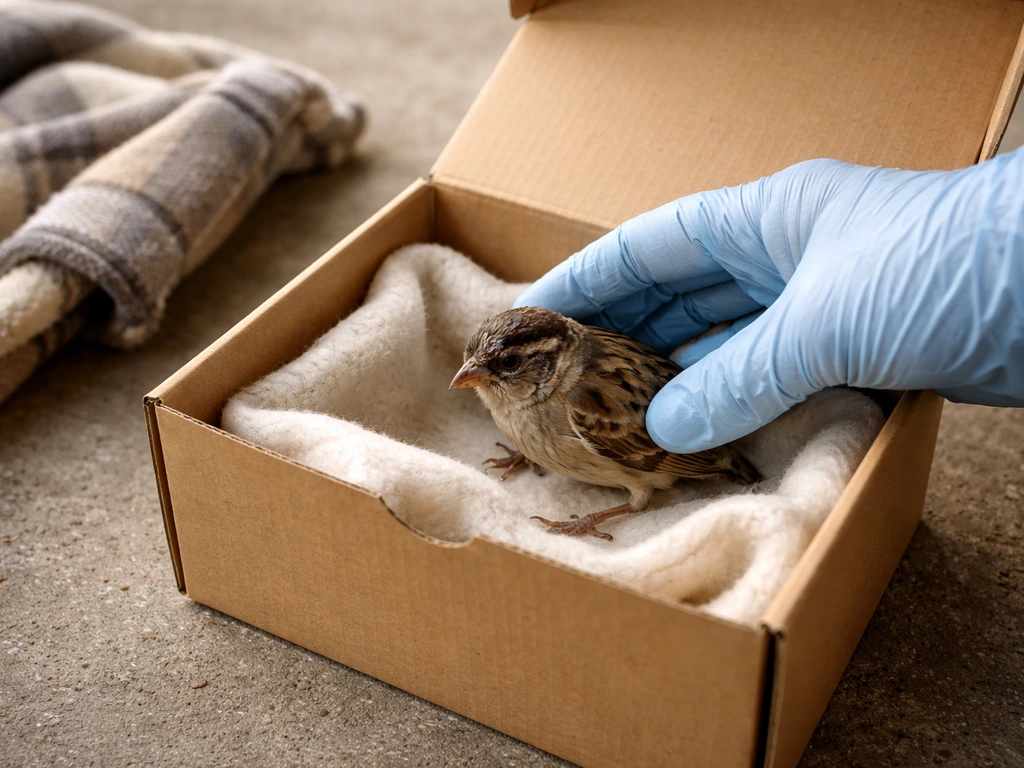
- Find a cardboard box with a lid. It doesn't need to be large, just big enough for the bird to sit without touching the sides. Poke several small air holes in the lid and sides for ventilation.
- Line the bottom with a soft cloth, paper towels, or a folded t-shirt. Avoid fluffy materials like cotton balls that can snag toenails.
- Gently place the bird inside in an upright position if possible. Do not force it. If it naturally lies on its side, leave it that way. Do not attempt to prop or position the head.
- Close the box and place it somewhere warm, dark, and quiet. A bathroom or a corner of a room away from noise, traffic, and pets works well. Room temperature is fine for most adult birds; avoid anything hot.
- If it's cold outside and the bird feels cold to the touch, place a heating pad on its lowest setting under one half of the box only, so the bird can move away from the heat if needed. Do not place the heating pad under the whole box.
- Do not open the box repeatedly to check on the bird. Every time you open it, you cause stress. Set it up once and leave it.
The dark, enclosed space calms the bird's nervous system and reduces the likelihood of shock. This is the same protocol used by wildlife rehabilitators during intake, and it genuinely makes a difference. When people ask me what they should be doing while waiting for help, the answer is almost always: nothing extra. The box is the intervention.
Things to never do with an injured bird
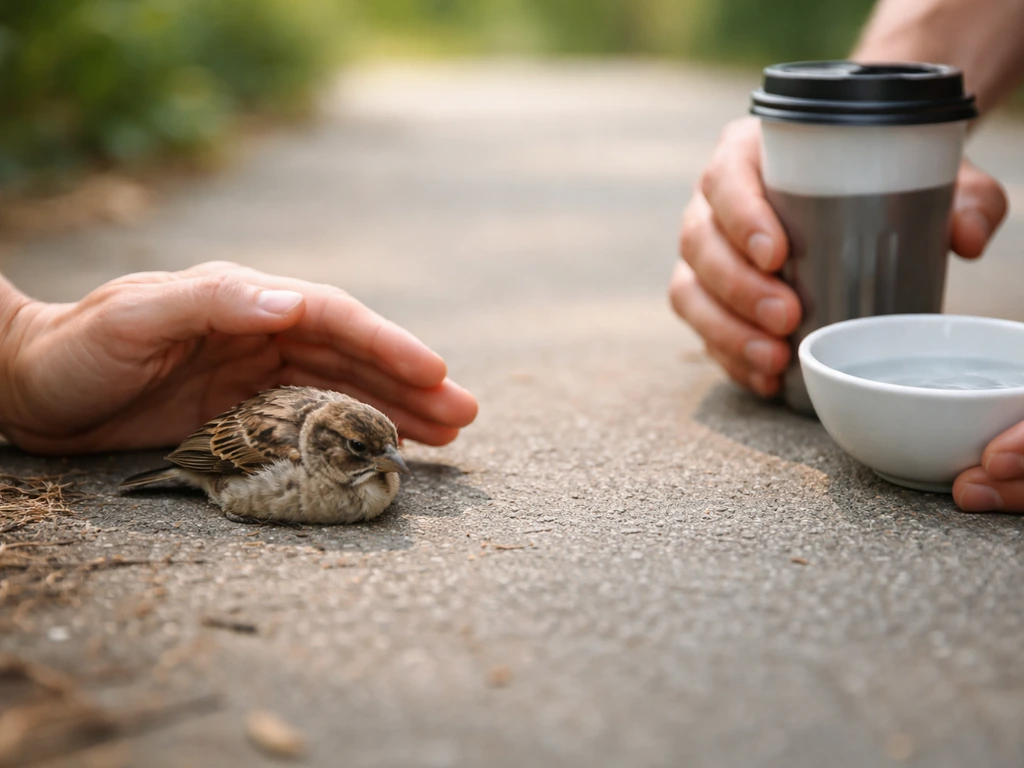
This list matters as much as the steps above. These are the mistakes that most commonly make the situation worse, and most of them come from good intentions.
- Do not give food or water. This is the single most important rule. Forcing food or water into an injured bird's mouth can cause aspiration (fluid entering the lungs), which can kill the bird quickly. Do not do this unless a licensed rehabilitator or avian vet specifically instructs you to. The bird will be okay without food for hours.
- Do not try to straighten the neck or head. If the head is in an abnormal position, leave it. Attempting to manually reposition a potentially fractured cervical spine can cause catastrophic damage to the spinal cord.
- Do not force the bird to stand or walk. If it can't stand on its own, it can't stand. Propping it up or making it try to walk causes pain and can worsen spinal injury.
- Do not leave the box in direct sunlight or near a heat vent. Overheating is a real risk.
- Do not let other people handle the bird. Well-meaning family members or neighbors picking it up repeatedly adds stress and risk of dropped injury.
- Do not place the bird in water. Some people think this helps with shock. It does not and can be dangerous.
- Do not attempt to splint or bandage the neck yourself. There is no safe at-home intervention for a suspected neck or spinal injury.
If you're already wondering whether the situation you're dealing with also involves other injuries, it's worth knowing that some birds present with multiple traumas at once. For instance, a bird that hits a window hard enough to suspect a broken neck may also have beak or facial trauma. The same handling rules apply: minimal movement, no food or water, and get professional help.
When to call an avian vet or wildlife rescue right now
If you've read this far and the bird in front of you has any of the following, this is an emergency situation that requires a professional today, not tomorrow:
- Cannot stand or perch at all
- Head is drooping, floppy, or held at an abnormal fixed angle
- Any visible paralysis or weakness in the legs or wings
- Labored breathing or breathing with an open beak and no improvement
- Bleeding that hasn't stopped
- Seizures or tremors
- Collapse after a fall, window strike, or pet attack
- No improvement after 30 to 60 minutes if you initially suspected only a concussion
To find help quickly, search 'wildlife rehabilitator near me' or 'avian vet emergency near me' on your phone right now. You can also use Animal Help Now (animalhelpnow.org), which is a location-based tool that connects you to the nearest licensed rehabilitator. In Missouri and Illinois, the Bi-State Wildlife Hotline operates 24 hours a day. In many states, your local animal control or humane society can refer you to a wildlife rehabber even if they can't take the bird themselves.
When you call, say this: 'I have a bird that I believe has a neck or spinal injury. It cannot stand, its head position is abnormal, and it came down after (a window strike / a cat attack / a fall). I have it in a dark, closed box. What do I do next and where can I bring it?' That gives the professional everything they need to triage the situation quickly.
Transport and what to monitor until help arrives
When you're transporting the bird to a vet or rehabilitator, keep the box on a flat surface in your car, not on the seat where it can slide. Do not play music or talk loudly in the car. Keep the heat running if it's cold outside, but don't blast it directly at the box.
While you're waiting or driving, the only things worth monitoring are breathing and alertness. You can do this by listening quietly near the box without opening it. A bird that is breathing, even shallowly, is still alive and has a chance. Watch for any sounds of distress or loud labored breathing, which would indicate you need to speed up getting to help. Birds breathe by moving their entire chest, so if you do open the box briefly, look for chest movement rather than trying to feel a pulse.
Avoid the temptation to open the box frequently. Injured birds can go into shock from repeated disturbances, and stress is a real physiological threat. If the bird goes quiet, that's often a good sign that the dark box is doing its job. If you hear no sounds and see no chest movement when you do need to check, contact the rehabilitator immediately for guidance.
Aftercare and realistic outcomes
I want to be honest with you here, because false hope doesn't help anyone. A true broken neck in a bird, meaning a fractured cervical vertebra with spinal cord involvement, carries a very poor prognosis. Avian spinal injuries are difficult to treat even with professional veterinary care. The bird may not recover sufficiently to survive in the wild. That doesn't mean your effort doesn't matter, it absolutely does, and the outcome isn't something you can determine by looking at the bird yourself.
Some birds that appear to have neck injuries are actually concussed or have soft tissue trauma that can improve with rest and supportive care under professional supervision. Some do recover and are released. Others improve enough to live in a sanctuary or educational setting. And for some, a licensed professional may advise humane euthanasia to prevent prolonged suffering. If that's the advice you receive, know that acting on it is one of the most compassionate things you can do.
The right next step after getting professional help is to follow the guidance you're given, even if the outcome is not what you hoped for. At-home nursing care for a serious spinal injury is not a realistic option, no matter how much you want to help. The bird's best chance is always with a licensed rehabilitator or avian vet. Your role right now is to keep the bird safe, calm, and stable until you can hand it off to someone with the tools to actually assess and treat it.
If you're in a situation where you're dealing with other injuries alongside this one, it can help to understand the full picture. For example, some birds involved in collisions or attacks also have facial damage, and knowing what happens if a bird breaks its beak can help you describe the full situation to the rehabilitator when you call. Similarly, if you have a pet bird at home rather than a wild bird and you're trying to figure out what's going on with your bird more broadly, the same basic principles apply: minimal handling, warmth, quiet, and professional help fast. And if the bird you're looking at has visible beak damage in addition to neck symptoms, reading up on bird beak injuries can help you give a clearer report when you reach a professional.
You're already doing the right thing by looking for help. Getting the bird contained and calm, making the call, and getting it to someone who can properly assess it, that's everything.
FAQ
Should I feed or give water to a bird that might have a broken neck?
Do not give food, water, or medications. Even if the bird seems alert, swallowing and breathing can be unsafe with spinal trauma, and fluids can lead to aspiration. If the bird is a wild bird, keep it contained and focused on quiet transport until a rehabilitator or avian vet instructs otherwise.
How can I check if the bird is still breathing without harming it?
Wait for chest movement, not a heartbeat. Birds do not show a pulse you can safely check by touch, and pressing or handling can worsen the injury. If you cannot confirm normal breathing while you are waiting, contact the rehabilitator/vet immediately for guidance on speeding up transport.
If the bird seems to get slightly better after a window hit, does that mean it is not a broken neck?
Yes, if a window strike bird is improving over time, it could be concussion or soft tissue injury, but you still treat it as a spinal emergency if it cannot stand, cannot perch, or shows leg weakness or paralysis. Improvement should be gradual and watched from a distance while it stays contained.
Is it okay to gently straighten the bird’s head or neck to help it breathe?
Do not attempt to align or “set” the head or neck, and do not keep the bird in your arms for reassurance. Support the body from underneath with minimal handling, keep the bird calm and dark, and transport in a flat, stable container. Straightening attempts can increase spinal cord damage.
What should I do if the bird is flopping, twitching, or having worsening breathing while I’m waiting?
If the bird is actively seizing, making sudden violent thrashing movements, or you hear severe labored breathing, treat it as urgent and contact a professional immediately. Keep it dark and contained, reduce disturbances, and transport as directed. If a trained rehabilitator is available, follow their instructions rather than trying repeated checks.
Can I wrap, bandage, or tape the bird’s neck or chest to keep it still?
Avoid removing feathers, bandaging the neck, or trying to splint anything you think looks “out of place.” External appearance can be misleading, and pressure around the chest or neck can worsen breathing or spinal injury. The safest approach is containment, minimal handling, and professional assessment.
What’s the safest way to transport the bird in a car?
For transport, use a ventilated, opaque container, place it on a flat surface, and keep it from sliding. Stop any actions that can jostle the bird, like buckling the box into a way that tips, holding it while driving, or placing it on your lap. If you have to drive a distance, check only breathing via quiet listening, then get there safely.
Do I need to move the bird, or can I leave it where it is?
If the bird is on a surface where it can be injured or reached by pets, gently drape and scoop it without squeezing. If it is already in a protected spot, you can keep it contained without moving it far, but still interrupt danger. If it is too large or capture risks you or the bird, contact a wildlife rehabilitator first.
What if the bird looks calm and only its posture seems strange, is it still a spinal emergency?
Some birds appear “fine” sitting but cannot stand, perch, or use their legs normally. The key distinction is functional leg weakness or paralysis, not whether the legs look visibly injured. If it cannot stand or perch, treat it as spinal trauma regardless of whether there is blood or obvious fractures.
What are the most common things people do that accidentally make the situation worse?
Common mistakes include opening the container repeatedly to check, keeping lights on or letting it see and react, giving water or food, and holding the bird tightly around the wings or chest. Another frequent issue is waiting too long for help when leg weakness or abnormal head position is present.
Next Article
Can a Bird Live With One Wing? Survival and First Aid
Can a bird live with one wing? Injury outcomes and step-by-step first aid, plus when to get urgent help.