
If you've found a bird with a suspected broken leg, the most important thing you can do right now is keep it warm, calm, and contained while you arrange professional help. Do not try to splint or set the leg yourself. Get the bird into a small, dark, ventilated box lined with a soft cloth, place it somewhere quiet at around 85°F (29°C), and start calling an avian vet or wildlife rescue immediately. Everything else flows from that.
Broken Leg Bird Treatment: What to Do Right Now
Marcus Chen
1 Jun 2026
Spot the signs: broken leg vs. sprain vs. dislocation
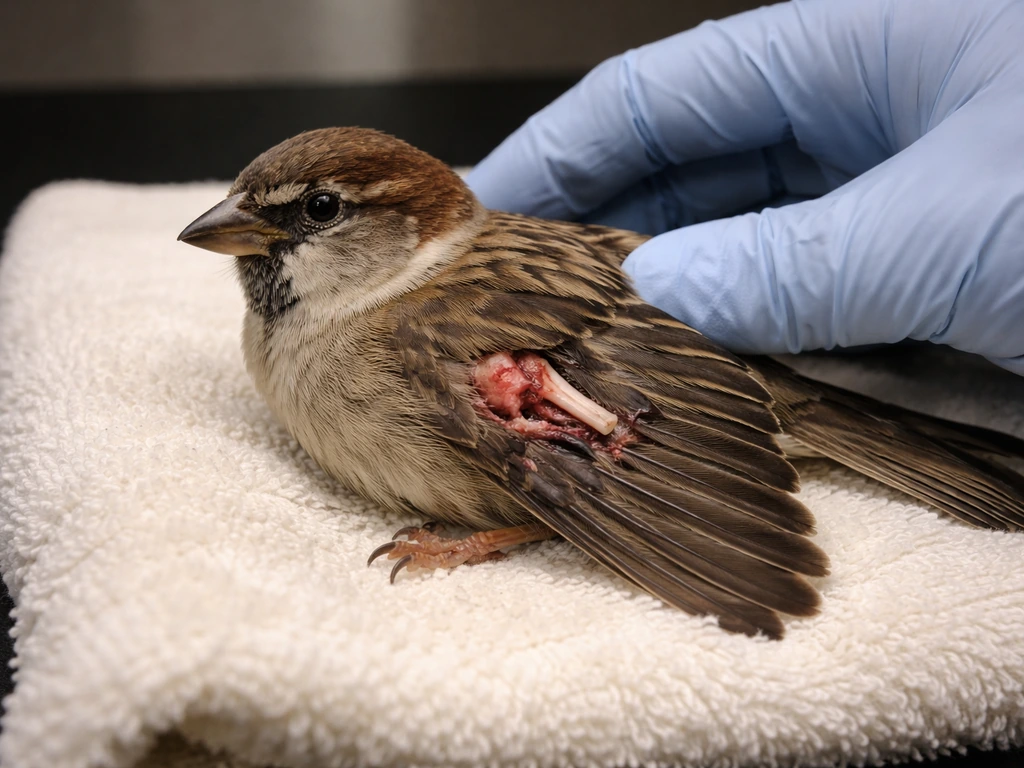
A bird won't tell you what's wrong, so you have to read the body language and the leg itself. A broken leg (fracture) often looks visibly wrong: the leg may hang at an abnormal angle, the bird may be completely non-weight-bearing, and you might notice swelling, bruising, or in serious cases, bone visible through the skin (an open fracture). The bird will usually be grounded and unable to perch.
A sprain or soft-tissue injury tends to look less dramatic. The bird may still put some weight on the leg, the limb sits at a roughly normal angle, and there's no visible bone or extreme deformity. The leg may just look slightly swollen or the bird may favor it. A dislocation, particularly at the hock joint, can look similar to a fracture because the joint pops out of alignment and the leg looks 'wrong,' but the bone itself isn't snapped.
Here's the practical truth though: you cannot reliably tell a fracture from a dislocation or severe sprain without an x-ray. And avian bones can shatter on impact, meaning what looks like a simple break on the surface can be much more complex inside. If the leg looks abnormal in any way, treat it as potentially broken and act accordingly.
| Sign | Likely Fracture | Likely Sprain/Soft Tissue |
|---|---|---|
| Leg position | Abnormal angle, hanging, or rotated | Roughly normal angle |
| Weight bearing | None at all | Partial or hesitant |
| Bone visible | Possible (open fracture) | No |
| Swelling | Often present, may be severe | Mild to moderate |
| Bird grounded | Usually yes | Sometimes |
| Movement of leg | May feel unstable or crepitate | Stiff but intact |
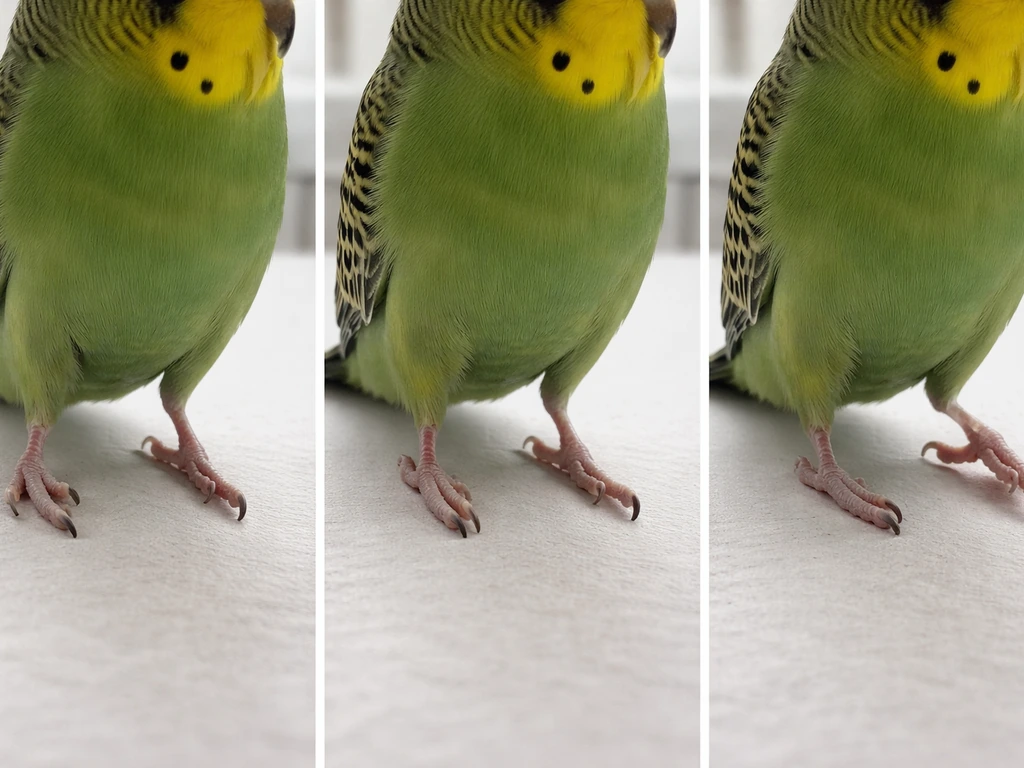
One specific thing worth knowing about budgies and small birds: symptoms of a broken leg can be subtle at first. A bird might grip a perch with one foot and hold the other leg tucked or extended stiffly. Don't dismiss leg-holding behavior as just resting. If it persists or the bird seems off balance or stressed, take it seriously.
What to do right now: first aid do's and don'ts
Your job in the first few minutes is to stabilize the situation, not fix the injury. Think of yourself as the ambulance, not the surgeon.
Do these things
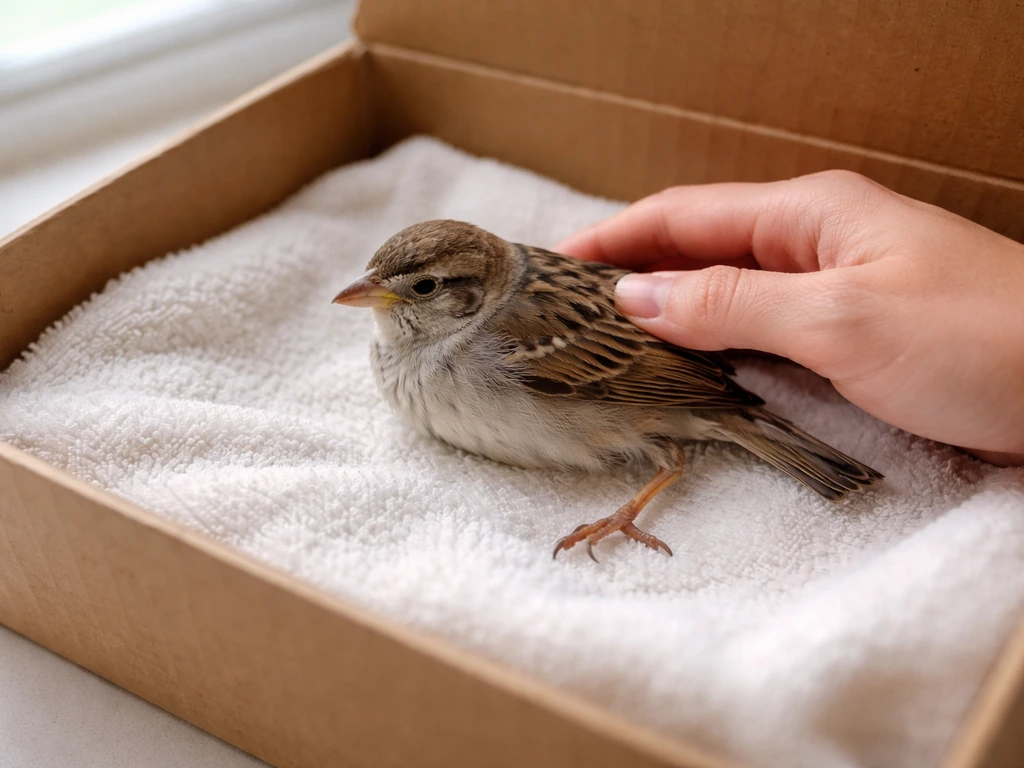
- Contain the bird gently in a small cardboard box or carrier lined with a soft, non-fraying cloth like a thin towel or paper towels. Smaller spaces reduce panicked flapping and further injury.
- Keep it warm. Target 85 to 90°F (29 to 32°C) for a bird that's lying on the floor or appears poorly responsive. A heating pad on the lowest setting under half the box works well, giving the bird a cooler side to move to if needed.
- Keep it dark and quiet. Covering the box reduces visual stress, which lowers the bird's heart rate and prevents shock from worsening.
- If there's active bleeding from an open wound on the leg, apply very gentle pressure with a clean cloth or gauze. Don't wrap it tightly.
- Remove all perches if you're using a cage instead of a box. A bird with a broken leg should not be trying to perch.
- Make a note of what you observed: how you found the bird, what the leg looks like, any bleeding, how the bird is breathing. This helps the vet enormously.
Don't do these things
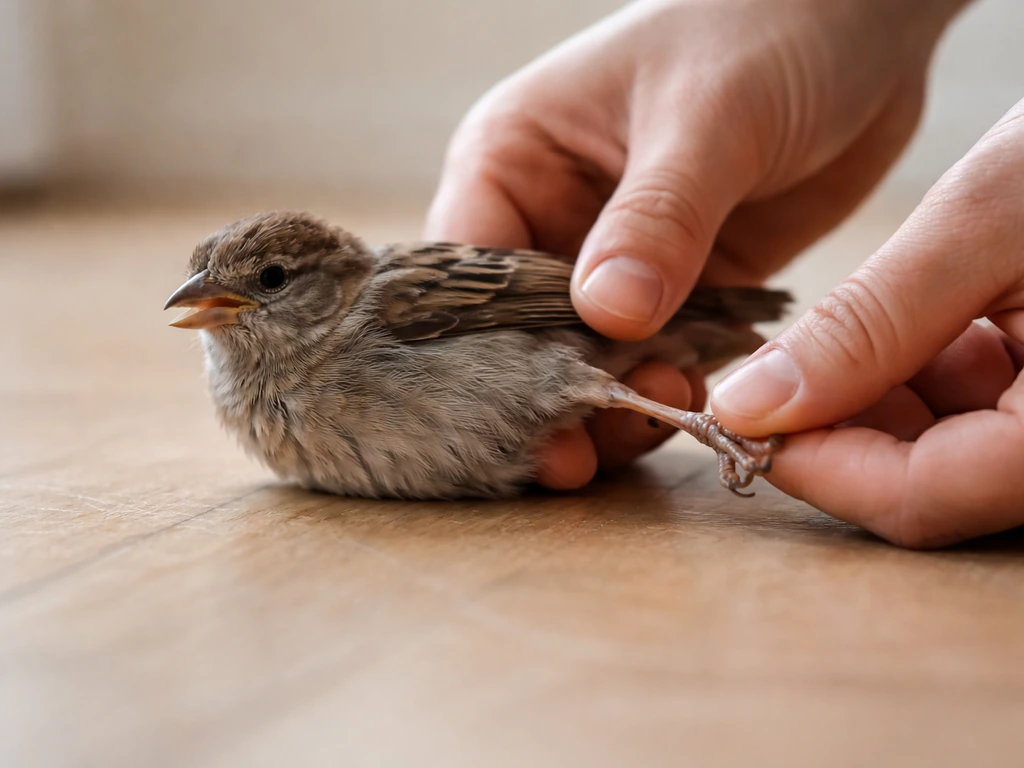
- Don't try to set or straighten the bone. You will cause more pain and potentially damage blood vessels or nerves.
- Don't attempt to splint the leg yourself unless you've been specifically instructed by a vet over the phone and have appropriate materials.
- Don't give the bird any human pain medications like ibuprofen, acetaminophen, or aspirin. These are toxic to birds.
- Don't offer food or water immediately. A stressed, injured bird in shock can aspirate, and feeding can wait until the bird is stable.
- Don't keep handling the bird to check on it. Every time you open the box, you stress the bird further.
- Don't put the bird in a large cage with other birds.
How to handle and immobilize the bird safely
Picking up an injured bird correctly matters a lot. For small birds like sparrows, finches, or budgies, cup the bird gently in both hands with the wings held against the body. Keep your grip firm but not squeezing. For larger birds like pigeons, crows, or raptors, be more cautious: raptors have talons that can do real damage, and larger birds can bite hard. A light towel draped over the bird first makes handling easier and less stressful for both of you.
Once you've got the bird in your hands, transfer it smoothly into the prepared box. Don't jostle the injured leg. If the leg is hanging at an odd angle, don't try to reposition it. Just get the bird settled on the soft bedding and close the box. The goal of immobilization at this stage is simply keeping the bird from thrashing around and making the injury worse. You are not splinting. You are containing.
If you suspect a wild bird has an open fracture (bone visible, wound present), minimize handling as much as possible and prioritize getting professional help within the hour. Open fractures in birds carry a high infection risk because birds have very limited soft tissue covering their leg bones, and bacteria move fast.
When it's urgent: symptoms that mean call immediately
Some situations can't wait for a vet appointment tomorrow. Call a wildlife rescue or avian vet right now if you see any of the following:
- Bone is visible through the skin (open fracture): infection sets in quickly and antibiotics need to start fast
- Active bleeding that won't slow with gentle pressure
- The bird is completely unresponsive, lying flat, or barely breathing
- The bird is in obvious shock: fluffed feathers, eyes half-closed, not reacting to movement near it
- The leg appears crushed or severely deformed
- A cat or dog caused the injury: even without visible wounds, punctures from claws or teeth introduce bacteria that can be fatal within 24 to 48 hours without treatment
- The bird is a protected wild species and you're unsure if you're legally allowed to keep it (in many countries, holding wild birds without a license is restricted)
Even in less dramatic cases, all broken leg injuries in birds need professional attention. blank" rel="noopener noreferrer">Home care is a bridge to professional treatment, not a replacement. The difference is whether you have hours or minutes before you need help.
What professional treatment for a bird's broken leg actually looks like
When you get the bird to an avian vet or wildlife rehabilitator, the first thing they'll do is a physical assessment to evaluate the bird's overall condition, breathing, and level of shock, before even focusing on the leg. Pain management comes early: avian vets use appropriate analgesics like meloxicam for birds (at doses specifically calibrated for the species), which is very different from anything you'd give a mammal. Never assume a human or even dog/cat pain med is safe.
After stabilization, the vet will likely take x-rays. Avian bones are different from mammal bones: they're often hollow and can shatter into multiple fragments on impact. An x-ray tells the vet exactly what they're working with. For some fractures, especially in smaller birds like budgies, the vet may also need to examine the leg under anesthesia to fully assess the damage and plan treatment.
Depending on the fracture type, treatment might include external splinting or casting, internal fixation with pins or plates (in larger birds or complex fractures), or in severe cases, amputation (which birds often adapt to remarkably well). A broken leg bird splint is often part of the plan to protect the fracture while the bone heals.
Splints for bird leg fractures are typically checked and changed every 3 to 5 days, since swelling changes and in young birds, rapid growth affects how the splint fits. Smaller birds like pigeons may need a splint for around 10 days; larger birds can need external support for up to 3 weeks or longer. Open fractures will almost always require antibiotics.
If a bird has an open fracture, it should be started on antibiotics due to infection risk open fracture should be started on antibiotics.
How to transport the bird and what to tell the vet
Transport the bird in the same small, dark, warm box you used for initial containment. Don't switch containers unnecessarily. If the trip is longer than 20 minutes, keep the box in a temperature-controlled part of the car. Don't blast AC or heat directly at the bird. Keep the radio low and drive smoothly.
When you call ahead (and you should call ahead), tell them: what species the bird appears to be (or your best guess), how you found it, what the leg looks like, whether there's any bleeding or open wound, how long the bird has been injured if you know, and whether a predator caused the injury. This helps the clinic prepare and triage appropriately, especially if they're busy.
To find help, search for 'avian vet near me,' 'wildlife rehabilitator near me,' or contact your local humane society or animal control for a referral. In the US, the National Wildlife Rehabilitators Association and the Wildlife Center of Virginia both have online directories. In the UK, the RSPCA has a 24-hour helpline. Most wildlife rehabilitators won't charge for wild birds, and many avian vets will triage an emergency at reduced cost.
Mistakes that make things worse (and are very easy to make)
I want to be direct here because these mistakes happen all the time and they come from a good place. People want to help, and they do things that feel logical but actually harm the bird.
- Trying to set or realign the broken bone: you cannot feel where fragments are, and manipulating a broken bird leg causes pain, further injury to nerves and blood vessels, and can turn a closed fracture into an open one
- DIY splinting with tape, sticks, or straws without guidance: an improperly applied splint restricts blood flow and can cause the leg to die from ischemia faster than the fracture would
- Giving pain medications meant for humans or other pets: ibuprofen and acetaminophen are toxic to birds; even aspirin can cause hemorrhage in birds
- Force-feeding or watering a bird in shock: a stressed bird cannot coordinate swallowing properly and can inhale fluid into its lungs
- Putting the bird in a large space to 'give it room': injured birds need confinement to prevent further self-injury from panicked movement
- Assuming the bird is fine because it's alert and reactive: birds hide pain and illness as a survival instinct; an alert bird can still be seriously injured
- Waiting more than a day to seek help because 'it doesn't look that bad': even a cleanly broken leg will swell, become infected, or heal incorrectly without treatment, often leading to permanent disability
Aftercare while you wait or during recovery
If you're waiting for a vet appointment or rescue intake (not more than a day or two at most), keep the bird in the warm, dark, quiet box. Once the bird seems settled and is not in acute shock, you can offer a small amount of water in a shallow dish. For pet birds, you can offer their normal food in a low dish on the floor of the container. Don't offer unfamiliar foods. Don't handle the bird more than necessary.
Once the bird is in professional care and you're managing aftercare at home (for a pet bird post-treatment), follow the vet's specific instructions precisely. Keep the recovery space small so the bird can't jump or fly before the bone is healed. Whether the leg heals fully often depends on how quickly treatment started, the fracture type, and the species.
How long it takes and whether it heals without intervention depends on the fracture type, which is why professional evaluation matters will a bird broken leg heal on its own. With prompt professional care, many birds with broken legs recover well enough to return to normal function. A bird with a broken leg needs prompt professional care, so do your best to stabilize it and contact an avian vet or wildlife rescue right away.
The key word there is prompt.
FAQ
Can I use a cardboard splint or DIY bandage for broken leg bird treatment at home?
No. Even if you immobilize “somehow,” you can worsen the fracture, crush soft tissue, or trap the wrong position (especially if it is actually a dislocation). For first aid, focus on containment in a warm, dark, ventilated box, then get x-rays and a species-appropriate plan from an avian vet or wildlife rehabilitator.
How do I tell if my bird is in shock or just in pain?
Shock signs are often broader than the leg, like the bird being very quiet or unusually still, panting or struggling to breathe, very cold body temperature, extreme weakness, or collapse. If you notice breathing changes or the bird looks overall unresponsive, treat it as an emergency and call ahead immediately rather than waiting for leg-focused care.
Is it okay to put the bird in a warm blanket or heating pad instead of keeping it in a warm box?
Use indirect, gentle warmth. A heating pad or hot spot can burn thin-skinned areas or overheat the bird, especially if it moves under the heat source. The safer approach is the small warm box setup at about 85°F (29°C), placed in a stable draft-free area, without direct contact heat.
Should I elevate the injured leg or keep it straight while I wait?
Don’t try to reposition the leg or straighten it. Elevating or moving can increase pain and further damage. Settling the bird with minimal handling is the priority, even if the leg appears at an odd angle.
What if I suspect an open fracture but I cannot tell if bone is actually visible?
Treat any wound plus an obviously abnormal leg shape as potentially open fracture until a professional confirms otherwise. Minimize handling, keep the bird warm and contained, and prioritize care within the hour because infection risk is high in birds.
How long can a bird wait for help before it becomes dangerous?
For suspected fractures, aim for help within hours, and for open fractures within the hour. If access to care is delayed, the bird can still worsen due to shock, dehydration, or infection risk, so call rescues or avian clinics as early as possible and ask about triage options.
Can I give human pain medication or a dog or cat NSAID for broken leg bird treatment?
Do not. Avian dosing is species-specific, and many common mammal pain medicines can be unsafe or lethal for birds. Ask the avian vet what, if anything, to give before administering anything, and otherwise focus on warmth and minimizing movement.
Should I offer food immediately in the box while waiting?
Offer only the bird’s usual food for pet birds, in a low dish on the floor, once the bird seems settled and not in acute shock. For wild birds, avoid feeding unless the rehabilitator instructs you to, and always limit handling.
Do I need to remove the splint or change bandages before the vet visit?
Not unless the vet directs it. Bandage and splint adjustments require correct fit and timing, since swelling and growth can change fit. Home changes can shift the fracture or compromise immobilization. Wait for the clinician’s plan.
If it is a dislocation instead of a fracture, is home treatment still possible?
No. A dislocation can still damage tissue and requires proper assessment, often imaging, and sometimes anesthesia to reduce or stabilize safely. Since you cannot reliably distinguish these injuries without x-ray, the safe assumption is “potential fracture” and get professional evaluation.
What transport conditions help the most during the car ride?
Keep the same small dark warm box, drive smoothly, and avoid directing air flow or heat directly at the bird. If the trip is longer than about 20 minutes, keep the box in a temperature-controlled area of the car so it stays warm but not overheated.
I found a bird that has a leg that looks wrong but it is still perching, should I assume it is fine?
No. Some birds may perch with one foot while holding the injured leg tucked or extended stiffly. Persistent leg-holding, favoring, or any imbalance behavior should be treated as a serious injury needing professional evaluation.