
If you've found a bird with a drooping or dangling wing, the most important thing you can do right now is get it into a safe, warm, dark box and contact a wildlife rehabilitator or avian vet as fast as possible. A temporary wing bandage can help prevent further injury during transport, but only if it's done correctly and loosely enough that the bird can still breathe. Wrapping too tightly is one of the most common mistakes people make, and it can kill a bird faster than the injury itself. This guide walks you through every step: confirming the injury, deciding whether to bandage at all, applying a safe temporary sling if needed, and getting the bird to someone who can actually fix it. The cost of treating a bird with a broken leg can vary a lot, so it helps to ask the rehabber or vet about fees when you call bandage.
Bird Broken Wing Bandage: Safe First Aid and Sling Steps
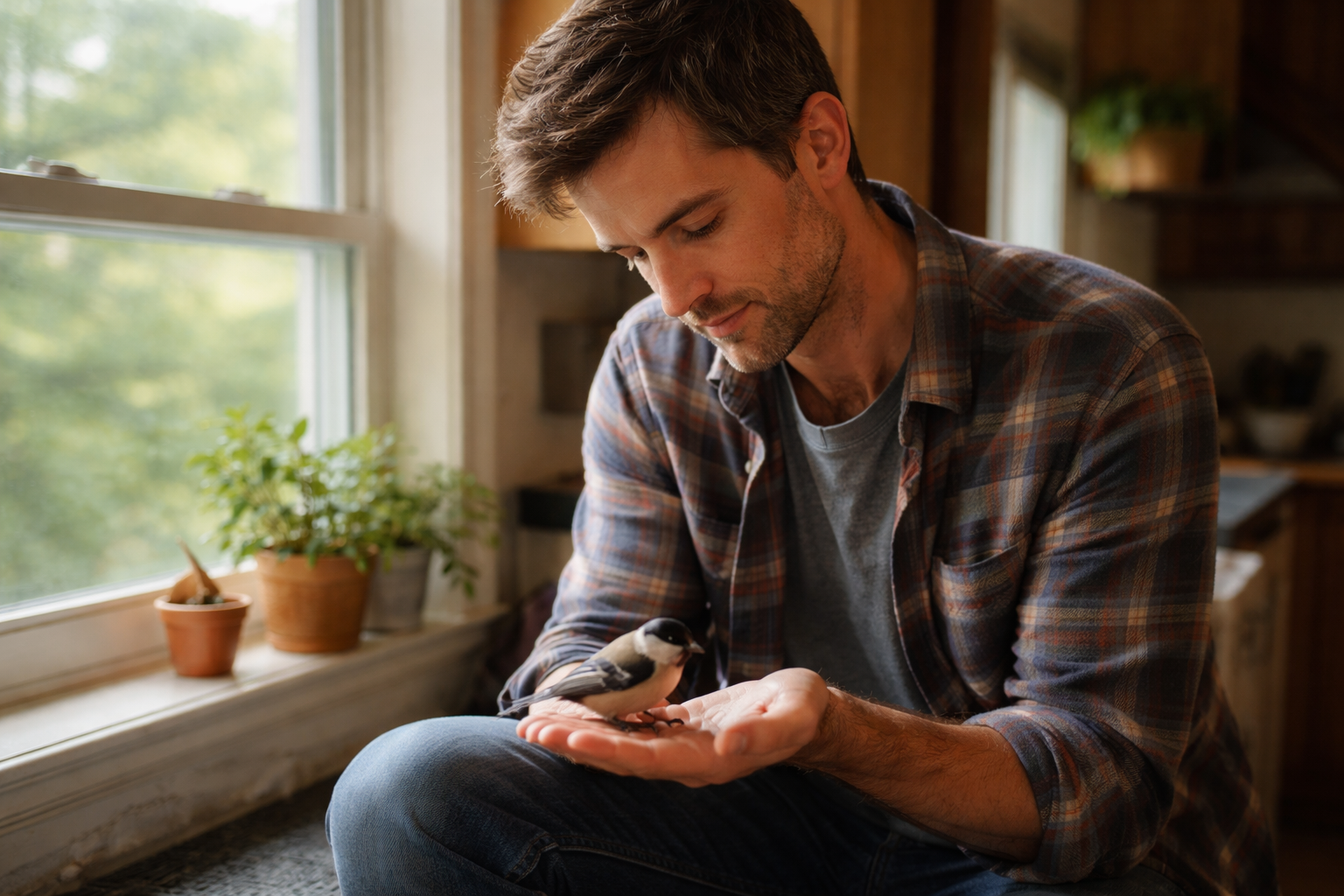
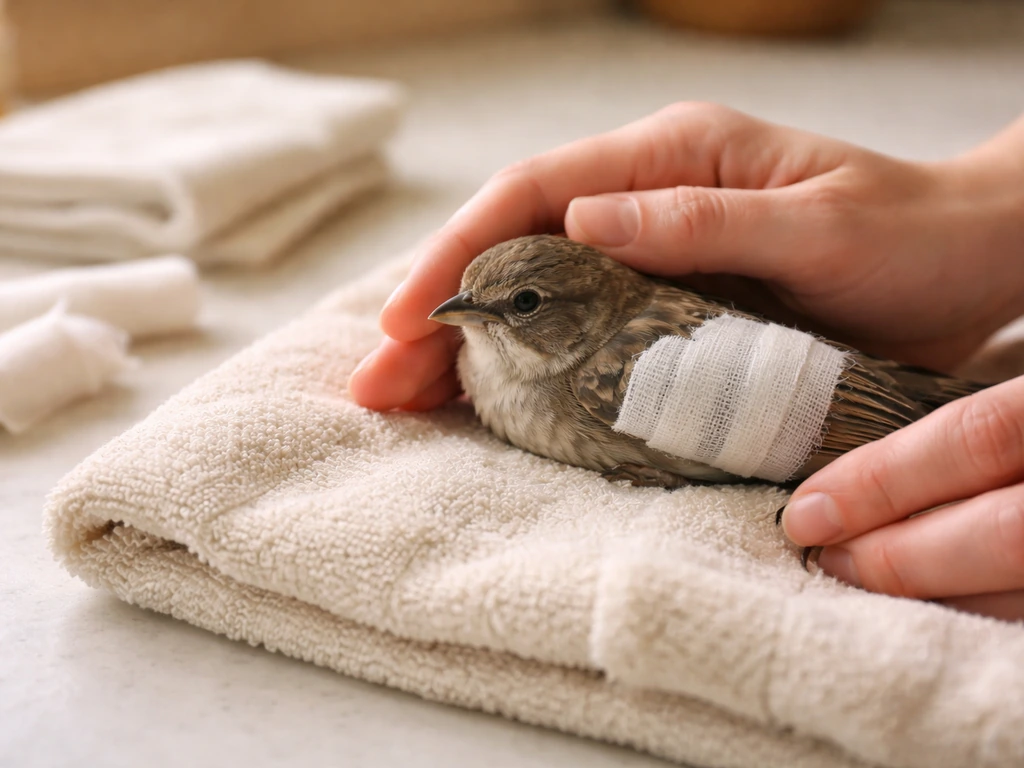
First: make sure it's actually a wing injury
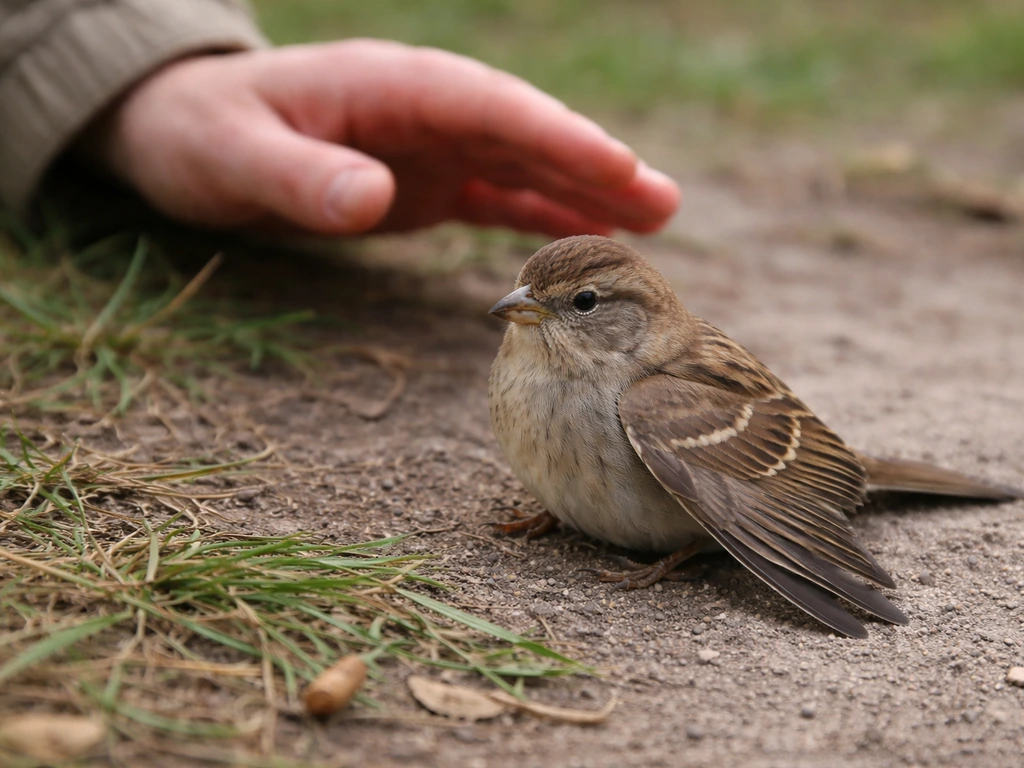
Before you touch the bird, watch it from a short distance for 30 to 60 seconds. A healthy adult bird will almost always try to escape when a human approaches. If it's sitting still, not flying off, or clearly struggling to move, that's a real sign something is wrong. Look for these indicators from a distance before you get closer:
- One wing hanging lower than the other, or held out at an unnatural angle
- Obvious drooping on one side while the other wing stays tucked
- Inability to fly or hop away even when approached
- Visible bleeding or a wound near the wing joint or along the wing
- Labored breathing, open-mouth breathing, or a bobbing tail (a sign of respiratory distress)
- The bird is standing but stumbling, or lying on its side
Keep in mind that you won't always be able to tell a broken bone from a sprain or soft-tissue injury just by looking. A drooping wing can mean a fracture, a dislocated joint, or significant muscle damage. All of these need professional assessment, so treat any of the signs above as a reason to act. The RSPCA is right that even if you can't see an obvious wound, an injured bird that doesn't flee still needs help. If you're unsure and can safely take a photo or short video without stressing the bird further, do that before you approach. It gives useful information to a rehabilitator when you call.
One more thing before you touch anything: protect yourself. Use gloves if you have them, and avoid touching your face. Injured wild birds can carry bacteria and parasites. This isn't a reason to panic, just a reason to be sensible.
Immediate first aid: warmth, calm, and stopping the bleeding
The first priority is not the bandage. It's stabilizing the bird so it doesn't go into shock or injure itself further. Injured birds go downhill fast when they're cold, stressed, or in a chaotic environment. Here's what to do in the first ten minutes:
- Contain the bird gently. Approach slowly and cover it with a light towel or cloth to reduce its field of vision. A calm, enclosed space immediately lowers the bird's panic response. Scoop it up carefully with both hands, keeping the wings folded against its body.
- Place it in a box. A cardboard box works perfectly. It should be big enough for the bird to sit comfortably but not so large it can thrash around and re-injure the wing. Line the bottom with a folded cloth or paper towels.
- Add warmth. Place a warm (not hot) water bottle wrapped in a towel in one corner of the box, or put a heating pad set to low under one half of the box so the bird can move away from the heat if needed. Target around 75°F to 85°F (24°C to 29°C) inside the box.
- Keep it dark and quiet. Put a lid on the box with a few small air holes punched in. Darkness reduces stress significantly. Keep the bird away from noise, pets, and children.
- Deal with active bleeding. If there is bleeding from the wound, apply very gentle, light pressure with a clean cloth or gauze. Do not use styptic powders on birds as they can be toxic if swallowed. If bleeding is severe and won't stop, that's an emergency and you need to get to a vet immediately.
Do not give the bird any food, water, or medication. This is a rule that almost every wildlife organization agrees on. Well-meaning attempts to feed or hydrate an injured bird frequently cause aspiration (fluid in the lungs) or other complications that make the situation worse. Keep it warm, dark, and quiet, and leave the feeding to the professionals.
When to bandage and when to skip it entirely
This is where a lot of people get stuck. The honest answer is that in most situations, you should skip the bandage and focus on safe containment and transport instead. If you are wondering what to do when a bird breaks its wing, safe containment and getting professional care quickly are usually the best next steps. A proper wing wrap requires some practice to get right, and a badly applied bandage can restrict breathing, cut off circulation, or cause more damage to the injured area. If you can get the bird to a wildlife rehabilitator or avian vet within a few hours, a good box and some warmth is genuinely all you need. If the bird has a broken neck, prompt professional bird broken neck treatment is especially important to prevent further injury and complications professional care.
That said, there are situations where a simple, loose body wrap or sling is useful: mainly when the wing is so unstable that it keeps falling open or dragging on the ground, causing the bird obvious additional distress or risk of further injury during a long transport. Think of the bandage as a way to hold the wing gently against the body to prevent extra movement, not as a treatment for the fracture itself.
Do not attempt any bandaging at all in these situations: If you notice a broken nail with bleeding, it’s still important to keep the bird calm, warm, and seek professional care as soon as possible bird broken nail bleeding.
- There is an open or compound fracture (bone visible through the skin). Cover it loosely with clean damp gauze and get to a vet urgently.
- The bird is in severe shock: limp, eyes glazed, barely responsive. Focus on warmth and immediate transport.
- You are not able to hold the bird securely without it struggling violently. The stress of struggling is more dangerous than an unsupported wing.
- The bird is very small (finch, sparrow, warbler). Tiny birds are extremely easy to injure further with even a gentle wrap.
- You have no experience and a vet or rehabber is reachable within 1 to 2 hours.
How to apply a temporary wing bandage safely
If you've decided a temporary wrap is appropriate, here is the safest approach using materials most people have at home. This is a body wrap that holds the injured wing against the bird's body, not a splint on the bone itself. Actual bone splinting should only be done by a trained rehabilitator or vet.
What you'll need: a strip of soft, stretchy fabric (a clean t-shirt works well), or self-adhering vet wrap/cohesive bandage if you have it. Do not use adhesive tape directly on feathers or skin. It causes serious damage when removed.
- Get a helper if possible. One person holds the bird calmly and firmly, with the wings against the body. The other applies the wrap. This is much safer than trying to do it solo.
- Hold the injured wing gently against the bird's body in its natural resting position. Do not try to straighten or reposition the wing. Just fold it as close to how it naturally rests as you can manage without forcing it.
- Wrap a strip of soft fabric around the bird's body (over both wings, like a little vest) in a figure-eight or simple loop. The goal is to hold the wing in place, not compress it.
- Check the fit constantly. You must be able to slide two fingers easily under the wrap. If you can't, it is too tight. Birds breathe by expanding their chest wall, and a wrap that's even slightly too snug can cause respiratory distress within minutes.
- Secure the wrap with a small piece of tape on the fabric itself, not on the feathers or skin. The wrap should hold without being cinched.
- Watch the bird for 2 to 3 minutes after wrapping. It should be breathing normally (steady, quiet, no open-mouth breathing). If it appears to be struggling or gasping, remove the wrap immediately.
Once the wrap is on, place the bird back in the box for transport. The wrap is temporary. It is not a treatment, and it should come off as soon as a professional can assess the bird properly.
Handling, transport, and where to keep the bird until help arrives
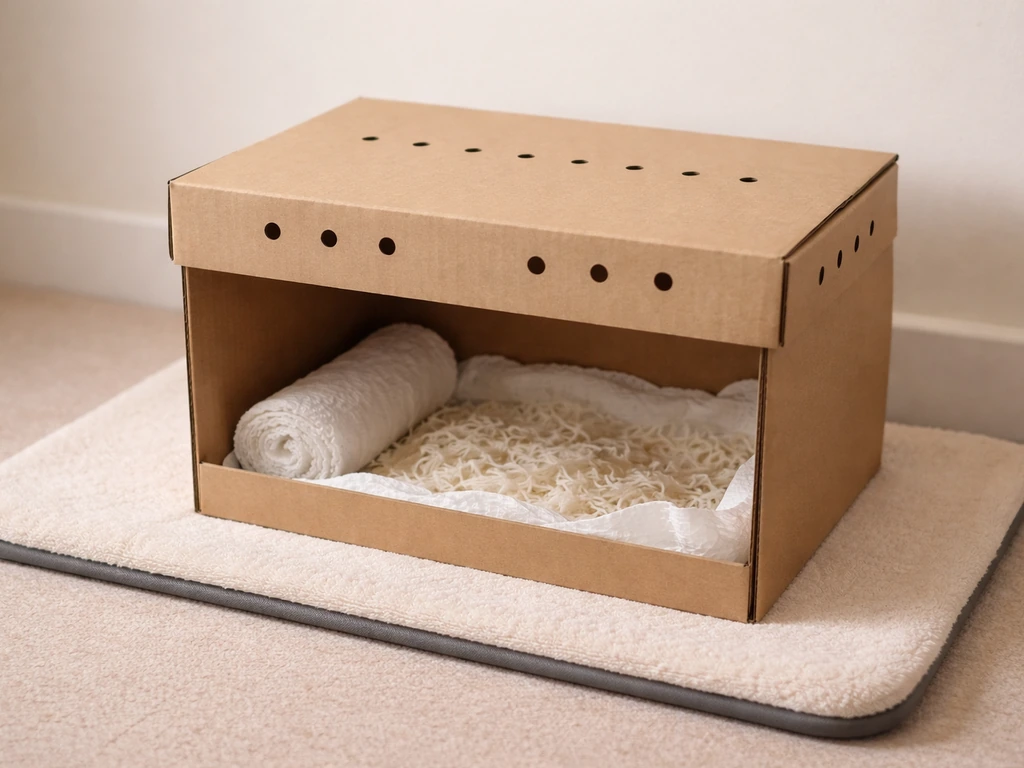
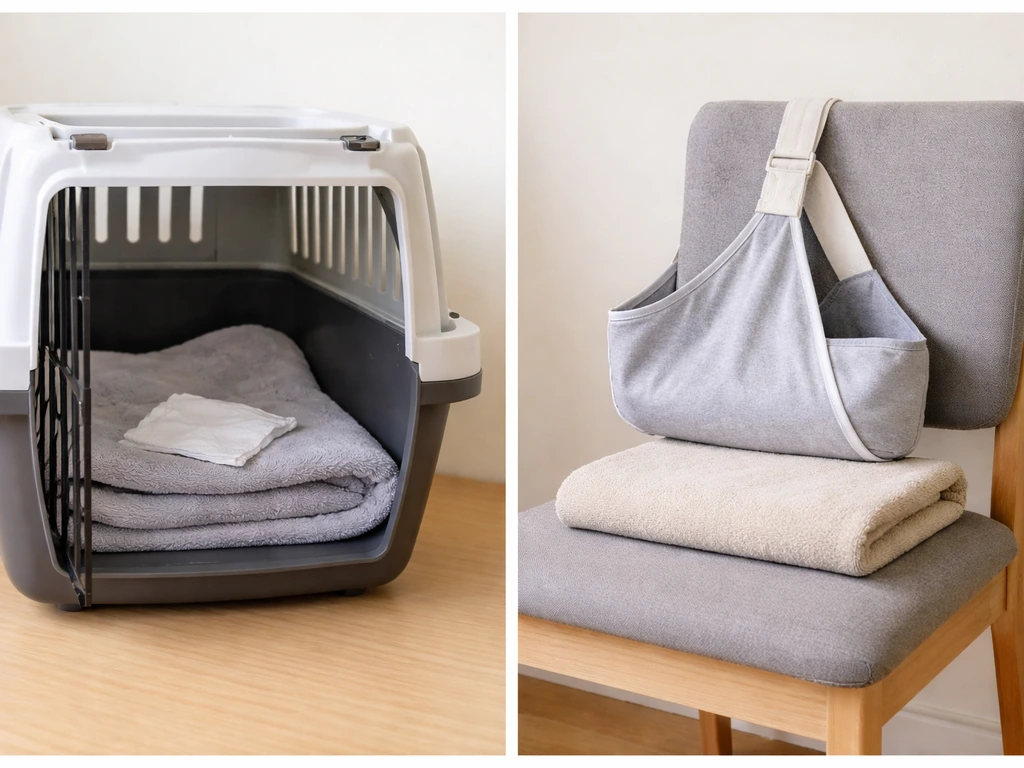
The box you put the bird in matters more than most people realize. It needs to be sturdy enough that it won't collapse, ventilated with small holes (not large gaps that let in too much light or cold air), and sized so the bird can sit or lie without flopping around. A shoebox lined with a folded cloth or paper towels is ideal for small to medium birds. For larger birds like ducks, pigeons, or crows, use a larger cardboard box or a pet carrier.
For transport, keep the box on a heated surface: a heating pad set to low under half the box, a hot water bottle wrapped in a towel in one corner, or a container of warm water underneath. Merck's guidance is to target 75°F to 85°F inside the carrier, with the heat source insulated so the bird can move away from it. Keep the box out of direct sun and away from air-conditioning vents in the car. Turn the radio off. The quieter the environment, the less stress the bird experiences, and stress is genuinely life-threatening for injured birds.
If you can't get to a rehabber or vet tonight, keep the bird in a warm, dark, quiet room overnight. A spare bathroom works well because you can control the temperature. Do not leave it in a garage, shed, or outdoor space. Check on it periodically by opening the box briefly, but minimize handling. The next morning, make getting it to professional care the first priority.
Red flags that mean get help today, not tomorrow
Some situations are urgent enough that you shouldn't wait at all. If you see any of the following, treat it as an emergency and call a wildlife rehabber or avian vet right now:
- Bone visible through the skin (open or compound fracture)
- Bleeding that won't stop after a few minutes of gentle pressure
- The bird is limp, unresponsive, or barely conscious
- Labored, open-mouth breathing or a tail bobbing with every breath
- Signs of a cat or dog attack, even if you can't see a wound (puncture wounds from animal bites go deep and cause serious infection within hours)
- The bird is spinning, falling over, or showing signs of a head injury
- Injury in a very young bird (fledgling or chick) with no feathers or only partial feathers
- The bird has been injured by a vehicle and you suspect multiple injuries
A note on cat attacks specifically: even if the wound looks minor, bacteria from cat saliva (particularly Pasteurella) can be fatal to birds within 24 to 48 hours without antibiotic treatment. Cornell Feline Health Center notes that Pasteurella-infected cat bite wounds can develop pain, swelling, and redness within about 24 to 48 hours and that antibiotic treatment is used for Pasteurella-associated complications. This is one case where getting professional help the same day is not optional.
Finding an avian vet or wildlife rescue near you
Your fastest options for getting help depend on where you are and what time it is. Here's how to find help quickly:
- Search 'wildlife rehabilitator near me' or 'bird rescue near me' online. Many areas have licensed wildlife rehab centers that take injured wild birds for free.
- In the US, the USFWS (US Fish and Wildlife Service) website has a starting point for reporting and finding resources for sick or injured birds.
- Call your local animal shelter or humane society. Even if they can't treat birds themselves, they usually keep a list of local rehabbers.
- Search the National Wildlife Rehabilitators Association (NWRA) or Wildlife Rehabilitators directory online.
- If it's a pet bird like a parrot, cockatiel, or budgie with a suspected broken wing, call an avian veterinarian specifically. Not all vets treat birds, so ask when you call.
- After hours? Many rehabbers have emergency lines or voicemails. Leave a message and keep the bird warm and contained until you hear back.
When you call or arrive, tell them: what species the bird appears to be (or your best guess), where you found it, what the injury looks like, how long ago you found it, and whether you've applied any bandage or given it anything. This information helps them prepare. Bring the bird in the same dark, ventilated box rather than transferring it to something unfamiliar right before the appointment.
You're doing the right thing by looking this up. Most people who find injured birds feel overwhelmed and unsure, and the fact that you're trying to do this carefully rather than improvising matters. A warm, dark box and a quick call to a rehabber is genuinely the best thing you can do for this bird right now. If you find a sick, injured, or orphaned migratory bird, the U.S. Fish and Wildlife Service’s Good Samaritan provision allows you to take possession so you can immediately transport it to a permitted rehabilitator Good Samaritan provision allows people to take possession of a migratory bird.
FAQ
How do I know if I should attempt a loose bird broken wing bandage or skip it entirely?
Choose skip-first if the wing position seems stable enough that it is not dragging or flapping open on the ground during transport. If the wing keeps falling away from the body and the bird is showing clear added distress or risk of further tearing, a gentle body wrap can be used temporarily, but it should be removed as soon as a rehabilitator or vet assesses it.
What signs mean the wrap is too tight and I need to remove the bird broken wing bandage immediately?
If the bird becomes more labored to breathe, you notice swelling around the wrap, the wing area looks darker or colder than the other side, or the bird panics right after tightening, remove the wrap and focus on warmth, darkness, and quiet. When in doubt, error on the side of looseness because restricted breathing is the most dangerous failure mode.
Can I use regular medical tape or duct tape for a bird broken wing bandage?
Do not place adhesive tape directly on feathers or skin. It can injure the skin on removal and can pull feathers out, causing additional trauma. Prefer a clean strip of soft stretchy fabric or self-adhering cohesive wrap that does not require taping onto the bird.
Should I wrap a bird’s wing if the bird also has a visible cut, bleeding, or a broken nail?
If there is bleeding or a broken nail, do not attempt bandaging to stabilize the wing as a substitute for professional care. Keep the bird warm, dark, and calm, and contact a rehabilitator promptly so wounds can be assessed and treated safely.
Is it ever okay to give pain medication or antibiotics at home for a bird broken wing bandage situation?
No. Do not give medications or antibiotics unless a licensed avian vet instructs you. Home dosing is risky because birds can respond differently and aspiration or dosing errors can worsen outcomes.
What temperature is safest if I’m using a heating pad or warm water for a bird with a broken wing bandage?
Aim for about 75°F to 85°F inside the carrier, and ensure the heat source is insulated so the bird can move away if it is uncomfortable. Avoid direct sun or vents, and never overheat the box just to get it warm faster.
What box setup prevents the bird from getting stuck or flopping during transport?
Use a sturdy, ventilated box sized so the bird can sit or lie without repeatedly rolling. Line it with folded cloth or paper towels (shoebox for small to medium birds, larger box or pet carrier for bigger species). A poorly sized box increases flopping, which can reopen injury.
Can I feed or give water to a bird after applying a bird broken wing bandage if it seems alert?
No. Even if it looks awake, do not offer food or water. Injured birds are prone to aspiration, and feeding can create breathing complications before the bird can be treated properly.
My bird was attacked by a cat. Does a bird broken wing bandage make it safer to wait?
Cat bites or scratches should be treated as urgent. Pasteurella bacteria can become fatal within 24 to 48 hours without antibiotics, so do not rely on a wrap. Call a wildlife rehabilitator or avian vet the same day, even if the wound looks minor.
Should I rotate the wrap or reposition the wing to make it line up better?
No. Do not try to “set” the wing or adjust it repeatedly. Place the wrap gently to hold the wing against the body, then minimize handling. Repeated movement increases stress and can worsen a fracture or dislocation.
Can I bandage if I only have a hard object for support, like a popsicle stick or splint?
Do not perform splinting on your own. A temporary body wrap is different from immobilizing bones, and splinting should only be done by trained rehabilitators or vets.
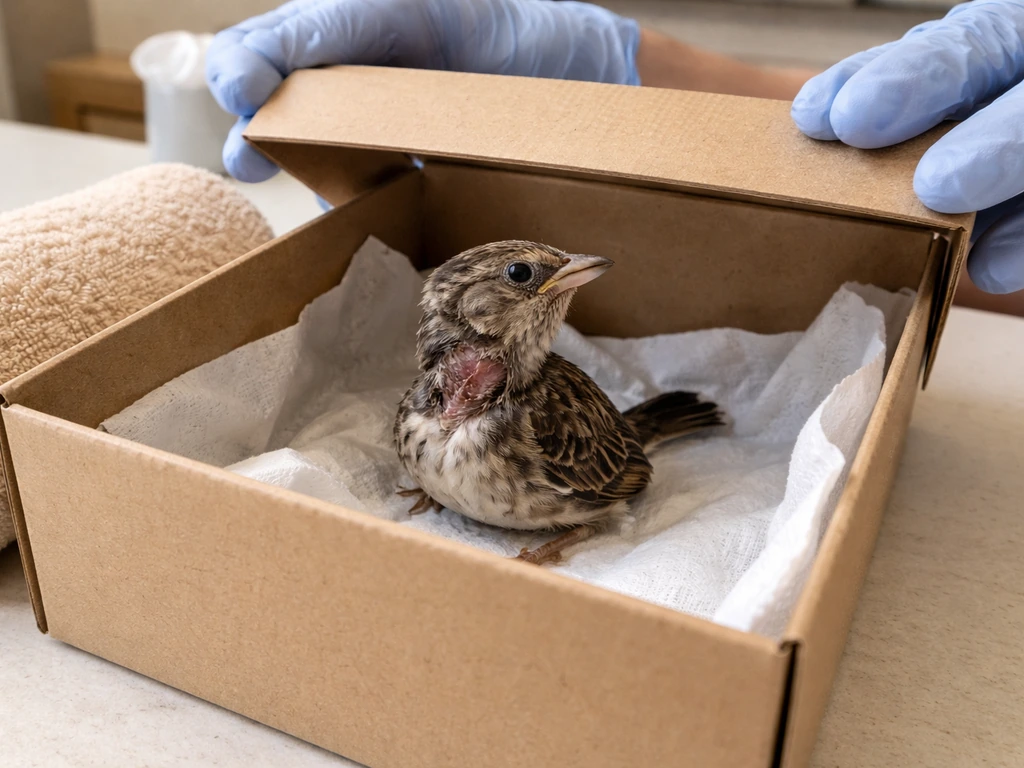
Step-by-step help for a bird with suspected broken neck still alive: safety, check breathing, immobilize, warm, escalate
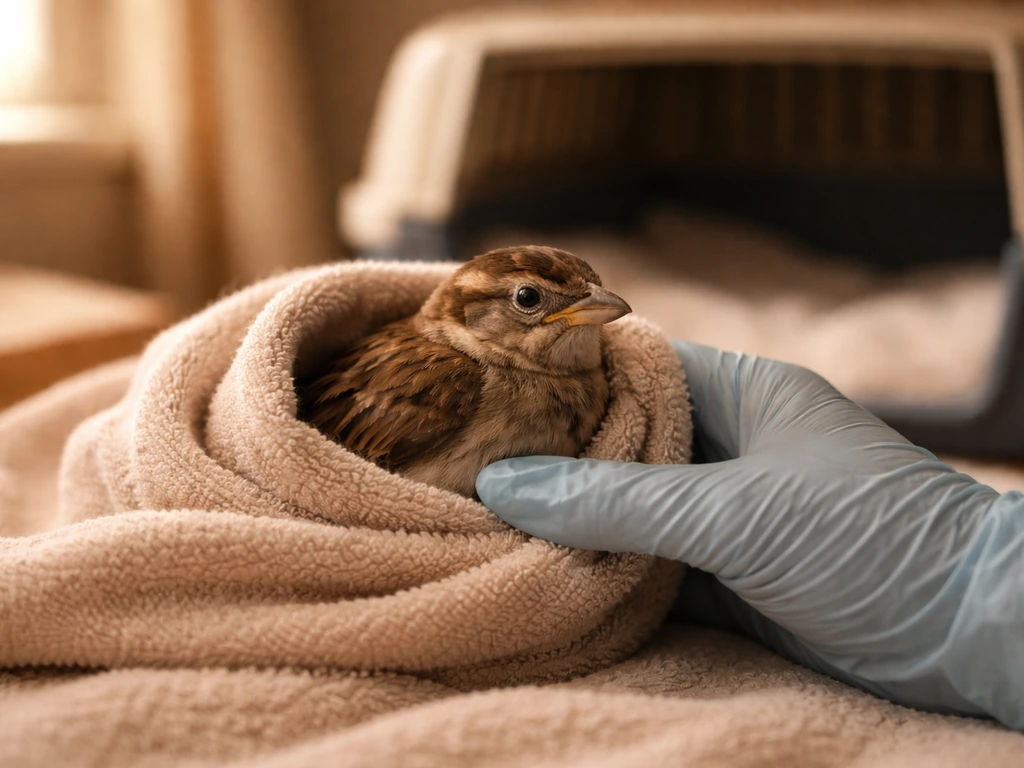
Step-by-step first aid for a bird with a broken wing: safety, warmth, bleeding control, splinting, and emergency care gu
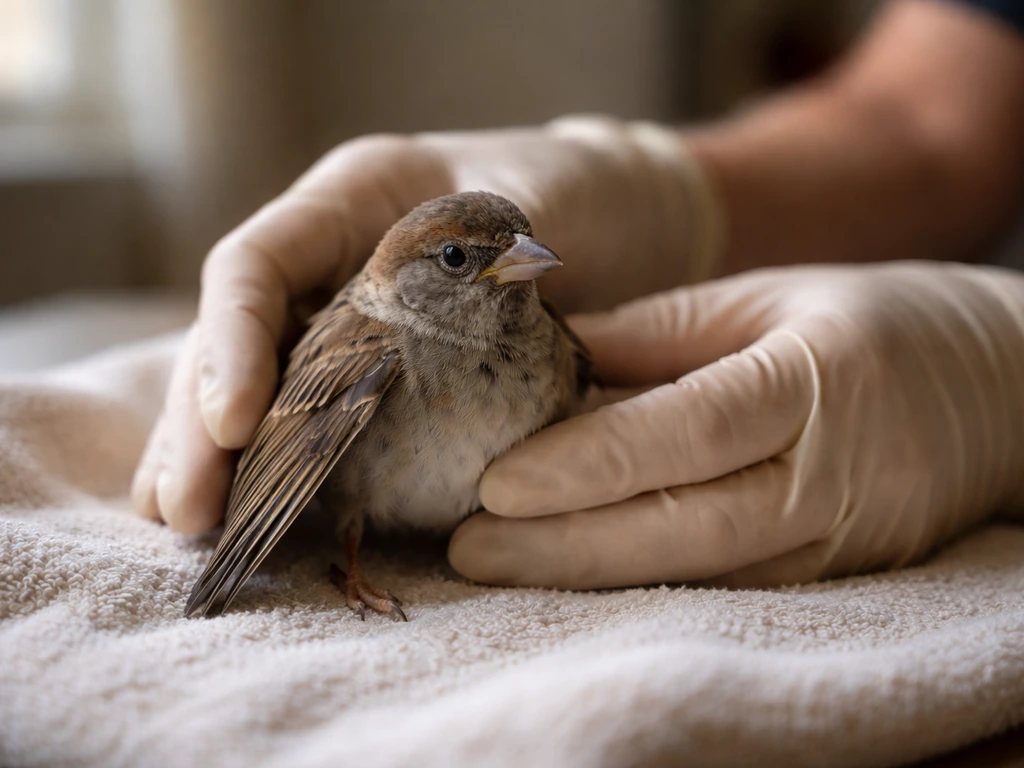
Can a bird live with one wing? Injury outcomes and step-by-step first aid, plus when to get urgent help.