If you've found a wild bird that appears to have a broken neck but is still alive, the most important thing you can do right now is this: do not move the bird more than necessary, do not try to straighten its neck, and do not give it food or water. Gently contain it in a warm, dark, quiet box and call a licensed wildlife rehabilitator or avian vet immediately. Every minute counts with a spinal or neck injury, and the difference between survival and death often comes down to how little additional trauma happens in the first 30 minutes.
Bird With Broken Neck Still Alive: What to Do Now
Marcus Chen
30 Apr 2026
First: Keep yourself safe and assess the situation
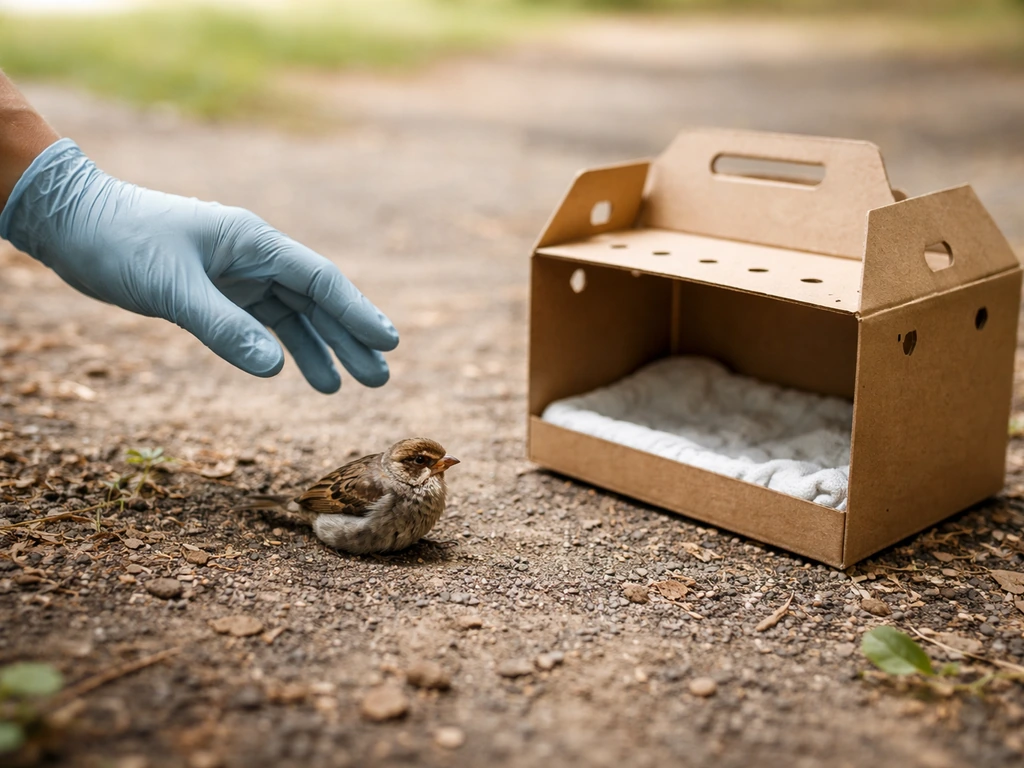
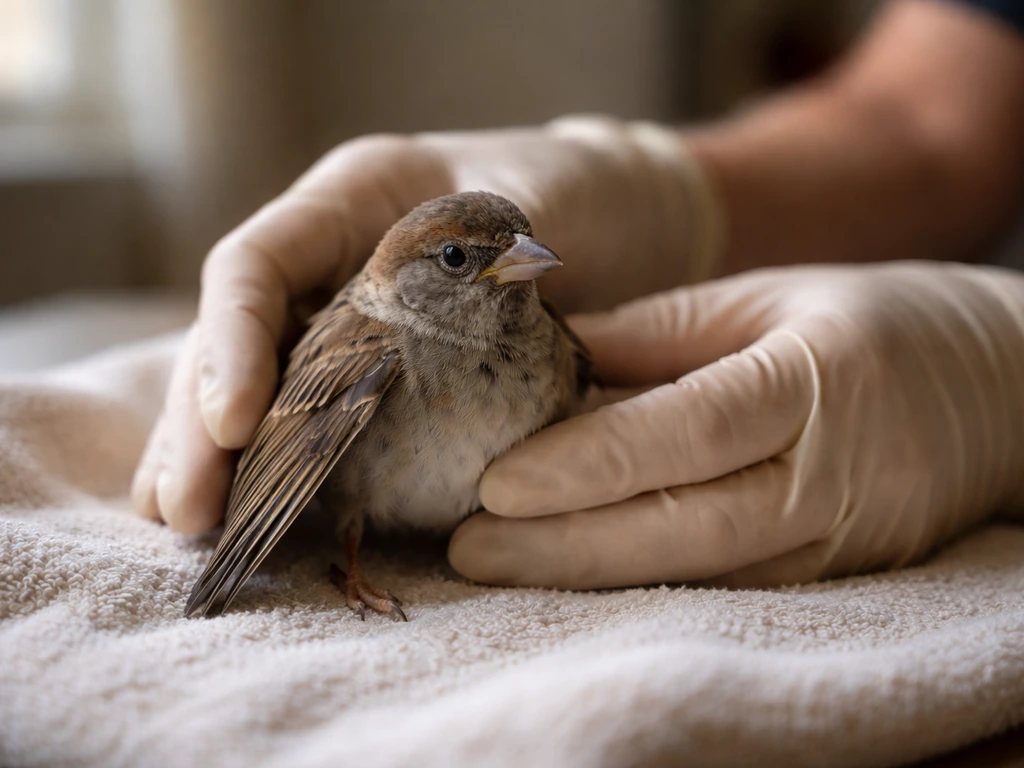
Before you touch the bird, protect yourself. Wild birds can carry disease and will instinctively scratch or peck even when severely injured. If you have gloves, put them on. Even a thin pair of gardening gloves is better than bare hands. If the bird is large (a hawk, crow, or goose, for example), consider eye protection too. The Wildlife Center of Virginia is clear on this: never handle wild animals bare-handed, no matter how injured they appear.
Once you're protected, take a moment before reaching in. Look at the bird from a short distance. Is it moving at all? Is the chest rising and falling? Is it responsive to your presence, even slightly? This quick visual check tells you a lot before you ever make contact, and it's safer for both of you.
How to tell if it's actually a neck injury (and not something that just looks like one)
A neck or spinal injury is easy to confuse with other serious conditions. A bird that's had a window collision, a cat attack, or a fall can look like it has a broken neck when it might actually be concussed, in shock, or dealing with internal injuries. Here's how to read the signs more accurately.
Signs that point specifically to a neck or spinal injury include a head that hangs at an abnormal angle and can't be held upright, a neck twisted or torqued to one side without the bird correcting it, and an inability to maintain balance even when otherwise responsive. The RSPCA flags these specifically: a bird that can't hold its head up straight or keep its balance is showing a neurological red flag that needs immediate professional assessment.
Signs that might look similar but suggest other causes: fast, labored, or panting breathing that goes on for more than a few minutes (more consistent with shock, internal bleeding, or a respiratory injury), a bird that is holding its head normally but just can't fly (more likely a wing or leg issue), or a bird that is completely still but blinking and alert (often stunned from a collision, not necessarily spinal). If you suspect internal bleeding along with other signs of trauma, keep the bird still and get it to an avian vet or wildlife rehabilitator right away. The distinction matters because the handling approach differs slightly, and it helps you give the rescue center accurate information when you call.
Do this right now: first aid for a suspected broken neck
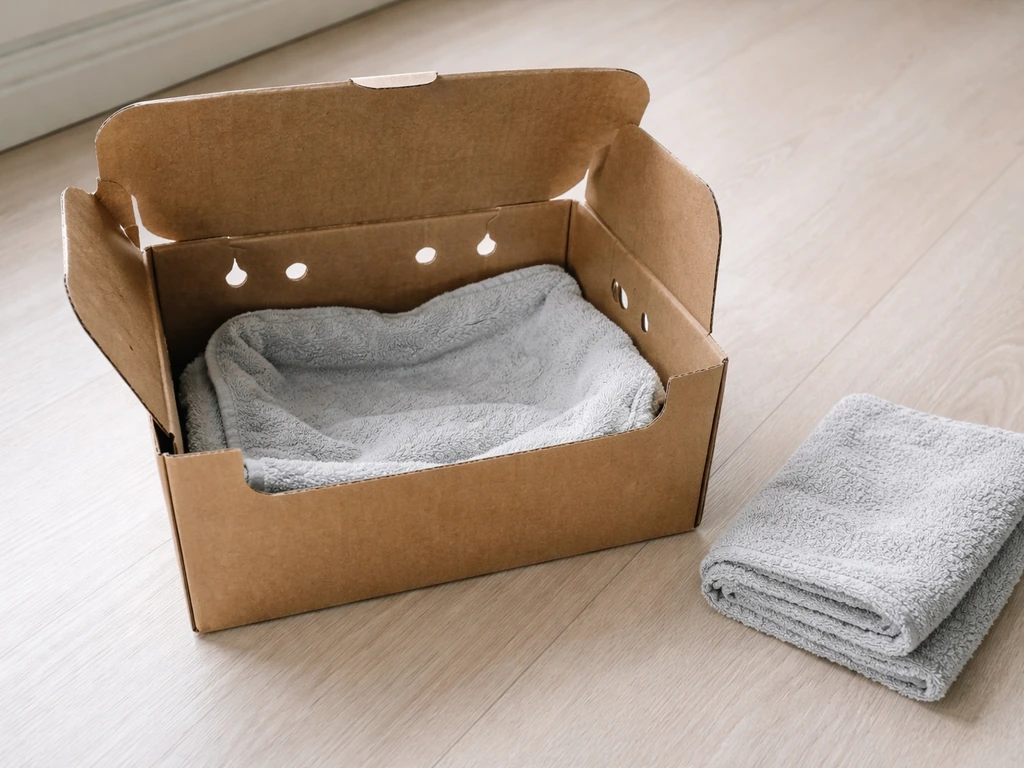
You are not going to fix a broken neck at home. What you can do is prevent additional damage while you get the bird to someone who can. Here's the exact sequence to follow.
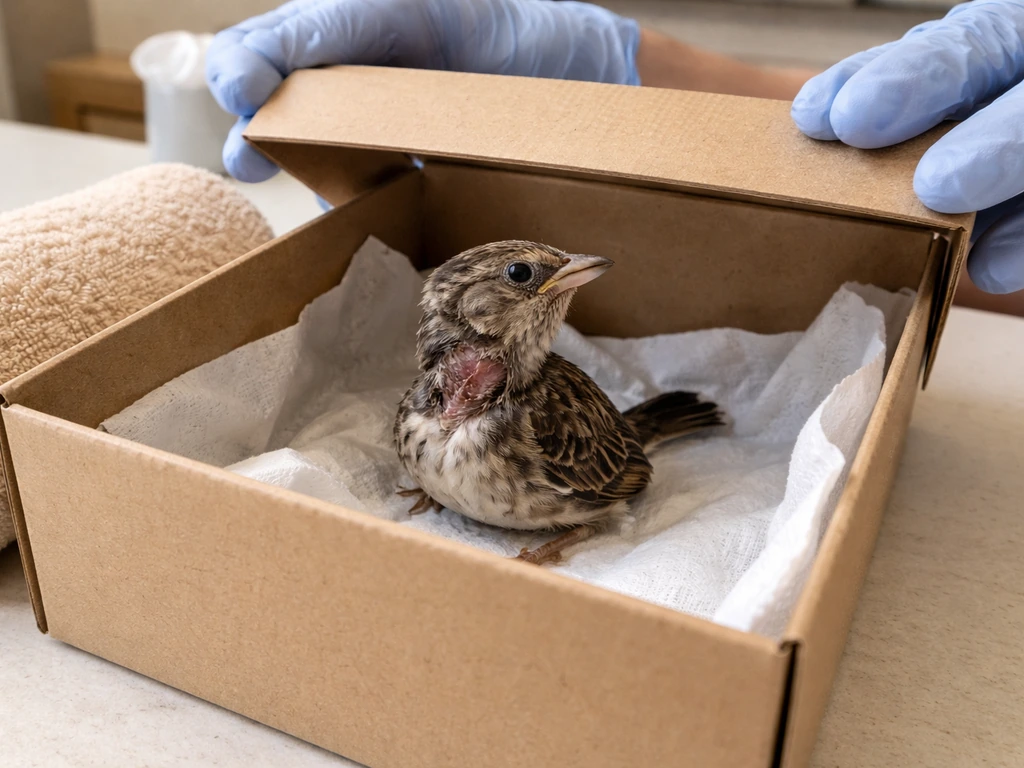
- Find a cardboard box or pet carrier with a lid. It doesn't need to be large. A shoebox works for small birds. Add ventilation holes if there aren't any.
- Line the bottom with a non-looping towel or a folded sheet. Avoid terrycloth loops that can catch toes. The goal is a non-slip surface so the bird isn't sliding around during transport.
- Approach the bird slowly and calmly from the side. Use both gloved hands to gently scoop it up with as little twisting or lifting of the head as possible. Support the body from underneath. Do not grab the neck.
- Place the bird gently into the box in whatever position it is in. If it's lying on its side, that's okay. Do not try to prop it upright or reposition its head.
- Close the box and place it somewhere warm, dark, and quiet. Away from kids, pets, noise, and drafts. Room temperature (around 75 to 80°F) is ideal. If it's cold outside and the bird is small, you can place a warm (not hot) water bottle wrapped in a towel near (not under) the bird.
- Call for professional help immediately. Do not wait to see if the bird 'improves on its own.'
The darkness and quiet genuinely help. A stressed, injured bird in a brightly lit room with ambient noise is burning through energy it doesn't have. Multiple organizations, including Cornell Wildlife Hospital and the Humane Veterinary Medical Association, specifically recommend this quiet-dark-warm environment as standard pre-rehabilitation supportive care.
What not to do (these mistakes can kill the bird faster)
This section matters just as much as the steps above. Well-meaning people cause real harm by doing things that seem helpful but aren't.
- Do not try to straighten or reposition the bird's neck. Even if it looks obviously wrong, moving a potentially fractured vertebra can sever the spinal cord. Leave it exactly as it is.
- Do not give food or water. An injured bird with a suspected neck injury may not be able to swallow safely. Forcing water can cause aspiration. The Wildlife Center of Virginia and Cornell Wildlife Hospital are both explicit: no food or water unless a professional specifically tells you otherwise.
- Do not wrap the bird tightly or try to immobilize the neck with tape, bandages, or rigid materials. Improvised splinting around the neck area is dangerous and can cut off circulation or airflow.
- Do not keep checking on the bird every few minutes. Every time you open the box, you're adding stress. Put it somewhere quiet and leave it alone until transport.
- Do not chase or repeatedly re-handle the bird if it moves around the box. Let it settle.
- Do not attempt to treat this at home long-term. In most places it is actually illegal to keep wild birds without a permit. More importantly, neck and spinal injuries require diagnostic imaging (X-ray) and professional neurological assessment. Home care is a bridge to professional help, nothing more.
Get help now: how to reach wildlife rescue or an avian vet
As soon as the bird is contained and in a quiet place, make the call. Don't wait until you're 'sure' something is wrong. Virginia DWR and the RSPCA both use visible broken bones, head tilt, inability to hold the head up, and abnormal positioning as clear indicators that professional assessment is needed immediately.
To find help quickly, try these options in this order: search 'wildlife rehabilitator near me' or use the Wildlife Center of Virginia's referral line (if you're in the eastern US), call your state's Department of Wildlife Resources or equivalent agency, or contact a local avian vet and ask if they accept wildlife or can refer you. The US Fish and Wildlife Service also provides guidance and referral resources at the federal level.
When you call, tell them: your location (city, county, or nearest landmark), the species if you know it, where and how you found the bird (window collision, cat attack, found on ground, etc.), and exactly what you're seeing: head position, breathing, responsiveness, whether it's moving. The more specific you are, the better they can triage it over the phone and prepare for your arrival.
If you cannot reach anyone immediately, Think Wild and other rehabilitation organizations suggest sending a photo via text or email to a wildlife center's intake line while you continue calling. Some centers can triage from a photo before you even arrive.
What to realistically expect: prognosis for a bird with a neck injury
This is the part nobody wants to hear, but it's important to go in with clear eyes. Neck and spinal injuries in birds are among the most serious injuries a bird can sustain. The prognosis depends heavily on the severity of the injury, whether the spinal cord itself is damaged, the species of bird, and how quickly it receives professional care. Getting proper bird broken neck treatment quickly after the injury can strongly affect the outcome bird neck injury prognosis.
A bird with a fractured vertebra but an intact spinal cord has a better chance than one with cord damage. Signs of cord involvement include complete flaccidity (the neck has zero muscle tone), paralysis of the legs or wings, and a complete lack of responsiveness. These cases have a poor prognosis even with intensive veterinary care. That said, birds that appear severely impaired immediately after a collision can sometimes recover if the cause was swelling or concussion rather than a true structural break. You genuinely cannot know without imaging.
What you should not do is make a quality-of-life judgment on your own. That's what the wildlife vet or rehabilitator is for. Your job is to get the bird there in the best possible condition. Even when the outcome is euthanasia, that decision made by a professional is far better than the bird suffering alone. If the bird does have a chance, fast action on your part is what makes that chance real. If you’re also dealing with a leg injury, the cost of treatment can vary widely depending on the severity and what emergency steps are needed first bird broken leg cost.
Transport and aftercare: keeping the bird stable until help arrives
Once the bird is boxed and you've made contact with a rescue or vet, here's how to manage the time between now and handoff.
Temperature
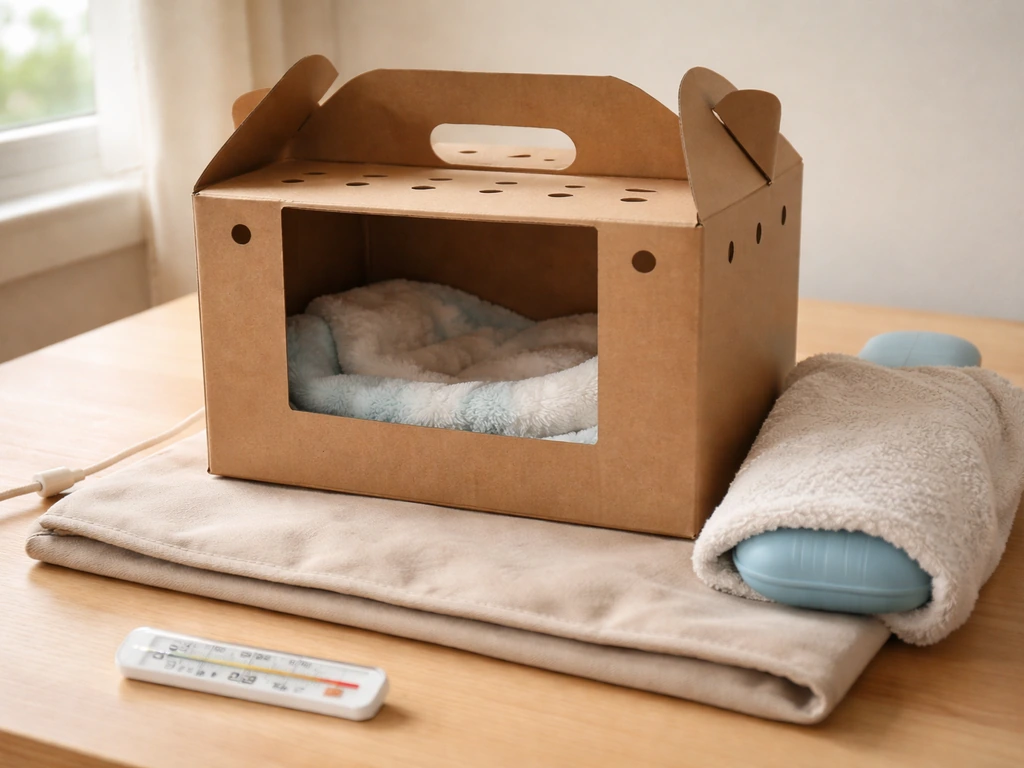
Injured birds lose body heat fast, especially small songbirds. Keep the environment warm but not hot. A box placed in a warm room (around 75 to 80°F) is usually sufficient. If you're in a cold climate or the bird is visibly shivering, place a warm water bottle (not scalding) wrapped in a cloth beside the bird, not underneath it. Overheating is also dangerous, so don't use a heating pad on high or place the box in direct sunlight.
Stress reduction
Keep the box away from household noise, pets, and children. A bird that is stressed is physiologically compromised. Multiple sources, from the VBSPCA to HumaneVMA, treat stress reduction as a clinical priority, not just a comfort measure. Excess handling can cause further injury on its own. Once the bird is boxed, don't keep opening the lid to check on it.
During transport
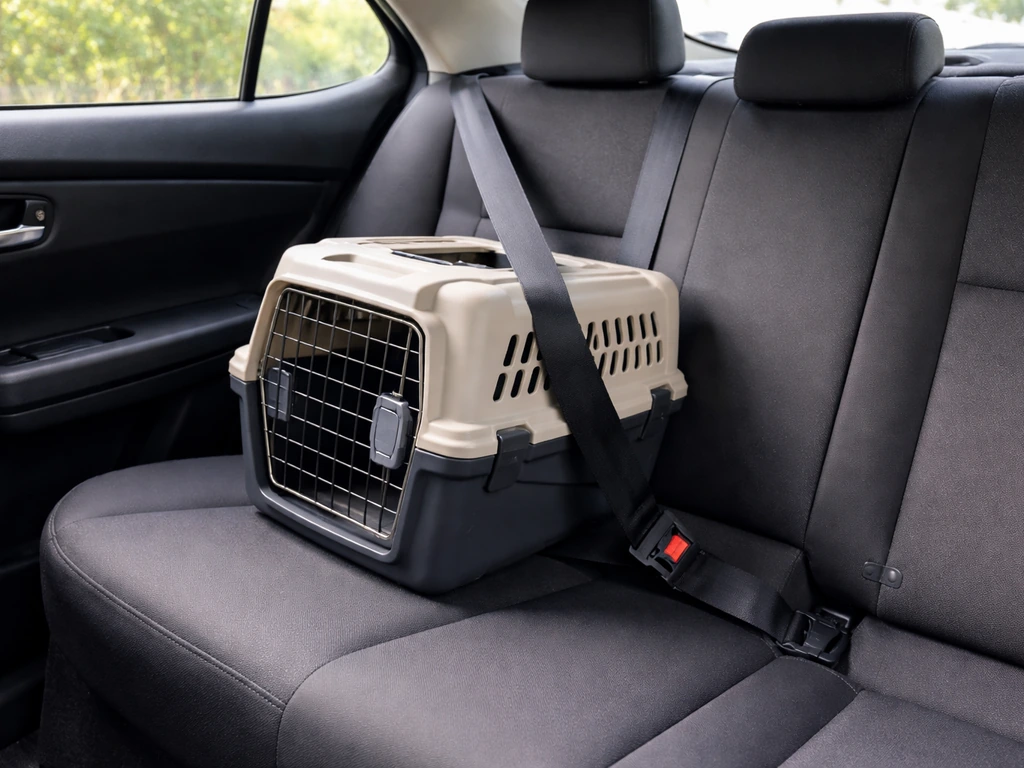
Keep the box secured so it can't slide or tip in your car. Avoid sudden braking or sharp turns. Keep the car quiet and at a comfortable temperature. If you have someone with you, have them hold the box steady. Do not open the box during transport. Cover any gaps with a light towel if light is getting in.
No food or water, even during transport
It bears repeating: do not add water dishes or food to the box. A bird in a weakened state with a neck injury can aspirate water in seconds. The rehabilitator will handle hydration and nutrition safely when the bird arrives. If you suspect a bird has a broken wing, follow the same cautious approach and get professional help as soon as possible broken wing bandage. Your only job right now is safe, calm, warm containment and rapid transport. In HumaneVMA’s wildlife care handbook for veterinary hospitals, it outlines wildlife care basics for the period before a rehabilitator arrives, supporting “before rehab or vet arrives” handling principles blank" rel="noopener noreferrer">before the rehabilitator arrives. Also, if the bird’s wing is involved, focus on stabilizing it without trying to straighten anything and get it to a wildlife rehabilitator as soon as possible.
If you find yourself in a situation where you can't transport immediately, continue checking in with the rescue center by phone. They can often walk you through exactly what to do for your specific situation, the species, and how the bird is presenting. That direct phone guidance is genuinely the most valuable resource available to you right now.
FAQ
How can I tell if the “broken neck” is actually a concussion or shock instead?
Look for whether the head is abnormal in angle or twisted to one side without correction, and whether balance is completely unreliable even when the bird seems aware. If the bird can hold its head normally but is just unable to fly, it may be a wing or leg problem. If breathing is fast, labored, or panting and doesn’t settle quickly, treat it as shock or another internal issue and still keep it contained and call immediately, because you cannot safely differentiate without an exam and imaging.
Should I cover the bird with a towel or leave it uncovered?
Covering is usually helpful once the bird is in a warm, dark, quiet box because it reduces visual stress. Use a light cloth over part of the box only if it does not block airflow, press on the bird, or prevent you from ensuring the lid stays closed. Do not wrap tightly around the bird’s neck or body.
Is it okay to move the bird from the street/yard to somewhere safer while I wait?
Yes, but only for safety, and only with minimal handling. Move the box, or use gentle, brief containment repositioning that does not involve trying to straighten the neck. If the bird is in immediate danger (traffic, pets, predators), place it into the box as quickly and calmly as possible, then call.
What if the bird is wet or covered in debris from rain or puddles?
Do not bathe or rinse it, and do not attempt to clean the neck area. If you can safely place it into the box without soaking it, do so. If it is heavily soiled, tell the rehabilitator when you call, because cleaning and dehydration risk need professional guidance.
Can I use my own pet carrier or a cardboard box, and does it need holes?
A simple box is fine as long as it is secure, warm, and dark. Provide ventilation with small holes or enough airflow so the bird can breathe comfortably, and ensure it cannot slide or tip. Avoid anything with gaps large enough for claws to get stuck. If you use a carrier, keep the door closed and prevent the bird from being jarred.
How warm should the box be if the bird is still alive, and what signs mean I’m overheating it?
Aim for a comfortably warm room temperature (roughly 75 to 80°F), add a wrapped warm water bottle beside the bird if needed, and never use scalding heat. Overheating can happen if the bird is in direct sunlight, near a hot vent, or too close to a hot bottle. If the bird feels hot to the touch or is visibly distressed, remove direct heat and keep the box warm but not hot.
Should I check on it every few minutes while waiting for the rehabilitator?
Minimize checks. Once it is boxed, do not repeatedly open the lid to “see if it’s better.” Instead, do your observation through the box (airflow, breathing rate, posture changes if visible) and keep calling for guidance. Frequent opening increases stress and can cause additional injury.
What if the bird is bleeding? Does that change what I should do first?
Still do not give food or water, and do not attempt to apply bandages or reposition the neck at home. Apply containment, keep it quiet, and contact a wildlife rehabilitator or avian vet right away. If you can safely observe where bleeding is coming from, mention it on the call, since certain injuries require different triage priorities.
Can I give water using a dropper or misting if it seems alert?
No. Avoid any water or food. A bird with a neck injury can aspirate in seconds, and hydration should be handled by the rehabilitator or vet with the correct methods based on breathing and neurological status.
Is it safe to offer pain relief from my medicine cabinet?
Do not give any human medication. Wrong dosing, drug choice, and swallowing risks can worsen outcomes. Only follow instructions from the wildlife professional, and in the meantime focus on warm, quiet, stable containment and rapid transport.
What should I do if the bird attacks or tries to peck when I’m trying to box it?
Back off and improve your protection and handling technique rather than forcing contact. Use gloves, and if the bird is large, add eye protection. The goal is brief, controlled containment, not prolonged handling. If you are alone and cannot safely secure the bird quickly, keep the bird confined where it is and call for real-time instructions.
If it is not possible to transport immediately, how do I keep it safe during that delay?
Keep the bird in the warm, dark, quiet box and keep the environment steady. Avoid cars with fumes or high temperature swings, reduce bumps, and do not open the box to check often. Continue calling for triage guidance, and if the waiting time grows, ask the center whether they want a photo update or whether they can provide a timed intake window.
Next Articles
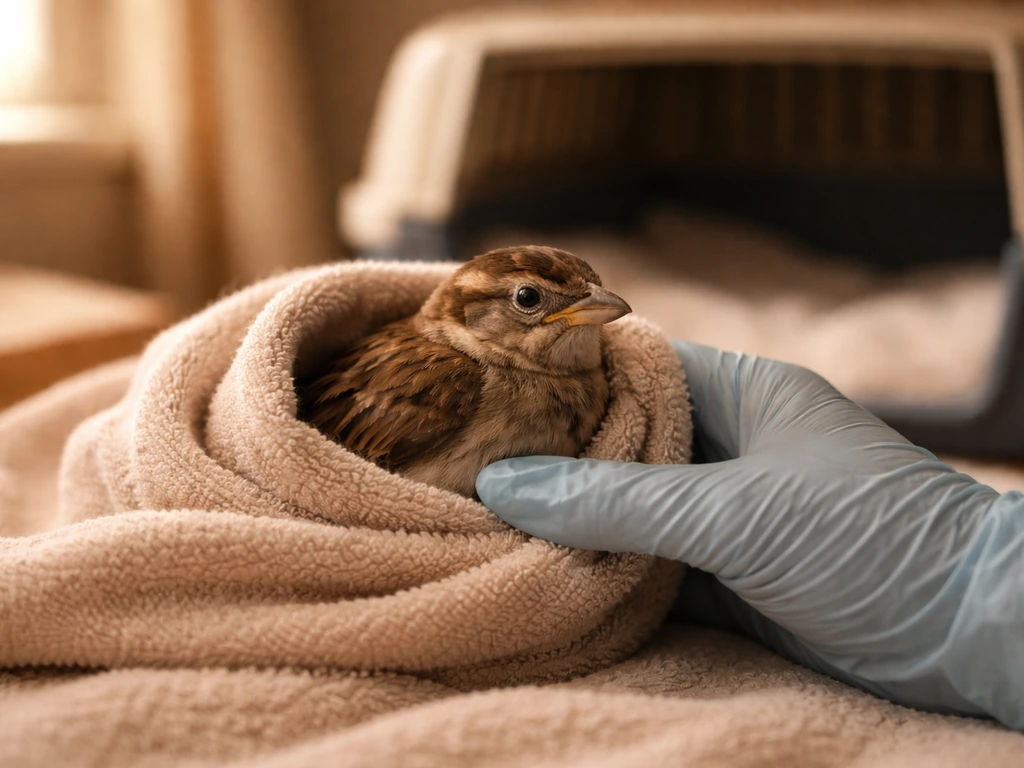
What to Do When a Bird Breaks Its Wing: First Aid Steps
Step-by-step first aid for a bird with a broken wing: safety, warmth, bleeding control, splinting, and emergency care gu
Can a Bird Live With One Wing? Survival and First Aid
Can a bird live with one wing? Injury outcomes and step-by-step first aid, plus when to get urgent help.
Can a Bird Survive With One Eye? What to Do Now
Learn if birds can cope with one eye and what to do now for an injured bird’s eye safely and urgently.