
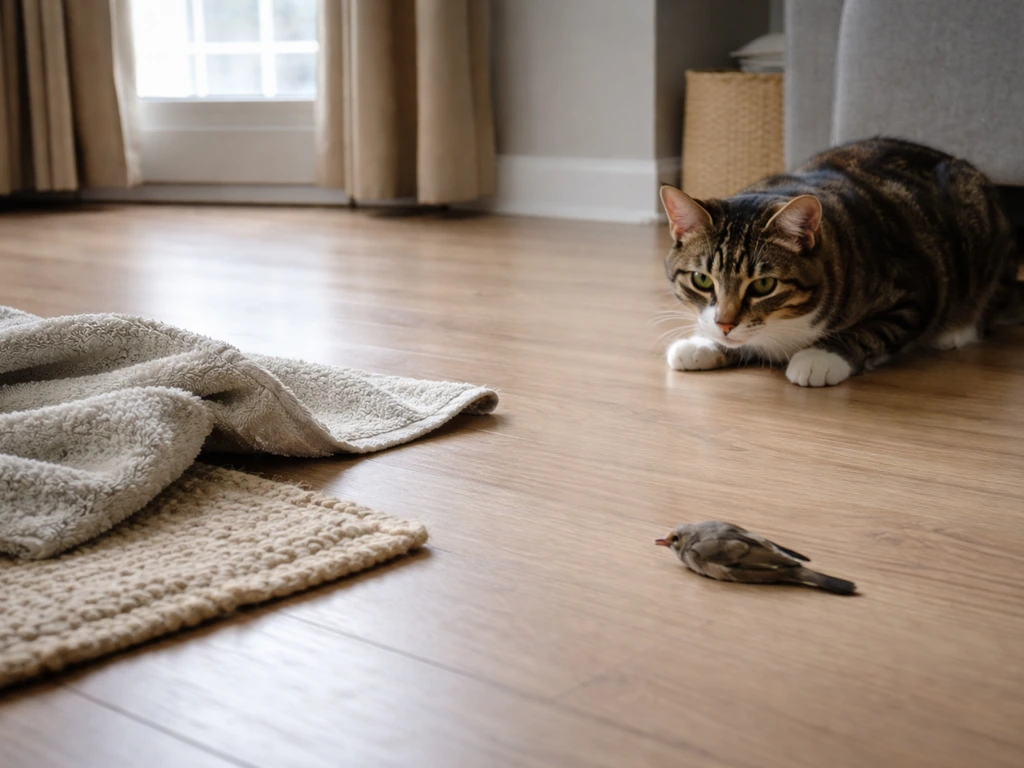
If your cat just killed a bird, here is what to do right now: secure your cat in another room, don't touch the bird with bare hands, and check whether the bird is actually dead before you do anything else. Cats kill an estimated 1.3 to 4 billion birds in the US every year, so this is a situation a lot of people face, and the steps are manageable once you know them. This guide walks you through everything from the first 60 seconds to longer-term prevention.
My Cat Killed a Bird What Should I Do Right Now
Marcus Chen
14 Apr 2026
Step 1: Immediate safety for you and your other pets
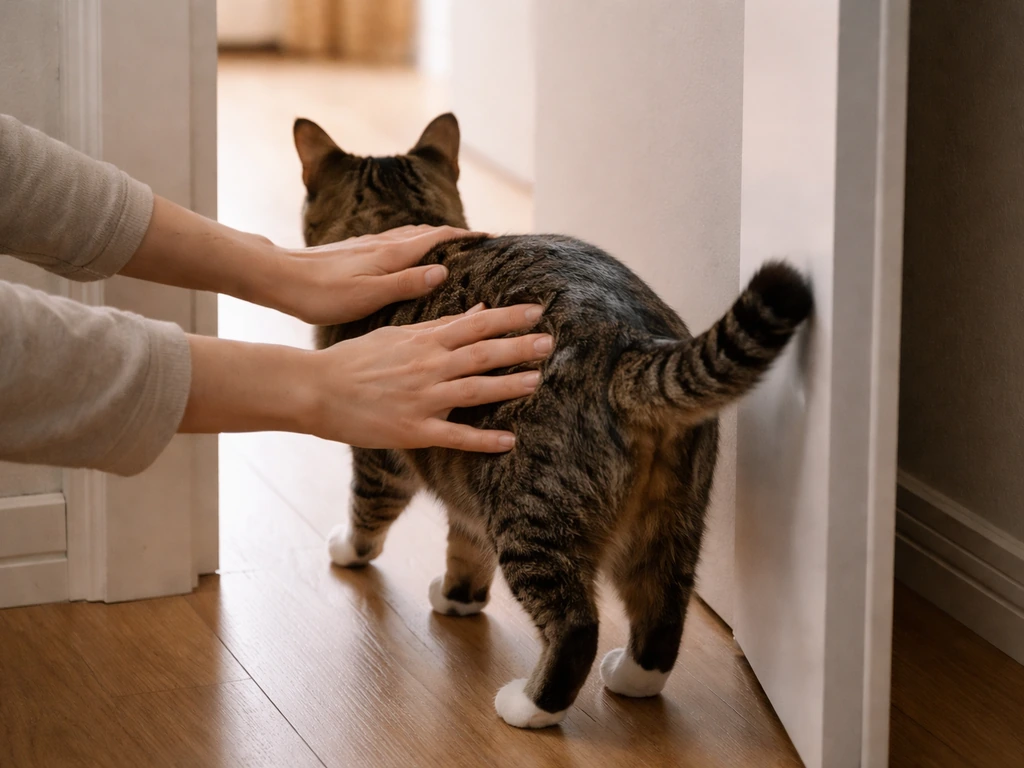
Before you touch anything, get your cat (and any dogs) out of the area. Put them in another room and close the door. This protects the bird from further harm, keeps your pets away from blood and potential bacteria, and gives you space to think clearly. Even if the bird looks completely dead, your cat will absolutely go back for it if given the chance.
Grab a pair of gloves if you have them, latex or rubber work fine, or use a thick cloth or paper towels as a barrier. Bird blood and saliva can carry bacteria, and you don't want to handle a cat-attacked bird with bare skin. If you have an open cut on your hand, that matters even more. While you're getting set up, avoid leaning over the bird, talking loudly, or letting other people crowd around. Noise and movement add stress to a bird that may still be alive.
Is the bird actually dead? Check before you assume
This is the most important question, and the answer isn't always obvious. A bird in shock can lie completely still, eyes closed, barely breathing. Before you conclude the bird is gone, look for these signs of life: watch the chest for any movement, hold a small feather or piece of fluff near the nostrils and watch for the faintest airflow, and gently observe whether the bird reacts at all to nearby movement. It is safer to assume the bird is alive and act accordingly than to discard a bird that still has a chance.
Signs that a bird urgently needs help include quick, shallow breathing, open-mouth breathing, drooping wings, limbs at strange angles, inability to stand, or just lying flat and not responding normally. Any of these means the bird is in distress and you should move to the next steps immediately.
Assess the bird's condition right away
Cat attacks cause a specific pattern of injuries. The most common ones you'll see are puncture wounds (small holes from the teeth that can look minor but go deep), broken or drooping wings, leg injuries, bleeding from the skin or feathers, and shock. The tricky thing with cat bites is that the external wound can look tiny while the internal damage is significant. A small puncture can hide a broken bone, internal bleeding, or a deep tissue infection waiting to develop.
Look the bird over without excessive handling. Check for visible bleeding, any wing or leg that hangs at a wrong angle, feathers matted with blood, and whether the bird can hold itself upright. Note what you see so you can describe it to a wildlife rehabilitator or vet. You don't need to diagnose anything, just observe and report.
First aid for common cat attack injuries
Even if a bird that was caught by your cat looks relatively okay, it almost certainly needs professional care. That said, there are supportive steps you can take right now that genuinely improve the bird's chances while you arrange transport.
Warmth and quiet are your two most powerful tools
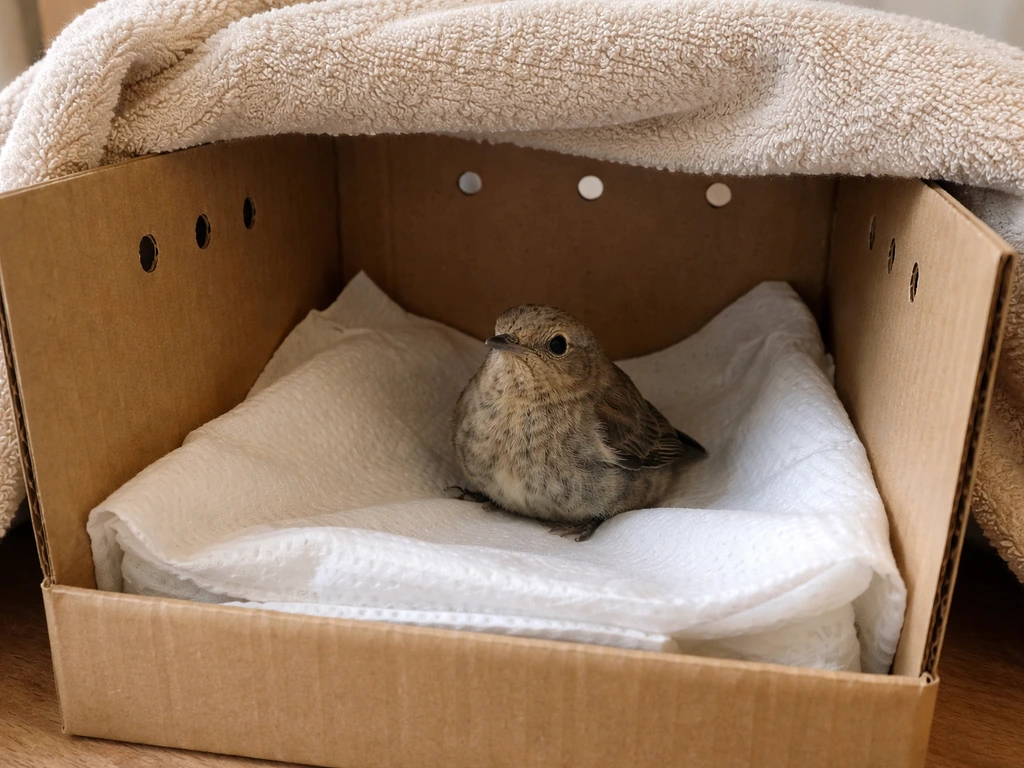
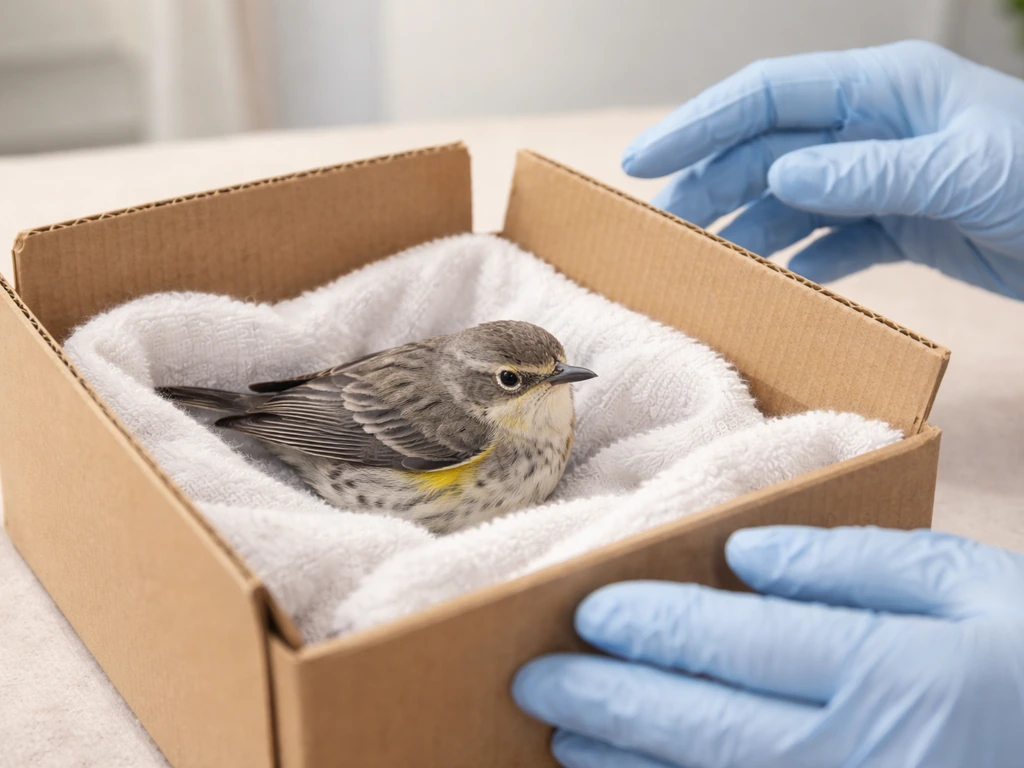
Place the bird in a cardboard box lined with a soft cloth or paper towels. Make the box dark by covering it with a towel or putting the lid on, leaving small air holes for ventilation. Dark, quiet environments reduce stress dramatically, and stress alone can kill an injured bird. Keep the box away from your cat, other animals, children, and loud noise. If you can keep the environment around 85°F, that helps the bird conserve energy it needs for recovery.
Do not place the bird on its back. Birds have more difficulty breathing in that position. Let it sit upright, and don't prop it up artificially if it keeps falling over. Just keep the box small enough that the bird can lean against the side.
Bleeding control
If there is visible bleeding, apply gentle pressure using a clean cloth or gauze. Hold it softly but firmly for a few minutes. Do not pull the cloth away suddenly, peel it away slowly so you don't reopen the wound. If the bleeding is heavy or doesn't slow down within a few minutes, that is an emergency and you need professional help immediately.
What not to do
- Do not try to give the bird food or water. A bird in shock can aspirate liquid and choke, and forcing food causes more harm than good.
- Do not try to splint a broken wing yourself unless you've been instructed to by a rehabilitator.
- Do not clean or flush puncture wounds with hydrogen peroxide or alcohol. This damages tissue.
- Do not keep handling the bird to check on it. Every handling session adds stress.
- Do not put the bird outside on the ground to 'let it recover.' It cannot defend itself and your cat is still nearby.
When to call a vet or wildlife rescue urgently
The honest answer is: if your cat attacked a bird, call a wildlife rehabilitator or avian vet regardless of how the bird looks. Even a bird that appears to have only minor injuries can have a deep puncture wound that will cause a fatal infection within 24 to 48 hours without antibiotics. Cat saliva is particularly dangerous to birds because of the bacteria it contains, and birds have no natural immunity to it.
Call immediately if you see any of the following:
- Labored, rapid, or open-mouth breathing
- Bleeding that won't slow with gentle pressure
- Visible puncture wounds anywhere on the body
- A wing or leg dangling at an unnatural angle
- The bird is unable to stand or keep its head upright
- The bird remains completely unresponsive
To find help, search for 'wildlife rehabilitator near me' or call your local Audubon Society chapter, humane society, or animal control office. The NWRA (National Wildlife Rehabilitators Association) and the Wildlife Rehabilitator Directory at wildliferehabber.org let you search by state. Some avian vets also see wild birds in emergencies, so call ahead and ask. When you call, describe the bird species if you can, what the injuries look like, and how long ago the attack happened. The more specific you are, the better guidance you'll get.
How to handle and transport the bird safely
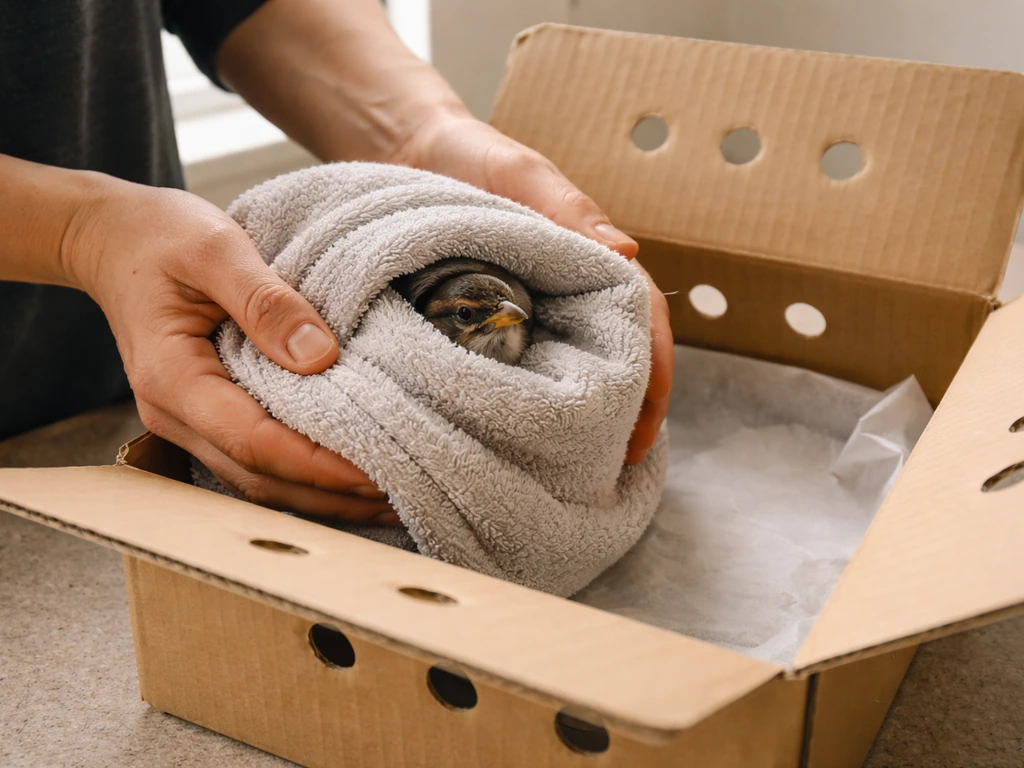
When it's time to move the bird, wrap it loosely in a towel to keep it calm and prevent it from flapping and injuring itself further. Support the body gently but don't squeeze. For small birds, you can cup them in both hands inside the towel. For larger birds like pigeons, crows, or raptors, be more cautious: larger birds can bite hard and have strong talons, so keep the wrap secure around the wings and feet.
Place the bird in a cardboard box with ventilation holes, not a plastic bin (plastic doesn't breathe and overheats quickly). A box with a lid is better than an open top because the bird can't see out and will stay calmer. Line the bottom with a non-slip surface like crumpled paper towels or a folded cloth. Don't add water dishes or food, since both can spill and cause injury or aspiration during transport.
During the drive, keep the car quiet, put the box on the seat rather than the floor if possible, and avoid sudden braking. Keep the temperature comfortable, not cold from AC blasting or hot from direct sun. Minimize stops and keep the trip as short as you can.
If the bird has died
If the bird is confirmed dead, you still need to handle it carefully. Wear gloves. Place the bird in a sealed plastic bag and dispose of it in an outdoor trash bin. Wash your hands thoroughly with soap and water. Don't let your cat or dog investigate or play with the carcass.
Infection risk, rabies, and what to do if you got scratched or bitten
This section is about you, not the bird. If you got scratched or bitten by your cat during this incident, take it seriously. Cat bites are considered high-risk wounds because the narrow puncture drives bacteria deep into tissue where it's hard to clean. Even a scratch from a cat can transmit Bartonella henselae, the bacteria behind cat scratch disease, which causes swollen lymph nodes, fever, and fatigue.
For any scratch or bite wound, wash it thoroughly with soap and running water for at least 5 minutes. Apply pressure if it's bleeding. Apply an antibiotic ointment and cover with a clean bandage. Then call your doctor or a nurse line to discuss whether you need a tetanus booster (recommended if it's been more than 5 years since your last one and the wound is deep or dirty) or any other treatment. Don't skip this step even if the wound looks minor.
Regarding rabies: the bird itself is not a rabies risk to you. However, if your cat is not up to date on its rabies vaccination and was outdoors getting into contact with wildlife, that is worth discussing with your vet. For most indoor or primarily indoor cats with current vaccinations, the risk is very low, but the conversation with your vet is worth having. If you handled the bird directly with open skin, wash those areas thoroughly as well. Bird-to-human disease transmission is rare but standard hygiene applies.
There is also a related concern if your cat managed to eat part of the bird. The risks there are a bit different, and if that happened, knowing what to do when your cat ate a bird can help you figure out the next steps for your pet specifically.
Preventing this from happening again
The only completely reliable way to prevent your cat from killing birds is to keep it indoors. That's not a judgment, it's just the reality. Cats are highly effective hunters and even well-fed, affectionate cats will hunt birds given the opportunity. If your cat is indoor-outdoor and this feels like a big change, there are middle-ground options worth knowing about.
| Option | How effective | Best for |
|---|---|---|
| Keep cat fully indoors | 100% effective for wildlife | Most cats with enrichment indoors |
| Catio or screened outdoor enclosure | Very high, no unsupervised roaming | Cats that want outdoor time safely |
| Leash and harness outdoors | High when supervised | Cats that adapt to leash training |
| Supervised outdoor time only | Moderate, depends on vigilance | Calm cats in low-bird-traffic areas |
| Bells on collar | Low to moderate, birds still at risk | Supplemental only, not a primary strategy |
A catio, which is basically a screened porch or enclosure attached to the house, gives your cat fresh air, sunlight, and the sights and sounds of being outside without any access to wildlife. They range from small window box designs to large walk-in structures. If you're also worried about the health risks when a cat eats a bird, keeping your cat contained removes that risk entirely at the same time.
Leash training is genuinely possible for most cats and gives them outdoor enrichment under your supervision. It takes patience but cats that are started young or gradually introduced to a harness often take to it well. For households where indoor-only isn't realistic, a combination of supervised walks and a secure outdoor enclosure is the next best thing.
There's one more angle worth mentioning if you're a bird person as well as a cat person. If you've ever worried about a bird escaping outdoors and whether it would survive, whether a bird will come back after flying away is a real concern, and the outdoor risks from cats are a big part of why prompt action matters for escaped pet birds too.
The bottom line
If your cat killed or injured a bird today: secure the cat, handle the bird with gloves, put it in a dark quiet box, and call a wildlife rehabilitator or avian vet right away. Do not try to treat puncture wounds yourself, do not feed or water the bird, and don't assume it's fine just because it looks okay from the outside. Cat attacks are serious injuries for birds, but professional care given quickly can make a real difference. Take care of your own scratches or bites while you're at it, and then think about a longer-term plan to keep your cat contained going forward.
FAQ
What if I can't tell whether the bird is actually alive or just stunned?
If you cannot confirm life, treat the bird as alive. Keep your cat secured, use gloves or a barrier to move the bird, place it upright in a dark, ventilated box, and contact a wildlife rehabilitator or avian vet as soon as possible.
Can I give the bird water or food while I wait for help?
Do not give water, food, or even a “quick sip.” Birds that are shocked and injured can aspirate, and feeding can also delay proper treatment. Focus on warmth, a dark quiet box, and getting professional help.
What should I do if the bird is bleeding heavily?
If it is bleeding, apply gentle pressure with clean gauze or a clean cloth and hold it for several minutes, and stop only if bleeding clearly slows. If bleeding is heavy or does not ease within a few minutes, consider it an emergency and escalate to the wildlife rehabilitator or emergency vet immediately.
The bird looks fine, do I still need to contact a wildlife rehabilitator?
Yes. Even if the bird appears to have no visible injuries, cat saliva can introduce deep infection through tiny punctures. The safest move is still to call a wildlife rehabilitator or avian vet right away.
Can I tape or splint the bird if a wing or leg looks injured?
Do not stitch, tape, or splint aggressively. If a wing or leg looks misaligned or droops, that can involve fractures or internal injury, and incorrect support can worsen damage. A trained rehabilitator can immobilize safely if needed.
How long can I wait at home before transporting the bird?
When the bird is not in a box, minimize movement and exposure to your cat. If you must wait at home for pickup, keep it in the dark, ventilated box in a quiet room with you supervising from a distance.
Is it okay to use a plastic bin if I don’t have a cardboard box?
A plastic tub can overheat and can limit airflow, increasing stress and risk. Use a cardboard box with ventilation holes, keep it dark, and avoid placing it in direct sun or near heaters.
What if the bird is motionless, can I assume it’s dead?
If the bird is in shock, it may be motionless but still breathe, so re-check signs of life briefly before deciding it is dead. If you are unsure, keep it in the box and call for guidance rather than assuming the worst.
If the bird is dead, should I still protect my cat and clean up differently?
If your cat has fresh contact with the carcass, it can carry bacteria in its mouth or fur and re-introduce contamination later. Wear gloves to remove and bag it, keep pets away, and wash hands and any contacted surfaces thoroughly.
What warning signs after a cat scratch or bite mean I should get medical care right away?
If you were scratched or bitten, wash with soap and running water for at least 5 minutes, then seek medical advice, especially for puncture wounds. Also watch for increasing redness, swelling, warmth, fever, or tender lymph nodes over the next days.
Do I need to worry about rabies from the bird or from my cat?
If your cat might be due for rabies vaccination or it is an outdoor cat that interacted with wildlife, discuss it with your veterinarian. The bird itself is not the rabies risk, but the cat’s vaccination status and access to wildlife determine how concerned you should be.
What’s the most effective long-term way to stop my cat from hunting birds?
For prevention, the most reliable immediate step is keeping the cat indoors (or in a catio or supervised harness system) because “well-fed” does not eliminate hunting. If the cat is indoor-outdoor, treat this incident as evidence the current setup is not secure enough.
What if I can’t find a wildlife rehabilitator right away?
If your cat injured the bird and you are unsure where to take it, start by calling a wildlife rehabilitator and ask what to do with birds that are likely cat-injured. If you cannot reach one quickly, an avian vet may provide triage instructions on containment and transport.