If you've just found an injured bird of prey, here's the short answer: don't pick it up yet, don't feed it, and call a licensed wildlife rehabilitator right now. Everything else you do in the next 30 minutes either helps or hurts that bird's chances, so let's walk through it step by step.
Injured Bird of Prey What to Do Right Now: Safe Steps
Marcus Chen
23 Mar 2026
First: Assess the Situation from a Safe Distance
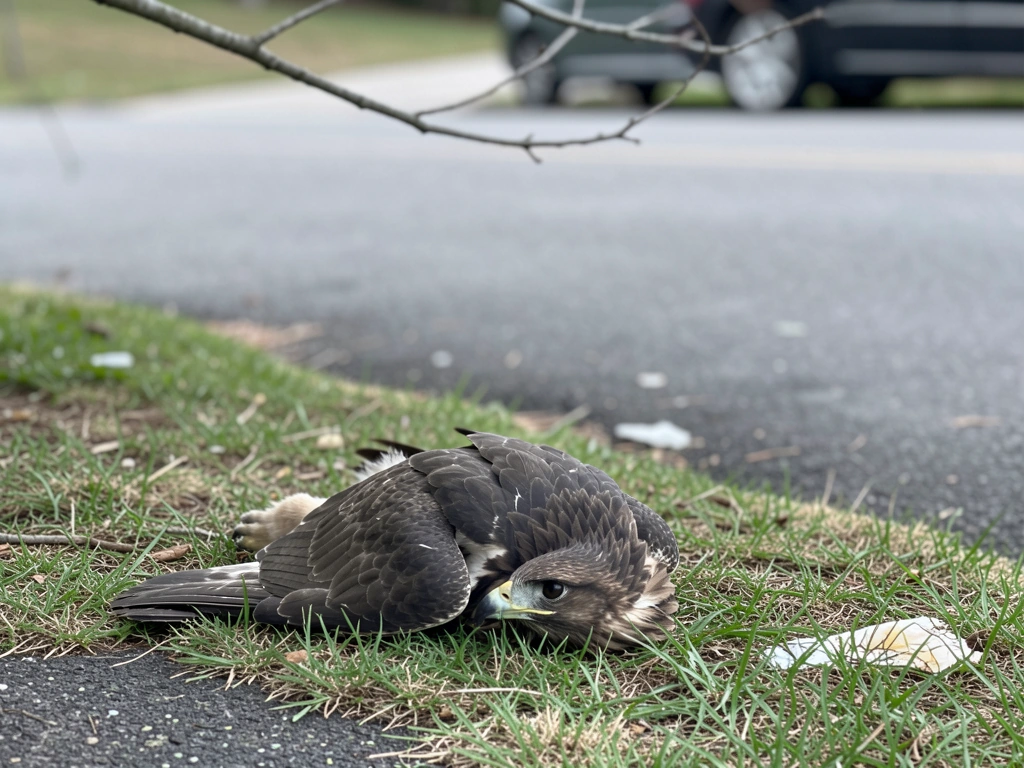
Before you do anything, stop and watch the bird for a minute or two from about 10 to 15 feet away. A raptor on the ground isn't automatically injured. Owls sometimes roost low, and young hawks or falcons learning to fly (called branchers or fledglings) spend time on the ground or low branches before they're fully airborne. A genuinely injured adult raptor will usually show clear signs: it won't fly or move away when you approach, it may be holding a wing at an odd angle, it could be bleeding, its feathers might look fluffed or matted, or it might be lying on its side.
The key question is whether the bird is making any attempt to escape from you. A healthy adult eagle, hawk, owl, or falcon will not let you walk up to it. If it does, that's a strong signal something is wrong. Take a mental note of everything you're seeing right now because you'll need those details when you call for help.
- Is it able to stand or is it lying flat?
- Is one wing drooping lower than the other?
- Can you see any visible blood or wounds?
- Is it alert and tracking your movements, or dull and unresponsive?
- Were there any obvious causes nearby, like a road, a window, power lines, or signs of a cat attack?
- Approximately how long has it been there, if you know?
Write these details down or type them into your phone. You'll be glad you did when the rehabber starts asking questions.
Call a Wildlife Rehabber Before You Do Anything Else
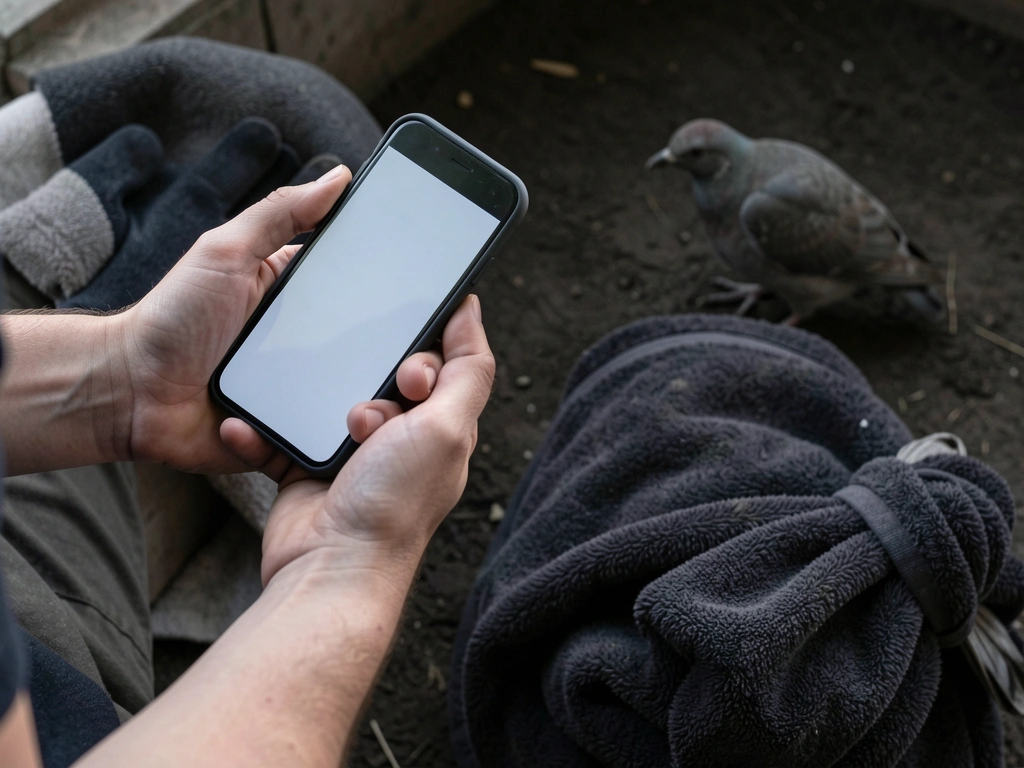
This is the most important step in the whole guide. A licensed wildlife rehabilitator can tell you over the phone exactly what to do with an injured bird for the specific situation you're in. They've seen your scenario many times. Attempting to figure this out on your own wastes time the bird doesn't have, and shock alone can kill a raptor even if the physical injury seems survivable.
To find a rehabber near you right now, try any of these:
- Search 'wildlife rehabilitator near me' or 'raptor rescue [your city/state]'
- Call your state's fish and wildlife agency (they keep lists of permitted rehabbers)
- Call a local veterinary clinic and ask if they work with a wildlife rehabber or raptor center
- Contact your local animal control or game warden if you can't find a rehabber quickly
- If you're in California, the UC Davis California Raptor Center has a recovery line; many states have university-based raptor programs with similar hotlines
If you're uncomfortable approaching or capturing the bird yourself, especially if it's a large species like a red-tailed hawk, great horned owl, bald eagle, or golden eagle, tell the rehabber that. They'd rather come to you, or connect you with someone who can, than have you get hurt or stress the bird further with a clumsy capture attempt.
When you can probably wait vs. when it's urgent
If the bird is alert, sitting upright, and you're not sure it's injured, keep your distance and give it 30 to 60 minutes to see if it moves on. Call a rehabber to describe what you're seeing and let them guide you. If the bird is clearly bleeding, lying flat, unable to lift its head, or trapped in something, that's a same-hour situation. Get on the phone immediately and start preparing to contain it while you wait for instructions.
How to Approach and Capture the Bird Safely
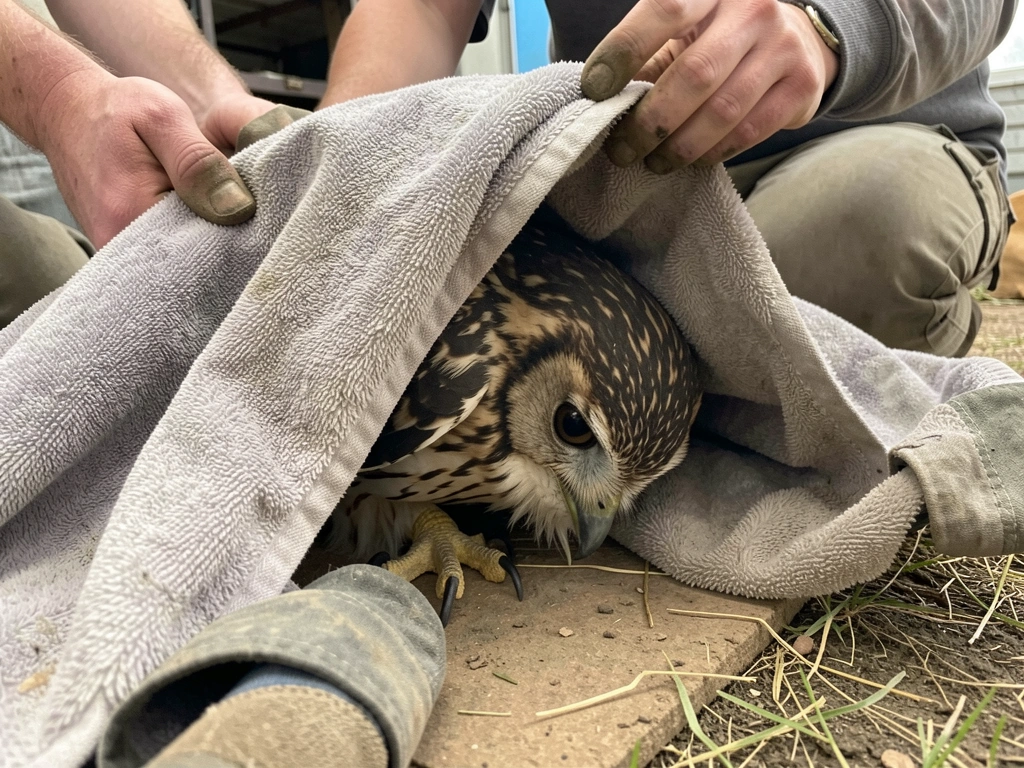
Even an injured raptor can seriously hurt you. The talons of a red-tailed hawk can exert extraordinary grip strength, and a great horned owl's talons are strong enough to cause deep puncture wounds. The beak can also inflict cuts, especially on fingers. This is not a reason to panic, but it is a reason to protect yourself before you reach for the bird.
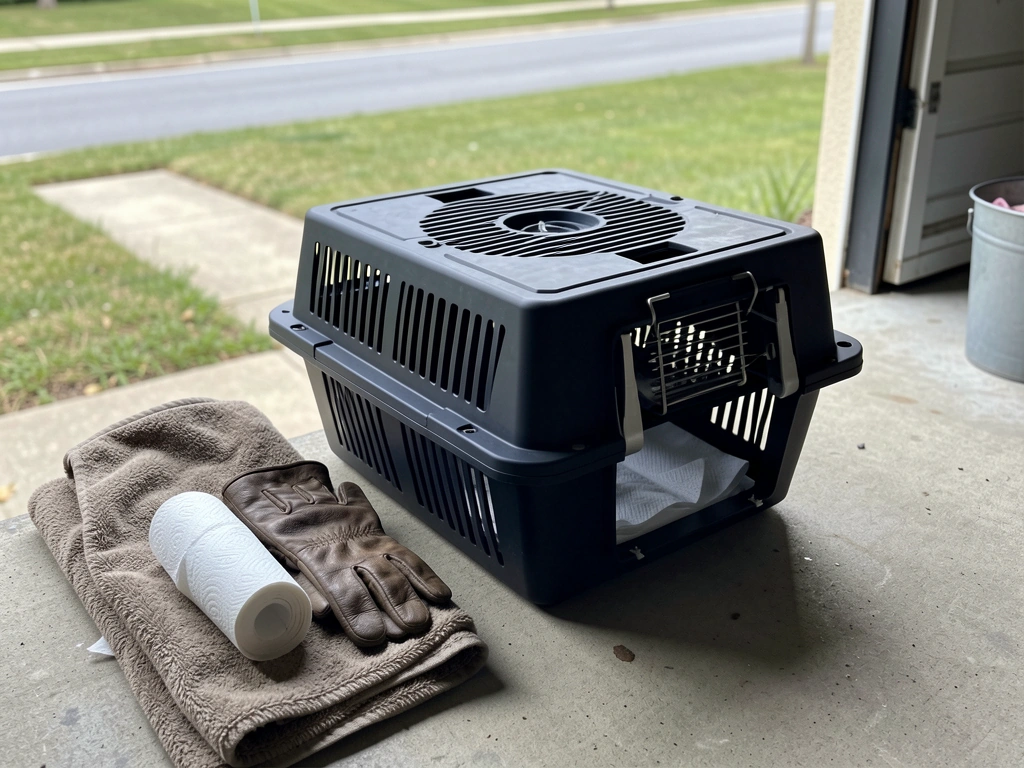
The safest capture method is the towel or blanket toss. Approach the bird slowly and calmly, talking quietly or staying silent. Don't make sudden movements. When you're close enough, drop or gently toss a thick towel or blanket over the bird to cover it completely, then carefully gather the feet through the fabric before the bird can grip you. The darkness of the covering immediately calms most raptors, so move confidently once you've got it covered.
Leather gloves are ideal if you have them available. Heavy gardening gloves work in a pinch. Do not try to grab the bird by the wings or body without covering it first. If you are not comfortable with this at all, or if you're dealing with a very large raptor, it is completely okay to wait for professional help and simply keep the area clear of other people, pets, and traffic while you do.
- Wear gloves if you have them (leather or thick material)
- Use a large, thick towel or blanket (avoid terry cloth with long fringe, which can snag toes)
- Approach slowly, from the front, and stay low
- Drop or drape the towel over the entire bird before reaching underneath
- Secure the feet through the fabric before moving the bird
- Keep your face away from the beak
- Once covered, the bird should calm down quickly
Temporary Housing: The Box, Warmth, and Darkness
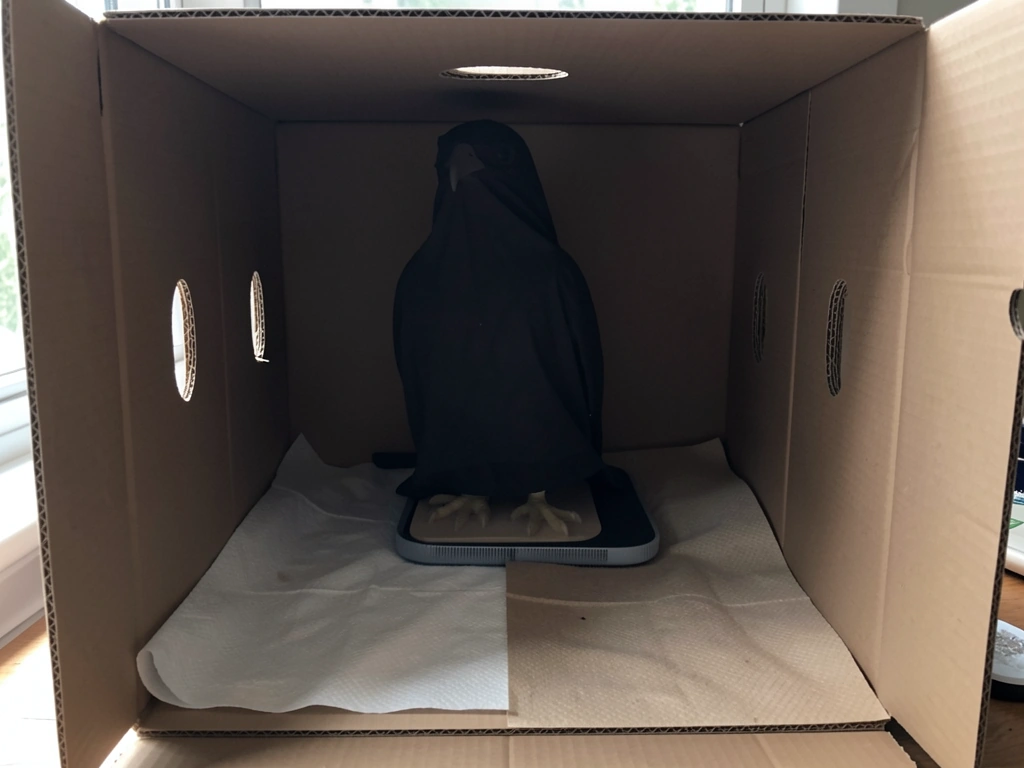
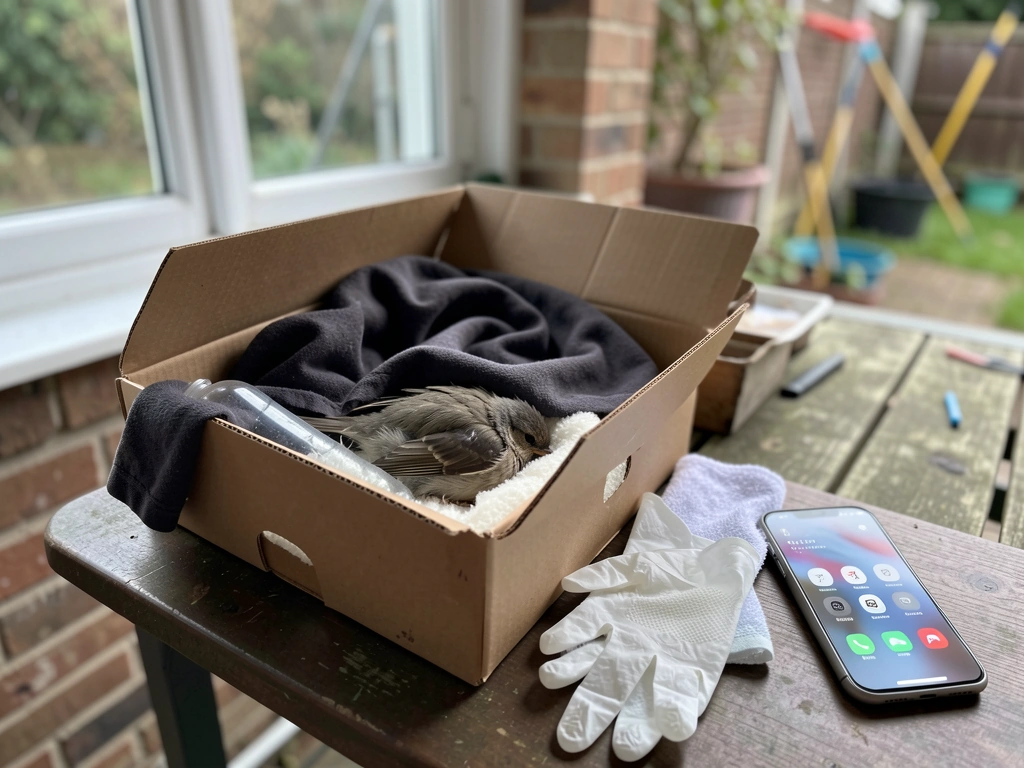
Once you've safely covered and secured the bird, your next job is to get it into a container that is dark, ventilated, and appropriately sized. A cardboard box works well for most raptors. It should be large enough that the bird can sit upright without its head touching the top, but not so large that it slides around and injures itself further.
Line the bottom of the box with paper towels or a clean, smooth cloth (nothing with loose loops or fringe that can catch talons). Poke several small ventilation holes in the sides or lid if there aren't already openings. Close the lid securely and tape it if needed. You're aiming for dark, quiet, and secure.
For warmth: if the weather is cold or the bird appears to be in shock (lethargic, unresponsive, cold to the touch), you can place a heating pad set to low under half of the box, not the whole bottom. This lets the bird move away from the heat if it gets too warm. A hot water bottle wrapped in a towel and placed near but not directly against the bird works too. In hot weather, skip the extra heat source and keep the box out of direct sunlight and away from air conditioning vents.
Put the box in the quietest room you have. Turn the TV and radio off. Keep children and pets out of that space. Do not keep opening the lid to check on the bird. Every time you do, you're adding stress that can worsen shock.
Transporting the bird to a rehabber
When it's time to transport, keep the box flat and stable in your vehicle. Don't put it on the seat where it can slide. Play no music, keep conversation to a minimum, and drive calmly. The bird can hear everything happening around it, and a quiet, steady ride does more for its stress levels than you might think. Most rehabbers recommend getting the bird to a facility as quickly as possible, ideally within a few hours of containment.
Basic First Aid: What You Can and Can't Do
The honest answer is that your first aid options are limited, and that's intentional. Birds of prey are protected under federal and state law in the US, and it is illegal to keep or treat an injured raptor beyond reasonable transport care without the required permits. More importantly, improper first aid can make injuries worse and reduce the bird's chance of survival and release.
Here's what actually falls within what you can safely do at home:
| Situation | What You Can Do | What to Avoid |
|---|---|---|
| Visible bleeding | Apply gentle pressure through the towel if actively bleeding; keep the bird contained and calm | Pouring water, hydrogen peroxide, or any antiseptic on the wound |
| Wing drooping or broken | Containment in a box prevents further movement; don't splint or tape yourself | Attempting to straighten, splint, or tape the wing |
| Appears cold/in shock | Gentle warmth under half the box using a low heating pad or wrapped hot water bottle | Placing heating pad under entire box; using a hot lamp or hair dryer |
| Bird seems tangled in wire/string | If you can safely clip or free it without pulling, do so carefully; wear gloves | Pulling hard or cutting close to the bird if it risks deeper injury |
| Unconscious or unresponsive | Dark quiet containment; call rehabber immediately; this is urgent | Attempting any kind of resuscitation, fluids, or feeding |
What Not to Do (This Section Can Save the Bird's Life)
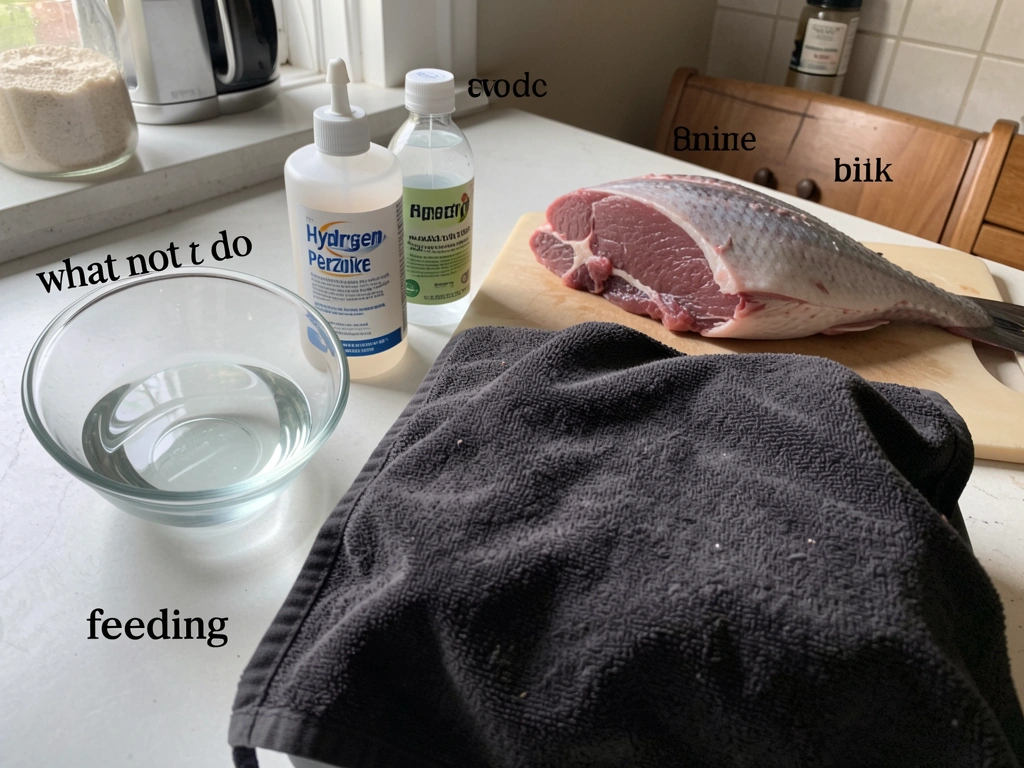
There are a handful of well-meaning mistakes that people make when they find an injured raptor, and some of them are genuinely dangerous for the bird. Please read this section even if you skip everything else.
- Do not offer food or water. Raptors in shock or with internal injuries can aspirate liquids, and offering food stimulates digestion at a time when the body needs to direct resources elsewhere. Even if the bird looks hungry, do not feed it. This applies to water too.
- Do not try to give it raw meat, fish, or anything from your kitchen. The nutritional and bacterial profile of food scraps is wrong for raptors in a medical context, and it won't help.
- Do not try to rehabilitate the bird yourself over days or weeks. Without the proper training, housing, diet, and permits, your best efforts will likely result in a bird that cannot be released back into the wild, and keeping a raptor without a permit is illegal.
- Do not put the bird outside in a cage, pen, or open box. Exposure to weather, neighborhood cats, dogs, and other wildlife can be fatal in hours.
- Do not handle it more than necessary. Every time you open that box, you're adding stress. Resist the urge to check on it constantly.
- Do not let children or pets near the box. Even a sick raptor can inflict a serious injury.
- Do not put the box in direct sunlight or near a heating vent or air conditioner.
What to Tell the Rehabber and How to Document It
When you call a wildlife rehabber or raptor center, they're going to ask you specific questions. Having the answers ready speeds up the call and helps them triage the situation before they even see the bird. Here's what to have ready:
- Your exact location where you found the bird (street address, GPS coordinates, or a landmark description)
- The date and time you found it, and how long you think it may have been there
- A description of the species if you can identify it (owl, hawk, falcon, eagle, etc.) and its approximate size
- What you observed: posture, behavior, visible injuries, whether it was alert or unresponsive
- Any likely cause you noticed (near a road, below a window, evidence of a cat attack, tangled in wire)
- What you've done so far (covered it, put it in a box, etc.)
- Your location and whether you can transport, or if you need someone to come to you
If it's safe to do so, take a photo of the bird from a few feet away before you contain it. Don't get close just for a photo, but if you already have your phone out and can capture a clear image without approaching further, it helps the rehabber identify the species and spot injuries you may not have noticed. Send it by text or email when you call.
Also take a quick photo or note of the surrounding area, especially if there's an obvious hazard like a window, road, or fence. This information can help rehabilitators follow up with property owners to prevent repeat incidents, and it's useful for documenting the rescue if anyone asks questions later.
After You've Called: What to Expect Next
Once you've reached a rehabber and the bird is contained, your job is mostly to wait. Keep the box in that quiet, dark, warm (but not hot) spot and resist the urge to interfere. If the rehabber is coming to you, they may ask you to stay nearby and keep the area clear. If you're transporting, they'll give you the address and may give you an approximate intake time.
Rehabbers are often volunteers working with limited resources, so response times vary. Some large raptor centers can see birds same-day. Others may ask you to transport to a local veterinary clinic that partners with them until they can take the bird in. If you're in a rural area, they may talk you through additional stabilization steps over the phone while you wait for pickup or transport logistics to be arranged.
Don't be discouraged if the wait is a few hours. The dark, quiet box is genuinely the best thing for the bird in the interim. What it needs most right now is calm.
Reducing the Risk of It Happening Again
Once the bird is in professional hands, it's worth spending a few minutes thinking about what caused this. If the bird struck a window on your property, window collision tape, external screens, or visual deterrent films can dramatically reduce repeat strikes. If it was hit by a vehicle on a road near your home or workplace, you may be able to report the location to your local wildlife agency as a known hazard area.
Cat and dog predation is one of the most common causes of raptor injury, especially for smaller species like American kestrels and screech owls. Keeping cats indoors is the most effective single action any cat owner can take. If the bird was found on someone else's property, it's worth a gentle conversation with them about outdoor cats or other hazards.
Power line electrocution, rodenticide poisoning, and entanglement in wire or netting are other common culprits. Utility companies in many areas have raptor protection programs, and your local rehabber can often point you toward the right contact if a power line was involved.
Finding an injured bird of prey is stressful, but you've already done the most important thing by stopping and looking for guidance instead of guessing. Get the bird contained, get a rehabber on the phone, and give it warmth, quiet, and darkness until it's in expert hands. That's genuinely everything you can do, and it's more than enough.
FAQ
What if the injured bird of prey can still fly, but seems off?
If it looks like an obvious injury but the bird is still able to fly, do not chase it. Many raptors can fly short distances even with concussion, internal injury, or a damaged wing. Keep people and pets away, note the location and flight direction, and call a wildlife rehabilitator for guidance on whether to wait, track from a distance, or contain it if it lands again.
Can I offer food or water to an injured bird of prey while I wait for help?
Do not give water, food, or vitamins. Feeding is unsafe because choking, aspiration, and incorrect diet can worsen shock and injuries. In the immediate window, the priority is containment in a dark, ventilated box and getting a licensed rehabber on the phone.
What should I do if I think the injured bird of prey may have been poisoned?
If you suspect the bird is poisoned (for example, sudden weakness after rodent bait nearby, foam, seizures, or uncoordinated movements), treat it as same-hour. Keep your distance, contain it with a towel only if instructed, and tell the rehabber what you saw and any nearby substances. Do not attempt antidotes or home remedies.
What if the bird of prey is stuck to something (glue, oil, tar)?
If it is stuck to something like glue, oil, or pitch, do not try to pull it free by force or use household solvents. Containment plus rapid professional handling matters because chemicals can cause burns and poisoning during cleanup. Call the rehabilitator and be ready to describe exactly what it is stuck to.
What if the injured-looking bird of prey is a fledgling or a young owl, not an adult?
No. Even if the bird is small, call for guidance and avoid contact. Baby raptors and fledglings can look helpless but be at a normal stage, while a truly injured bird may not move away when approached. If it is alert and upright, monitor from a distance, but if it cannot lift its head, is bleeding, or won’t move away, call immediately.
Should I cut the bird free if it’s tangled in fishing line or netting?
If the bird has entangled legs or wings in fishing line, netting, or fencing wire, do not yank it free. The fastest safe action is to keep the area quiet and call the rehabber. They can tell you whether to cut line with proper tools while minimizing movement, or wait for pickup depending on the location and the bird’s posture.
What if the injured bird of prey is actively bleeding?
If it’s bleeding, the goal is to minimize stress and prevent further injury, not to apply bandages or compressions that could damage feathers or restrict breathing. Place it in the dark, ventilated container as soon as you can safely contain it, and tell the rehabber where the blood is coming from and whether the bird is responsive.
What if I only find feathers, not the bird, after seeing something happen?
If you find feathers scattered near a site, it may be evidence of a partial injury or an escape with damage. The bird might be hiding nearby. Keep pets away, look within the immediate area from a distance, and contact a rehabber if you see the bird unable to move normally, holding a wing oddly, or not flying when approached.
What should I do if the injured bird of prey is on a road or highway?
If it’s on a roadway, do not attempt to move it across traffic by hand. Put distance between you and the bird, warn others, and call emergency services or a rehabber with the exact location. If the bird is at risk of being hit again, follow dispatcher or rehabber instructions for a safe, minimal-stress approach.
How do I handle an injured bird of prey inside a garage or house?
If the bird is inside a garage or building, close off escape routes to keep it from running into hazards, open doors or windows only if the rehabber advises, and remove pets and people. When you can safely do so, contain it with a towel and move it to a dark, ventilated box, but do not corner it aggressively or attempt multiple chases.
Is it okay to adjust the warmth or ventilation after I put the bird in the box?
After containment, the box should stay mostly closed, but the bird needs ventilation and the ability to thermoregulate. You can slightly adjust heat sources only if instructed or if the bird feels cold and it is safe to do so. Avoid overheating, and do not place the bird directly on a hot surface or cover the box entirely with plastic.
What if the rehabber can’t arrive for several hours, what changes during that wait?
If the rehabber is delayed, the most important interim steps are keep it dark, quiet, and stable, do not repeatedly check the bird, and keep it out of direct sun and strong airflow. If the bird becomes more lethargic, is breathing abnormally, or you notice a worsening condition, call again with an update rather than trying additional first aid.
Next Article
What to Do With an Injured Bird in the UK Today
UK step-by-step injured bird guide: triage, first aid, what not to do, and who to call with postcode tips.